ch 14 - stress and health
 Call Kai
 Learn
Learn Practice Test
 Spaced Repetition
 Match
Match Flashcards
 Knowt Play
1/61

There's no tags or description
Looks like no tags are added yet.
Name | Mastery | Learn | Test | Matching | Spaced | Call with Kai | Chat |
|---|
No analytics yet
Send a link to your students to track their progress
62 Terms
stressor
internal/external specific event or pressure that:
puts demands on a person
OR
threaten their well-being
stress
physical and psychological response to stressors
health psychology
psyc subfield concerned with how psychological factors influence physical illness, health maintenance
provide examples of internal and external stressors
internal: physical pain, illness, self-degradation
external: work, school stress
holmes and rahe discovered that major life changes from positive and negative events […] and that […] causes illness
they discovered this through […]
major life changes from pos/neg events can cause stress
increased stress causes illness
discovered these through testing readjustment amount needed after life changes
CUSS (acronym and measurement)
college undergraduate stress scale
assesses college student life events
[…] produce less psychological distress and fewer physical symptoms
[…] can sometimes counteract the effects of negative events
[positive events], [happiness]
chronic stressors (def, relationship it is linked to, examples)
sources of stress that are continuous or repeating, can differ based on rural vs city locations
linked to social relationships
ex/ bullying, strained relationships, money troubles, overworking
environmental psychoogy
study of environmental effects on behaviour and health
perceived control and how it influences stress response
control over stressful event can add to/reduce stress response
lack of control may add to stress
perceived control may cause more effective coping
the threat of death or injury can cause significant and lasting physical and psychological ________
stress reactions
name 2 physical stress reactions
fight or flight response
general adaptation syndrome (GAS)
fight or flight response (def + hormonal release pathway)
emotional & physiological response increasing readiness for action in an emergency
pathway
hypothalamus activates anterior pituitary → AP releases ACTH (adrenocorticotropic hormone) → ACTH activates adrenal glands → glands release catecholamines and cortisol → energize fight-or-flight response
general adaptation syndrome (GAS) (def, stages)
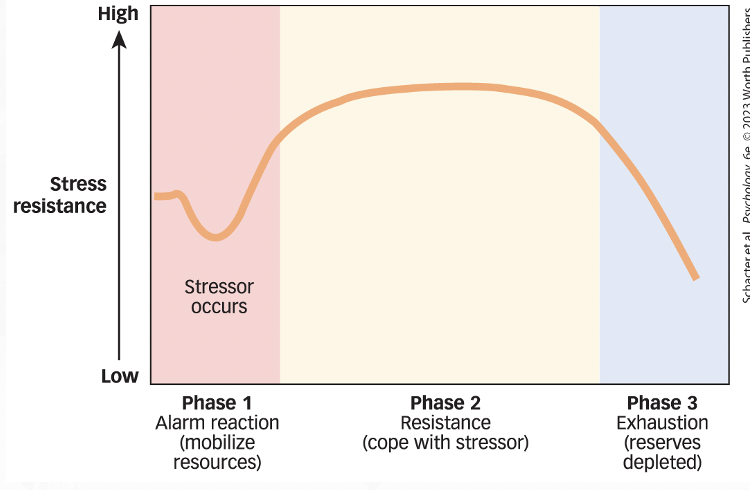
nonspecific physiological response; does not vary across stressors
alarm phase - mobilizes bodily resources (draws energy from fat and muscles) to respond to threat
resistance phase - adaption to arousal state, shuts down unnecessary processes to cope with stressor
exhaustion phase - bodily resistance collapses; damage leads to infection, aging, organ damage, death
selye’s three phases of stress response (def, graph with x and y axis and line showing stress resistance across 3 phases)
stress resistance builds over time but only lasts for so long before exhaustion kicks in
explain the relationship between cell division and stress
constant cell division facilitated by telomeres and telomerase - telomeres shorten with every cell division
telomeres = caps at chromosomes’ ends preventing them from sticking to one another
telomerase = enzyme rebuilding telomeres
those exposed to chronic stress have shorter telomeres and lowered telomerase activity - cortisol reduces telomerase activity
lack of telomerase prevents cell division, causing aging + cell death
name a hormone that floods brain when exposed to stressors, weakening the immune system and it's immune response
glucocorticoids
define the following:
lymphocytes
psychoneuroimmunology
lymphocytes = white blood cells producing antibodies (T cells, B cells) that fight infection
psychoneuroimmunology = study of immune system responding to psychological variables
explain the relationship between the cardiovascular + circulatory system and stress
atherosclerosis
blood vessel damage: BP goes up, stays up due to stress activated arousal - gradually damages blood vessels that accumulate plaque
atherosclerosis: gradual narrowing of arteries during plaque buildup
type A behaviour pattern
tendency towards easily aroused hostility, impatience, time urgency
higher hostility linked to higher risk of heart attack
of 2280 men studied over 3 years, ___ suffered coronary heart disease incidents.
many of these occurrences involved those scoring above the ____th percentile in hostility
[45] [80th percentile]
physiological responses to stress are intertwined with ______ responses, beginning in the ____
[psychological] [mind]
2-step process of stress interpretation (also differentiate btwn challenge vs threat)
primary appraisal: interpretation of stimulus as stressful or not
secondary appraisal: determining whether stressor is something that can be handled or not (challenge or threat)
challenge = positive appraisal, you feel confident you can control it
threat = negative appraisal, feels like you might not overcome
burnout
state of physical, emotional, mental exhaustion from long-term involvement in emotionally demanding situations
lowered performance and motivation
self-reported happiness and stress go [up/down] as incomes increase
only up to [$_____]
[down / $75,000]
[true/false] those with more money are at risk for earlier death
[false - those with LESS money have earlier death]
stress management
techniques counteracting physical and pyschological stress
manages body and mind
manages the situation
mind management (3 R’s)
repression
rationalization
reframing
repressive coping
avoiding situations reminding you of a stressor - maintaining artificially positive viewpoint
putting unpleasant thoughts/emotions out of mind
rational coping (def, 3 step process)
facing stressor, working to overcome it. prolonged exposure
acceptance: accept that stressor exists
exposure: attending to/seeking out stressor
understanding: finding meaning stressors hold in one’s life
reframing, SIT
finding new way to think about stressor that reduces a threat
SIT: stress inoculation training
reframing technique that develops positive ways to think about situations
ex/ writing about deepest thoughts and feelings
body management (4 techniques list)
meditation
relaxation
biofeedback
aerobic exercise
meditation (def + effect produced)
practice of intentional contemplation, clearing the mind of thoughts, breathing
transformed consciousness
rests and revitalizes
lengthened telomeres
relaxation (def + effect produced)
EMG
relaxation therapy + response
picturing peace
EMG = electromyography, measuring subtle activity of muscles
relaxation therapy = reduces tension by consciously relaxing muscles of the body
relaxation response = reduced muscle tension, cortical activity, heart rate, breathing rate, blood pressure
biofeedback
using external monitoring device to obtain info about bodily function, gain control over it. gives access to visual/audial feedback showing levels of psychophysiological functions
ex/ EEG neurofeedback (brainwave abnormalities)
aerobic exercise (def + effect produced)
exercise increasing heart rate and oxygen intake for sustained period
may increase serotonin, endorphins, fights depression
maintains physical health
situation management (def + 3 technique list)
changing your life to reduce stress
social support
religious practice
humour
social support (def, male vs female differences)
interacting with others to gain aid, reducing stress and depression
males: more prone to fight or flight response
females: more prone to tend-and-befriend (seek social support)
(situation management → social support)
explain why women seek out social support (tend and befriend) more often than men
females have higher estrogen → estrogen causes oxytocin to seek social responses, nurture others, create cooperative groups
religious practice (defs below + effect produced)
religiosity
spirituality
religiosity = engagement with practices of particular religion
spirituality = having belief in, engagement with some higher power, not necessarily linked to religion
effects
lower heart disease rates
decreased chronic pain
improved psychological health
What did Benson et al. (2006) find when testing whether prayer affected recovery after cardiac bypass surgery?
Researchers found that prayer did not reduce complications after surgery. Surprisingly, patients who knew they were being prayed for and were prayed for experienced significantly more complications than the other groups.
humour (effects produced)
reduces pain and stress sensitivity
reduces time needed to calm down after stressful event
SHORT TERM STRESS ALLEVIATION, NO HEALTH/LONGEVITY EFFECTS
procrastinating
causes stress in the long run. effective time management reduces procrastination
sickness response (prompted by + immune response)
adaptive reactions to illness - can be prompted by stress without an actual infection
leukocytes activated by immune response
cytokines released: proteins activating vagus nerve/”sickness” message
Do people who report many physical symptoms have more health problems?
People differ in how they notice and report bodily symptoms; some may be more sensitive to physical changes rather than actually having more illness.
What did fMRI research show about people reporting higher pain levels?
Brain regions associated with pain processing were more active, suggesting that people can accurately experience and report pain.
sick role
recognized set of rights/obligations linked with illness, providing exemptions
malingering
feigning medical symptoms to achieve something you want
patient-practitioner compliance deteriorates if treatment is […]
frequent (ex/ eye drops)
inconvenient
painful (injections)
treatments increases over time
What did the antacid intake scatterplot study (Roth & Caron, 1978) show about patients’ self-reports?
Patients often exaggerated/overestimated their antacid intake. Bottle counts (actual intake) showed that many patients reported taking more antacid than they actually did.
effect of placebos on hormonal release / brain
placebos can trigger release of endorphins, lower brain activation of pain-related areas
ex/ electric shock/heat
placebo cream
placebos work because patients believe in the […]
nature of medicine
2 kinds of psychological factors influencing personal health
health-relevant personality traits
health behaviour
explain how optimism (personality) can affect health
maintains psychological health by predicting positive health outcomes (ex/ cardiovascular health)
healthier than pessimism
[true/false] a person’s level of optimism or pessimism tends to be unstable over time
[false] a person’s optimism/pessimism tends to be stable over time
hardiness (3 C’s characteristics, how it affects stress handling)
1) commitment
2) control
3) acceptance of challenge
stress handling
“thick-skinned” and able to handle stress better
list 3 health-promoting behaviours
healthy eating
safe sex
not smoking
self regulation (def)
involving in engaging in health-promoting behaviours. exercise of voluntary control over oneself to align oneself with preferred standards; willpower
delayed gratification
eating wisely (why it fails, how it can be reworked)
(self regulation) process of conscious self-regulation can be undermined by stress
rework the process by: increasing activity rather than reducing food intake
how can self-regulation be made more effective?
by focusing more on what to do rather than on what not to do
reason why avoiding sexual risks is difficult (self-regulation)
b/c one has the illusion that they have unique invulnerability
combined with impulsive emotions
smoking causes _____% of lung cancers
80%