Exam 2 - Venous Hemodynamics
 Call Kai
 Learn
Learn Practice Test
 Spaced Repetition
 Match
Match Flashcards
 Knowt Play
1/23

There's no tags or description
Looks like no tags are added yet.
Name | Mastery | Learn | Test | Matching | Spaced | Call with Kai | Chat |
|---|
No analytics yet
Send a link to your students to track their progress
24 Terms
Venous Walls
Have elasticity - can distend several times original size
Not as muscular as arteries
Venous Valves are Made From
Connective tissue
The femoral vein contains how many valves?
1-6
The great saphenous vein contains how many valves?
10-12
The popliteal vein contains how many valves?
0-4
The anterior tibial vein contains how many valves?
8-11
The posterior tibial vein contains how many valves?
8-19
Venous Return
Returns blood back to heart
Requires pressure gradients to overcome gravity
Venous Capacitance
Veins act as a blood reservoir
Hold 2/3 of blood volume
Can distend 4x large than arteries
Hydrostatic Pressure Formula
= : ρ x g x h
(ρ is density of blood, g is gravity, h is height of column of blood)
Hydrostatic Pressure
Major force affecting venous system
Pressure within vessel that pushes blood
Negligible in a supine position
What happens if veins fall below tissue pressure (5 mmHg)?
Collapse
Transmural Pressure
Pressure difference between inside and outside of vein
Changes in vein shape are associated with...
Large volumes of flow
Once veins are distended, what is needed to change volume?
Large changes in pressure
Venous Dynamics During Inspiration
Pressure decreases in thorax
Increased intra-abdominal pressure
Blood pools into the pulmonary vascular bed
IVC collapses
Venous return from the legs is impeded
Venous Dynamics During Exhalation
Increased pressure in thorax
Decreased intra-abdominal pressure
Flow increases from legs into abdomen
Blood flow decreased to thorax
Valsava Maneuver
Increases intra-thoracic and intra-abdominal pressures
Eliminates pressure gradient
IVC has no flow
Edema
Fluid collection in tissues
Indicative of venous congestion
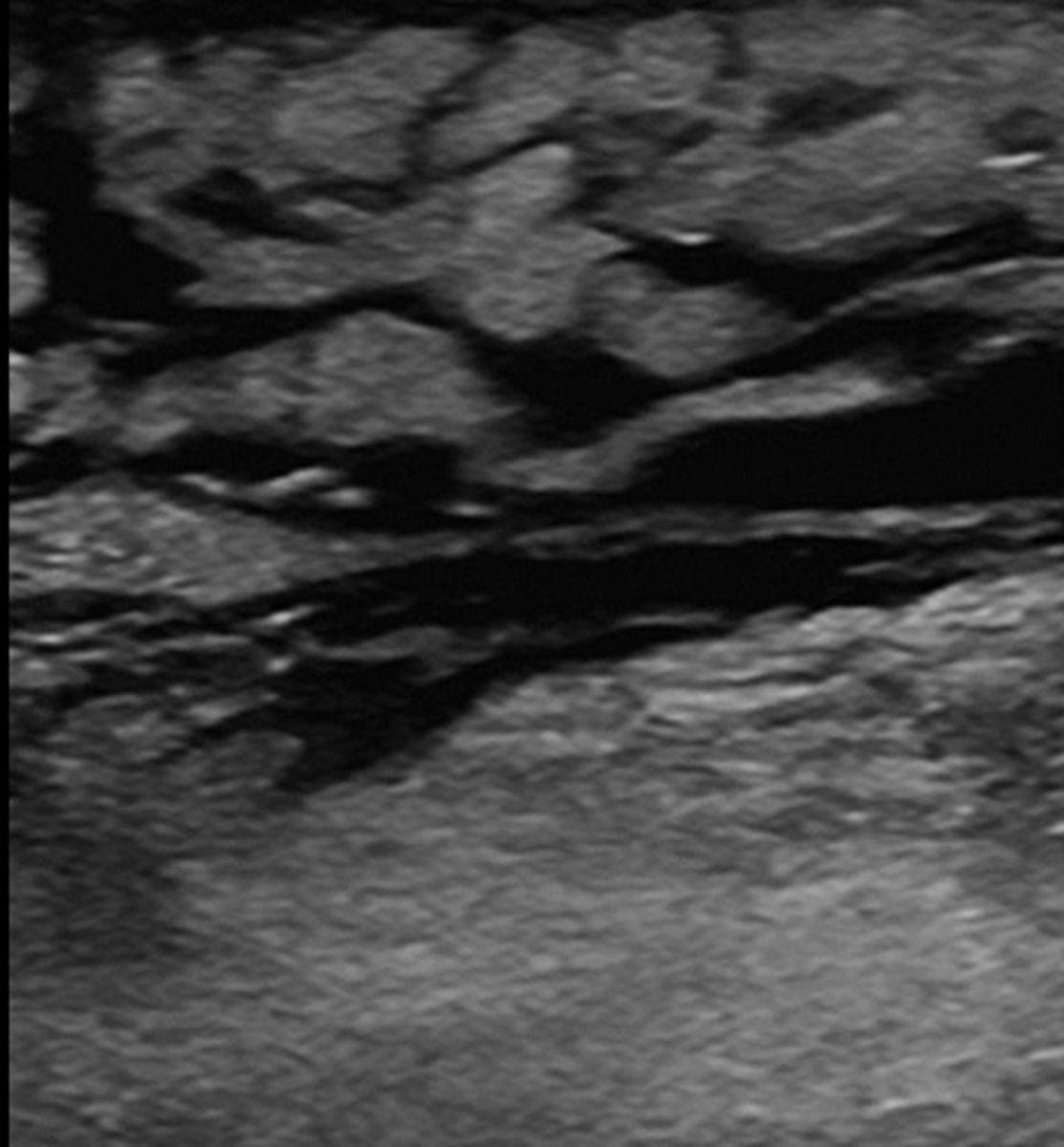
Calf Muscle Pump - When Muscles are Contracted
Proximal valves are open
Distal valves are closed
Calf Muscle Pump - When Muscles are Relaxed
Proximal valves are closed
Distal valves are open
Primary Varicose Veins
Develop in absence of DVT
Incompetent valves in common femoral or great saphenous veins - retrograde flow
Increased venous pressure
Secondary Varicose Veins
Associated with DVT
Incompetent valves in deep, superficial, and perforating veins
Increased venous pressure
Venous Stasis Ulcers
Open sores that develop on the lower legs due to poor blood circulation