Economics: Chapter 2
 Call Kai
 Learn
Learn Practice Test
 Spaced Repetition
 Match
Match Flashcards
 Knowt Play
1/22

There's no tags or description
Looks like no tags are added yet.
Name | Mastery | Learn | Test | Matching | Spaced | Call with Kai | Chat |
|---|
No analytics yet
Send a link to your students to track their progress
23 Terms
Chapter 2 Page 19
Goods
Def: Physical objects that can be produced for sale or use. Three examples are food, clothing, and cars.

Chapter 2 page 19
Services
Def: Actions or activities that are performed for a fee (usually money)

Chapter 2 Page 20
Factors of Production
Def: The resources used to produce goods and services. Economists define these resources as land, labor, and capital (sometimes entrepreneurship).

Chapter 2 Page 23
Capital (Physical Capital or Capital Goods)
Def: The tools, machines, and buildings used to produce goods and services.

Chapter 2 Page 20
Land
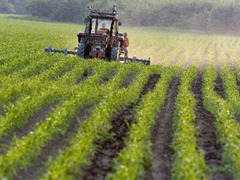
Def: The "gifts of nature" that are used to produced goods and services. They may include natural resources like air, soil, minerals, and water.
Chapter 2 Page 22
Labor
Def: The time and effort people devote to producing goods and services in exchange for wages. It can include both physical labor and mental activity.

Chapter 2 Page 20
Entrepreneurship
Def: The willingness to take the risks involved in starting a business.

Chapter 2 Page 25
Opportunity Cost
Def: The value of the next best alternative that is given up when making a choice. This is the measure of what you must give up to get what you most want.

Chapter 2 Page 24
Productivity
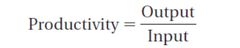
Def: A measure of the efficiency with which goods and services are produced. Productivity is often stated as the quantity produced per person per hour.
Chapter 2 Page 28
Production Possibilities Frontier (PPF) or PPC (Production Possibilities Curve)
Def: A simple model of an economy that shows all the combinations of two goods that can be produced with the resources and technology currently available.

Chapter 2 Page 29
Economic Efficiency
Def: The result of using resources in a way that produces the maximum amount of goods and services.

Chapter 2 Page 19
Shortage
Def: Lack of something that is desired, a condition that occurs when there is less of a good or service available than people want at a current price.

Chapter 2 Page 20
Inputs
Def: The scarce resources that go into the production process.

Chapter 2 Page 20
Outputs
Def: The goods and services produced using the factors of production.
Chapter 2 Page 20
Production Equation
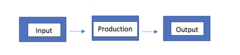
Def: Represents the process of combining resources (inputs) to produce goods and services (outputs).

Chapter 2 Page 21
Renewable Resources
Def: Natural resources, like forests, fresh water, and fish, that can be replaced as they are used.

Chapter 2 Page 21
Nonrenewable Resources
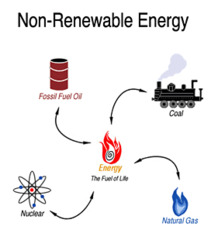
Def: A natural resource that cannot be replaced once it is used like oil and coal.
Chapter 2 Page 22
Human Capital
Def: The knowledge and skills people gain from education, on-the-job training, and other experiences.

Chapter 2 Page 22
Financial Capital
Def: Money used for investment or production.

Chapter 2 Page 24
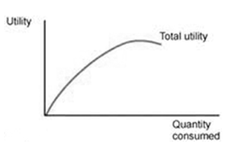
Total Utility
Def: The total amount of satisfaction or pleasure one gets from consuming a specific amount/number of a good or service.
Chapter 2 Page 26
Marginal Utility
Def: The extra satisfaction or pleasure achieved from an increase of one additional unit of a good or service.

Chapter 2 Page 27
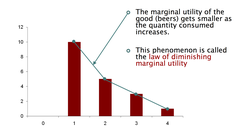
Law of Diminishing Marginal Utility
Def: The general observation that as the quantity of a good or service consumed increases, the benefits for the consumer of each additional unit decrease.
Chapter 2 Page 26
Negative Utility
Def: A lack of pleasure or satisfaction from consuming a product or service or taking an action; the opposite of utility.
