Blood Cell Morphology

0.0(0)
Studied by 5 people
call kaiCall Kai
Locked
learnLearn
examPractice Test
spaced repetitionSpaced Repetition
heart puzzleMatch
flashcardsFlashcards
GameKnowt Play
Card Sorting

1/17

encourage image

There's no tags or description

Looks like no tags are added yet.

Last updated 5:49 AM on 7/12/26
Name
Mastery
Learn
Test
Matching
Spaced
Call with Kai
Chat

No analytics yet

Send a link to your students to track their progress

18 Terms

1
New cards

Discocytes

RBCs with a round, biconcave shape that allows for flexibility and optimal gas exchange.
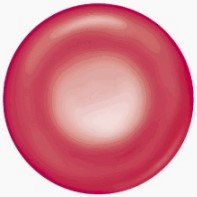
<p><span style="font-family: &quot;Times New Roman&quot;, serif">RBCs with a round, biconcave shape that allows for flexibility and optimal gas exchange.</span></p>
2
New cards

Acanthocytes

RBC with irregular, spiky projections; seen in liver disease, abetalipoproteinemia.
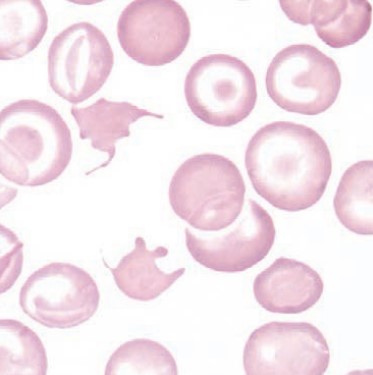
<p><span style="font-family: &quot;Times New Roman&quot;, serif">RBC with irregular, spiky projections; seen in liver disease, abetalipoproteinemia.</span></p>
3
New cards

Bite cells

RBCs with a "bite-like" removal of hemoglobin; formed when spleen removes Heinz bodies; associated with G6PD deficiency.
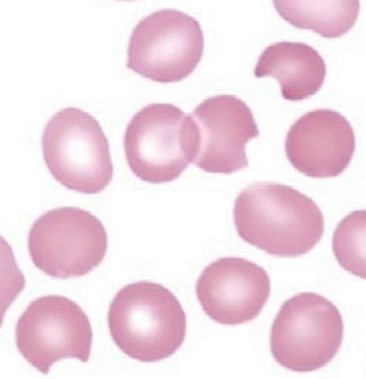
<p><span style="font-family: &quot;Times New Roman&quot;, serif">RBCs with a "bite-like" removal of hemoglobin; formed when spleen removes Heinz bodies; associated with G6PD deficiency.</span></p>
4
New cards

Blister cells

RBCs with a vacuole or blister-like appearance, often a precursor to bite cells. Seen in oxidant damage.
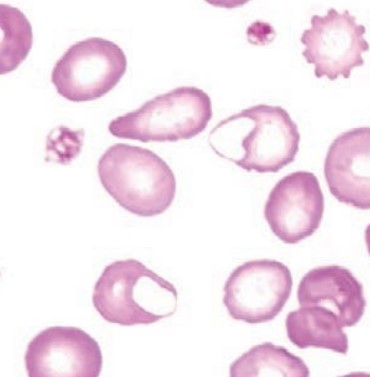
<p><span style="font-family: &quot;Times New Roman&quot;, serif">RBCs with a vacuole or blister-like appearance, often a precursor to bite cells. Seen in oxidant damage.</span></p>
5
New cards

Elliptocytes

Oval or elongated RBCs; seen in hereditary elliptocytosis and iron deficiency anemia.
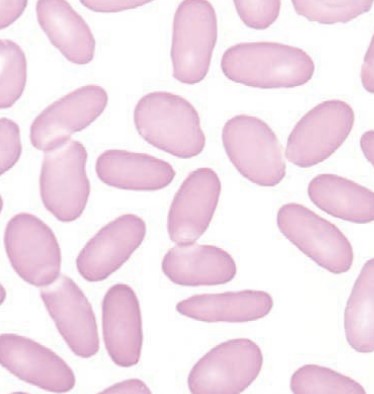
<p><span style="font-family: &quot;Times New Roman&quot;, serif">Oval or elongated RBCs; seen in hereditary elliptocytosis and iron deficiency anemia.</span></p>
6
New cards

Megalocytes

Large, oval-shaped RBCs; common in megaloblastic anemias (e.g., B12 or folate deficiency).
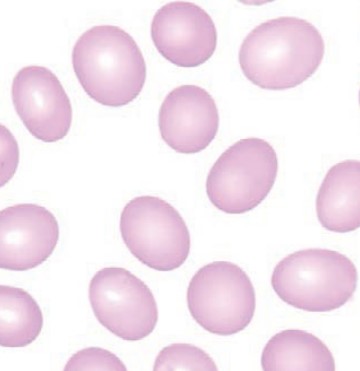
<p><span style="font-family: &quot;Times New Roman&quot;, serif">Large, oval-shaped RBCs; common in megaloblastic anemias (e.g., B12 or folate deficiency).</span></p>
7
New cards

Echinocytes (burr cells)

RBCs with short, evenly spaced projections; reversible and may be artifact, but also seen in uremia or pyruvate kinase deficiency.
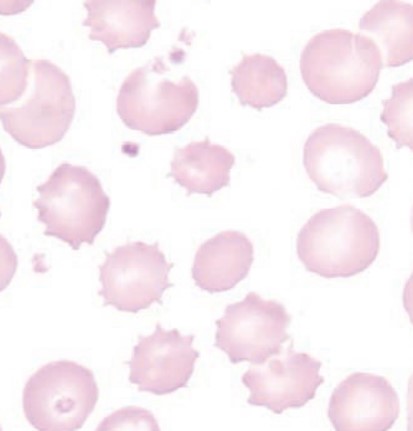
<p><span style="font-family: &quot;Times New Roman&quot;, serif">RBCs with short, evenly spaced projections; reversible and may be artifact, but also seen in uremia or pyruvate kinase deficiency.</span></p>
8
New cards

Schizocytes

Fragmented RBCs; typically from mechanical damage (e.g., DIC, TTP, HUS).
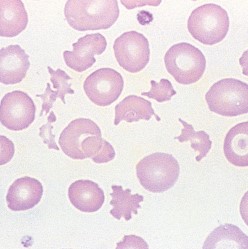
<p><span style="font-family: &quot;Times New Roman&quot;, serif">Fragmented RBCs; typically from mechanical damage (e.g., DIC, TTP, HUS).</span></p>
9
New cards

Drepanocytes

Crescent- or sickle-shaped RBCs due to polymerization of hemoglobin S; hallmark of sickle cell disease.
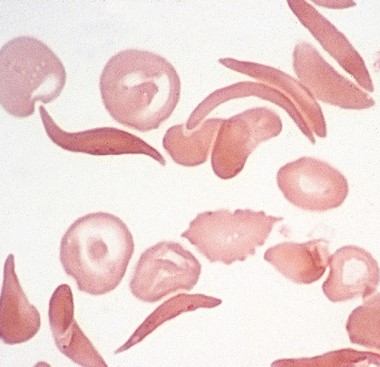
<p><span style="font-family: &quot;Times New Roman&quot;, serif">Crescent- or sickle-shaped RBCs due to polymerization of hemoglobin S; hallmark of sickle cell disease.</span></p>
10
New cards

Stomatocytes

RBCs with a mouth-like (slit-shaped) central pallor; associated with hereditary stomatocytosis or liver disease.
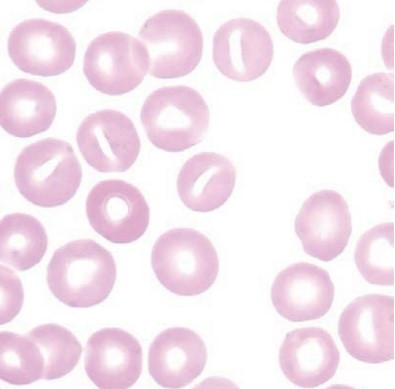
<p><span style="font-family: &quot;Times New Roman&quot;, serif">RBCs with a mouth-like (slit-shaped) central pallor; associated with hereditary stomatocytosis or liver disease.</span></p>
11
New cards

Spherocytes

Small, round RBCs lacking central pallor; seen in hereditary spherocytosis or autoimmune hemolytic anemia.
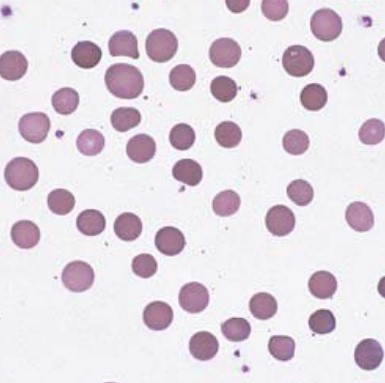
<p><span style="font-family: &quot;Times New Roman&quot;, serif">Small, round RBCs lacking central pallor; seen in hereditary spherocytosis or autoimmune hemolytic anemia.</span></p>
12
New cards

Dacryocytes

Tear-shaped RBCs; seen in myelofibrosis, thalassemia, or marrow infiltration.
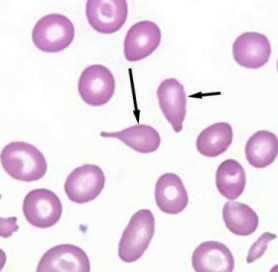
<p><span style="font-family: &quot;Times New Roman&quot;, serif">Tear-shaped RBCs; seen in myelofibrosis, thalassemia, or marrow infiltration.</span></p>
13
New cards

Codocytes

RBCs with a central bullseye appearance; seen in liver disease, thalassemia, and hemoglobinopathies.
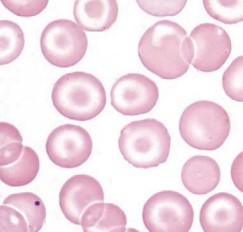
<p><span style="font-family: &quot;Times New Roman&quot;, serif">RBCs with a central bullseye appearance; seen in liver disease, thalassemia, and hemoglobinopathies.</span></p>
14
New cards

Neutrophils

Most abundant WBC. Segmented nucleus. First responders in bacterial infection; phagocytose pathogens.
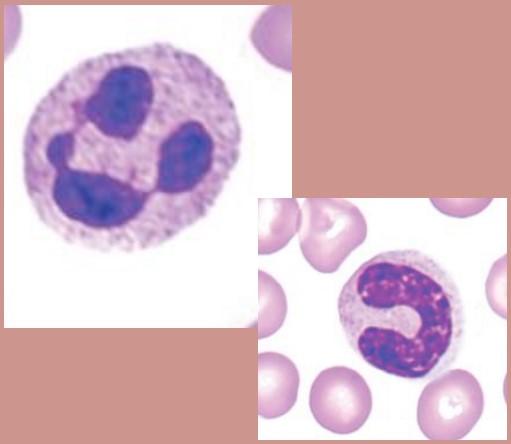
<p><span style="font-family: &quot;Times New Roman&quot;, serif">Most abundant WBC. Segmented nucleus. First responders in bacterial infection; phagocytose pathogens.</span></p>
15
New cards

Lymphocytes

Second most common WBC. Includes B and T cells; central to adaptive immunity (antibody production and cytotoxic response).
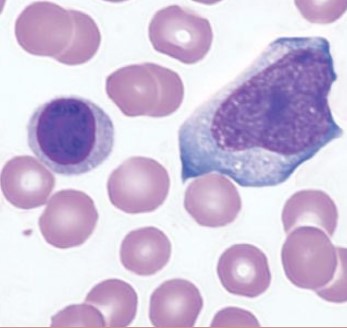
<p><span style="font-family: &quot;Times New Roman&quot;, serif">Second most common WBC. Includes B and T cells; central to adaptive immunity (antibody production and cytotoxic response).</span></p>
16
New cards

Monocytes

Largest WBC. Kidney-shaped nucleus; differentiate into macrophages in tissues and help in phagocytosis and antigen presentation.
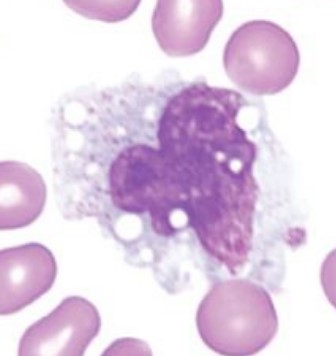
<p><span style="font-family: &quot;Times New Roman&quot;, serif">Largest WBC. Kidney-shaped nucleus; differentiate into macrophages in tissues and help in phagocytosis and antigen presentation.</span></p>
17
New cards

Eosinophils

Bilobed nucleus; involved in allergic reactions and parasitic infections. Contain granules with cytotoxic proteins.
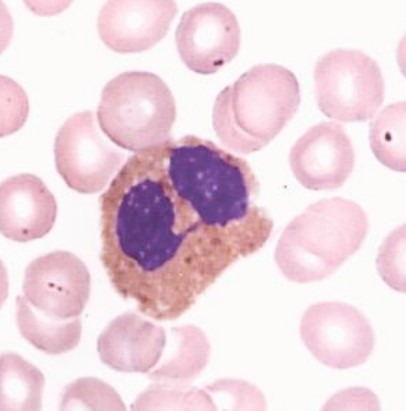
<p><span style="font-family: &quot;Times New Roman&quot;, serif">Bilobed nucleus; involved in allergic reactions and parasitic infections. Contain granules with cytotoxic proteins.</span></p>
18
New cards

Basophils

Least common WBC. Involved in allergic and inflammatory responses; release histamine and heparin.
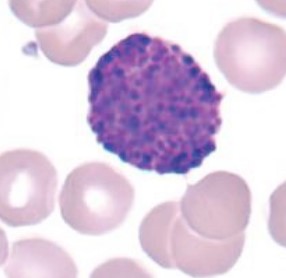
<p><span style="font-family: &quot;Times New Roman&quot;, serif">Least common WBC. Involved in allergic and inflammatory responses; release histamine and heparin.</span></p>



