Cardiology: Cardiac Rhythm Disturbances
 Call Kai
 Learn
Learn Practice Test
 Spaced Repetition
 Match
Match Flashcards
 Knowt Play
1/181

There's no tags or description
Looks like no tags are added yet.
Name | Mastery | Learn | Test | Matching | Spaced | Call with Kai | Chat |
|---|
No analytics yet
Send a link to your students to track their progress
182 Terms
First line to evaluate Rhythm
EKG
EP Study
- invasive catheter based test that maps the heart's electrical activity
- electrode catheters are advanced through a vein into the heart
- records electrical signals from inside the heart
EP Study: Evaluates (4)
- location and mechanism of an arrhythmia
- SA and AV node/conduction system
- presence of an accessory pathway
- ability to induce an arrhythmia under controlled conditions
EP Study ID (4)
- recurrent or unexplained SVT
- suspected AVNRT or AVRT/WPW
- selected wide complex tachycardias
- when catheter ablation is being considered
Catheter Ablation
- minimally invasive procedure used to eliminate abnormal electrical pathways or arrhythmia-producing tissue
- radiofrequency energy, cryotherapy, or other energy sources are used to ablate the target tissue
What should be done before a Catheter Ablation?
EP Study first to find the electrical problem
Catheter Ablation ID (6)
- AVNRT
- AVRT/WPW
- A. Flutter
- Focal atrial tachycardia
- A. Fib
- V. Tachycardia
Catheter Ablation: AVNRT where to ablate
Ablate the slow pathway
Catheter Ablation: AVRT/WPW where to ablate
Ablate the accessory pathway
Catheter Ablation: A. Flutter where to ablate
Ablate the reentry circuit
Catheter Ablation: Focal Atrial Tachycardia where to ablate
Ablate the ectopic focus
Catheter Ablation: A.Fib usually involve
Pulmonary vein isolation (PVI)
4 Mechanisms of Arrhythmias
1. Abnormal Automaticity
2. Abnormal Impulse Conduction
3. Reentry
4. Triggered Activity
Abnormal Automaticity (3)
- cardiac cells fire when they shouldn't
- creates an abnormal/ectopic pacemaker
- PACs, PVCs, focal atrial tachycardia
Abnormal Impulse Conduction (2)
- electrical impulse if delayed of blocked
- AV blocks, BBB
Reentry (2)
- electrical impulse travels in a continuous loop, repeatedly reactivating tissue
- AVNRT, AVRT/WPW, A. Flutter
Triggered Activity (3)
- extra impulse occurs after the normal action potential
- electrolyte abnormalities, medications, or prolonged QT
- torsades de pointes
Rhythm Interpretation 5 Steps
1. Rate
2. Rhythm
3. P waves
4. PR Interval
5. QRS
No clear P waves + irregularly irregular
A. Fib
Sawtooth Waves
A. Flutter
Regular narrow-complex tachycardia
SVT (AVNRT)
Wide-complex tachycardia
V-tach
Progressively longer PR w/ dropped QRS
Mobitz 1 Heart block
Fixed PR + sudden dropped QRS
Mobitz 2 Heart block
P waves and QRS march independently
Complete heart block (III)
Polymorphic VT + prolonged QT
Torsades
Sinus Dysrhythmias (4)
- Sinus tachycardia
- Sinus bradycardia
- Sinus arrhythmia
- Sick Sinus Syndrome (SSS)
Sinus Tachycardia EKG (4)
- rate > 100bpm
- regular rhythm
- normal sinus P wave before every QRS
- usually gradual onset
Sinus Tachycardia Causes (6)
- exercise, pain, anxiety
- dehydration, hemorrhage, anemia, hypoxia
- fever, infection
- HF, PE
- hyperthyroidism
- caffeine, meds
Sinus Tachycardia tx
Find and treat the underlying cause
Sinus Bradycardia EKG (4)
- rate
Sinus Bradycardia Causes (4)
- athletes, sleep, increased vagal tone
- medications
- sinus node dysfunction, ischemia
- hypothyroidism, hypothermia, OSA
Sinus Bradycardia tx asx
No treatment
Sinus Bradycardia tx sx
identify and correct reversible cause
Sinus Bradycardia compromise initial tx (4)
- assess airway and breathing: O2/ventilation prn
- cardiac monitoring and IV access
- obtain EKG
- Identify and tx reversible causes
Sinus Bradycardia Compromise tx
Atropine
Sinus Bradycardia Compromise if tx ineffective (3)
- Transcutaneous pacing (TCP)
and/or
- Dopamine infusion or epinephrine infusion
- expert consult and transvenous pacin
Atropine MOA
- blocks parasympathetic (vagal) effects on the heart
- increase SA node firing; improve AV nodal conduction
- increases HR
Atropine Dosing (3)
- 1mg IV bolus
- repeat every 3-5 min
- max total dose: 3mg
Atropine ADE (6)
- tachycardia
- palpitations
- dry mouth
- blurred vision
- urinary retention
- confusion (older adults)
When can Atropine be ineffective?
In significant infranodal conduction disease
Transcutaneous Pacing (TCP)
- temporary external cardiac pacing through defibrillator/pacing pads
- used as bridge until cause is corrected or more definitive pacing is available
- select pacer mode, start low (60-80) and gradually increase up
Transcutaneous Pacing (TCP) ID
When sx bradycardia persists despite atropine; persistent instability
Is Transcutaneous Pacing (TCP) painful?
It can be painful in a conscious patient
Sinus Arrhythmia EKG (4)
- normal sinus P wave before every QRS
- irregular rhythm associated with respiration
- HR increases with inspiration
- HR decreases with expiration
Sinus Arrhythmia causes (3)
- normal physiologic variation
- increased vagal tone
- mc in children and young healthy adults
Sinus Arrhythmia tx
None; reassurance
Sick Sinus Syndrome (sinus node dysfunction) EKG (4)
- sinus bradycardia
- sinus pauses/arrest
- tachy-brady syndrome
- chronotropic incompetence (inadequate HR increase with activity)

Sick Sinus Syndrome Causes (7)
- age related fibrosis of the sinus node (mc)
- ischemic heart disease
- infiltrative disease
- prior cardiac surgery
- medications that suppress sinus-node fx
- metabolic/endocrine abnormalities
- OSA
Sick Sinus Syndrome tx (2)
- identify and correct reversible causes
- if sx: permanent pacemaker
Sick Sinus Syndrome
What is
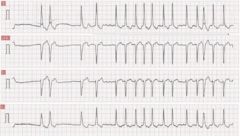
Sick Sinus Syndrome
What is
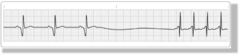
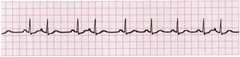
Premature Atrial Complexes (PAC) EKG (5)
- premature beat originating in the atria
- early P wave with a different morphology than the sinus P wave
- normal/narrow QRS
- followed by a brief, noncompensatory pause
- underlying rhythm may be regular
Premature Atrial Complexes (PAC) Causes (7)
- often occur in healthy adults
- increased sympathetic activity/stress
- caffeine, alcohol, tobacco, stimulants
- electrolyte abnormalities
- hypoxis
- hyperthyroidism
- structural heart dz/atrial enlargement
Premature Atrial Complexes (PAC) sx (2)
- often asymptomatic
- palpitations or sensation of a "skipped beat"
Premature Atrial Complexes (PAC) tx (4)
- usually no tx needed
- identify and correct triggers/causes
- frequent/sx: B-Blocker
- frequent may warrant evaluation for underlying heart dz or atrial arrhythmias
2 Types of Tachycardias
1. Narrow Complex
2. Wide Complex
Narrow Complex Tachycardias (5)
- sinus tachycardia
- Suptraventricular tachycardias (AVNRT/AVRT)
- A. Fib
- A. Flutter
- Multifocal Atrial Tachycardia
Wide Complex Tachycardias (4)
- SVT with aberrancy
- SVT with preexcitation (WPW)
- V. Tachycardia
- V. Fib
Supraventricular Tachycardia (SVT)
What is

Supraventricular Tachycardia (SVT)
- rapid rhythm originating above the ventricles
- regular, narrow complex
- AVNRT (mc) or AVRY
- suddent onset and termination
Regular + Narrow + Fast: What should you think
Supraventricular Tachycardia (SVT)
Supraventricular Tachycardia (SVT) sx (5)
- palpitations
- dyspnea
- chest discomfort
- lightheadedness/dizziness
- syncope (severe)
Supraventricular Tachycardia (SVT) EKG (5)
- regular rhythm
- narrow QURS (
Supraventricular Tachycardia (SVT) Stable tx (2)
- vagal maneuvers
- adenosine 6mg rapid IV push + NS flush
Supraventricular Tachycardia (SVT) if tx unsuccessul
Adenosine 12mg rapid IV push + flush
Supraventricular Tachycardia (SVT) is persistent tx
B-Blocker or diltiazem/verapamil
Supraventricular Tachycardia (SVT): recurrent sx SVT tx
Catheter ablation
Supraventricular Tachycardia (SVT) Unstable tx
Synchronized cardioversion (50-100 J) (electrocute them)
Atrial Fibrillation EKG (5)
- irregularly irregular rhythm
- no distinct P waves
- variable R-R intervals
- QRS usually narrow
- V rate is variable; > 100bpm
Atrial Fibrillation Causes (8)
- increasing age
- HTN/DM
- CAD/HF
- Valvular heart disease; mitral dz
- Obesity/OSA
- hyperthyroidism
- alcohol use
- pulmonary dz
Atrial Fibrillation sx (6)
- may be asymptomatic
- palpitations
- fatigue/exercise intolerance
- dyspnea
- lightheadedness
- chest discomfort
Atrial Fibrillation Complications (3)
- thromboembolism/stroke
- HF
- tachycardia mediated cardiomyopathy
Atrial Fibrillation tx (4)
- assess hemodynamic stability first
- rate or rhythm control
- assess need for anticoagulation based on stroke risk
- tx contributing conditions/risks
Paroxysmal Atrial Fibrillation
- terminates spontaneously or with intervention within ≤ 7 dyas
- episodes may recur
Persistent Atrial Fibrillation
- continuous for > 7 days
- often requires rhythm control
Longstanding persistent Atrial Fibrillation
- continuous for >12mo
- rhythm-control strategy
Permanent Atrial Fibrillation
- joint decision to stop attempts to restore/maintain sinus rhythm
- AF accepted
- rate control and stroke prevention
- not defined by a specific duration
Atrial Fibrillation Evaluation
- EKG (initial)
- Labs
- Imaging
- TEE
Atrial Fibrillation Labs (5)
- CBC
- BMP/CMP
- Mg
- TSH
- Troponin is ischemia/ACS suspected
Atrial Fibrillation Imaging (2)
- CXR
- Echo (TTE)
Atrial Fibrillation Unstable tx
Synchronized cardioversion
Atrial Fibrillation Stable Management
- identify and treat contributing causes
- control sx (rate or rhythm)
- assess stroke risk
- admit or outpatient management
If long term anticoagulation is contraindicated, what should you consider?
Left Atrial Appendage Occlusion (LAAO)
Atrial Fibrillation: Rhythm Control ID (4)
- sx AF despite adequate rate
- recently dx AF
- tachycardia-mediated cardiomyopathy
- HF when AF is contributing to sx/LV dysfunction
Atrial Fibrillation: Rhythm Control options (3)
- electrical cardioversion
- antiarrhythmic medications
- catheter ablation/pulmonary vein isolation
Atrial Fibrillation: Rhythm Control Medications (7)
- amiodarone
- flecainide
- propafenone
- sotalol
- dofetilide
- dronedarone
Atrial Fibrillation: Rate Control tx (3)
- Beta Blocker (metoprolol tartrate)
- Diltiazem or Verapamil
- Digoxin
What patient population is rate control preferred in?
Older patients ≥75-80yo
How to assess stroke risk
CHA2DS2-VASc
CHA2DS2-VASc
C-Chronic Heart Failure (1)
H-HTN (1)
A - Age > 75 years (2)
D-Diabetes Mellitus (1)
S-Stroke/TIA (2)
V-Vascular disease (1)
A - Age 65- 74 years (1)
Sc-Gender: Female (1)
CHA2DS2-VASc Low risk
- 0 to 1
- no anticoagulation
CHA2DS2-VASc Intermediate risk
- 1 to 2
- reasonable to anticoagulated/consider
CHA2DS2-VASc High risk
- men: ≥2
- women: ≥3
- anticoagulation recommended
Atrial Fibrillation: Stroke Medications (2)
- DOACs
- Warfarin
What stroke medication is preferred for most patients with A. Fib?
DOACs
DOACs (3)
- Apixaban
- Rivaroxaban
- Dabigatran
Warfarin ID (2)
- mechanical heart valve
- moderate-severe rheumatic mitral stenosis
Oral Anticoagulation major AE
Bleeding
AF + PCI tx (5)
- anticoagulation for AF and antiplatelet therapy for stent
- DOAC + ASA + clopidogrel (1-4wks)
- then DOAC + clopidogrel for up to 12mo
- after 12mo: DOAC alone
- DOAC and clopidogrel preferred