Week 5
 Call Kai
 Learn
Learn Practice Test
 Spaced Repetition
 Match
Match Flashcards
 Knowt Play
1/31

Earn XP
Name | Mastery | Learn | Test | Matching | Spaced | Call with Kai | Chat |
|---|
No analytics yet
Send a link to your students to track their progress
32 Terms
Workplace Diversity
ways in which people in an organization are similar/different to one another
Surface-level Diversity
easily perceived differences that may trigger stereotypes but don’t reflect how people think
Deep-level Diversity
differences in values, personality, & work preferences
Challenges to Diversity
Bias → Prejudice → Discrimination
Bias
a tendency or preference toward a particular perspective or ideology
Prejudice
preconceived notions towards a person/group of people
Stereotyping
judging a person based on perception of a group they belong to
Employee Resource Group (ERGs)
voluntary employee-led subgroup within an organization that shares distinctive quality/value
What is an example of an ERG?
Black ERG at AT&T
Classical View
view that management’s only social responsibility is to MAXIMIZE profits
Socioeconomic View
view that social responsibility goes further than profits to include promoting/improving society’s welfare
Social Responsibility
a firm’s obligation, BEYOND WHAT IS REQUIRED BY LAW & ECONOMICS, to pursue long-term goals that benefit society
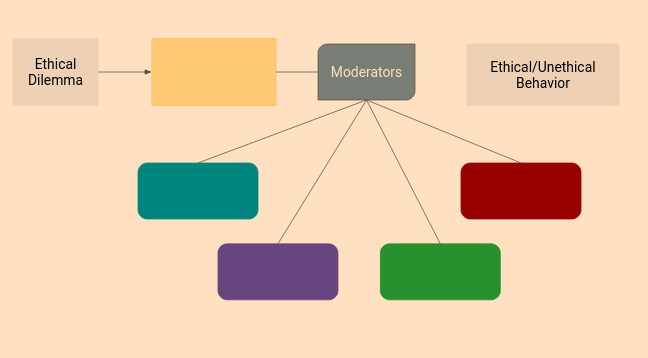
What is in the yellow box?
Stage of Moral Development
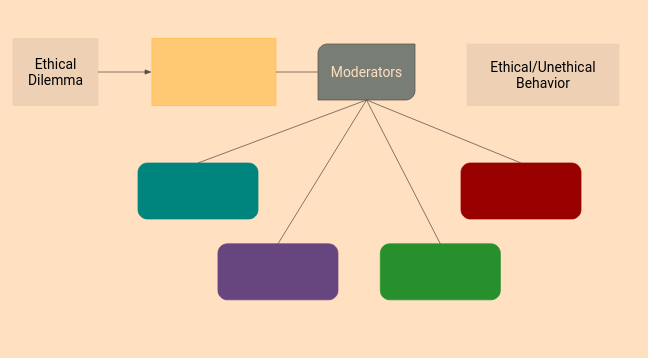
What are factors that could determine ethical/unethical behavior? (Blue, Purple, Green, Red)
Individual characteristics, Issue Intensity
What are the different techniques that can be used to manage change?
Education & communication, Participation, Negotiation, Manipulation & Co-optation, Facilitation & Support, Coercion
What is an example of EDUCATION & COMMUNICATION?
staff unhappy w/ deduction and didn’t know it goes to their pension
When can EDUCATION & COMMUNICATION be used?
when resistance is due to misunderstanding
What is an example of PARTICIPATION?
deploying new revenue tracking software w/ help of IT
When can PARTICIPATION be used?
resisters have expertise for contribution
What is an example of NEGOTIATION?
working w/ the union to ensure acceptance of deal
When can NEGOTIATION be used?
resistance comes from powerful group
What is an example of FACILITATION & SUPPORT?
hiring counselling support during/after layoffs to ensure retention
When can FACILITATION & SUPPORT be used?
resisters are fearful and anxiety ridden
What is an example of MANIPULATION & CO-OPTATION?
“communicating” with non-union workers and sharing “facts” to win sympathy
When can MANIPULATION & CO-OPTATION be used?
powerful group’s endorsement is needed
What is an example of COERCION?
threatening closure of business
When can COERCION be used?
powerful group’s endorsement is needed
Disruptive Innovation
radically change industry
Sustaining Innovation
small, incremental changes in established products rather than dramatic breakthrouughs
what is an example of disruptive innovation?
self checkout
what is an example of sustaining innovation ?
fingerprint technology for phones
Skunk Works
innovative undertaking involving small group that is outside of normal R&D within an organization