SB5
 Call Kai
 Learn
Learn Practice Test
 Spaced Repetition
 Match
Match Flashcards
 Knowt Play
1/112

Earn XP
Description and Tags
health + medicine
Name | Mastery | Learn | Test | Matching | Spaced | Call with Kai | Chat |
|---|
No analytics yet
Send a link to your students to track their progress
113 Terms
What is good health?
Good health is a state of complete physical, social and mental well-being.
What is physical well-being?
Physical well-being includes:
how free you are from disease
how well you sleep/eat
how much activity/exercise you get
how many harmful substances (alcohol/drugs) you take
What is social well-being?
Social well-being includes:
how well you get on with other people
how your surroundings affect you
What is mental well-being?
Mental well-being refers to how you feel about yourself.
What is a correlation?
A correlation is when 2 or more factors change in a similar pattern.
What is a cause?
A cause is a factor that makes another factor change as it changes.
What is a disease?
A disease is a problem with either a structure or process in the body that is not the result of injury.
What is a pathogen?
A pathogen is a microorganism that causes disease.
What is a communicable disease?
A communicable disease refers to a disease caused by pathogens which can be passed from person to person.
What is a non-communicable disease?
A non-communicable disease refers to a disease caused by a problem in the body or our lifestyle which cannot be transferred from one person to another.
Why may diseases be correlated?
Diseases may be correlated because:
one disease may damage the immune system, making it easier for other pathogens to cause disease
a disease can damage the body’s natural barriers + defences, making it easier for pathogens to enter the body
a disease could stop an organ system from working effectively, making other diseases more likely to occur.
What is a genetic disorder?
A genetic disorder is a non-communicable disease cause by faulty alleles of genes and can only be passed to offspring.
What is a deficiency disease?
A deficiency disease is a non-communicable disease caused by a lack of a certain nutrients (malnutrition).
What are examples of deficiency diseases?
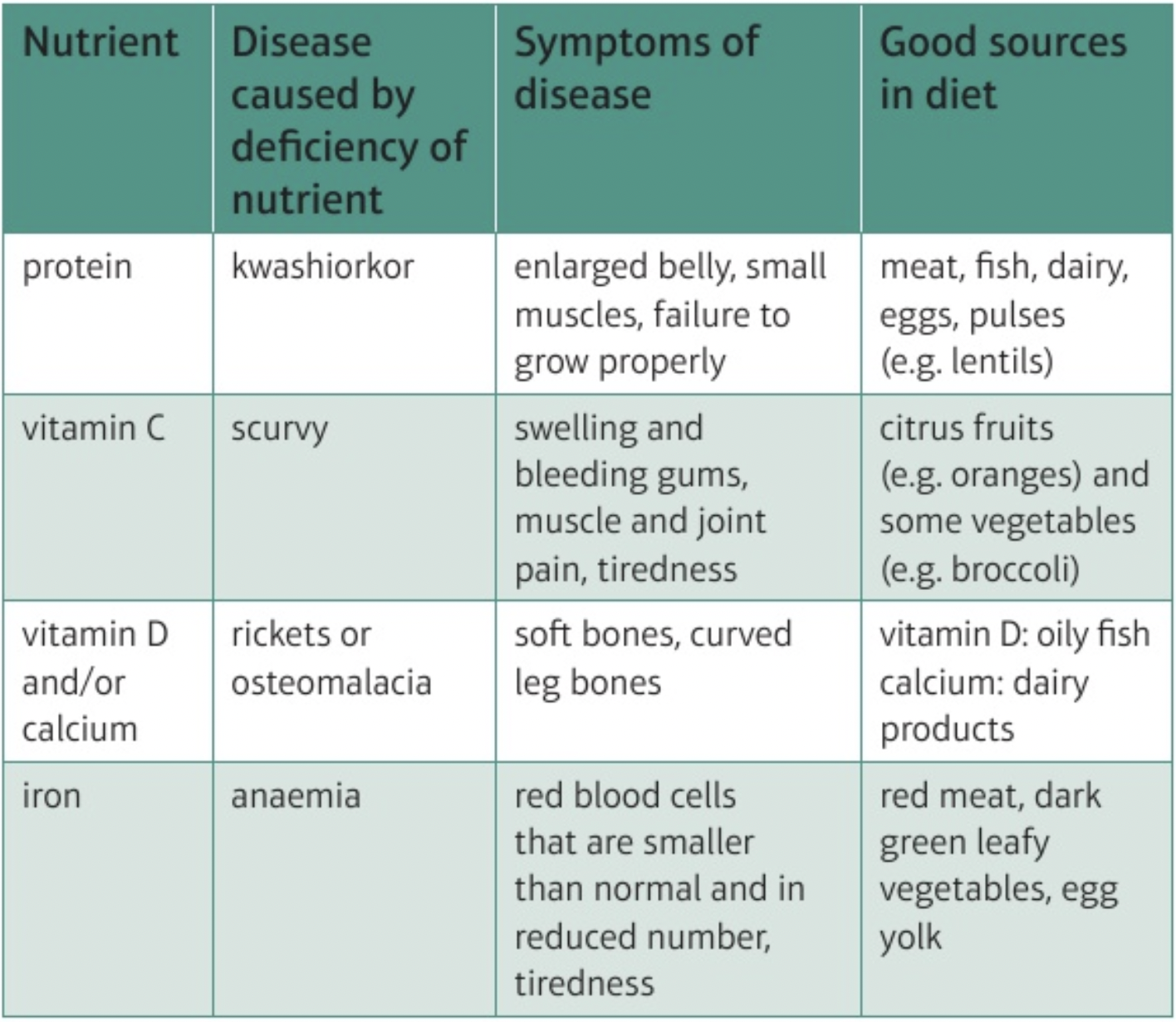
How can alcohol cause disease?
Alcohol contains ethanol which is broken down by the liver. A large amount of ethanol over a short period of time can lead to liver disease, including cirrhosis - a cirrhotic liver doesn’t function well and can cause death.
What is cardiovascular disease?
Cardiovascular disease is a non-communicable disease caused by the poor functioning of the circulatory system.
What are symptoms of cardiovascular disease?
Some symptoms of cardiovascular disease are:
high blood pressure
heart pain
heart attacks
narrow + blocked blood vessels
What factors increase the risk of cardiovascular disease?
Factors that increase the risk of cardiovascular disease are:
obesity (caused by malnutrition due to a diet high in sugars + fats and little exercise)
smoking
What is BMI (Body Mass Index)?
BMI is a measure which estimates the amount of fat on the body.
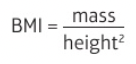
At what BMI is an adult considered obese?
30 and above
At what BMI is an adult considered underweight?
19 and below
What is the limitation of using BMI to measure body fat?
The limitation of using BMI to measure body fat is that it doesn’t consider muscle mass.
What is a better method at measuring abdominal fat than BMI?
A better method at measuring abdominal fat than BMI is waist:hip ratio.
How does smoking increase the risk of cardiovascular disease?
Substances in tobacco smoke damage the artery lining, causing fat to build up in the artery wall at the site of the damage. This makes the artery narrower and thus increases the risk of a blood clot occurring - leading to a heart attack/stroke.
How can cardiovascular disease be treated?
Cardiovascular disease can be treated by:
giving up smoking
exercising more
taking medication to decrease blood pressure
inserting a stent into narrowed blood vessels to widen them
inserting other blood vessels in the heart to bypass blocked arteries
What types of microorganism can cause disease?
Bacteria
Fungus
Protist
Virus
What are the characteristics of pathogenic bacteria?
They are prokaryotic, reproduce very quickly and produce toxins which damage cells.
What are some examples of pathogenic bacteria?
Mycobacterium Tuberculosis
Vibrio Cholerae
Helicobacter Pylori
What disease does Mycobacterium Tuberculosis cause and what are the symptoms?
It causes tuberculosis by infecting and damaging the lungs. The symptoms include: bloody lung mucus, fever + weight loss.
What disease does Vibrio Cholerae cause and what are the symptoms?
It causes cholera, whose main symptom is diarrhoea.
What disease does Helicobacter Pylori cause?
It causes stomach ulcers.
What are the characteristics of pathogenic fungi?
They often infect plants, can be unicellular or multicellular and spread by producing spores.
What is an example of disease cause by pathogenic fungi?
Chalara Dieback.
What is the host organism of chalara dieback?
Ash trees.
What are the symptoms of chalara dieback?
Leaf loss
Lesions on branches
Death
What are the characteristics of pathogenic protists?
They are eukaryotic, not very common and need a host to survive - they are parasites.
What is an example of a pathogenic protist and what disease does it cause?
Plasmodium causes Malaria in humans.
What are the symptoms of Malaria?
Damage to red blood (causes fatigue) + liver cells
Fever
What are the characteristics of viruses?
(always) pathogenic + parasitic
smaller than bacteria
not true organisms because they do not have a cellular structure
contain DNA in a protein coat or capsid
can only reproduce in a host cell by taking over its processes for making genetic material + proteins
What are some examples of viruses?
Ebola virus
Human Immunodeficiency virus (HIV)
What disease does Ebola virus cause and what are the symptoms?
It causes Haemorrhagic fever by breaking down blood vessels, liver and kidney cells. The main symptoms include internal bleeding and fever.
What disease does HIV cause and what are the symptoms?
It causes AIDs by destroying white blood cells, making the person more susceptible to other infections by weakening their immune system.
How can pathogens be spread?
Water
Air
Vectors
Food
How is cholera spread?
Through water in areas of poor hygiene, i.e. developing countries, refugee camps.
How can the spread of cholera be prevented/reduced?
By having good hygiene, i.e. treating water for pathogens.
How is tuberculosis spread?
Through the air after an infected person sneezes/coughs.
How can the spread of tuberculosis be prevented/reduced?
By covering your mouth when sneezing/coughing and washing your hands afterwards.
By isolating the infected.
How is chalara dieback spread?
Through the air via the production of spores.
How can the spread of chalara dieback be prevented/reduced?
By cutting down + burning infected trees.
By checking all ash tree seedlings before they are moved to other places.
How is malaria spread?
Through mosquitoes as vectors - they carry the protist in their blood after sucking it from an infected person and inject it into the next person they feed on.
How can the spread of malaria be reduced?
By using mosquito nets + repellents
By spraying standing water with insecticide to kill young mosquitoes.
How can helicobacter bacteria be spread?
Through food that has been touched by someone (or a fly) who has previously touched their mouth/ faeces or through infected water. It is transmitted via the oral route.
How can the spread of helicobacter bacteria be prevented/reduced?
By having good hygiene, i.e. washing your hands after the toilet.
How is ebola virus spread?
Through contact with infected bodily fluids.
How can the spread of ebola virus be prevented/reduced?
By isolating infected individuals
By sterilising contaminated areas
What is the lytic pathway in a virus’ life cycle?
The reproductive pathway of a virus that causes the lysis of its host cell. In the lytic pathway, the virus enters the cell and causes it to produce many new viruses.
What is the lysogenic pathway in a virus’ life cycle?
The reproductive pathway of a virus in which the viral genetic material is inserted into its host cell’s genetic material. This causes it to replicate each time the cell divides meaning each new cell contains the viral genetic material.
What happens during the lytic cycle?
A virus attaches to a cell and inserts its genetic material into it.
The virus takes over the cell’s processes.
New viral proteins are produced from the viral genetic material.
These proteins are assembled in the cell to form new viruses.
The cell lyses, releasing the viruses.
What happens during the lysogenic cycle?
A virus attaches to a cell and inserts its genetic material.
The virus’s DNA inserts itself into the bacterial chromosome.
The bacterium divides, replicating the viral genetic material each division.
The cell may reproduce many times, or, occasionally, the viral genetic material may separate from the bacterial chromosome.
This causes a lytic cycle.
How can the effect of viruses on bacteria be studied?
Using bacterial lawn plates which are made of nutrient agar on top of which the bacteria grows. A solution containing viruses is added, causing clear circles to be seen where the virus has killed some of the bacteria.
How is the cross-sectional area of the clear circles calculated?
Using the equation: πr2 (area of a circle)
What does the size of the cross-sectional area show in relation to the virus?
The larger the cross-sectional area, the more bacteria the viruses have killed.
How do plants protect themselves from pathogens + pests?
Using physical and chemical barriers.
What is an example of a physical barrier used by plants to protect themselves from pathogens?
The cuticle is a waxy layer that covers the outsides of leaves and stems which acts as a physical barrier by making it difficult for pathogens to get into the cells beneath.
What is a cuticle?
An outer covering not made of cells.
How do fungal pathogens get past the cuticle?
By entering through the stomata in the leaf’s surface.
What is a chemical defence?
The use of chemical compounds to defend against attacks from pathogens/pests, i.e. poisons + insecticides.
What is an example of a chemical barrier used by plants to protect themselves from pathogens?
The wild potato releases a substance when attacked by aphids that causes them to fly away.
What is the main issue for plants when producing chemical defences?
They need a lot of energy to be made.
What are two ways in which substances from plants are used medically?
Aspirin is used to control symptoms of pain + fever.
Artemisinin is used to kill plasmodium protists which cause malaria.
What are aseptic techniques?
Techniques used to keep out unwanted microorganisms.
What are some examples of aseptic techniques?
Using an autoclave to sterilise equipment and growth medium.
Flaming certain equipment to kill microorganisms.
Working near a Bunsen flame
Why are aseptic techniques used?
To avoid contamination which may lead to inaccurate results.
When do plants show signs of stress?
little or too much water
soil lacks nutrients
attacked by pests/disease
Why is it important to identify the cause of stress?
To prevent the loss of yield by treating the plant correctly.
How are plant diseases identified?
Observing visible symptoms
Using distribution analysis
Using diagnostic testing
What are visible symptoms of stress in plants?
changes in growth/colour
blotching of leaves
lesions on stems + leaves
How can observing symptoms of stress be used to identify plant disease?
By comparing them to photos or other information to suggest a cause.
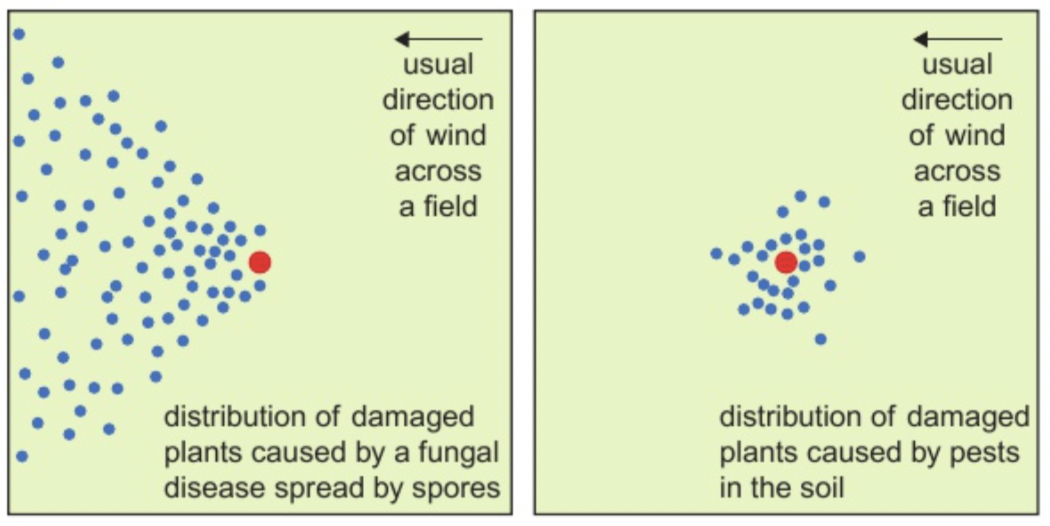
How is distribution analysis used to identify plant disease?
It uses the location + distribution of plant stress as a way to identify its cause, i.e. disease.
What are examples of how distribution analysis is used to identify the cause of stress?
Plants affected by flooding, drought or soil lacking of nutrients will show stress in majority of an area.
Plants affected by a disease spread through the air will show stress in a wide area, in the direction of the wind.
Plants affected by a soil pathogen will show stress in a small area.
How is diagnostic testing used to identify plant disease?
Samples of the crop and soil sent to a lab for testing to identify crop disease, or in the case of soil, to test for toxins or nutrients
What are the physical barriers that protect the human body from infection?
The skin
Mucus
Ciliated cells
How does the skin protect the body from infection?
It covers most of the body which makes it difficult for pathogens to get past it - they can only get through via wounds or animal vectors that pierce the skin.
How does mucus protect the body from infection?
It is a sticky secretion produced by cells lining the mouth and nose, that traps pathogens entering these openings.
How do ciliated cells protect the body from infection?
They are cells that are specialised to move substances across surfaces and thus carry pathogens out of the body or into the throat. They line the inside of the nose + trachea.
What are the chemical barriers that protect the human body from infection?
Lysozyme
Hydrochloric acid
How does lysozyme protect the human body from infection?
It breaks down the cell wall of some bacteria, killing them.
How does hydrochloric acid protect the human body from infection?
It is acidic meaning it destroys many pathogens that enter the stomach.
What are sexually transmitted infections (STIs)?
Pathogens that are transmitted through sexual activity and spread through contact with sexual fluids.
What are two common examples of STIs?
Chlamydia (bacterium)
HIV (virus)
How else can chlamydia and HIV be spread?
Both can be passed from a pregnant mother to her unborn baby. HIV can also be spread through blood from an infected person to another, such as when sharing needles.
How can the spread of STIs be reduced or prevented?
By wearing condoms to avoid direct contact with sexual fluids.
By using screening to identify the infection.
By using separate needles for different individuals (HIV)
What are antigens?
Molecule on the outer surface of cells + pathogens.
What is a lymphocyte?
A type of white blood cell whose function is to make antibodies - different lymphocytes make different antibodies.
What are antibodies?
Proteins produced on the surface of lymphocytes that are complimentary to a specific antigen.
What happens during immunisation?
Pathogens have antigens unique to them.
A lymphocyte with a complimentary antibody will bind to the antigen, activating it.
This causes the lymphocyte to divide many times.
Some of these lymphocytes secrete a large number of antibodies which bind to the antigens and destroy the pathogen.
Others remain in the blood as memory lymphocytes which respond immediately if the same kind of pathogen appears, causing a much faster secondary response.
This makes the body immune to that pathogen.
How do vaccine immunise people from certain pathogens?
They contain the weakened/inactive versions of that pathogen which are injected into the body, triggering an immune response that produces memory lymphocytes. They remain in the blood until the body is infected with the same pathogen which triggers a much faster secondary response.
What is herd immunity?
When the majority of a population are vaccinated, protecting vulnerable, unvaccinated people.
What is an antibiotic?
Substances that either kill bacteria or inhibit their cell processes, which stops them growing/reproducing.
Why have many different types of antibiotic been developed?
Different types of bacteria have different structures so do not all respond in the same way to a particular antibiotic