hollistic 2 pre midterm 1
 Call Kai
 Learn
Learn Practice Test
 Spaced Repetition
 Match
Match Flashcards
 Knowt Play
1/93

There's no tags or description
Looks like no tags are added yet.
Name | Mastery | Learn | Test | Matching | Spaced | Call with Kai | Chat |
|---|
No analytics yet
Send a link to your students to track their progress
94 Terms
impacts on nutritional status
genetic predisposition
determinants of health (esp income and socioeconomic status)
nutritional status
balance btwn intake and requirements
optimal nutritional status
nutrients consumed that support daily requirements- persons with optimal nutritional status are generally more active, healthier and live longer
undernutrition
reserves are depleted or inadequate intake
overnutrition
consuming excess nutrients (calories, sodium, fat) above requirements
bmi is used
BMI
BMI = kg/m²
used to determine health risks associated with under and over weight
BMI not used for muscle builders, long distance athletes, pregnant women, young children, or elderly
bc bmi doesn’t consider if weight is fat or muscle
can be used with waist circumfrence for a better look on health of the person
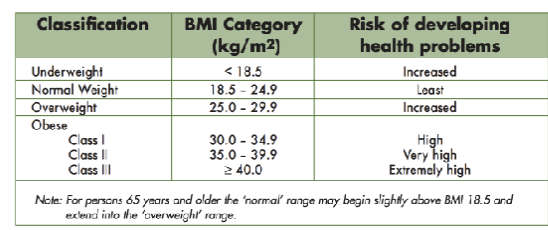
health risks with body weight

waist circumfrence
indicator of health risks associated with excess abdominal fat
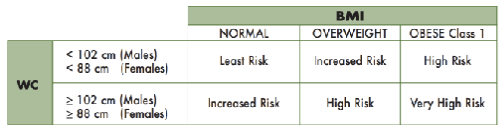
development consideration for nutrition: adolescents
rapid physical growth- increased protein and energy
bone, muscle growth (menarche in females)- calcium and iron
boys- grow taller and body fat replaced with muscle
girls- increase in fat (25%)
societal importance on physical appearance can lead to pressure to diet
eating disorders
development consideration for nutrition: adults
growth stabilises
lifestyle and diet contribute to illness
nutrition counselling is important in overweight and obesity
development consideration for nutrition: pregnancy and lactation
requires sufficient calories, protein, vitamins and minerals to support the synthesis of maternal and fetal tissues
recommended weight gain is 11.5-16kg
nutritional risks
adolescents: anemia, hypertension, pre eclampsia, renal, depressive, higher infant mortality, preterm, lower birth weight
pregnancy close together (<18 months)
use of tobacco, alcohol, drugs
multiple births (twins or triplets)
restrictive diets cause inadequate weight gain
manage weight by eating regular meals and snacks
folic acid supplements taken to prevent neural tube defects
development consideration for nutrition: older adults
prone to undernutrition or overnutrition (poor physical and mental health, poverty, polypharmacy)
after age 50 energy requirements decrease by 5% per decade
decreased metabolic rate and inactivity overnutrition
lowest mortality risk for those older than 70 yrs with BMI 25-32
risk factors- affect nutritional status
poor dentition, decreased visual acuity, decreased saliva production, slowed gi mobility, decreased gi absorption, polypharmacy challenges, diminished olfactory and taste sensitivity
access- meal prep, access to grocery store, limited income, social isolation
over 50 requires daily vit d supplement (400 IU) bc of decreased vit d synthesis
cultural diversity in dietary practices
suggest traditional and store bought foods that fit within pt’s cultural practices
new immigrants may have challenges to new or unfamiliar foods (storage, preparation, access to familiar foods)
cultural factors
definition of food, frequency/# of meals, eating away from home, ceremonial meals, food prep methods, amt and types of food
ask the pt and avoid cultural stereotyping
risk for malnutrition
screening: identify individuals at risk- unintentional weight loss, inadequate food intake or recent illness

ways to assess nutritional intake
24 hr recall (better for diff populations)
food frequency (times eaten certain foods per day, week or month)
food diaries (record everything eaten during time periods, to identify patterns and such (ex- working vs non working))
direct observations (detection of problems not identified, watch feeding technique and interaction with care giver, most accurate assessment)
subjective data or nutrition
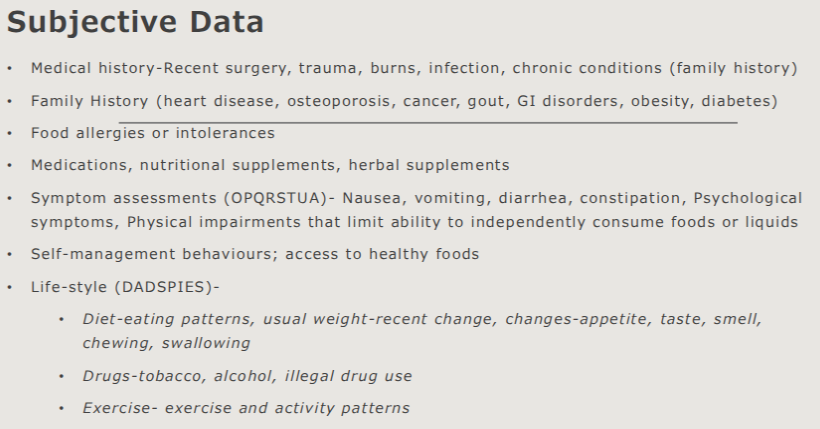
objective data on nutrition

lab values and nutritional status
do not need to memorise

keys to healthy diet
variety of foods
recomended amts
limit intake of saturated fats, trans fats, added sugars, starch, cholesterol, salt and alcohol
match energy intake with energy expended
engage in moderate physical activity
follow food safety guidelines for handling preparing and storing foods
For questions consult with registered dietitian
nasal and oral tubes

endotracheal tube
short term <14 days
can suction bc pt can’t cough
ensure balloon is filled so air doesn’t leave the mouth
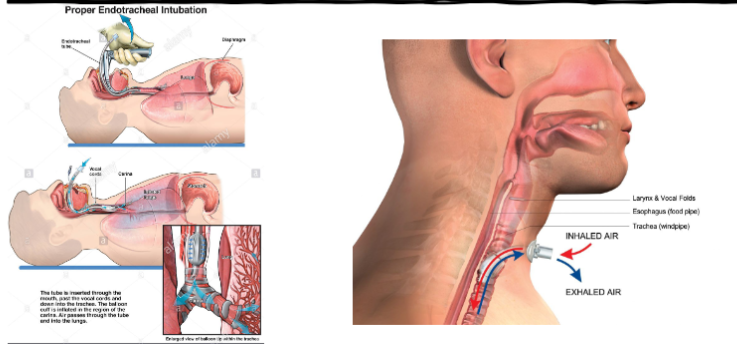
tracheostomy needed for:
prolonged mechanical ventilation
upper airway obstruction (tumours, difficulty with airway clearance after spinal cord injuries or neuromuscular disease)
tracheostomy
hole cut into trachea to bypass upper airway
can be surgically closed if not needed anymore

pros of tracheostomy compared to ET tube
decreased risk of tissue injury
access for oral hygiene
can be long term or permanent
easily replaced if damaged or dislodged
family/pt can care for tracheostomy tube
may be able to cough secretions out of trach tube
parts of tracheostomy tube
some have cuff and some don’t, uncuffed trach patients will be able to speak and cough on their own

tracheostomy assessment
soiled or loose ties or dressing
non stable tube
excessive secretions, skin assessment
assess for signs and symptoms assciated with hypoxia and hypercapnia
objective: vital signs- o2 sats, resp rate and effort, lung sounds and pt ability to cough
tracheostomy safety
at bedside
suction
tracheostomy obturator (for when trach has been pulled out)
tracheostomy tube or inner cannula (usually just inner cannula)
*in emergency nurse can reestablish airway, put obturator inside spare trach to put spare trach in and then take obturator out, and call for help and pt will probably go to operating room

tracheostomy suctioning
follow facility policy (check if clean or sterile)
donne PPE as needed
connect catheter to suction per policy (less than 150mmhg in adults)
lubricate catheter by suctioning small amt of normal saline or water
provide supplemental oxygen before and after each suctioning
without applying suction, gently insert catheter using dominant thumb and forefinger into artificial airway, go until resistance is met or patient coughs, then pull back 1cm
intermittent suction for less than 10 seconds, place and release non dominant thumb over vent
slowly withdraw catheter while rotating it back and forth btwn dominant thumb and forefinger
encourage pt to cough, watch pt for respiratory distress
wait 1 full minute btwn attempts, do 3 attempts, make sure to oxygenate patient, if more than 3 attempts are needed, call RT (respiratory therapist)
assess pt’s resp status before, during and after care (measure o2 sats always)


respiratory-inhalation device

aerosol inhalers- metered dose inhalers (MDI) and soft mist inhalers (SMI)
MDI asthma medication suspended in a propellant
measured dose of med is released when pressed
spacer increases amt of med goes into airway rather than mouth and throat
med relaxes constricted muscles within minutes
SMI provide a measured dose suspended in water based mist
dry powder inhalers DPI
dry powder med given directly into lungs as they breath
contain albuterol which bind to beta-adrenergic receptors on smooth muscle cell surface lining airways and muscles relax causing airways become less constricted
2 types
turbuhalers: turn the dial on bottom on the unit until it clicks, user presses button to release then inhales
diskus inhalers: disc shaped inhalers contain powdered med, doses taken by opening device, sliding the loading lever and inhaling dose through mouthpiece
easier to breath in medication
spacers cant be used for dry powder
how do inhalers work
non invasive
absence of first pass med effect
pulmonary route delivers high concentration of med

when to use which inhaler

using MDI with spacer
spacer requires a more low inspiratory effort and doesn’t need to be synced to breathing, better for children and older adults

using a MDI no spacer

dry powder inhaler

subjective female health exam
past medical: prev issues, surgeries (breast or pelvic), pelvic pain, cancer
family history: breast and ovarian cancer
meds: oral contraceptives (gives higher risk of blood clots, higher risk of breast cancer), hormone replacement therapy (risk of stroke, cancer, blood clots)
female health topics: breasts, vaginal discharge, sexual practices, menstrual cycle, obstetrical history, menopause or urinary symptoms
breast specific subjective
breast pain (mastalgia): location, timing (menses), provocative (excersise, intercourse, bra)
swelling (menses, pregnancy, breast feeding)
trauma
lump (location, when noticed, related to menses, change to overlying skin)
nipple discharge: how long, colour, consistency, odour
galactorrhea milky (white discharge from breast)
self care: screening, self exam (know your breasts)
subjective vaginal discharge
amt
how long
colour and character (white, yellow, green, grey, cottage cheese like)
odour
symptoms: itching, rash, pain during intercourse (dyspareunia)
self care: douche- cleaning inside of vagina (alters flora, advise against), talcum powder (causes ovarian cancer), panty hose/nylon underwear (local irritation), last cervical screening test and results
subjective female sexual practices
intercourse in last 6 months
# of partners
any contraceptives for intercourse or oral
history of STI
subjective, menstrual specific
last menstrual period (LMP)
age at first period (menarche), around 12-13, differs based on endocrine or weight
amenorrhea: absence
how often/how long (18-45 day cycles, around 3-7 days)
usual flow: light, medium, heavy, pads/tampons used day/hour
menorrhagia: heave menses
clotting: heavy flow
spotting between menses (dysmenorrhea)
pain/cramps before, does it interfere with activities
associated symptoms: bloating, breast tenderness, moodiness
subjective obstetrical
G- gravida (number of pregnancies)
T- term (deliveries at term)
P- preterm (delivered early)
A- abortions (medically induced or spontaneous abortions/miscarriage)
L- living children
*any complication during pregnancy or delivery
subjective menopause/urinary
Menopause
change in periods
associated symptoms: hot flashes, sleep disruptions, mood changes, decreased sexual function
treatment for symptoms
hormone replacement
Urinary
after menopause more risk of utis bc decreased estrogen
frequency, burning, nocturia, hematuria, cloudy, foul smelling, incontinence (stress)
objective breast exam
normal: slight asymmetry, left slightly larger
upper outer quadrant- most breast lumps and tumors
nipples usually protrude, can be flat or inverted
changes during menses, sometimes tender
discharge: try to collect discharge
supernumerary nipple normal
view in various positions: hands above head, on hips, palms together, lean forward (use pillow for those with large breasts)- do breast exams in all different positions, make sure to check all the way up to armpit
signs to watch: lump, skin dimpling, changes in colour or texture, change in how nipple looks, clear or bloody fluid that leaks
objective female armpit and lymph nodes
examine axillae for rash or infection
palpate axilla for swollen lymph nodes
palpate breast- supine with arm over head, pad under side- fllattens breast and displaces
large breast can use bimanual
if discharge reported: press nipple (vertical strip pattern)
objective physical exam prep female
lithotomy position and draping
measures to enhance comfort during exam
mirror pelvic examination
cervix
nullipara (no babies): smaller
primipara/multipara (one or more babies): larger

development of breasts
full development average of 3 yrs (1.5-6 yrs)
breasts of non pregnant women change with hormones during menses

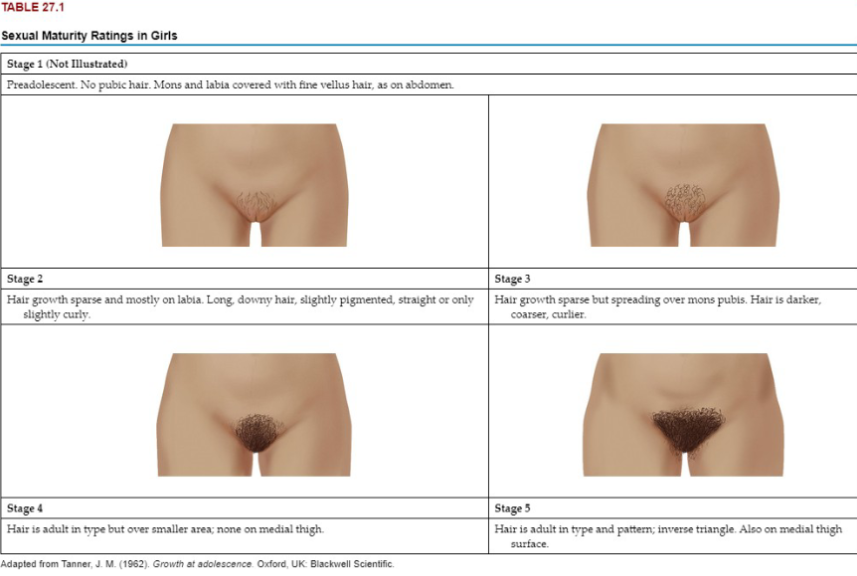
Tanner stages of sexual maturity ratings in girls
stage 1-stage 5
development of breasts during pregnancy
changes start during second month
expansion of ductal system and fatty tissue
development of true secretory alveoli
breasts enlarge and become more nodular
nipples: larger, darker, venous pattern prominent
fourth month: colostrum produced (protein, no lactose no fat), given before breast milk produced
milk production (lactation): 1 to 3 days post partum (more emulsified fats and calcium)
development of pregnancy
missed period
cervix softens (goodell’s sign): 4-6 weeks
vaginal mucosa and cervixs looks cyanotic (chadwich signs): 6-8 weeks
isthmus softens (lower segment) (Hegar’s sign): 6-8 weeks
uterus growth - bladder, urinary frequency
10-12 weeks- uterus globular
20-24 weeks- uterus oval shape, almost to liver
mucous plug cervical canal: protects fetus from infection, as does change in discharge PH, during pregnancy risk for yeast infections
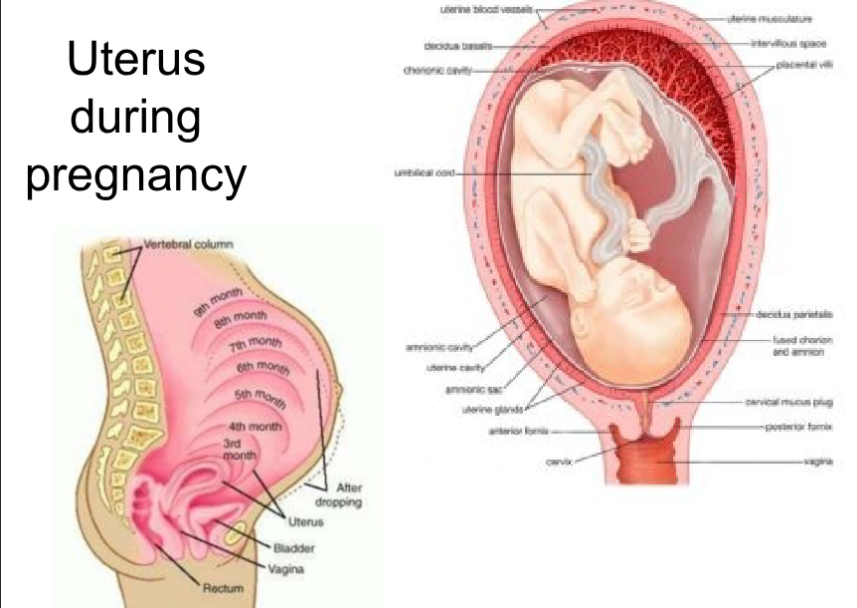
fetal growth


development of female aging
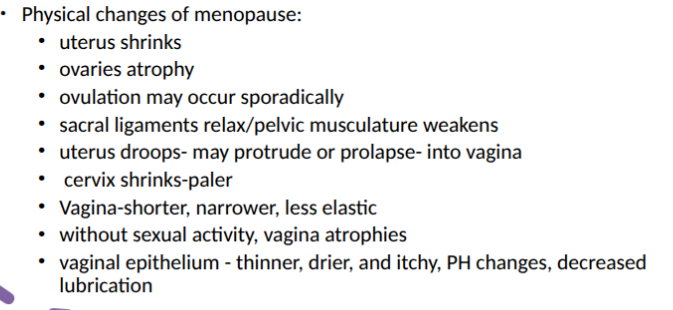
menopause: cessation of menses, around 48-51 years
preceding 1-2 years- decline in ovarian function, irregular menses, ovarias stop producing progesterone and estrogen reproductive tract estrogen dependant
after menopause- ovarian secretion of estrogen and progesterone decreases middle age- 80-90s
decrease breast size and elasticity (drooping or sagging)
around nipple: lactiferous ducts are more palpable and feel firm and stringy because of fobrosis and calcification
axillary hair decreases
female genital cutting
removal of parts/all of external female genitalia
prepubertal girls
most common in africa, asia, middle east (200 million girls and women)
harmful and violation of human rights
health implications: pain, hemorrhage, urinary retention, infection, sepsis, death, urinary and genitcal tract dysfunction, painful menstruation, sexual birth control difficulties, infertility, difficulties during pregnancy/childbirth and psychological difficulties
fgc- illegal in canada and most wester countries

HPV vaccine
human papillomavirus (genital warts)
most prevalent STI in Canada
vaccine-gardasil or vervarix hpv vaccine
grade 7 school based program
approved for women up to 45 yrs (user-pay)
HPV can lead to cancers: cervix, vulva, vagina, for male: penile, for both: anal and oropharyngeal
cervical cancer screening
anyone with a cervix
cervical screening every 5 years starting at 25 years or later depending on sexual activity
stop at age 70 or if 3 or more normal tests in last 10 years
low risk: feel healthy/no symptoms, no longer sexually active, had 1 sexual partner, same sex relationship, menopause, no family history of cervical cancer, recieved HPV vaccine
cervical cancer risk
almost all cases are from HPV
risk reduction
reduce exposure, multiple sexual partners,
use condoms/diaphragms
smoking cessation
immunisation
regular screenings
breast cancer screening
40-74 every 2 years- mammography
30-69 for high risk- annual mamography & breast magnetic resonance imaging or utz (if cant have MRI)
gene mutation: BRCA1, BRCA2, TP53, PTEN, CDH1
first degree relative with gene mutation
personal or family history of breast/ovarian cancer
radiation therapy chest- before age 30 and atleast 8 years ago
modifiable risk cancer: nulliparity or first child after age 30 yrs
hormonal contraceptive use
HRT
alcohol intake of over 1 drink faily
obesity
high socioeconomic status
PCP exam- canadian cancer society: know your breasts

abnormal breast findings
retraction- dimple
lymphatic obstruction- edema, orange peel look
fixation- asymmetry, distortion, decreased mobility
nipple deviation- fibrosis in mammary duct, pulls nipple toward it
documenting lump on breast

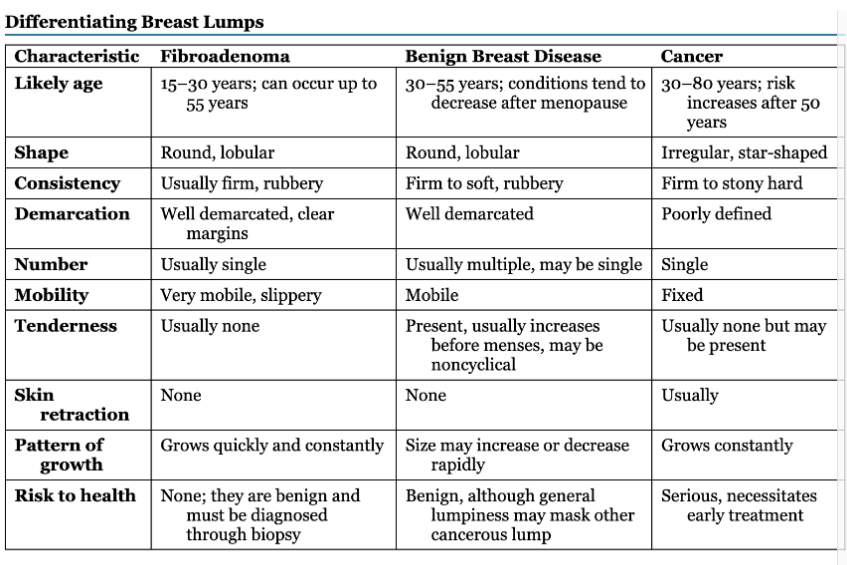
differentiating breast lumps
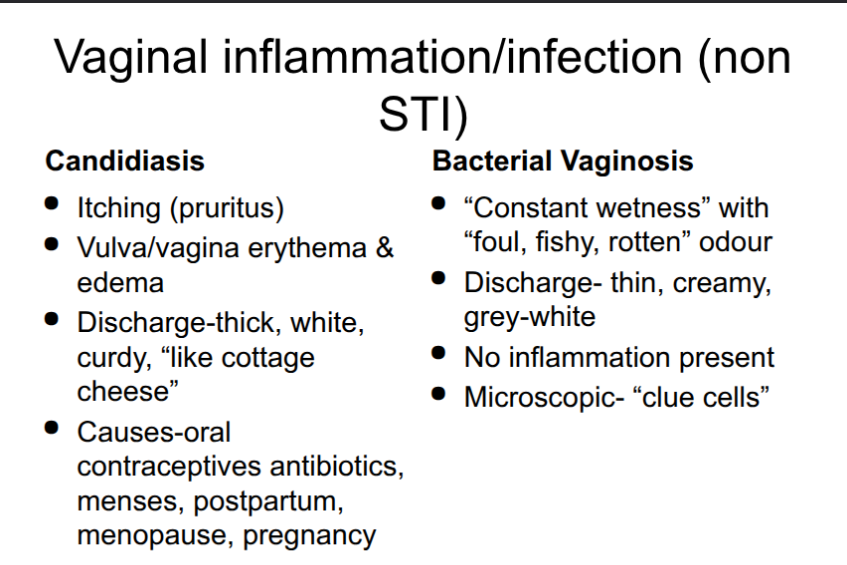
vaginal inflammation/infection (non sti)
female trichomoniasis

chlamydia female

gonorrhea female

herpes simplex virus female

pediculosis pubis female

whats a catheter
into urinary bladder through urethra
types: indwelling (foley) & intermittent (in and out)
indications: patient is retaining urine for some reasong (ex- pregnancy with epidural, can’t feel down there, or surgery for 10+ hrs, sedation causes unable to urinate, need urine sample from someone who is incontinent and unable to follow directions)
foley catheter requires balloon to be inflated to hold in place, intermittent doesn’t need balloon
short term indications for foley
less than 14 days
surgical prodcedures
monitoring of urine output in critical patients
prolonged immobilisation
urinary retention/bladder outlet obstruction (prostate)
instillation medications/irrigation
end of life care- comfort
long term indications for foley
over 14 days
bladder outlet obstruction pending surgery
chronic retention (neurological disease)
stage 3 or 4 pressure injury or perineal skin breakdown incontinent patients
urinary incontinence if alternate approaches (stress incontinence)
risk of catheters
high risk of UTIs
utis are among most common healthcare associated infections in canada
attributed to indwelling catheters bc bacteria ascending catheter tubing
remember: avoid unnecessary catheterisation, timely removal, appropriate peri care and draining of catheter
types of catheters
coude tip- amab pt with enlarged prostate, curve helps to get around prostate
foley- double lumen with balloon
straight catheter- for in and out
3 way catheter- for pts who have had surgery to shave off parts of the prostate, one port to drain urine, one to drain blood and prevent blood clots, one to irrigate the bladder with normal saline and break up blood clots (CBI- continuous blood irrigation)

catheterisation measurments
unit is the French (my foley is size 12 french)
smaller # is smaller catheter
Fr 8-10 for children
Fr 10-12 for adult female
Fr for adult male
hematuria with clots will need Fr 20-24 with 3 way to irrigate with normal saline
catheterisation
requires physican orders/medical directive/hospital policy
check allergies (latex, tape, lubricant, betadine)
check last voiding/catheterisation (may have q4h catheter) nurses note intake/output
assess for distended bladder (need for catheter) (palpable/dull above symphysis) (use bladder scanner and check if above 500ccs)
assess level of awareness and developmental stage
mobility and physical limitations of client (affect position)
clients age and gender determines size of catheter
prior to catheterisation procedure
assess for pathological condition that may impair passage of catheter (ex enlarged prostate)
explain procedure
assess client’s knowledge of purpose for catheterisation
gather equipment
get additional personnel if required
provide privacy
supplies for catheterisation

positioning for catheterisations
female: dorsal recumbent position (supine with knees flexed), ask pt to relax things, hips can be rotated externally, or side lying (sims) with upper leg flexed at hip if unable to assume other position, cover rectal area with drape to reduce chance of cross contamination
male: supine position with thighs slightly abducted
set up for catheterisation
open collection bag placed over edge of bottom bed frame, bring drainage tube up btwn side rails and mattress
raise bed to appropriate height
light
open kit
organise sterile supplies
add catheter to tray/sterile field
lubricate catheter, anasthetic lubricant may be used with order
draping patient during catheterisation
female: apply fenestrated drape over perineum, exposing labia
male: apply fenestrated drape over thighs and drape it over penis
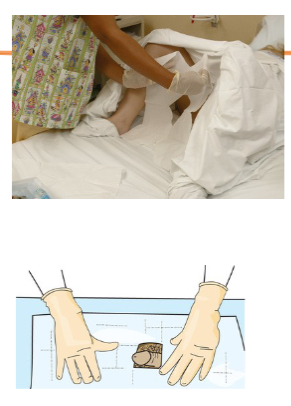
peri care pre catheterisation female
retract labia to fully expose urethral meatus, non dominant hand spreads labia while dominant hand cleans and insert catheter
clean perineal area from front to bath (clitoris toward anus)
first swab far away from you, last swab is down the middle
include both labial folds and directly over centre of urethral meatus as shown
peri care pre catheterisation male
not circumcised: retract foreskin with non dominant hand, maintain position throughout procedure, if foreskin doesn’t remain retracted during cleaning, procedure must be repeated
cleanse in a circular motion from urethral meatus down to base of glans, repeat this 3 times
catheter insertion- female
pick up catheter with dominant hand
ask pt to bear down gently as if voiding
slowly insert catheter through urethral meatus as shown
advance catheter total of 5-7.5 cm or until urine flows out of catheter’s end
when urine appears, advance catheter another 2.5-5cm
do not force against resistance
release labia, hold catheter with non dominant hand and inflate balloon (for indwelling) as shown
gently tug to ensure proper location
catheter insertion male
pick up catheter with dominant hand
lift penis to position perpendicular to pt body and apply light traction
ask pt to bear down as if voiding then insert catheter slowly through urethral meatus
advance 17-22.5cm or until urine flows
for indwelling, after urine appears advance catheter 2.5-5cm
reduce or reposition foreskin
do not force catheter against resistance
gently tug to check position
post catheterisation
collect urine as needed
attach end of indwelling catheter to collecting tube of drainage system
drainage bag must be below level of bladder (attach to bed frame, not side rails)
securing catheter
female: secure catheter tubing to inner thigh or abdomen using tape or product such as stat lock
male: secure catheter tubing to top of thigh or lower abdomen, with penis directed toward chest
***for both, allow for slack so movement doesn’t create tension
urine collection bag

documentation for catheterisation
reason for catheterisation
record type and size of catheter
amt of fluid (mL) used to inflate the balloon (amt to use is written on catheter)
characteristics of urine
amt of urine
specimen collection is appropriate
pt response to procedure
teaching (using leg bag, emptying drainage bag, etc)
record intake and ouput
if catheter is in bladder and no urine produced within 1 hour, report to MRP
caring indwelling catheter
assess for inflammation, swelling and discharge
not amt, color, odour and consistency of discharge
ask pt any burning or discomfort
clean perineal tissue and along 10 cm of cather as shown
in uncircumsised males, reposition foreskin
removing indwelling catheter
deflate balloon with syringe
gently remove catheter
provide peri care
record and report discomfort, burning sensation, when voiding, bleeding and changes in vital signs (temp)
check if pt is actually able to void after catheter removed (check that pt has voided 8 hrs after catheter is removed)