Reflective models
 Call Kai
 Learn
Learn Practice Test
 Spaced Repetition
 Match
Match Flashcards
 Knowt Play
1/9

There's no tags or description
Looks like no tags are added yet.
Name | Mastery | Learn | Test | Matching | Spaced | Call with Kai | Chat |
|---|
No analytics yet
Send a link to your students to track their progress
10 Terms
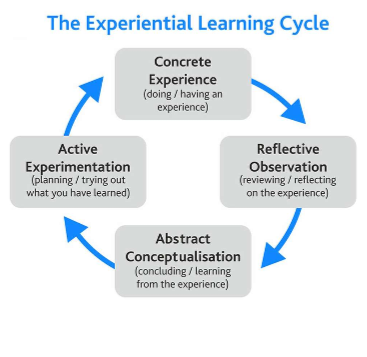
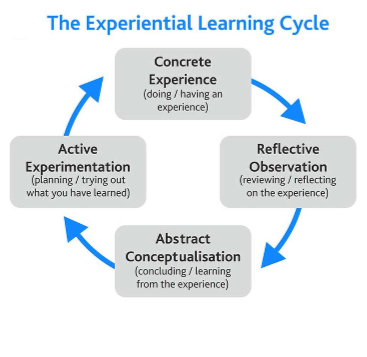
Kolbs 1984
Concrete experience - Reflection Observation - Abstract Conceptualisation - Active Experimentation
Kolbs 1984 P/C
Pros:
Encourage active learning from real experiences
Emphasises learning as continuous process
Useful for planning future actions
Cons:
Theory-focused, less intuitive for beginners
Lacks focus on emotion/ethical aspects
Overly abstract for clinical settings
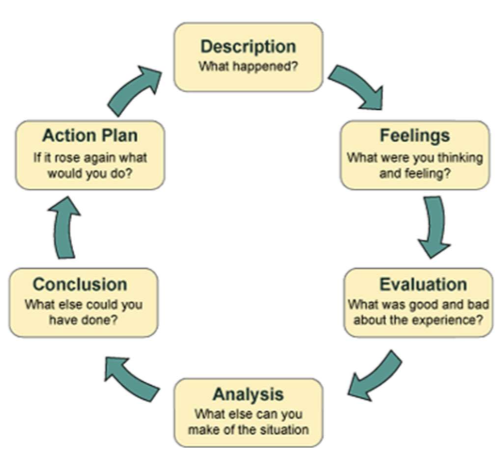
Gibbs 1988
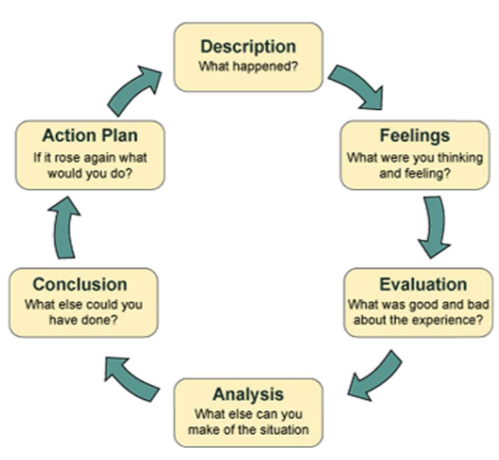
Description - Feelings - Evaluation - Analysis - Conclusion - Action Plan
What happened? What were you thinking/feeling?
What was good/bad about experience? What else can you make of situation?
What else could have done? If it rose again what would you do?
Gibbs 1988 P/C
Pros:
Easy to follow
Encourages emotional, critical reflection
Structured, logical progression
Cons:
Become formulaic/superficial
Emphasis on feelings, may feel repetitive
Can be time-consuming
Rolfe 2001
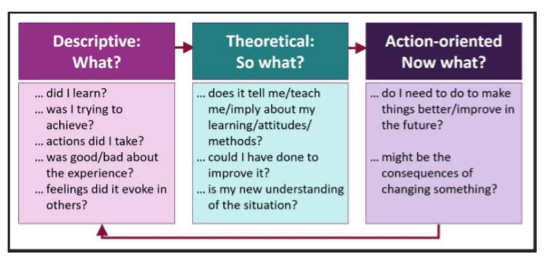
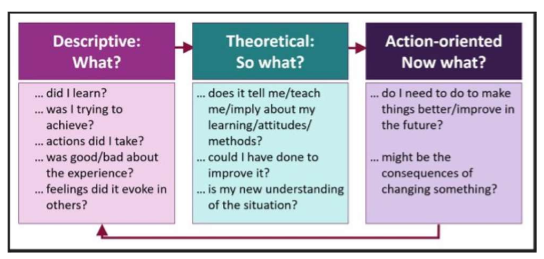
What? So what? Now what?
Rolfe 2001 P/C
Pros:
Simple, accessible
Quick to use in practice
Easy to remember apply
Cons:
May lack depth for complex reflections
Limited guidance on theory or evidence
Risk of oversimplification
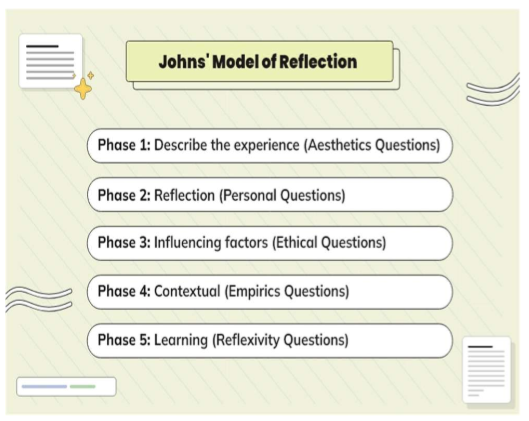
Johns 1994
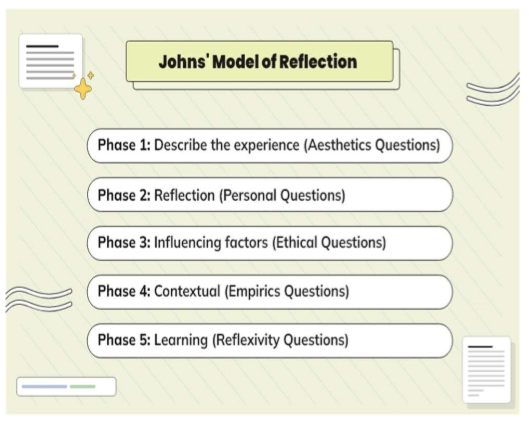
Describe, Reflection, Influencing factors, Contextual, Learning
Johns 1994 P/C
Pros:
Encourage deep, critical thinking
Links personal experience with theory and ethics
Useful for clinical, emotional ethical reflection
Cons:
Complex and time-consuming
Requires familiarity with theory (e.g. Carpers ways of knowing)
Can feel overwhelming for beginners
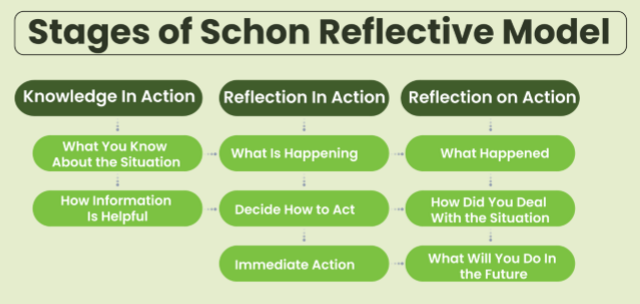
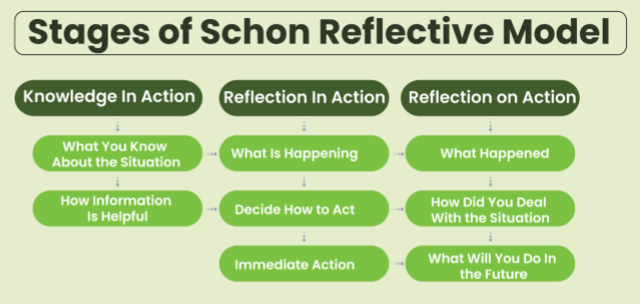
Schons
Knowledge in action - Reflection in action - Reflection on action
Schons P/C
AI
Pros:
Cons:
Lack step by step structure
Time consuming