ch7 - the blueprint of life
 Call Kai
 Learn
Learn Practice Test
 Spaced Repetition
 Match
Match Flashcards
 Knowt Play
1/21

There's no tags or description
Looks like no tags are added yet.
Name | Mastery | Learn | Test | Matching | Spaced | Call with Kai | Chat |
|---|
No analytics yet
Send a link to your students to track their progress
22 Terms
DNA
characteristics of each cell dictated by info contained within dna
def: the blueprint of life; hereditary material that is passed onto offspring
contains all info required to make the organism and give the organism all its abilities
genome
complete set of genetic info [genotype = specific combination of alleles (gene variants) an individual possesses], all the genes they contain
genes are composed of sections of dna in all living organisms
chromosomes are made of dna
functional unit is the gene
genes code for products (protein, RNA)
phenotype
physical characteristics or enzymes resulting from the expression of genes
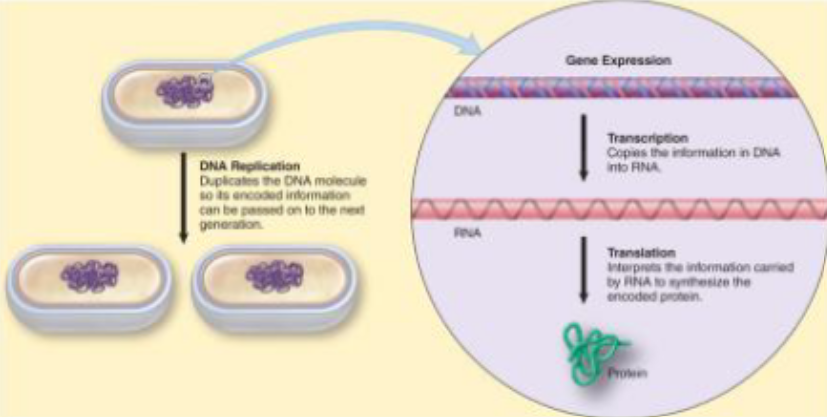
to multiply, cells must carry out:
dna replication
gene expression (transcription and translation)
info flow from dna → rna → protein
known as the central dogma of molecular bio
characteristics of dna
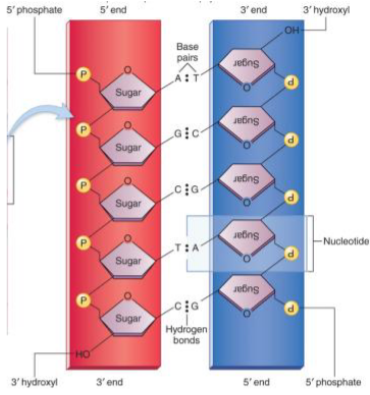
made of deoxyribonucleotides
DNA: double stranded molecule
strands are complementary due to the specific pairing of bases
AT, CG
strands held together by hydrogen bonds
melting or denaturing - separate strands
there are 2 hydrogen bonds between A and T
3 hydrogen bonds between C and G
the more Gs and Cs they have, the more hydrogen bonds they have, the harder it is to split it, so they have a high boiling point, and then the strands get separate
strands are antiparallel
5’ phosphate to 3’ hydroxyl and 3’ hydroxyl to 5’ phosphate
characteristics of rna
made of ribonucleotides
Uracil replaces Thymine in RNA, U vs T
shorter, single stranded molecule
3 types of RNA: each with a different function
protein encoding gene: section of dna providing instructions for making a protein → mRNA → translation → protein
rRNA gene: section of DNA, structural RNA and makes up the ribosome (protein making) → ribosomal RNA
tRNA gene: section of DNA → tRNA, RNA molecules that will bring the amino acid to the ribosome during process of translation or protein synthesis

DNA replication
duplication of genome, the bacteria, the chromosome
its circular
begins at the origin of replication
melt/break apart/unwinds the double stranded DNA
each original strand is used as a template to make the new complementary strand
bi-directional synthesis of DNA
replication will keep going in both directions from the origin until it meets
creates 2 replication forks
forks continue moving around the circular chromosome until they meet
semiconservative
2 DNA molecules, each with an old and new strand

process of dna replication
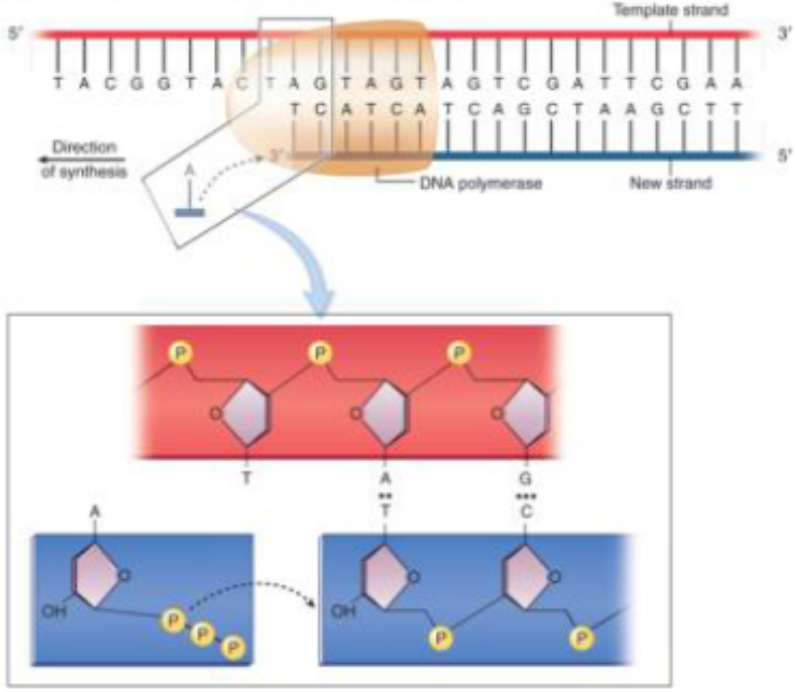
dna replication uses dna polymerase
IMPORTANT:
reads dna template 3’ to 5’
dna polymerase always synthesizes in the 5’ to 3’ direction
can only add nucleotides to an existing molecule, not initiate
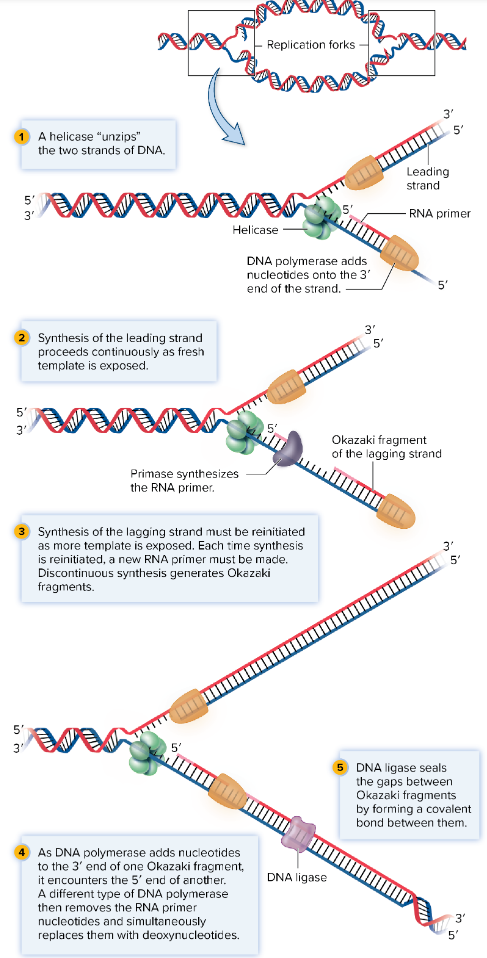
helicase unzips 2 strands of DNA
dna polymerase requires RNA primers at the origin of replication to start synthesis
the first thing is the synthesis of RNA primer
5’ — (3’ to 5’) — 3’
() is rna molecule, primer
the RNA primer gives dna polymerase a starting point
it can add nucleotides to 3’ -OH end of the strand only
DNA polymerase adds DNA nucleotides
process of dna replication - leading and lagging
dna strands are antiparallel → grow in opposite directions
leading strand: synthesize continuously in 5’ to 3’ direction (5→3→5→3 etc)
synthesizing on the 5’ to 3’ strand towards the replication fork
lagging strand produces Okazaki fragments: synthesizing in small fragments, discontinuously
synthesizing on the 5’ to 3’ strand away from the replication fork in Okazaki fragments
it moves down and puts a RNA primer and synthesizes a small piece
move down again and synthesize again
makes RNA primer
DNA polymerase adds DNA to the primer making a small DNA section
replication fork opens up more
makes another RNA primer
repeat
THEN:
DNA ligase seals the gaps between Okazaki fragments by forming a covalent bond between them
as DNA polymerase adds nucleotides to the 3’ end of one Okazaki fragment, it encounters the 5’ end of another
a different type of DNA polymerase then removes the RNA primer nucleotides and simultaneously replaces with deoxynucleotides


gene expression in bacteria - transcription
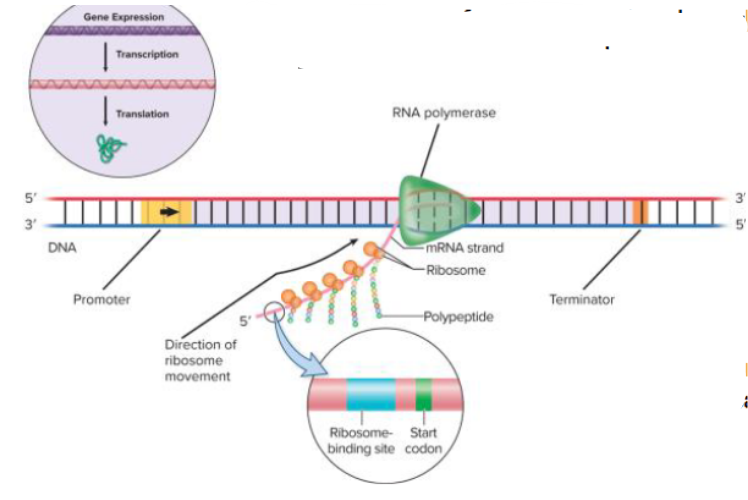
synthesis of a complementary strand of mRNA from a portion of the DNA by RNA polymerase
important: RNA polymerase binds to promoter
the promoter determines where transcription starts and which DNA strand the RNA polymerase will use as a template
can run in either direction
RNA polymerase reads the template strand 3’ → 5’
RNA polymerase synthesizes the new RNA strand 5’ → 3’
stops at terminator
mRNA
carries info from DNA to ribosome
3 steps of transcription process: Initiation, Elongation, Termination

gene expression in bacteria - transcription/ initiation
RNA polymerase binds to the promoter with the help of a sigma factor and melts/unwinds a short section of DNA double helix
eukaryotes use transcription factors not sigma factors
function of sigma factor is to guide RNA polymerase to promoter
RNA polymerase chooses one DNA strand as the template
can initiate without RNA primer, RNA polymerase doesn’t require it
RNA synthesis begins
gene expression in bacteria - transcription/ elongation
sigma factor dissociates from RNA polymerase, leaving the core enzyme of RNA polymerase to complete transcription
RNA is synthesized in the 5’ to 3’ direction
read in 3’ → 5’
the enzyme adds nucleotides to the 3’ end of the growing RNA strand
new RNA strand is complementary and antiparallel
itll continue on and on until it reaches the terminator
eukaryotic doesn’t require sigma factor, only bacteria
gene expression in bacteria - transcription/ termination
when RNA polymerase encounters a termination, transcription stops and it falls off the template releasing the newly synthesized RNA from the DNA
gene expression in bacteria - translation
process of decoding the information in mRNA → protein
also involves
ribosomal RNA (rRNA)
forms ribosome - “translational machine”
transfer RNA (tRNA)
brings correct amino acid to ribosome
carries anticodon
mRNA read three nucleotides at a time (3 n = codon)
most codons specify a particular amino acid according to the genetic code
the genetic code is redundant (degenerate)
64 possible codons
61 codons for amino acids, 3 are stop/nonsense codons
AUG
start codon for most protein
also, codes for the amino acid methionine/met
UAA, UAG, UGA
stop codon
specific nucleotide sequences define different regions on the mRNA
ribosome binding site - where the ribosome binds to begin translation
start and stop codons mark the beginning and end of the region to be translated
anticodon
anticodon on tRNA binds to the complementary codon on mRNA through hydrogen bonds
this allows tRNA to recognize and match the correct codon on the mRNA
before entering the ribosome, the tRNA is attached to its specific amino acid by an enzyme called aminoacyl-tRNA synthetase
the enzyme ensures that the correct amino acid is attached to the correct tRNA
therefore, when the anticodon matches the mRNA codon, the tRNA brings the correct amino acid to the ribosome

translation process - initiation
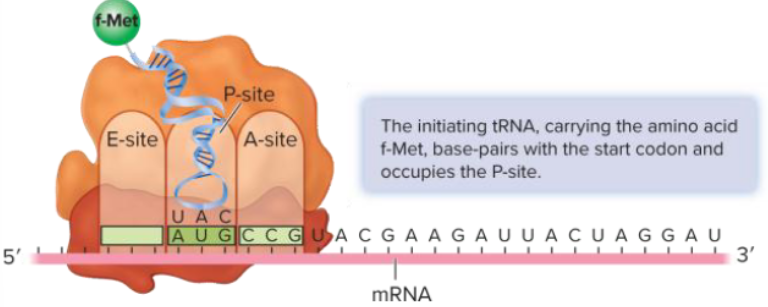
initiating tRNA brings formylmethionine (f-Met) to the P-site of the ribosome
tRNA anticodon pairs with start codon
first tRNA carries 1st amino acid to the start codon AUG
only in bacteria its f-Met instead of methionine
translational machinery ready after assembling
A-site: aminoacyl
P-site: peptidyl
E-site: exit
first tRNA/start codon will be in P-site

translation process - elongation
synthesis of a polypeptide to make a longer protein
another tRNA carries the amino acid that matches the codon into the A-site
recognizes codon in empty A-site
brings in next correct amino acid and fills that site
ribosome catalyzes the joining of the amino acid carried by the tRNA in the P-site to the one carried by the tRNA in the A-site
a ribozyme creates a peptide bond between 2 amino acids
the ribosome advances a distance of one codon (3 nucleotides)
the tRNA that occupied the P-site exits through the E-site
the tRNA that was in the A-site moves into the P-site
a tRNA that recognizes the next codon quickly fills the empty A-site
example: the next one is Tyrosine and tRNA carries it into the A-site
ribosome forms a peptide bond between the growing dipeptide of Pro and f-Met, and it will attach to Tyr
mRNA advances in 5’ to 3’ direction through ribosome
initiating tRNA exits through the E-site
tRNA recognizing next codon in A-site attaches
peptide bond forms between amino acids
ribosome advances one codon on mRNA
empty tRNA exits E-site, new tRNA occupies A-site
process repeats until we get to the end of the mRNA which is its stop codon, and a release factor binds to it causing the completed polypeptide to be released

translation process - termination
elongation stops when ribosome reaches stop codon
when the stop codon enters in the A site
a release factor recognizes the stop codon bcuz no tRNA molecules recognize or can bind to it.
the release factor triggers release of the completed polypeptide and termination of translation
ribosome falls off mRNA
components disassemble releasing the newly formed polypeptide
dissociates into subunits (30S) and (50S)
mRNA and completed polypeptide released
then the proteins fold after synthesis
after translation
newly synthesized polypeptide protein folds into its function shape
may undergo modifications depending on the protein

simultaneous transcription and translation
only in bacteria both processes can occur at the same time
IMP- why only bacteria: 2 reasons
bacteria is a prokaryote, so doesnt have a nucleus
doesn’t occur in eukaryotes bcuz in eukaryotic transcription it occurs in the nucleus and translation occurs in the cytoplasm in different regions
Eukaryotic mRNA/DNA has introns and exons (non coding vs coding)
when mRNA is made it has both introns and exons
all introns have to be removed and exons spliced together → mature mRNA leaves the nucleus and enters the cytoplasm where it will be translated by a ribosome
Insulin/cDNA example:
protein made from RNA produces correct insulin protein
scientists can convert mature human mRNA through splicing and removal of introns and turn it into cDNA (complementary DNA)
introduces the cDNA into the bacteria so the bacteria can produce the desired human protein
and this is what we pump in bacteria to produce the correct protein bcuz the cDNA from mRNA doesnt have any introns
translation of the mRNA begins while the mRNA is still being synthesized
polyribosomes: multiple ribosomes translating the same mRNA
promoter is a DNA sequence where RNA polymerase binds to start transcription
going to use blue in this example because thats where the promoter is for 3’ → 5’
as soon as the mRNA is done being transcribed in ribosome binding site, the ribosomes hop on and start translating
bacteria can adjust quickly because they can do both quickly at the same time in a minute or two
they alr have the proteins they need to be functional and can adjust to any environment
beginning of mRNA is where the ribosome binding site is and where the start codon for translation to begin is
as we go down mRNA it goes longer and longer
bacterial gene regulation
control of transcription/translation/gene regulation
allow bacteria to
conserve energy
bacteria are very conservative - they will not waste energy making products they dont need
will rather put that energy in growth
respond/adapt to changing environments by altering the level of gene expression
changing which genes they express
may turn some genes off and others on to make new proteins depending on the environment
constitutive genes
constantly expressed, enzymes produced
proteins made all the time bcuz they’re needed to maintain the life and basic ongoing functions of the cell
ex: enzymes of glycolysis need to be available regularly cuz theyre needed to break down glucose
need it all the time bcuz glucose is an important energy source for cells
regulated genes
can be turned on/off; only made when needed
inducible genes
we can induce it meaning we can turn it on when we need them
not regularly expressed
turned on only under certain conditions (induction)
B-galactosidase - only when lactose is present
lactose → allolactose (inducer)
inducer turns on inducible genes
mechanisms can turn on transcription for as long as needed
ex: when the substrate for an encoded enzyme is present
repressible genes
repressed meaning it can be turned off
routinely expressed, can be turned off when not needed
can turn off transcription for as long as necessary
ex: when the product of an encoded enzyme is in sufficient quantity
generally involved in biosynthesis
amino acids (tryptophan (trp) )
genes in trp are repressible
bacteria are making trp and we suddenly give it a lot of trp
if theres a lot in the surroundings, it wil use a little bit of energy to transport it in the cell
genes involved in this are routinely expressed and it will turn those genes off with a repressor if theres suddenly a lot
controlled by a repressor that blocks transcription when genes are no longer needed → repression
levels of regulation
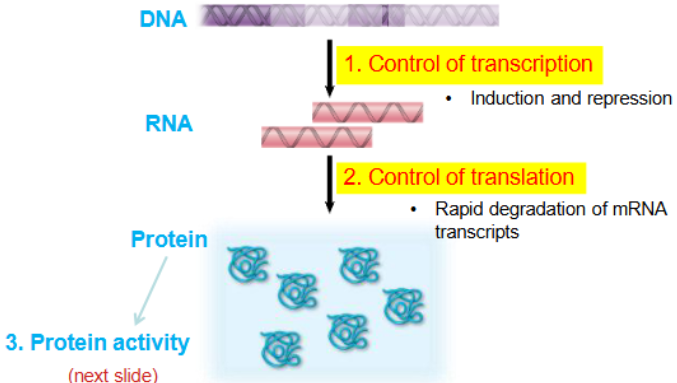
control of transcription
induction and repression
so mRNA is not made
most efficient way of saving energy
control of translation
rapid degradation of mRNA transcripts so that it doesnt get translated
protein activity
even if its made we can control the enzyme activity (protein function)
feedback inhibition
overabundance of end-product (enzymes) inhibits enzymes that makes it
will stop the enzyme function
amino acid Threonine converted by the steps to make Isoleucine
when theres a lot of Isoleucine, it will bind to and inhibit the function of the first enzyme in the pathway
when it does that itll stop the function of the enzyme and the next intermediate will not be made
therefore it cant be converted to the next and the next, therefore Isoleucine will not be made
a lot of Isoleucine around so cell doesnt need it
