Sheep Brain Quiz
 Call Kai
 Learn
Learn Practice Test
 Spaced Repetition
 Match
Match Flashcards
 Knowt Play
1/87

There's no tags or description
Looks like no tags are added yet.
Name | Mastery | Learn | Test | Matching | Spaced | Call with Kai | Chat |
|---|
No analytics yet
Send a link to your students to track their progress
88 Terms

Red Arrow
Dorsal
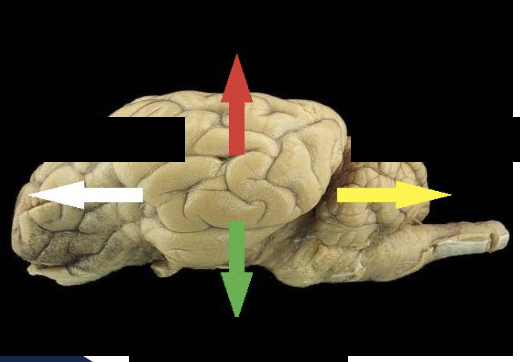
Green Arrow
Ventral

Yellow Arrow
Posterior AND Caudal
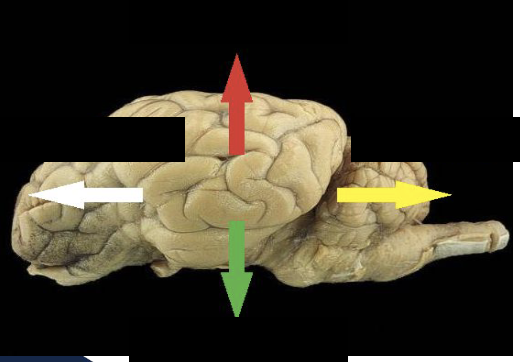
White Arrow
Anterior AND Rostral

Green Arrow
Lateral

Red Arrow
Medial

Coronal
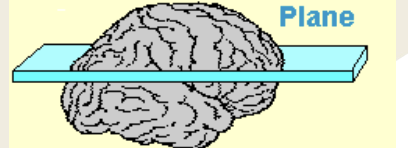
Horizontal Plane

Sagittal Plane

Front Arrow + function
Frontal Lobe, higher cognitive function, executive functions, (Broca’s Area)

Second, Top arrow and function
Parietal Lobe, touch, proprioception, speech (making sense of words)

Second, bottom arrow and function
Temporal Lobe, speech (Wernicke's area), hearing, memory

Third top arrow and function
Occipital lobe, sight/vision

Back arrow and function
Cerebellum, motor learning and balance (oldest area evolutionarily)
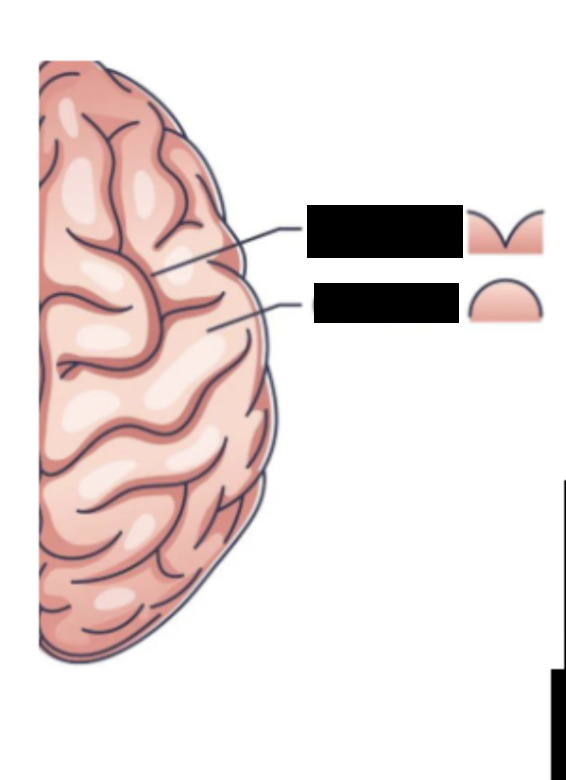
Top one
Sulcus - valley/furrow of cortex
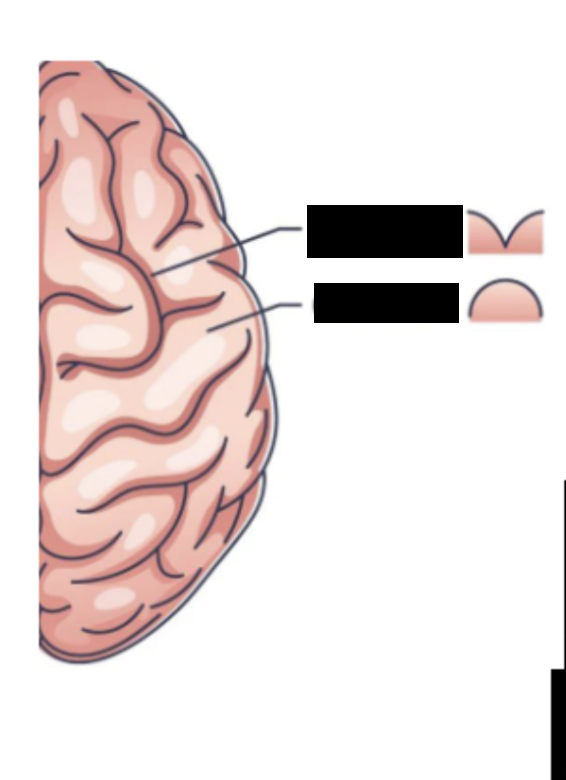
Bottom
Gyrus - ridges/raised/ hill portions of cortex
Fissure
Large groove that divides the brain into lobes
Longitudinal Fissure
groove that separates brain between left and right hemispheres

Optic Nerve
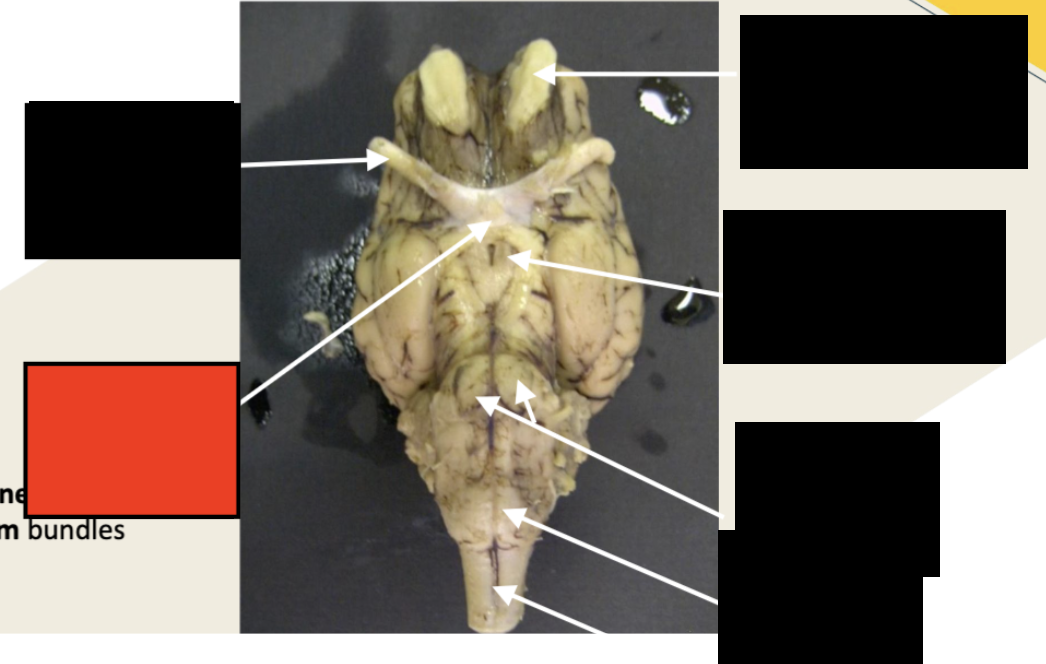
Optic Chiasm
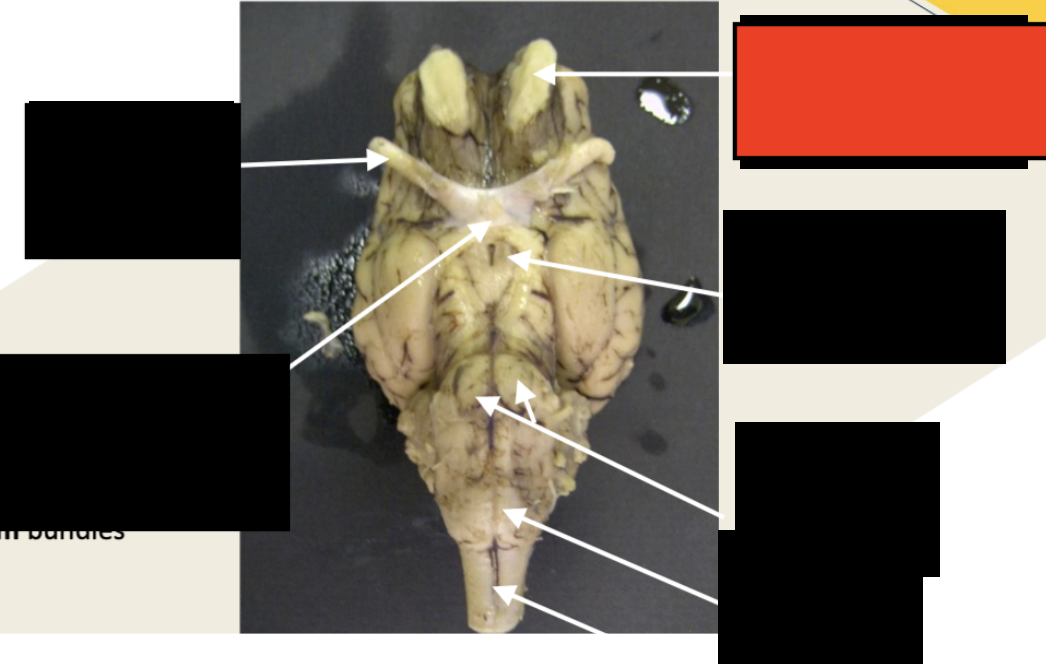
Olfactory Bulbs

Hypothalamus
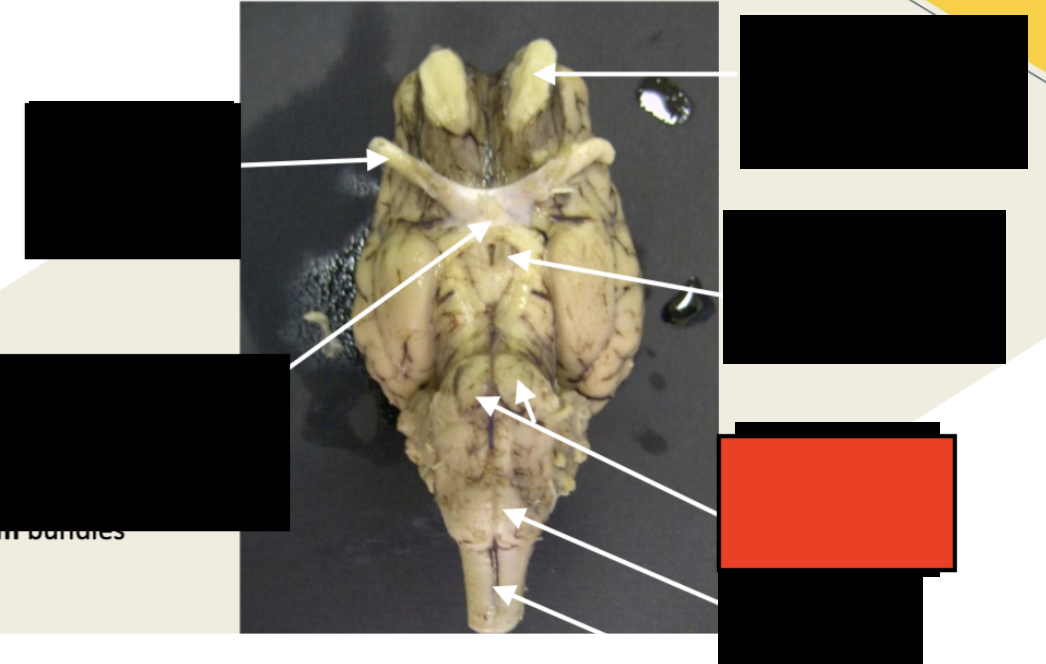
Pons
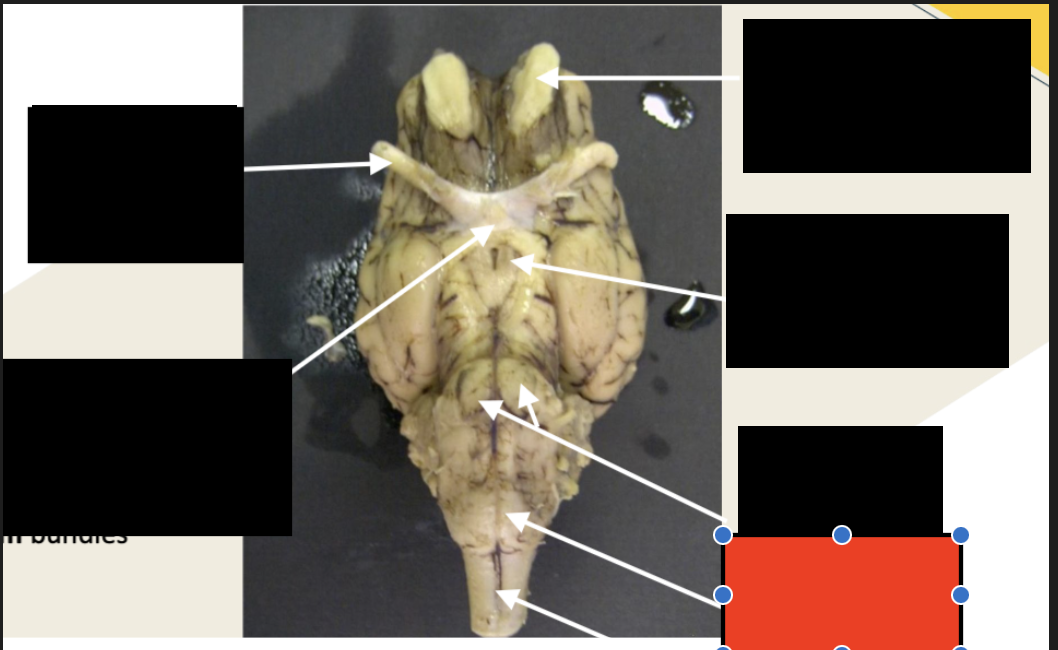
Medulla

Spinal Cord
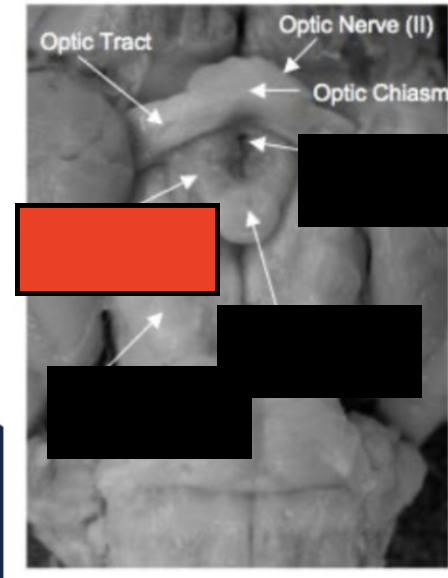
Hypothalamus
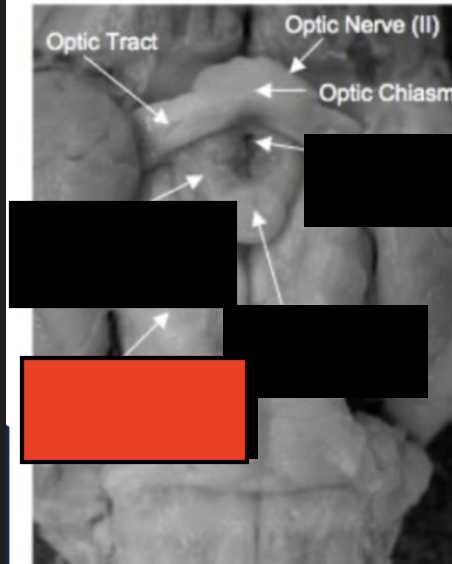
Cerebral Peduncle
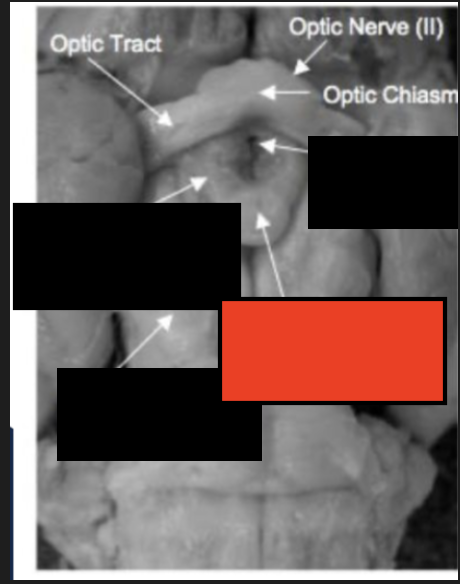
Mammillary Bodies

Infundibulum

Pineal Gland,

Superior Colliculus, visual processing

AND function
Inferior Colliculus, auditory and vestibular (inner ear balance and gravity) processing
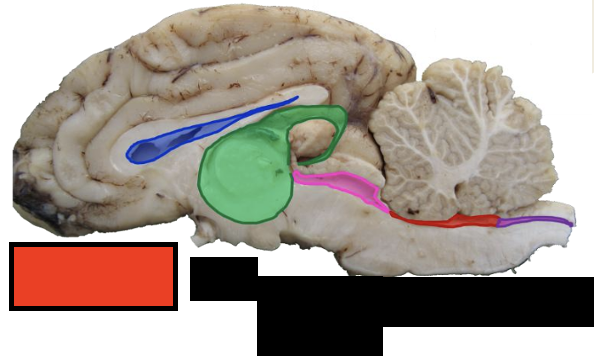
Lateral (I and II)

III
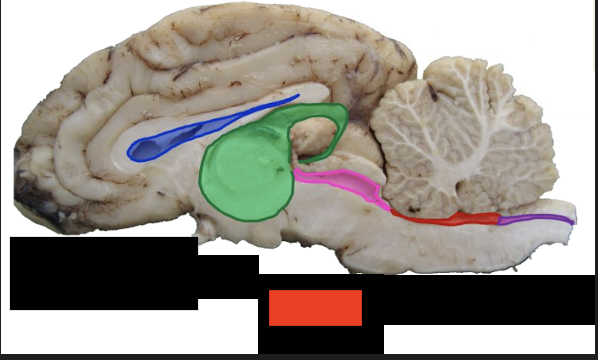
Cerebral Aqueduct
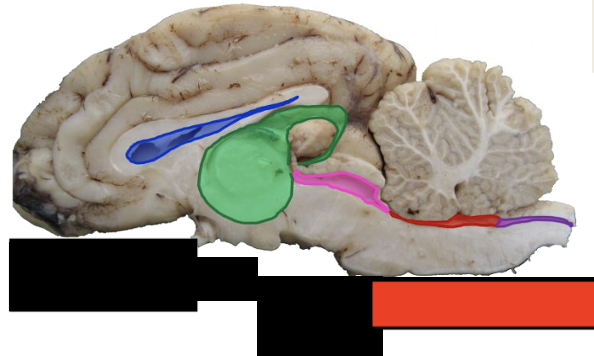
IV (Purple is central canal )
Gray Matter vs White Matter
Gray is Cell bodies, White is axons

cerebellum

Arbor Vitae
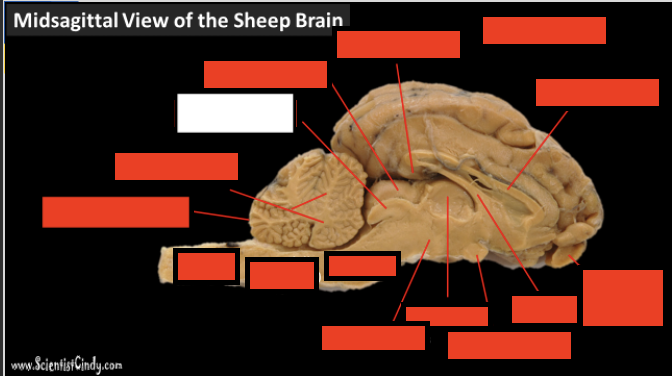
Inferior Colliculus
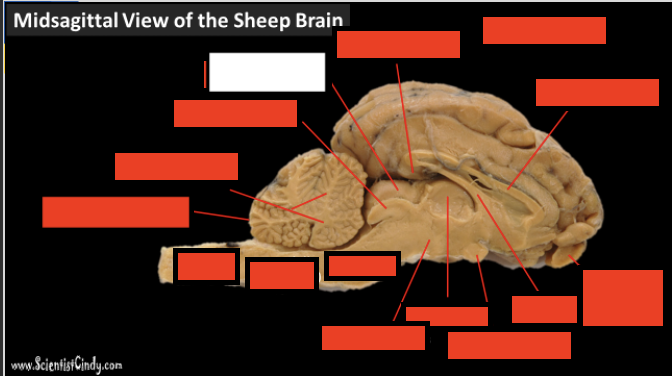
Superior Colliculus

Pineal Body

Corpus Callosum

Olfactory Bulbs

Fornix

Optic Chiasm

Thalamus
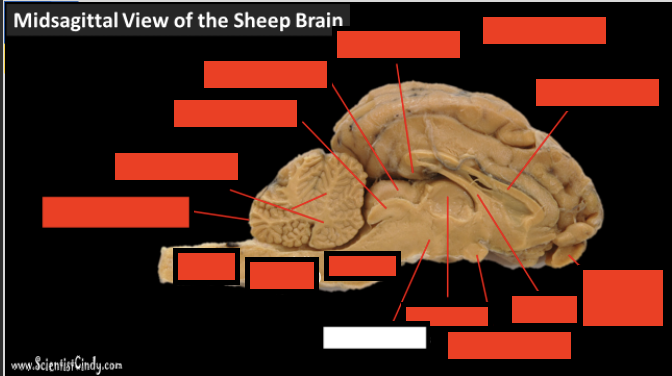
Hypothalamus

Pons

Medula

Spinal Cord

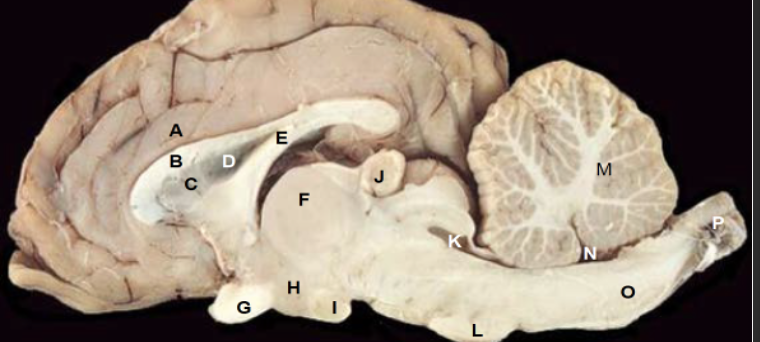
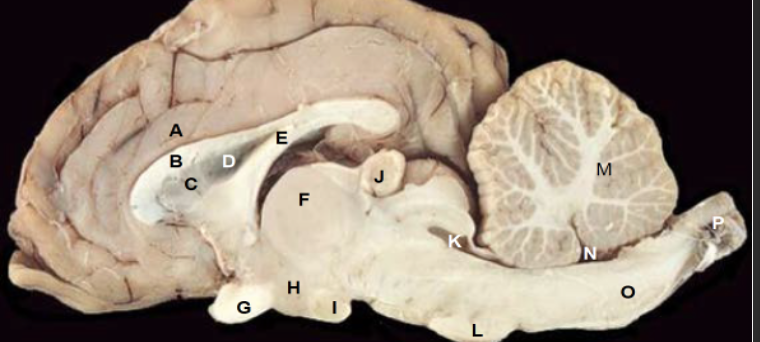
A + Function
Cingulate Gyrus - Emotion and attention
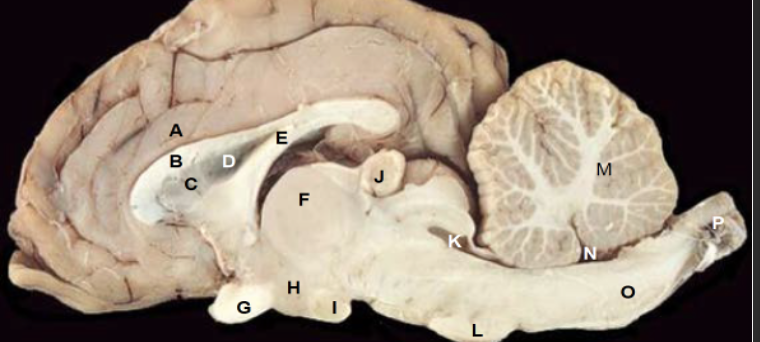
B
Corpus Callosum

(Space behind ) C + function
Septum Pellucidum - Separates left and right lateral ventricle

D
Lateral Ventricle - Contains choroid plexus, which produces CSF

E + function
Fornix, Major Axon projections from the hippocampus, connects halves of the hippocampus
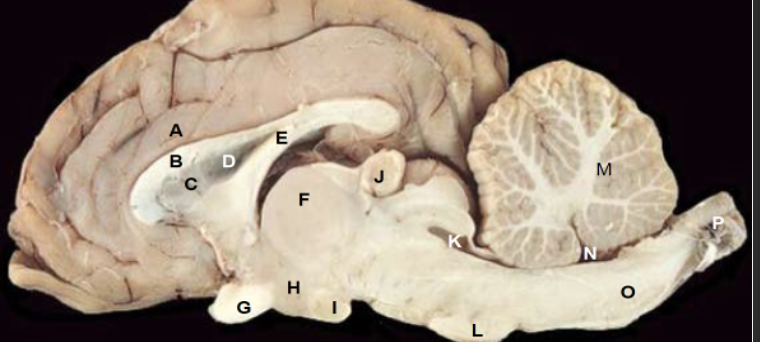
F + Function
Thalamus, relay station for sensory input EXCEPT OLFACTION

G + function
Optic Chiasm, Point at which visual info crosses over to the contralateral side before entering occipital lobe

H + function
Hypothalamus, maintenance of homeostasis (the 4 F’s - fighting, fleeing, feeding, and mating) - regulation of hormones - controls activity of pituitary and coordinates autonomic nervous system
I
Mammillary Body - memory (episodic)

J + function
Pineal Gland, makes melatonin and regulates sleep wake cycle
K + function
Cerebral Aqueduct, connects 3rd and fourth ventricles (right below superior and inferior colliculi

L + function
Pons, sleep, swelling, bladder control, balance

M + function
Arbor Vitae - major WHITE matter tract that carries sensory and motor info to and from cerebellum, branching design allows for white matter too onnect broadly with gray matter, maximizing communication

N
IV ventricle

O + function
Medulla, responsible for vital autonomic functions, like sneezing, coughing, heart rate, breathing

P
Spinal Cord
Ventricles
Allow spaces in brain that produce and circulate CSF
CSF
Cerebrospinal fluid, protection, feeds brain, removes waste and acts as a shock absorber
Differences between human and sheep brain
Sheep have larger olfactory bulbs (as sheep rely on sense of smell more), less wrinkly cerebral cortex’s (as humans have greater surface area for advanced cognitive functions), Smaller cerebellum proportionally (as humans have fine motor control), more elongated brain due to positioning, smaller corpus callous (less inter hemispheric integration), Larger optic chasm due to laterally positioned eyes
Purpose of crossing for vision
allows visual cortex in each hemisphere to receive information from both eyes about the same visual field —> depth perception

and function
Cerebral Peduncle, Highways connecting brain’s cortex to spinal cord and brain stem, carrying motor commands and helping coordinate movement

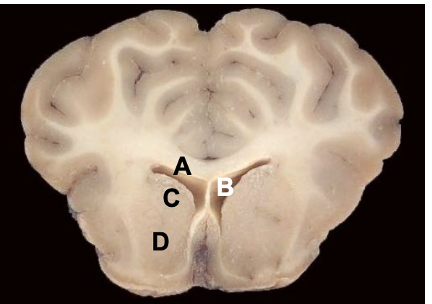
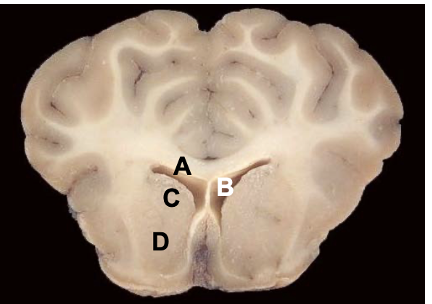
A
Corpus Callosum
B
Lateral ventricle
C + function
Caudate Nucleus (That + putamen = striatum), initiates voluntary movements and coordinates slow skeletal muscle contraction (posture + balance) as well as playing a role in learning, memory, and goal directed behavior
D + Function
Putamen (apart of striatum) - regulates movement and motor control, especially automatic or learned movements

E
Thalamus
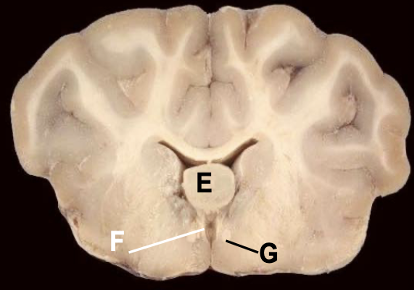
F
3rd ventricle
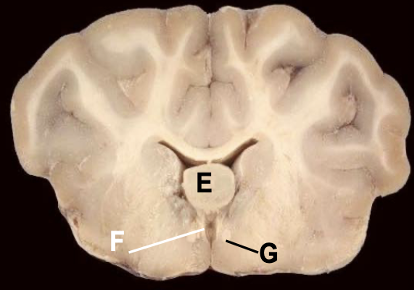
G
Fornix
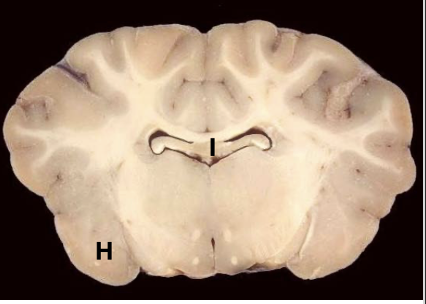
H + function
Amygdala, integrative center for emotions, behavior, and motivation - fear and anger especially
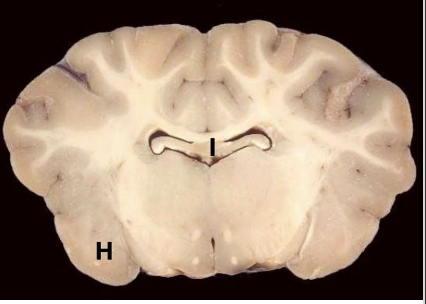
I
Body of Fornix

J + function
Hippocampus - Memory (specifically forming new memories and retrieving old ones) - damage results in Anterograde amnesia , emotion, autonomic nervous system.
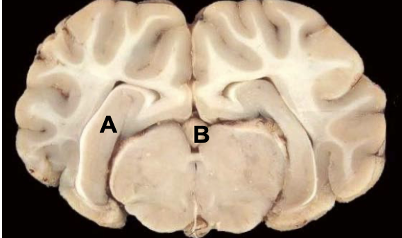
A
Hippocampus

B
Pineal gland

C
Superior Colliculus

D
Lateral ventricle
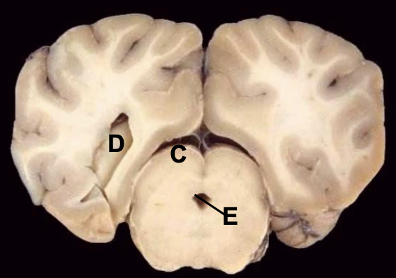
E
Cerebral aqueduct

F
4th ventricle