MEA101 Exam 1
 Call Kai
 Learn
Learn Practice Test
 Spaced Repetition
 Match
Match Flashcards
 Knowt Play
1/120

There's no tags or description
Looks like no tags are added yet.
Name | Mastery | Learn | Test | Matching | Spaced | Call with Kai | Chat |
|---|
No analytics yet
Send a link to your students to track their progress
121 Terms
Define geology
-Geology is the study of the origin, composition, structure, and history of the earth.
-Geologists interpret the characteristics of materials like rocks and fossils to unravel Earth's history and decipher the evolution and distribution of organisms that have lived on the planet over billions of years.
-Geology also includes the study of Earth's internal structures, surface landforms, and the processes that formed them.
Shaded-relief map
emphasizes the shape of the land by simulating light and dark shading on the hills and valleys
topographic map
shows the elevation of land with series of lines called contours
satellite image
shows distribution of different types of plants, rocks, and other features using measurements of different wavelengths of light reflecting from land surface
geologic map
represents the distribution of rock units and geologic features exposed on the surface
Which of the following is NOT a source of data that geologists can collect to address hypotheses?
A. observations in the field
B. laboratory measurements
C. satellite images
D. archaeological information
D
Four major components of earth's system
atmosphere (air, weather), biosphere (plants, animals), geosphere (land, rocks), hydrosphere (water, ice)
Which of the following is an example of how carbon can move between components of the earth system? (select all that apply)
A. between the atmosphere and the biosphere via photosynthesis
B. between the geosphere and the atmosphere via the burning of fossil fuels
C. between the atmosphere and the hydrosphere via ocean acidification
D. between the hydrosphere and the geosphere via physical weathering
A, B, C
North America and Africa separated from each other before South America and Africa split up.
Pangea formed early in Earth's history, around 2 billion years ago.
North America has traveled south from its location during the time of Pangaea.
Pangaea began to split up approximately 200 million years ago.
T, F, F, T
Continental Drift Hypothesis; what did it explain? (2)
The idea that continents have moved and are still moving slowly across the Earth's surface; explains fossils and glacial deposits
Plate Tectonic Theory
the Earth's outer shell, (lithosphere) is divided into eight relatively large plates and a number of smaller ones
Continental Drift Theory
the concept of the movement of continents and other land masses across the surface of the earth
Which type of crust is older on average?
A. continental
B. oceanic
C. lithospheric
A
Tectonic plates are best defined by... (select all that apply)
A. the shapes of continents
B. the locations of earthquakes
C. sites of active volcanism
D. the distribution of oceanic ridges
E. the distribution of oceanic trenches
B, C, D, E
Make a labeled sketch to show the relationship of crust, mantle, lithosphere, and asthenosphere
Principal features of earth's surface (4)
mid-ocean ridges, island arcs, deep ocean trenches, mountains
Sketch volcanoes and earthquakes on a map
Sketch and label the tectonic plates
divergent boundary
A plate boundary where two plates move away from each other.
convergent boundary
A plate boundary where two plates move toward each other.
transform boundary
A plate boundary where two plates move past each other in opposite directions
physical features of divergent boundary (2)
mid-ocean ridges, continental rift
physical features of convergent boundary (3)
oceanic trench, volcanoes, mountain ranges
physical features of transform boundary (2)
mid-ocean ridge, earthquakes
Describe what happens at a divergent plate boundary
1. rift forms because of seafloor spreading
2. as plates move apart, solid mantle in asthenosphere rises toward surface. It partially melts in response to to a decrease in pressure
3. most magma solidifies, but some erupts onto the seafloor, creating new ocean crust
Explain continental rifting
1. initial uplift of crust from rising mantle
2. stretching and faulting form steep-sided rift valley; melting forms magma
3. if rifting continues, the continent splits into 2 pieces and narrow ocean basin forms
describe how ocean basins form
can form in passive margins, continental rifts, normal fault blocks, reverse and thrust faults, strike-slip faults, and regional subsidence
define and explain hot spots and give examples
-a volcanically active site interpreted to be above an unusually high temperature region in the deep crust and upper mantle (ex. Yellowstone, Hawaii)
What is the principal control on the rate of motions among Earth's tectonic plates?
a. The size of tectonic plates
b. The thickness of the plates
c. The configurations of the plate boundaries
d. The frequency and size of earthquakes along the plate boundaries
c
Which of the following is the best explanation regarding the sources of Earth's internal heat that drive plate tectonics?
A. Though a very small amount of the Earth's total energy budget, the Earth's internal heat is generated from both radioactive decay of isotopes in the mantle along with heat left over from the initial formation of the Earth. This heat drives plate tectonics processes.
B. Earth's internal heat, which is the source of geologic activity on the Earth's surface (ex. volcanoes, earthquakes), can be predominantly contributed to heat left over from the formation of the Earth 4.6 billion years ago.
C. The flow of heat from Earth's interior to the surface is estimated at 47 terawatts (TW). This heat (and its variable distribution around the globe), drives plate tectonics.
D. Plate tectonics is caused by variable distributions of Earth's internal heat, which is generated by radioactive elements and heat leftover from Earth's formation.
A
Earth's internal heat is derived from which of the following sources...(select all that apply)
A. heat left over from the formation of the Earth
B. combustion of volatile elements in Earth's inner core
C. nuclear fusion of Hydrogen to Helium in Earth's inner core
D. radioactive decay of isotopes in the mantle and crust
A, D
ridge push
a plate-driving force that results from the tendency of an oceanic plate to slide down the sloping lithosphere-asthenosphere boundary near a mid-ocean ridge (almost all plates have)
slab pull
a plate-driving force generated by the sinking action of a relatively dense, subducted slab; stronger force
3 types of convergent boundaries
oceanic-oceanic, oceanic-continental, continental-continental
oceanic-oceanic convergence
denser plate is subducted, deep trenches generated, volcanic island arcs generated
ocean-continent convergence
oceanic plate is subducted, mountain chains and volcanoes form
continent-continent convergence
oceanic crust subducted, creating high mountains and a wide plateau
Which three elements are proportionally more abundant in Earth's interior (e.g., core, mantle) than in Earth's crust?
iron, magnesium, sulfur
The most common elements in the entire Earth are
iron, oxygen, silicon
Which mineral(s) and/or element(s) would you most likely find in oceanic crust?
pyroxene
Which mineral(s) and/or element(s) would you most likely find in the mantle?
olivene
Which of the following lists exclusively include some of the eight most common elements in found in silicate minerals?
oxygen, potassium, magnesium, iron, sodium, calcium, aluminum
What is most common mineral group found in earth's crust, and how is it formed (5)
silicon; it can form as independent tetrahedra, single chains, double chains, sheets, and frameworks (share all 4 O2 atoms)
element vs. mineral vs. rock
-type of atom with specific number of protons and chemical characteristics
-naturally occurring, inorganic, crystalline solid with relatively consistent composition
-made up of different minerals, 3 types: igneous, sedimentary, metamorphic
define igneous rock
a type of rock that forms from the cooling of molten rock at or below the surface
metamorphic rock
A type of rock that forms from an existing rock that is changed by heat, pressure, or chemical reactions.
sedimentary rock
A type of rock that forms when particles from other rocks or the remains of plants and animals are pressed and cemented together
how do we use texture to classify igneous rocks?
course (plutonic) vs fine (volcanic)
how do we use color to classify igneous rocks?
light= more silica, dark= less silica
high to low: felsic, intermediate, mafic, ultramafic
three mechanisms for melting rocks
addition of water, decreasing pressure, increasing temperature
partial melting
the process by which different minerals in rock melt at different temperatures
melting of magma at oceanic ridge
hot rock is uplifted rapidly with no time to cool (decompression melting)
melting of magma at ocean-continent subduction zone
1. adding water partially melts ultramafic mantle
2. heating by mafic magma partially melts crust
3. mostly felsic and intermediate magma from partial or complete melting of continental crust
melting of magma at hot spots
decompression melting of mantle rocks; volcanoes built from basalt lava
Magma that leads to volcanism above hot spots is generated by...
A. plumes of hot mantle material rising from below
B. flux melting via the addition of water from the oceanic crust
C. decompression melting due to the removal of overlying material
A
Magma that leads to volcanism along subduction zones is generated by...
A. plumes of hot mantle material rising from below
B. flux melting via the addition of water from the oceanic crust
C. decompression melting due to the removal of overlying material
B
What is the composition of magma supplying volcanoes in continents above subduction zones?
A. mafic
B. intermediate
C. felsic
B
Magma that leads to volcanism at oceanic ridges is generated by...
A. plumes of hot mantle material rising from below
B. flux melting via the addition of water from the ocean floor
C. decompression melting due to the removal of overlying material
C
High pressures deep in Earth prevent minerals from recrystallizing and new minerals from forming.
True/False
false
Identify all the conditions that would be likely to promote metamorphism.
A. increasing pressure
B. tectonic stress
C. presence of hot fluids
D. increasing temperature
E. uplift
A, B, C, D
list examples of igneous rocks
granite, basalt, rhyolite, andesite, gabbro, diorite
define metamorphic rock
a rock changed in the solid state by temperature, pressure, deformation, or chemical reactions that modified a preexisting rock
list features of metamorphic rocks (4)
cleavage, foliation, lineation, folding
list examples of metamorphic rocks
schist, gneiss, marble, quartzite
Which of the following plate tectonic environments would most likely find rocks that have been altered via contact metamorphism?
A. near molten magma material rising at a hotspot
B. near molten magma material rising above a subduction zone
C. near molten magma material at a continental rift
D. all of the above
D
Which of the following plate tectonic settings would most likely lead to regional metamorphism?
A. continental hot spots
B. continental convergence
C. oceanic ridge divergence
D. continental rifts
B
Regional vs. contact metamorphism
-metamorphism affecting an extensive region and related mostly to burial, heating, and deformation of rocks
-metamorphism that principally involves heating of the rocks next to magma or hot igneous material
clastic sedimentary rock and example
Sedimentary rock that forms when fragments of preexisting rocks are compacted or cemented together (ex. sandstone, shale)
chemical sedimentary rock and example
Sedimentary rock that forms when minerals precipitate from a solution or settle from a suspension. (ex. rock salt, gypsum)
biochemical sedimentary rock and example
sedimentary rock formed from material (such as shells) produced by living organisms (ex. limestone, coal, chalk)
how are clastic rocks formed?
1. generated by weathering of all rocks at earth's surface to produce sediment
2. sediment transported- undergoes additional weathering, sorting, rounding
3. sediment deposited- cemented and compacted- lithification to form rock
Which clastic sedimentary rock is most likely to be deposited in lakes?
A. sandstone
B. shale
C. conglomerate
B
what factors determine size, shape, and sorting of clastic sediment?
steepness of slope, strength of current, agent of transport
Which of the following rocks is made from billions of coccolithophores?
limestone, chalk, chert, coal
chalk
Which of the following rocks can be made from the precipitation of calcite by marine organisms such as corals?
A. limestone
B. chalk
C. chert
D. coal
A
Classify the following statement as either "data" or an "interpretation":
Meteor Crater in Arizona was formed when a large nickle-iron meteorite crashed onto the planet roughly 50,000 years ago.
interpretation
Which of the following statements represent qualitative data? (Select all that apply)
a. The crater is 400 meters in diameter.
b. The crater is made of igneous rocks.
c. The rocks in the crater are mostly dark green in color.
d. The crater is 135 000 years old.
b. The crater is made of igneous rocks.
c. The rocks in the crater are mostly dark green in color.
In the context of science, how would you classify the following statements?
A: The continued use of fossil fuels will raise global temperatures by ~4-10 degrees F in the next century.
B: The average global temperature in 2015 was 1.6 degrees F above the 20th century average.
a. A is an observation; B is a prediction
b. A is a prediction; B is an observation
c. A & B are both predictions
d. A & B are both observations
b. A is a prediction; B is an observation
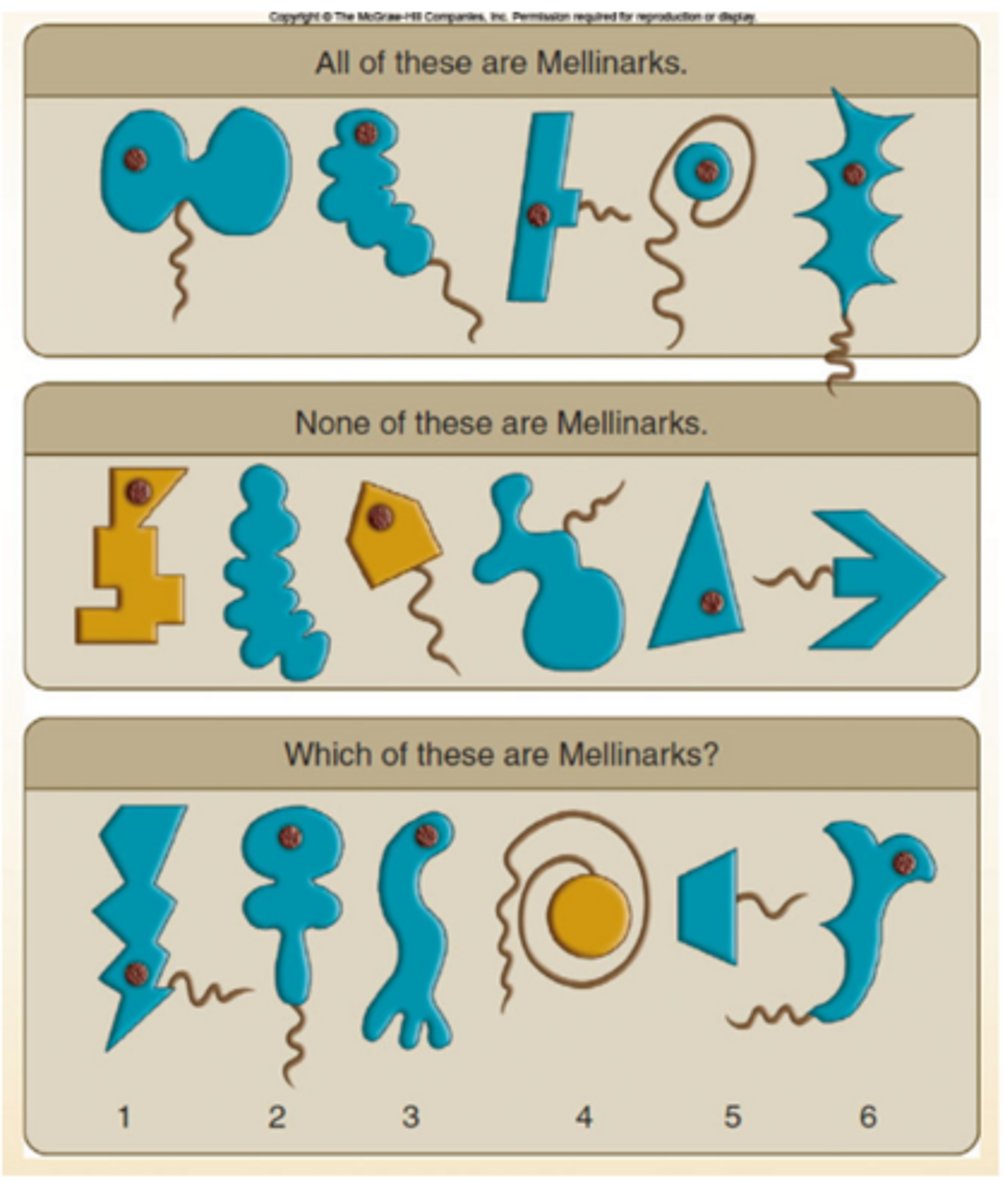
How many images in the bottom row are Mellinarks?
3
Which of the following data did Wegener NOT use to support his hypothesis of continental drift?
a. Fossil distributions on different continents
b. Fits of the edge of the continents
c. Match of mountain belts between different continents
d. Patterns of earthquake locations within ocean basins
e. Paleoclimate data (especially data on glacial deposits)
d. Patterns of earthquake locations within ocean basins
Science involves making observations and forming hypotheses. Which of the following statements is more accurate?
a. Observations are only as good as the hypotheses on which they are based.
b. Hypotheses are only as good as the observations on which they are based.
b. Hypotheses are only as good as the observations on which they are based.
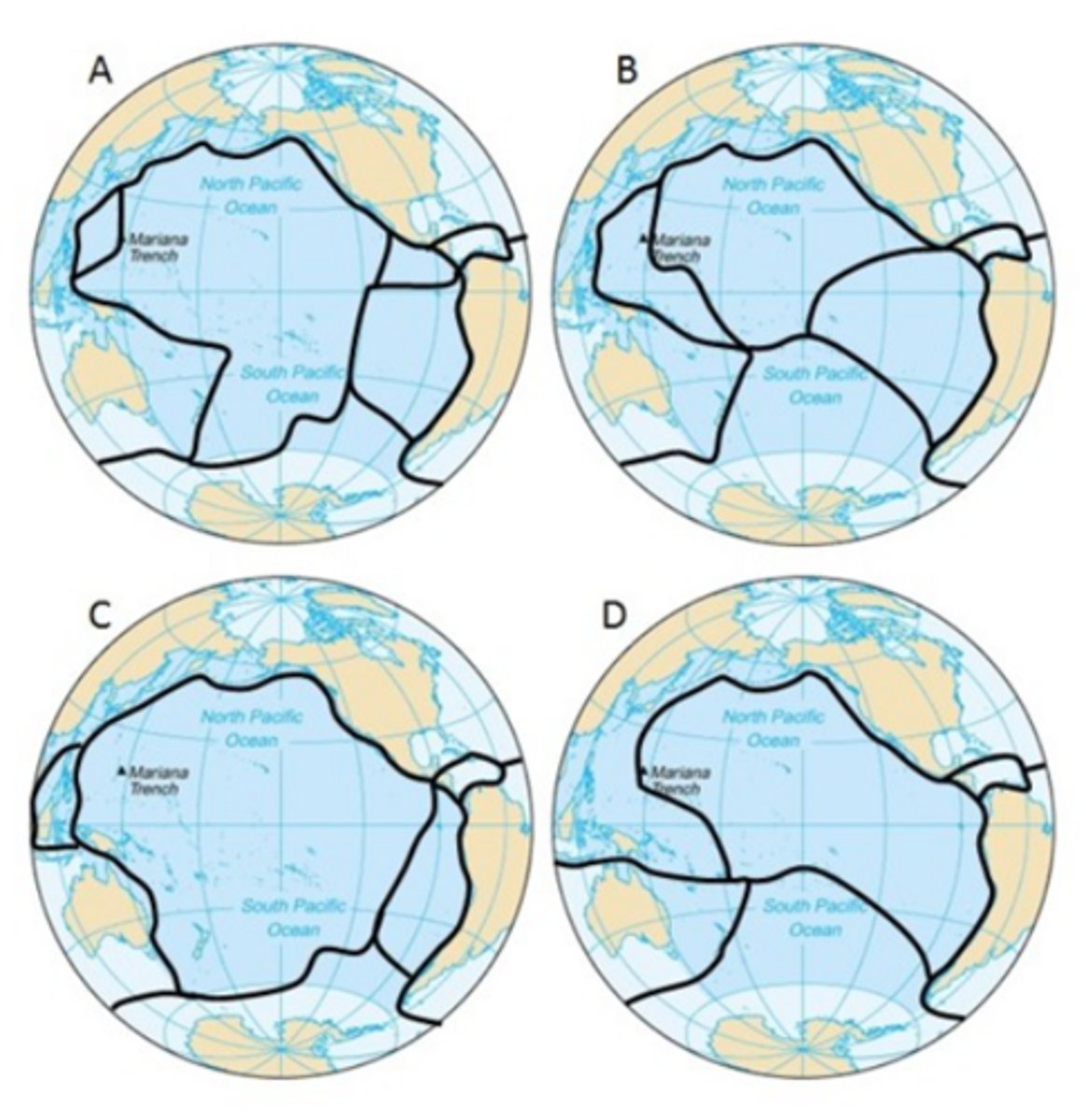
Which map best illustrates the locations of the plate boundaries in the Pacific Ocean?
a
Which of the following statements about tectonic plates is the most accurate (correct)?
a. A tectonic plate is a segment of the oceanic and continental crust that lies on top of the mantle.
b. A tectonic plate is composed of rocks in the asthenosphere and is in constant slow motion.
c. A tectonic plate is a rigid part of the Earth's crust that is constantly moving.
d. A tectonic plate consists of the crust and the top layer in the mantle.
e. A tectonic plate is made up of Earth's outer layer that is found in the upper mantle.
d. A tectonic plate consists of the crust and the top layer in the mantle.
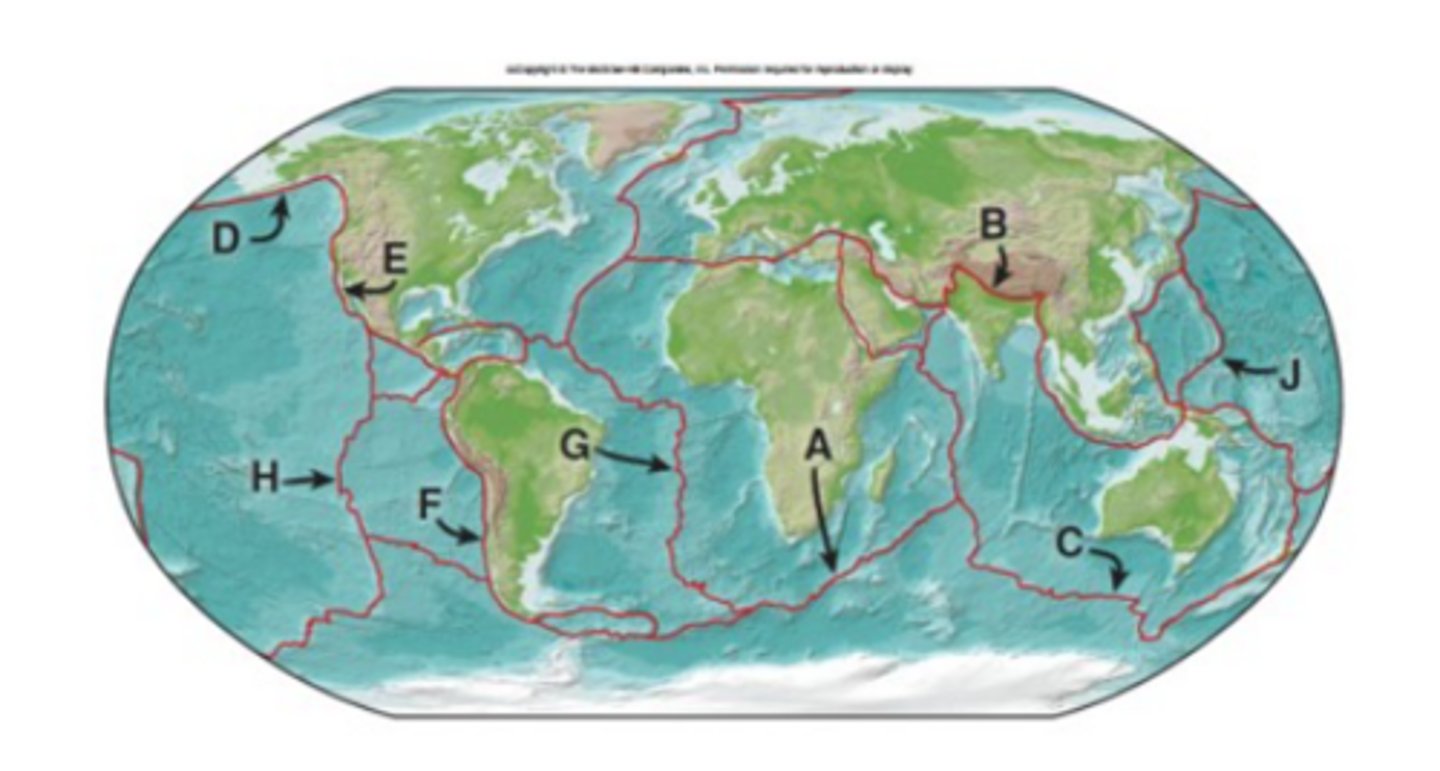
Which pair of locations has oceanic trenches?
a. A,C
b. D,F
c. B,E
d. G,H
b. D,F
Which of the following is NOT a visible outcome associated with tectonic plate activity?
A. Earthquakes
B. Volcano eruptions
C. Mountain formations
D. Stable sea levels
D. Stable sea levels
What layer is entirely liquid?
a. crust
b. lithosphere
c. asthenosphere
d. mesosphere
e. outer core
f. inner core
e. outer core
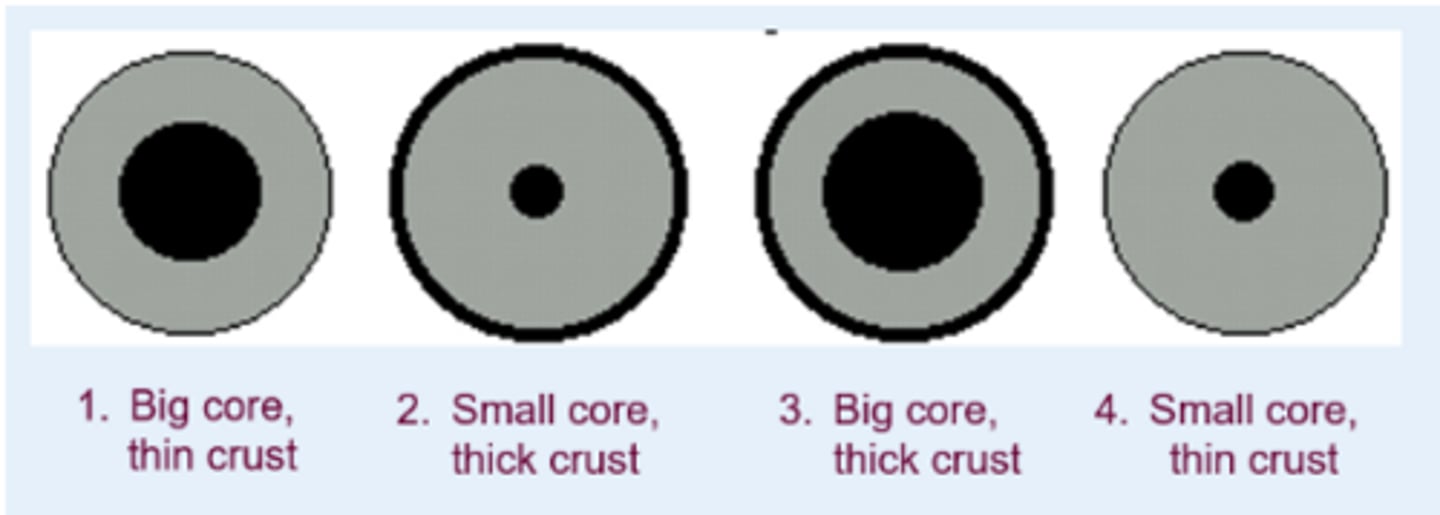
Which of the images best approximates the internal structure of our planet? In this image, core includes both the inner and outer core.
1
What is the principal cause of convection in Earth's mantle?
a. Earth's rotation on its axis.
b. Earthquakes and volcanic activity.
c. The transfer of heat within Earth's interior.
d. The movement of tectonic plates.
c. The transfer of heat within Earth's interior.
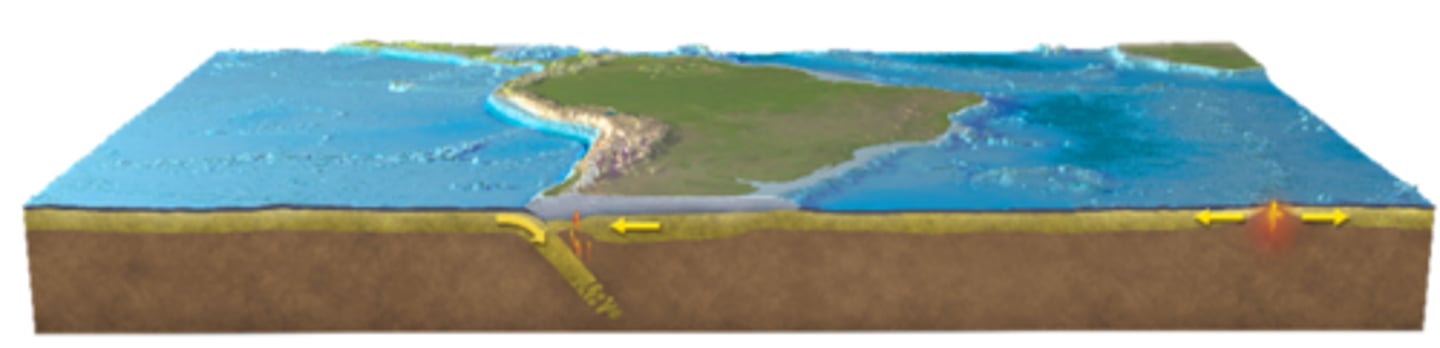
How many tectonic plates are illustrated in the cross-section of this image?
3

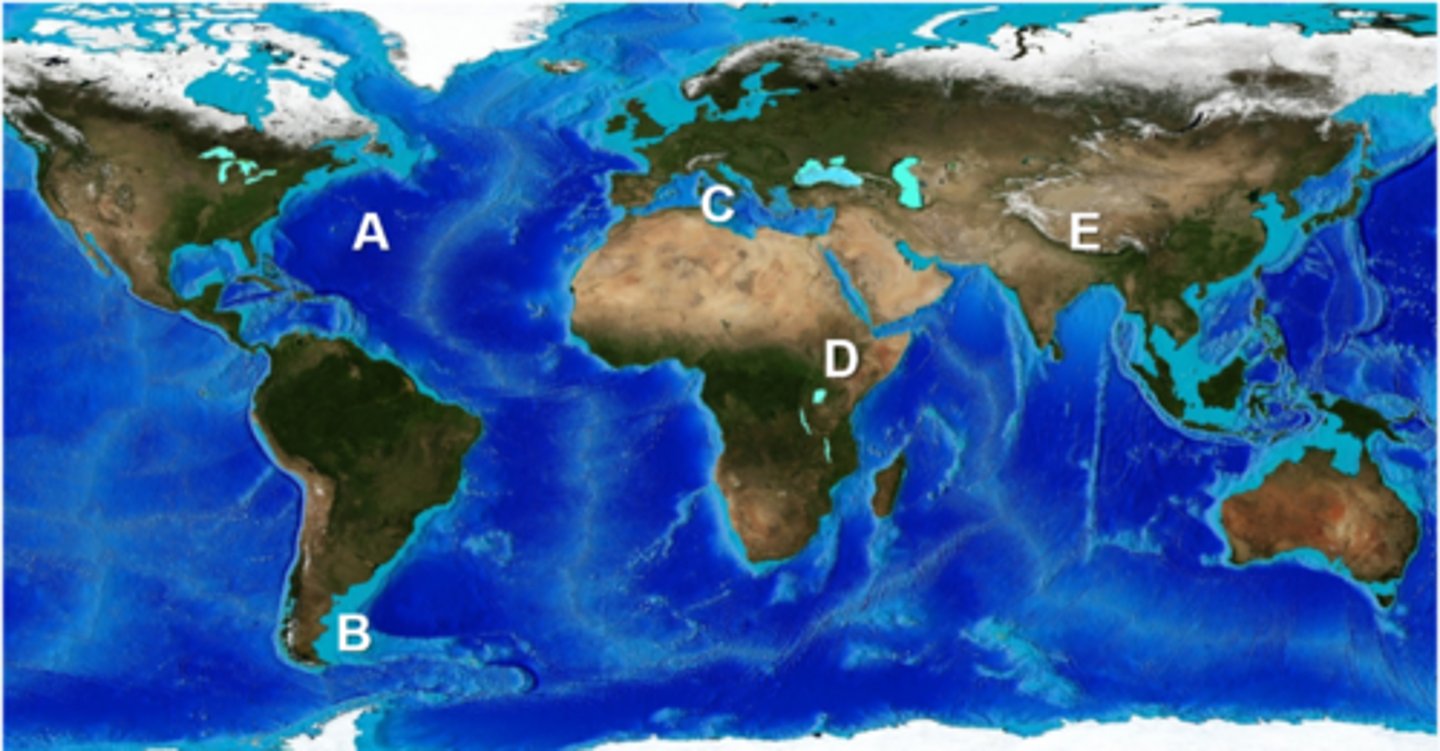
Which location is presently experiencing the first stage (initiation) in the formation of an ocean basin?
d
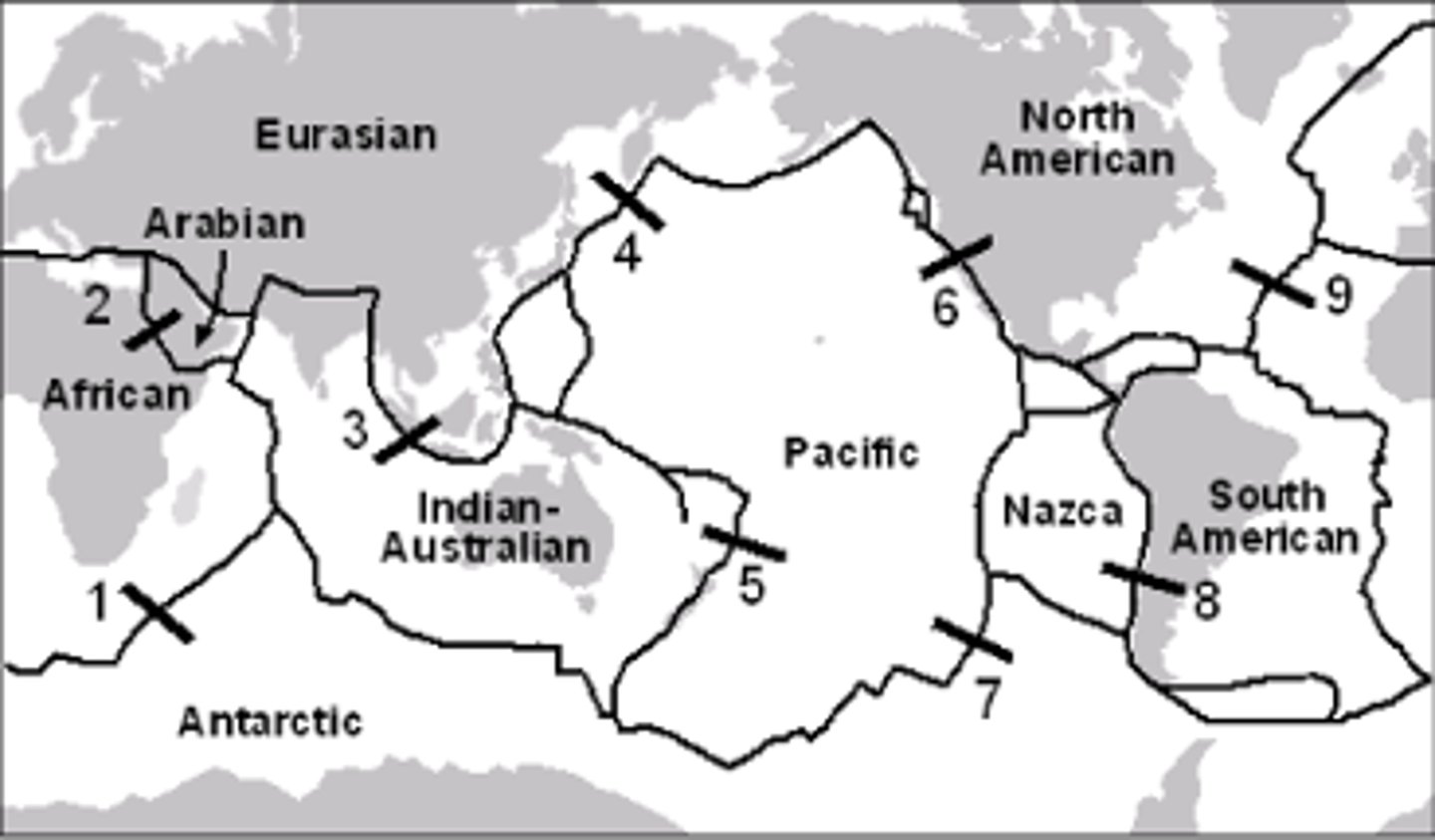
Which of the locations on the map all represent examples of divergent plate boundaries?
2, 7, 9
Divergent Plate boundaries are typically characterized by oceanic (ridges/trenches)
ridges
True or False:
Earthquakes are associated with divergent plate boundaries
True
True or False:
Most active volcanoes are found along divergent plate boundaries
False
What is the source of magma that forms at oceanic ridges?
Melting of the (lithosphere/asthenosphere)
asthenosphere
Divergent plate boundaries initially form by breaking apart
a. old, cold oceanic lithosphere
b. continental lithosphere
b. continental lithosphere
Raleigh is moving (away from/toward) a divergent boundary in the Atlantic Ocean.
away from
How many plates are associated with a typical divergent plate boundary?
two
Oceanic ridges are found
a. in all ocean basins
b. only in the Atlantic and Pacific oceans
a. in all ocean basins
Which of these plate boundaries are divergent plate boundaries? (Select all that apply)
a. Nazca and South American plates
b. Indian-Australian plate and Antarctica plate
c. Pacific plate and Eurasian plate
d. African plate and South American plate
e. North American and Eurasian plate
f. Nazca plate and Pacific plate
b. Indian-Australian plate and Antarctica plate
d. African plate and South American plate
e. North American and Eurasian plate
f. Nazca plate and Pacific plate