Urinary System Chp. 7 slide shows
 Call Kai
 Learn
Learn Practice Test
 Spaced Repetition
 Match
Match Flashcards
 Knowt Play
1/141

There's no tags or description
Looks like no tags are added yet.
Name | Mastery | Learn | Test | Matching | Spaced | Call with Kai | Chat |
|---|
No analytics yet
Send a link to your students to track their progress
142 Terms
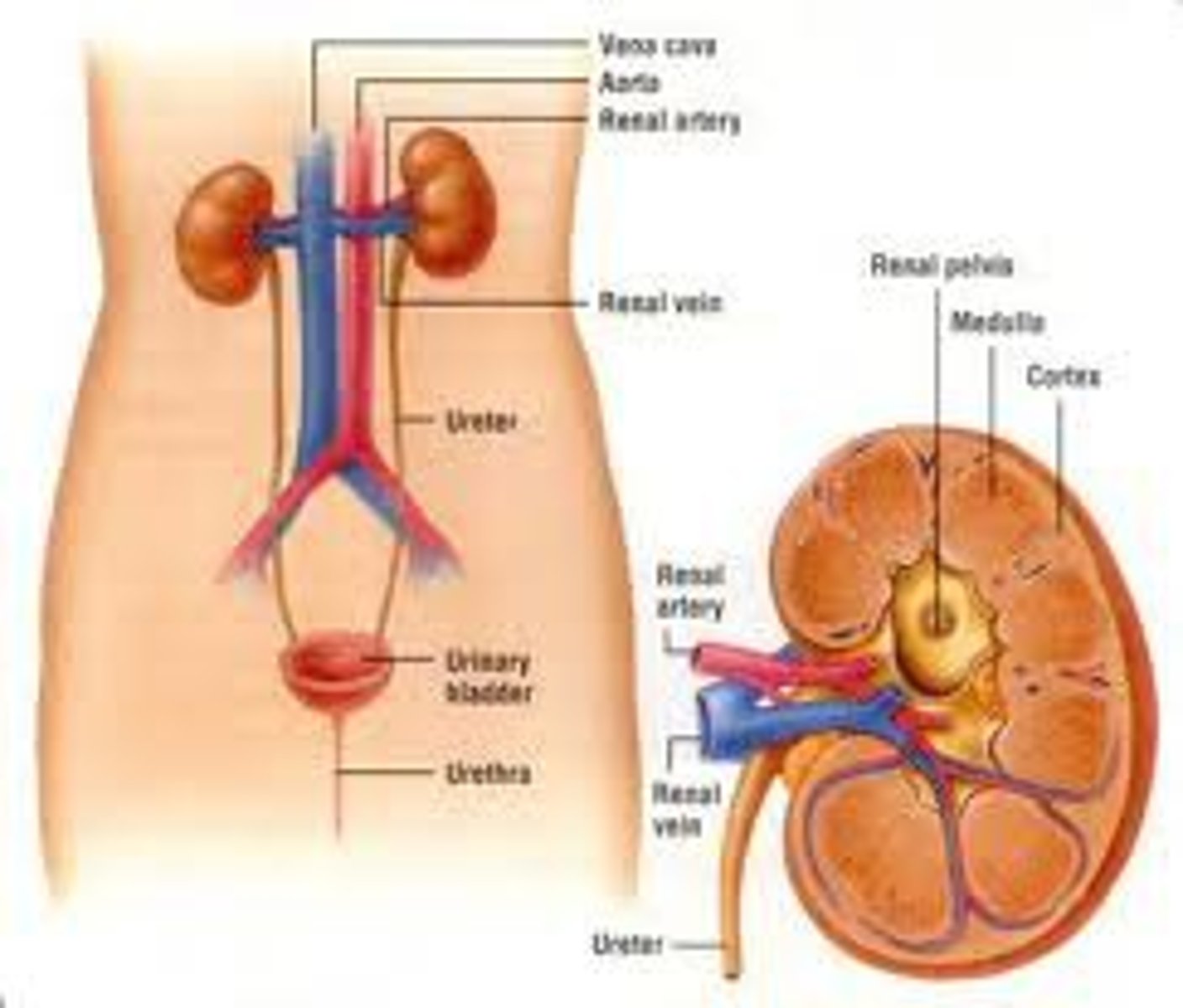
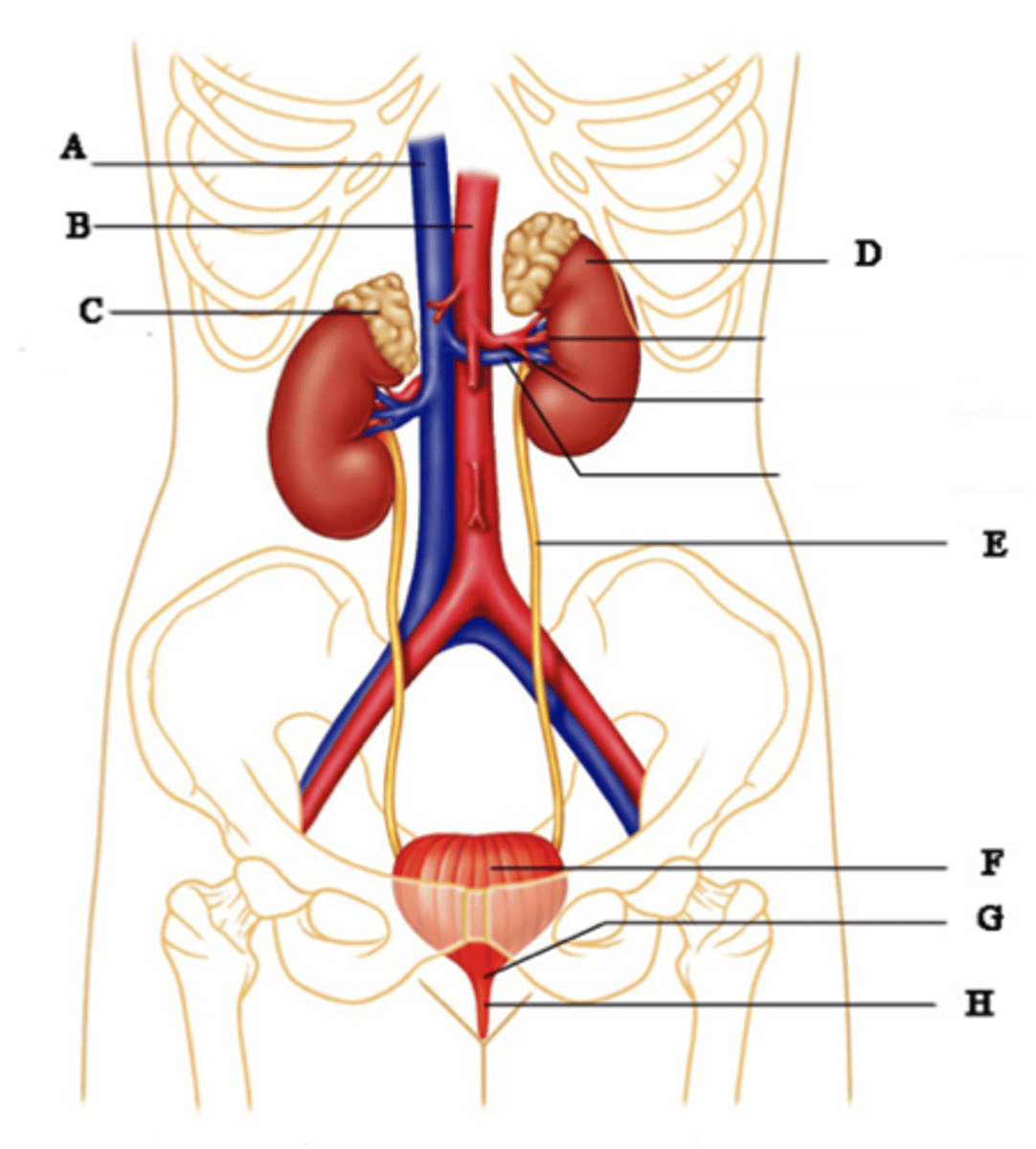
The excretory (urinary) system is composed of what?
- 2 kidneys
- 2 ureters
- 1 urinary bladder
- 1 urethra
What is the primary function of the excretory (urinary) system
- production/ excretion of urine
- filtration/ detoxification of blood
- maintains body physiology by: balancing pH, minerals, iron, & salt levels
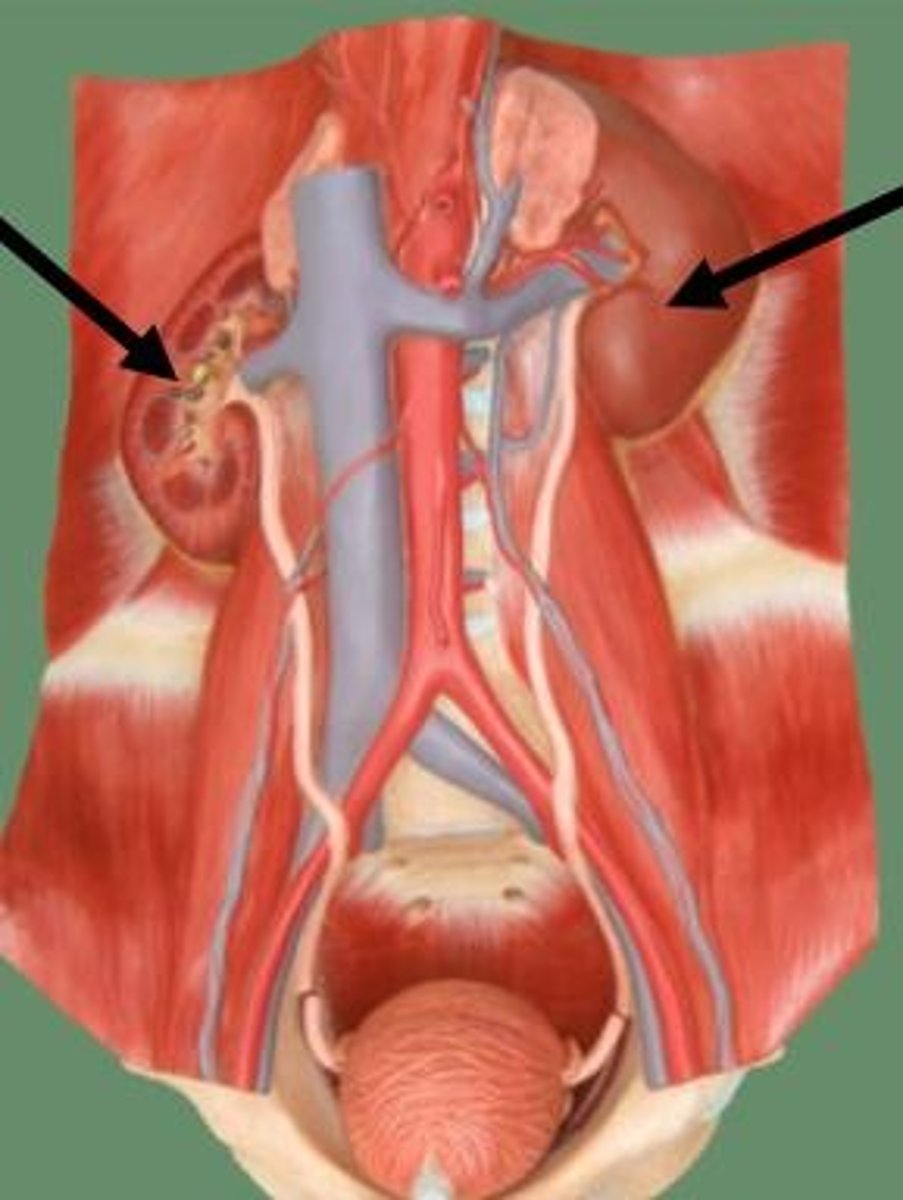
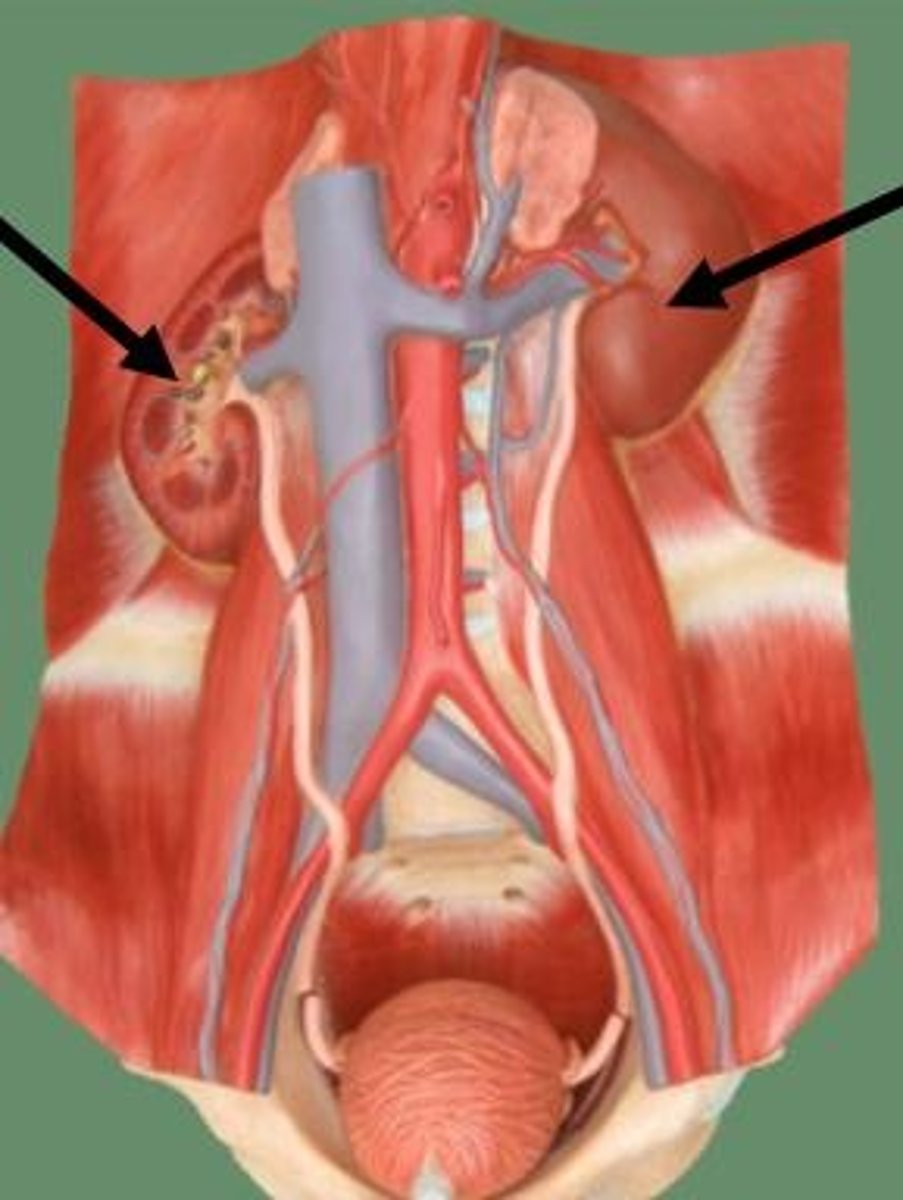
What are the functions of the inferior vena cava and aorta
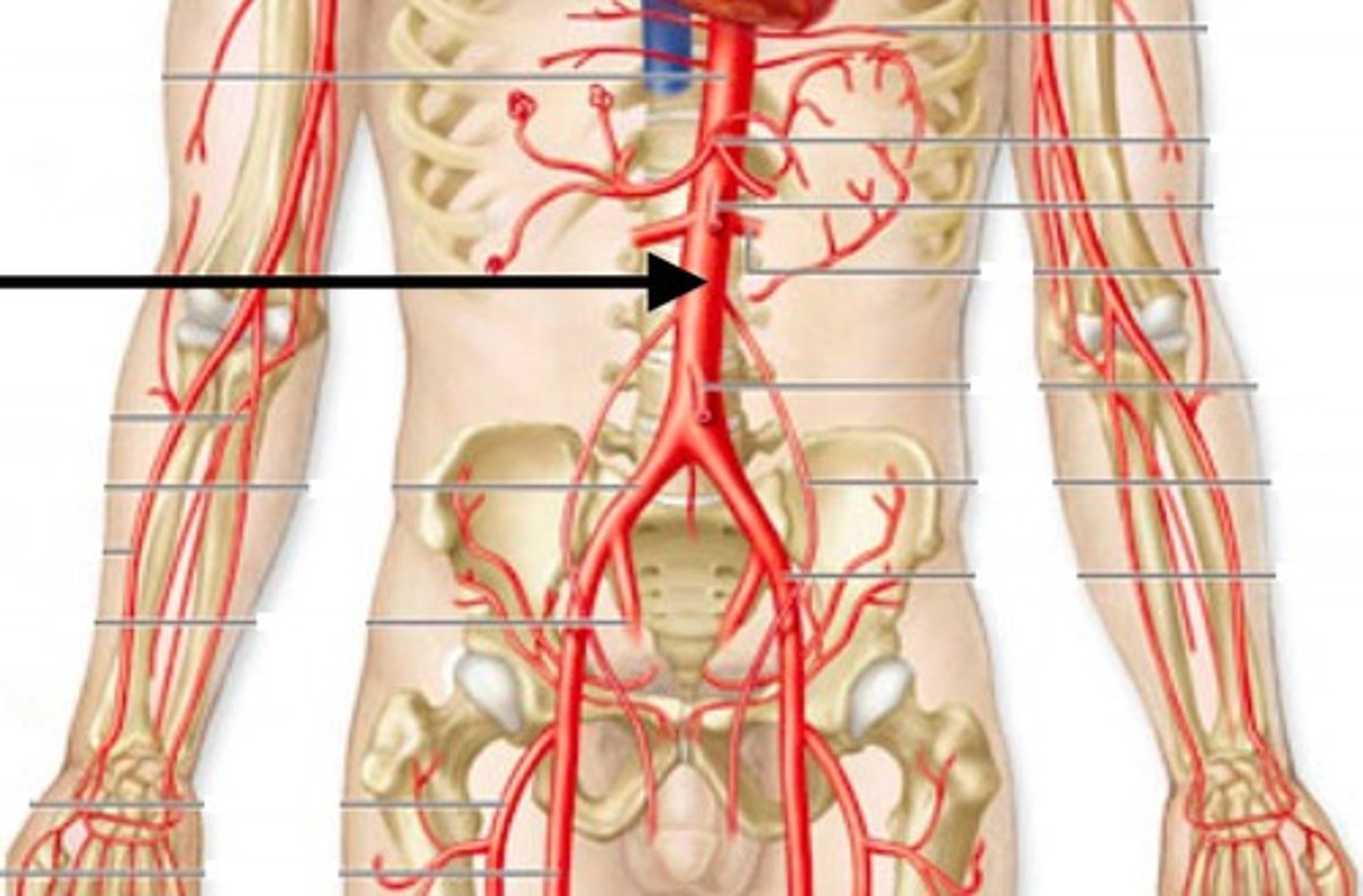
the IVC drains the kidneys and the aorta feeds the kidneys
What is the shape of the 2 kidneys?
bean-shaped
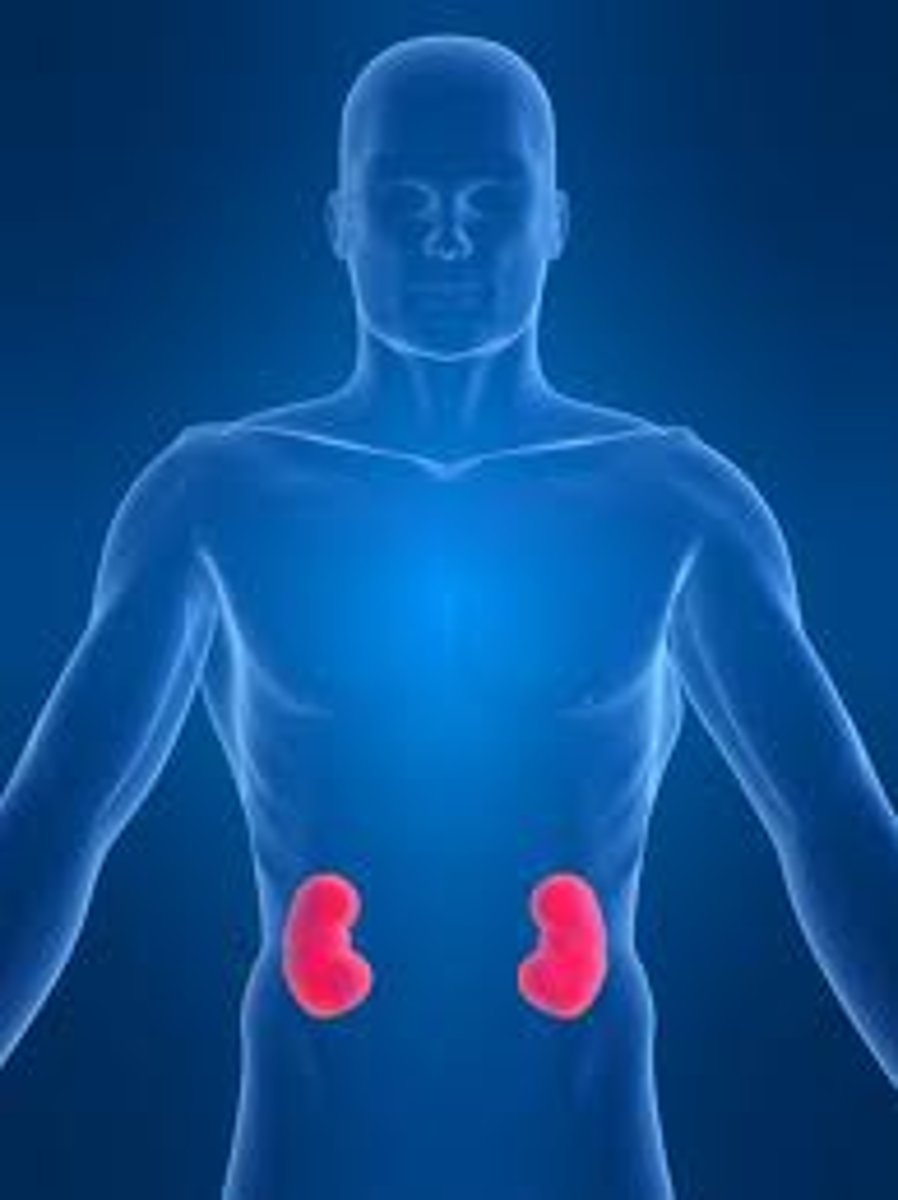
Where are the kidneys located?
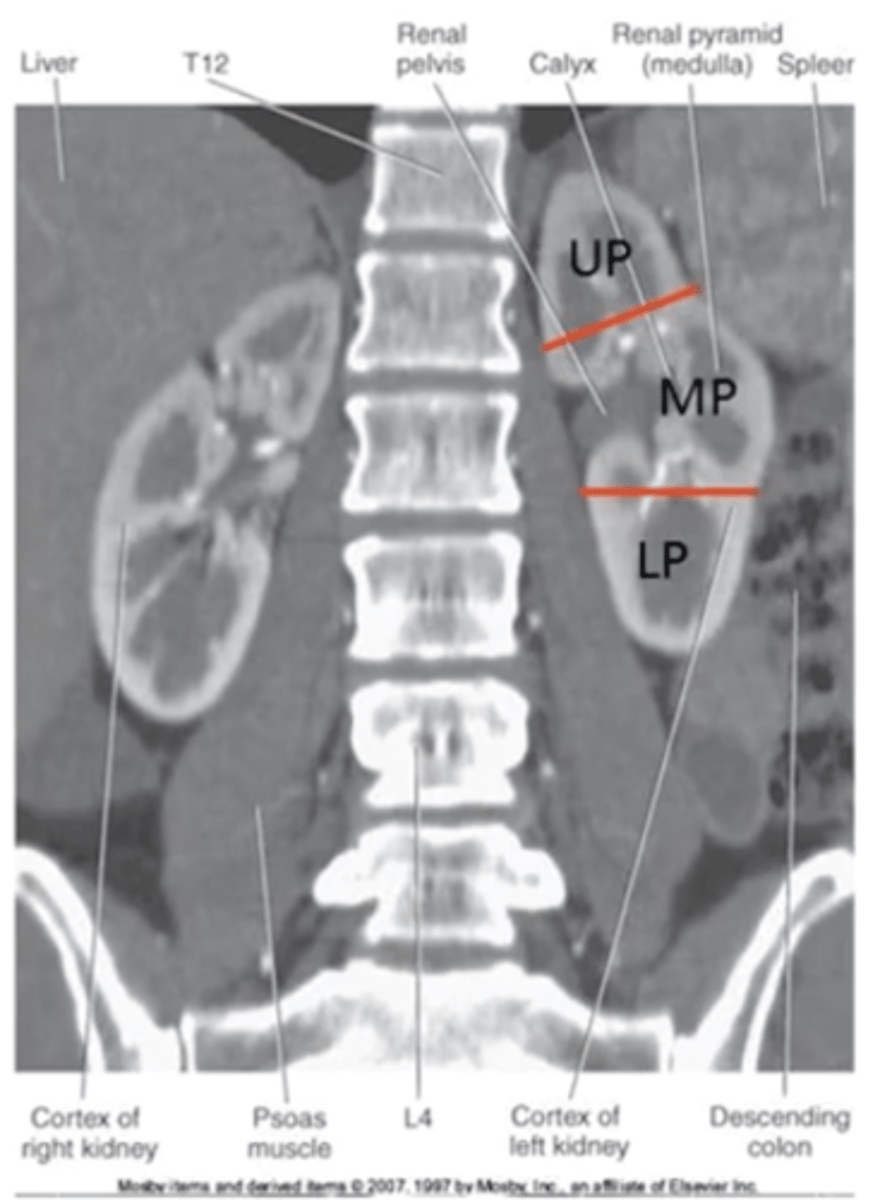
beside the spine, between T12- L4
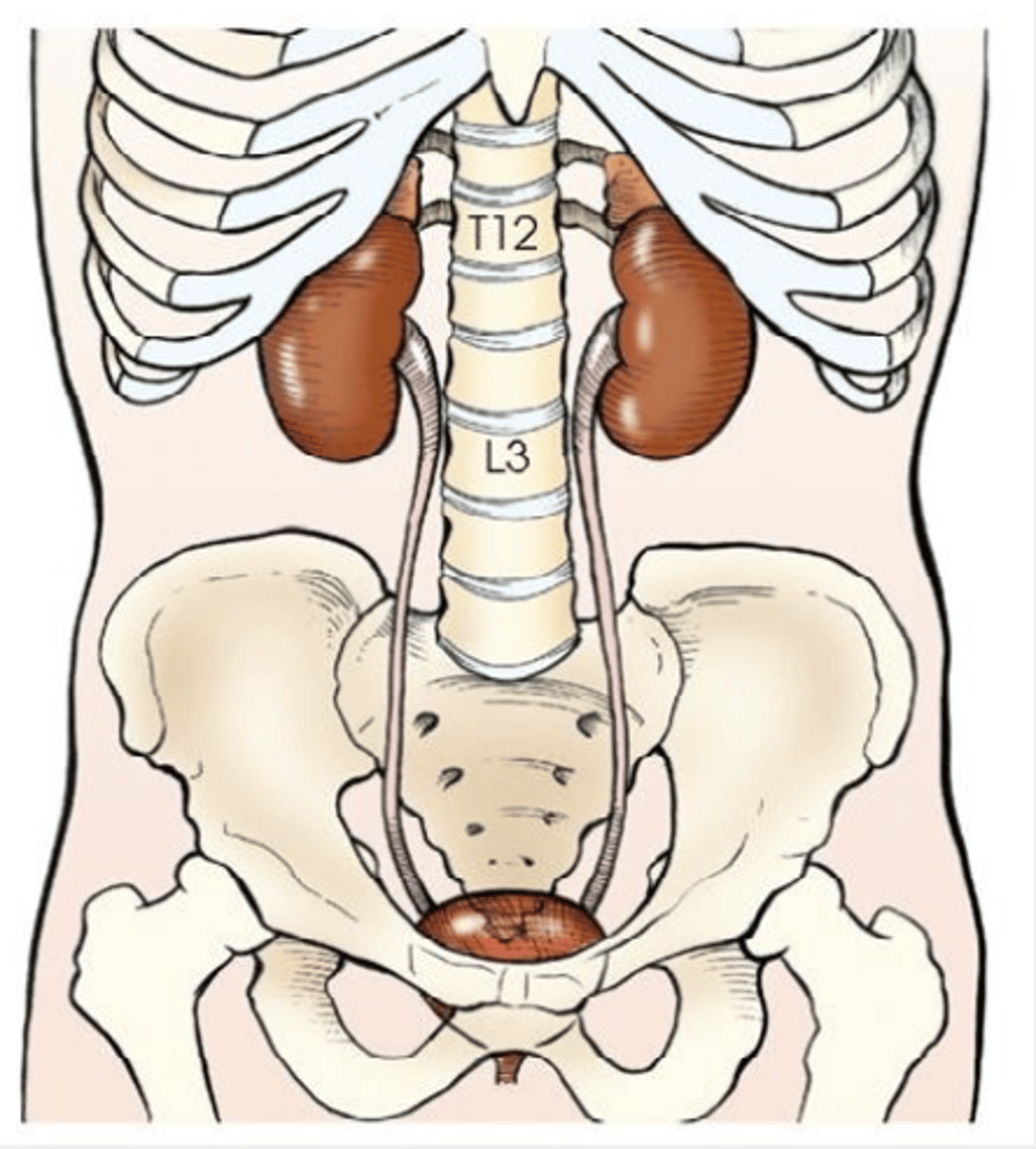
What does "retroperitoneal" mean in relation to the kidneys?
The kidneys are located behind the peritoneal lining of the abdominal cavity.
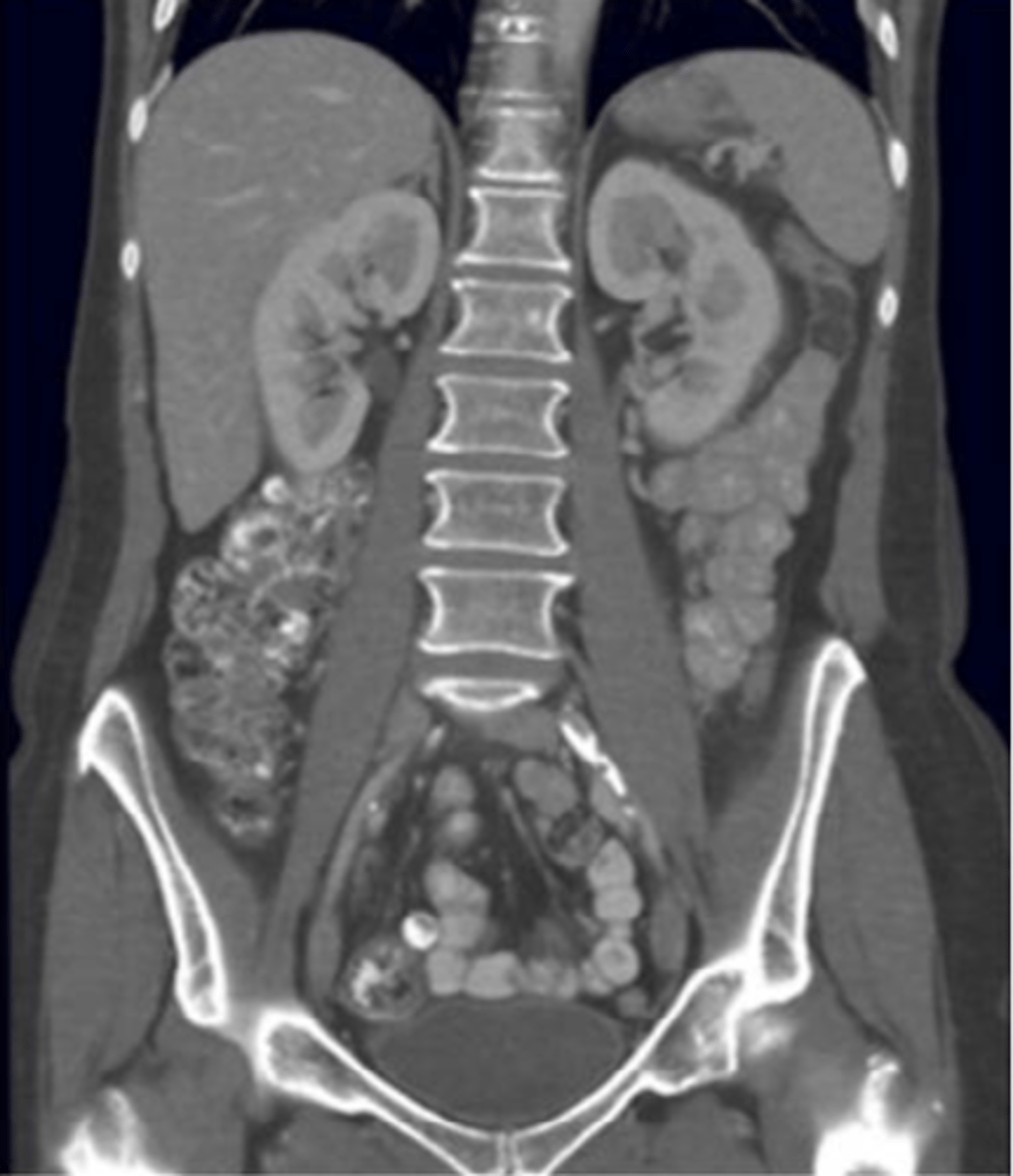
Which kidney is more superior (sits up higher)?
the left kidney
Why is the left kidney more superior than the right?
due to the liver located in the RUQ
The kidneys lay In what kind of plane?
an oblique plane
How are the kidneys rotated in the body?
They are rotated 30 degrees anteriorly toward the descending aorta
What radiographic positions best demonstrate the kidneys?
30° LPO (Left Posterior Oblique) or RPO (Right Posterior Oblique).
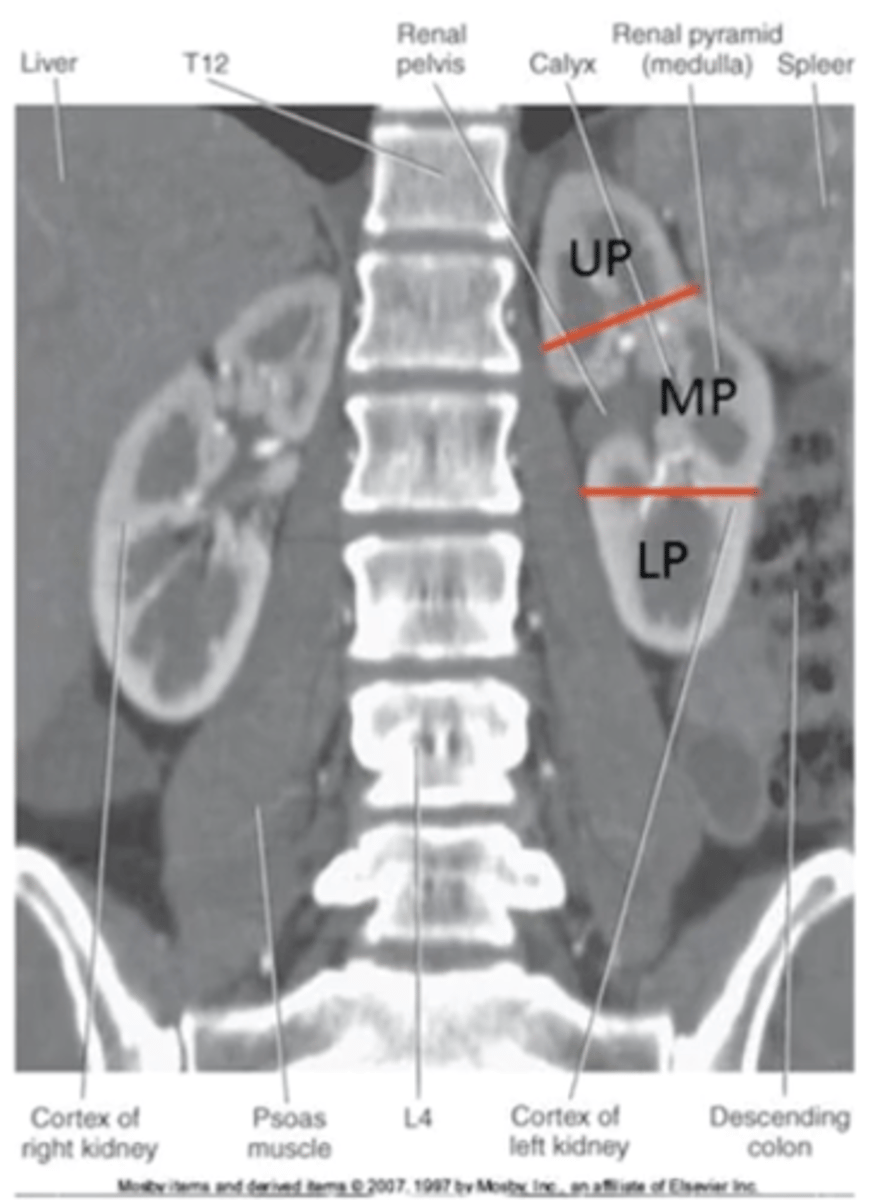
In a 30° LPO or RPO position, how does the lower pole of the kidney lie in relation to the IR?
Perpendicular to the IR.
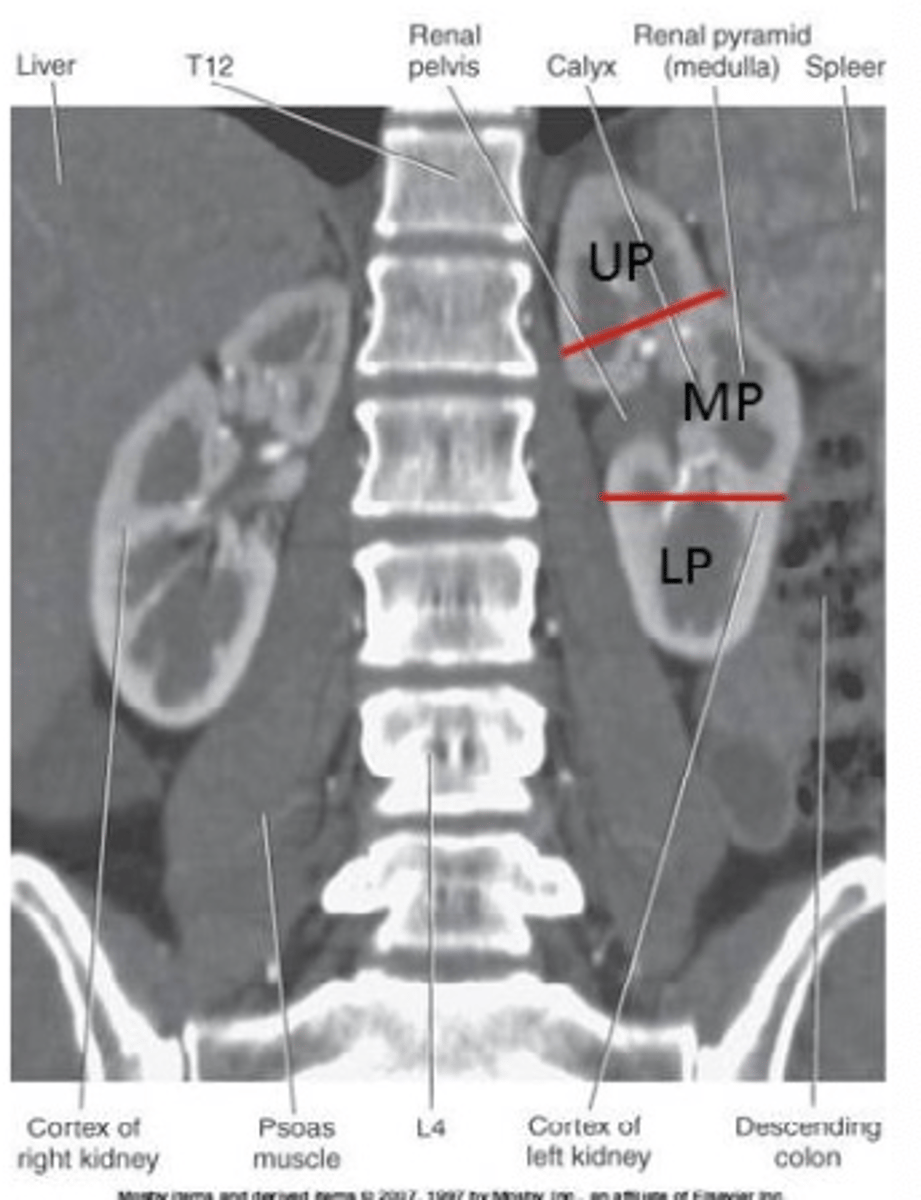
In a 30° LPO or RPO position, how does the upper pole of the kidney lie in relation to the IR?
Parallel to the IR.
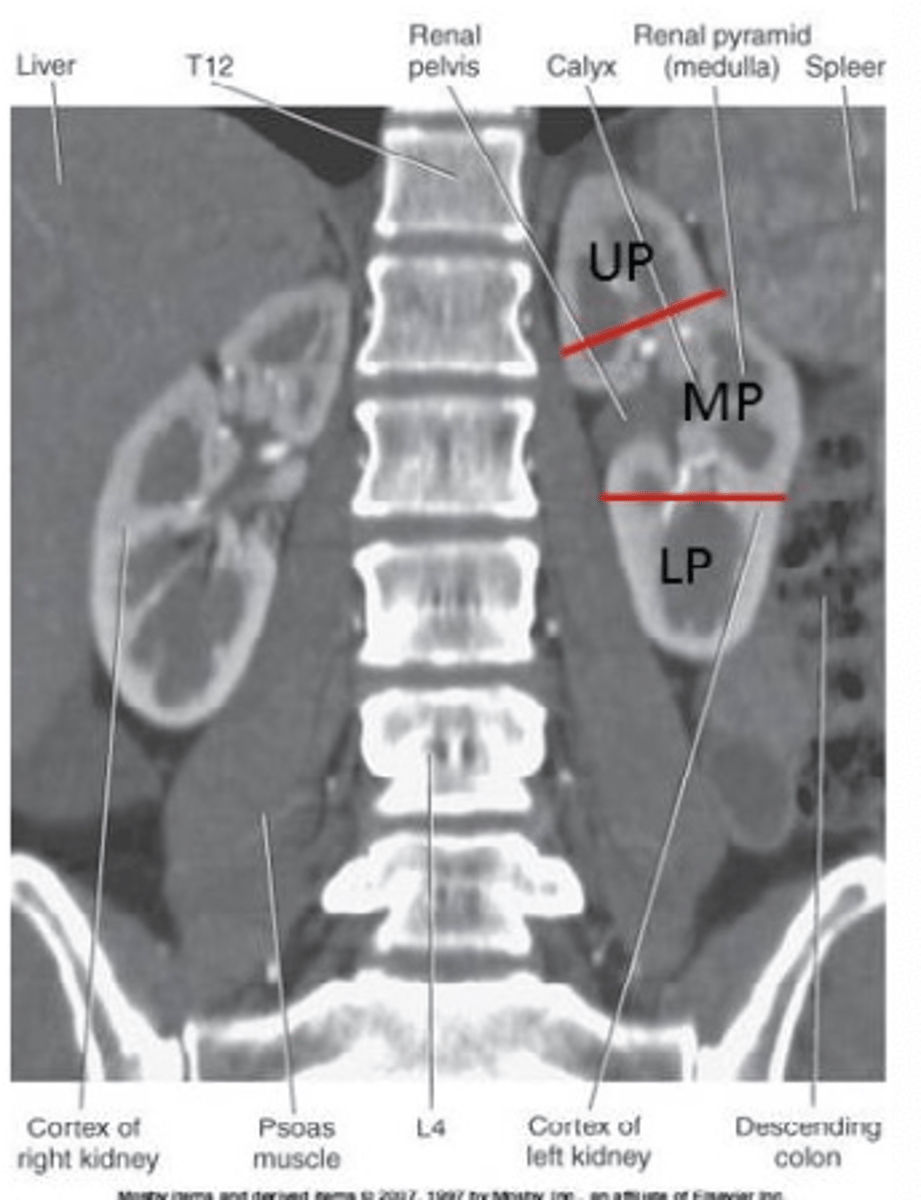
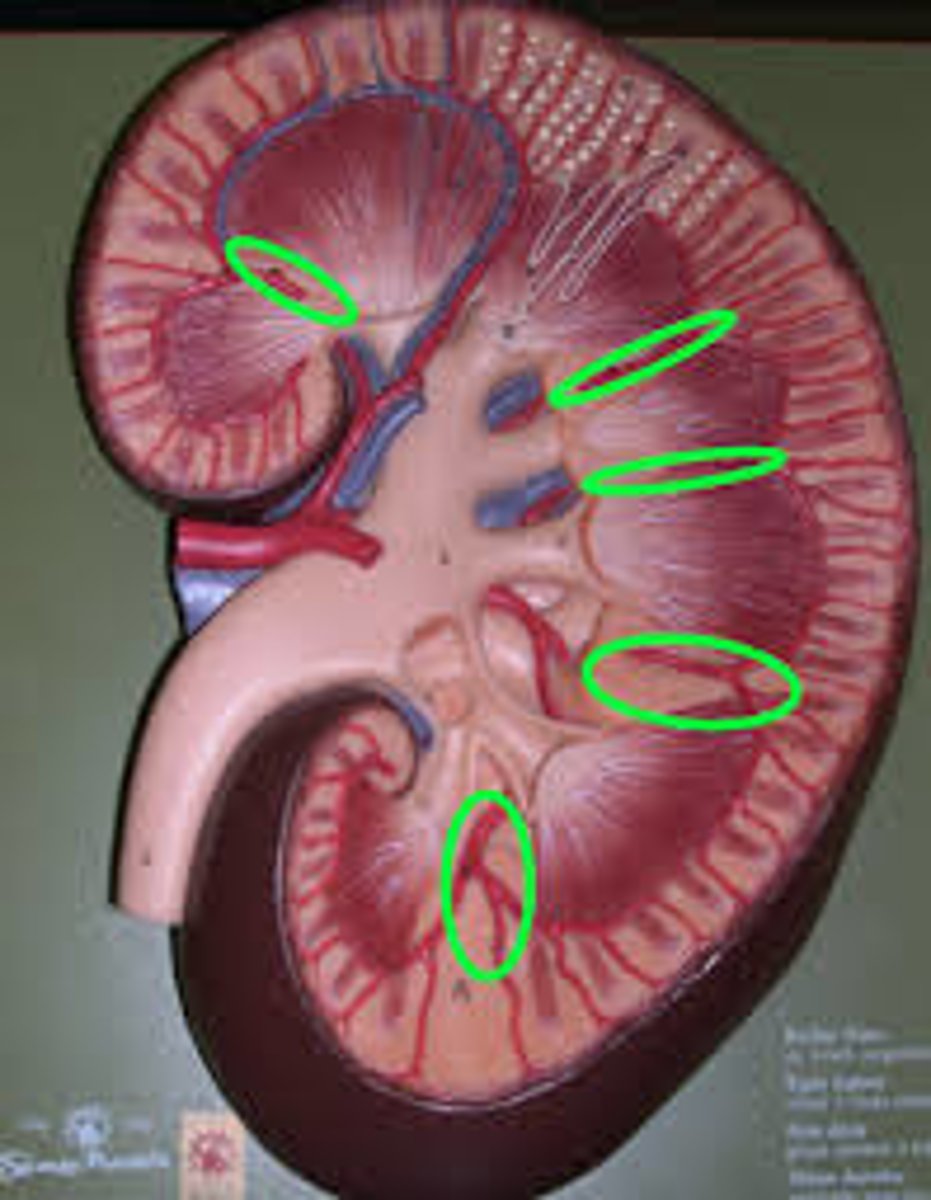
The outer portion of the kidneys are called?
The Renal Cortex
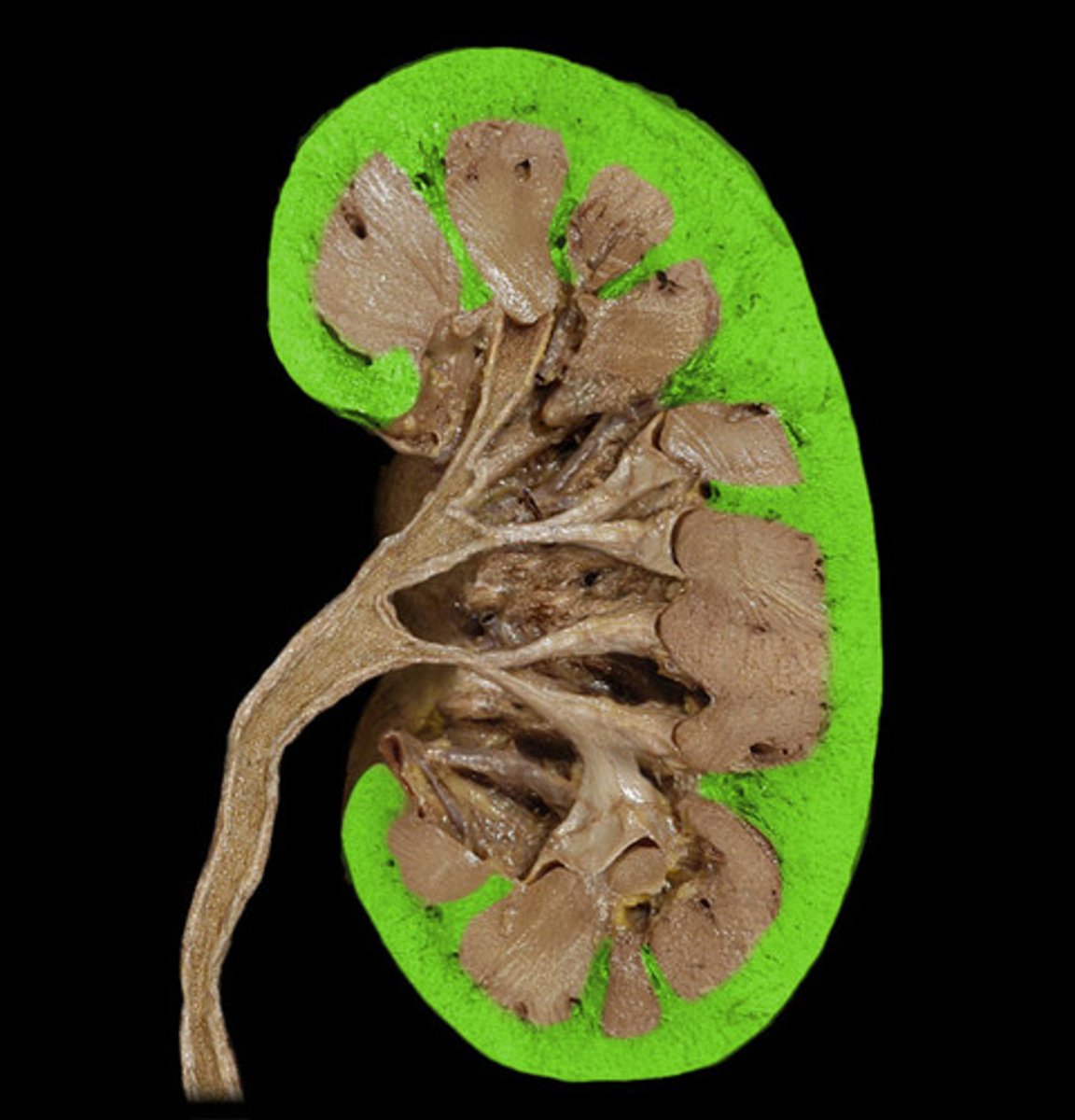
How much of the kidney tissue does the renal cortex make up?
The outer 1/3 of renal tissue.
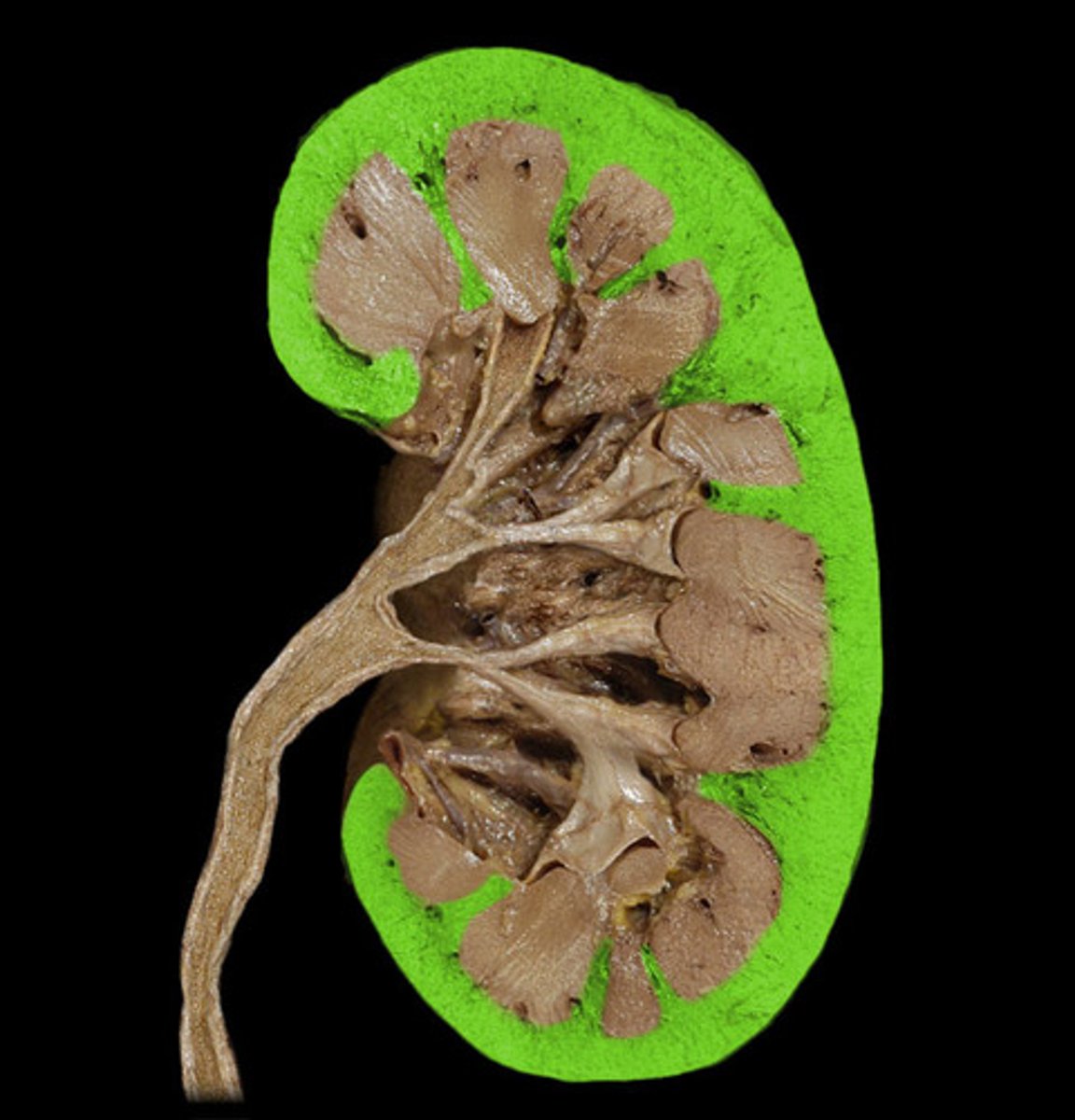
Where does filtration occur in the kidney?
In the renal cortex.
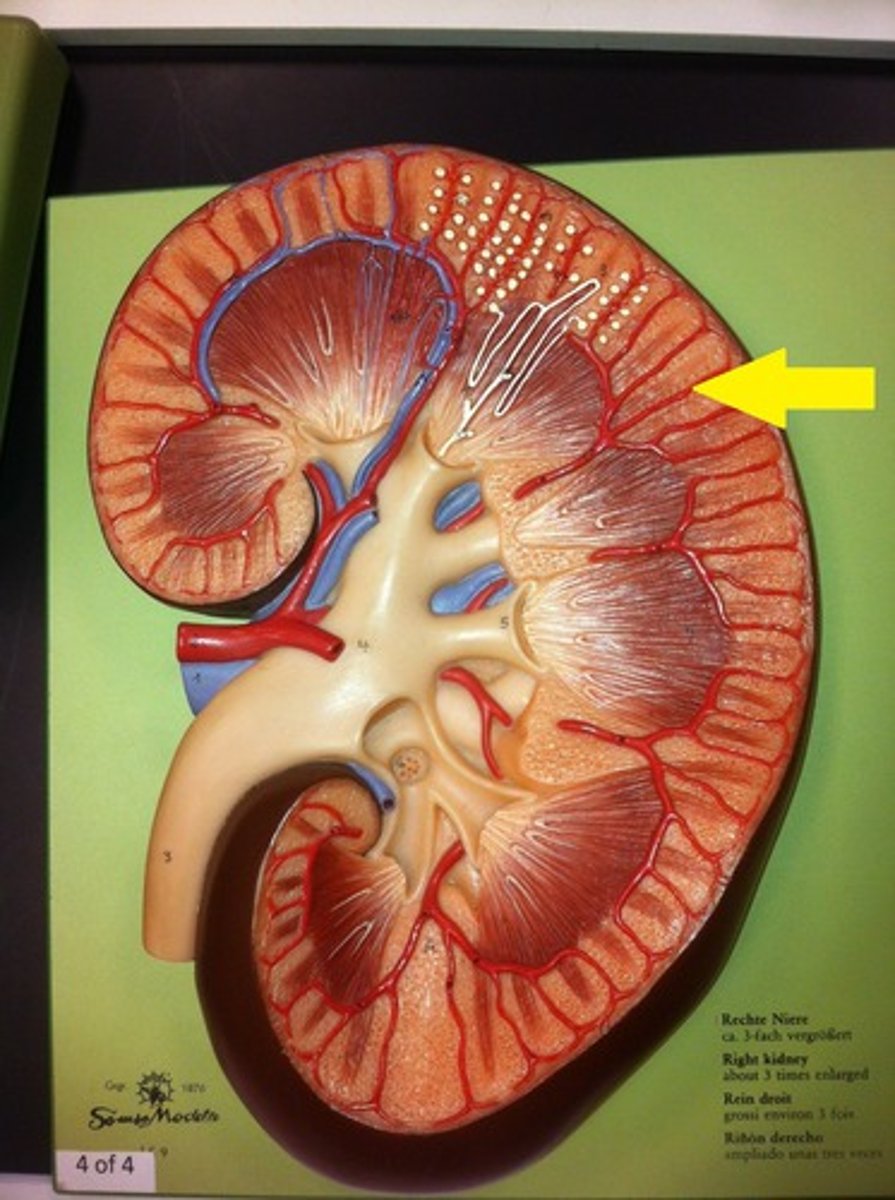
What are the cortex areas between the medullary pyramids called?
Columns of Bertin.
What is the functional unit of the urinary system?
The nephron.
The body contains what amount of nephrons that help filter the blood in the kidneys?
1 million
Where is the nephron located?
In the renal cortex.
The inner portion of the kidneys are called?
Renal Medulla
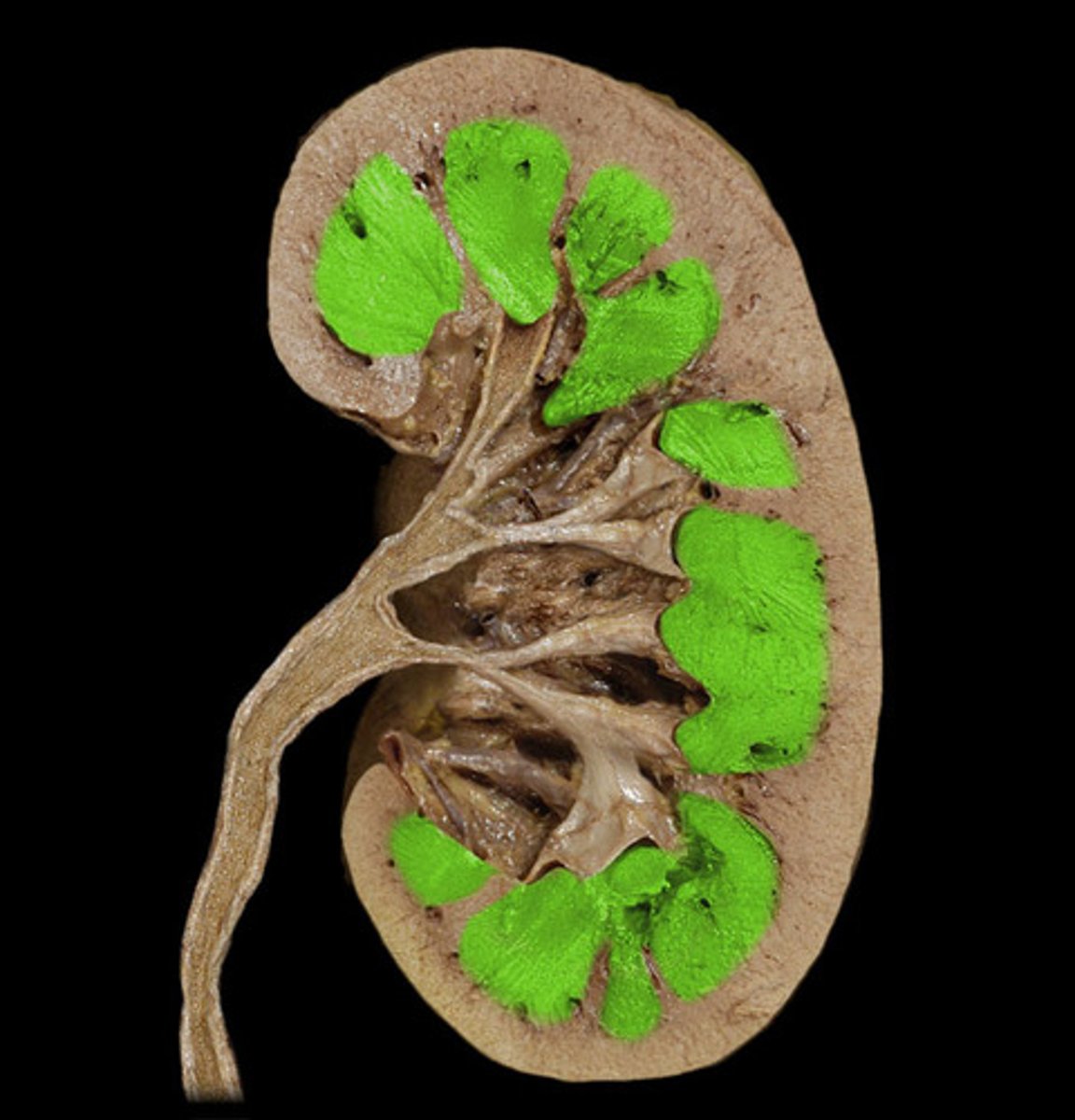
Where does reabsorption/ collection happen in the kidneys?
The renal medulla
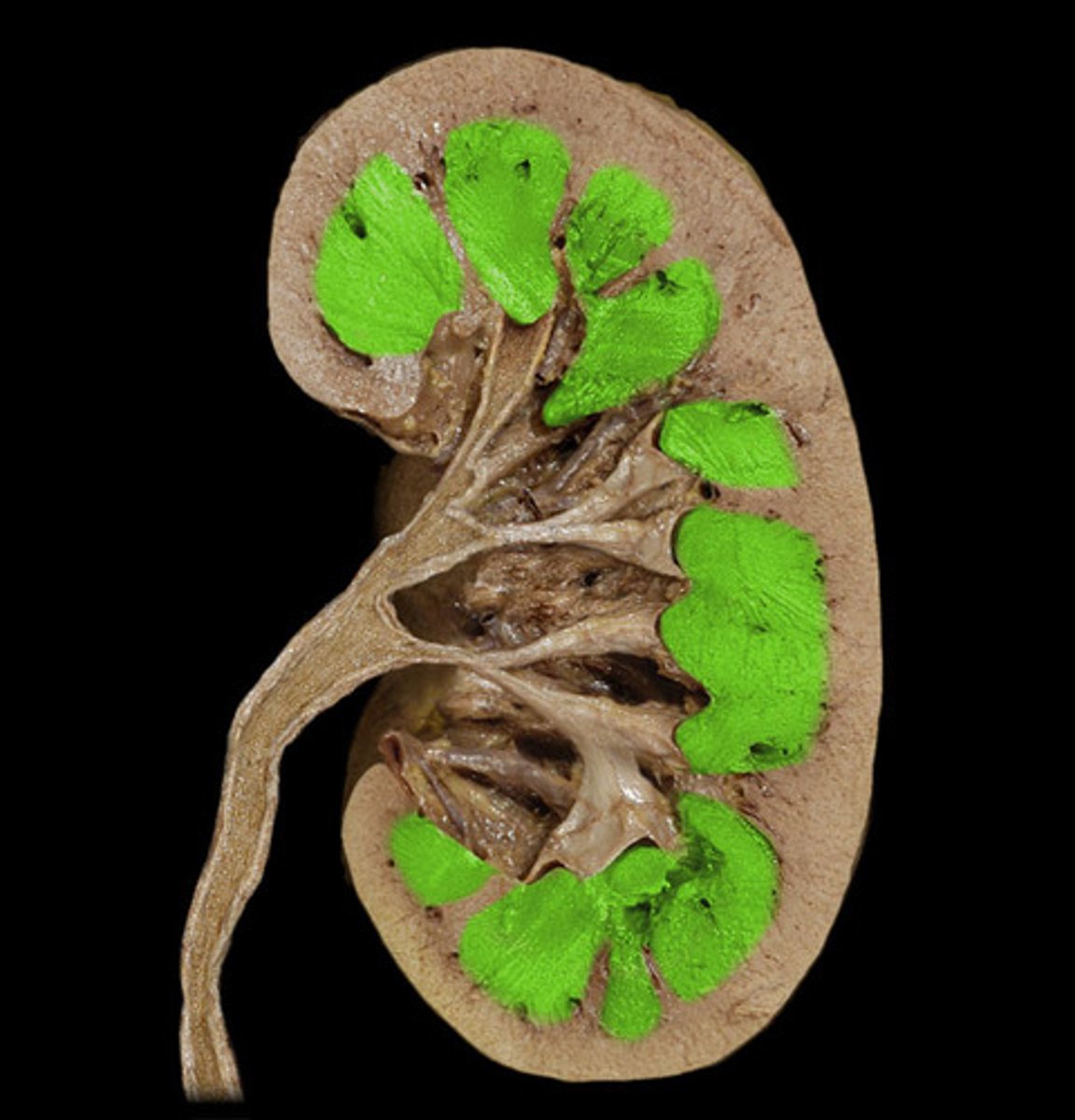
What shapes are the renal medulla structures?
Triangular, round, or blunted urine-filled areas.
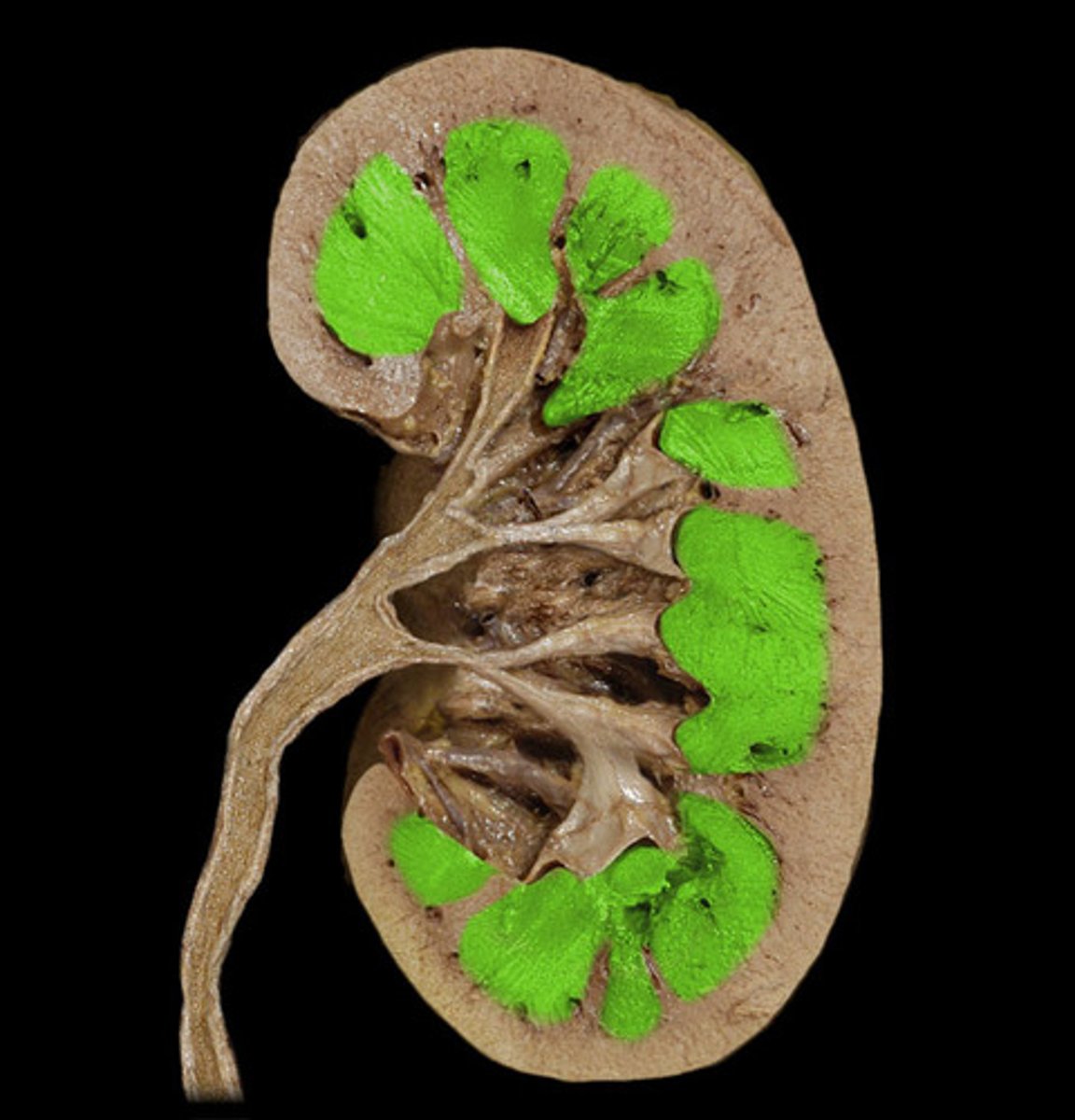
How many medullary pyramids are in the kidney?
8 to 18.
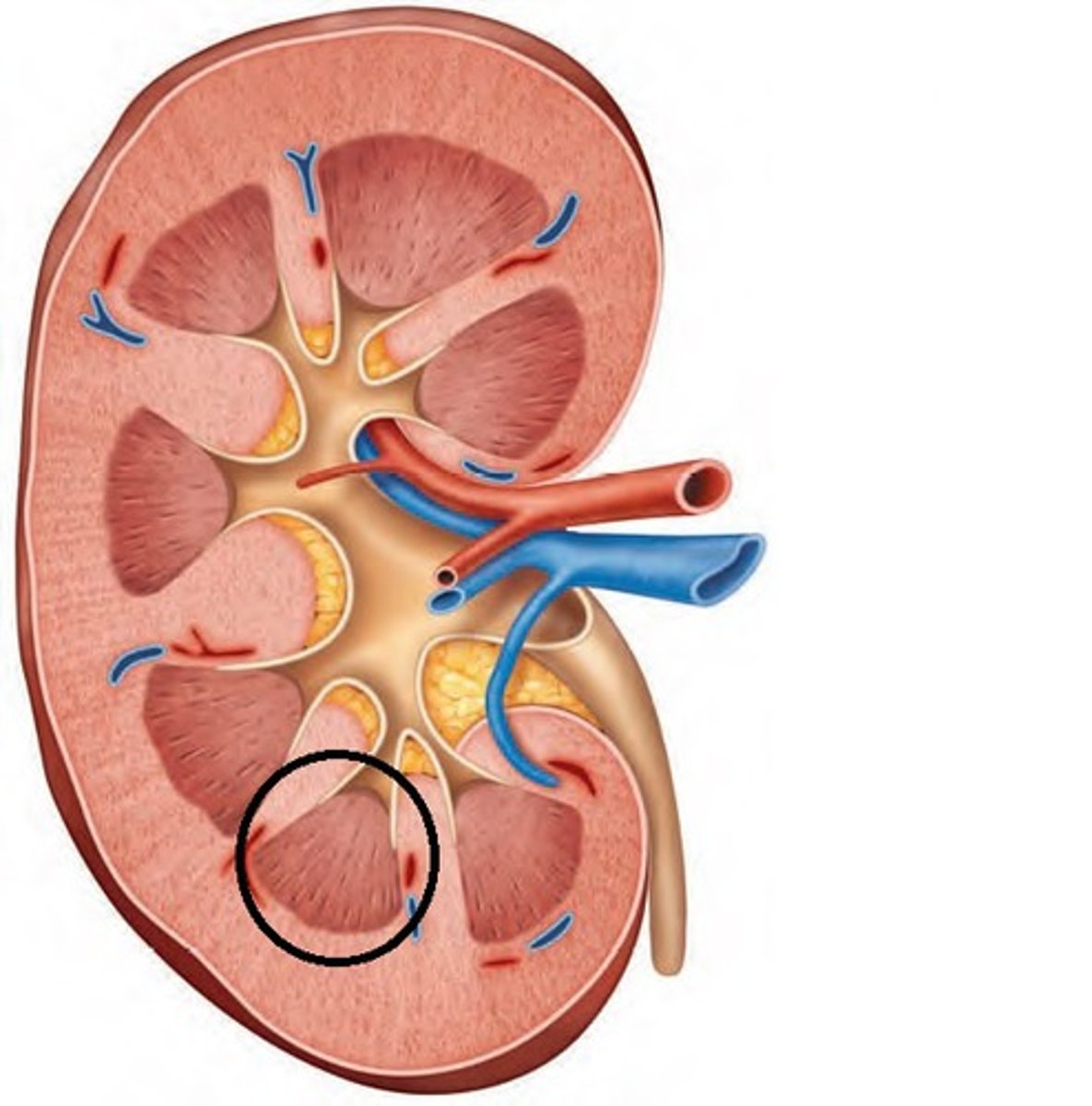
What do the medullary pyramids contain?
Loops of Henle.
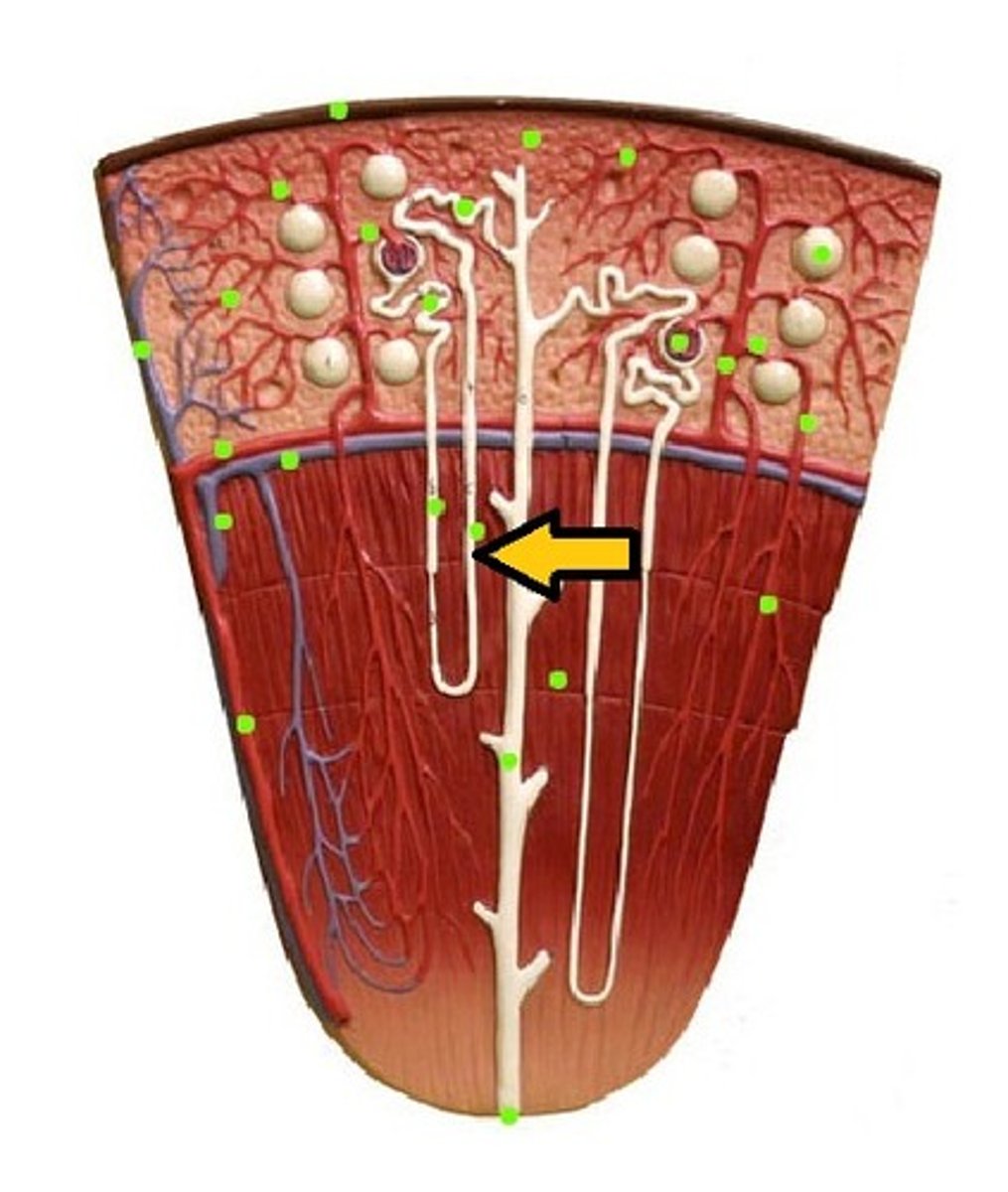
Where does the broad base of each pyramid sit?
Within the renal cortex.
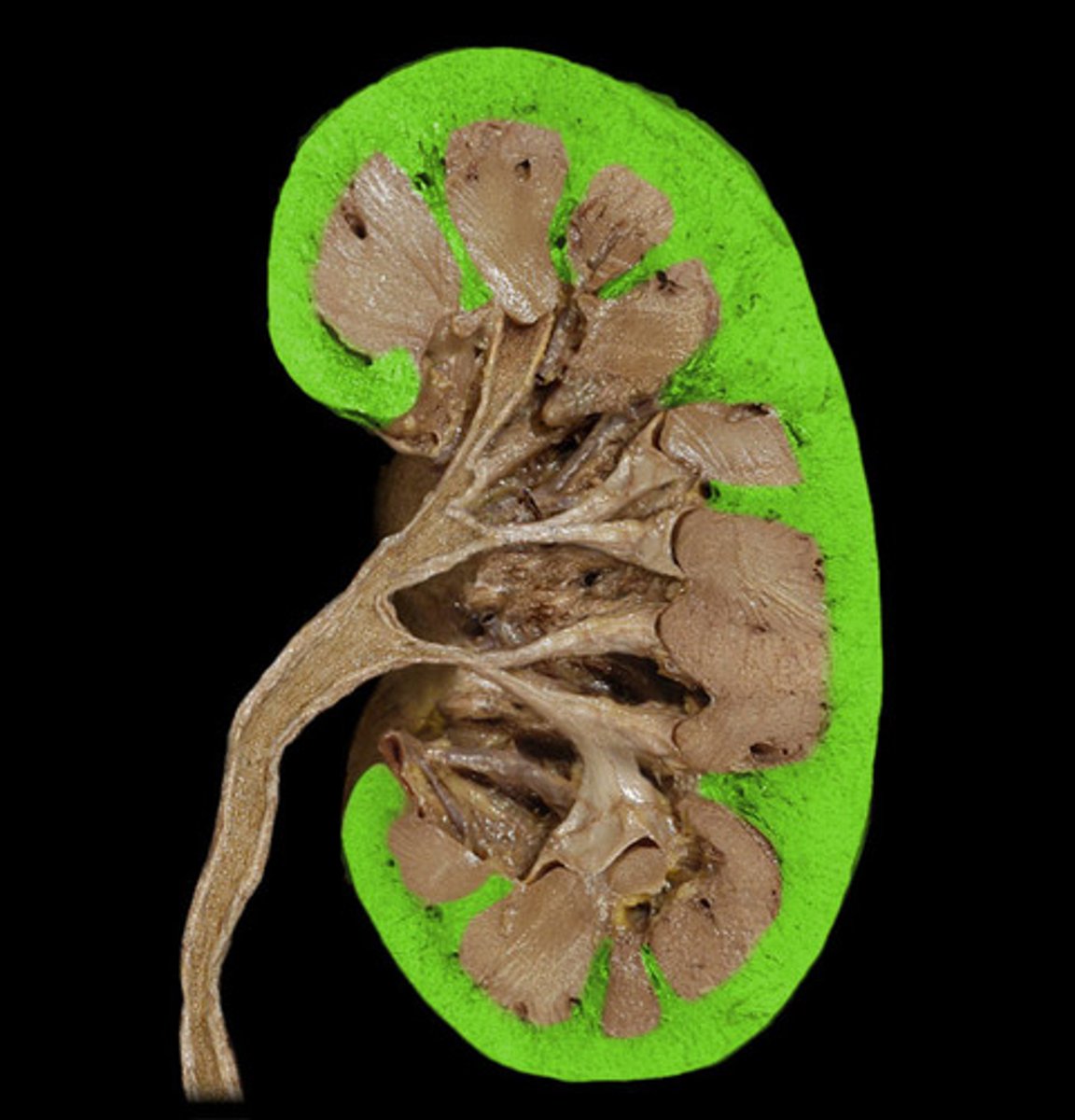
Where does the apex (narrow tip) of each pyramid sit?
Within a minor calyx.
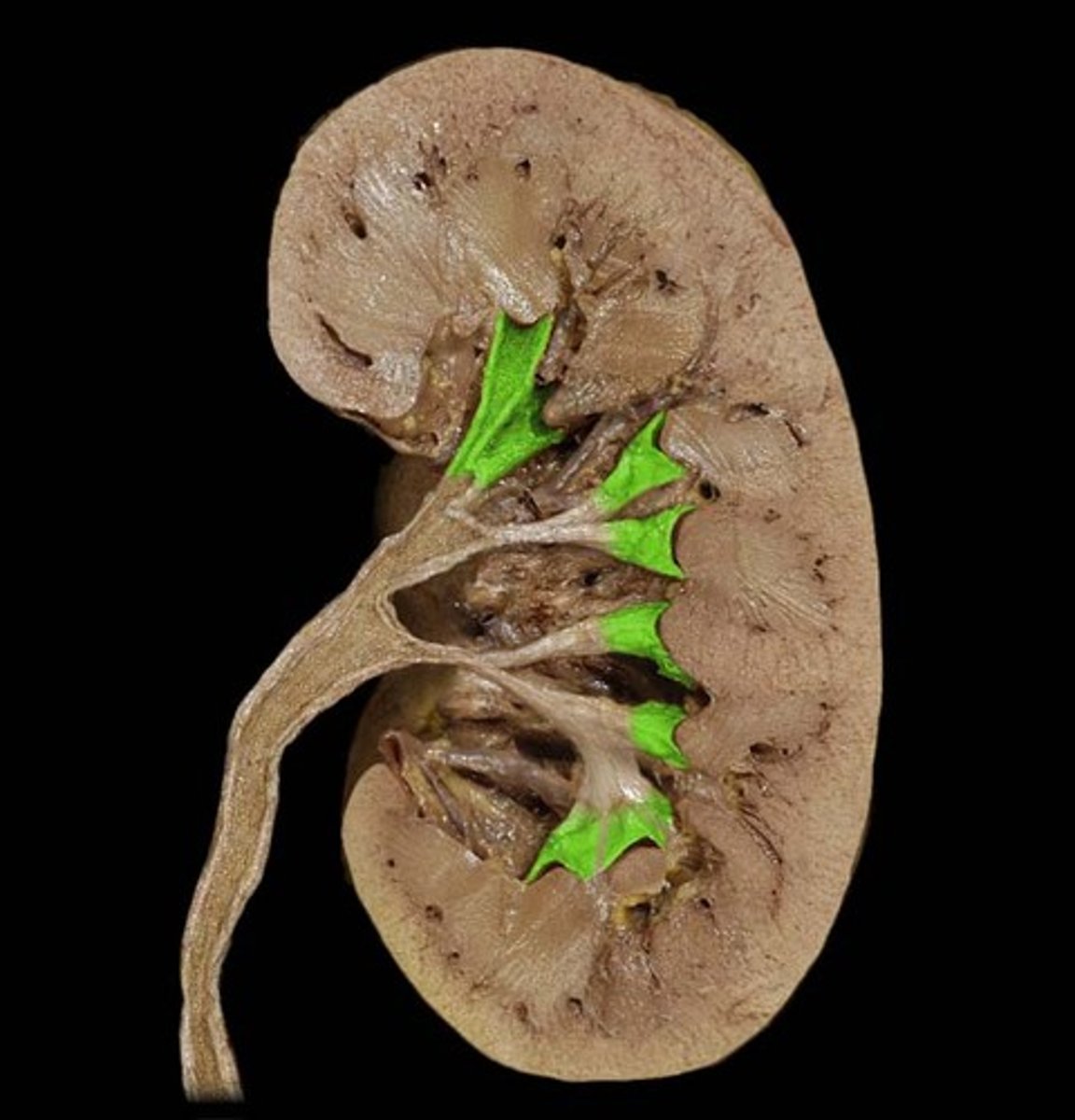
What does the number of medullary pyramids equal?
The number of minor calyces.
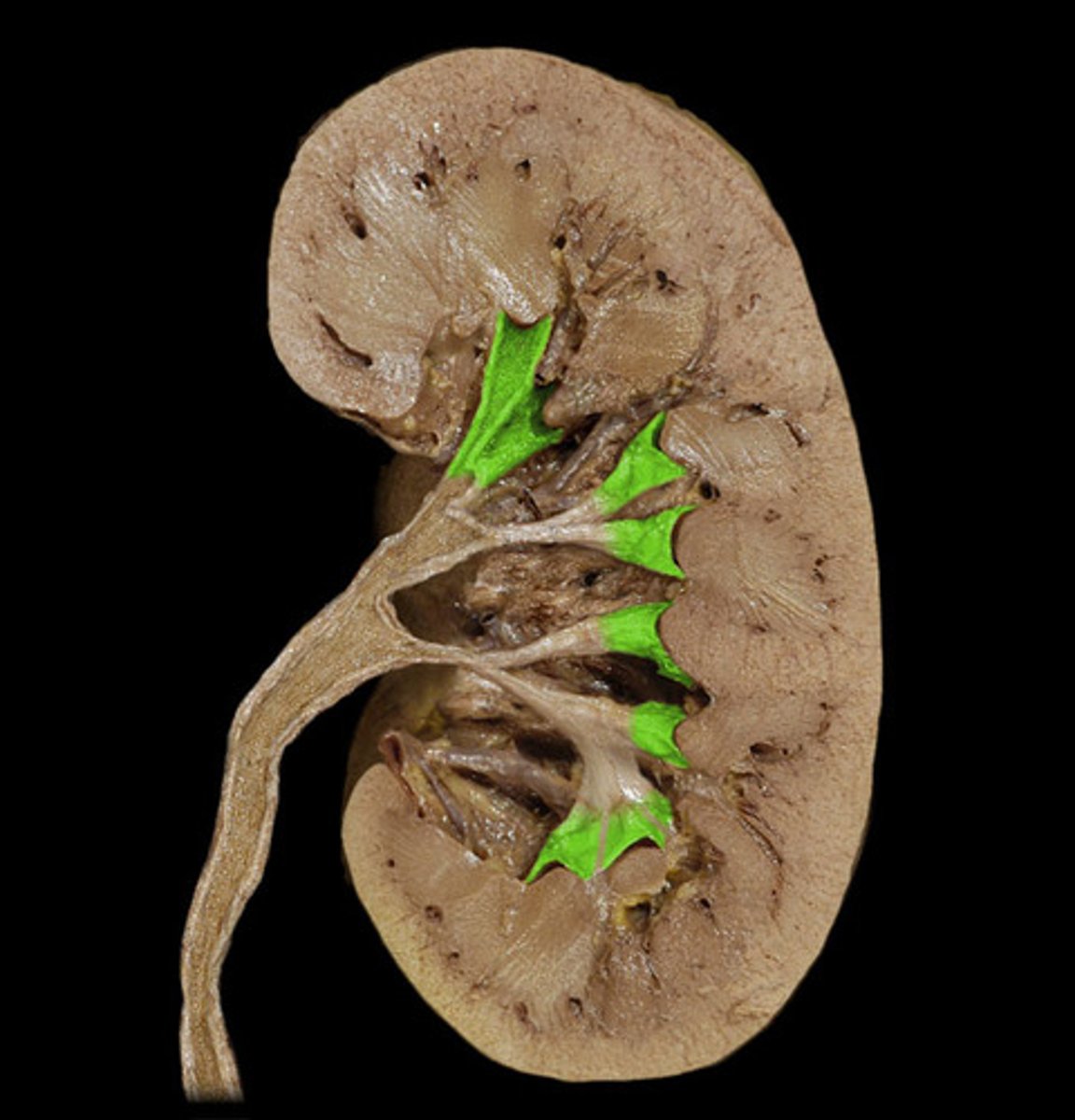
What separates the medullary pyramids?
Columns of Bertin (bands of cortical tissue).
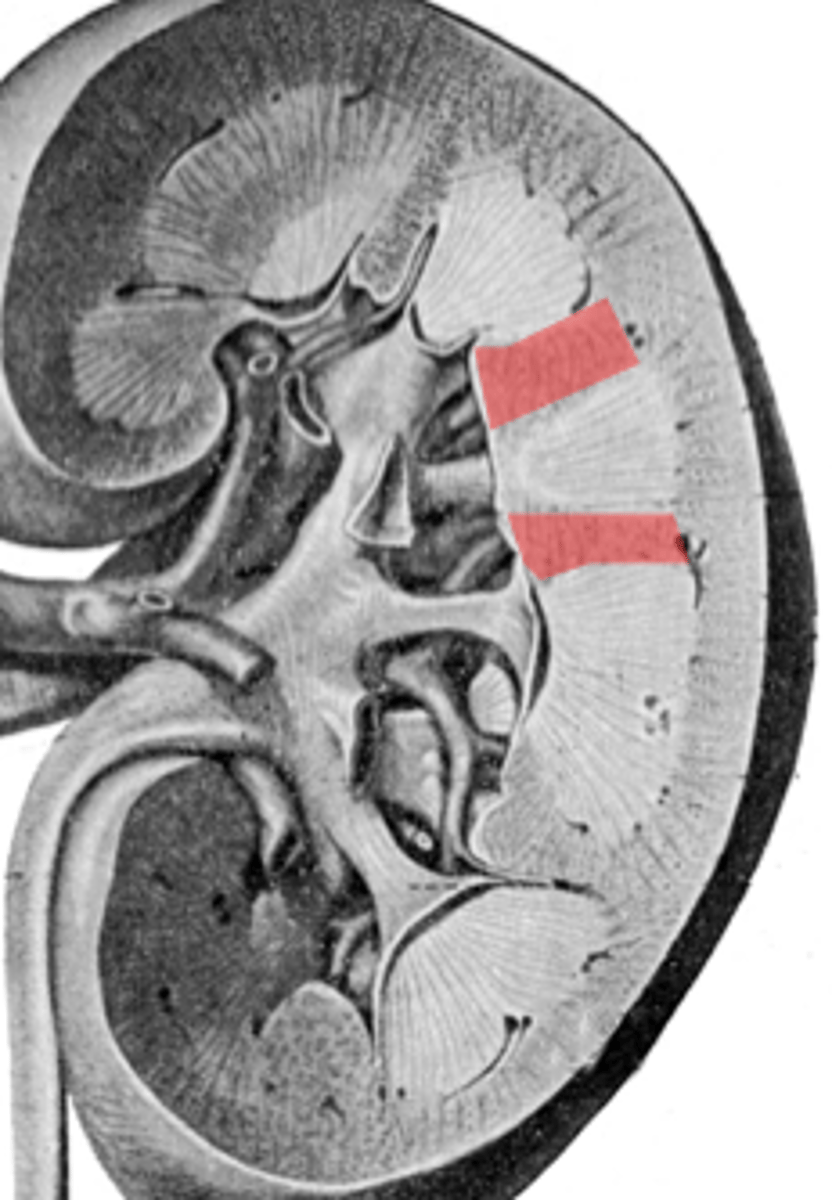
How much of each pyramid is surrounded by the renal cortex?
About ¾ (three-fourths)
The major calyces receive urine from what?
from the minor calyces
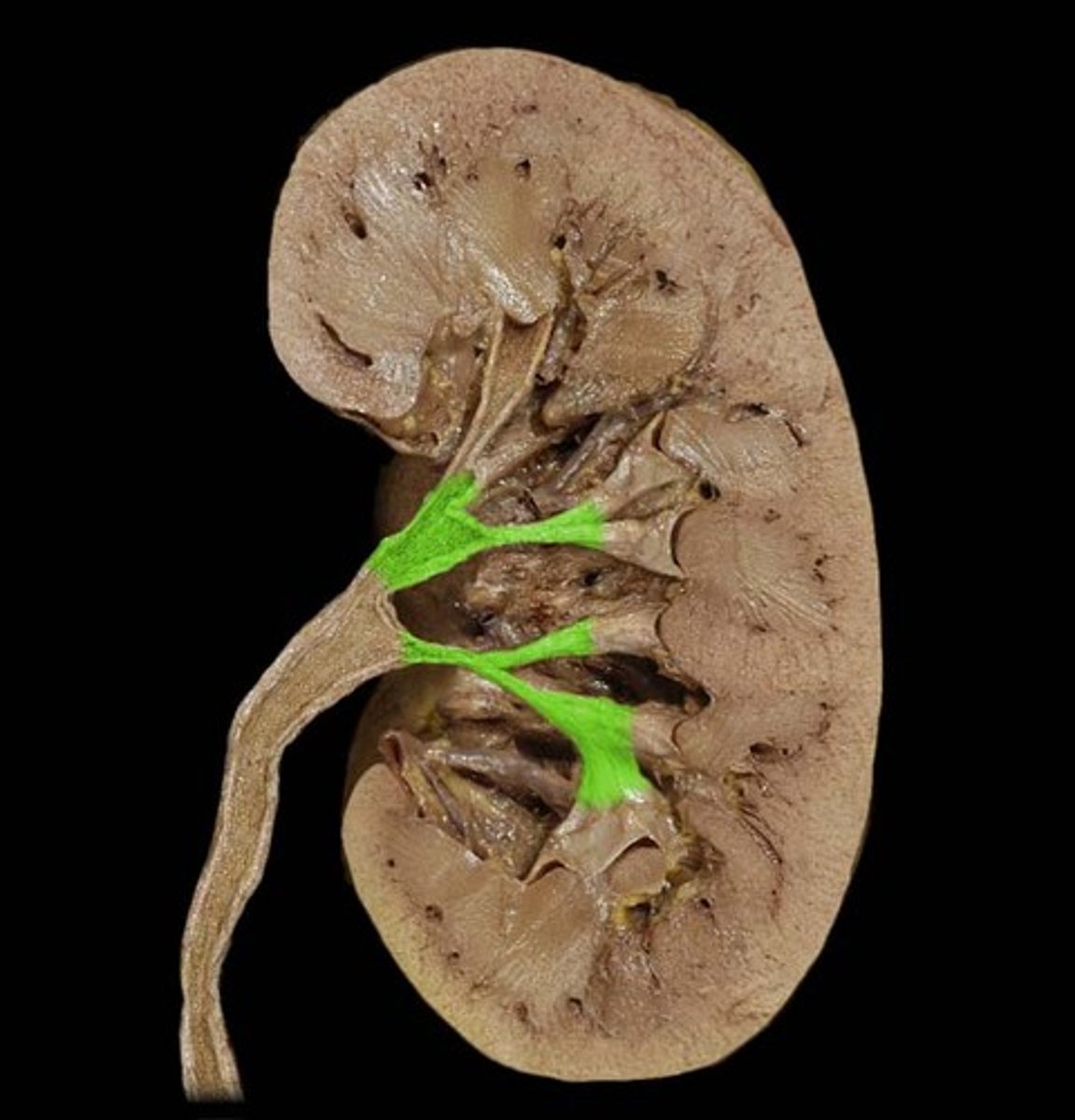
The major and minor calyces send urine to what?
the renal pelvis
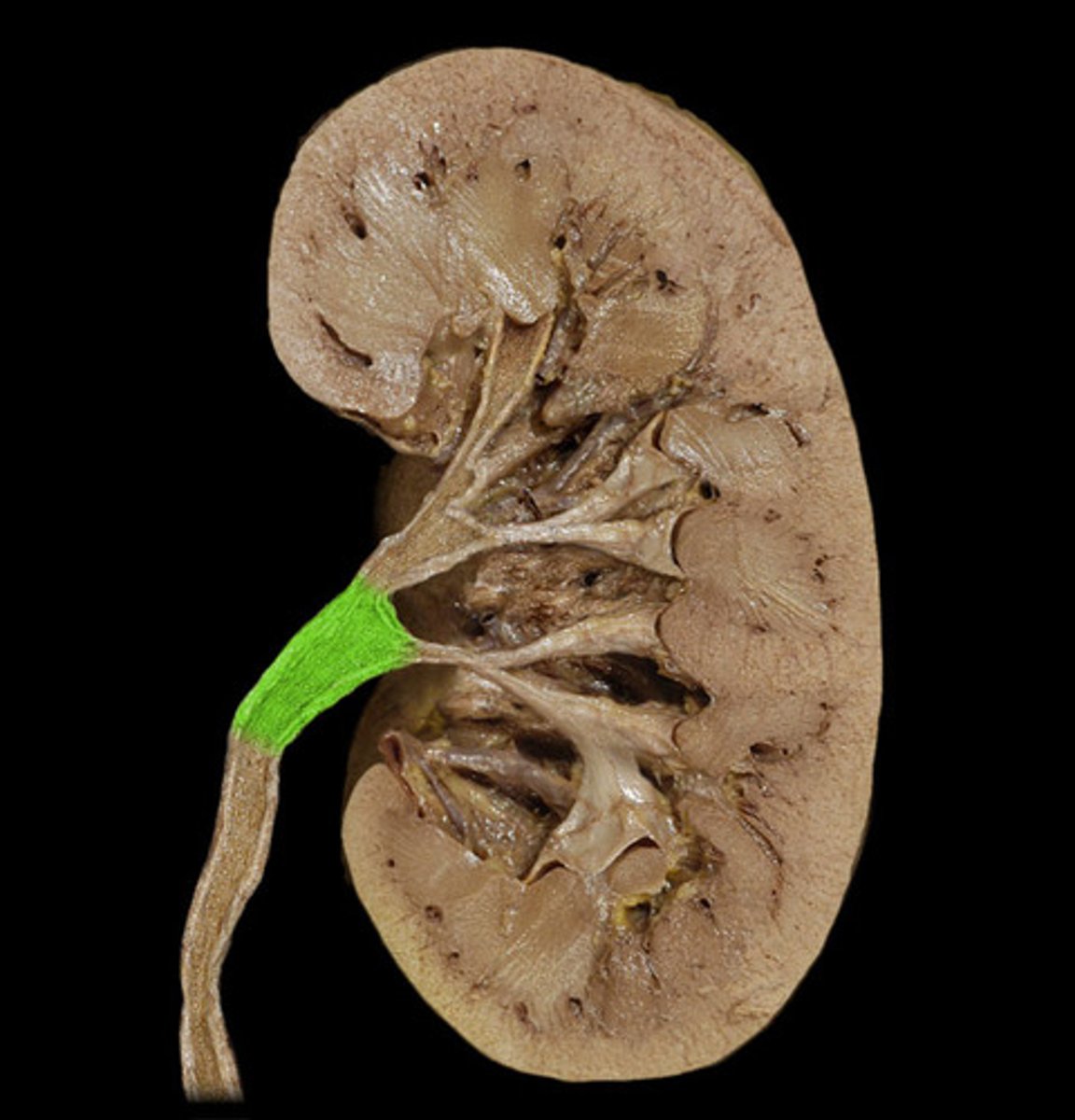
What is the upper portion of the ureter?
the renal pelvis
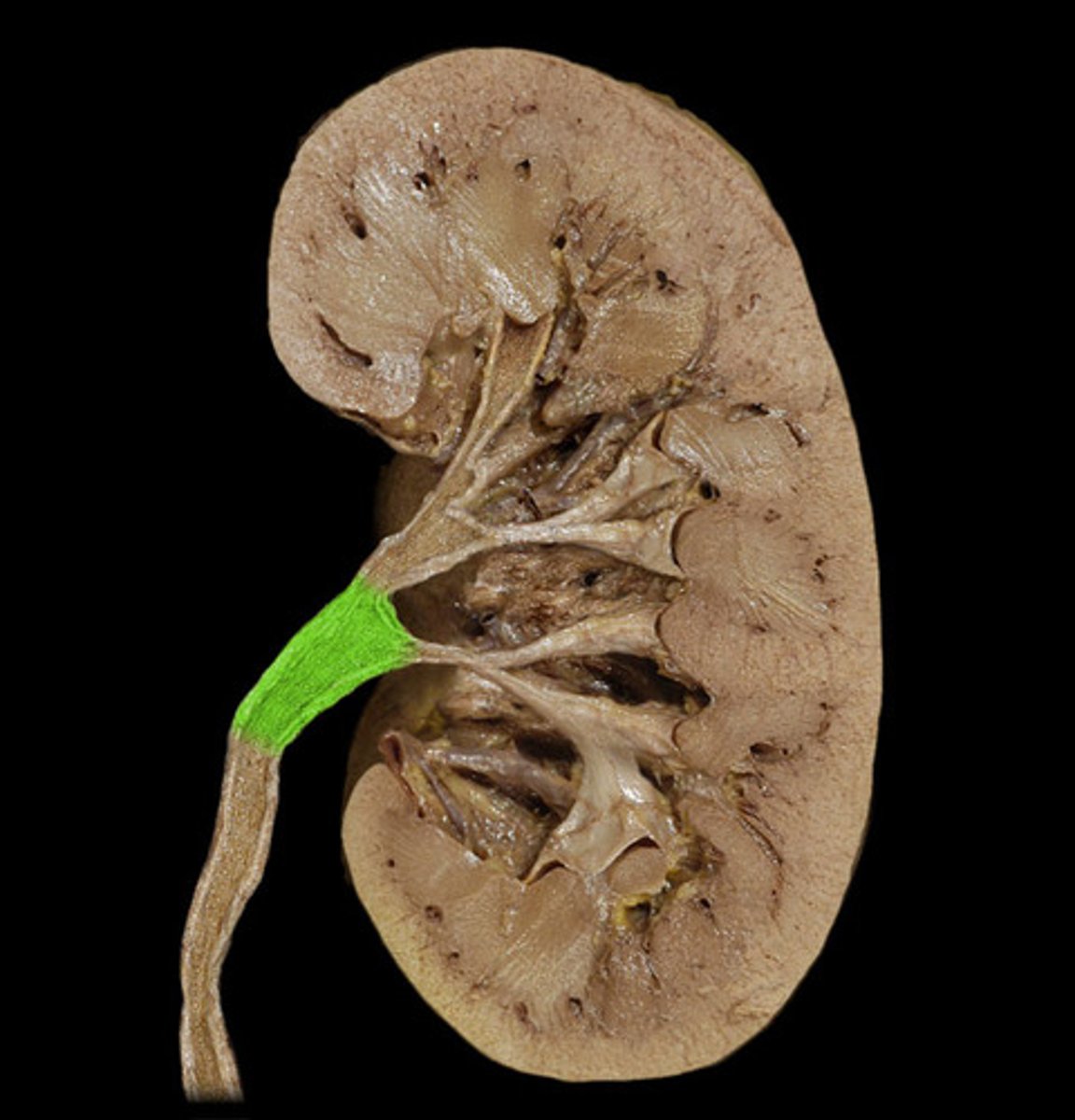
What is the hilum of the kidney?
The area where vessels enter and exit the kidney.
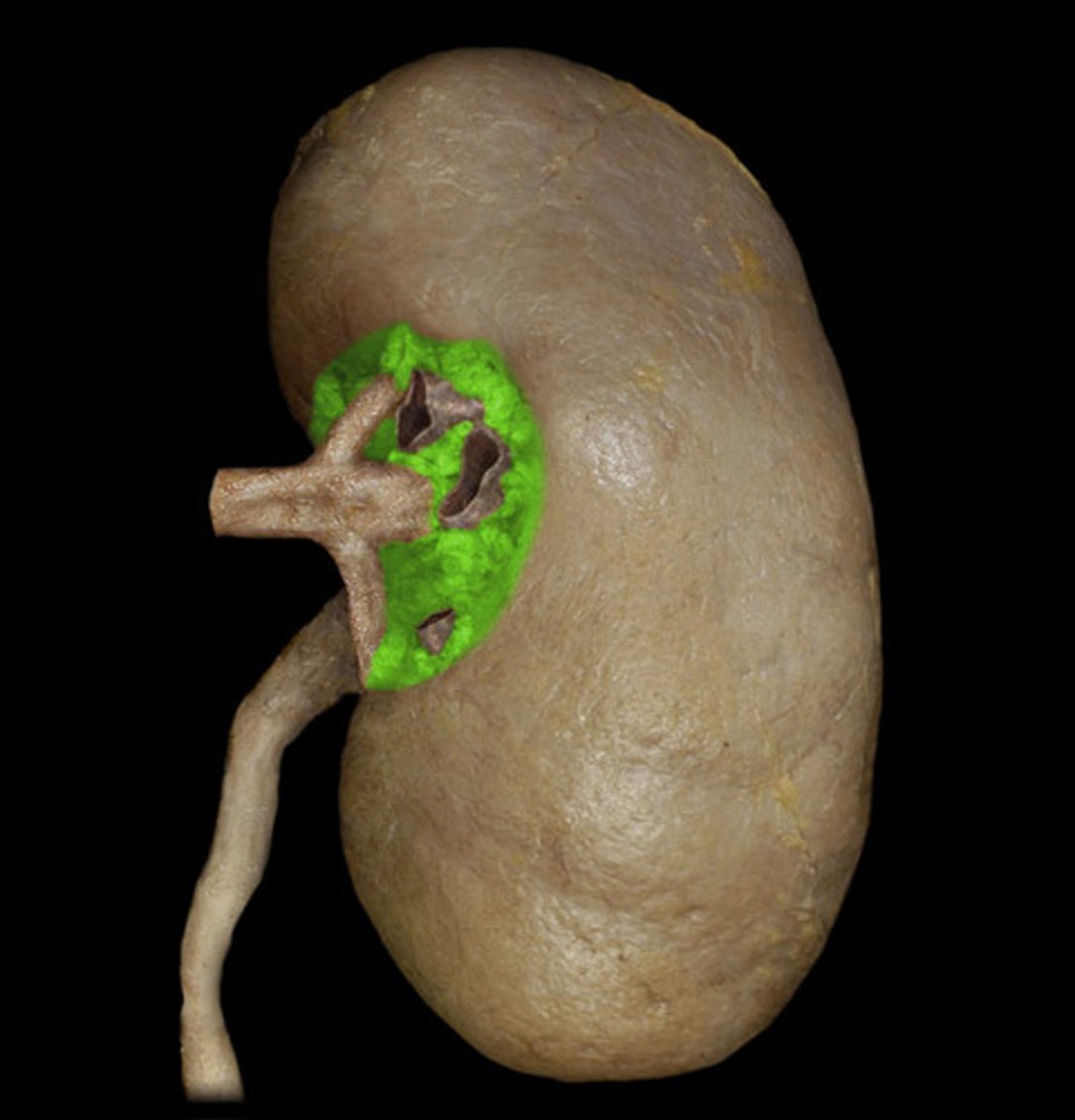
Where does the kidney receive arterial blood from?
the aorta via the left and right renal arteries.
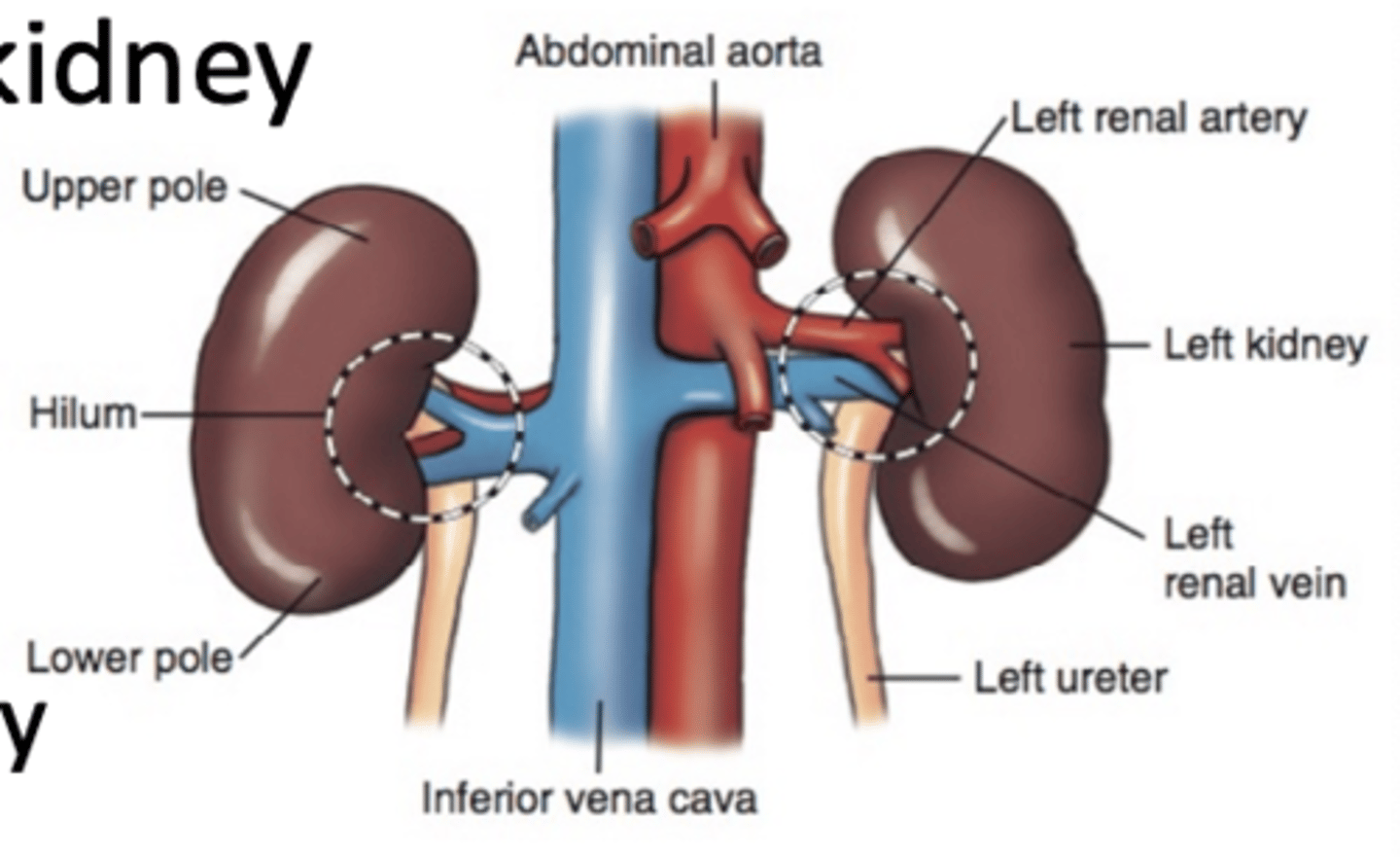
What happens to the renal arteries once they enter the kidney?
They branch many times until a vast capillary network is formed.
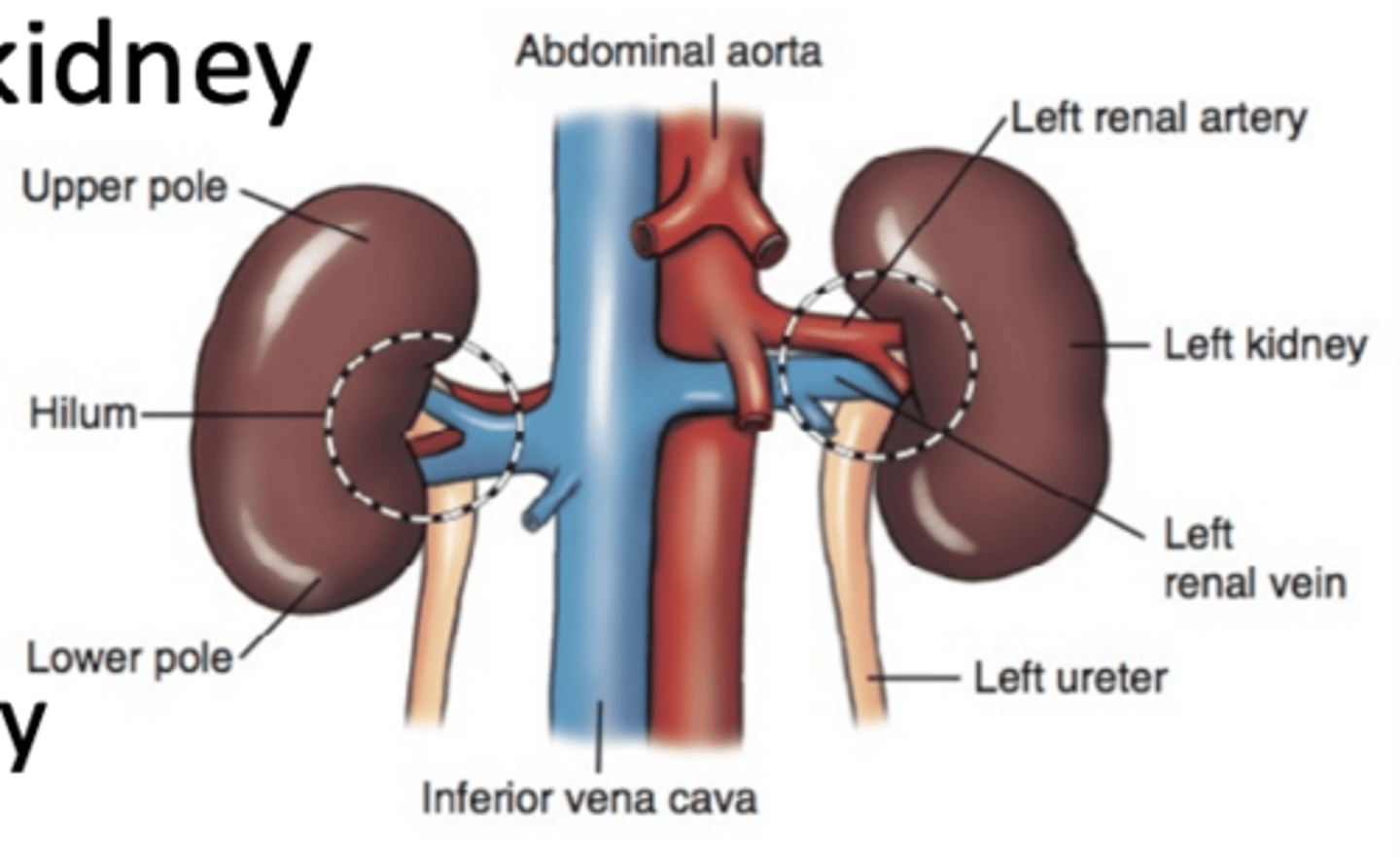
Where do the renal veins drain into?
Directly into the inferior vena cava (IVC).
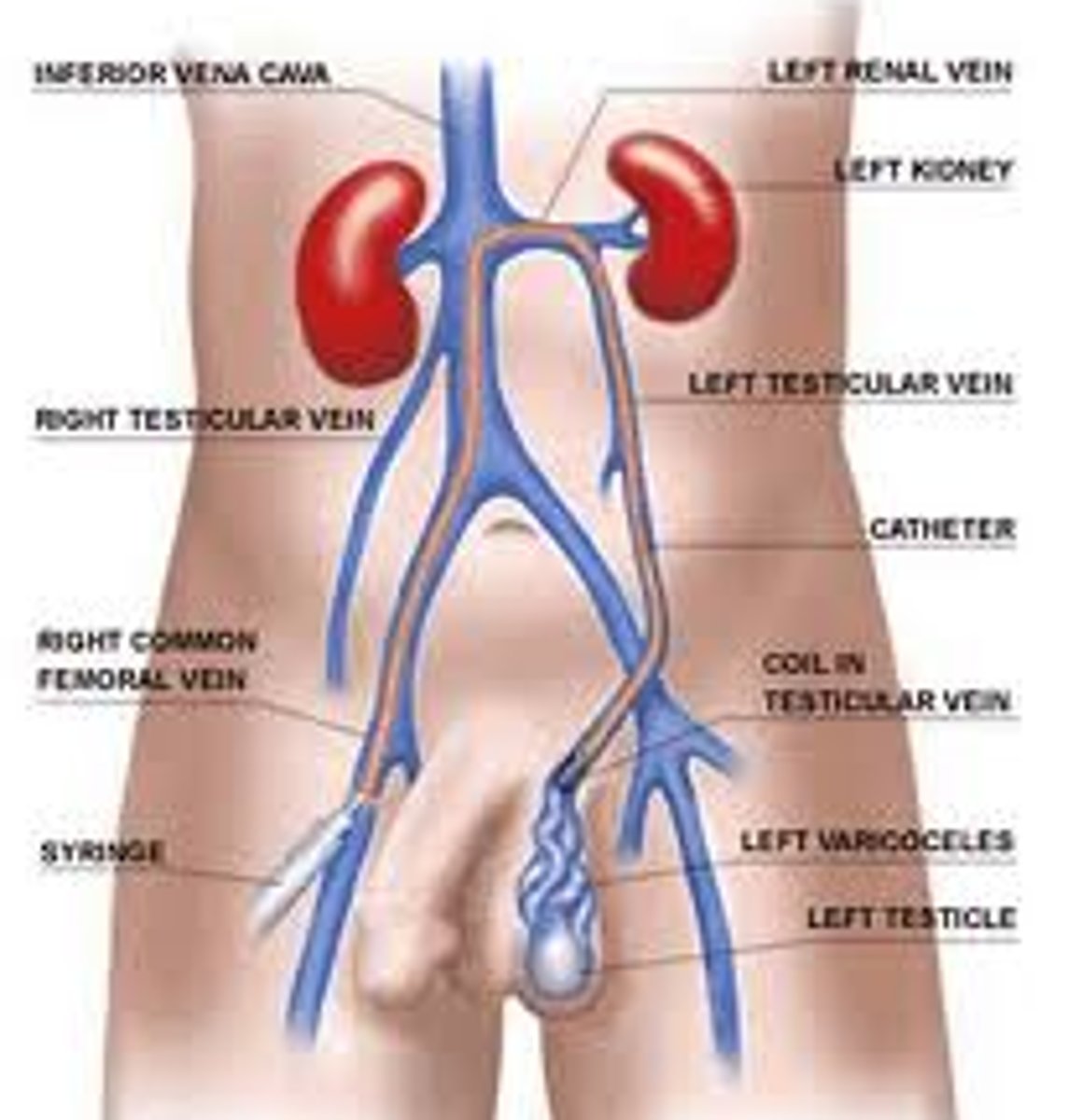
What is the function of the renal veins?
To return blood to the right side of the heart.
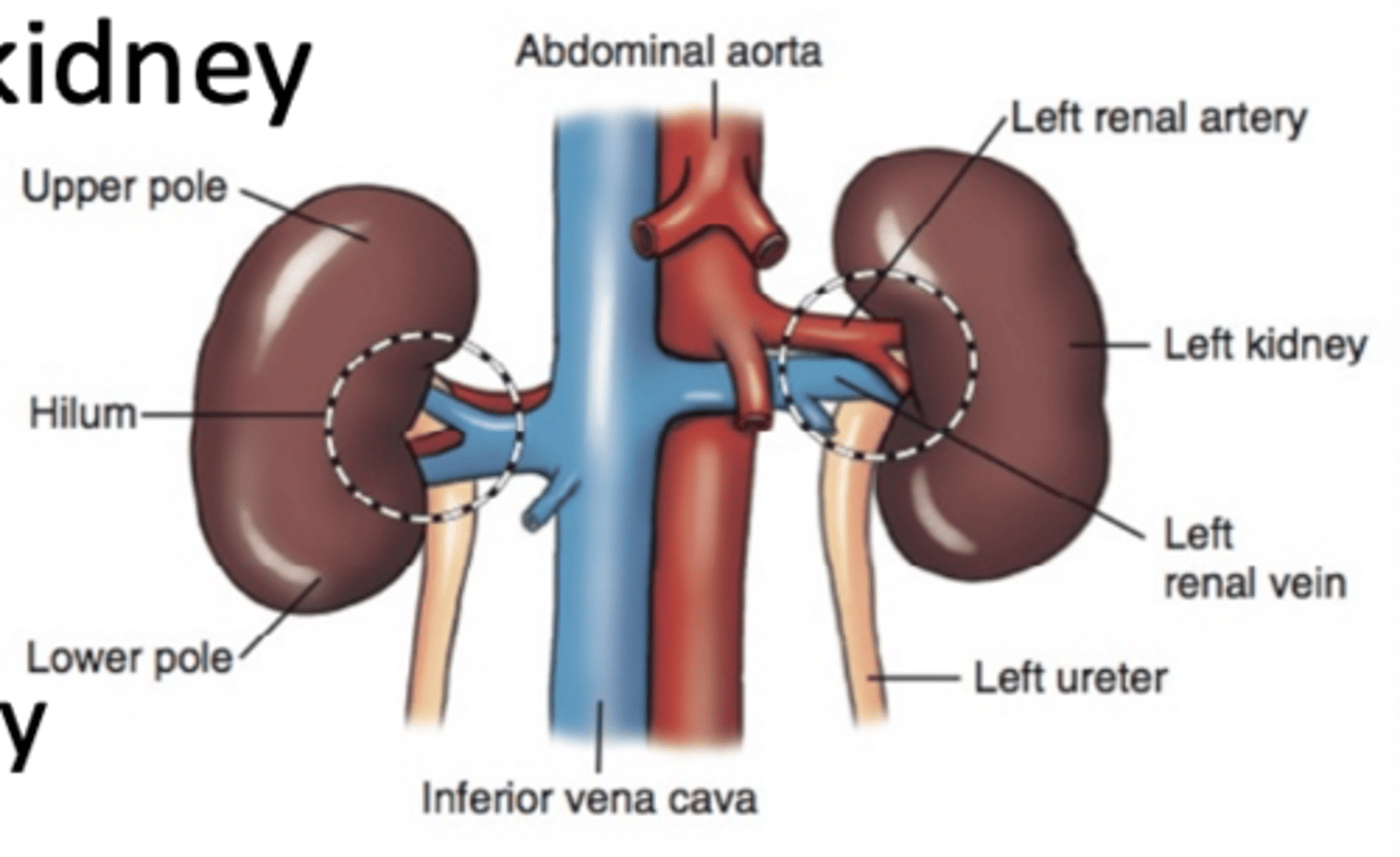
Where are the renal veins located in relation to the renal arteries?
Renal veins are normally anterior to the renal arteries.
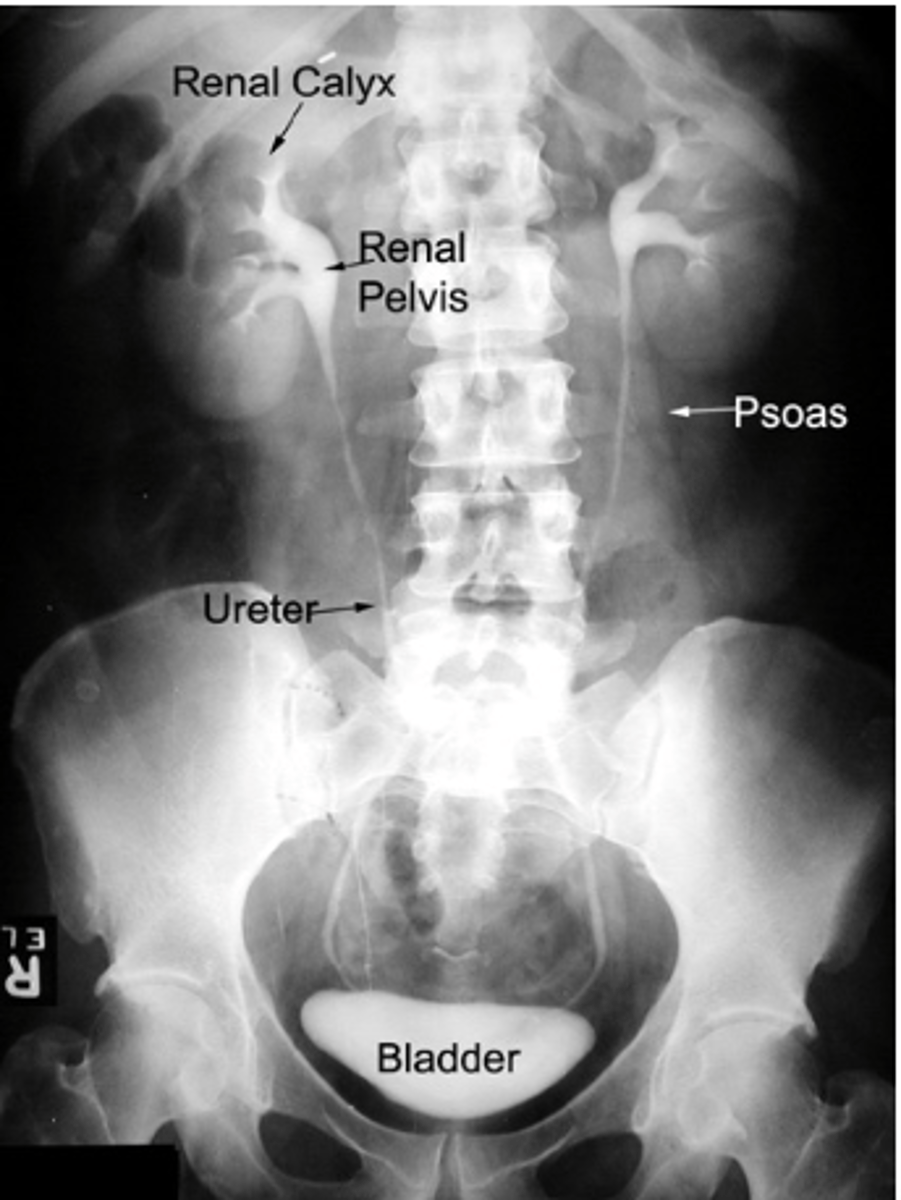
What type of structures are the ureters?
Retroperitoneal structures.
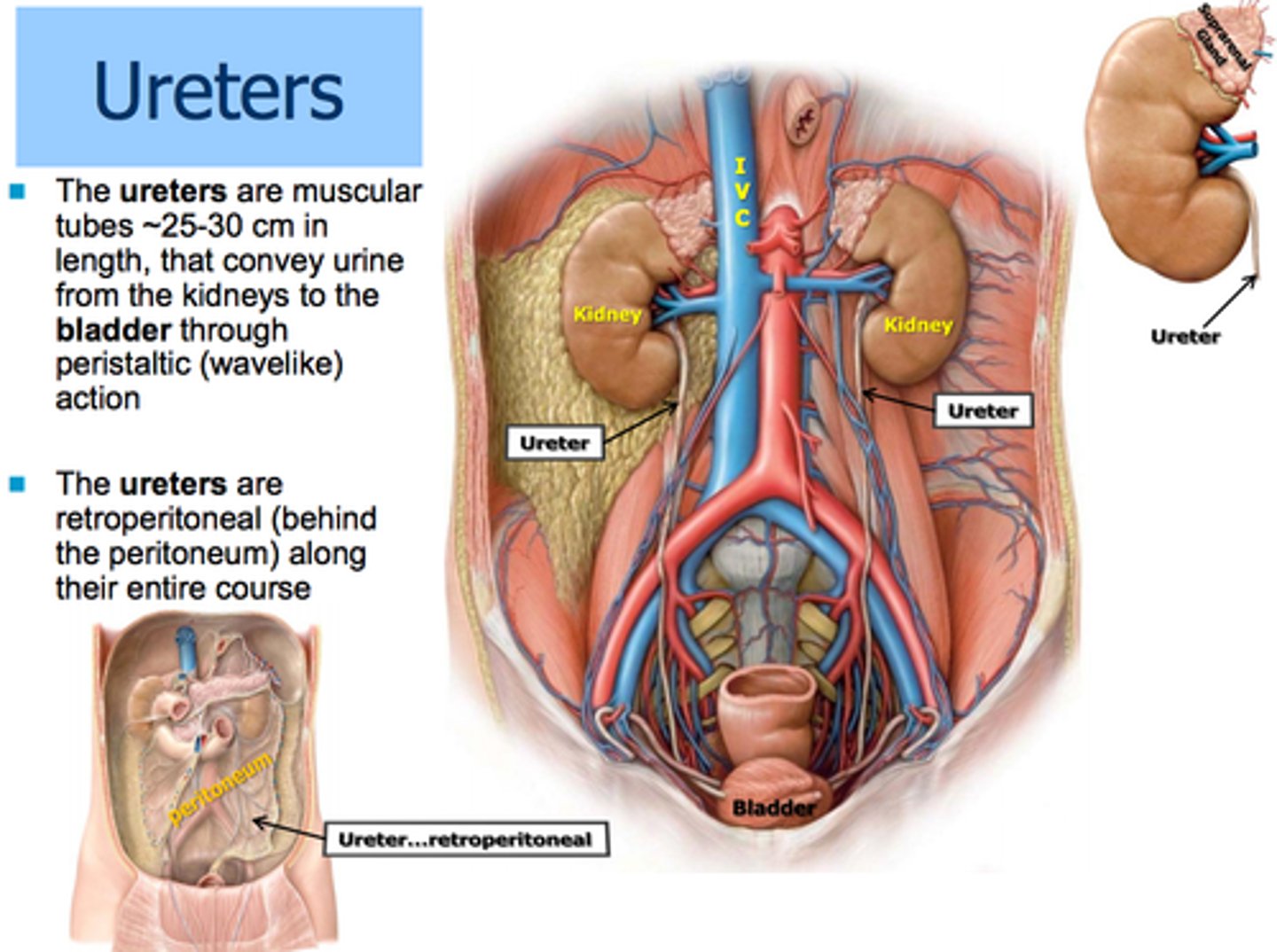
What is the function of the ureters?
They are paired muscular tubes that transport urine to the bladder.
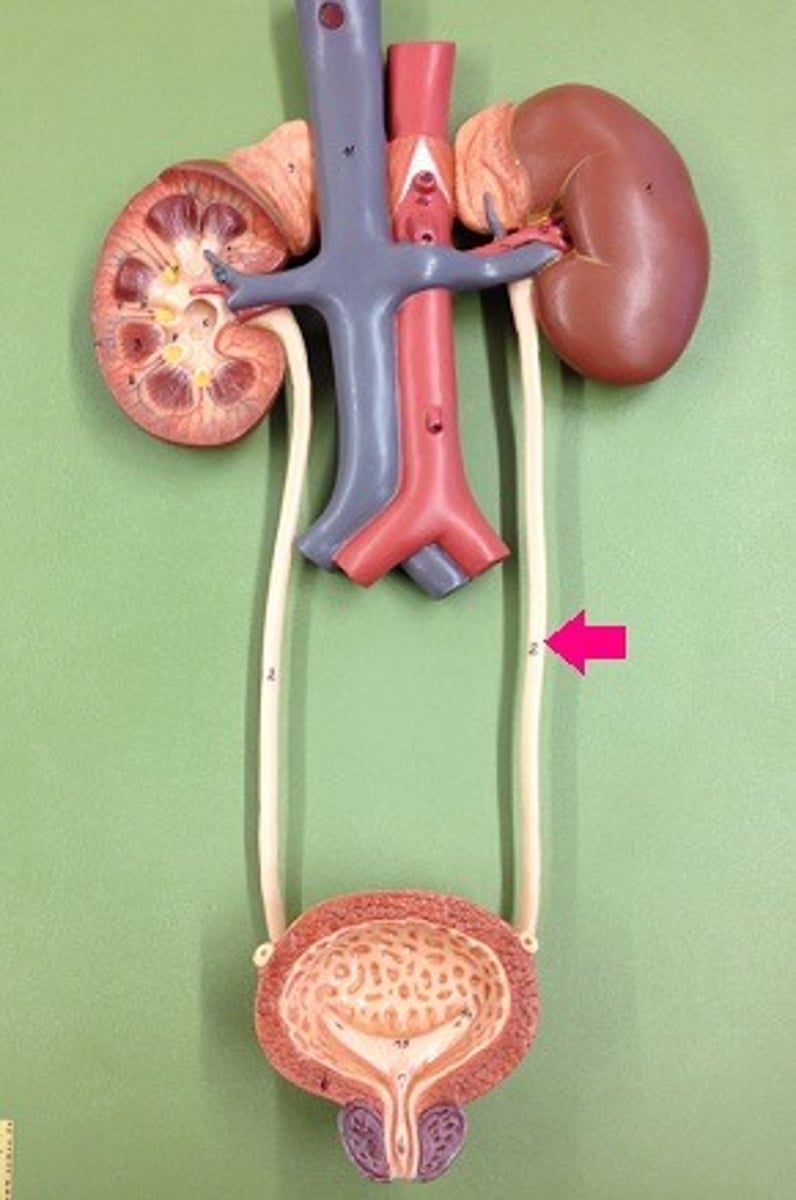
Where do the ureters begin?
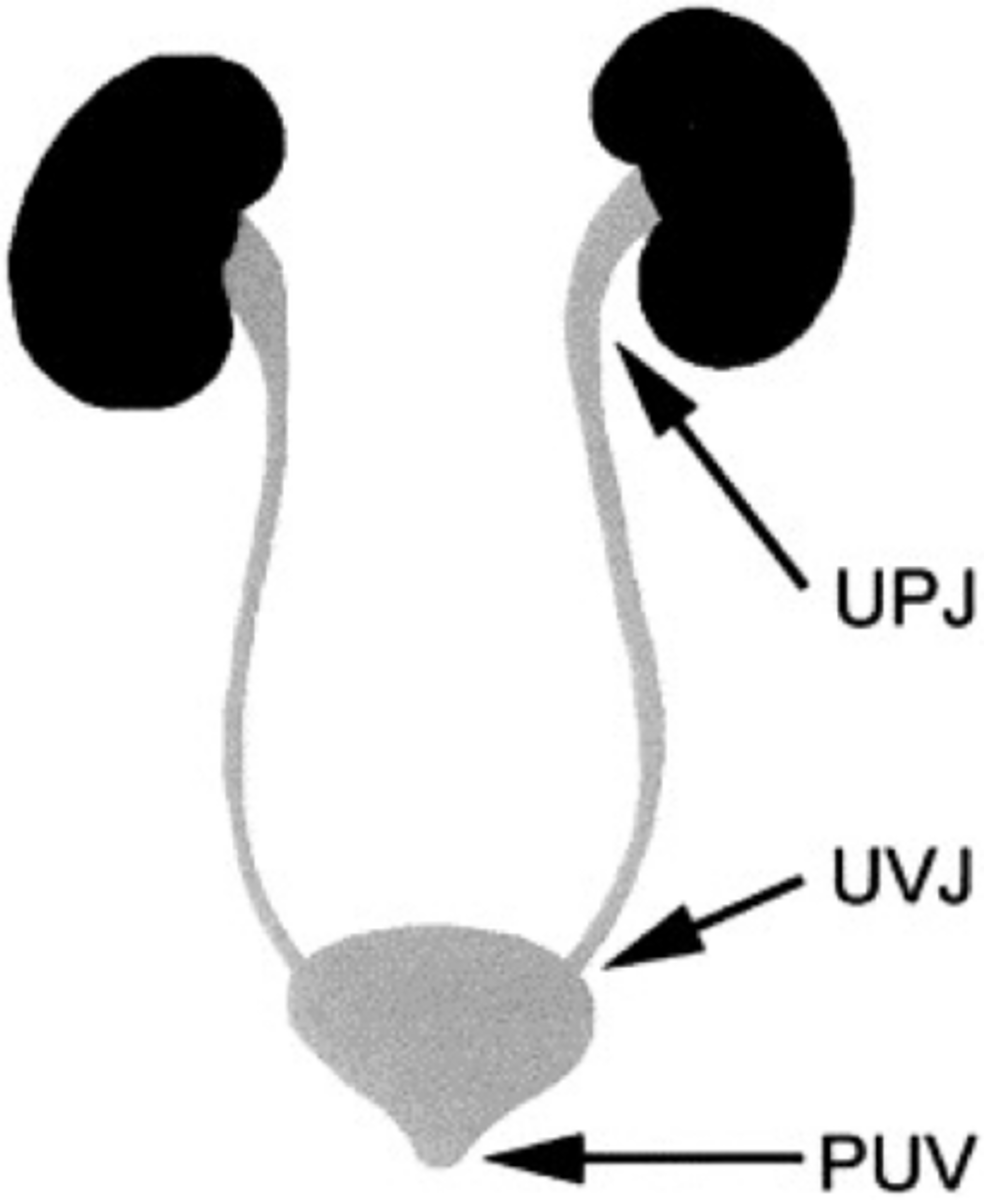
At the ureteropelvic junction (UPJ) of the renal pelvis.
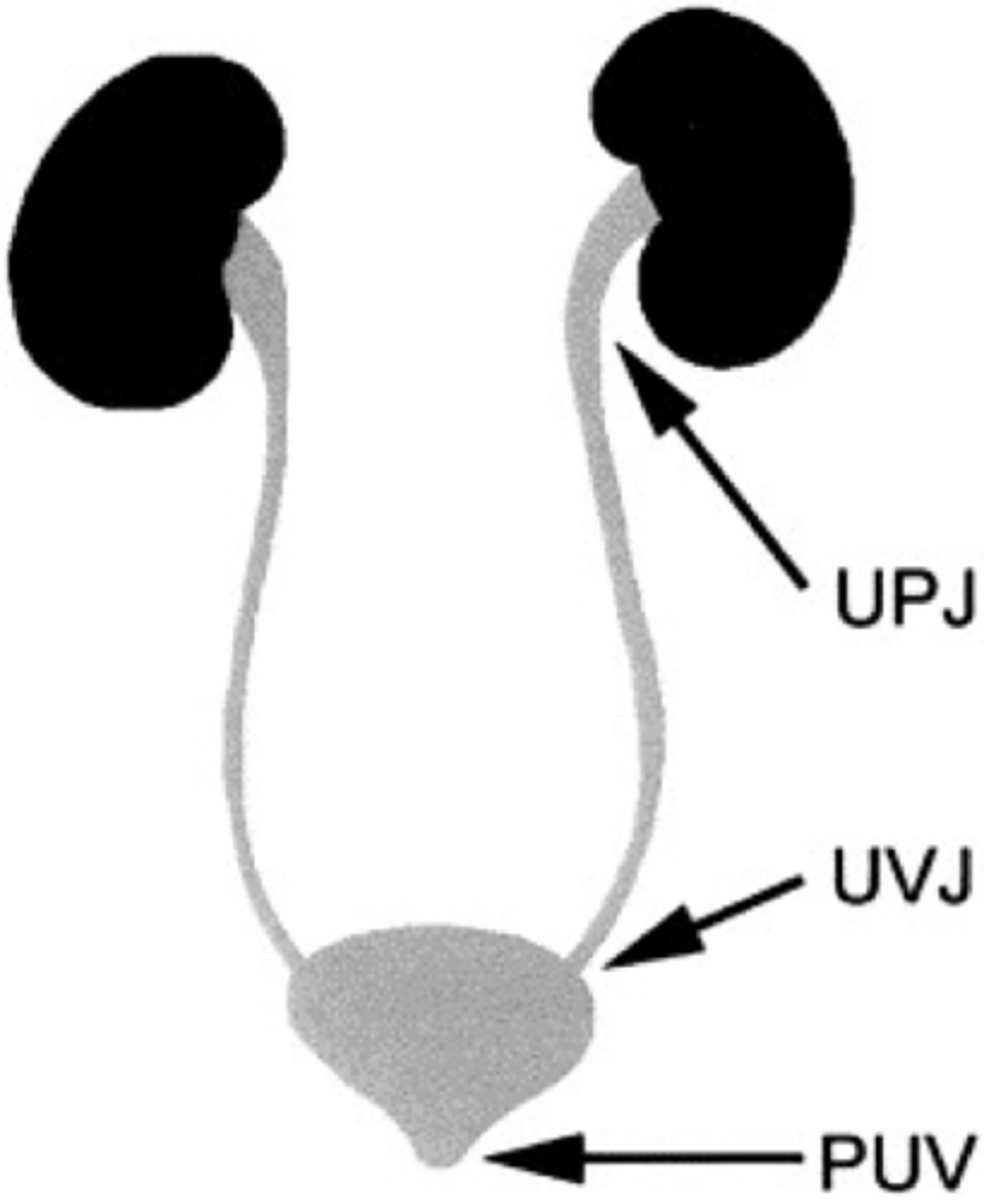
How do the ureters descend through the body?
Anteromedially to the psoas muscle, anterior to the lumbar vertebrae.
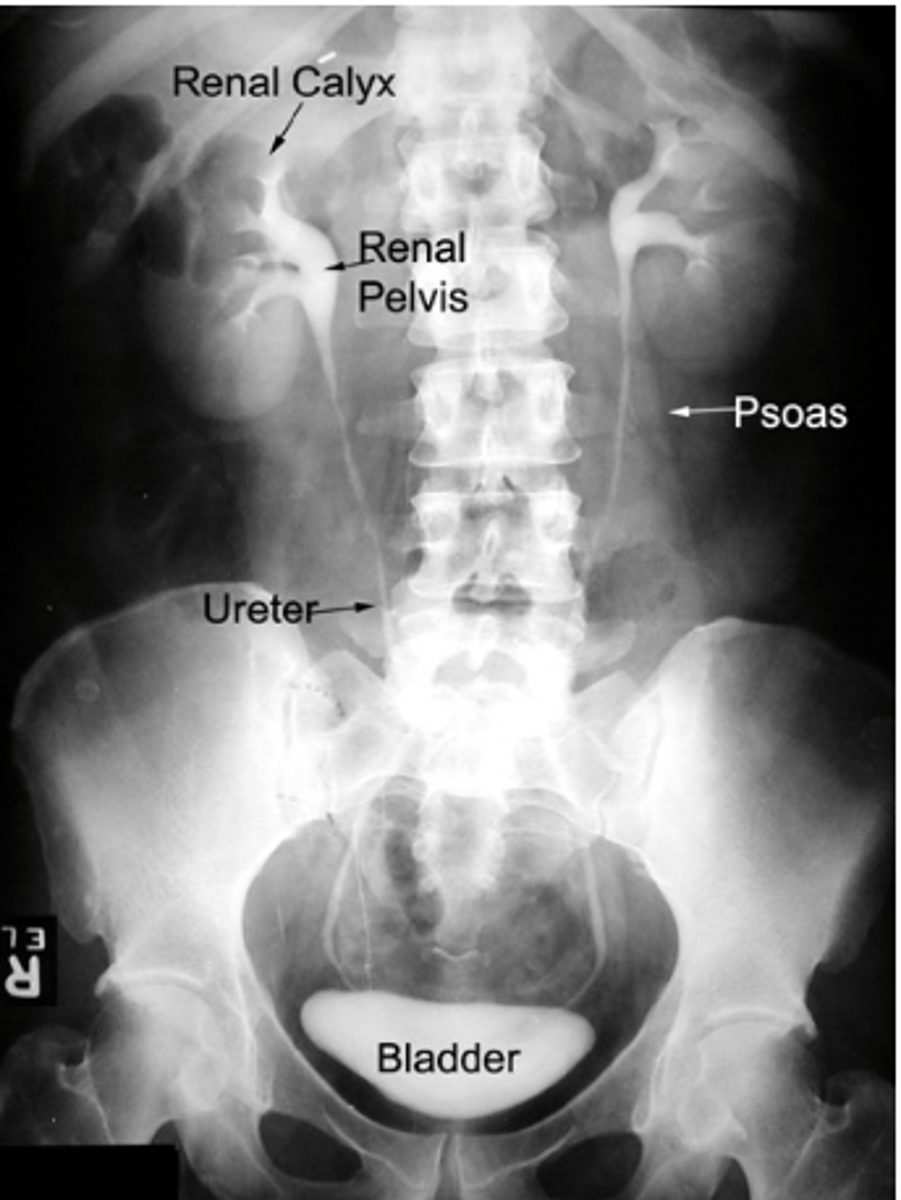
In males, what structure do the distal ureters pass behind?
The ductus deferens.
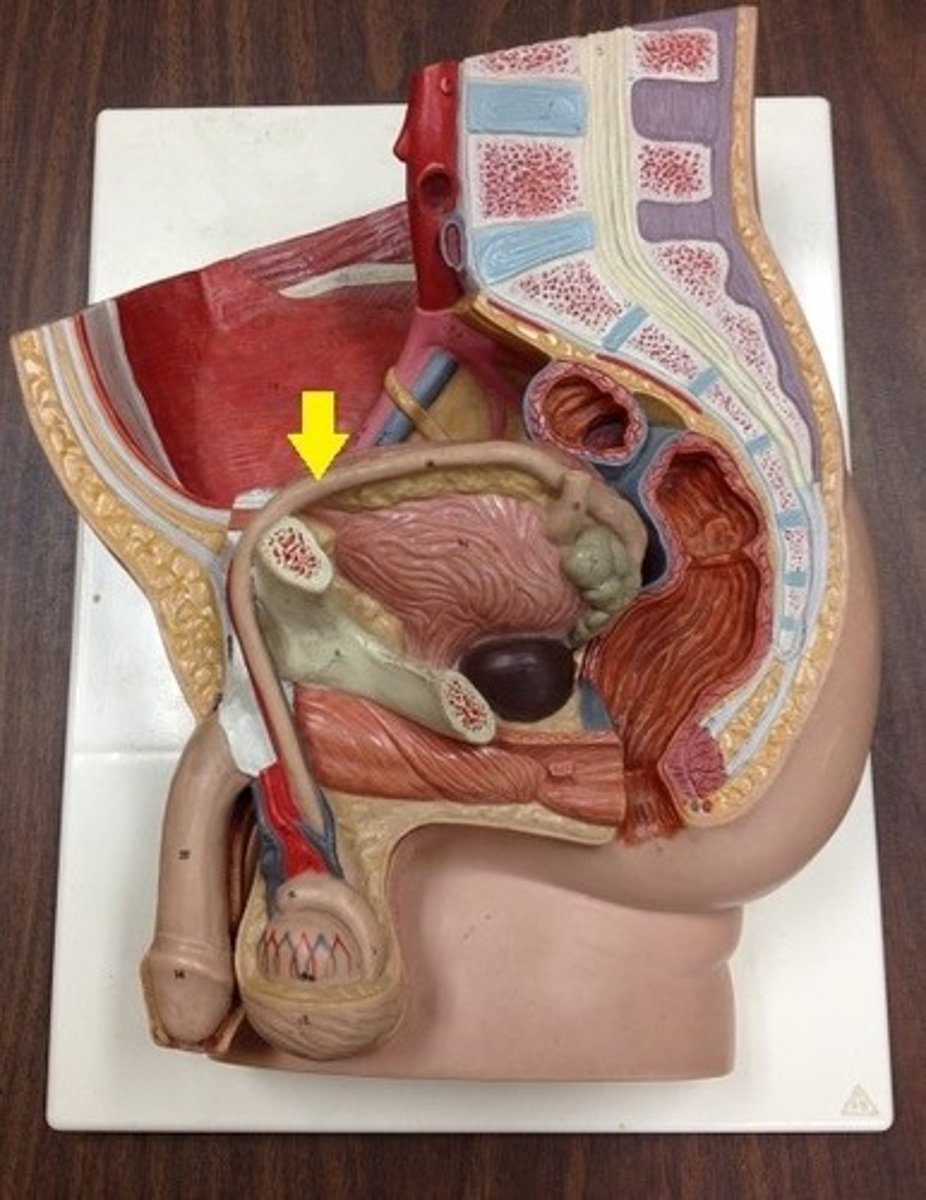
In females, what structure do the distal ureters pass behind?
The uterine artery.
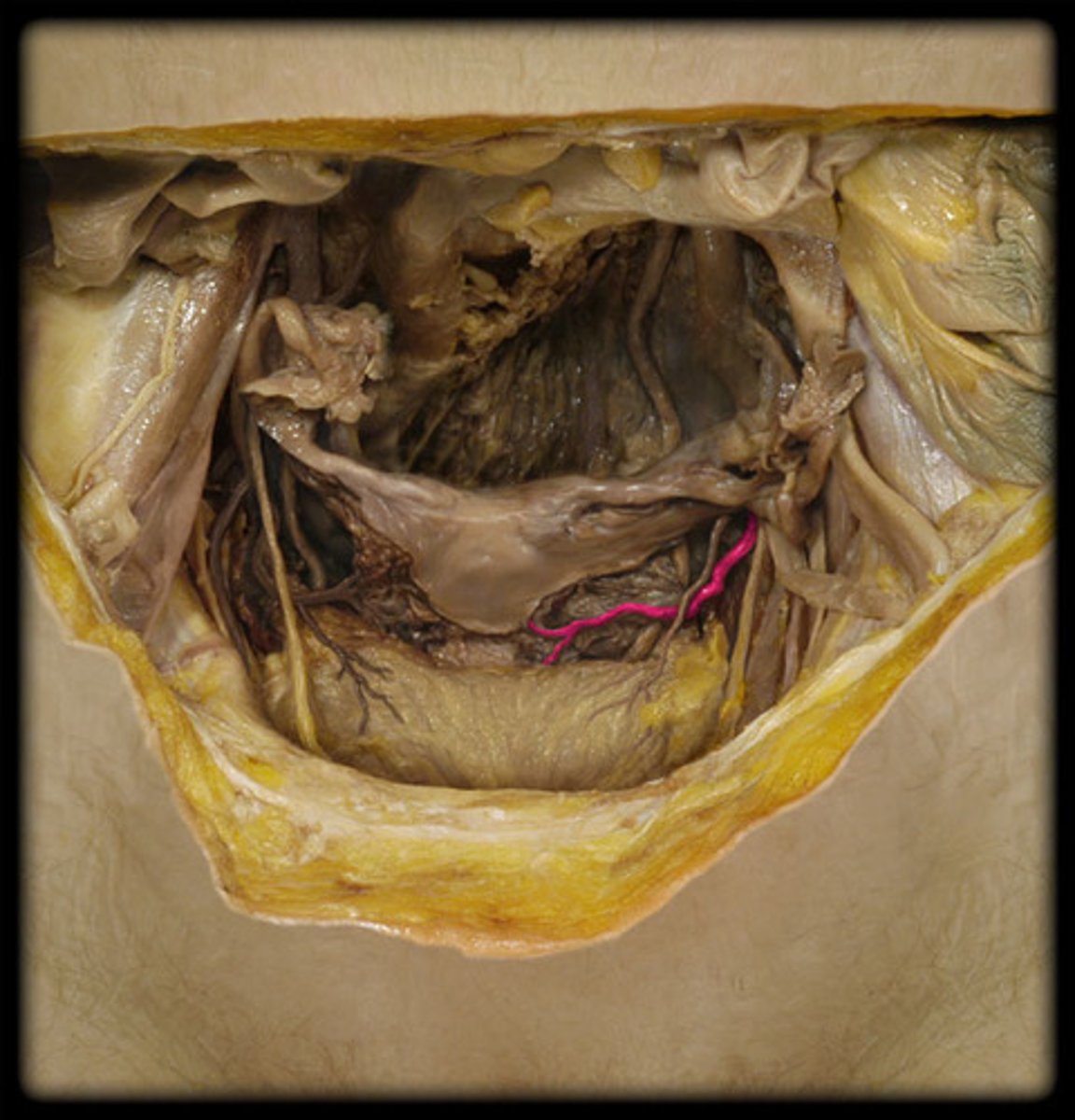
Where do the ureters enter the bladder?
At the posterior portion of the bladder at the ureterovesicular junction (UVJ).
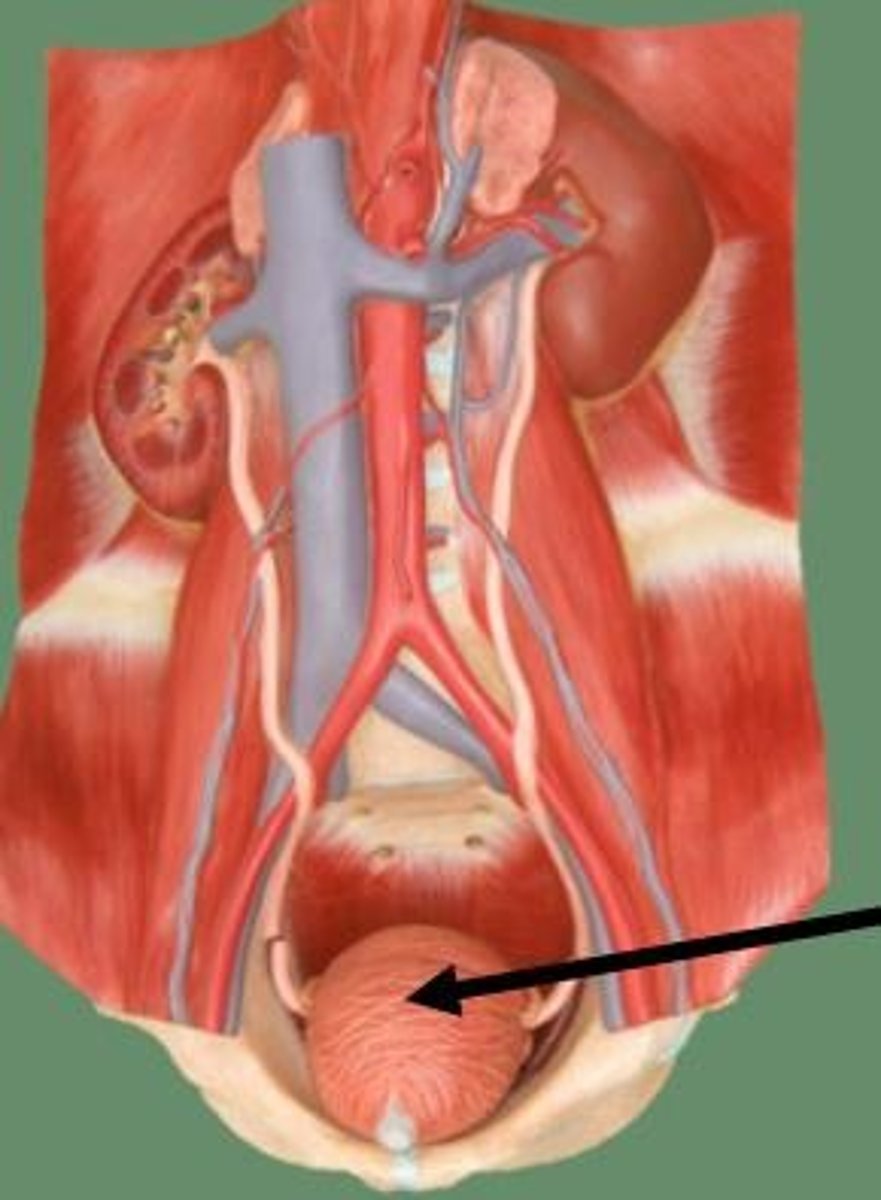
What type of organ is the urinary bladder?
A retroperitoneal hollow, muscular organ.
Where is the bladder located in relation to the symphysis pubis?
Posterior to the symphysis pubis.
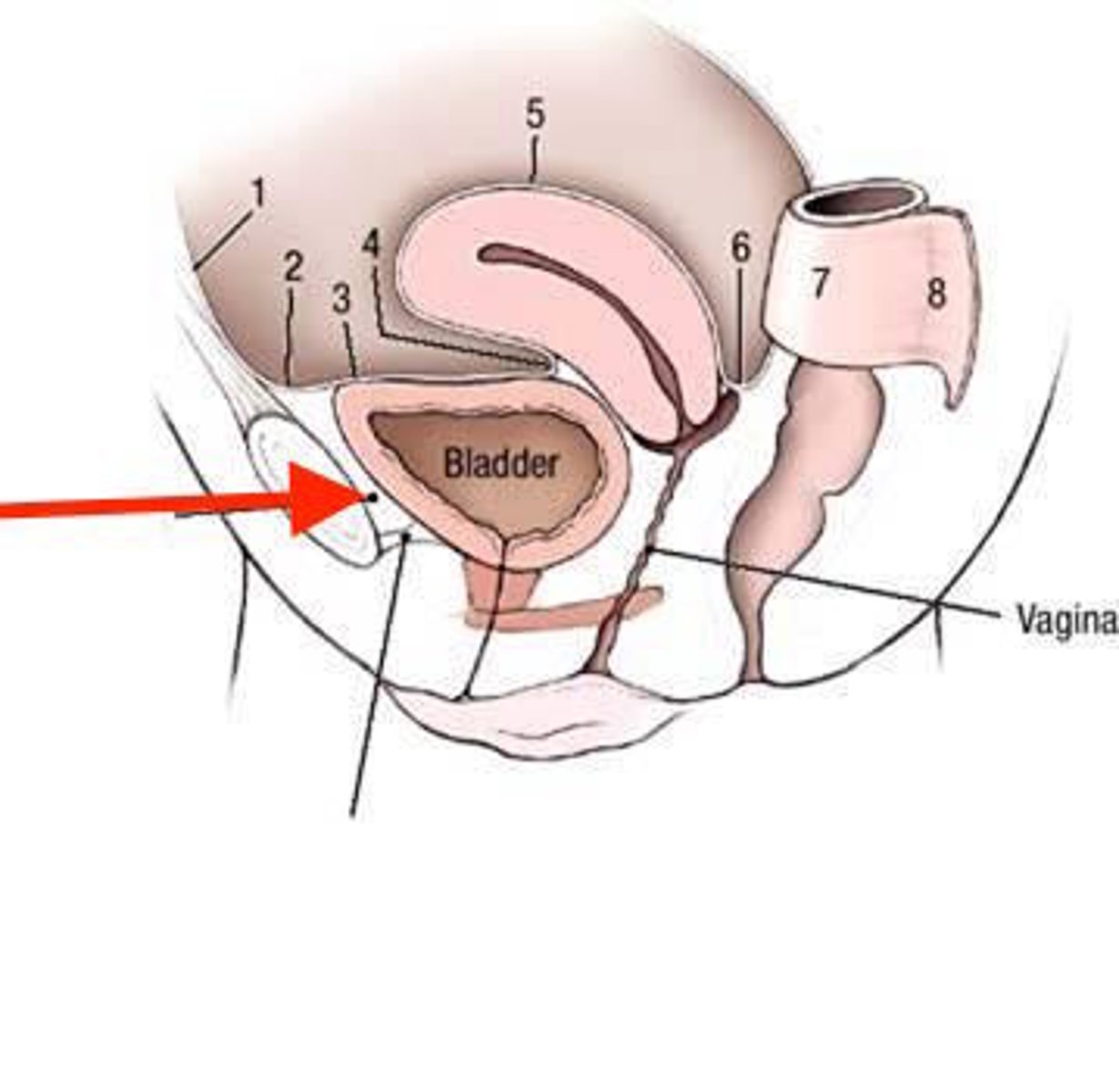
In women, what is located behind the bladder?
The vagina.
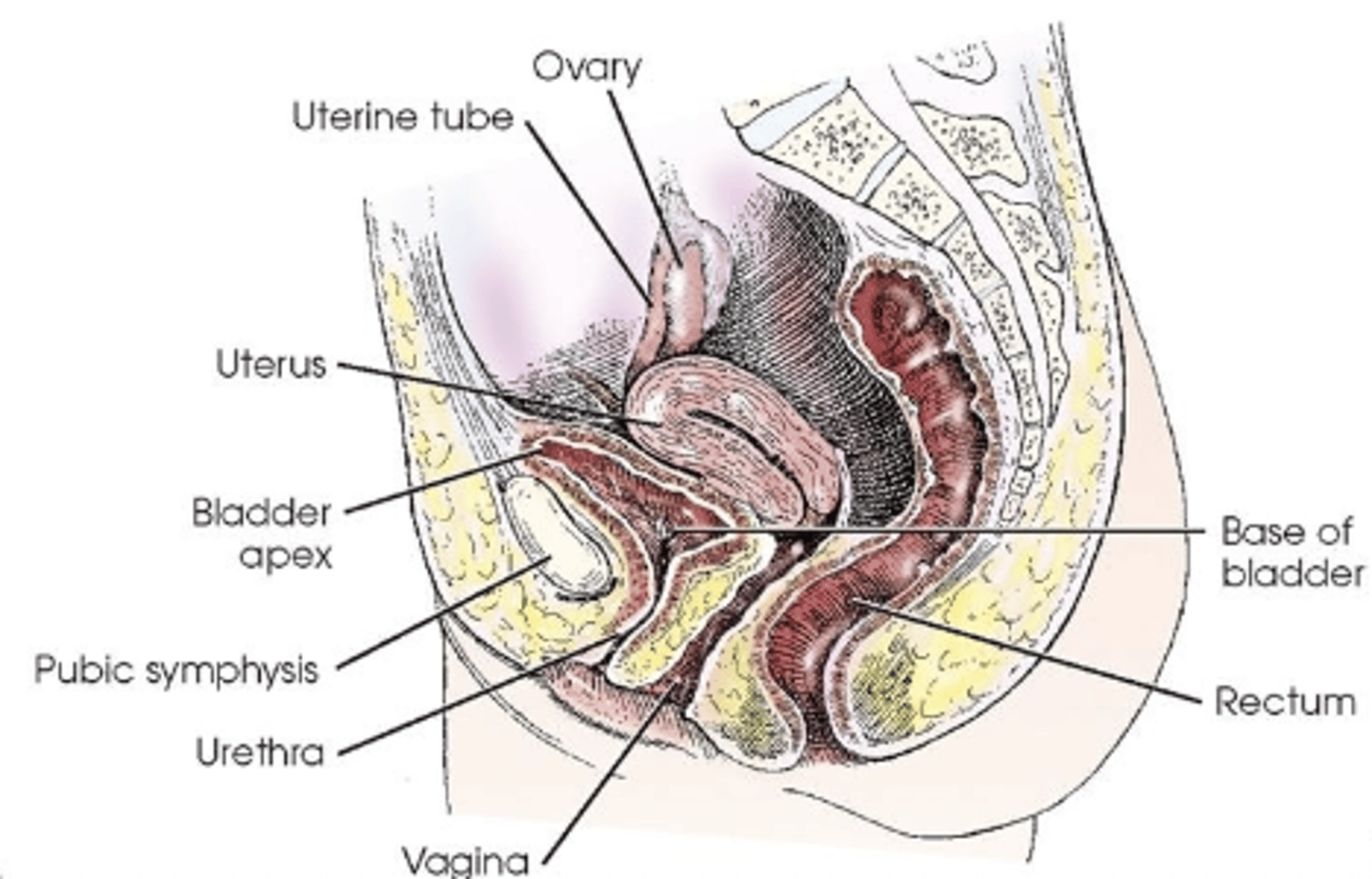
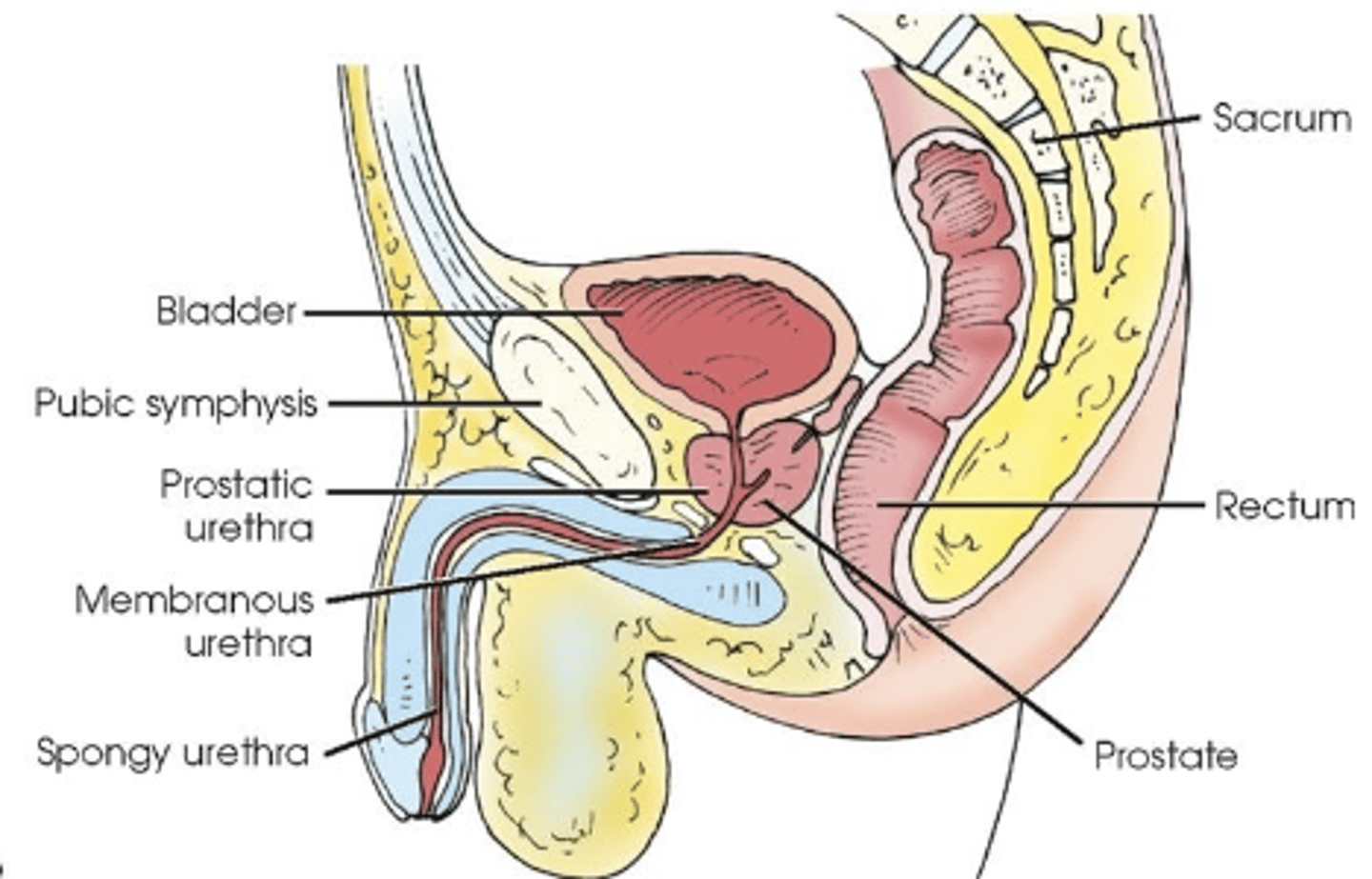
In men, what is located below the bladder?
The prostate gland.
What is the trigone of the bladder?
A triangular area on the bladder floor with 3 openings.
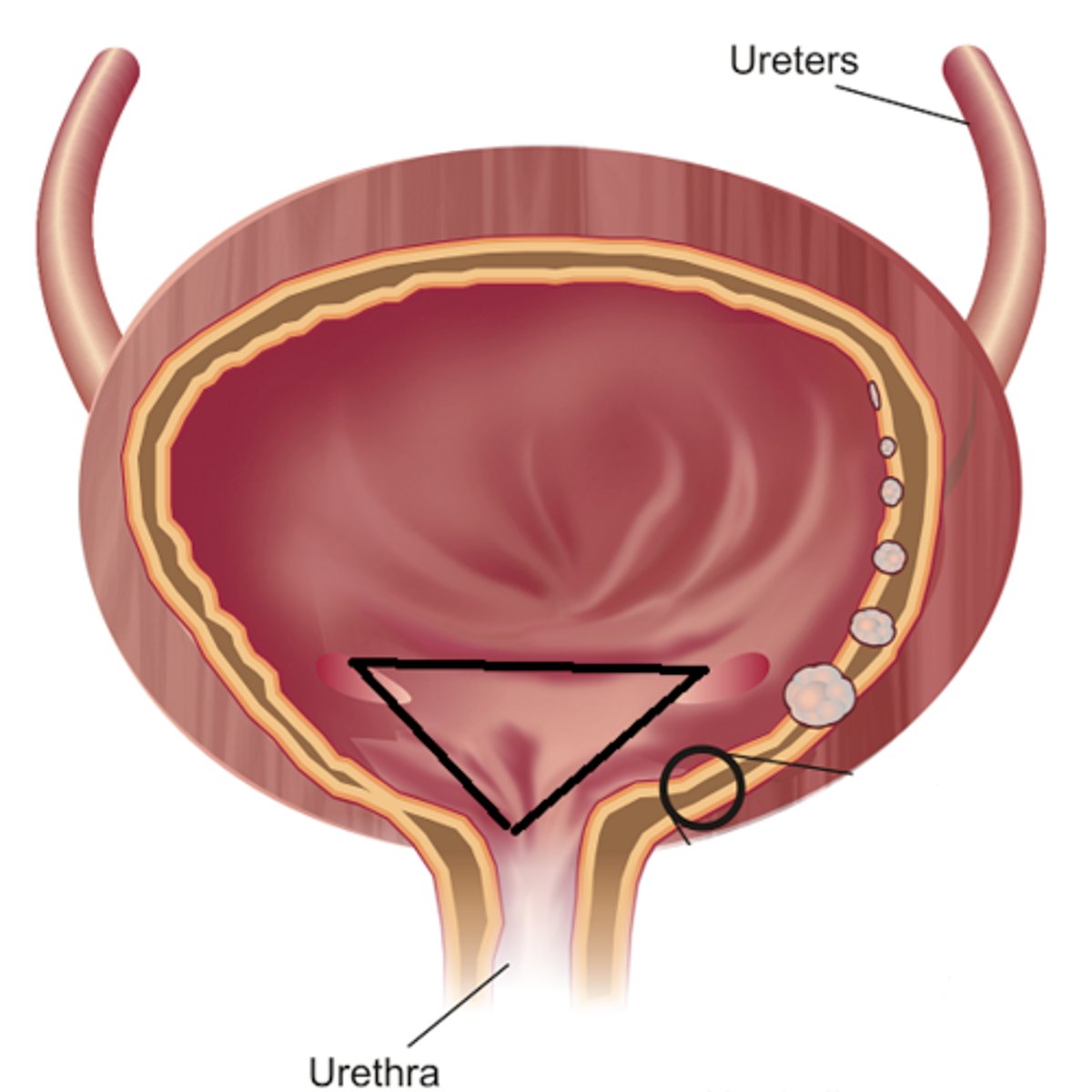
What are the three openings of the bladder trigone?
Two from the ureterovesicular junctions (UVJ) and one to the urethra.
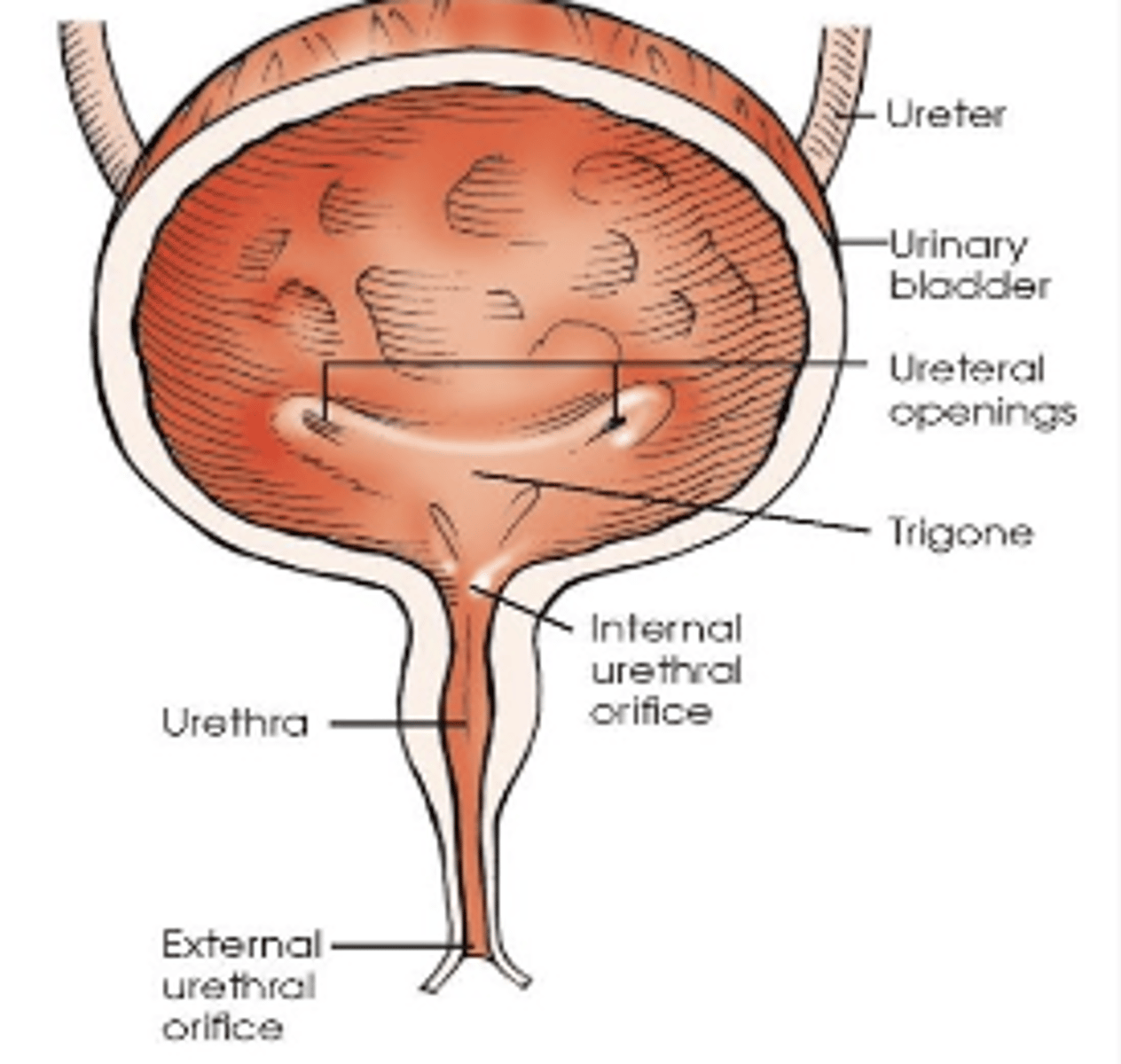
What is the function of the urethra?
It allows urine to exit out of the body.
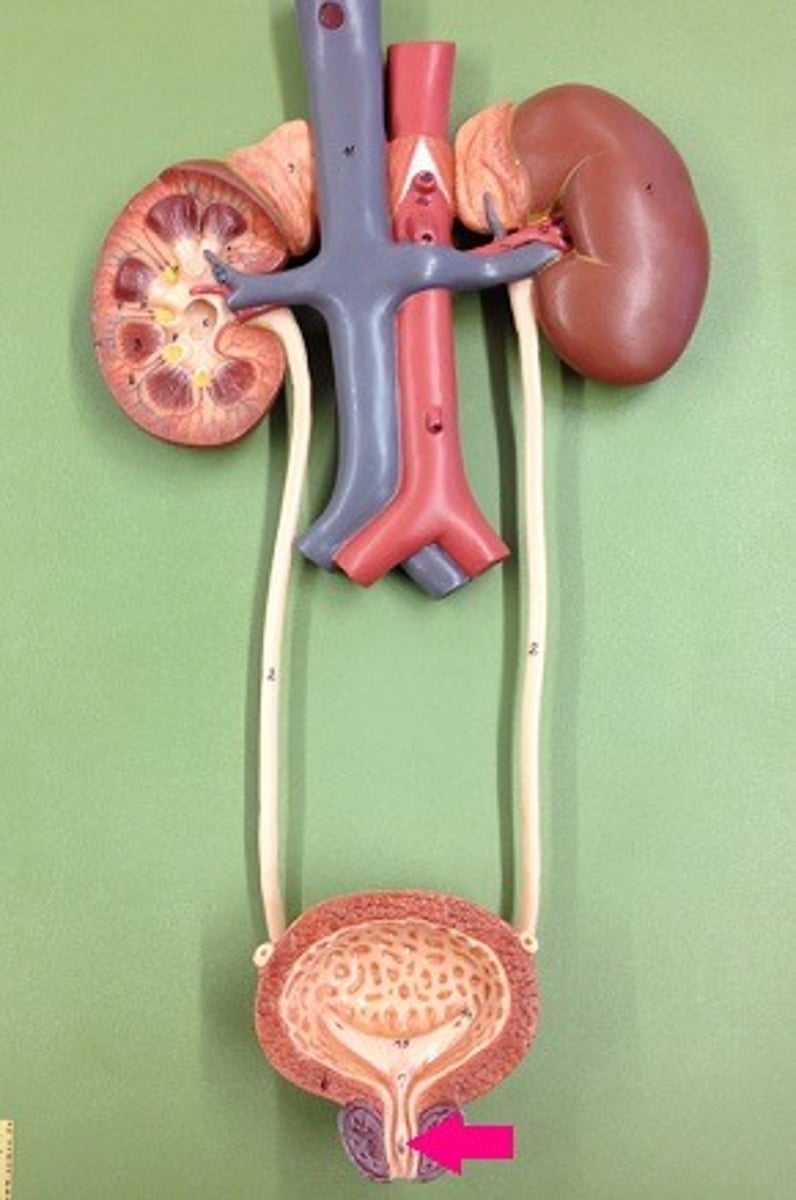
What type of structure is the urethra?
A narrow, musculomembranous tube with a sphincter muscle at the neck of the bladder.
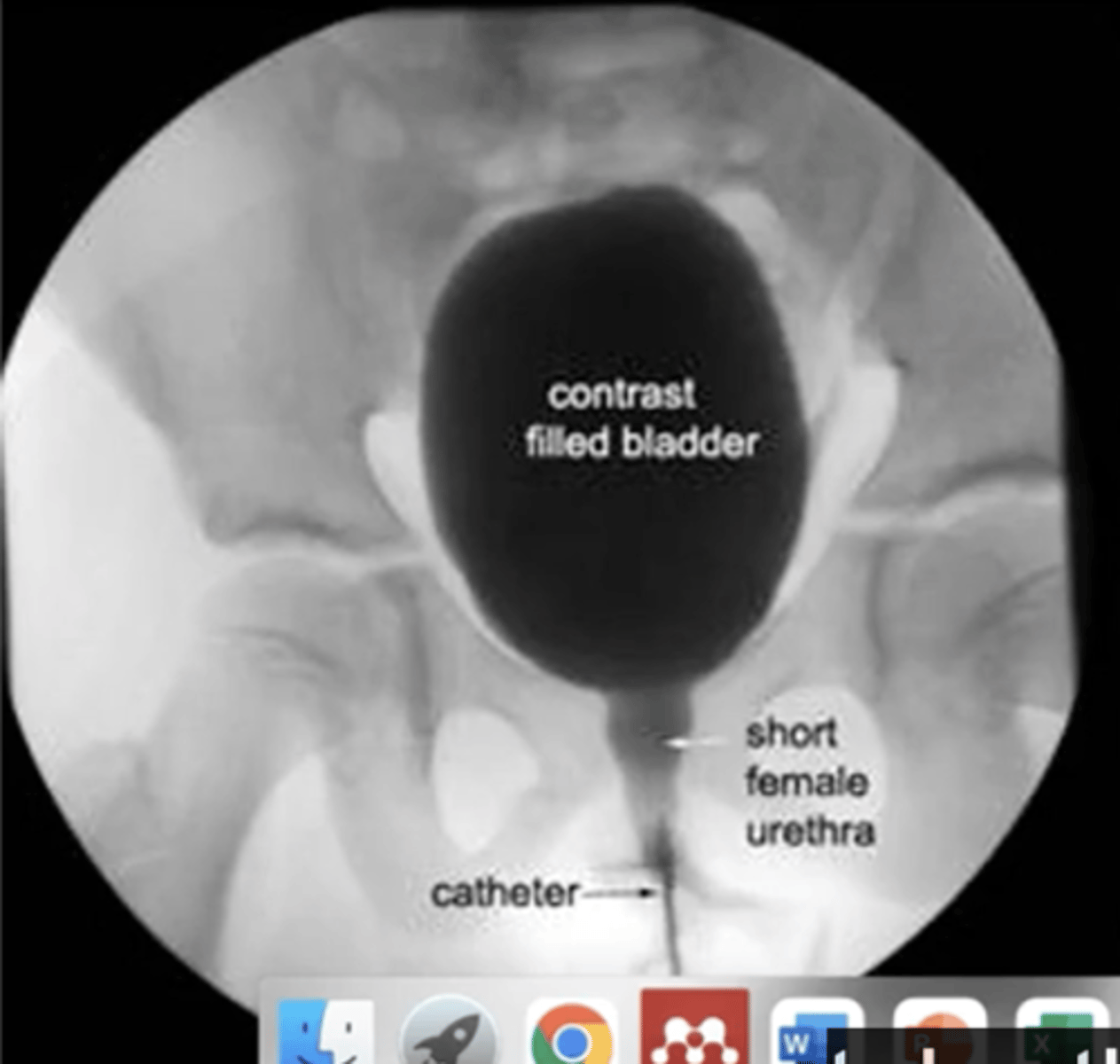
How long is the female urethra?
About 1.5 inches (3.8 cm).
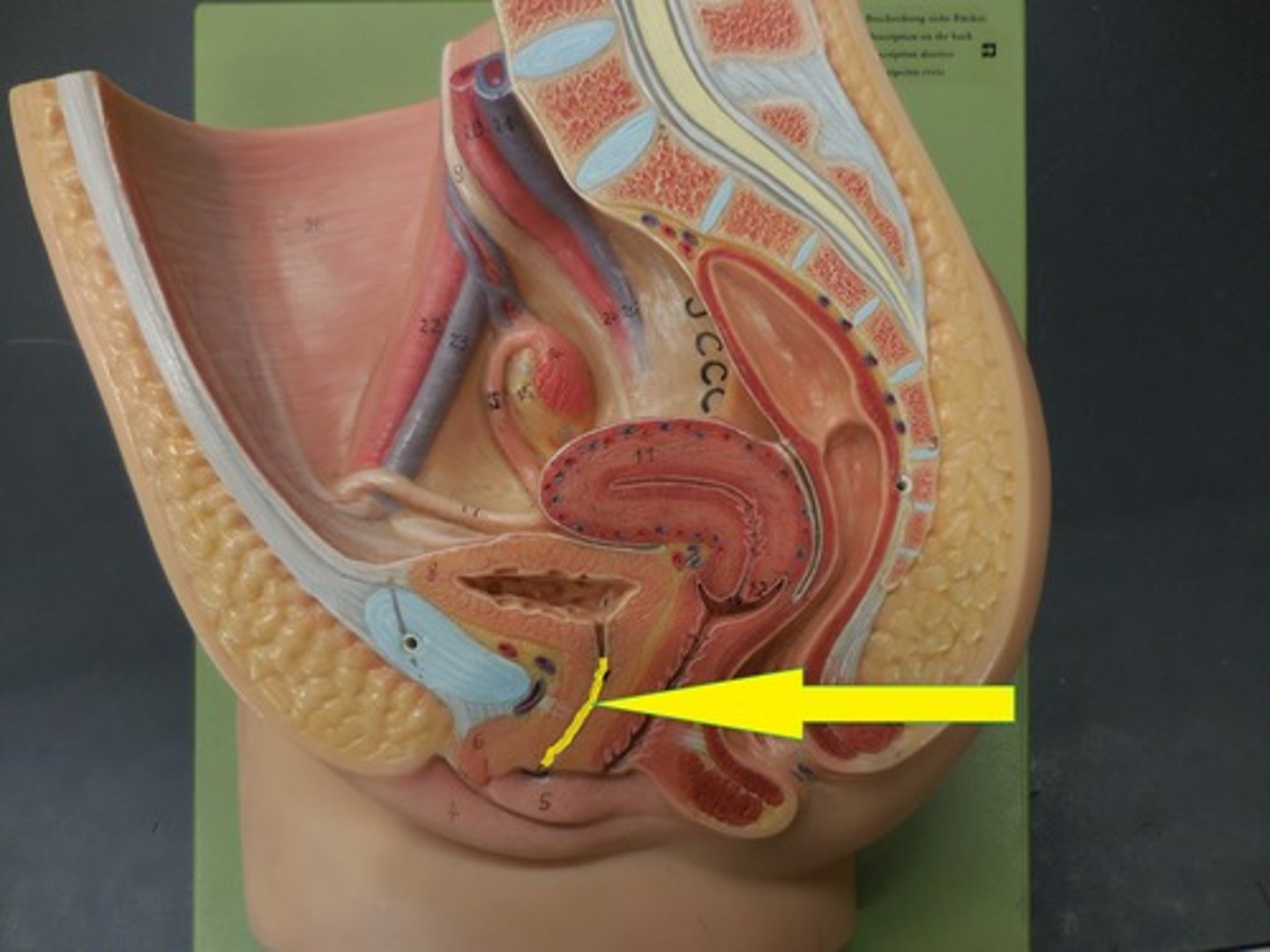
Where does the female urethra run?
Along the anterior wall of the vagina to the external urethral orifice.
How far is the female urethral opening from the vaginal opening?
About 1 inch (2.5 cm) anterior to the vaginal opening.
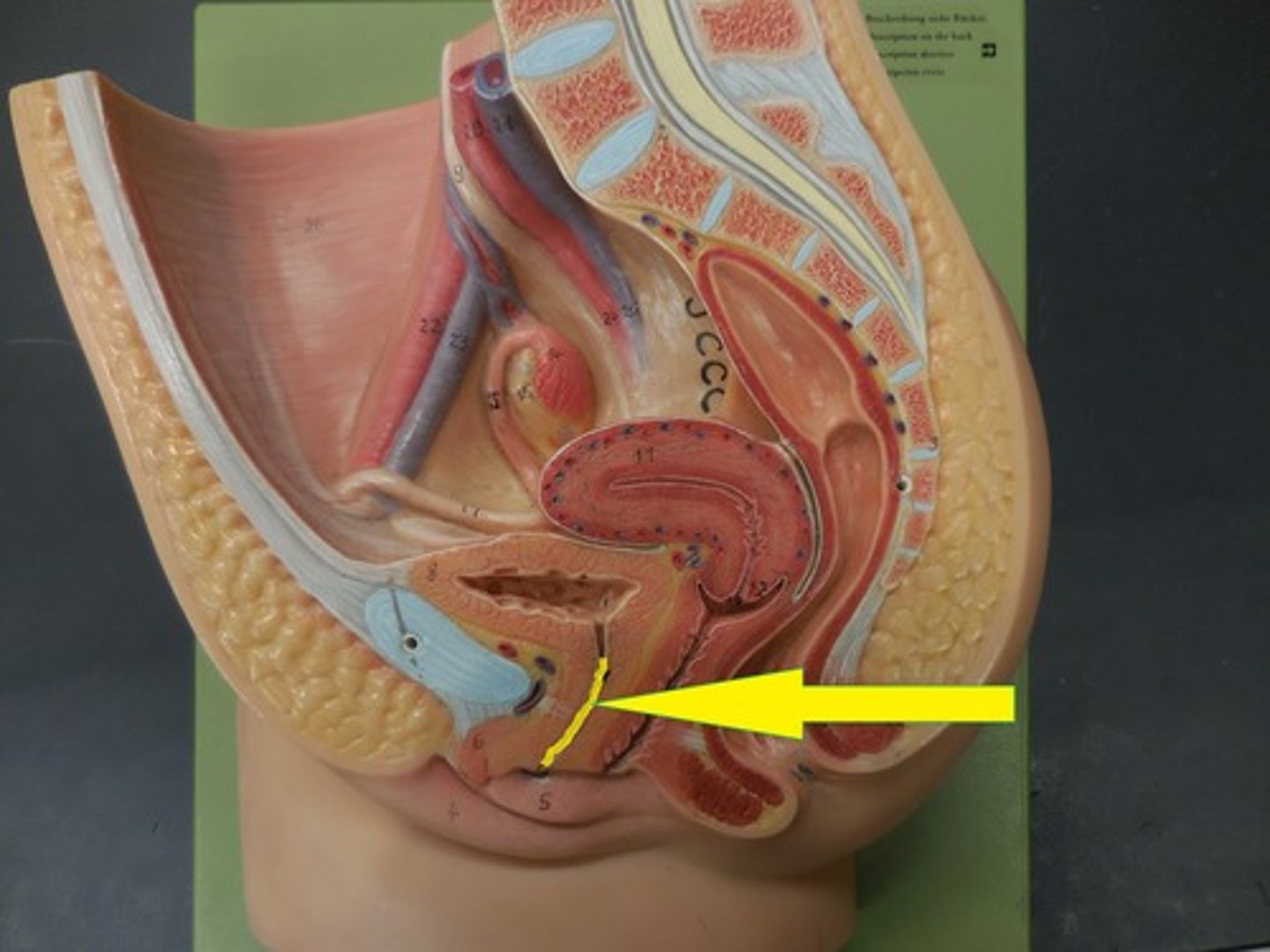
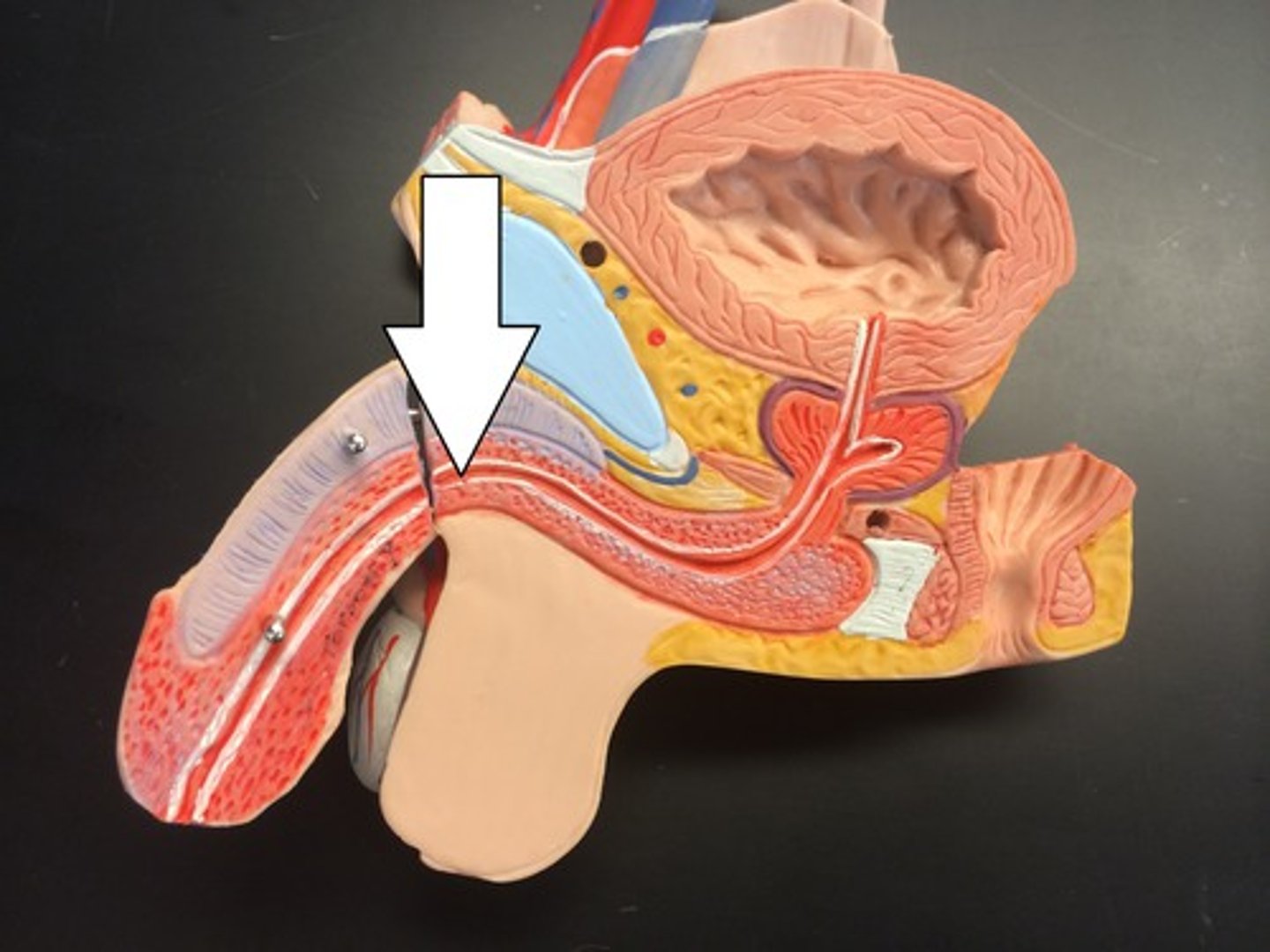
What are the two functions of the male urethra?
It allows urine to exit the body and carries semen during ejaculation.
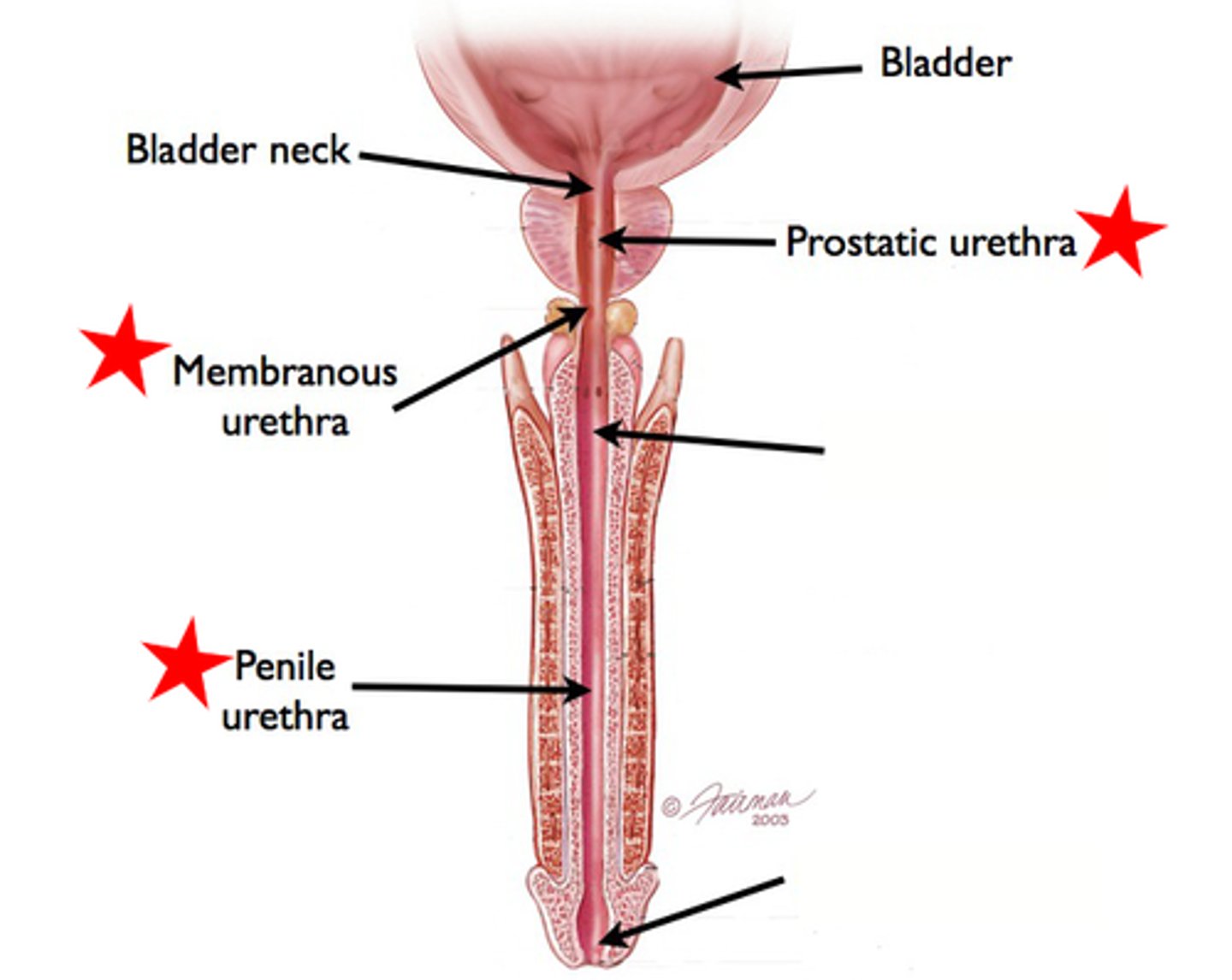
How long is the male urethra?
About 7 to 8 inches (17.8 to 20 cm).
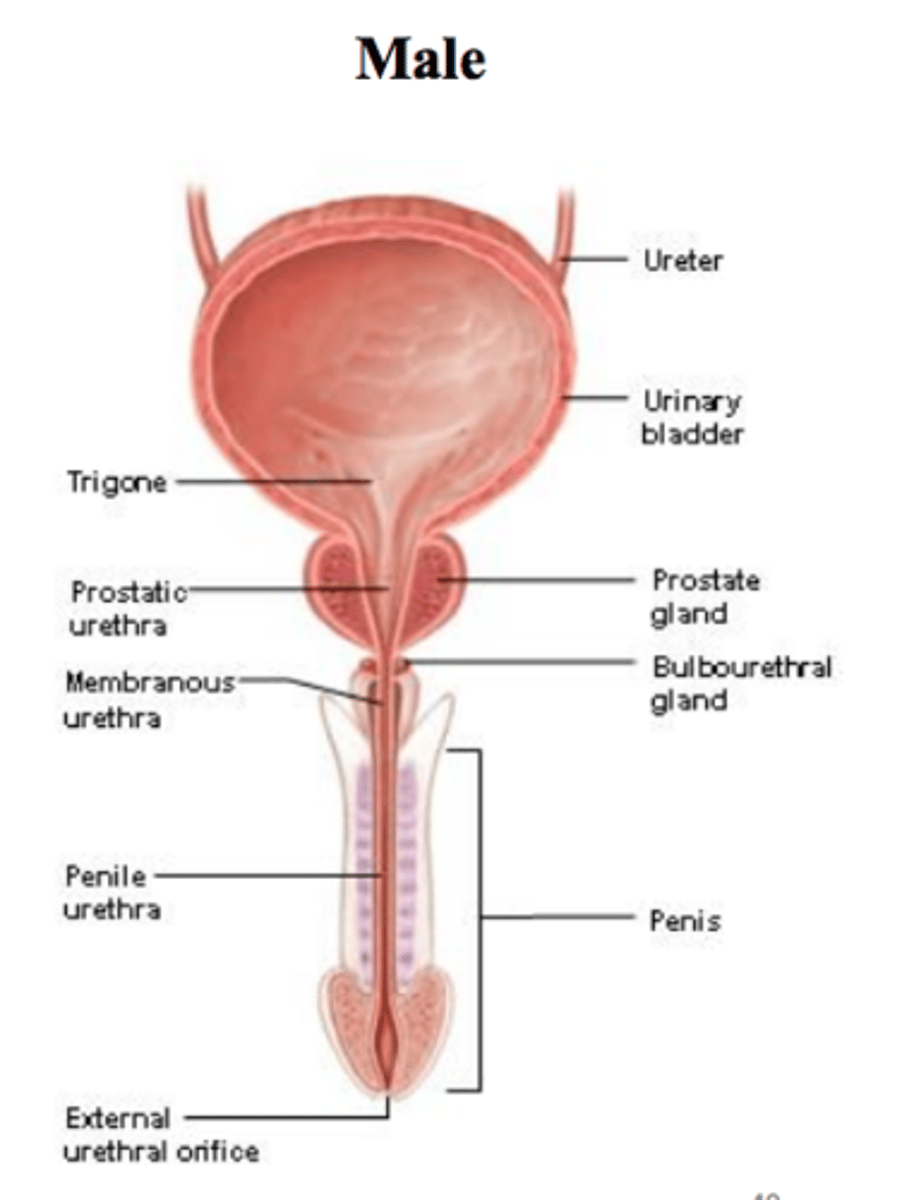
What is the first part of the male urethra and where does it pass?
Prostatic urethra; passes through the prostate gland.
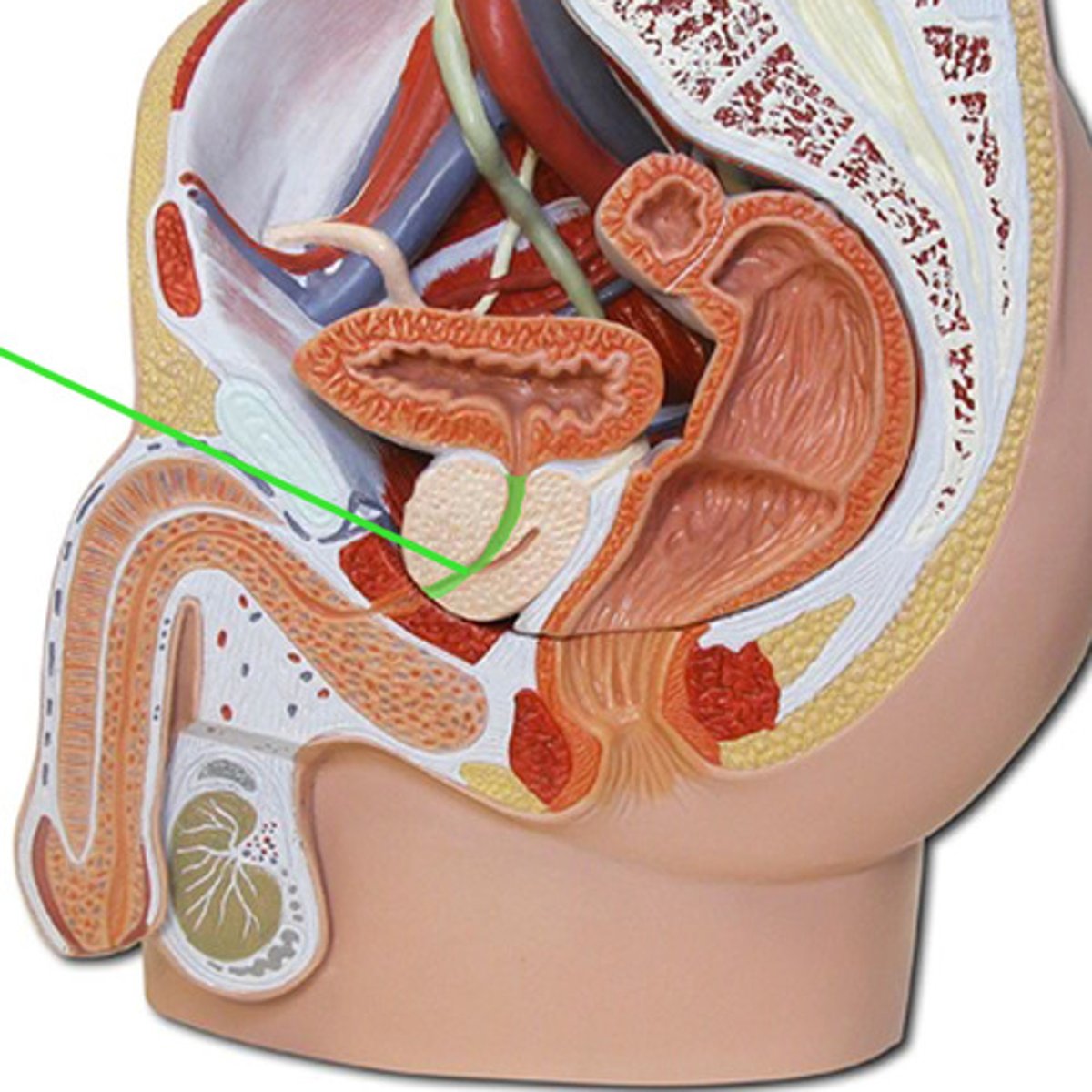
What is the second part of the male urethra and what are its features?
Membranous urethra; the shortest and narrowest part, passes through the external urethral sphincter.
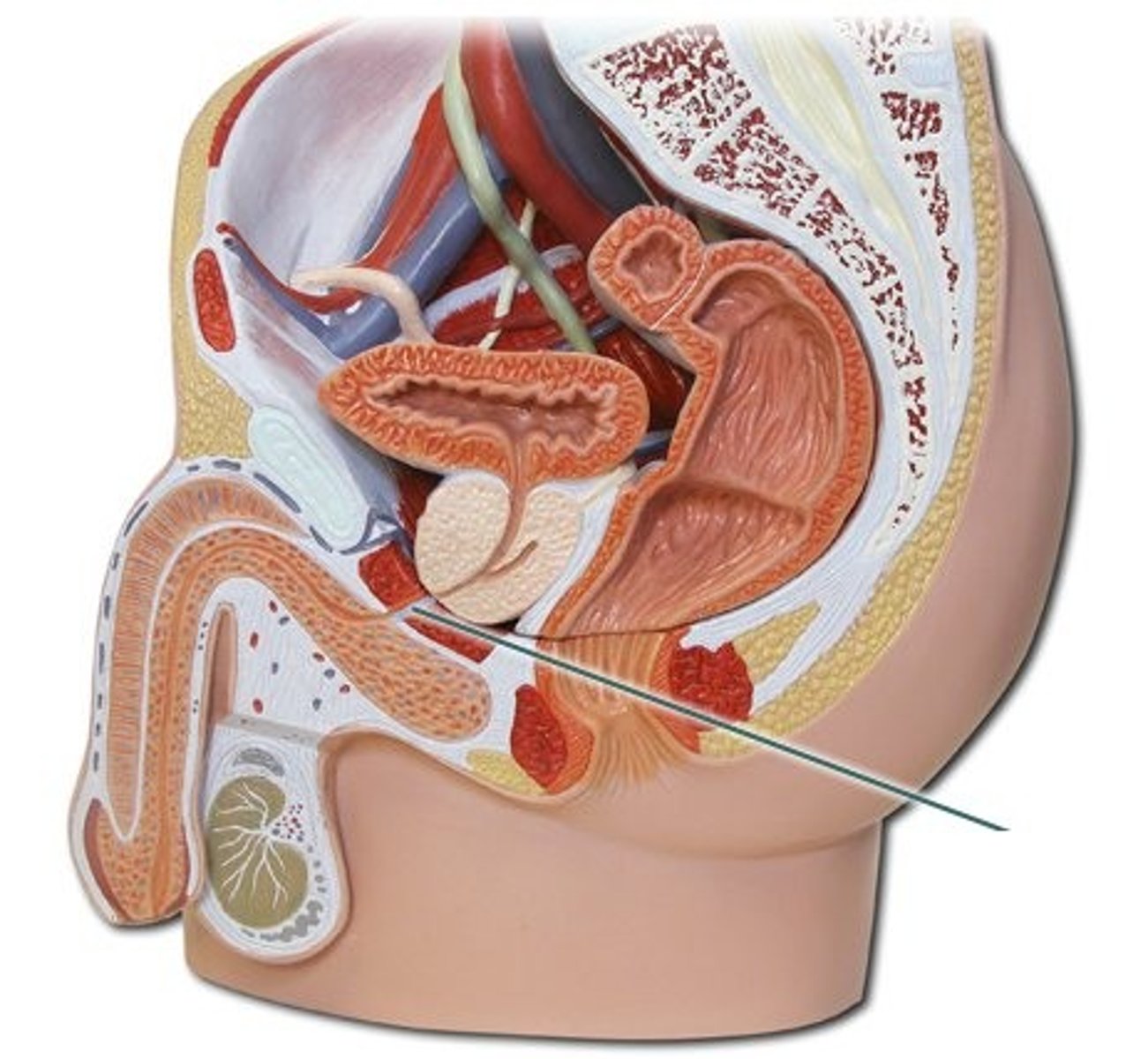
What is the third part of the male urethra and where does it extend?
Penile (spongy) urethra; extends from the external urethral sphincter to the tip of the penis.
What are urinary calculi?
Solid masses made up of tiny crystals, also known as kidney stones.
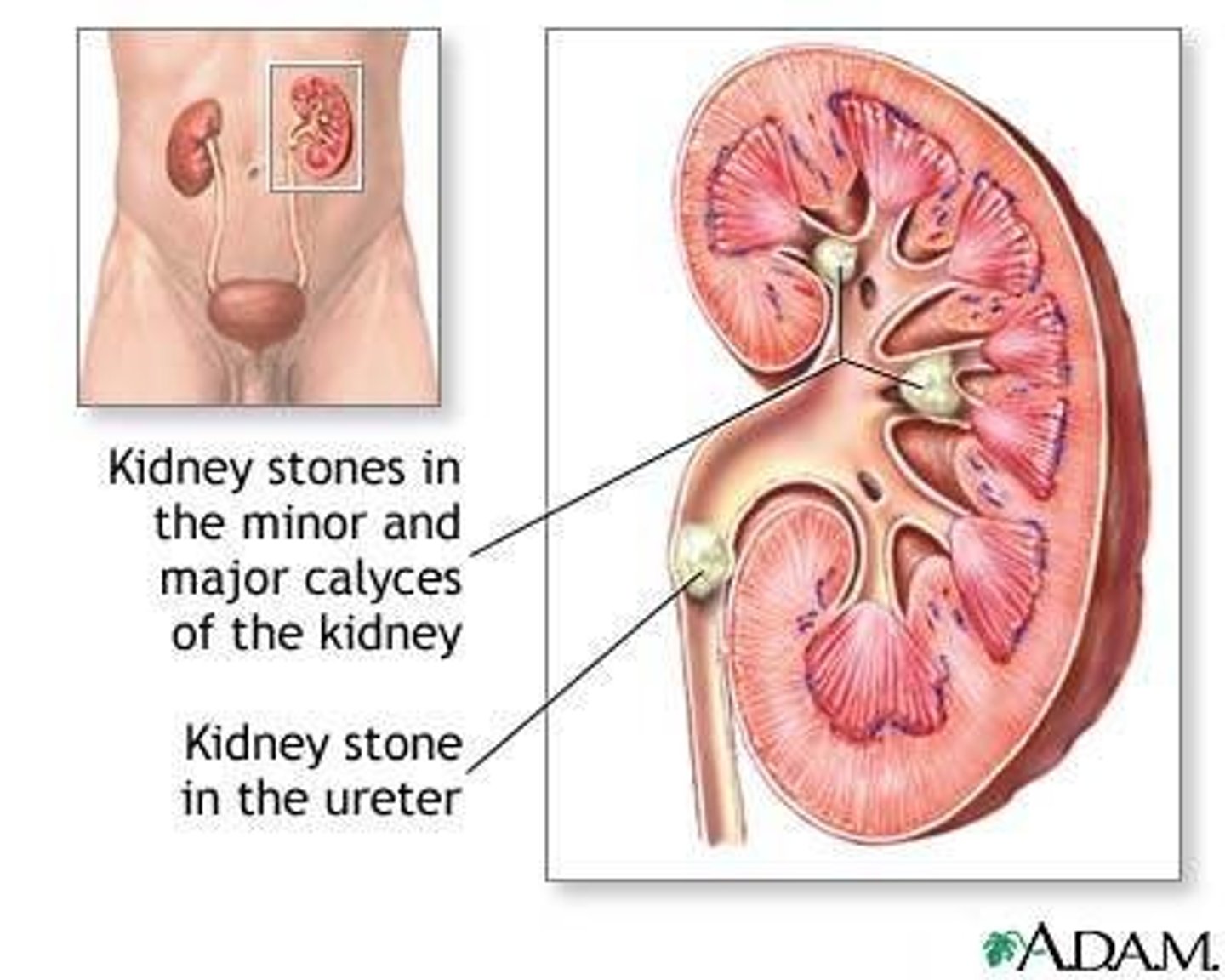
Can multiple stones be present in the urinary tract at the same time?
Yes, one or more stones can be in different parts of the urinary tract at once.
Where do calculi commonly get stuck?
At specific narrowing points in the urinary tract.
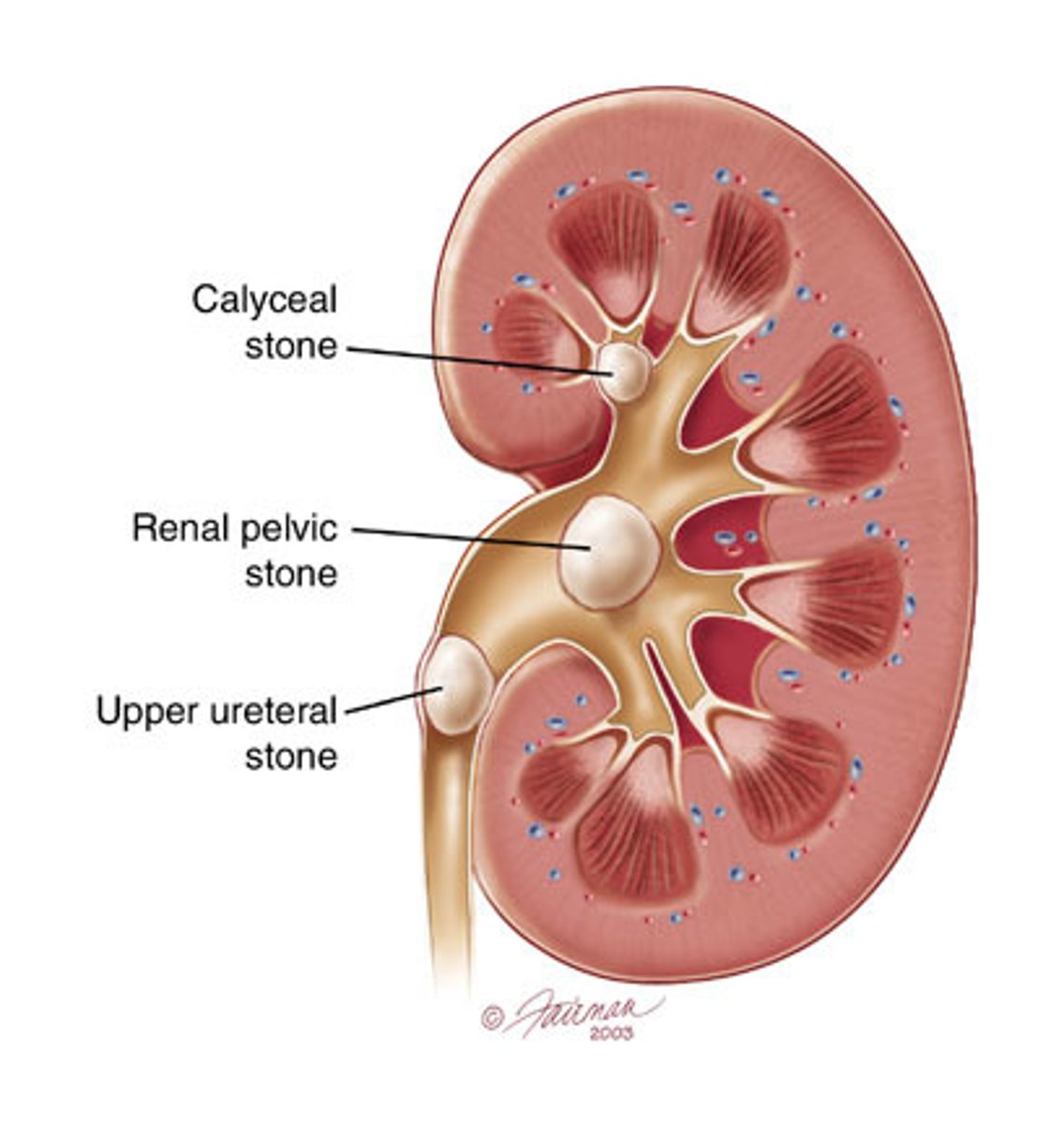
Name the four common sites where kidney stones get stuck.
- Corticomedullary junction
- ureteropelvic junction (UPJ)
- ureterovesical junction (UVJ)
- along the pelvic brim.
What is the purpose of contrast media in urology?
To help visualize the urinary system during imaging exams.
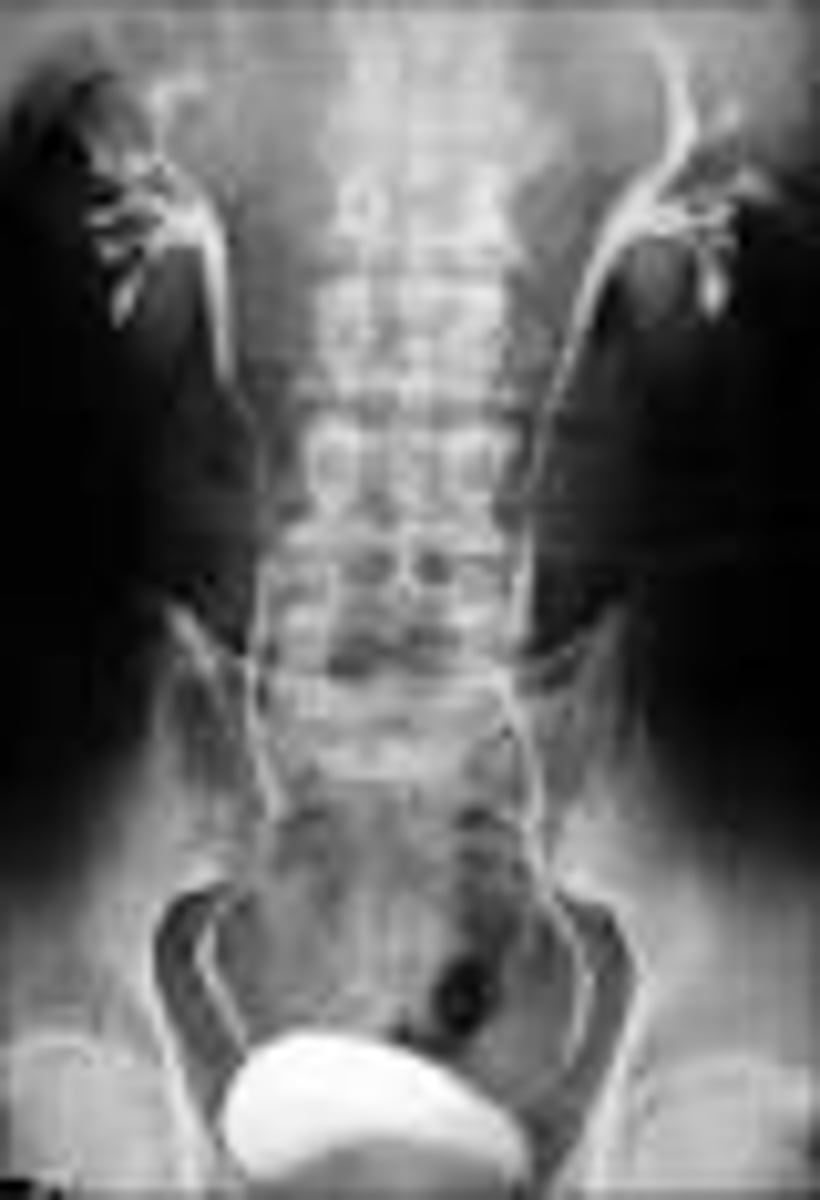
How is contrast media administered in an antegrade exam?
It is injected intravenously.
What is another name for an intravenous urogram?
Pyelogram.
How is contrast media administered in a retrograde exam?
Through a catheter.
Name three types of retrograde contrast procedures.
- VCUG/CUG
- cystography
- retrograde pyelogram.
What is the purpose of an intravenous urogram?
To visualize the anatomy of the urinary system's collecting portion.
What functional aspect does an intravenous urogram assess?
The functional ability of the kidneys.
Is an intravenous urogram a timed procedure?
Yes, it is timed to evaluate how well the kidneys function over time.
What is the first step a radiographer should take before a contrast exam?
Obtain a thorough patient history.
What information should be included in a patient history for contrast media use?
- Clinical complaints
- consent form
- allergies
- past reactions
- asthma/hay fever/hives, and lab values.
What is the purpose of the contrast media questionnaire and informed consent form?
To identify risks and confirm the patient agrees to the procedure.
What should be checked before contrast is administered?
Food or drug allergies and any previous reaction to contrast media.
Why are asthma, hay fever, or hives important to note?
They may indicate a higher risk for allergic reaction to contrast.
What should a radiographer do to prepare the contrast media?
Read the label at least three times to confirm accuracy.
What are two other responsibilities besides patient history and contrast prep?
Preparing the room/equipment and performing venipuncture.
What key question should be asked to diabetic patients before a contrast procedure?
"Are you currently taking Glucophage or other medication for diabetes mellitus?"
What specific medication should you ask about when reviewing patient history?
Metformin (and any combination meds that contain it).
What must be done with metformin meds before and after iodinated contrast procedures?
They must be withheld for 48 hours after the procedure.
What must be verified before a patient resumes taking metformin after contrast use?
Normal kidney function.
What is the general eGFR threshold below which contrast media should not be used?
Less than 60 mL/min/1.73 m².
Why is Graves disease a contraindication for iodinated contrast?
Patients in therapy should not receive contrast 6 weeks before or after treatment.
What is pheochromocytoma?
An adrenal gland tumor.
Why is sickle cell anemia a concern with contrast media?
It can trigger a sickle cell crisis
What is the risk of using contrast media in a patient with renal failure?
If the kidney doesn't work, the patient can die.
What are some contraindications (where a treatment should not be used because it could harm the patient.) for contrast media in IVU?
- Graves' Disease (radioactive iodine therapy)
- Pheochromocytoma (adrenal tumor)
- Sickle Cell Anemia (can trigger crisis)
- Renal Failure (risk of death if kidneys can't filter contrast)
- eGFR < 60 mL/min/1.73m² (poor kidney function)
What condition could make a patient to be considered "high risk" for a contrast media study?
- hypersensitivity to iodinated contrast
- diabetes (esp. taking metformin)
- asthma etc.
- hypertension
- severe dehydration
- multiple myeloma
- acute/chronic renal disorders
What is the normal creatinine level for adults?
0.6 to 1.3 mg/dL
What is the normal BUN (blood urea nitrogen) level for adults?
6 to 20 mg/dL
What is the normal GFR (glomerular filtration rate) for adults?
Greater than 60 mL/min/1.73 m²
What should be done if a patient has a history of allergy or reaction and a contrast study must be done?
Follow a pre-medication protocol.
What is a common pre-medication protocol for contrast allergy?
Pre-treat with a combination of Benadryl and prednisone over 12 or more hours before the procedure.
Can contrast be given to a patient with a known allergy without approval?
No, only with radiologist approval.
Does pre-medication guarantee no allergic reaction?
No, there is no guarantee that a reaction won't occur.
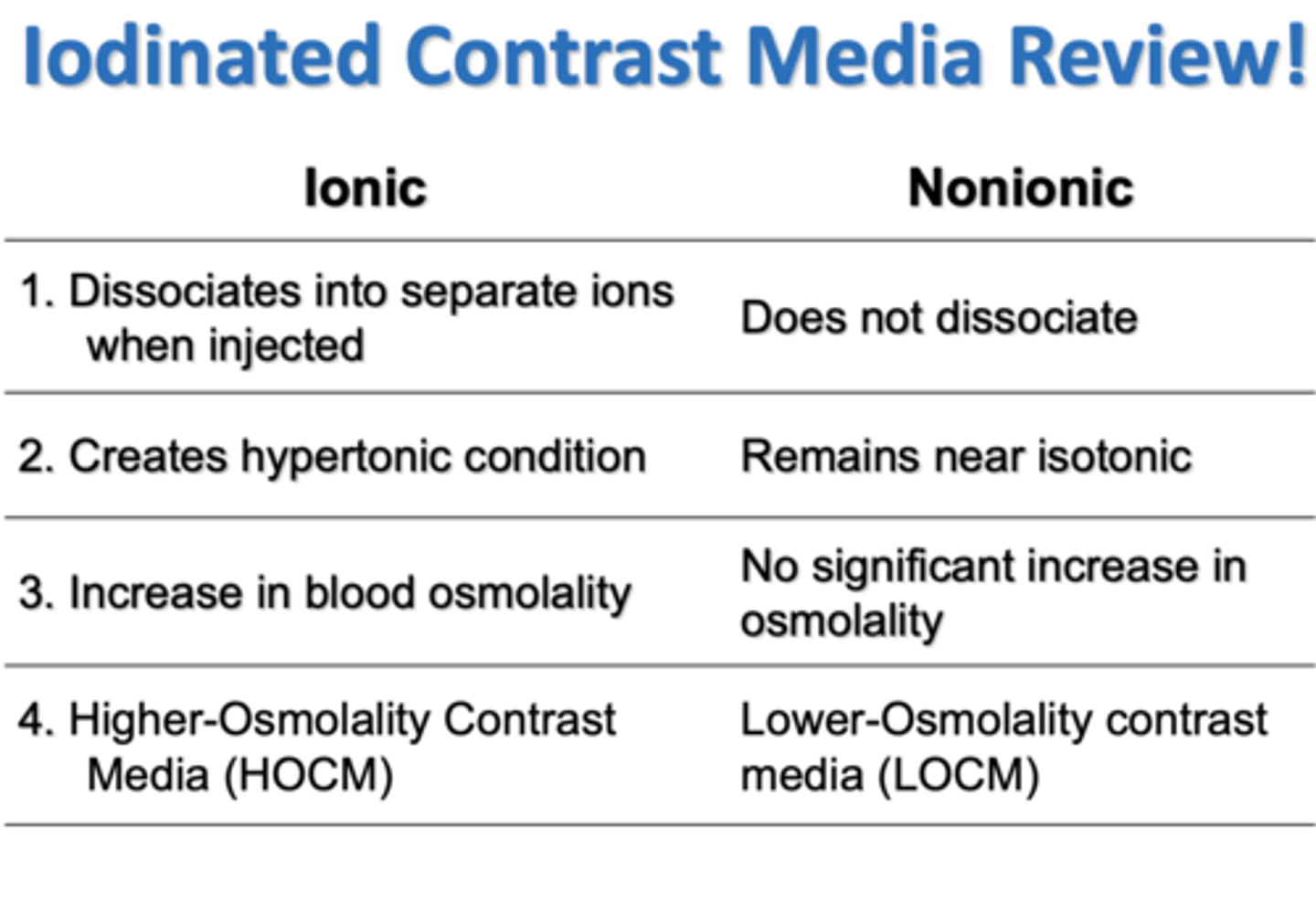
What happens to ionic contrast media when injected?
It dissociates into separate ions.