p2 mistakes + theory [IAL]
 Call Kai
 Learn
Learn Practice Test
 Spaced Repetition
 Match
Match Flashcards
 Knowt Play
1/64

There's no tags or description
Looks like no tags are added yet.
Name | Mastery | Learn | Test | Matching | Spaced | Call with Kai | Chat |
|---|
No analytics yet
Send a link to your students to track their progress
65 Terms
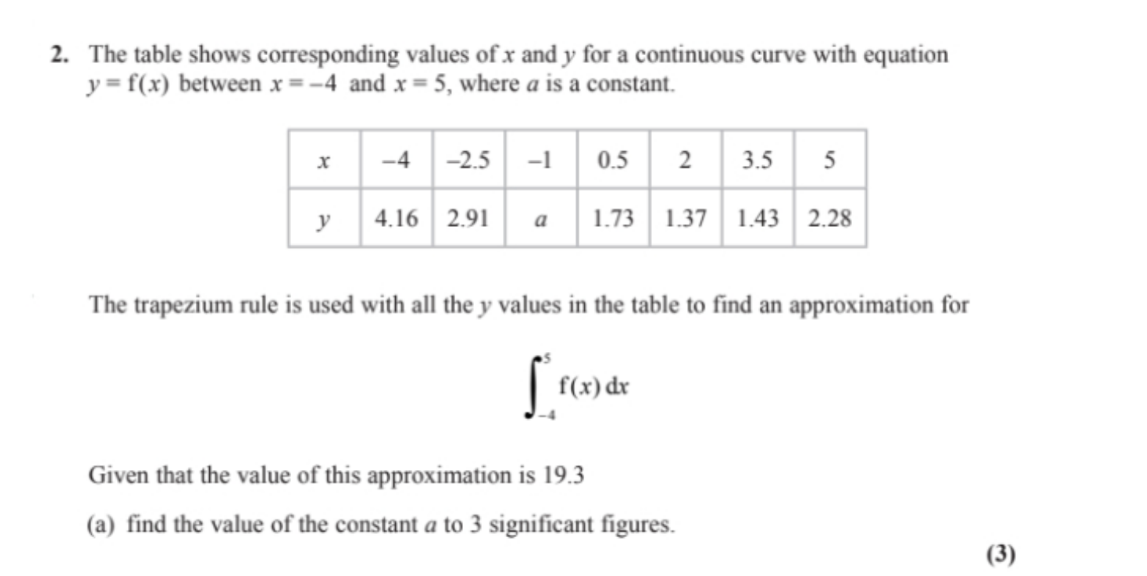
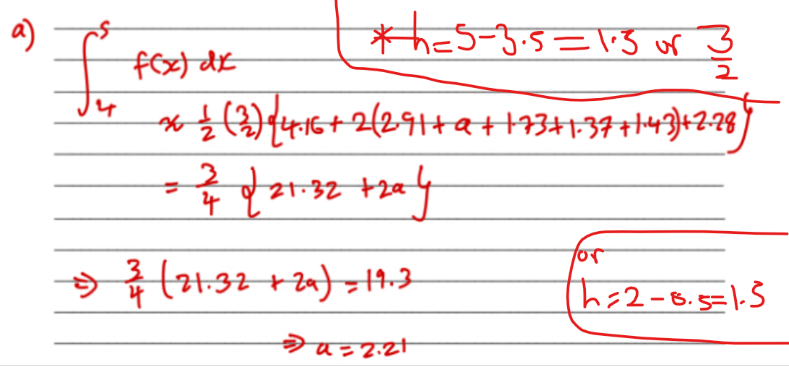
Find h and then solve.
h = 5 -3.5 = 1.5
- You can subtract any of the two values of x to find h
( don’t use the formula booklet for getting h, might get wrong h value at times)
then find area using the formula (in booklet)

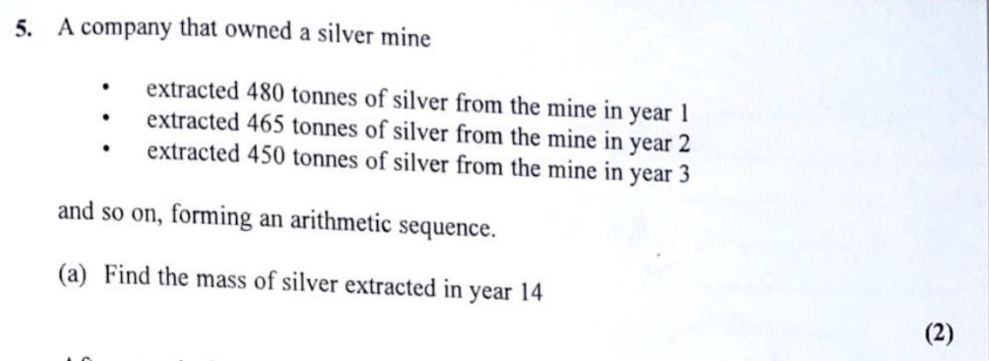
easy sum BUT BEWARE, always to T2 - T1 ( because d can be -ve or +ve)
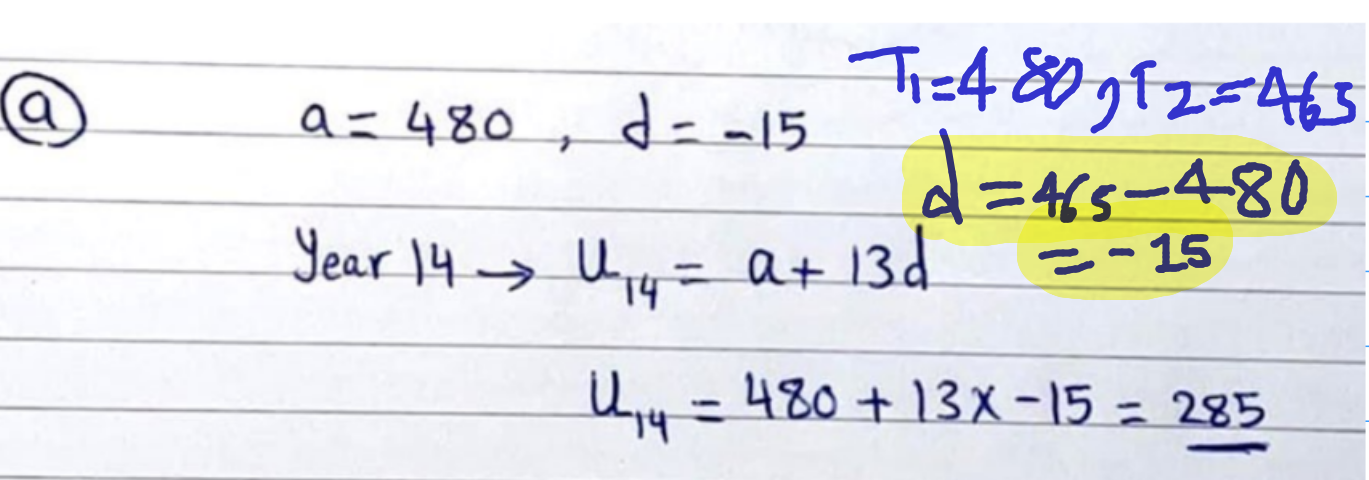

Exam tip:
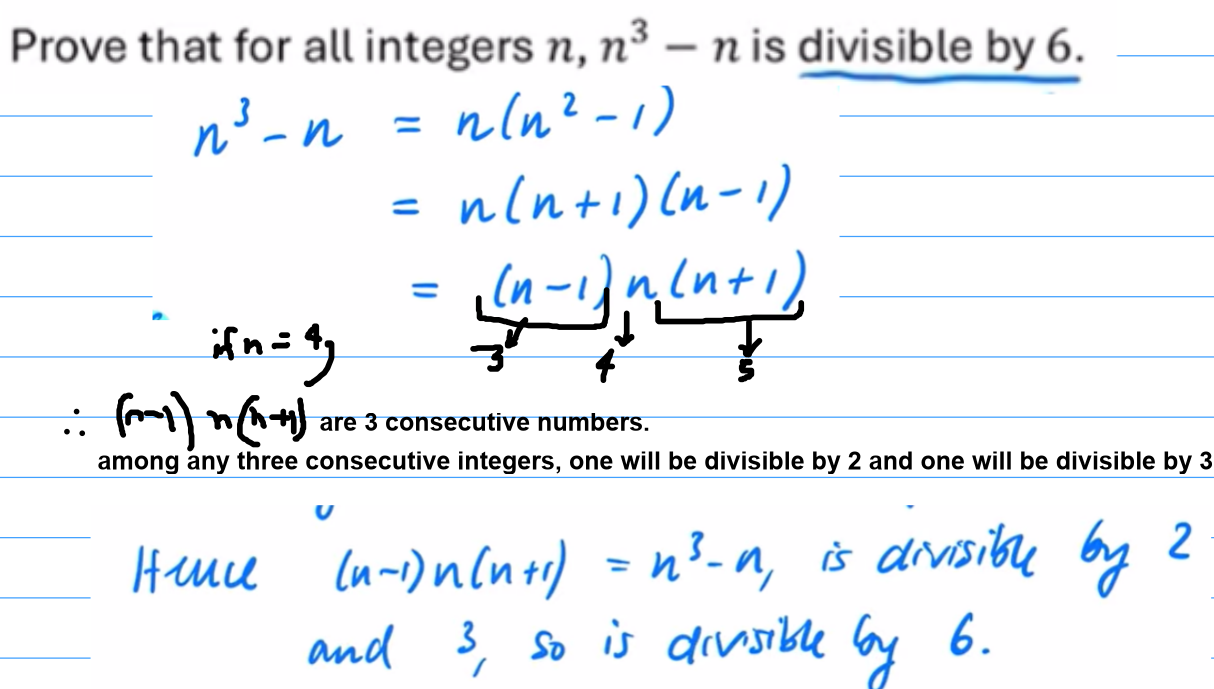
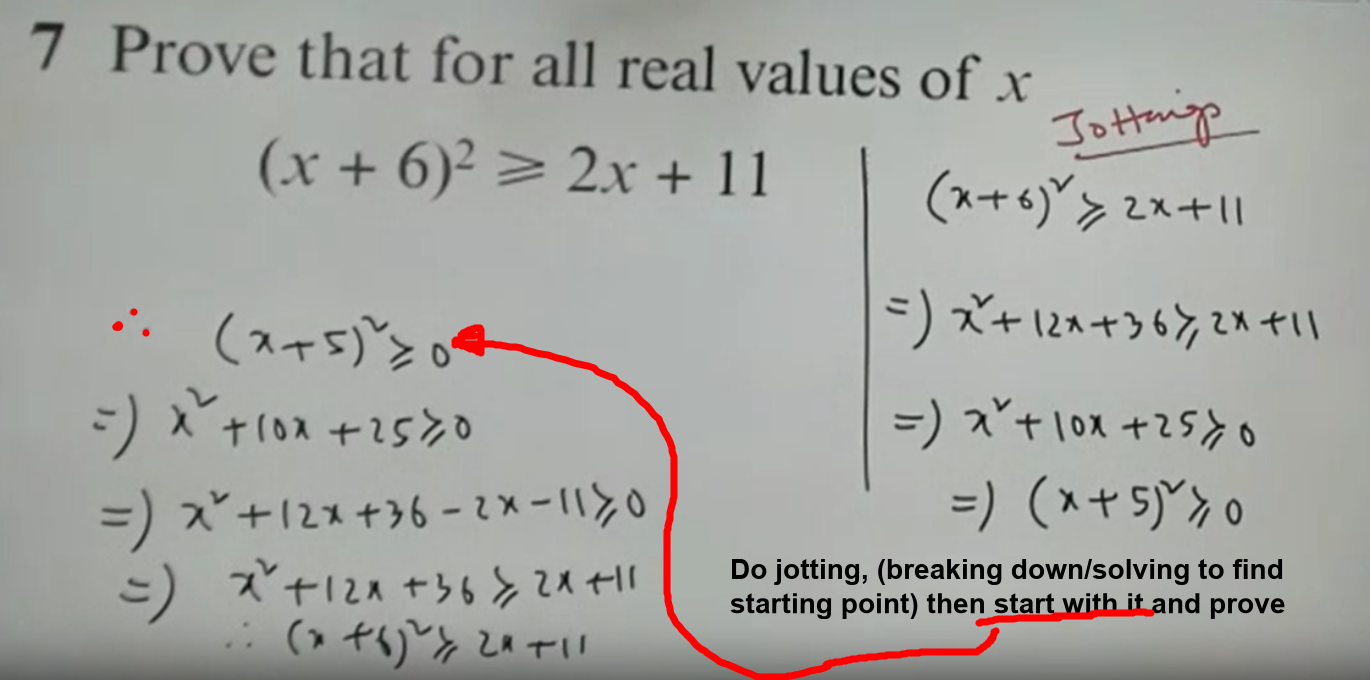
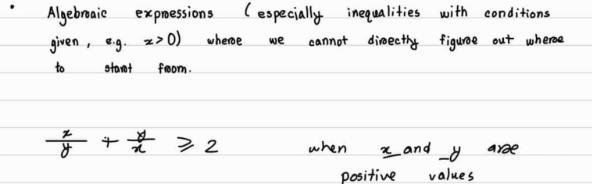
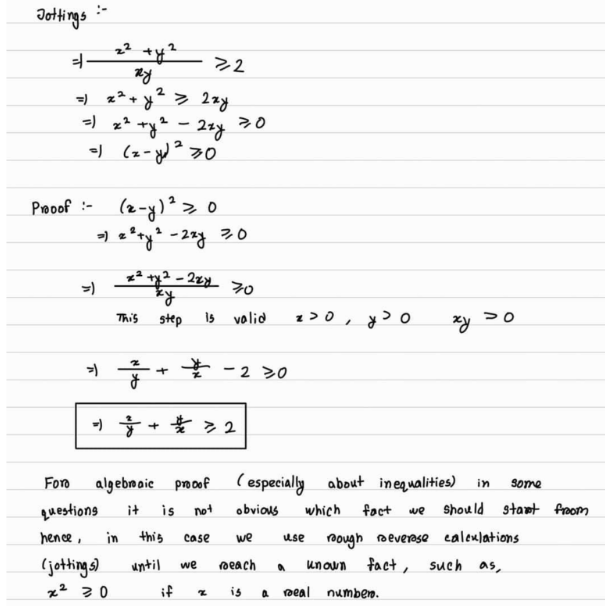
for proof sums, just start by doing something, like jottings.
→ In mathematics, "jottings" in a proof are informal, scratch-pad calculations to plan the structure of a proof before writing the final answer
→ jottings help bridge the gap between understanding a problem and constructing steps to the answer.
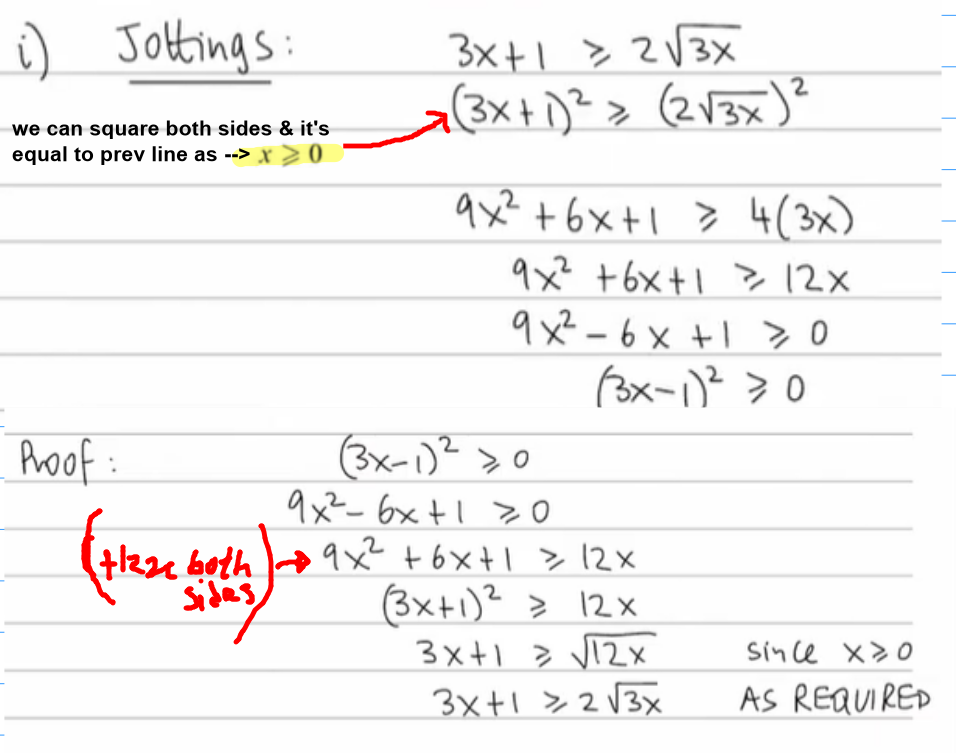

N just means natural numbers (+ve integers, 1 to ……)

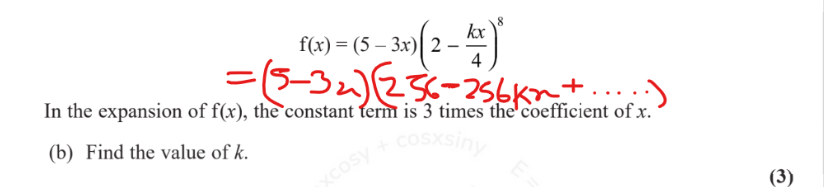
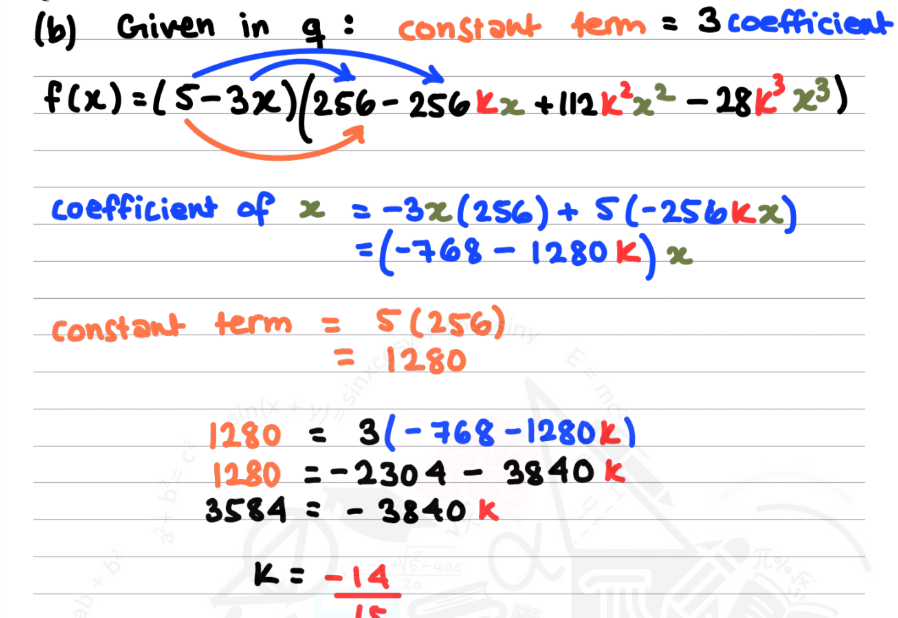
constant term in binomial expansion is the term without any coefficient of x, (or x^0, its usually the first term)
e.g: 1 + 2x + 2x² …. , constant term is 1
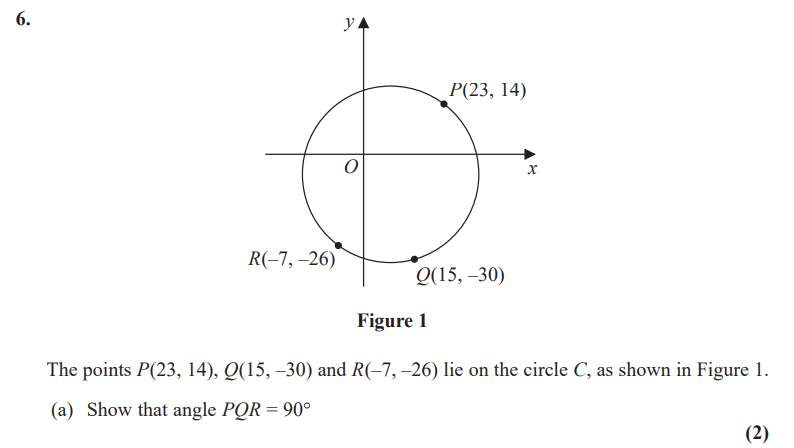
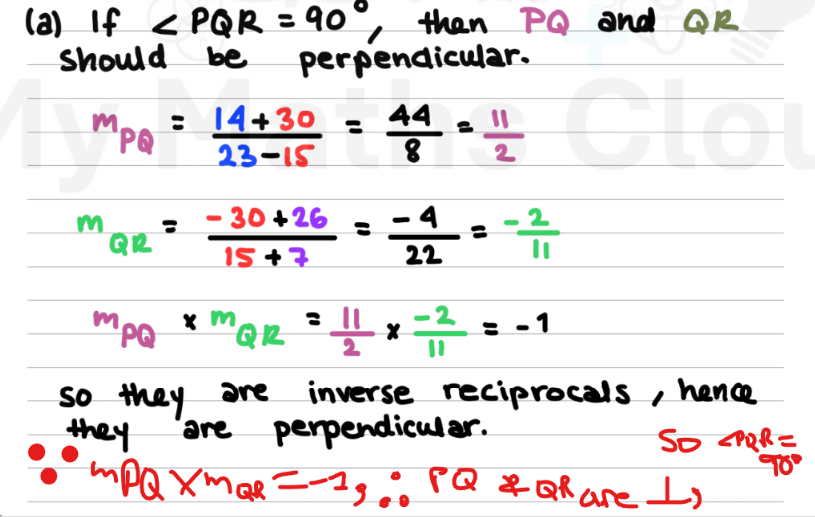
Find gradient of mPQ and mQR
then multiply them to show they are = -1

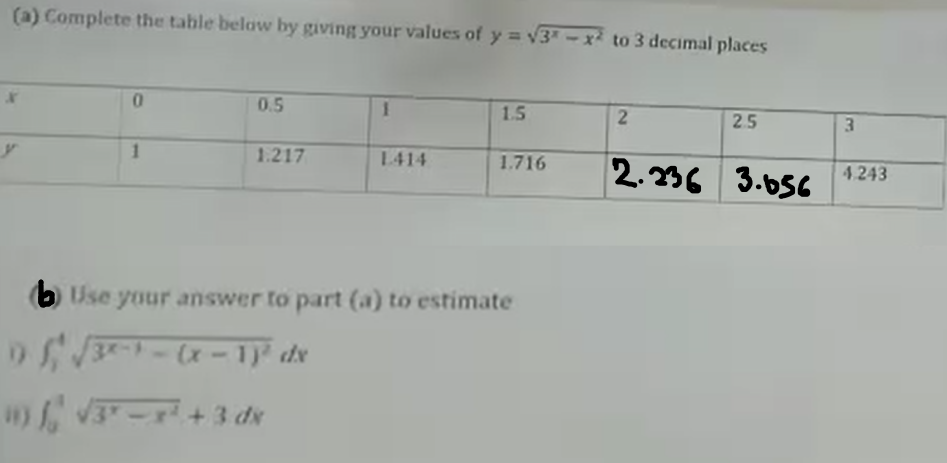
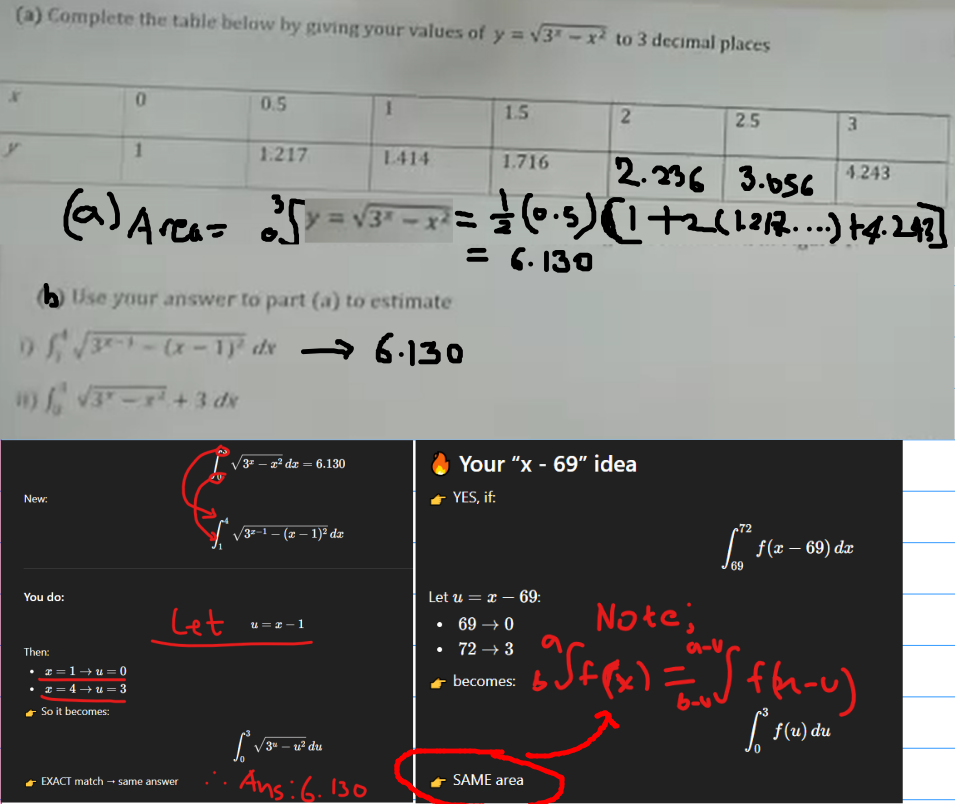
Key Rule:
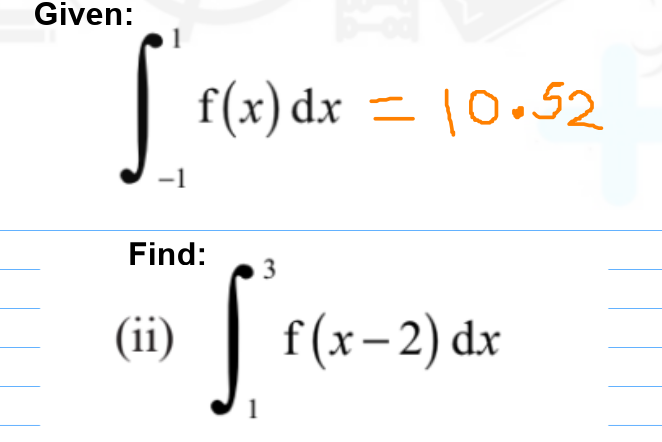
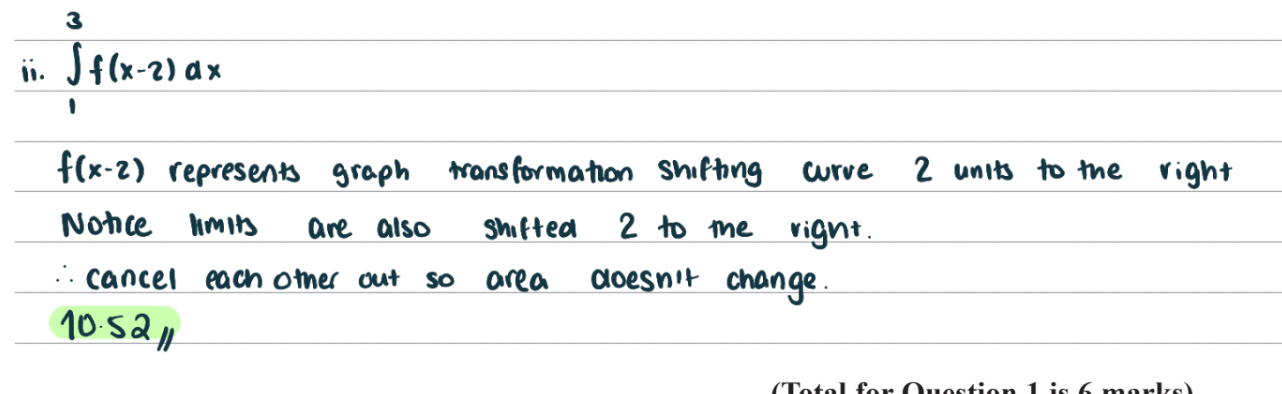
👉 “Inside shift = limits shift → area unchanged”
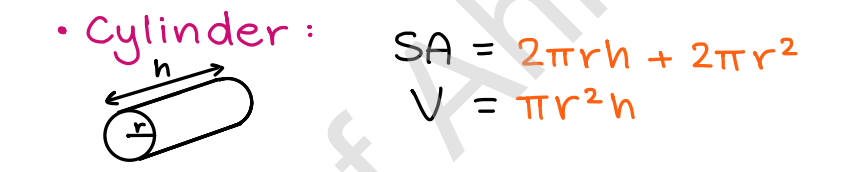
state the formula of SA and volume of cylinder
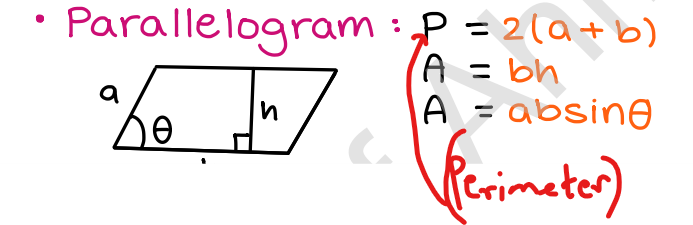
state the two formulas to find area of parallelogram
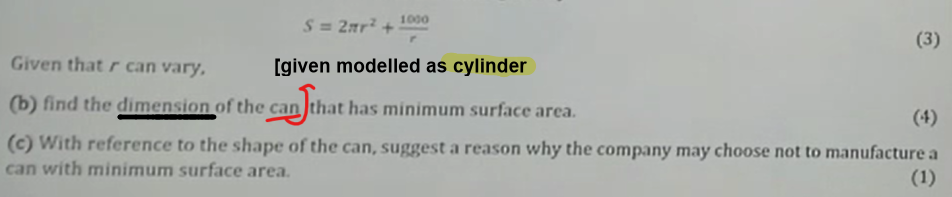
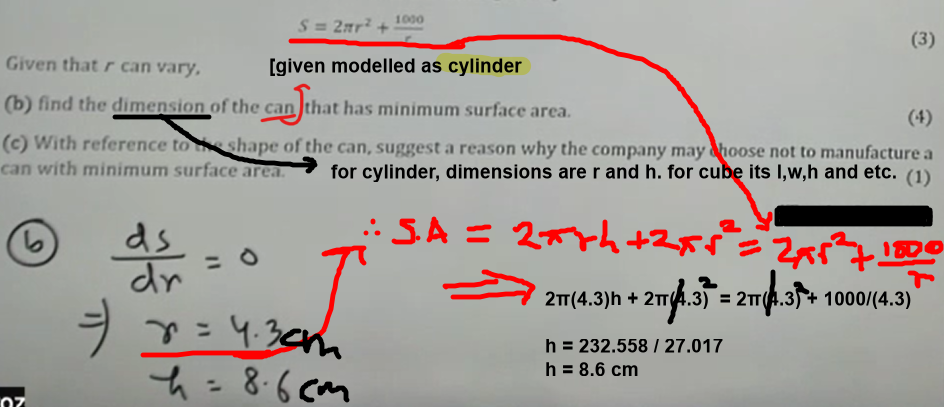
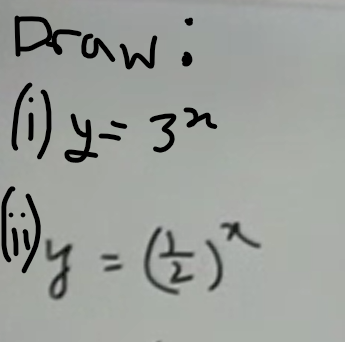
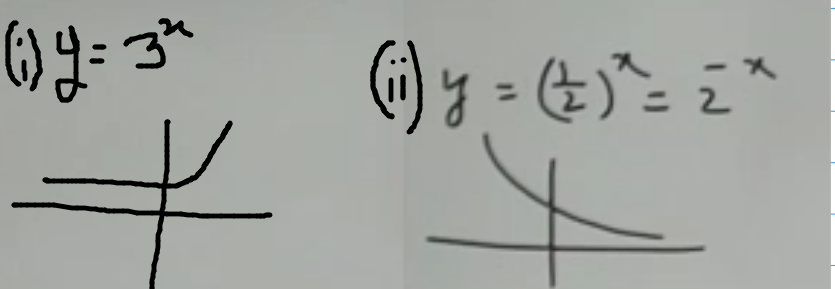

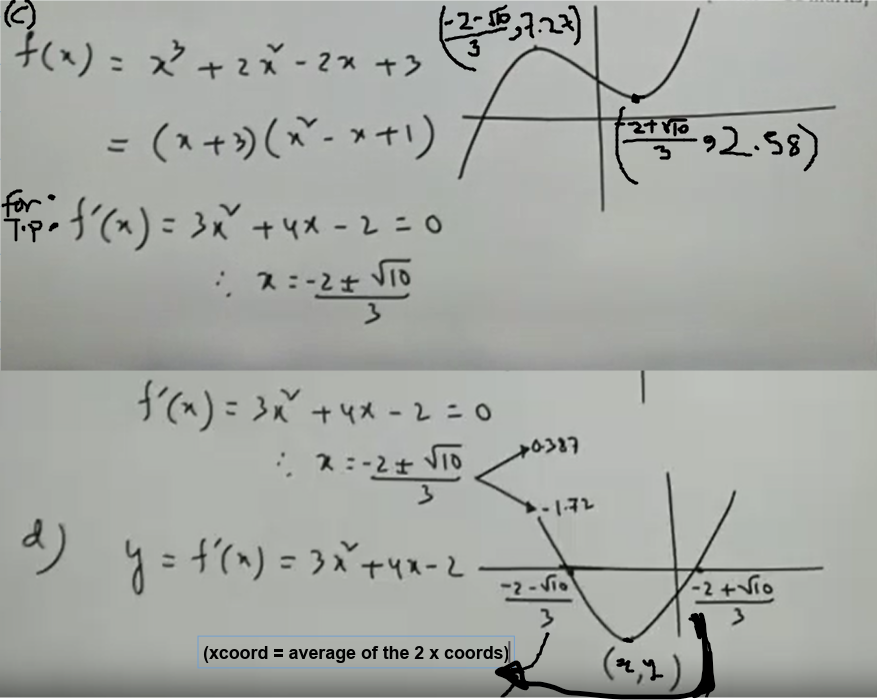
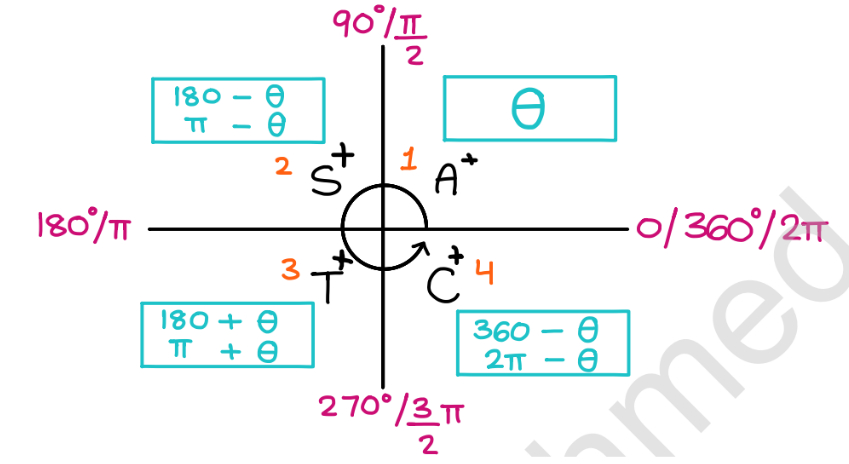
important concept, attach topical question later
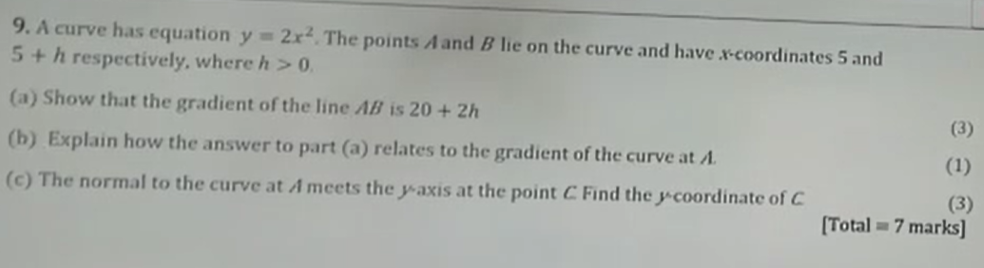
number (b) concept mainly
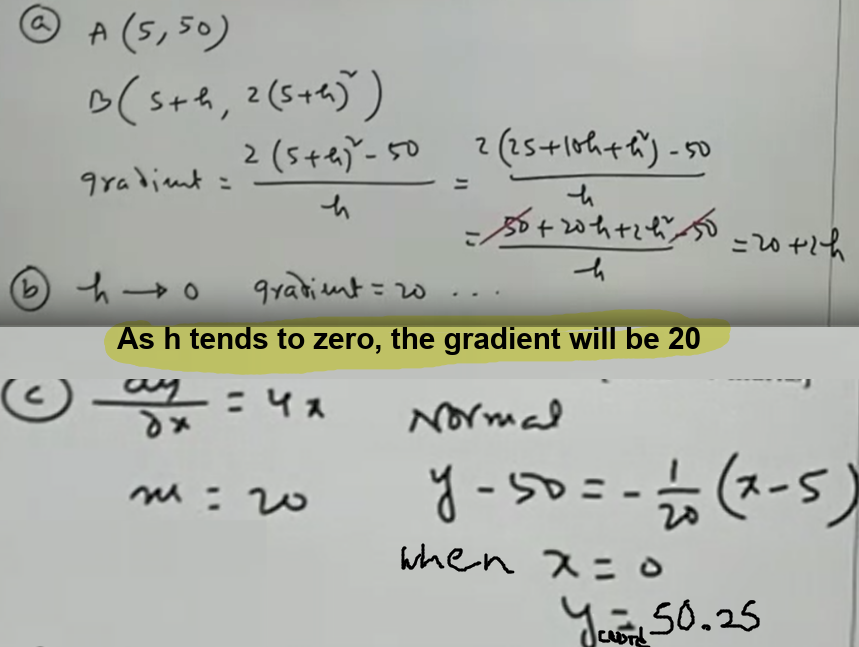
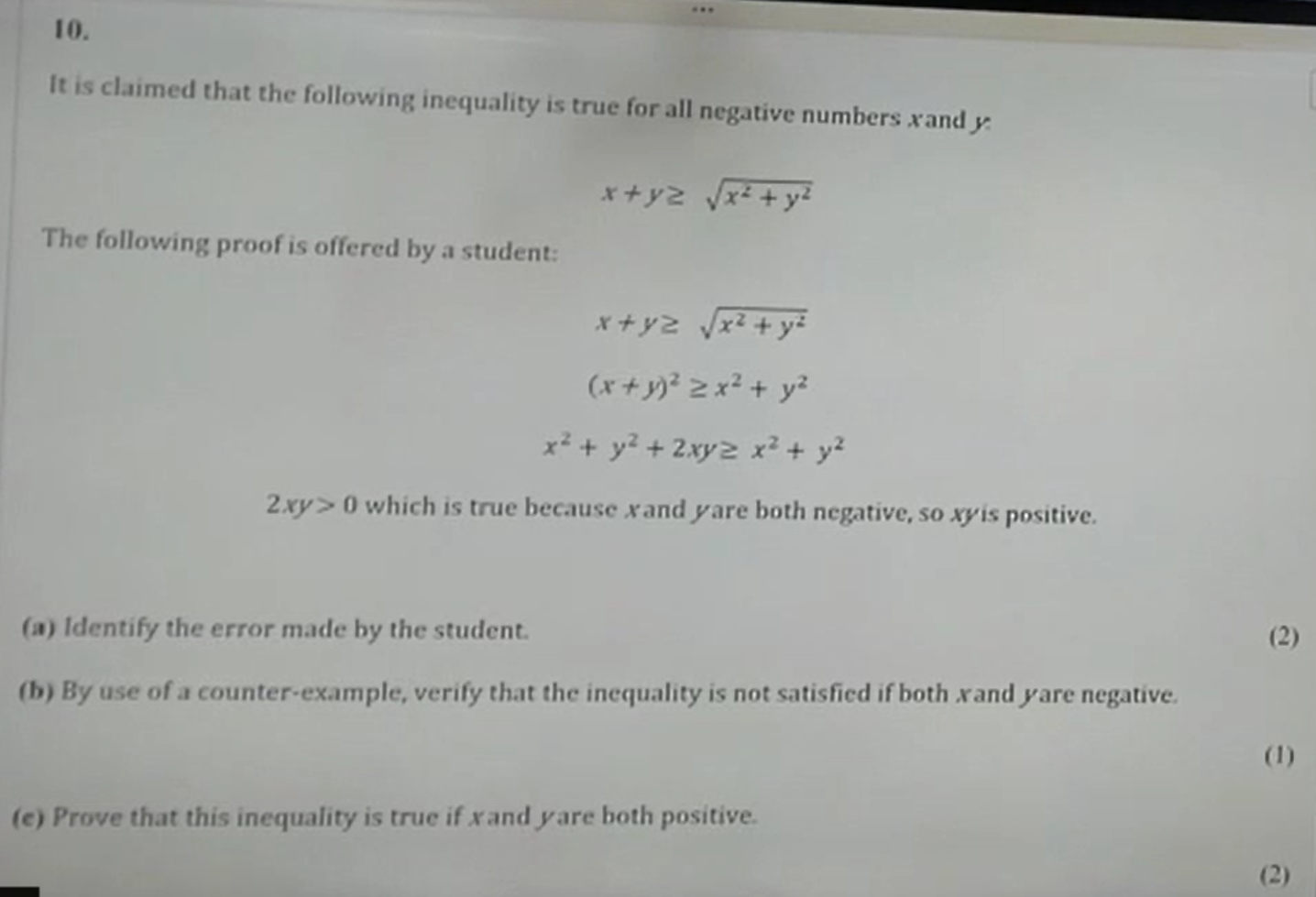
proof question
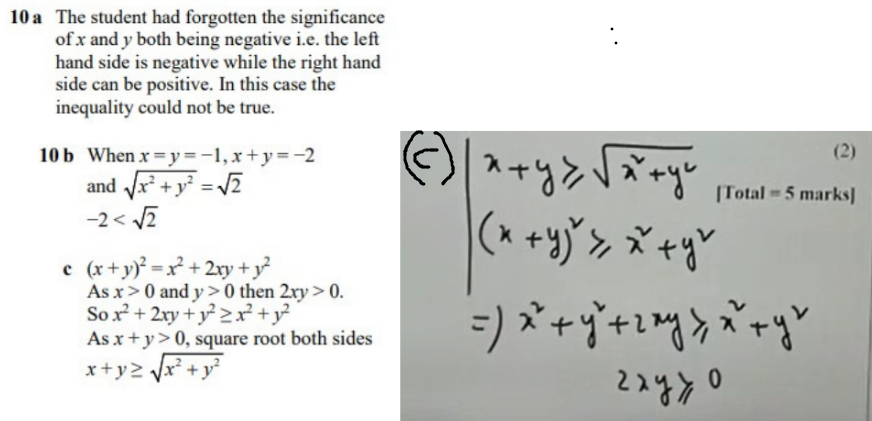
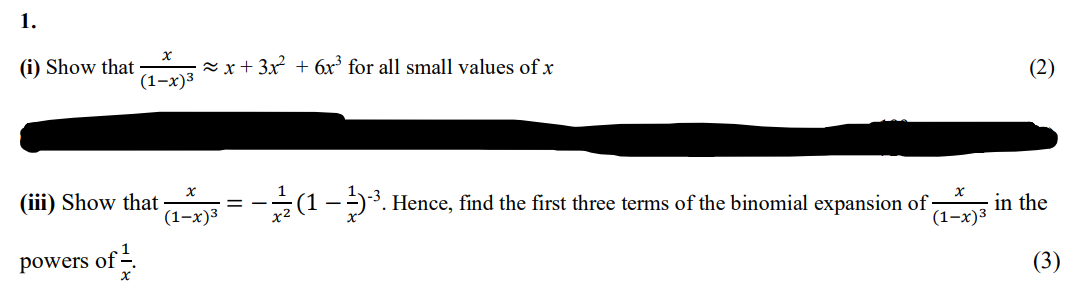
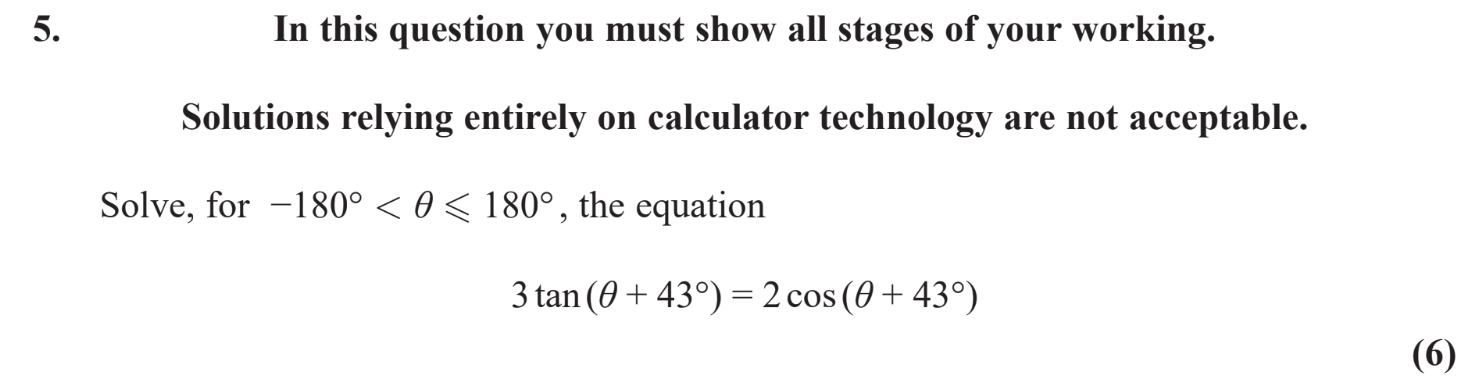
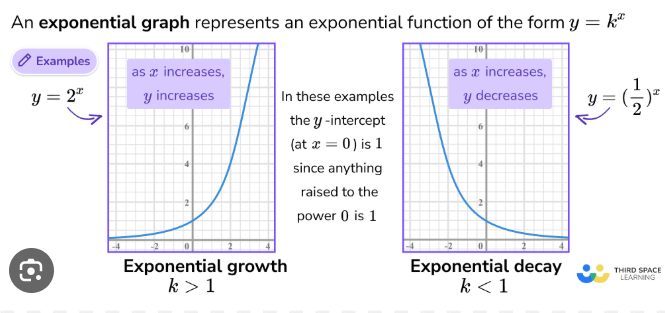
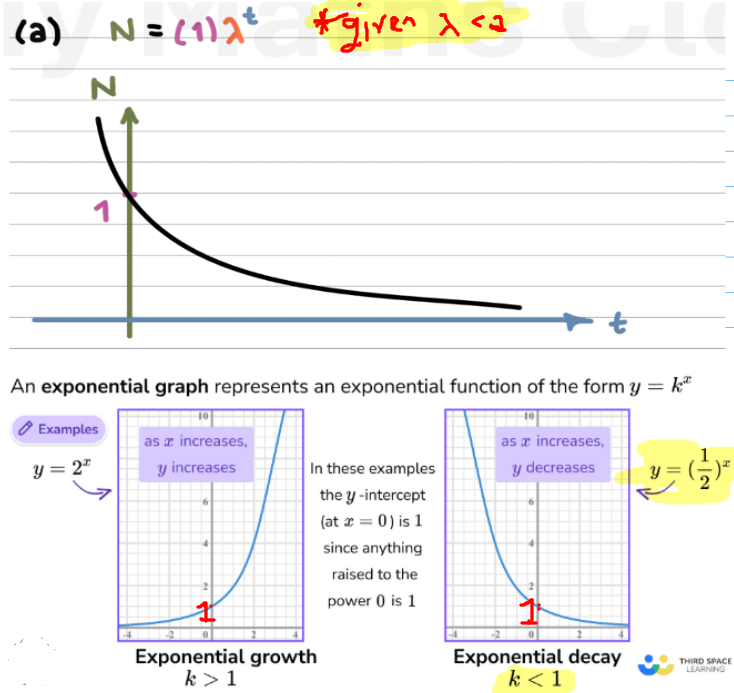
Draw graph for N = λ^t
Given 0 < λ < 1
think of y = k^x
so it’s exponontial graph where k<1
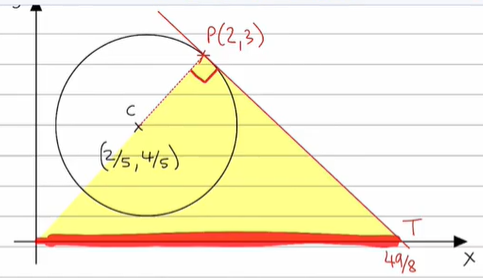
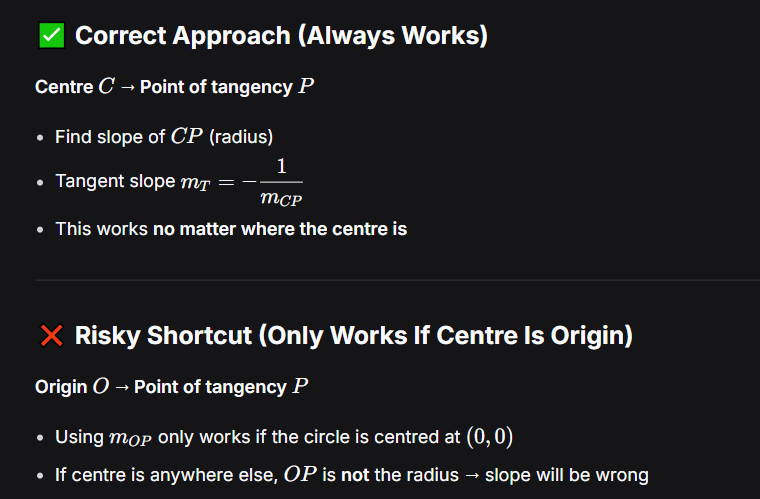
find mT
mT won’t be inverse -ve of mOP as OP is not radius
its always better to do centre coords and point of tangent rather than origin
so answer is: mT = -8/11

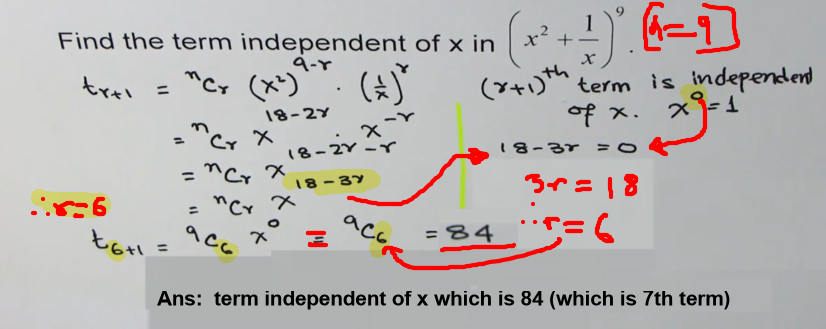
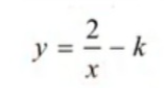
draw this
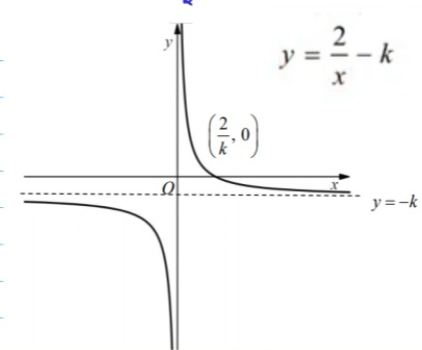
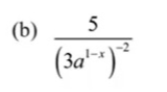
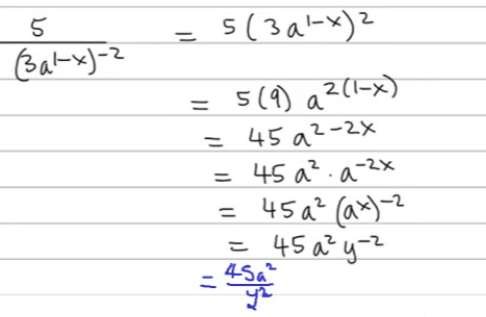
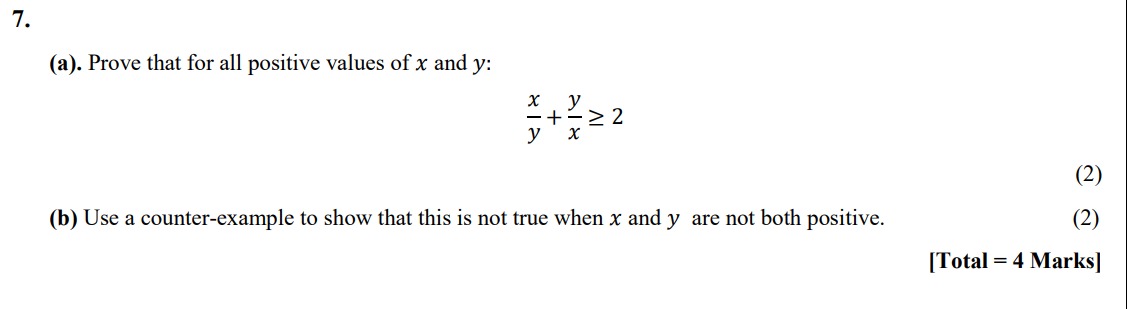
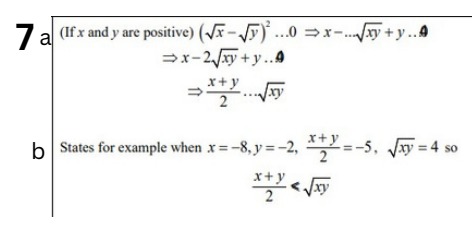

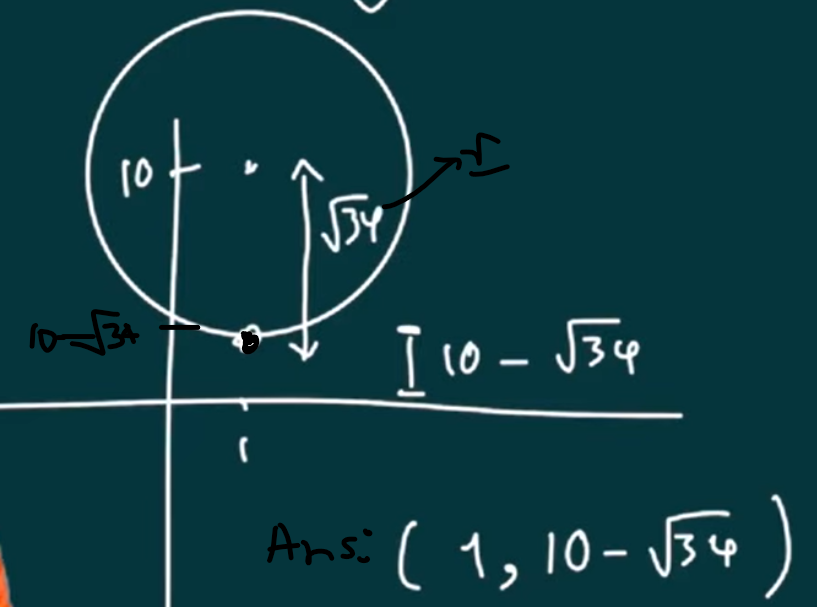
A circle has this equation, find the coords that are closest to X-axis
draw diagram and see which x coord value is closest & then find y with the x-value.
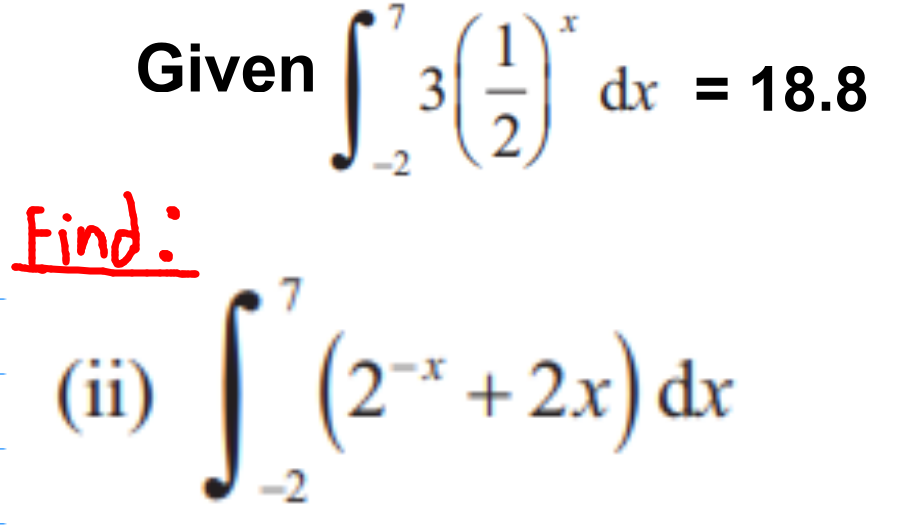
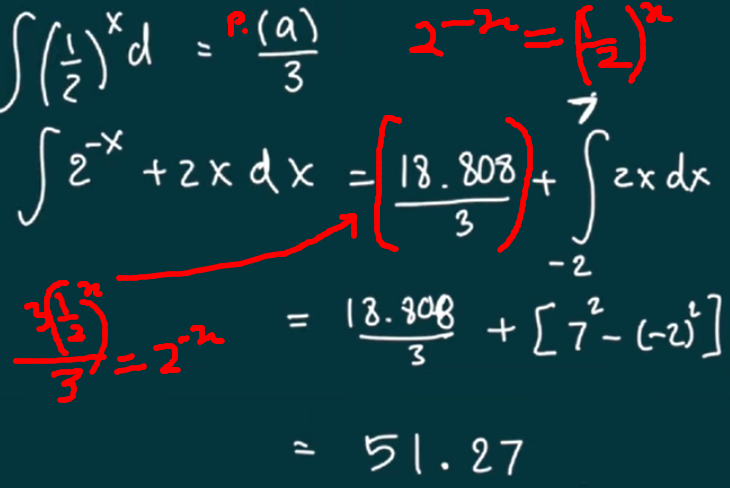
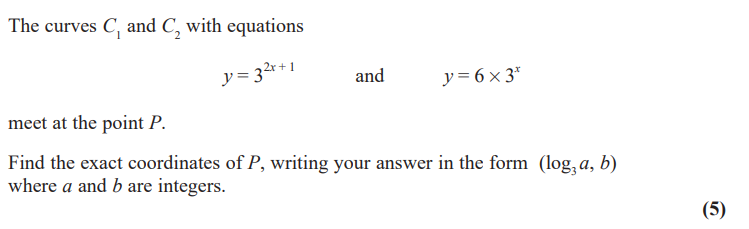
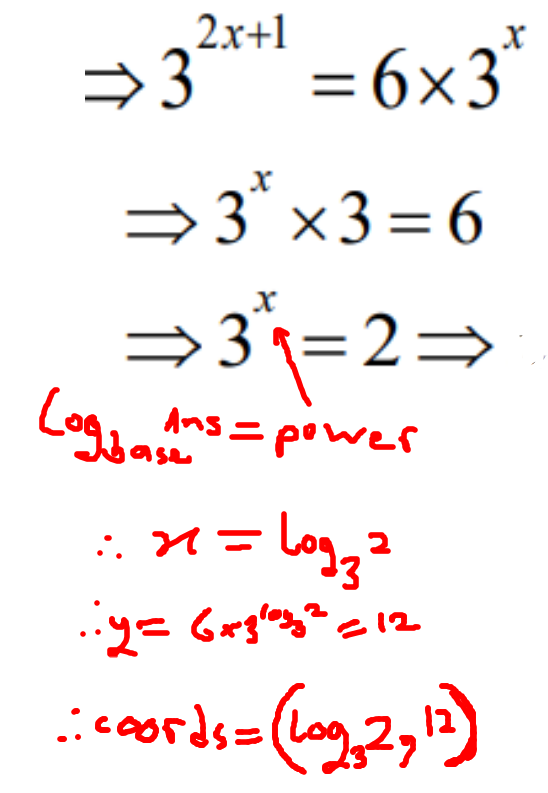
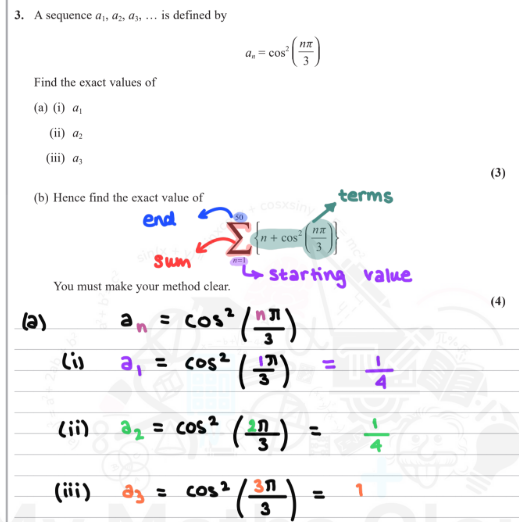
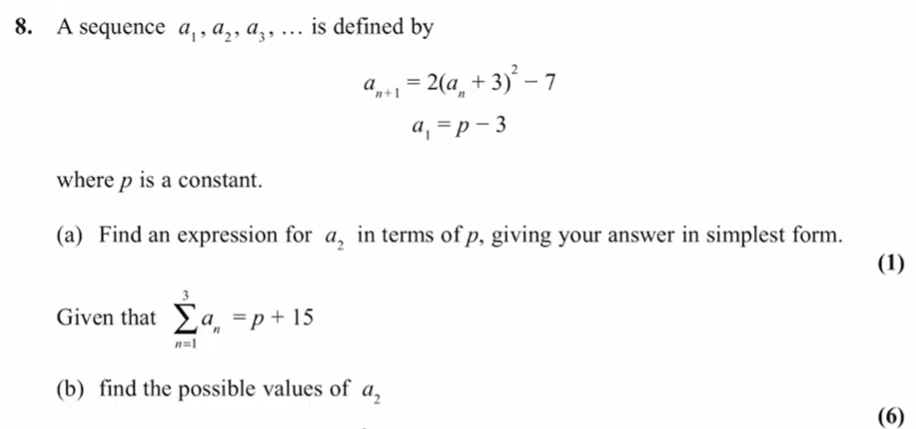
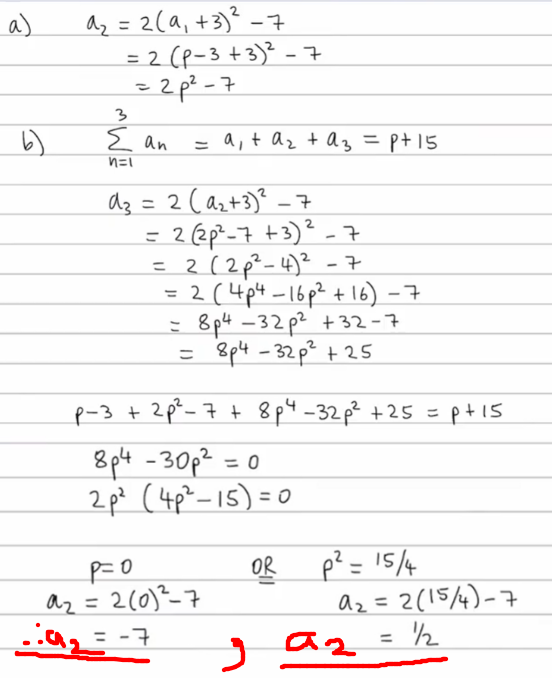
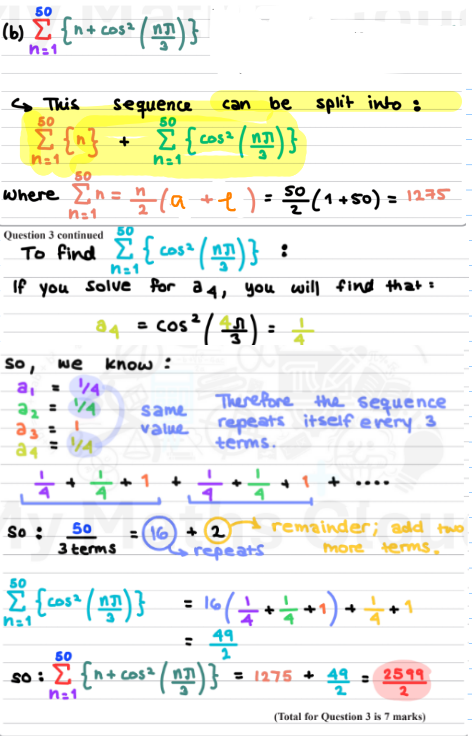
given a1 = 1/4, a2 = 1/4, a3 = 1
do (b)
NOTE:
for these sigma sums, always split if you can
always check if sequence is periodic
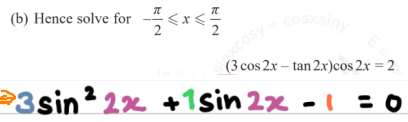
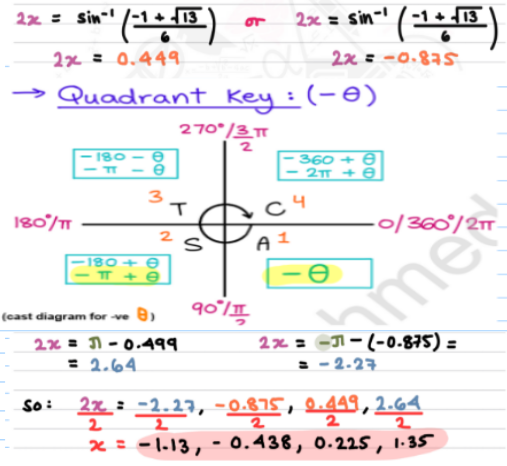
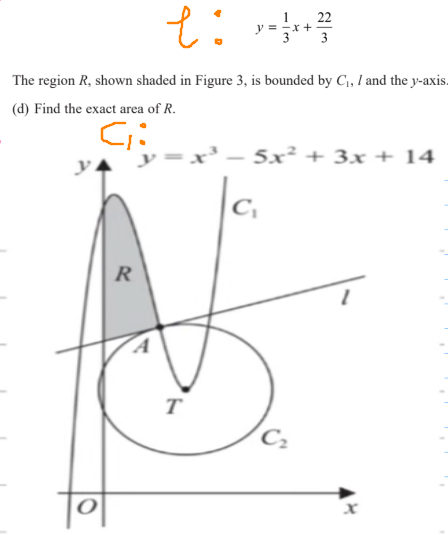
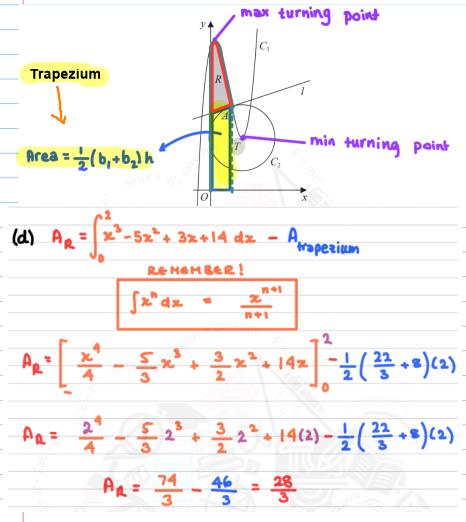
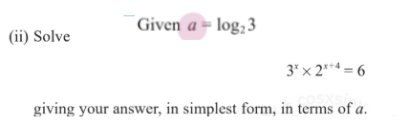
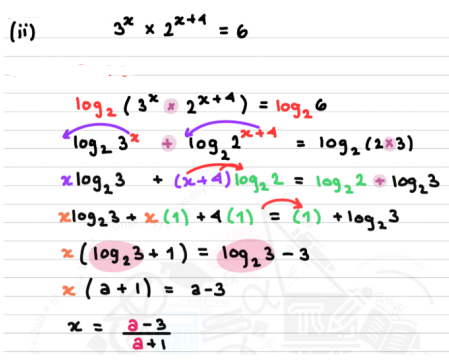
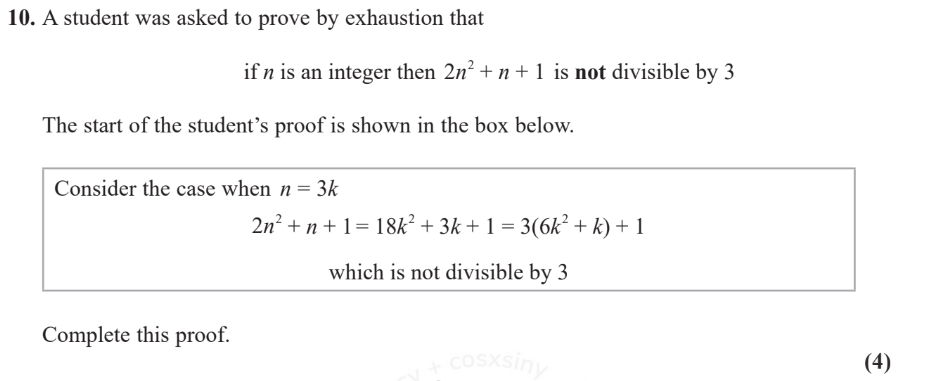
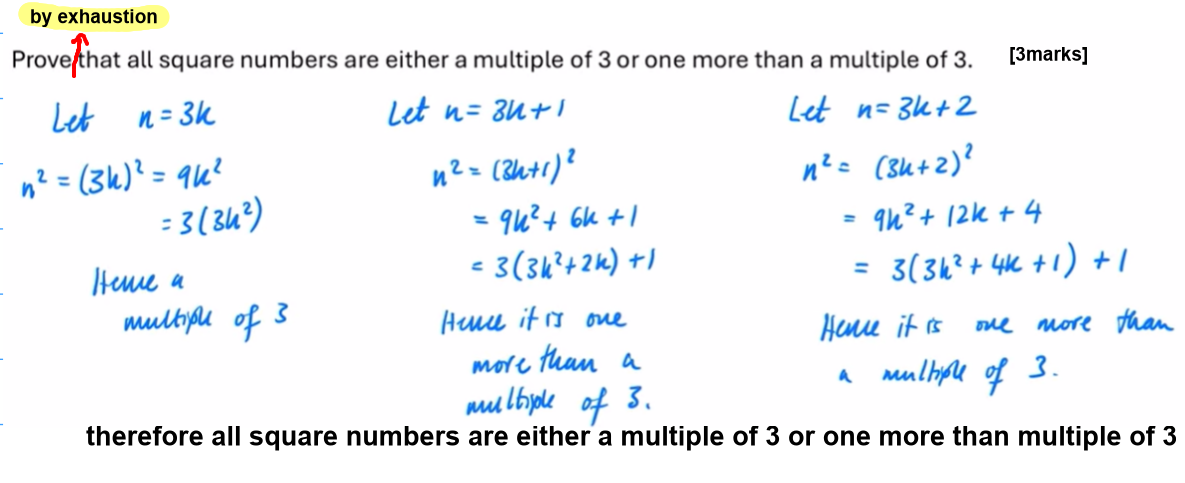
since student considers n = 3k, take a case that is valid and in context
[take all possible factorised form an integer can have/ can be divided by 3]
e.g: n = 3k - 1, n = 3k + 1, n = 3k+2 and so on.......
DO NOT TAKE random cases like n = 2k or n = 5k
![<p></p><p>since student considers n = 3k, <strong><u><mark data-color="yellow" style="background-color: yellow; color: inherit;">take a case that is valid and in context</mark></u></strong></p><p>[take all possible factorised form an integer can have/ can be divided by 3] <br></p><p>e.g: n = 3k - 1, n = 3k + 1, n = 3k+2 and so on....... </p><p>DO NOT TAKE random cases like n = 2k or n = 5k</p>](https://assets.knowt.com/user-attachments/8692df8c-c5a0-4c0b-b406-176e691029cb.png)
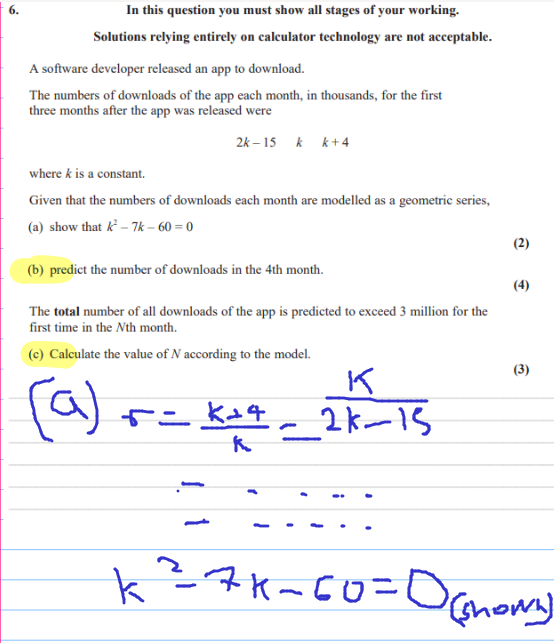
just do (b) and (C)
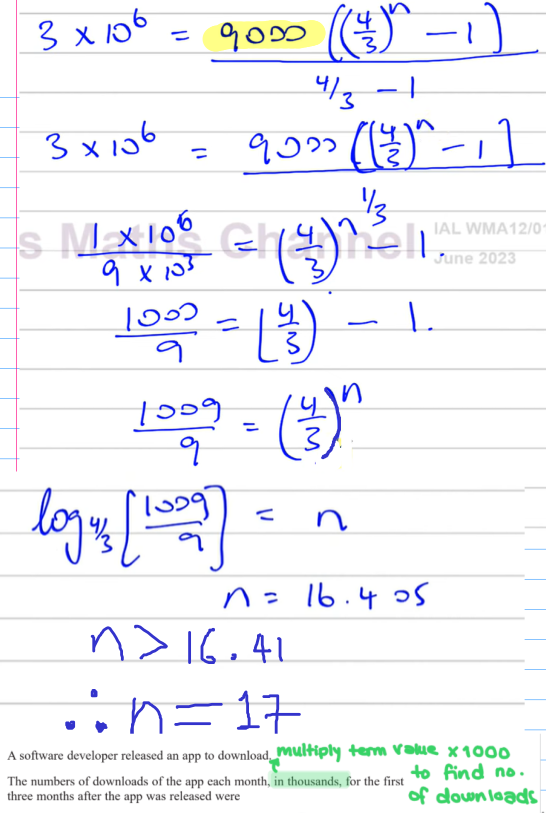
it’s 17 cuz at 16 → 2.6 mill
but at n =17 → 3.5 mill (thus 3 mill exceeded)
NOTE: if Q. says in thousands or in millions, ALWAYS MULTIPLY BY THAT
(or else you’ll get -1 or -2)

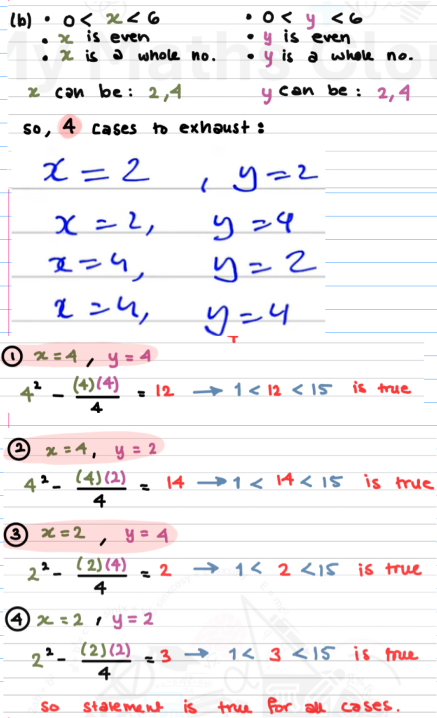
exhaustion means that you check all possibilities
for these usually you just input values and show true or not true (simple but exhausting lol)
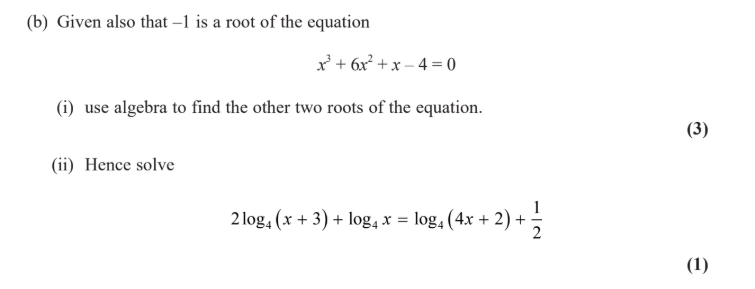
NOTE:
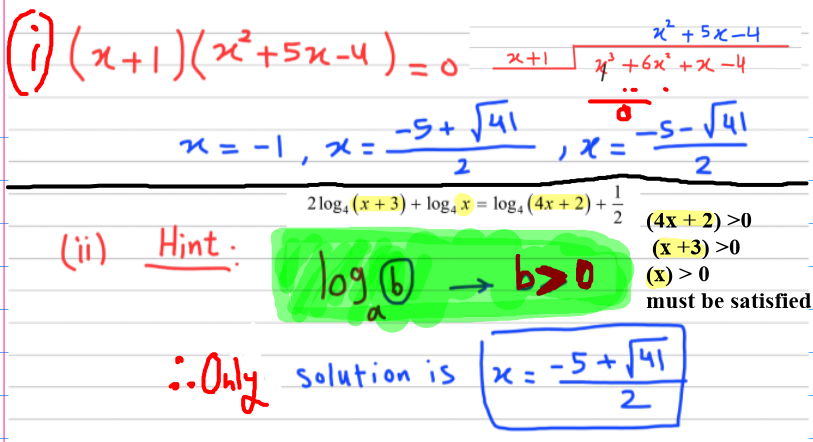
for loga(b) → b > 0
for log sums, always make sure the solution is valid (like it doesn’t give math error in caclulator)
(btw even tho negative number like -1 is fine for log4(-1 + 3), however the other logs give math error, so the overall equation becomes invalid)
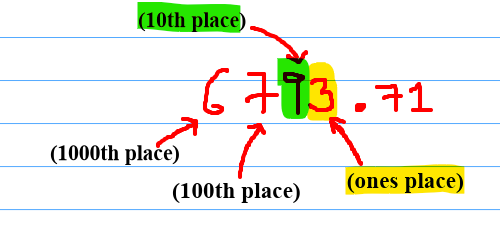
6793.71 tonnes of apples are produced, find the apples produced to:
(i) nearest 1 tonnes
(ii) nearest 10 tonnes
(iii) nearest 100 tonnes
(i) 6794 tonnes
(ii) 6790 tonnes
(iii) 6800 tonnes
NOTE: for AP GP sums→ ALWAYS USE EXACT r VALUE (like if r = root over to power 69 or smt)

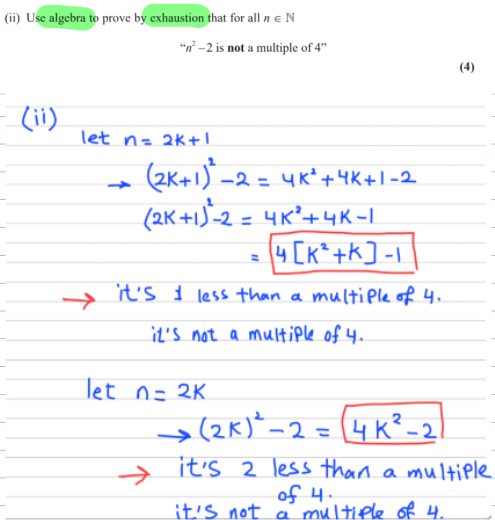
if QUESTION LITERALLY SAYS , USE ALGEBRA, you MUST use algebra (you can’t solve numerically like n = 1,2,3….)
(also be careful with regards to context, here it is prove not multiple of 4, so using n=2k is fine
but if it was say not multiple of 3, then use n = 3k, n = 3k +1 ……….)
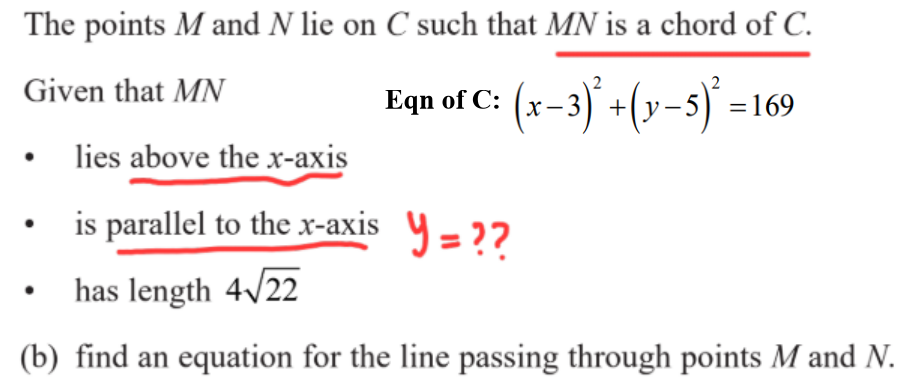
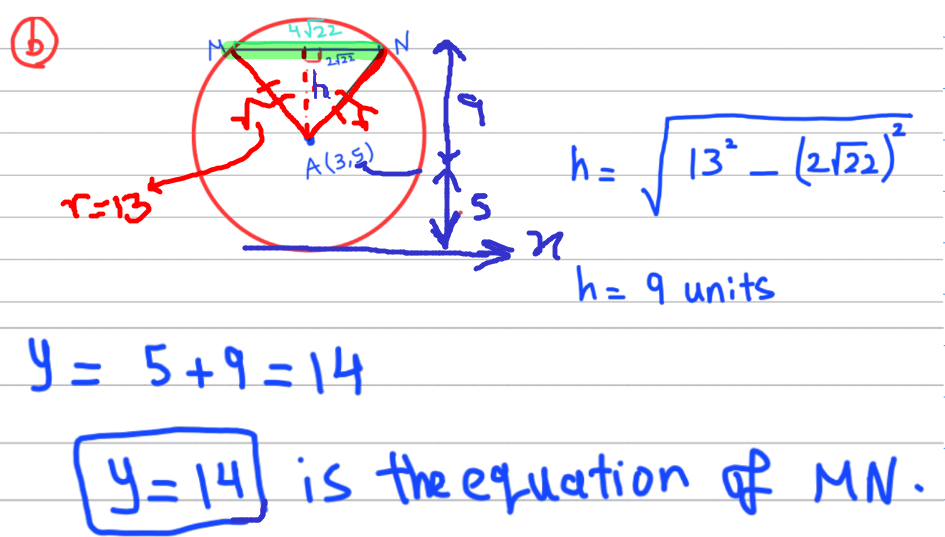
parallel to x-axis means eqn is y = …
for these questions ALWAYS draw a nice diagram, helps a lot and makes life soo much easier
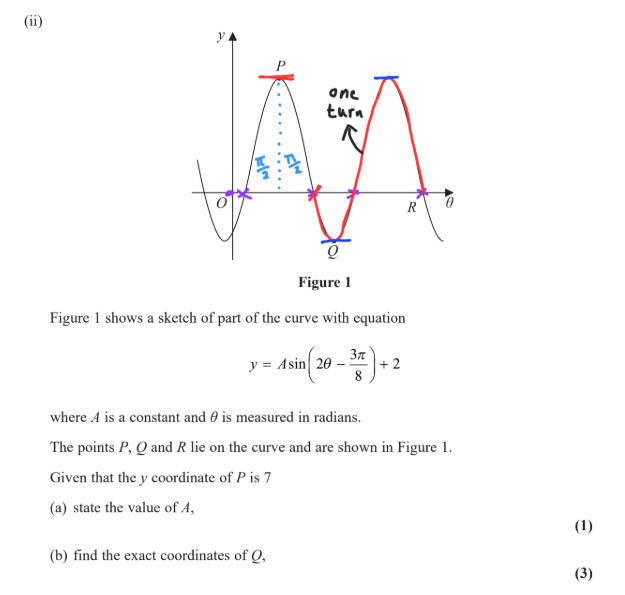
for horizental transformation of graphs we do opposite of BIDMAS when finding coords. Also opposite thing, like if its + you do - and / you do X
like e.g: f (3x - 2) = 0
then lets say normal xcoord is 9, you do (9 + 2) x 1/3 = 11/3
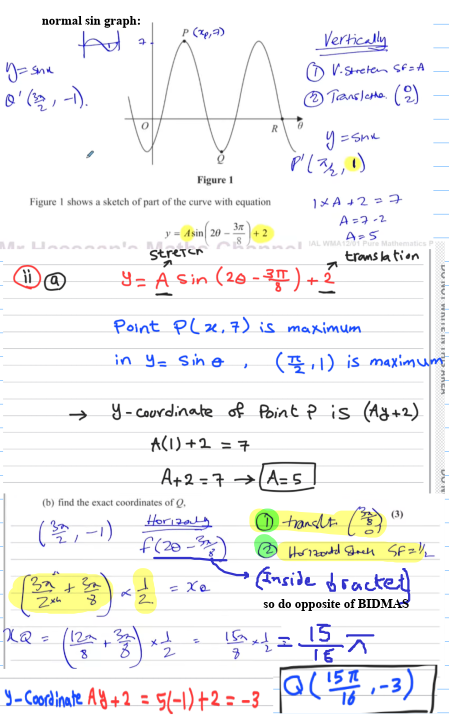
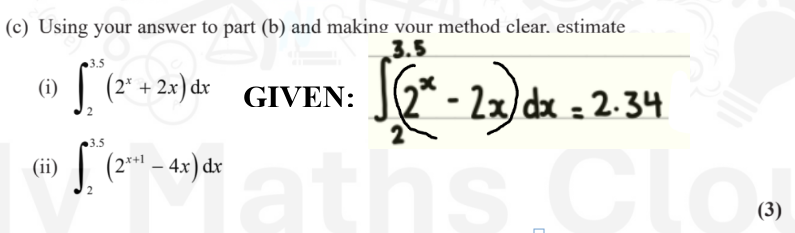
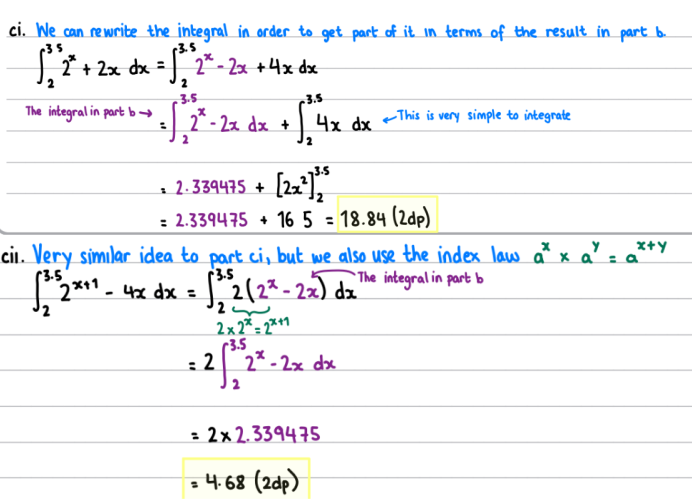
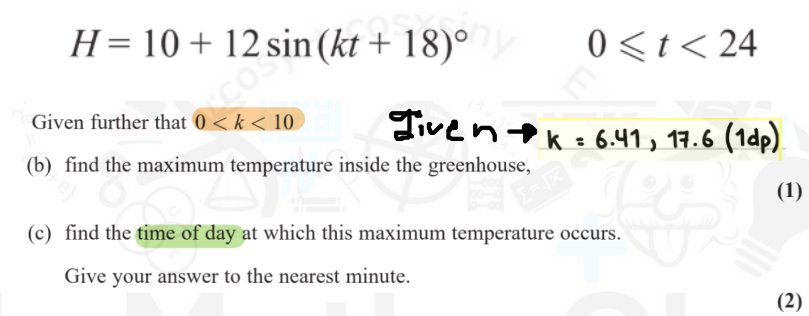
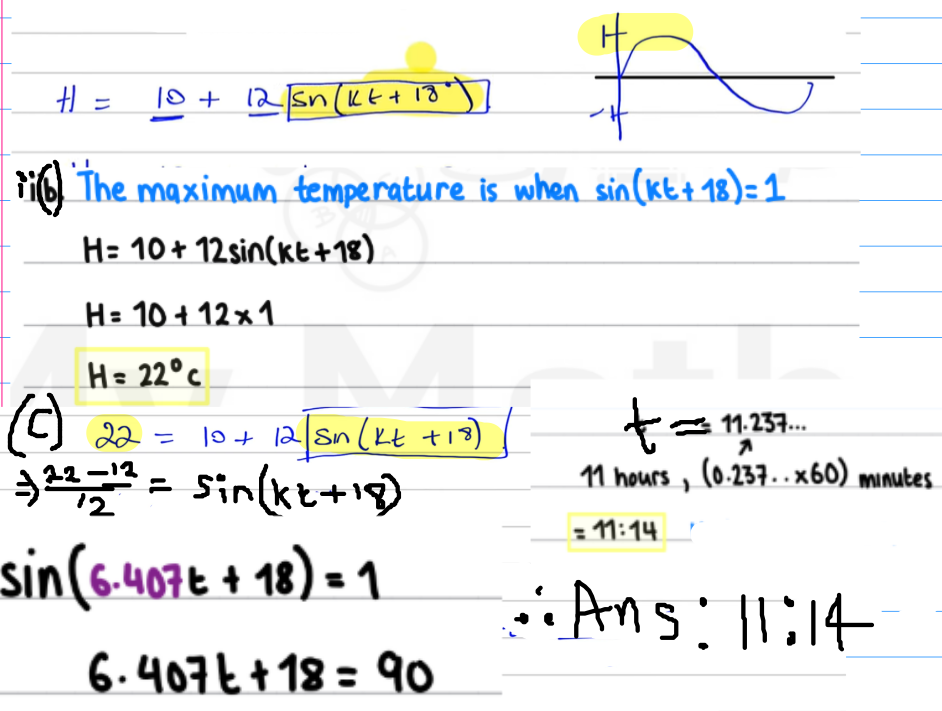
the maximum value for sin(x) / sin(a) = 1
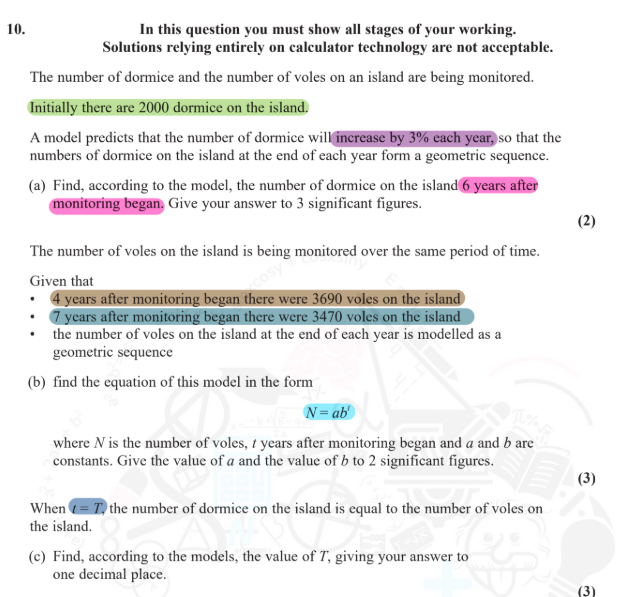
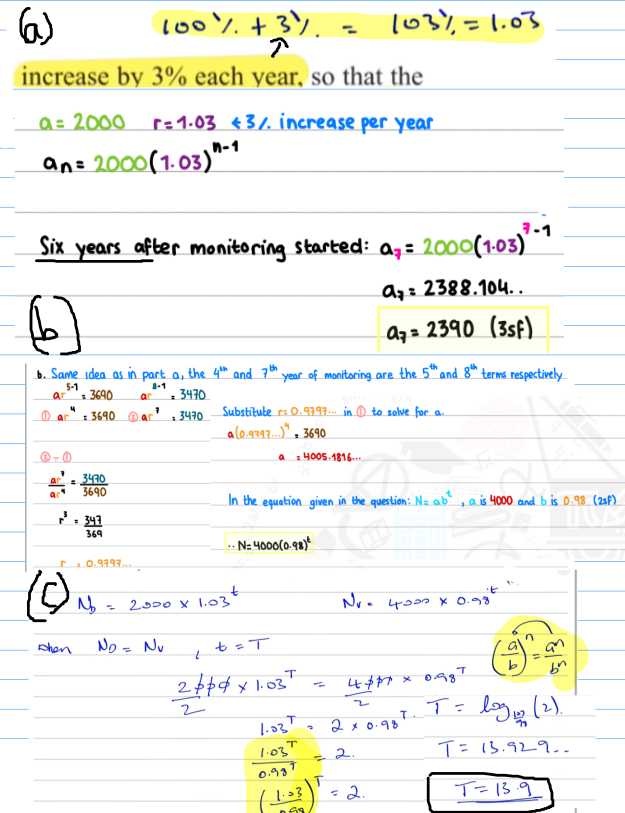
since Q. says end of each year, thus end of or after 6th year is 7th term, so n = 7
NOTE:
→ Use term formula when finding the value at a specific time/position:
→ Use sum formula when finding a total / accumulation (total over years or total apples produced etc)
i.e: (at year 6 / after 4 years / nth term) → term formula
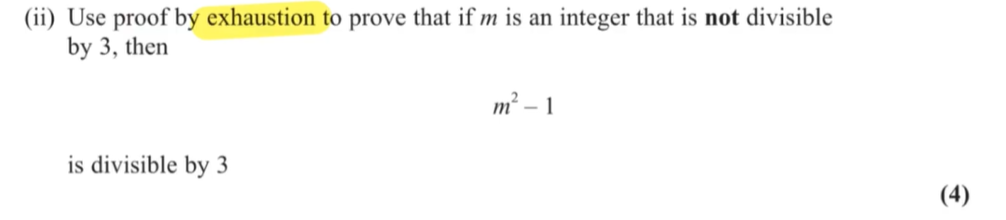
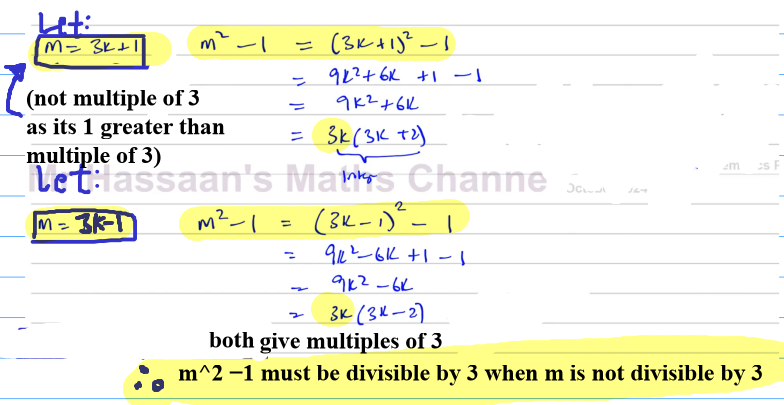
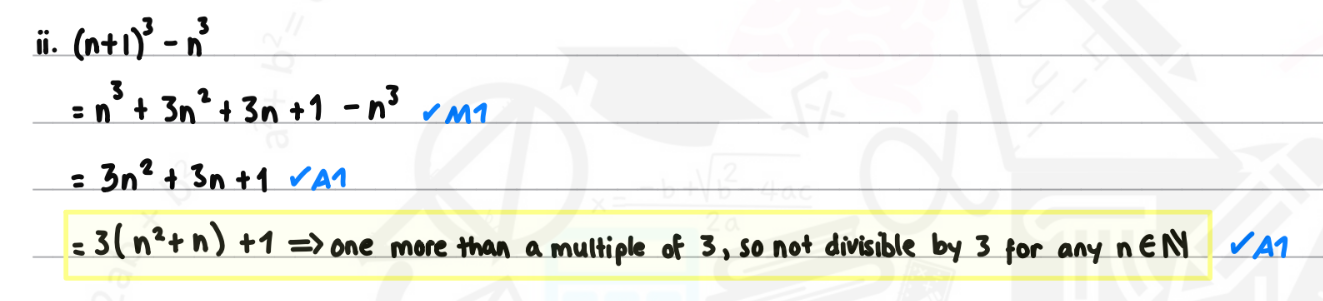
notice how its in context, as Q. says divisible and not divisible by 3
i took let m = 3k +- 1
(NOTE: for these questions you can do n = 1,2,3,4,5…… as jottings and then also give algebra, regardless if Q. asks it or not)

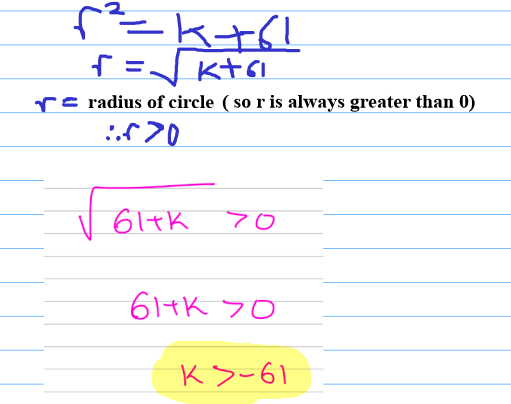
always make sure to leave answer as: k >…, i.e → k > -61
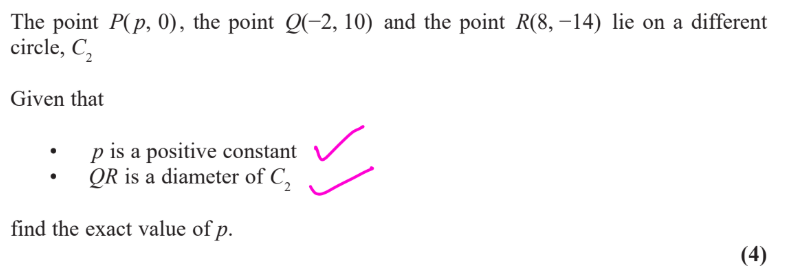
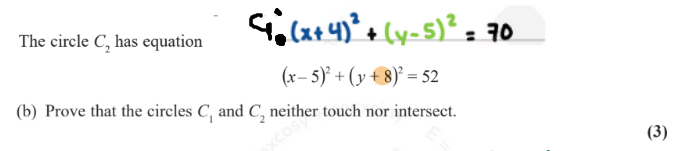
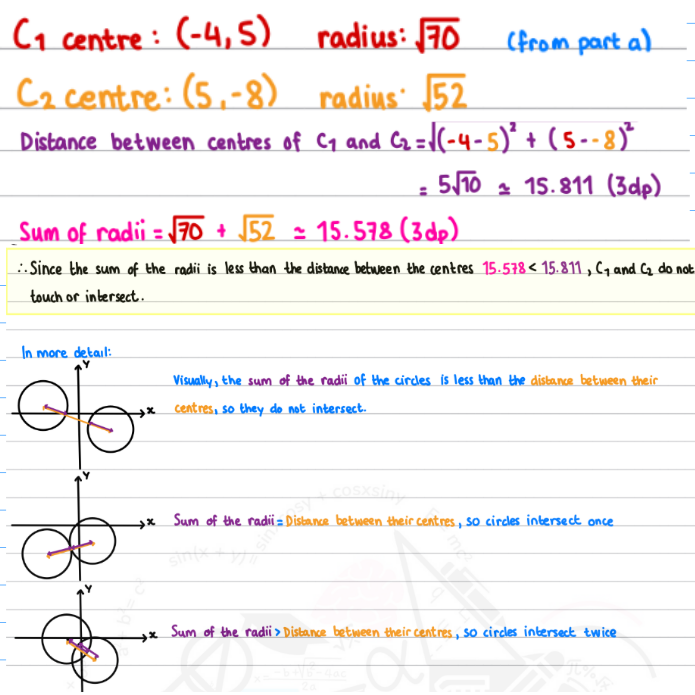
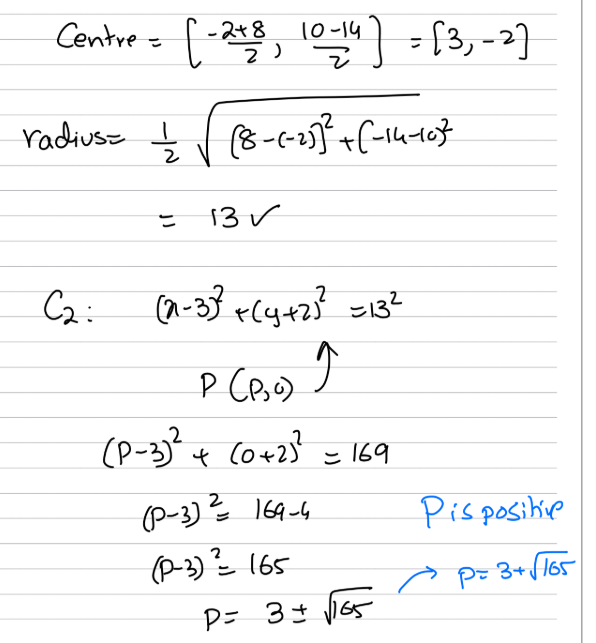
p is on the circle, you can't assume mQR is perpendicular to mOP
instead find equation of C2, then plug in (p,0) coords to find p

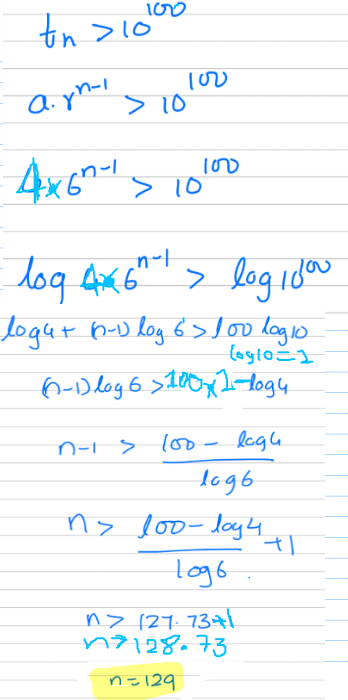
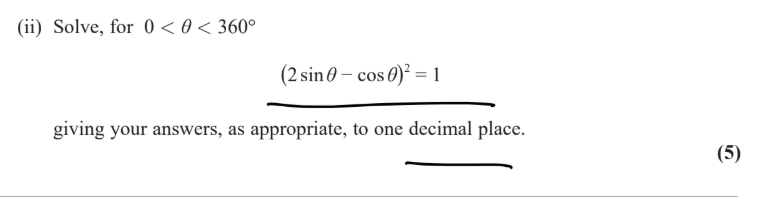
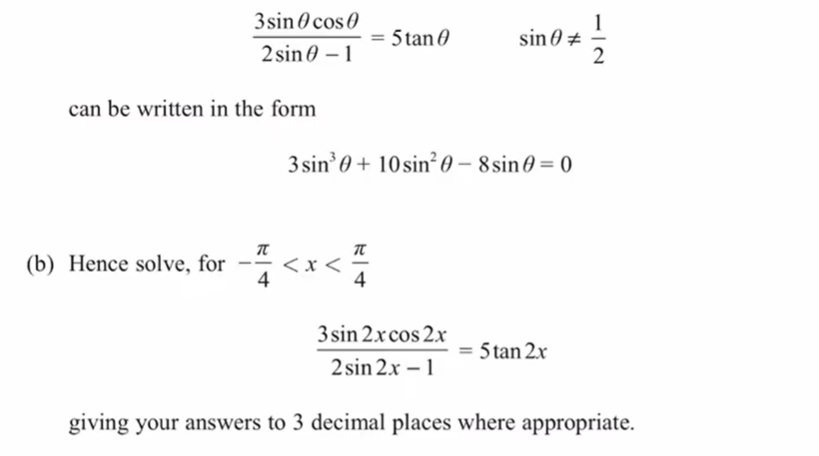
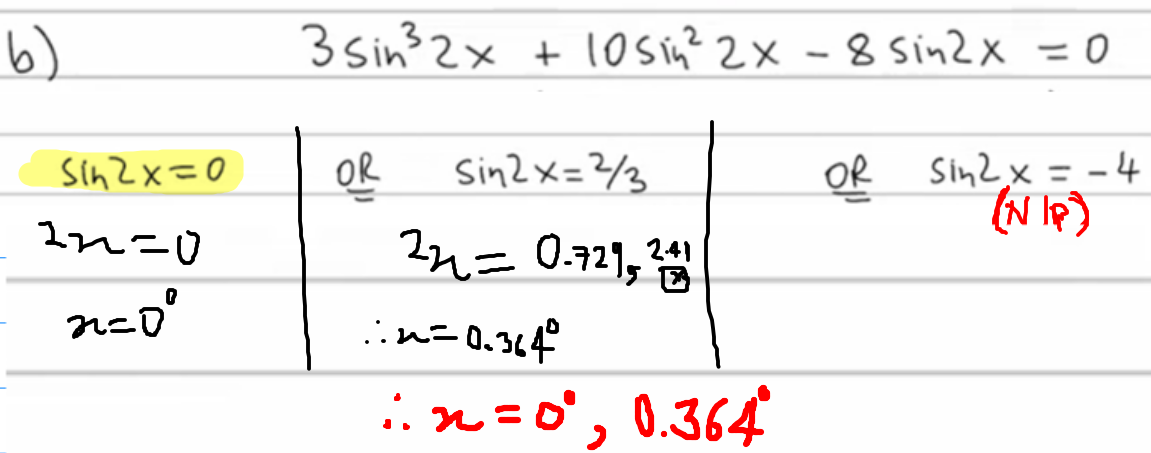
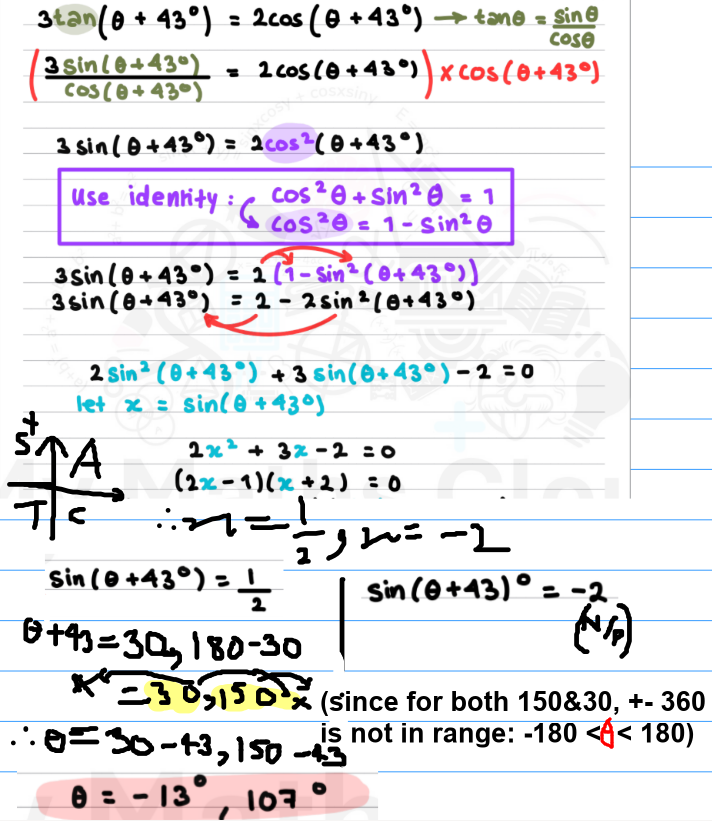
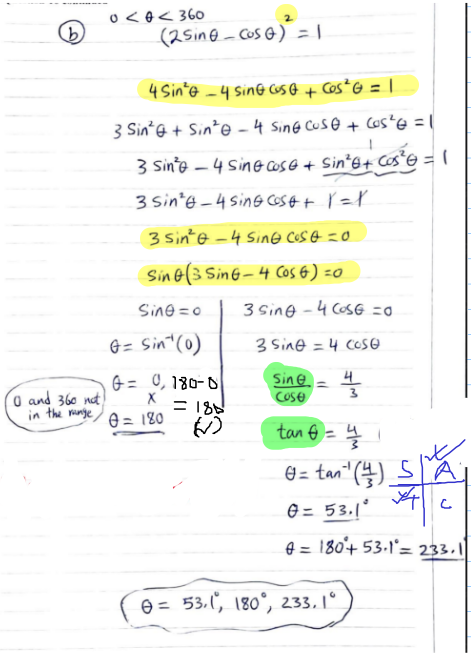
just remember you can do sin/cos to make tan and then solve
( and solve sin algebra normally as you wud for x, avoid silly mistakes)
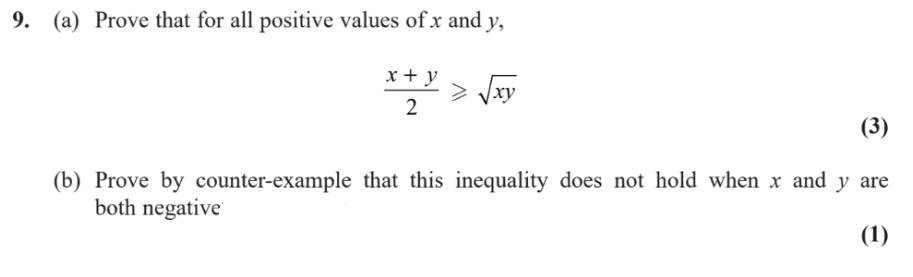
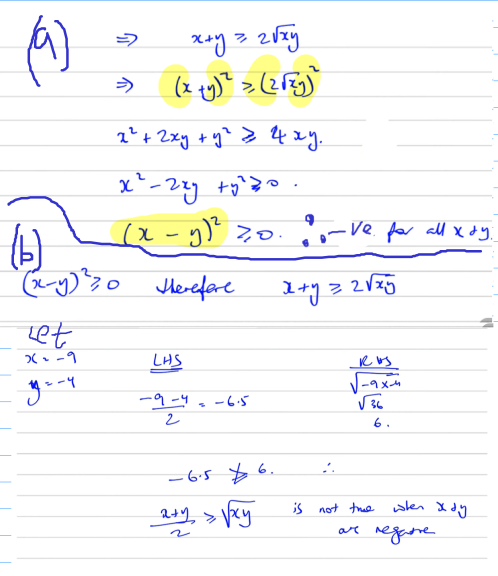
since given all values positve → we can square both sides
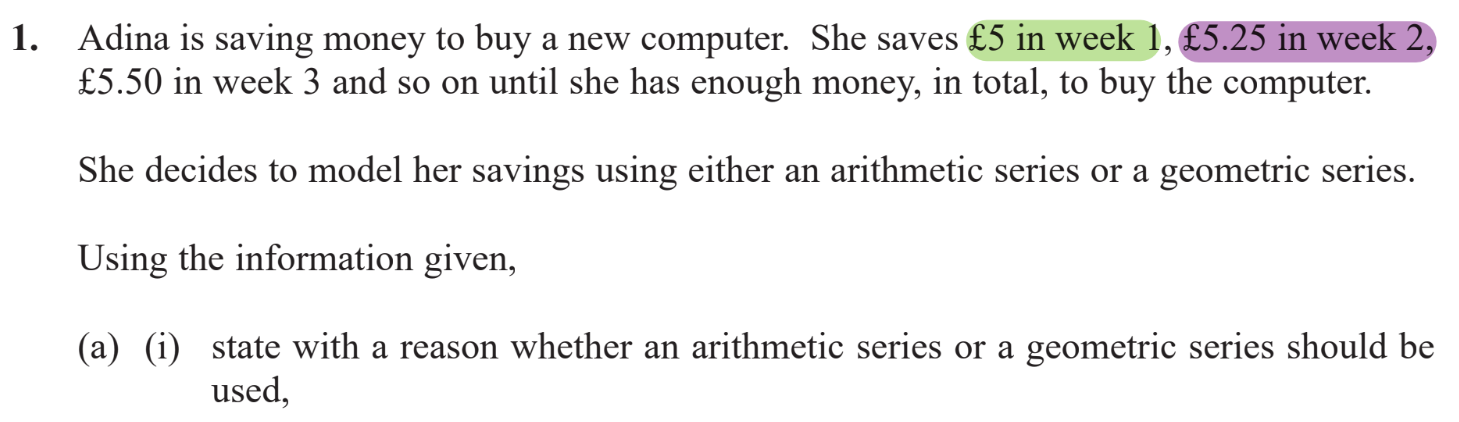
There is a common difference [of 0.25] and no common ratio,
so an arithmetic series should be used
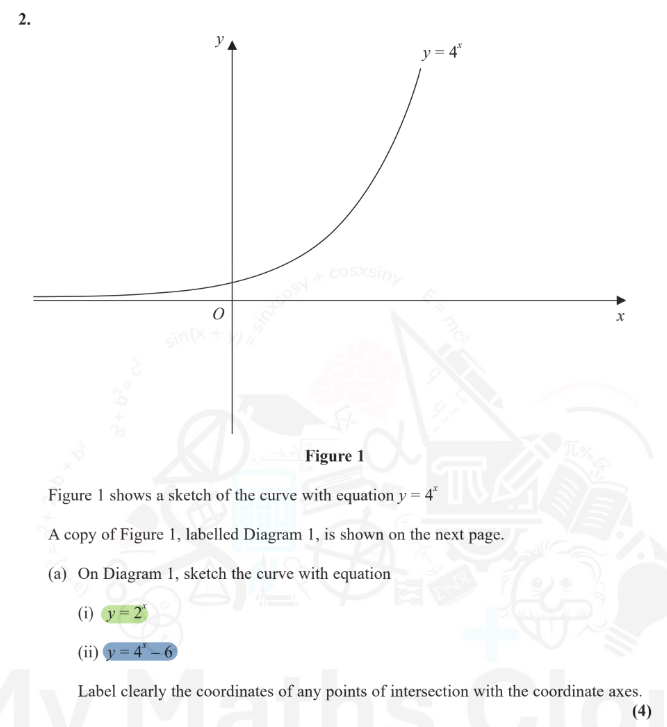
just make sure y = 2x is below and less steeper&more elongated than y = 4x
also for (b) solve till you get 2x = 3
→ log22x = log23 [for these take same base so that it becomes just x]
→ x(1) = log23
thus x = log23 (ANS)
![<p>just make sure y = 2<sup>x </sup> is below and less steeper&more elongated than y = 4<sup>x </sup><br><br>also for (b) solve till you get 2<sup>x </sup> = 3<br>→ log<sub>2</sub>2<sup>x</sup> = log<sub>2</sub>3 [for these take same base so that it becomes just x]<br>→ x(1) = log<sub>2</sub>3 <br>thus x = log<sub>2</sub>3 (ANS)</p>](https://assets.knowt.com/user-attachments/bdf14107-f072-40d0-a22a-b6ee8cd50ea6.png)

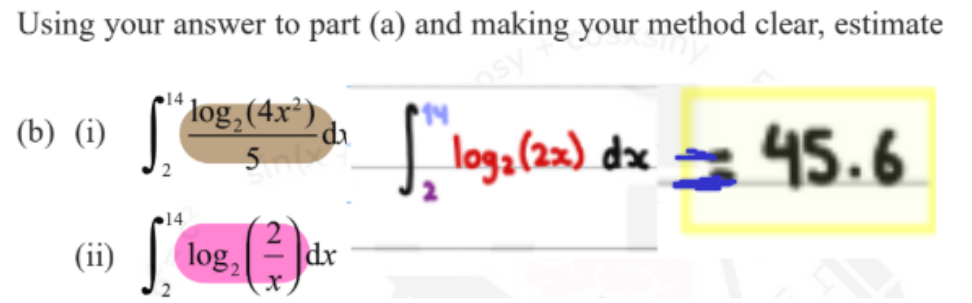
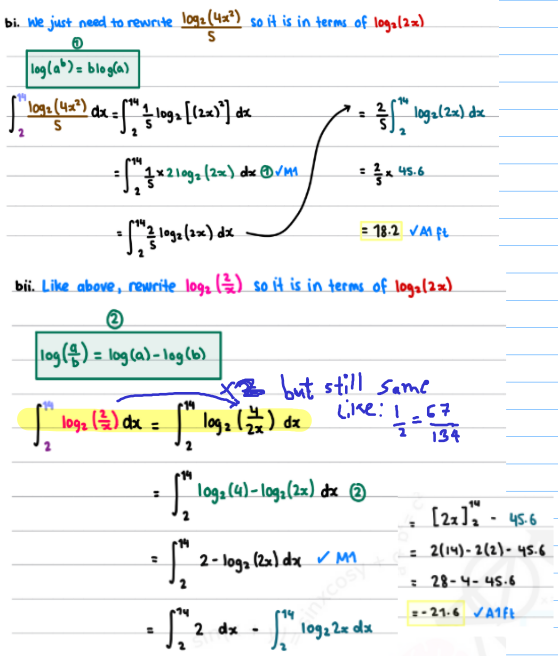
this one was begging to be expanded bruh
in summary:
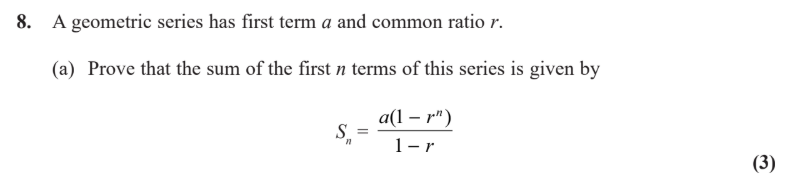
step 1 (write down eqn1) → Sn = a + ar .... arn-1
step 2 (write eq2, which is r x eqn1) → rSn = ar + ar² ..... + arn
step 3 (eqn 1 - eq2 to get) → Sn - rSn = a - arn
step 4: solve to get Sn = the normal formula
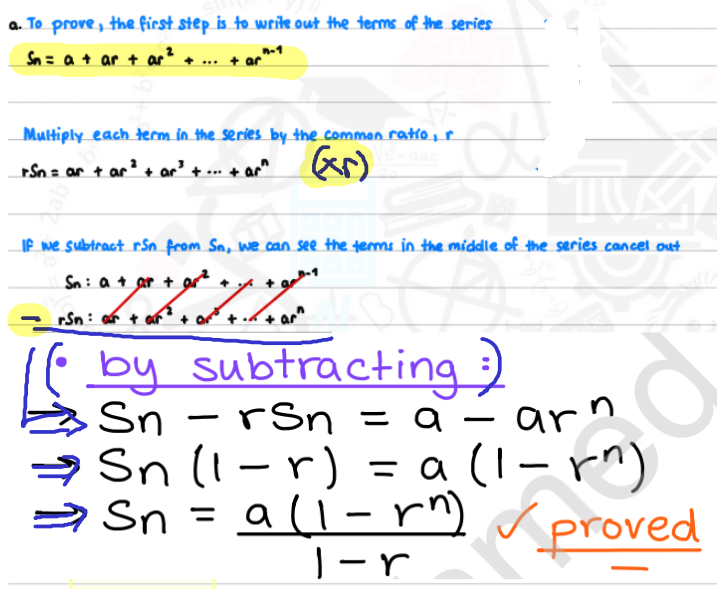
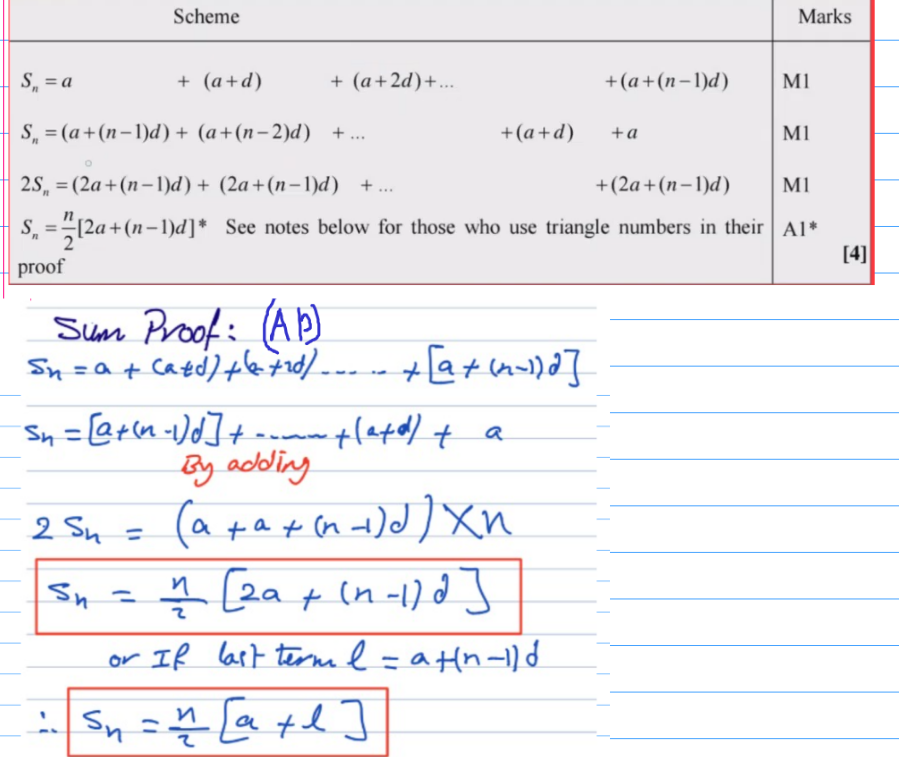
prove sum of AP
sum of AP proof
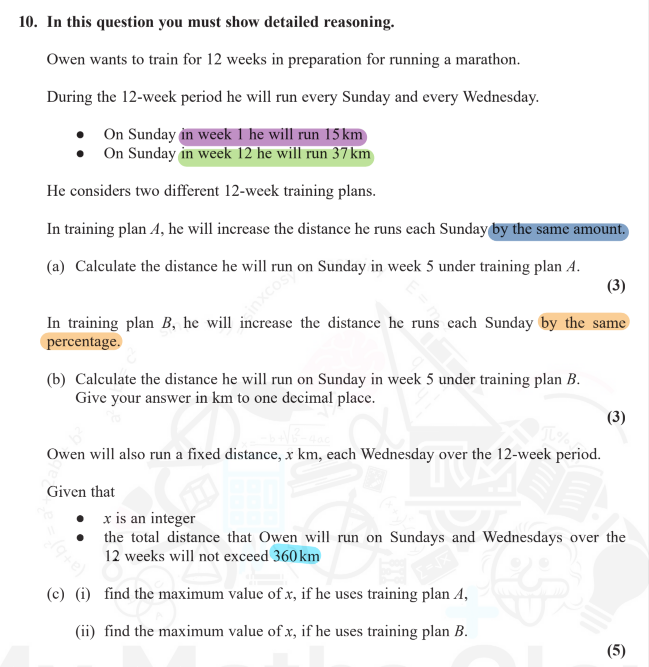
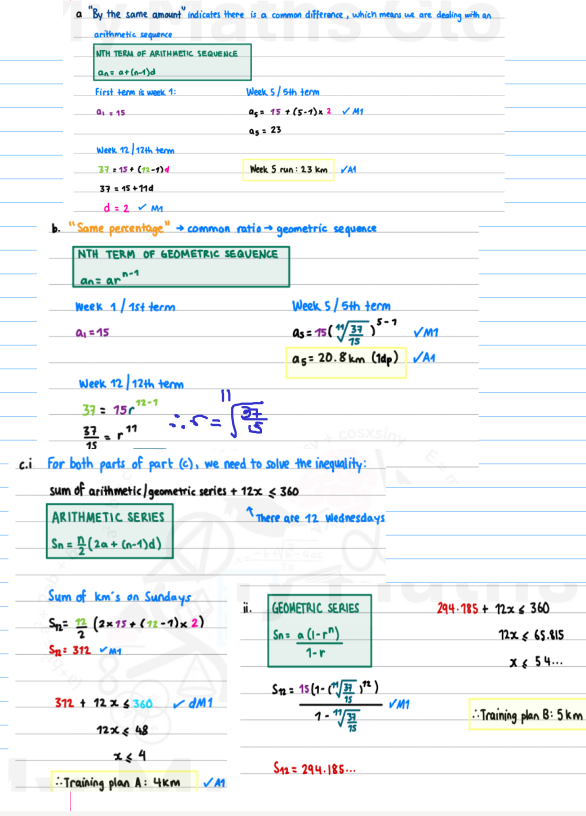
(jan 21 Q.10)
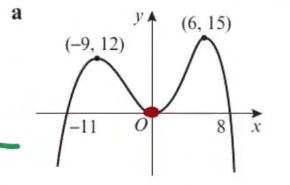
gradient function notes:
tp -> cutting in x -axis
+ve grad -> above x - axis
-ve grad-> below x-axis
assypote will be y = 0
(point of inflection -> tp)
(vertical assymptote will be unchanged)
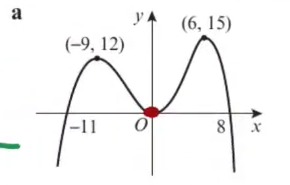

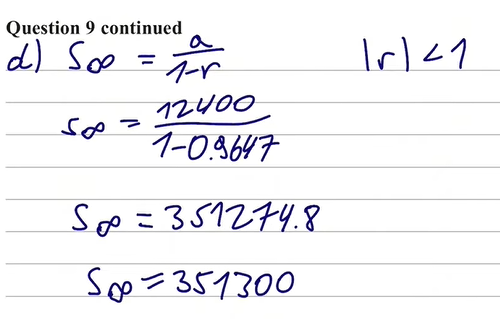
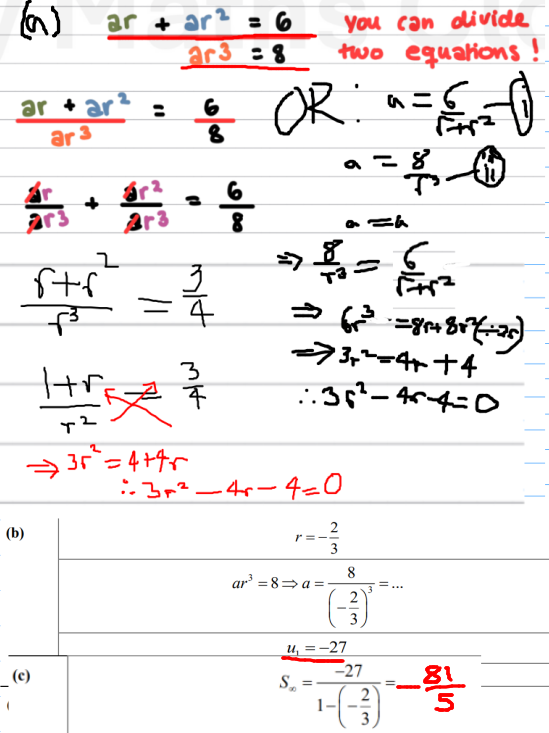
given we found a = 12400, r = 0.9647,
In AP/GP problems, when the term "limit" is used to discuss the sum, it almost always refers to the sum to infinity