Digestive System
 Call Kai
 Learn
Learn Practice Test
 Spaced Repetition
 Match
Match Flashcards
 Knowt Play
1/94

Earn XP
Description and Tags
A&P Exam 4
Name | Mastery | Learn | Test | Matching | Spaced | Call with Kai | Chat |
|---|
No analytics yet
Send a link to your students to track their progress
95 Terms
Describe anatomy of GI tract
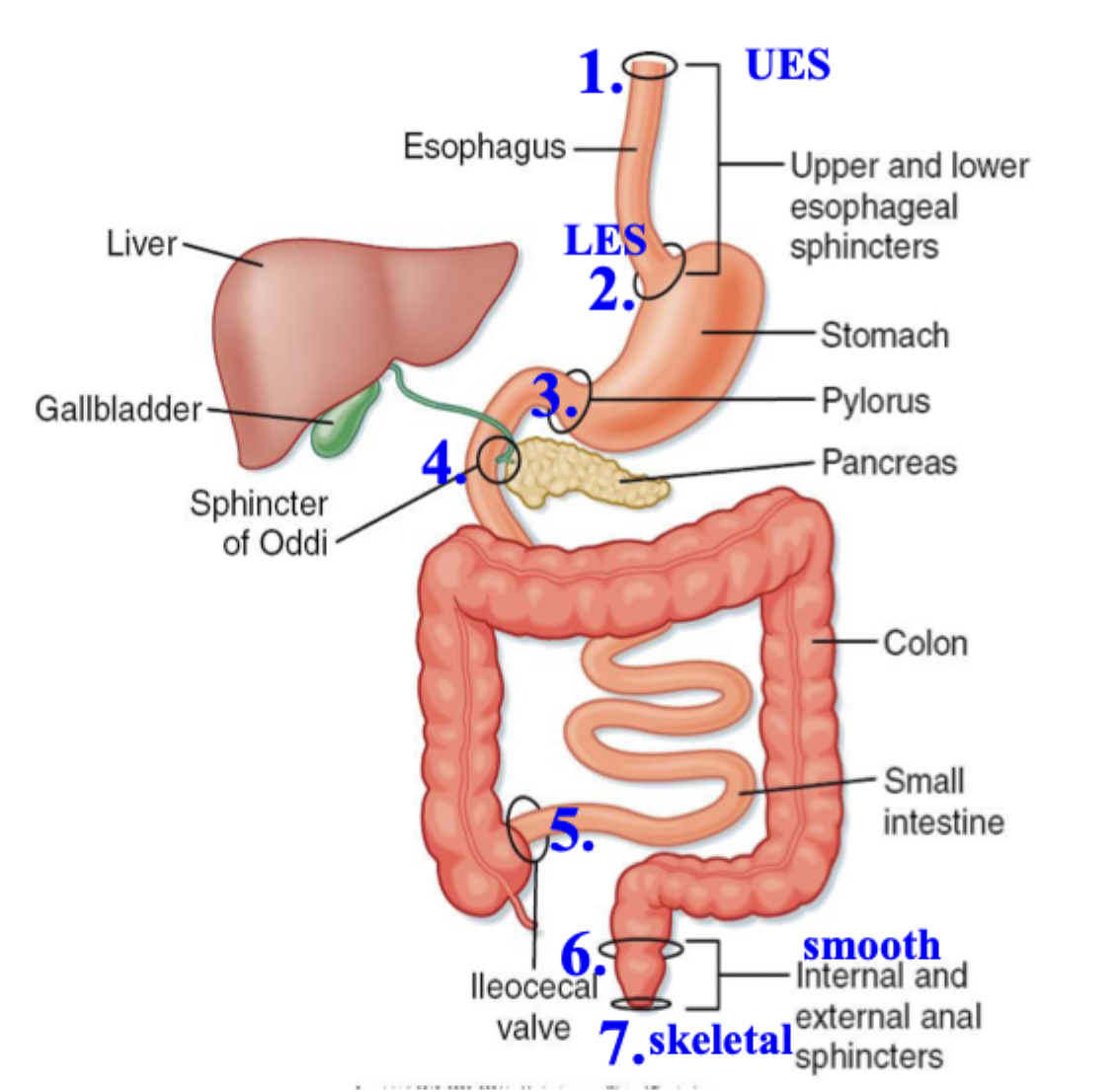
Continuous tube from mouth to anus, has 7 sphincters of significance
Define accessory organs, give examples
Vital organs for digestion; salivary glands, liver, gallbladder, pancreas
List and describe the 7 sphincters of the GI tract
Upper esophageal sphincter (keeps air out, prevents reflux)
Lower esophageal sphincter (prevents reflux)
Pylorus sphincter (controls emptying of stomach into duodenum)
Sphincter of Oddi (allows entry of bile and enzymes)
Ileocecal valve (one way gate between intestines)
Internal anal sphincter (involuntary controlled)
External anal sphincter (voluntarily controlled, skeletal)
List the 4 layers of the GI wall
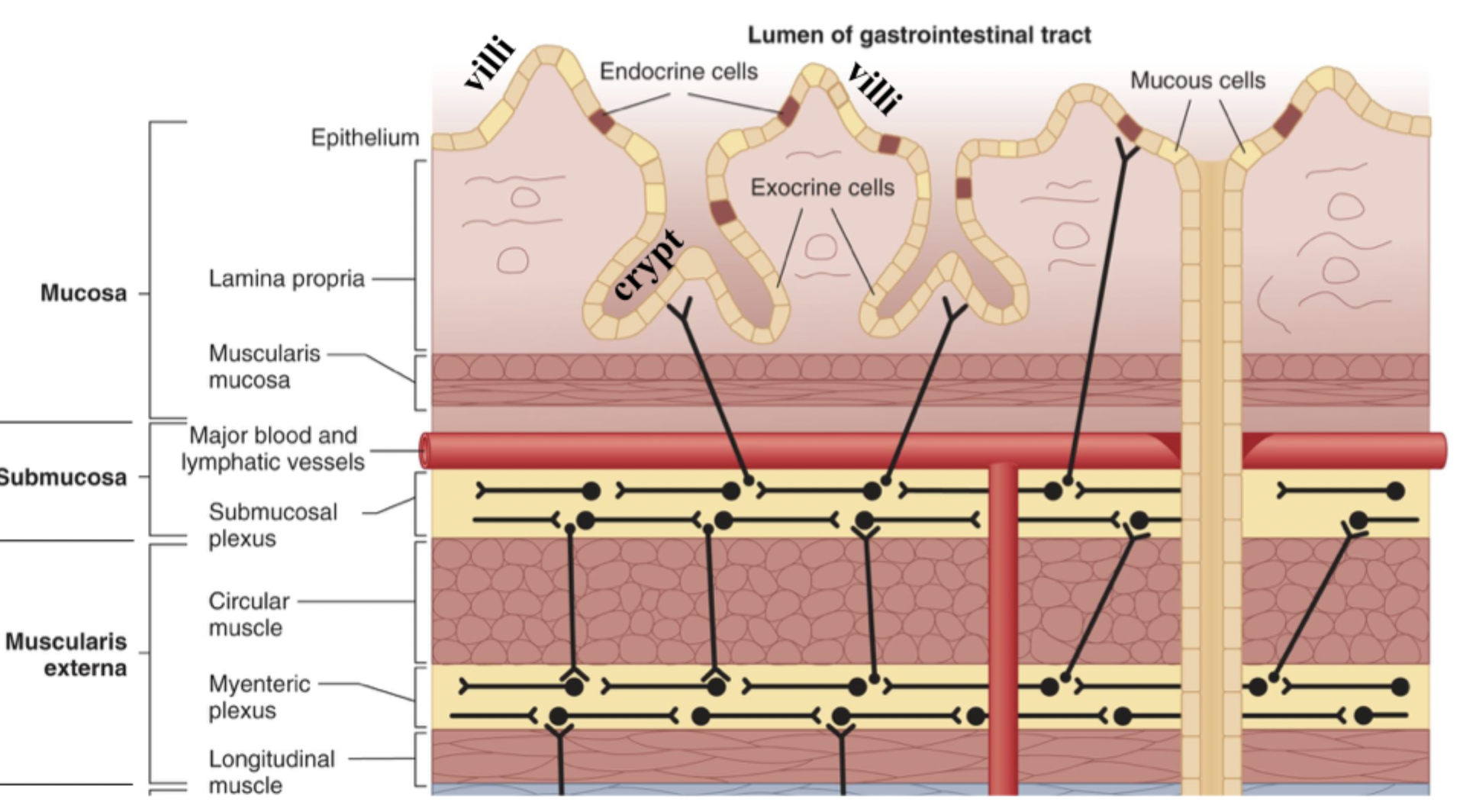
Mucosa, submucosa, muscularis externa, serosa
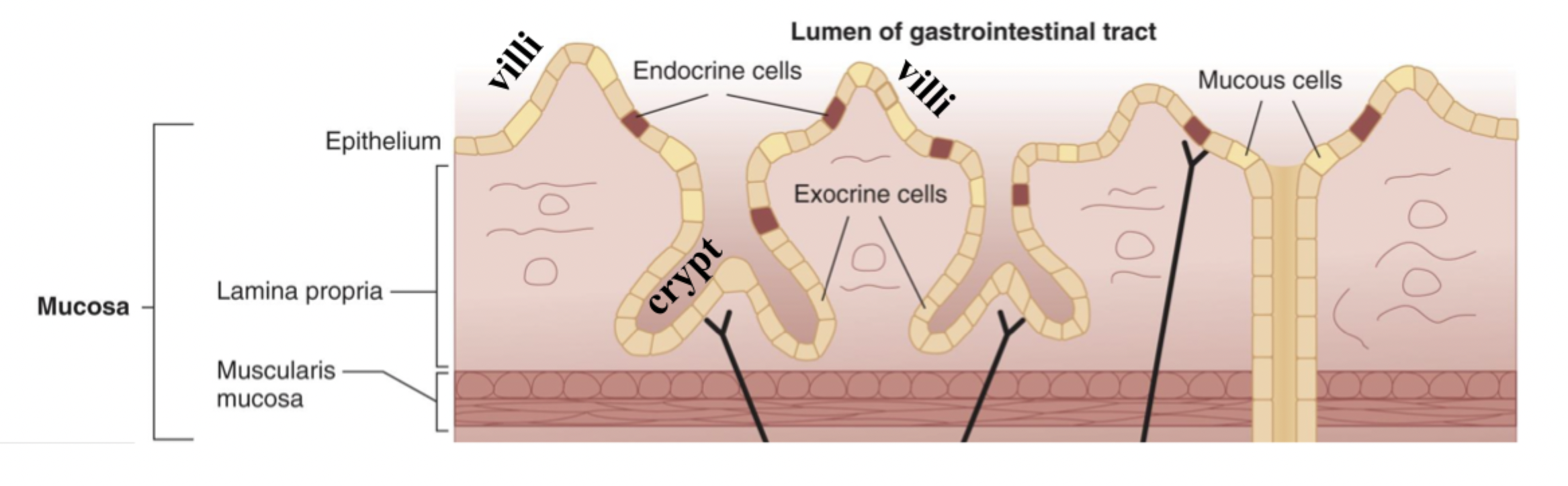
Explain components of mucosa layer
Villi - finger like projections that increase SA of epithelial layer
Crypts - contain exocrine cells that produce secretions into lumen
Lamina propria - connective tissue
Muscularis mucosa - thin layer of smooth muscle that makes flux and agitation
Explain components of submucosa layer
Blood and lymphatic vessels - allows for lots of reabsorption
Submucosal plexus - ENS innervates and influences secretion of exocrine cells

Explain components of muscularis externa layer
Circular muscle - changes diameter of GI tract wall
Myenteric plexus - communicates with submucosal plexus, engages in ENS control of circular and longitudinal smooth muscle and muscularis mucosa
Longitudinal layer - shortens and lengthens
Explain the serosa layer
Connective tissue, reduces friction between organs
How does the ENS impact the GI wall
Locally controls the myenteric plexus to control GI motility and the submucosal plexus to control secretions
How does the ANS impact the GI wall
Is an external overrider of the ENS and modulates its activity
Parasympathetic stimulates ENS activity, sympathetic inhibits ENS activity
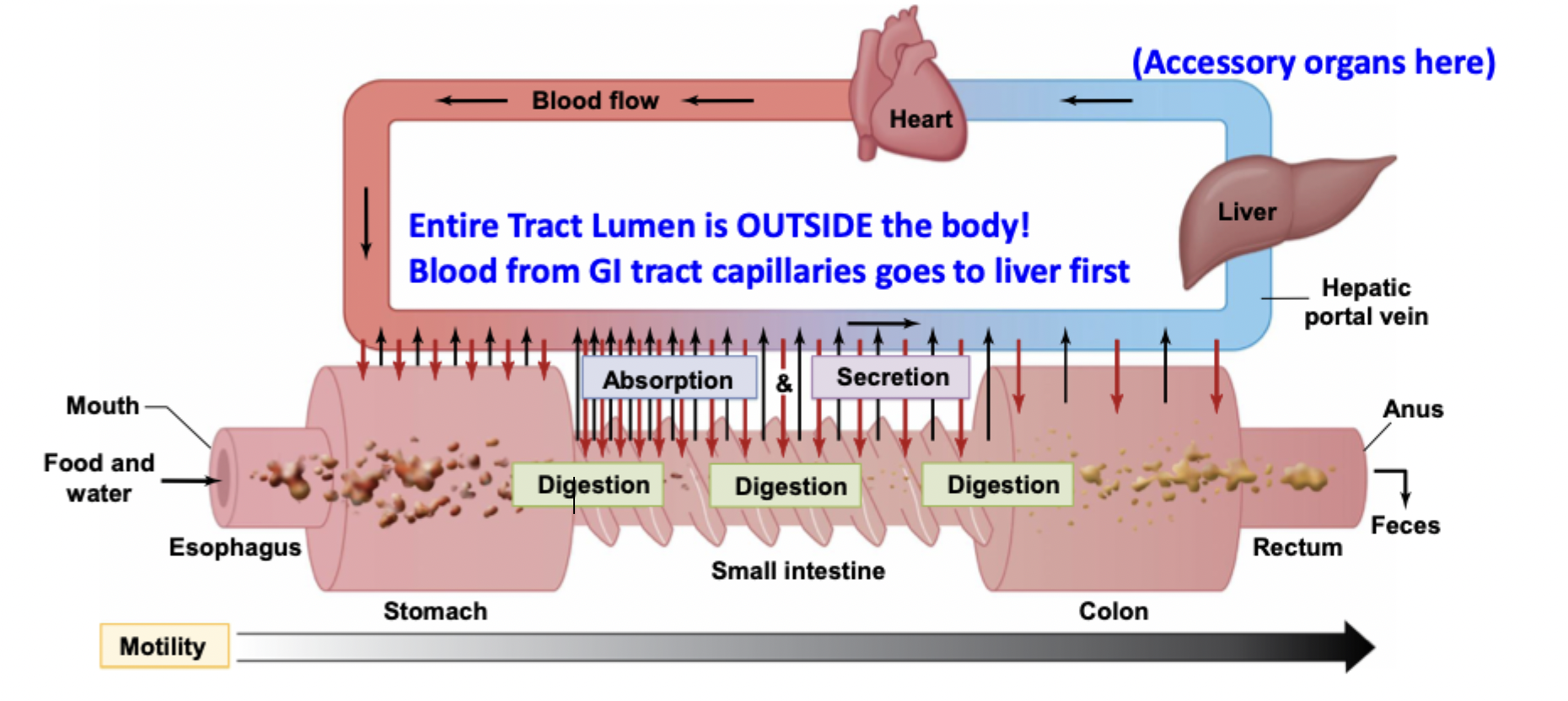
Explain functions of digestive system
Ingesting foods, liquids, nutrients, ions
Digest large molecules into absorbable molecular forms and transport it
Absorption of nutrients from gut lumen to internal environemnt
Metabolic transformation of fuel molecules and detoxification
Excretion of metabolic end products secreted by liver (bilirubin)
Immune functions (production of antibodies)
List the 4 major processes of the DS
Motility, digestion, absorption, secretion
What enzymes break down carbohydrates and what are the products
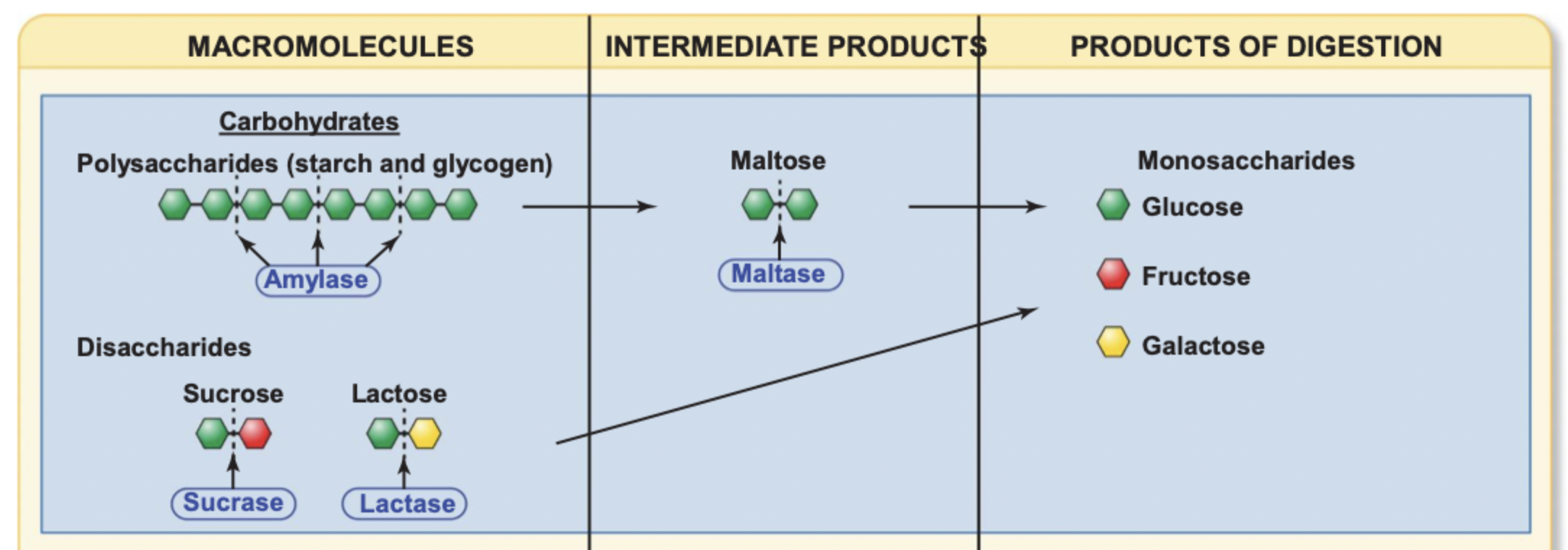
Amylase breaks down polysaccharides (starch, glycogen) to maltose → maltase breaks down maltose → glucose
Sucrase and lactase break down disaccharides (sucrose, lactose) → fructose, galactose
What enzymes break down proteins and what are the products
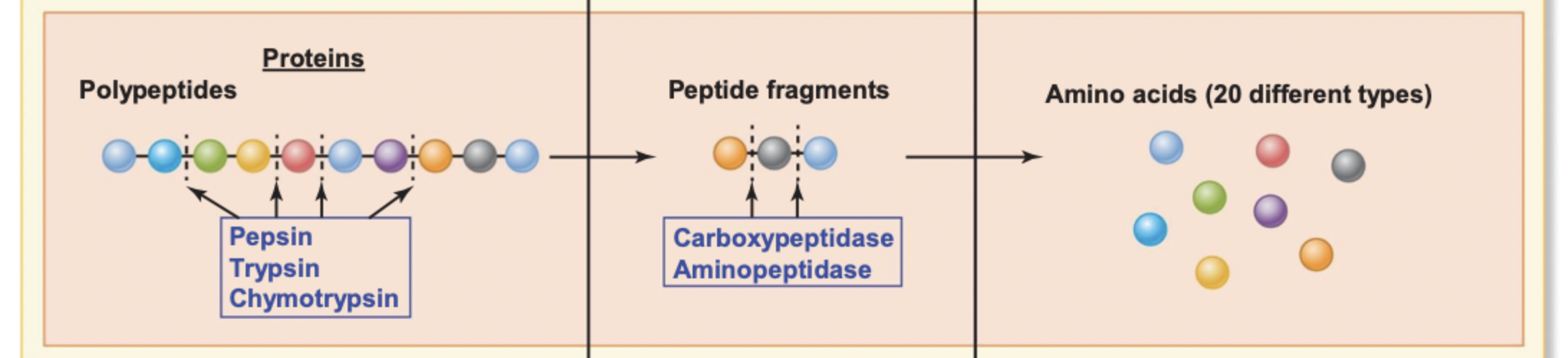
Pepsin, trypsin, chymotrypsin break down polypeptides → carboxypeptidase, aminopeptidase breaks down peptide fragments → amino acids
What enzymes break down triglycerides and what are the products
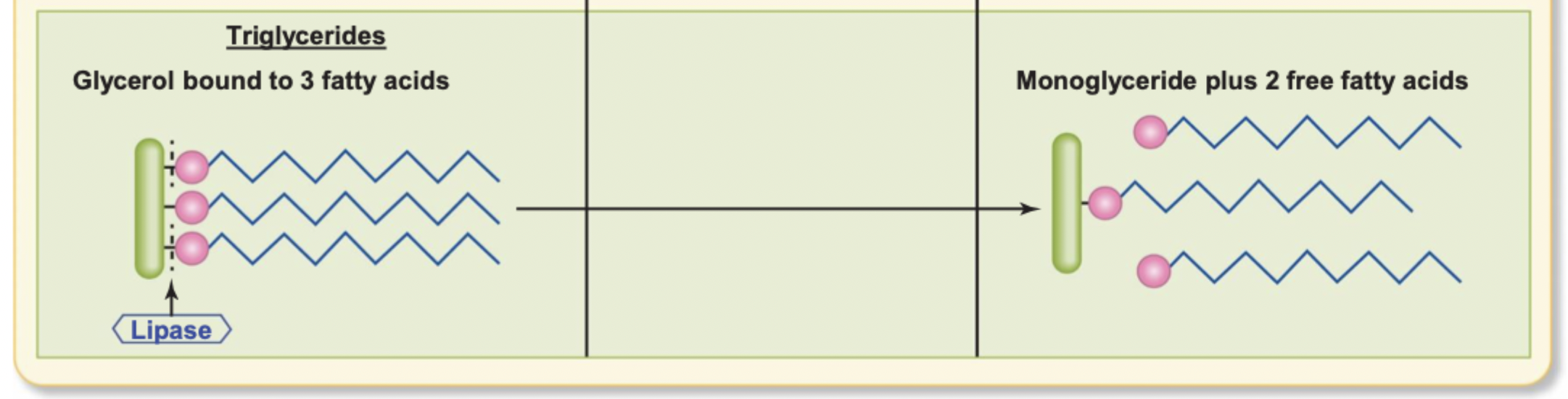
Lipase breaks down glycerol (3 pieces) → monoglyceride + two free fatty acids
Why is the amount of fluid so much greater than amount consumed in GI tract
Because the DS adds large volumes of fluid secretions
Explain feed-forward regulation of GI tract
Sight, smell, taste of food → CNS → efferent autonomic neurons —> nerve plexus → GI glands and smooth muscle —> response
Explain short reflex regulation of GI tract
Stimulus in GI tract → sensory receptors (chemo, osmo, mechano) → nerve plexus ENS → smooth muscle/gland → response
Occurs all in gut wall
Explain long reflex regulation of GI tract
Stimulus → sensory neuron → CNS → efferent autonomic neurons → nerve plexus ENS → smooth gland/muscle → response
Goes to the brain and spinal cord first before going to the digestive tract
Name the GI hormones secreted by the tract that regulates the smooth muscles/glands
Gastrin, CCK, secretin, GIP (all peptides)
Explain properties of gastrin
Produced in stomach
Stimulated by amino acids, peptides in stomach, parasympathetic nerves
Inhibited by acid in stomach, somatostatin
Stimulates acid secretion (parietal cells), motility, ileum, and mass movement
Explain properties of CCK
Produced in small intestine
Stimulated by amino acids, fatty acids in small intestine
Stimulates insulin secretion, gallbladder
Inhibits acid secrection, motility
Relaxes sphincter of Oddi
Explain properties of secretin
Produced in small intestine
Stimulated by acid in small intestine
Stimulates enzyme secretion, liver
Inhibits acid secretion and motility
Explain properties of GIP
Produced in small intestine
Stimulated by glucose, fat in small intestine
Goes to pancreas → stimulates insulin into plasma
Name phases of GI control and its stimulus origins
Cephalic - head
Gastric - stomach
Intestinal - small intestine
Explain the cephalic phase of GI control
Stimulated by sight, smell, taste, chewing, emotional state
Increases secretory and contractile activity mainly by parasympathetic system
Lots of feed-forwarding
Explain the gastric phase of GI control
Stimulated by stretch, acidity, amino acids, peptides
Mediated by short and long reflexes, hormone gastrin (increases secretion and motility)
Explain the intestinal phase of GI control
Stimulated by stretch, acidity, osmolarity, digestive products
Mediated by short and long reflexes, hormones secretin, CCK, GIP
What are the phases of food as it is digested in the body
On plate/in cup → food, nutrients, liquid
in mouth/esophagus → bolus
In stomach/small intestine → chyme
In large intestine/rectum → chyme/feces
Describe motility of mouth and pharynx
Chewing (mastication) - grinding of food to increase surface area, mixing saliva to dissolve it and aid taste
Voluntary skeletal muscles and complex brainstem patterns
What are the functions of the 6 components of saliva
Water - moistens and dissolves molecules
Mucus - lubricates food, fascilitates formation of bolus for swallowing
Bicarbonate - neutralizes acids in food
Lysozyme - kills bacteria
Amylase - begins digestion of polysaccharides
Lipase - begins digestion of triglycerides
How does ANS affect secretion of saliva
Parasympathetic - lots of secretion, thin, watery
Sympathetic - little secretion, thick, viscous
Explain motility of esophagus
Swallowing (deglutition) - propels good to stomach, has two phases
Oropharyngeal phase - voluntary closing of lips and elevation of tongue (irreversible) → soft palate and uvulate elevate to block off nasal passage → larynx elevates and bolus flattens epiglottis over glottis → UES opens and smooth muscle relaxes → UES closes rapidly
Esophageal phase - peristaltic wave, propulsion
Explain the role of the esophagus
Secretes mucus to make to make GI slippery and buffers acidity to protect GI ract wall
Doesn’t digest or absorb
Describe the three functional regions of the stomach
Fundus (top) - flexible size, thin, weak smooth muscle to acommodate bolus
Body (middle) - thicker, stronger smooth muscle, has rugae (ridges and folds), secretes mucus, pepsinogen, HCl
Antrum (bottom) - mixing and grinding, secretes mucus, pepsinogen, and gastrin
List the 6 secreting cells in the stomach
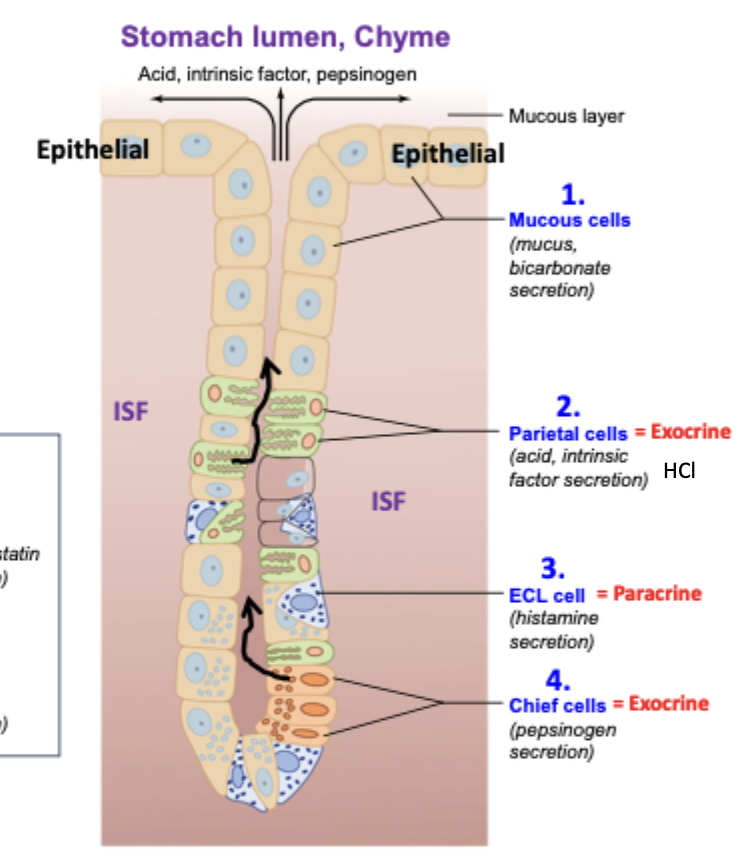
Mucous, parietal, ECL, chief, D, G
What do mucous cells secrete
Secrete mucus and bicarbonate
Exocrine
What do parietal cells secrete
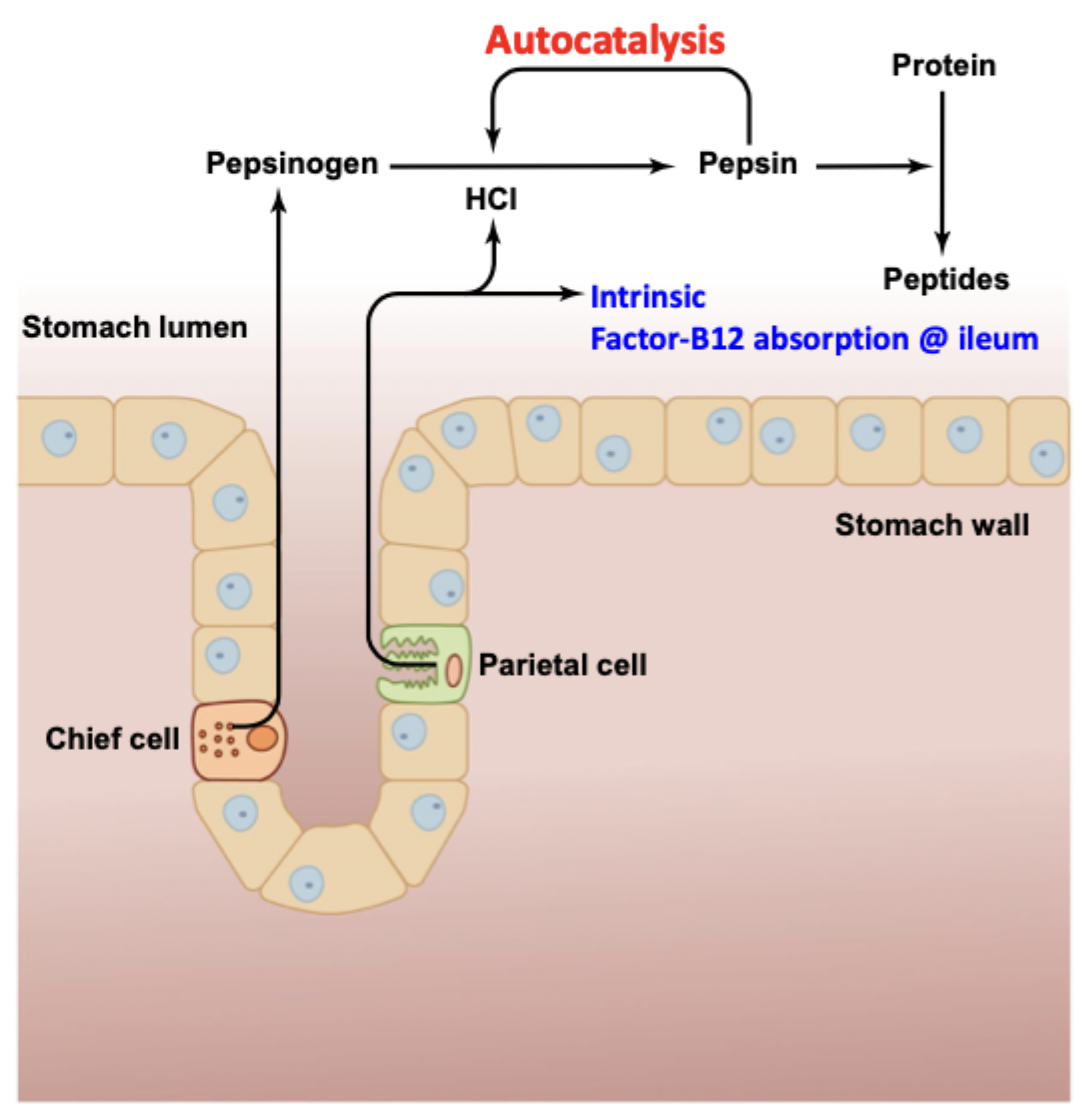
Secrete HCl acids and intrinsic factors
Secretions go into the duct/pit (exocrine)
What do ECL cells secrete
Paracrine
Histamine secretion that acts on parietal cells
What do chief cells secrete
Exocrine
Secretes pepsinogen
What is pepsinogen
An inactive enzyme that when activated turns into pepsin and breaks down proteins
What do D cells do
Endocrine
Secretes somatostatin
Act on parietal cells
What do G cells do
Secrete gastrin
Act on parietal cells
Explain gastric pits
Where glands are secreted in the stomach. Lined with epithelial layer
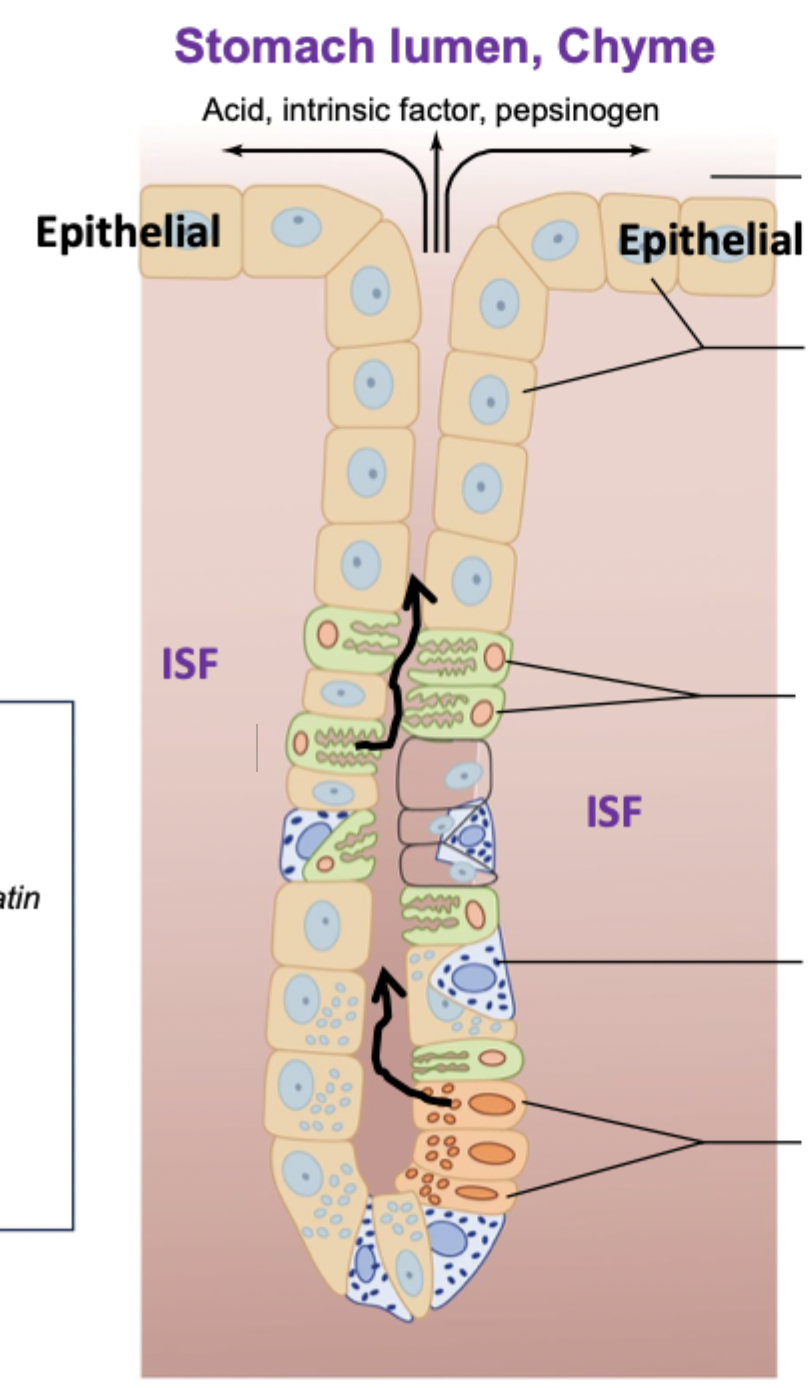
How is HCl produced in the stomach by parietal cells
CO2 + H2O makes HCO3- and H+ via carbonic anhydrase
H+ → stomach lumen via K+/H+ ATPase
HCO3- → capillary via bicarb/Cl- exchanger
Apical has K+ and Cl- leaking out
H+ and Cl- meet up in the lumen to make HCl
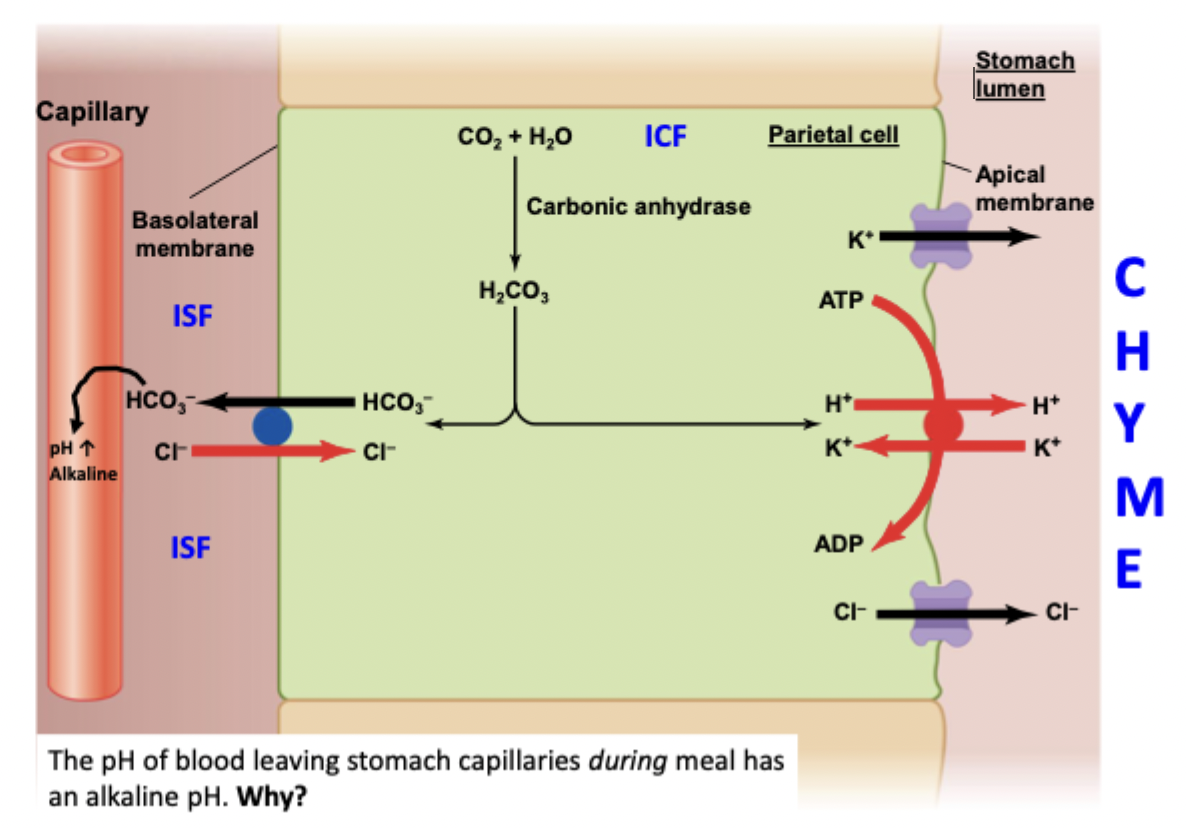
Explain alkaline shift
The shift in pH to be more alkaline in the capillaries of the stomach during eating
Due to the entry of HCO3- into capillaries during HCl production, increasing the capillary’s buffering capacity
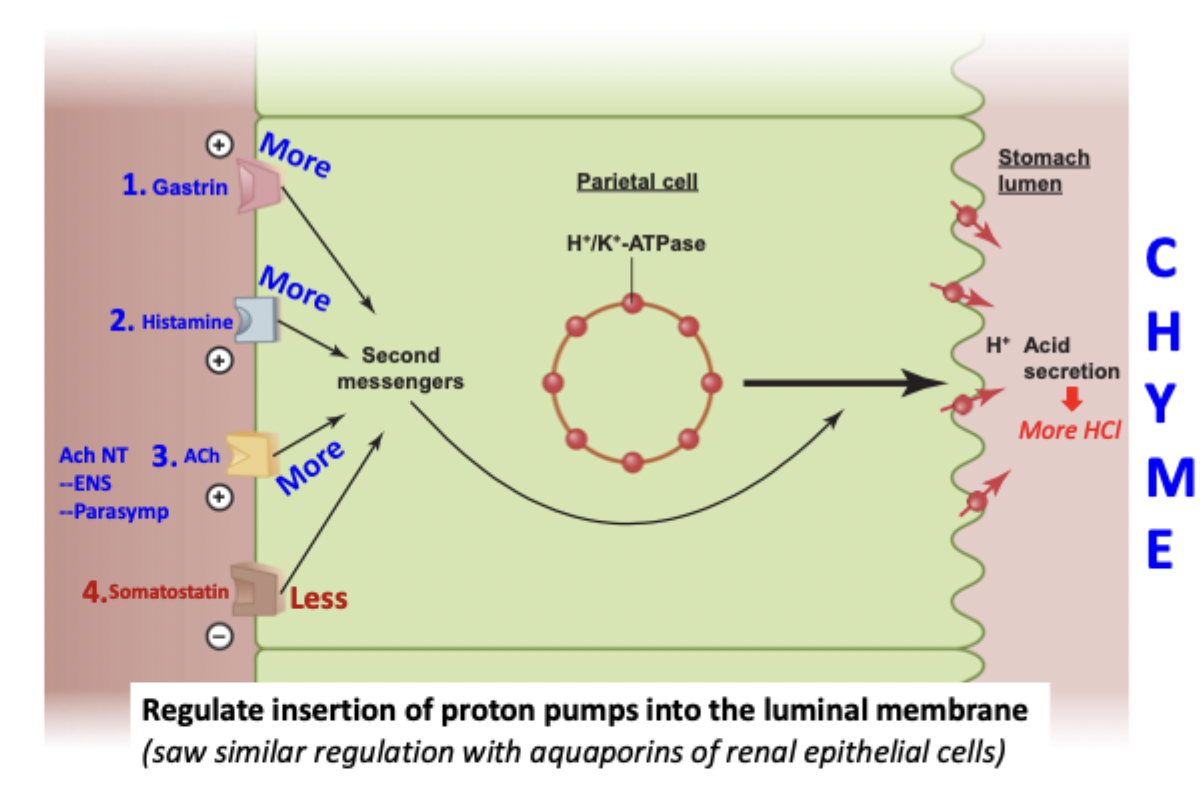
Which hormones have a positive effect on HCl production and how
Hormone starts second messenger cascade → vesicle containing K+/H+ ATPase pumps to fuse with apical membrane → more H+ pumping and HCl production
Gastrin, histamine, and ACh (from ENS + para, binds to cholinergic receptors)

What hormone has an inhibitory effect on HCl production?
Somatostatin - inhibits the second messenger cascade that fuses vesicle to apical membrane
What are the types of drugs used to treat stomach acid problems
OTC antacid tablets/solution - neutralizes acids
Histamine blockers - blocks acid stimulation from histamine
Proton pump inhibitors - blocks protons from pumping
What are drugs used to treat stomach acid for?
Excess acid production, heartburn, GERD (gastroesophageal reflux disease, a condition where stomach acid flows back into esophagus)
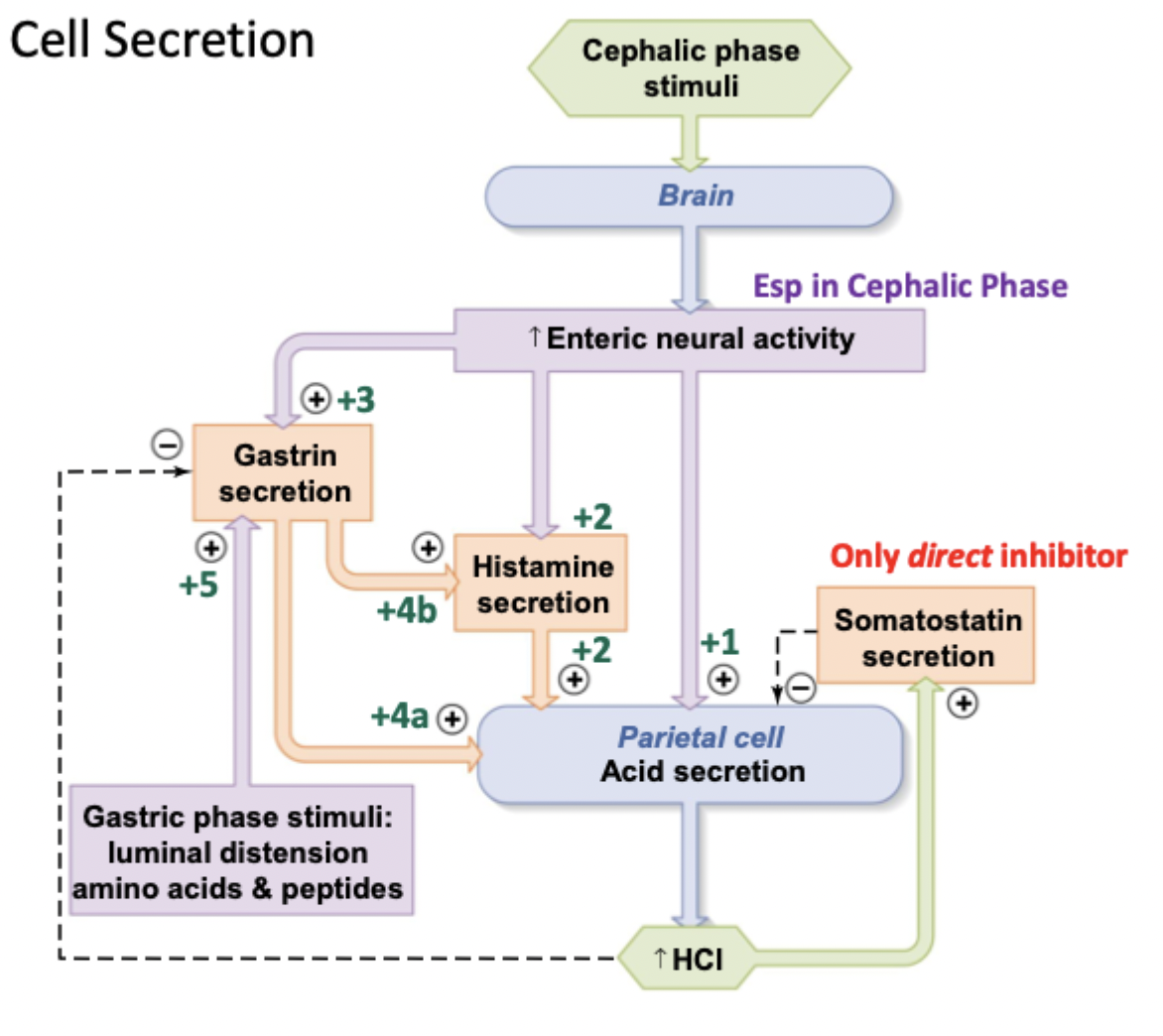
What are the 5 ways of regulating parietal cell secretion
Increases secretion
Cephalic stimuli → increases enteric neural activity
Increase histamine secretion
Increase gastrin secretion (acts on both histamine and parietal cells)
Gastric phase stimuli increases amino acids, peptides, luminal distension → increases gastrin
Decreases secretion
Increases somatostatin
How do intestinal contents affect HCl secretion
Intestinal contents means the stomach wants to slow gastric emptying
Stimulated by distension/swelling, increases nutrient concentrations, decreases HCl
Intestinal nutrients decreases both stomach secretion and motility
What pathways do cephalic phase, gastric contents, and intestinal contents make to influence HCl secretion
Cephalic → parasympathetic nerves to ENS → ↑ HCl
Gastric → long and short neural reflexes, gastrin → ↑ HCl
Intestinal → long and short neural reflexes, secretin, CCK → ↓ HCl
Describe the secretion of pepsin in the stomach, inactivation, and if it’s essential or not
Pepsinogen is produced by chief cells → activated by HCl to make pepsin (can autocatalyze itself) → breaks down proteins into peptides
Inactivated by alkaline pH in small intestine and isn’t essential, pancreas can produce proteases that do the same thing
Define intrinsic factors
Essential proteins that bind to vitamin B12 and chaperones it to the ileum to be absorbed, preventing its breakdown and degradation
List the 4 motilities of the stomach
Receptive relaxation, peristaltic waves, retropulsion, gastric emptying
Describe receptive relaxation motility in stomach
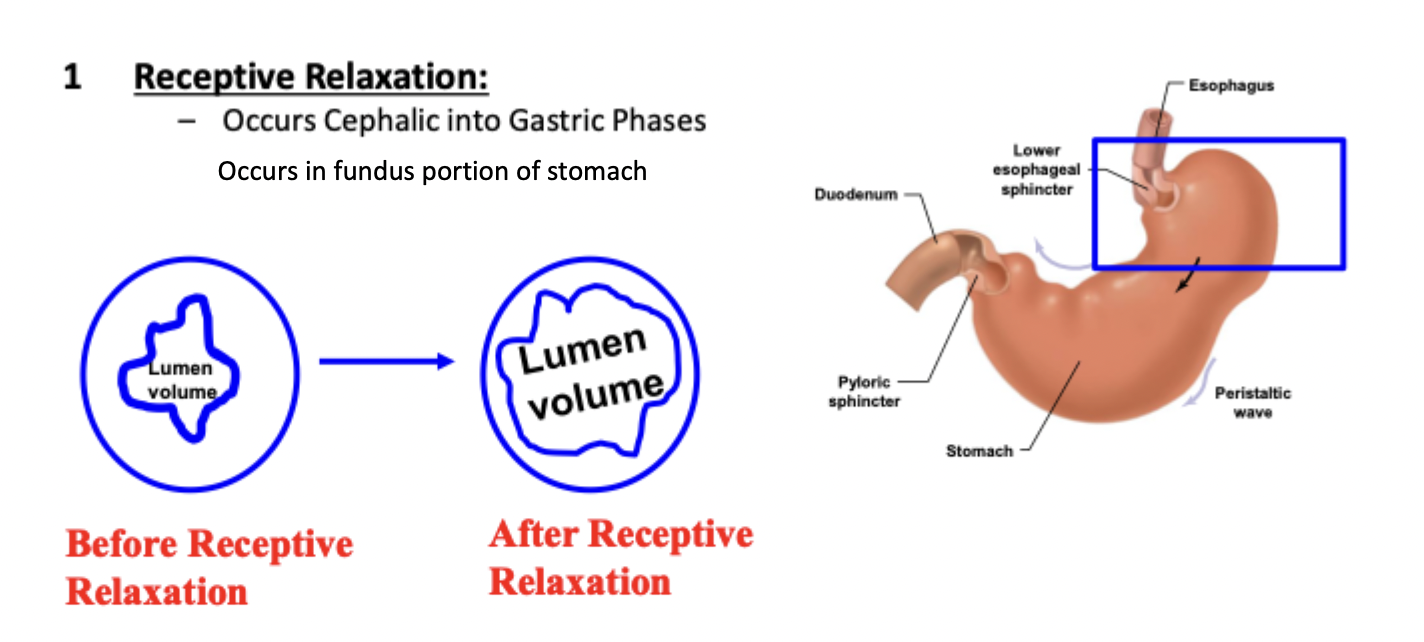
Occurs from cephalic into gastric phases, in fundus
Relaxation and weakening of smooth muscle that increases the lumen volume of the stomach to store bolus
What neurotransmitters are involved in receptive relaxation
Serotonin and nitric oxide from the ENS (stomach wall), which come from submucosal plexus and myenteric plexus to increase lumen size
Describe peristaltic wave motility in stomach
Wave-like contraction beginning in the body and approaches the pyloric sphincter
Closes and squirts out a little chyme

Describe retropulsion motility in stomach
Backward splashing that occurs in antrum
Pulverizes bolus and mechanically digests it

Explain slow waves motility in stomach
Pacemaker potentials that develop tension when it goes above threshold that sets rhythm for gastric motility
Depolarized and hyperpolarized by location of bolus (mechano and stretch receptors), ENS, hormones, and ANS
Describe gastric emptying
Chyme moving into the small intestine
Stimulated by stomach stretching and chyme fluidity
Inhibited by enterogastric reflex
What is the enterogastric reflex
A reflex that slows gastric emptying
Senses acidity, lipids, amino acids, hypertonicity, and distention in the duodenum
Stimulate long and short neural reflexes
Increase secretion of enterogastrones (CCK and secretin)

How much absorption occurs in the stomach
Not a lot, only weak acids and alcohols
How does eating greasy, fatty foods help with alcohol consumption
Prevents BAC spike and its problems
Greasy fatty foods (has proteins, lipids, acidity) that inhibit gastric emptying and slows the rate that alcohol is emptied into the intestine where absorption is rapid
Describe the anatomy of the small intestine
Begins at pyloric sphincter, ends at ileocecal sphincter/valve
Has three parts, duodenum, jejunum, ileum
Longest portion of GI
Components of SI that increase surface area
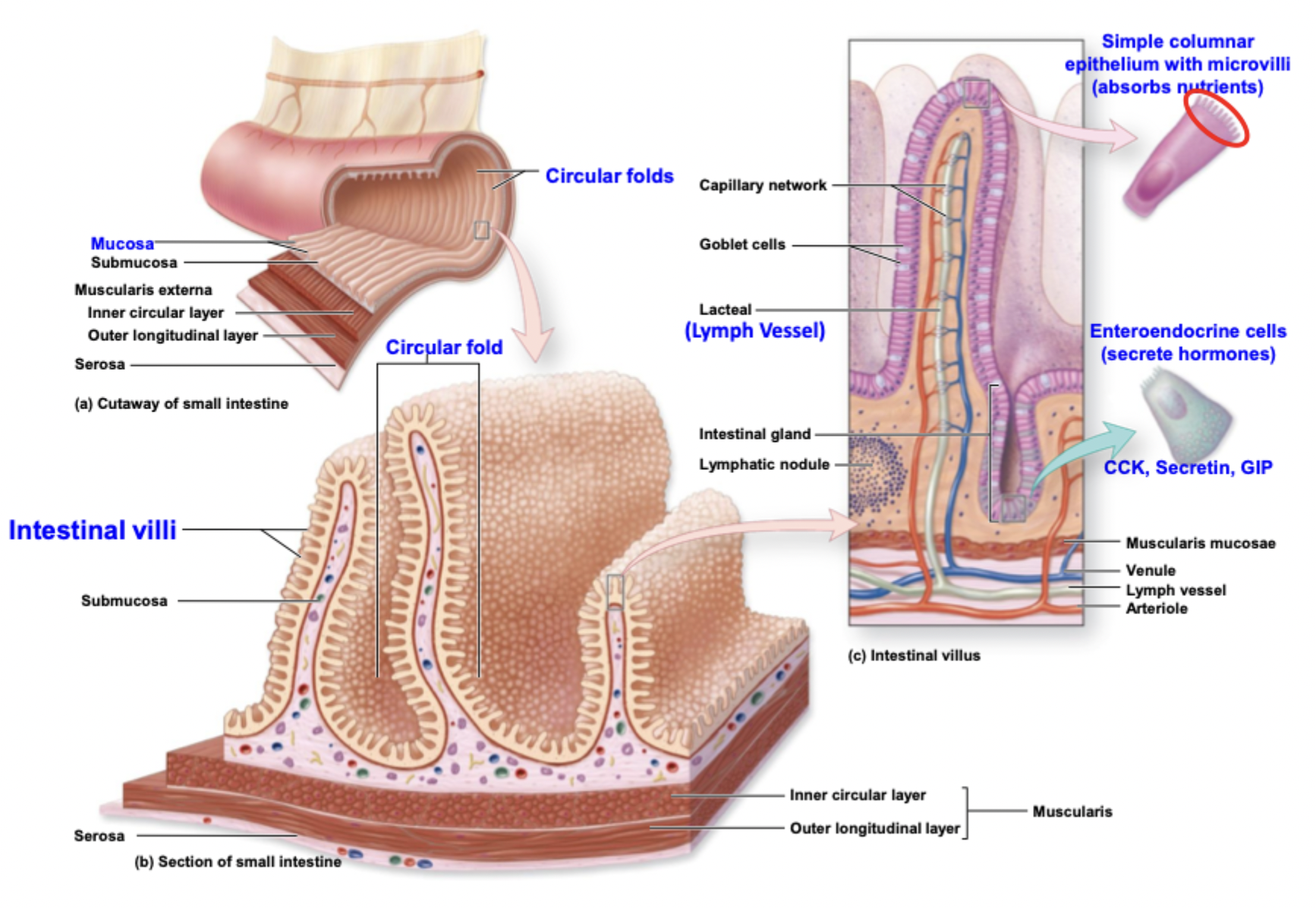
Coiled length, circular folds, villi (epithelial layer), and microvilli (plasma membrane)
Explain digestion and absorption in the SI
Occurs at the microvilli, where nutrients move from GI lumen into epithelial cells (outside to inside body).
This is where chyme actually moves across the epithelial barrier
Describe amount of secretions from SI
1500 ml/day of water, mucus, NaCl (for secondary active transport)
500 ml/day of bile from liver and gall bladder to digest and absorb fats
1500 ml/day of pancreatic secretions (bicarb to neutralize pH and enzymes to digest nutrients
All exocrine secretions
Where does the liver and pancreas connect?
At the duodenum (small intestine)
Explain duct connections of SI with pancreas and liver
Right and left hepatic ducts of liver merge with bile duct from gall bladder - transports bile
Bile duct merges with pancreatic duct - adds secretions to bile at the sphincter of Oddi

Explain the exocrine parts of the pancreas
Acinar cells - secretes pancreatic enzymes
Duct cells - secretes bicarb
Explain endocrine parts of the pancreas
Islet cells - insulin and glucagon
How does the pancreas secrete bicarbonate through duct cells
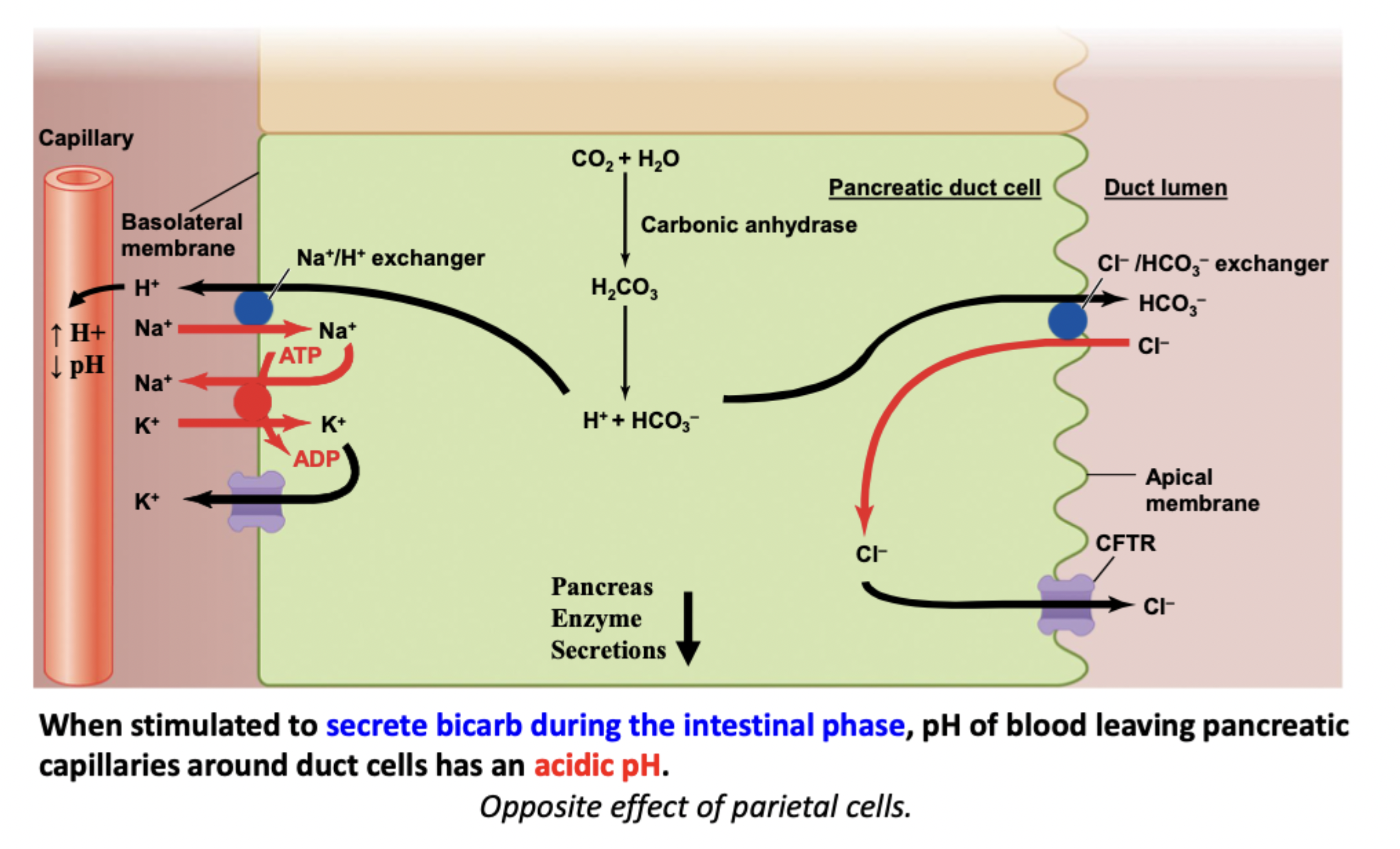
H2O + CO2 → H+ and bicarb in pancreatic cells
Bicarb → duct lumen via bicarb/Cl- exchanger into the bile
H+ → capillary through a Na+/H+ exchanger
Na+ moves into the cell, then out through Na/K ATPase, then K moves out through a leak channel
Apical has a CFTR channel for Cl-
Basolateral has K+/Na+ ATPase and K+ leak channel
Overall makes the capillaries more acidic and the duct less acidic
Explain the process of enzymes secreted by acinar cells in the pancreas
Acinar cells secrete inactive enzymes and trypsinogen into the intestine → trypsinogen is activated by enterokinase into trypsin → trypsin activates the inactive enzymes

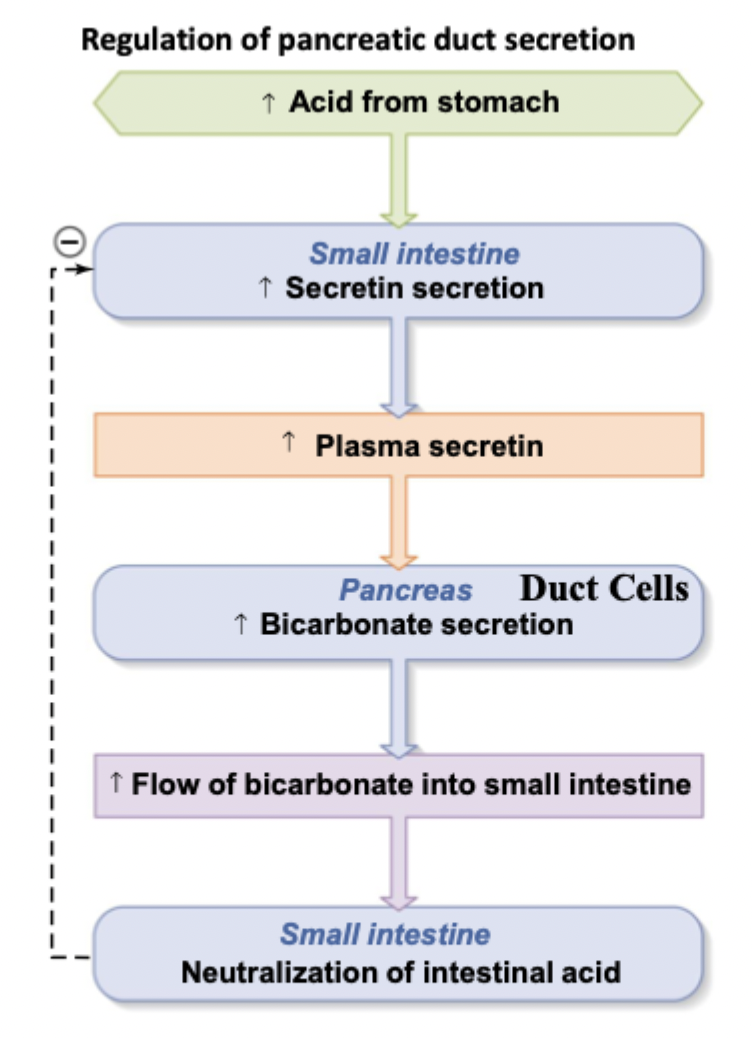
How does secretin regulate pancreatic duct secretion
When there’s stomach in the acid, secretin binds to duct cells and increases bicarbonate secretion to further neutralize intestinal acid
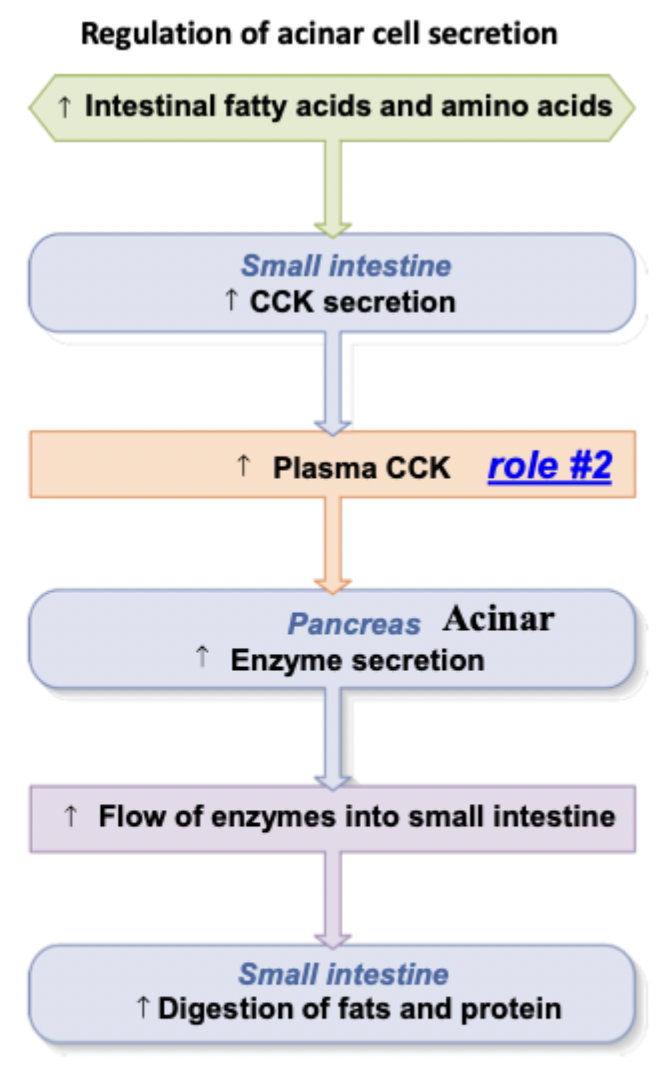
How does CCK regulate acinar cell secretion
Fatty acids and amino acids in the intestine stimulates CCK to bind to acinar cells → increases enzyme secretion, further digesting fats and proteins
Inhibiting gastric emptying by decreasing motility
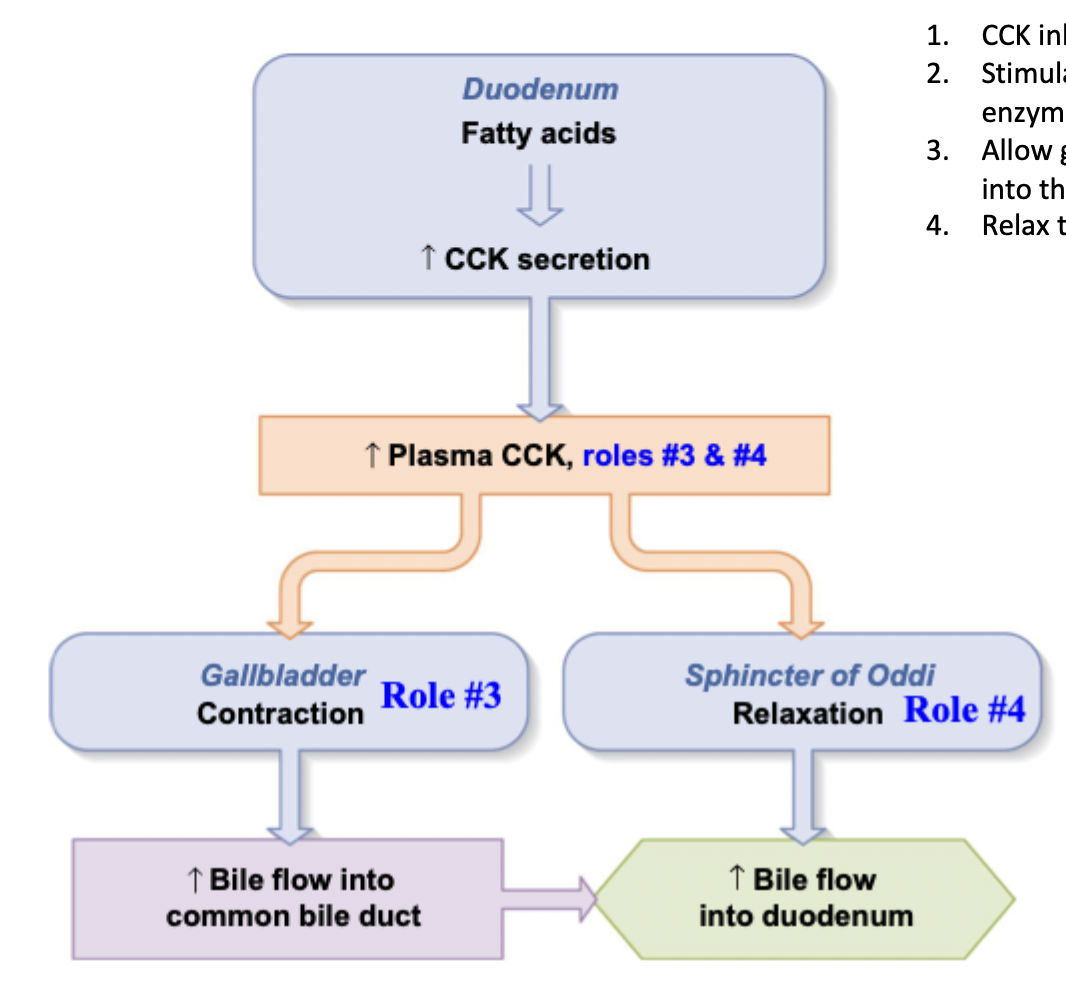
How does CCK regulate bile flow
The duodenum senses fatty acids → CCK is secreted
Gallbladder contracts to increase bile flow into common bile duct → flow into duodenum
Sphincter of Oddi relaxes → bile flow into duodenum
How does the liver mainly help with digestion
It produces bile salts that emulsify (evenly distributes) fats
BIle salts are made from cholesterol and contains bilirubin
Are reabsorbed in distal ileum
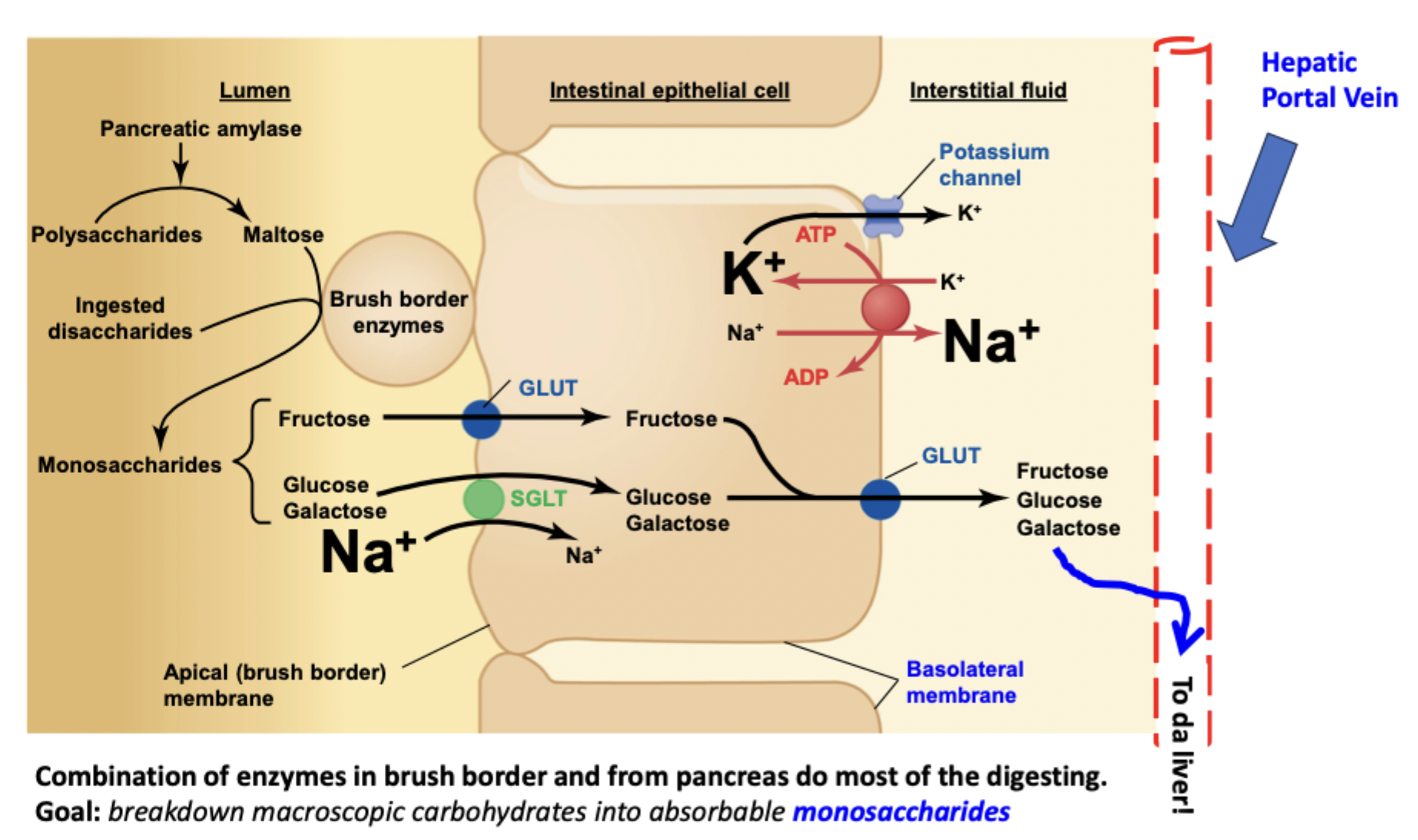
How does the SI digest and absorb carbohydrates
Polysaccharides go into SI lumen → broken down by amylase into disaccharides → turned into monosaccharides by brush border enzymes
Fructose → in cell via GLUT → in capillary via GLUT
Glucose and galactose cotransport with Na into cell via SGLT → out to capillary via GLUT
All go to the hepatic portal vein to the liver
Basolateral has K+/Na+ ATPase and K+ channel
How does the SI digest and absorb proteins
Proteins are broken down by proteases and peptidases into small peptides and amino acids
Small peptides → amino acids by brush border peptidases OR enter cell via H+ cotransporter → turn into amino acids via peptidases in cell
Amino acids cotransport into cell with Na+ → go into ISF via amino acid transports into capillary to the liver
Needs Na/K ATPase and K channel

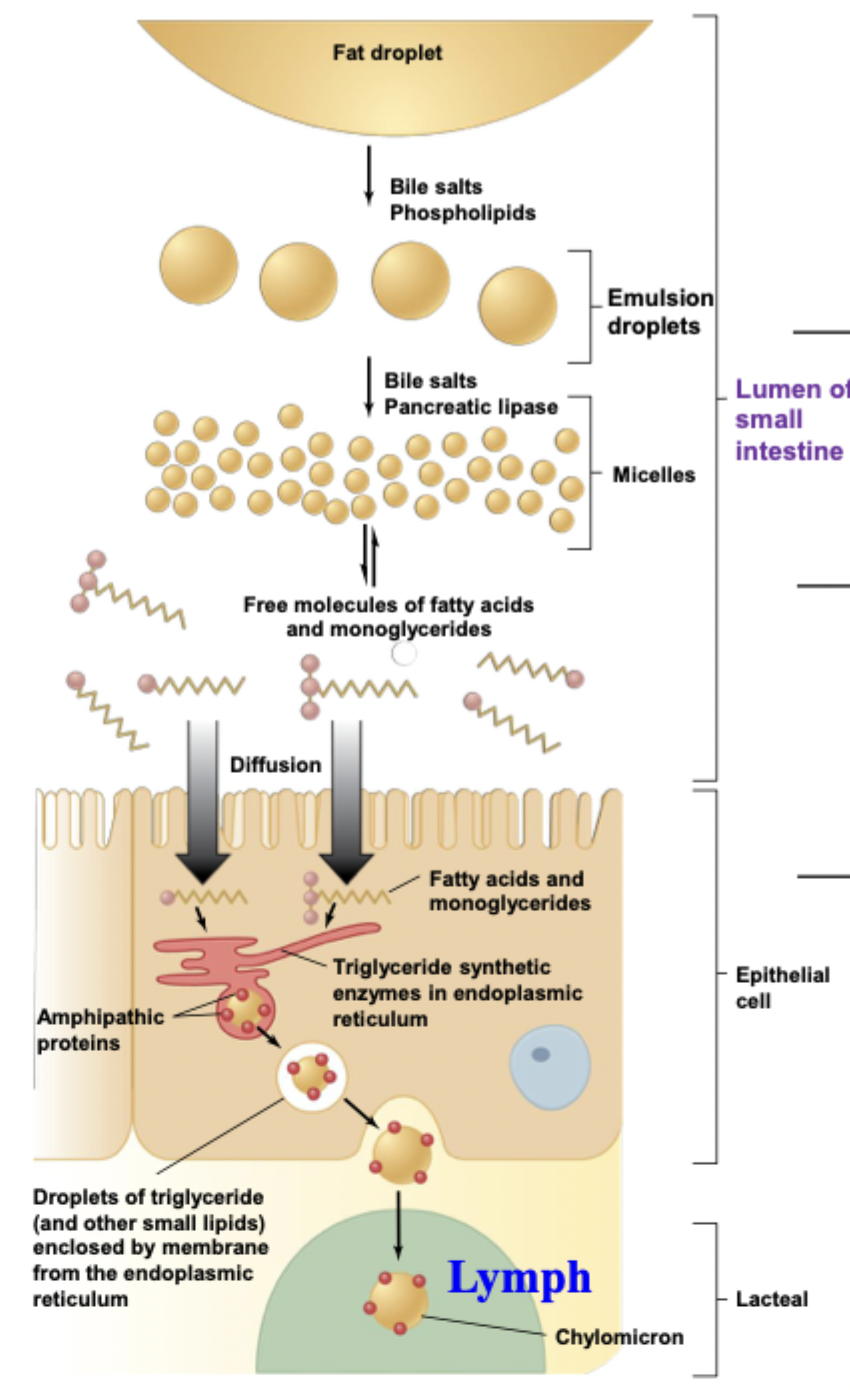
How does the SI digest and absorb lipids
Fat-soluble vitamins (A, D, E, K) are emulsified into bile salts →
Pancreatic lipases breakdown triglycerides →
Turned into fatty acids and monoglycerides that diffuse into epithelial cells to be absorbed →
Combine with amphipathic proteins to form chylomicrons (triglycerides) that exocytose into lacteals →
Bypasses liver to go to lymph vessels, entering through veins near thoracic duct near heart
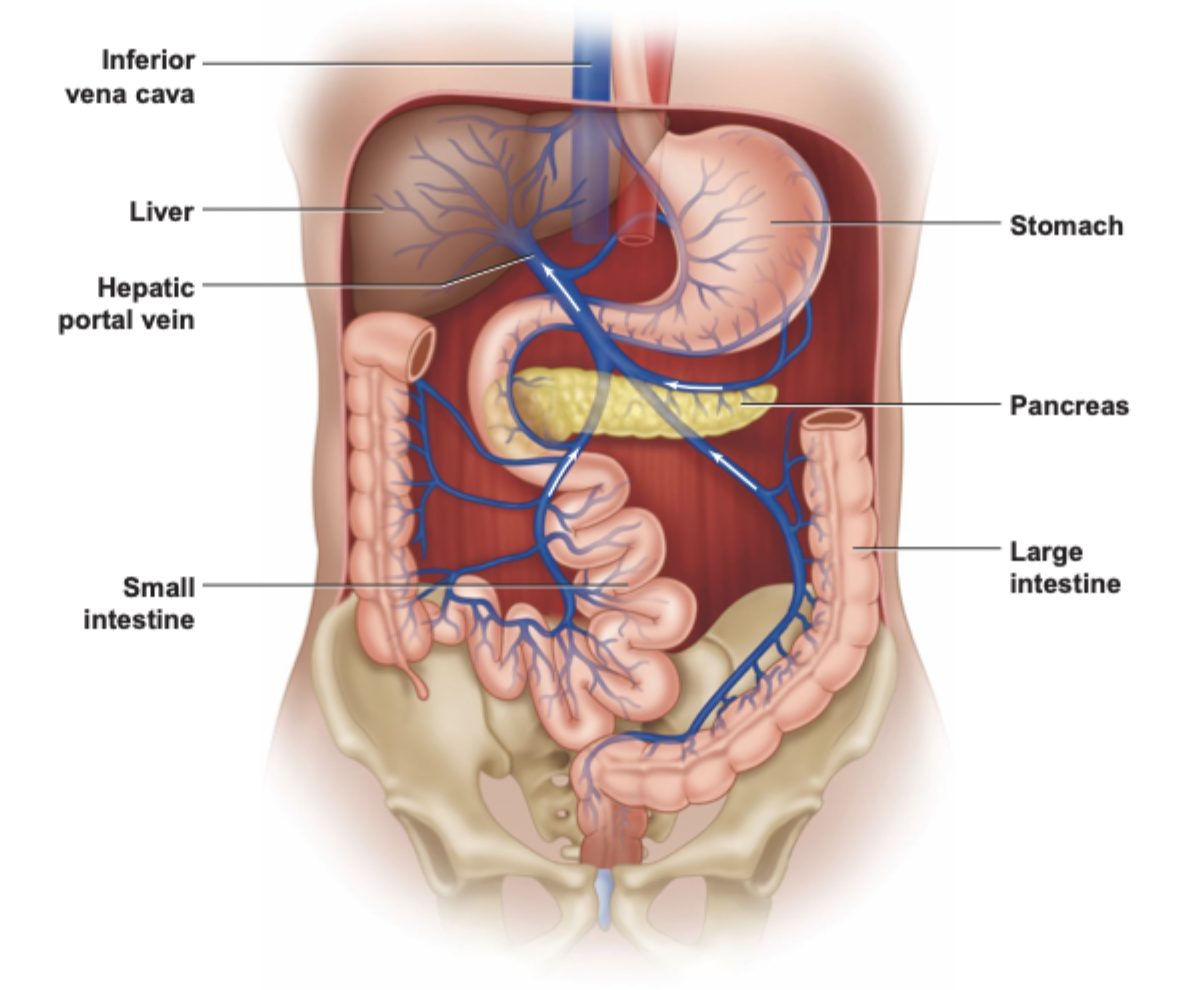
What capillaries in the SI all feed into the hepatic portal vein
Stomach, pancreas, small and large intestines
Explain absorption of hydrophilic substances
Capillaries all go through the hepatic portal vein which goes straight to the liver and another capillary bed (bypassing heart), where it’s processed at liver
Then liver capillaries drain from hepatic veins → inferior vena cava for circulation
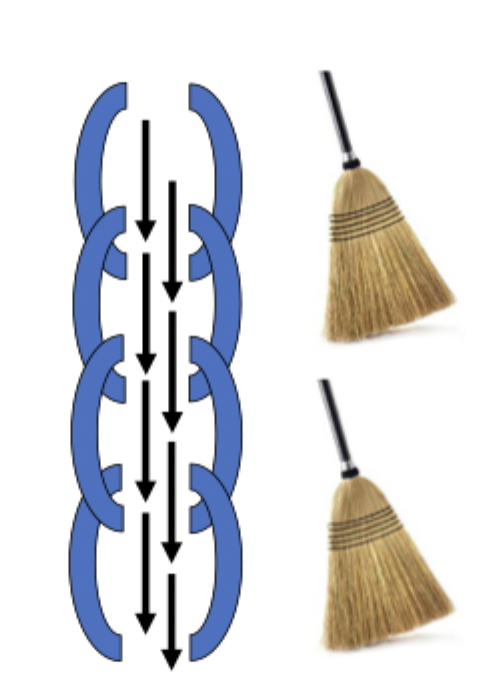
What are the motilities of the small intestine
Segmentation and migrating myoelectric complex (MMC)
What occurs in segmentation motility in small intestine
An alternating contraction-relaxation, fastest at duodenum and slowest at ileum
Mixes chyme with enzymes and bicarb for more enzyme exposure and neutralization of acid

What occurs in migrating myoelectric complex (MMC) motility (SI)
A housekeeping motility that occurs after a meal during post-absorptive, intestinal phases
Short distance peristaltic wave that sweeps everything left behind after eating to clear the intestine
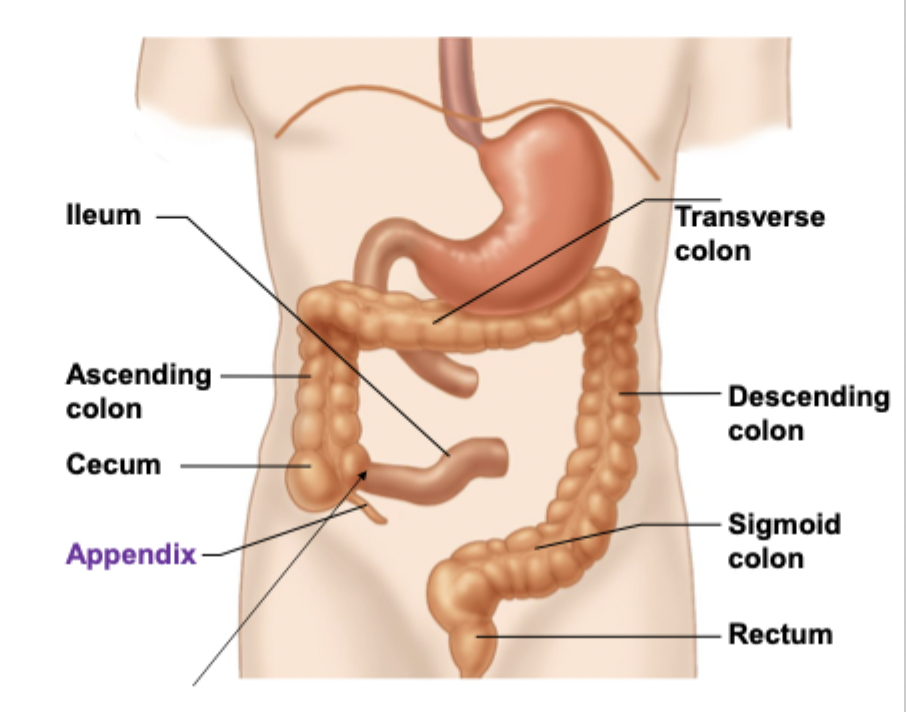
Pathway of large intestine
Cecum (w appendix) → ascending colon → transverse colon → descending colon → sigmoid colon → rectum
What is the main function of the LI
Store and dry feces
Maintains a healthy gut bacterial environment to repopulate gut in case of antibiotics wiping them out
Secretes alkaline mucus with bicarb and K+
Bacterial breakdown of complex polysaccharides
Absorbs mainly water, some NaCl, vitamin K, and products of bacterial metabolism
What are the motilities of the LI
Segmentation (Haustrations), mass movement, and defecation
Explain segmentation/haustrations motility in the LI
Occurs every 30 minutes
Shuffling back and forth motility where haustral sacs shrink and expand to dry chyme
Explain mass movement motility in LI
Long range peristaltic wave stimulated by gastrin that packs rectum with feces and leads to defecation reflex
Begins at ascending colon to rectum
Explain defecation motility of the LI
Rectal stretch relaxes internal anal sphincter, contracts external anal sphincter (which relaxes when ready to defecate)
Valsalva maneuver can increase pressure in abdomen and aid with defecation
Reduced motility → constipation
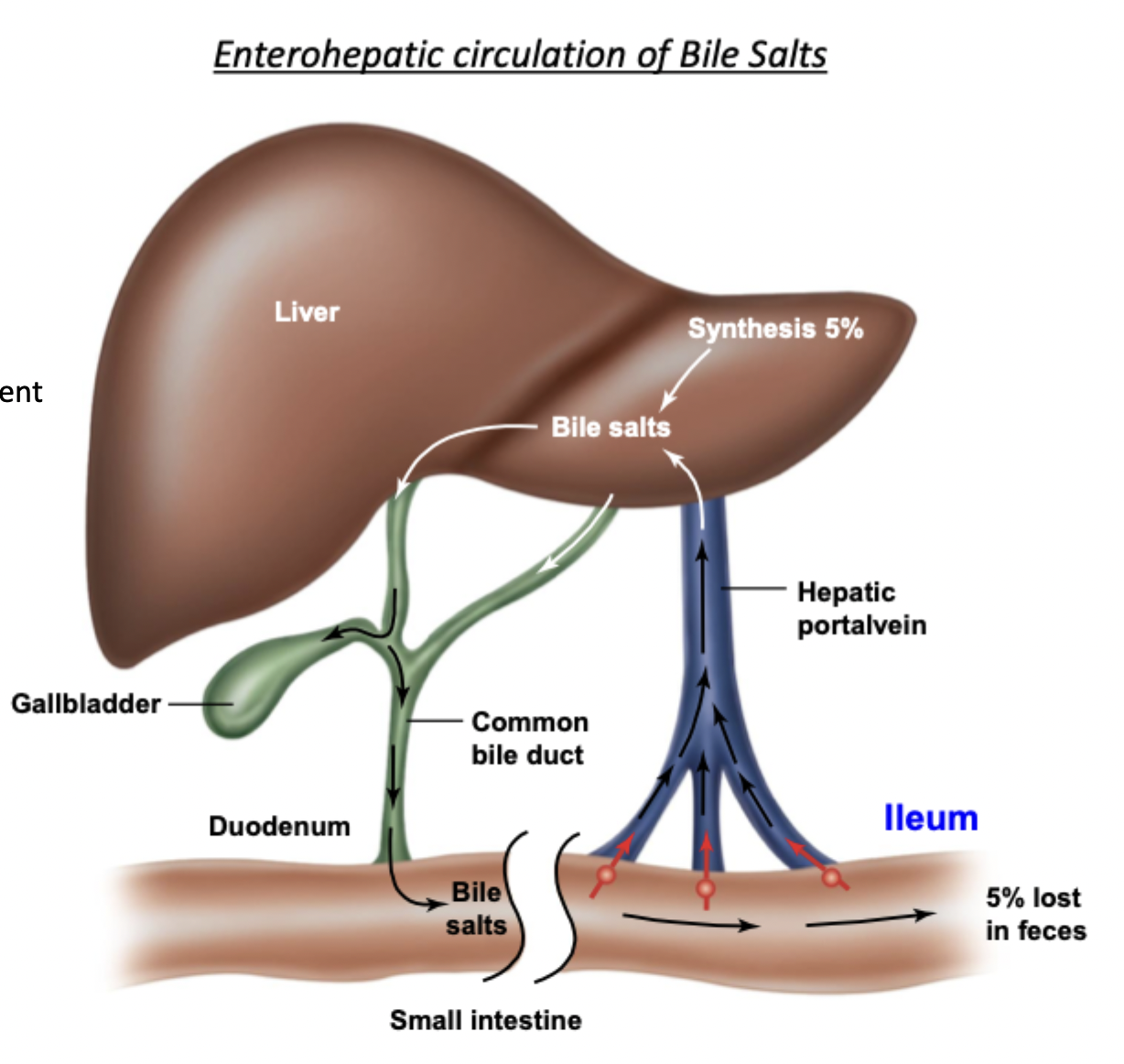
Enterohepatic circulation of bile salts
Begins in the liver → goes down bile duct → duodenum (emulsifies fats) → reabsorbed at ileum through hepatic portal vein back to liver
Exocrine vs paracrine vs endocrine
Exo - secreted into the digestive tract (lumen)
Para - affect nearby cells only, don’t enter bloodstream
Endo - released into the bloodstream