Milady Skin Disorders & Diseases
 Call Kai
 Learn
Learn Practice Test
 Spaced Repetition
 Match
Match Flashcards
 Knowt Play
1/64

There's no tags or description
Looks like no tags are added yet.
Name | Mastery | Learn | Test | Matching | Spaced | Call with Kai | Chat |
|---|
No analytics yet
Send a link to your students to track their progress
65 Terms
Lesions
It is a mark on the skin that may indicate an injury or damage that changes the structure of tissue or organ.
primary lesions
Lesions that are a different color than the color of the skin and lesions that are raised above the surface of the skin.
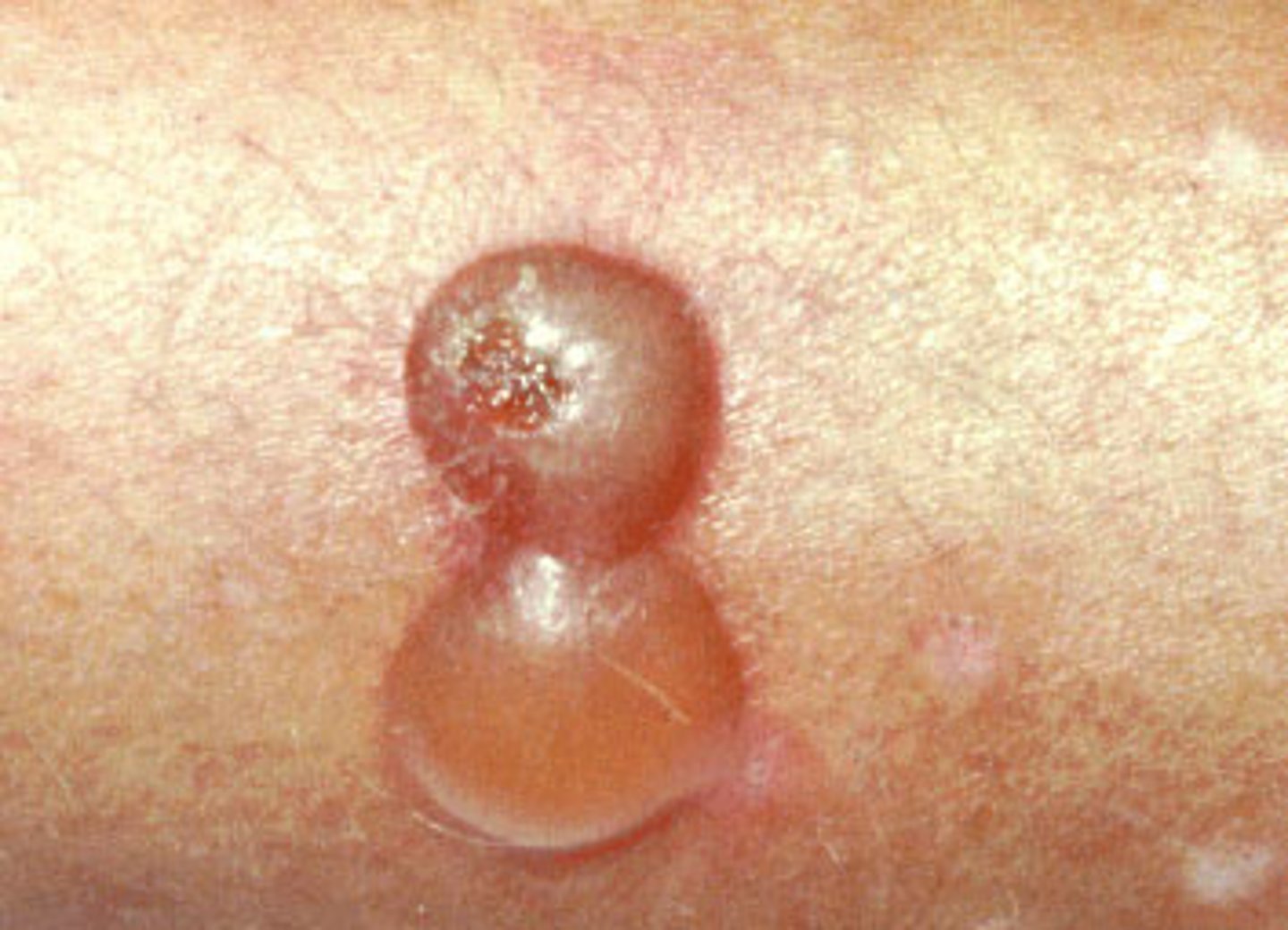
Bulla
Large blister containing watery fluid
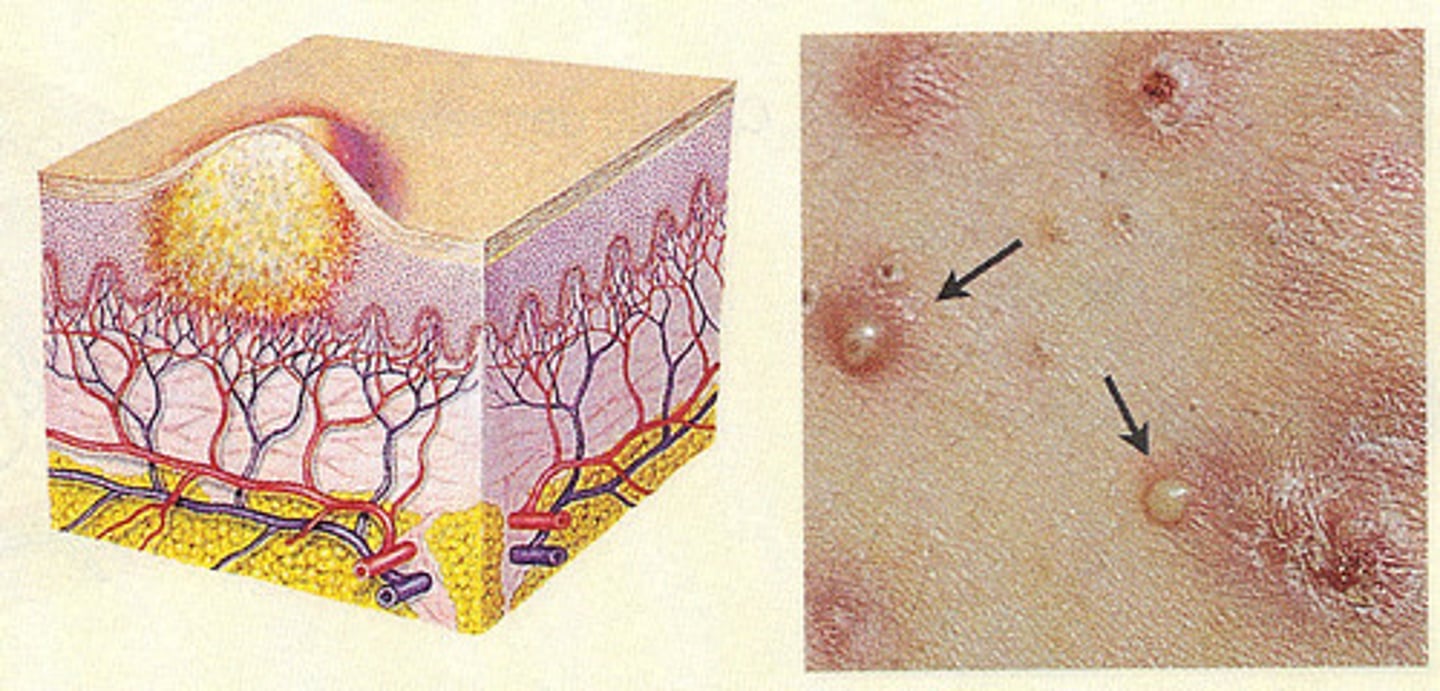
Cyst
sac containing fluid
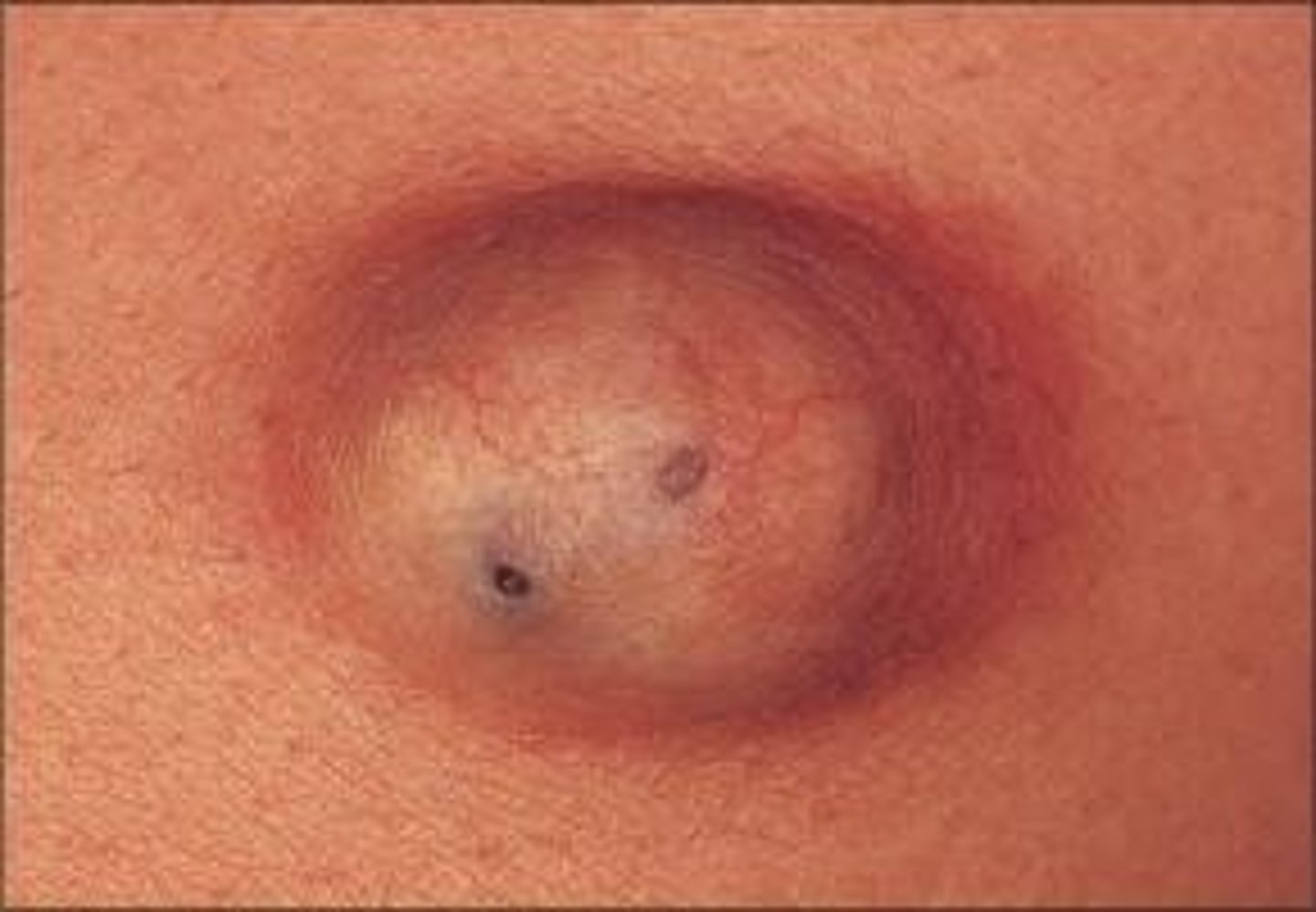
Macule
flat, colored spot on the skin
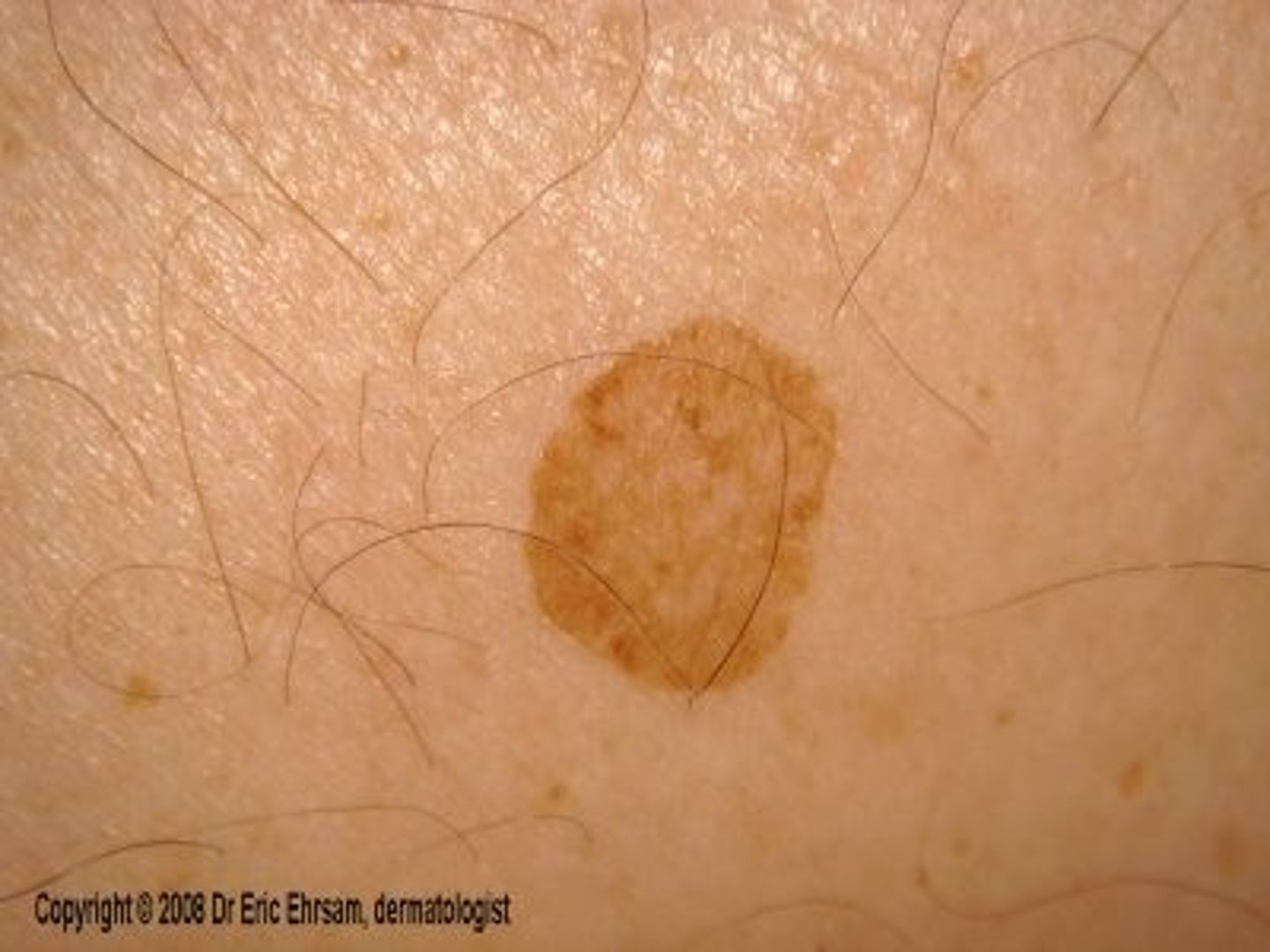
Nodule
solid, round or oval elevated lesion 1 cm or more in diameter
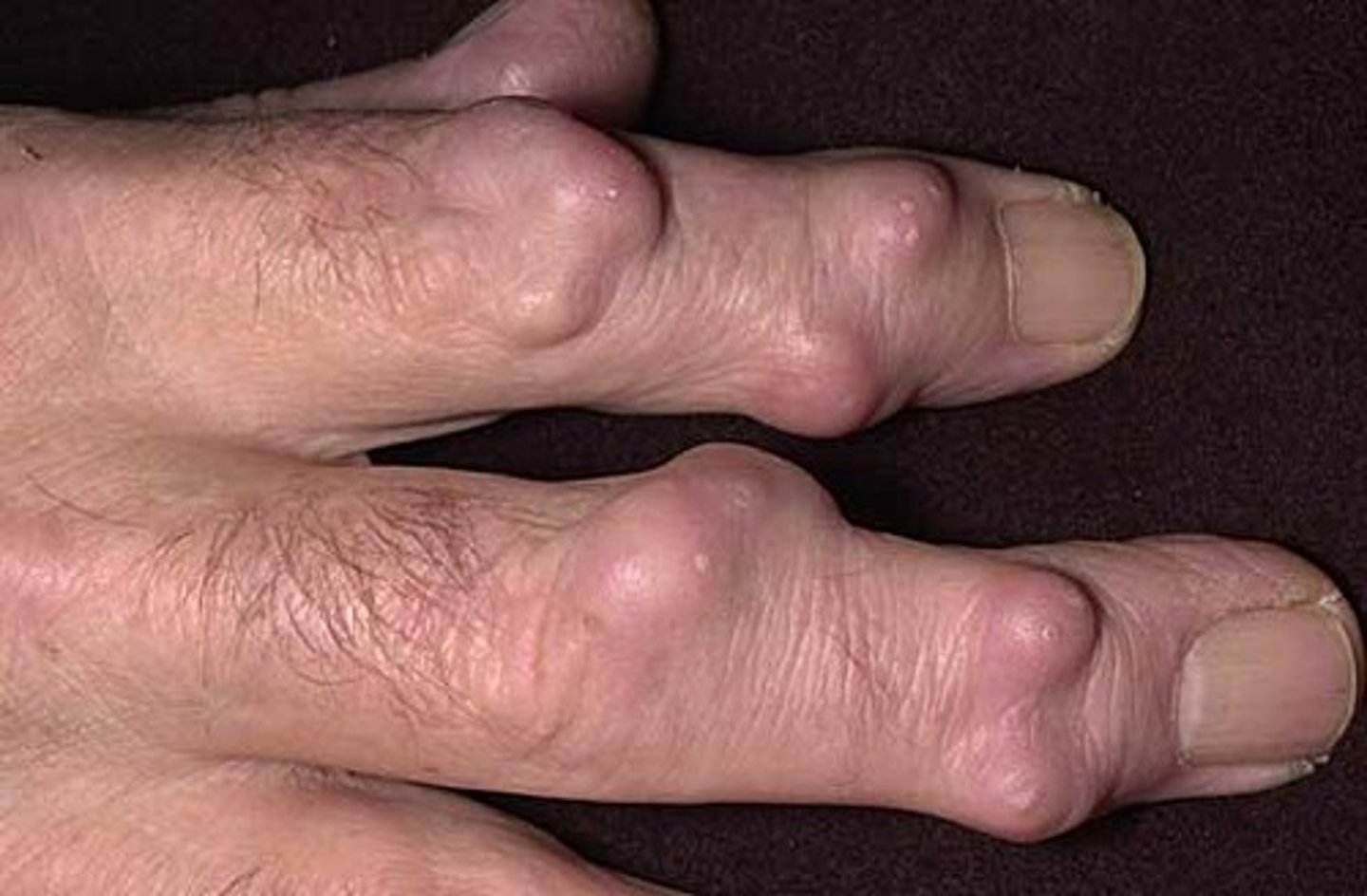
Papule
small, solid skin elevation (pimple)
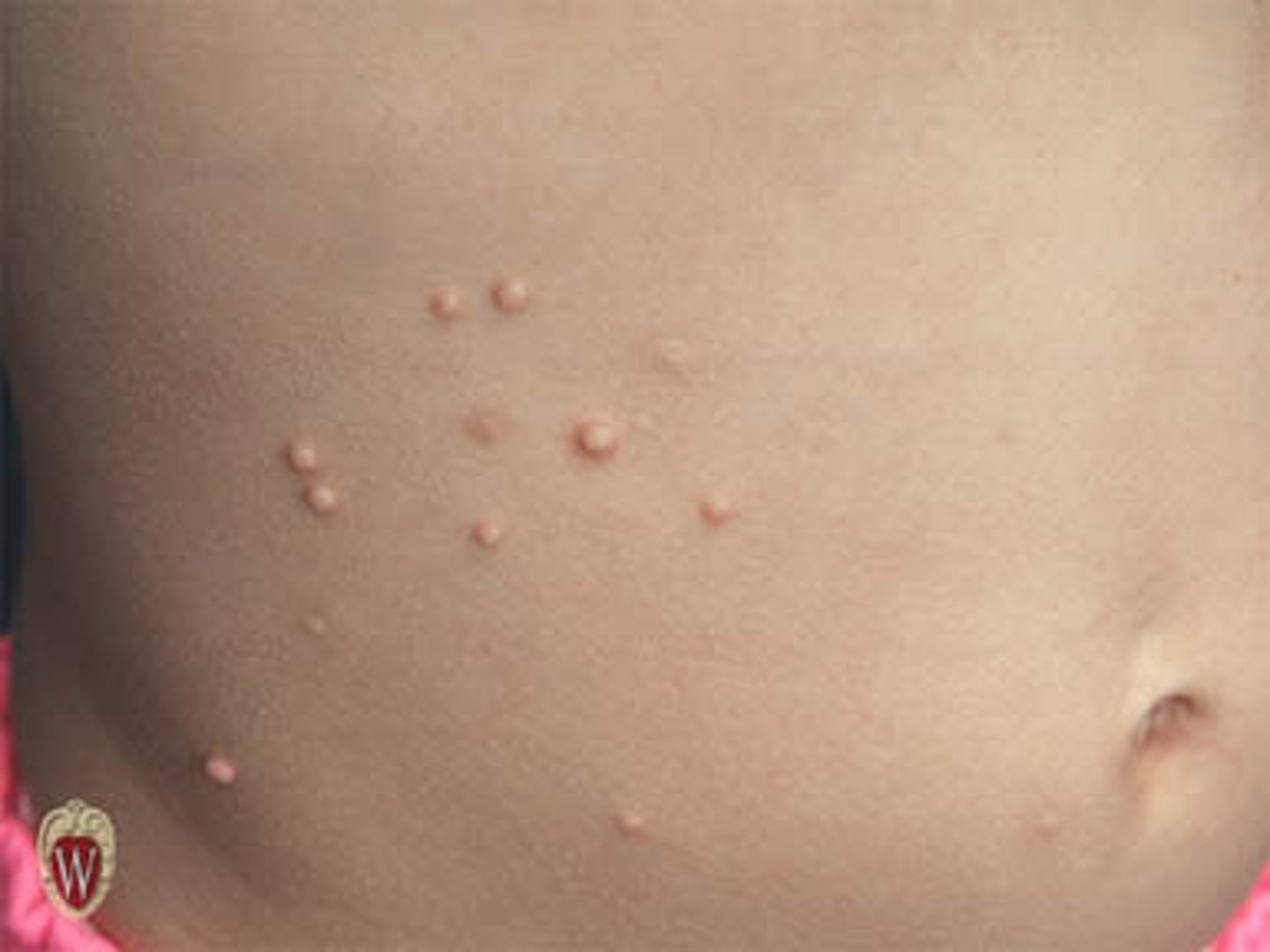
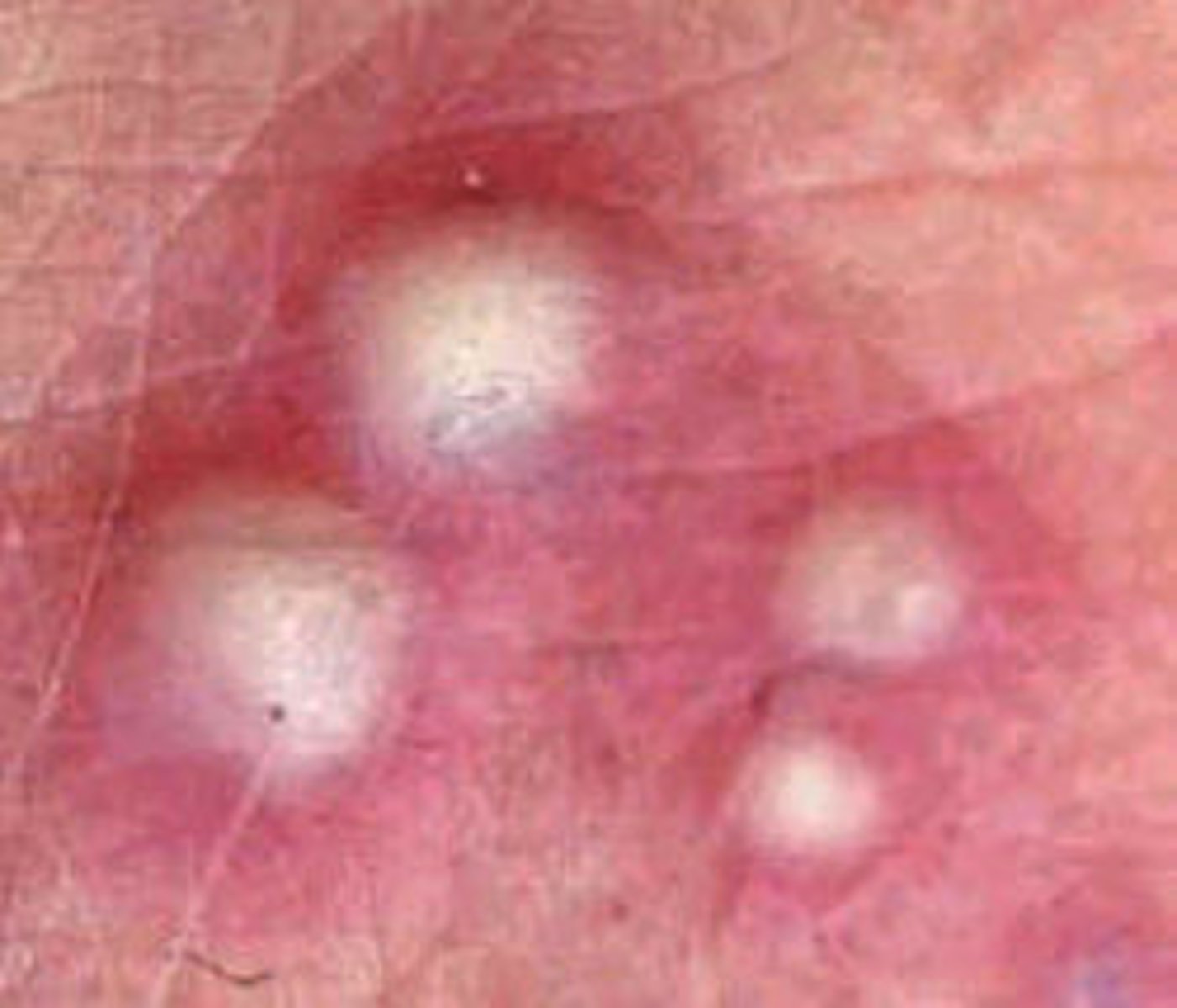
Pustule
Raised, inflamed papule with a white or yellow center containing pus in the top of the lesion referred to as the "head" of the pimple.
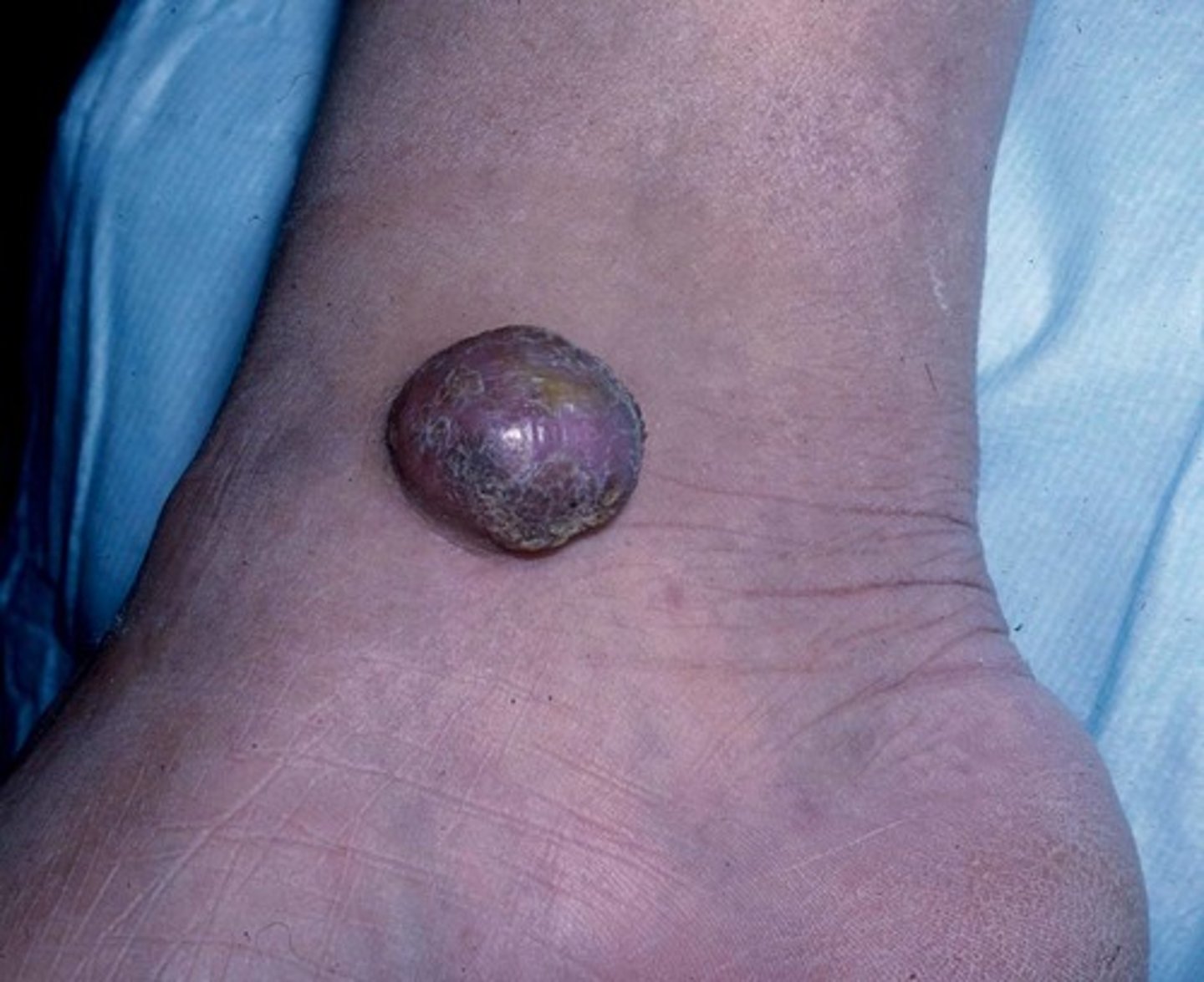
Tumor
A mass of abnormal cells develops when cancerous cells divide and grow uncontrollably.
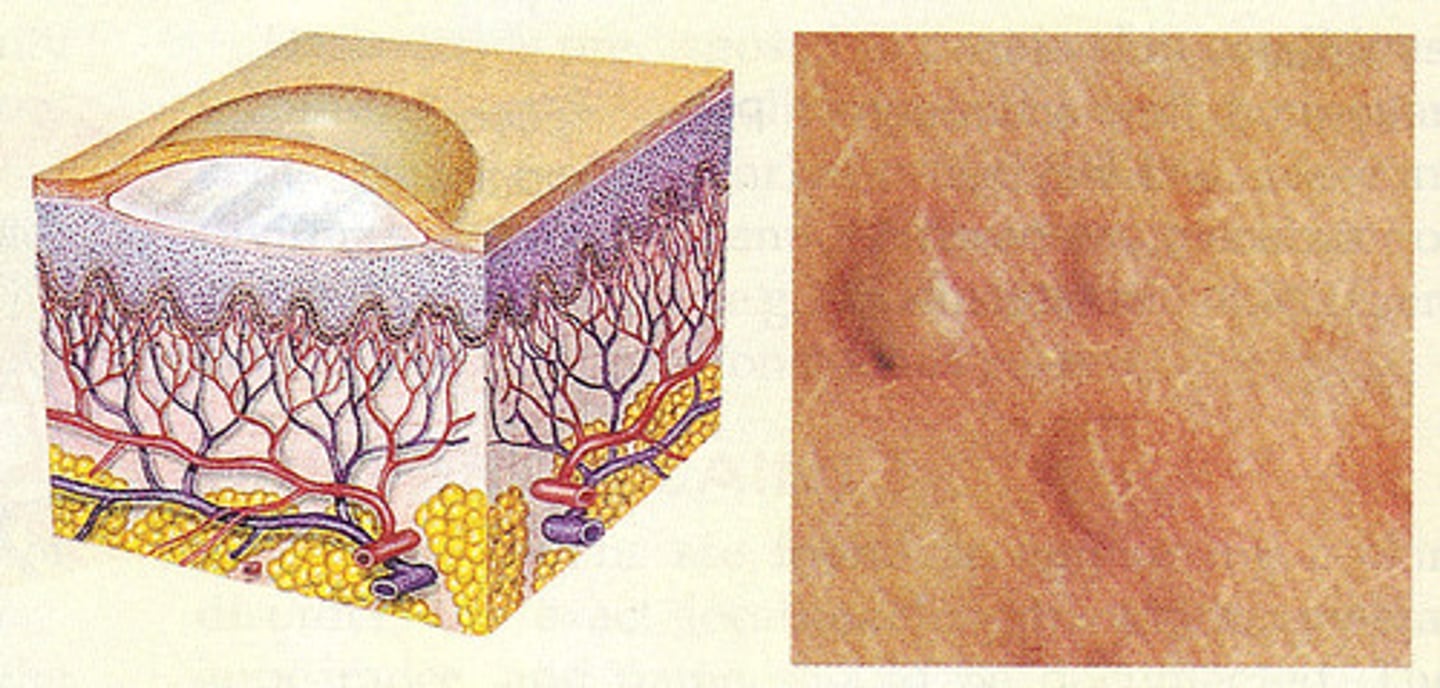
Vesicle
A small blister or sac contains clear fluid lying within or beneath the epidermis.
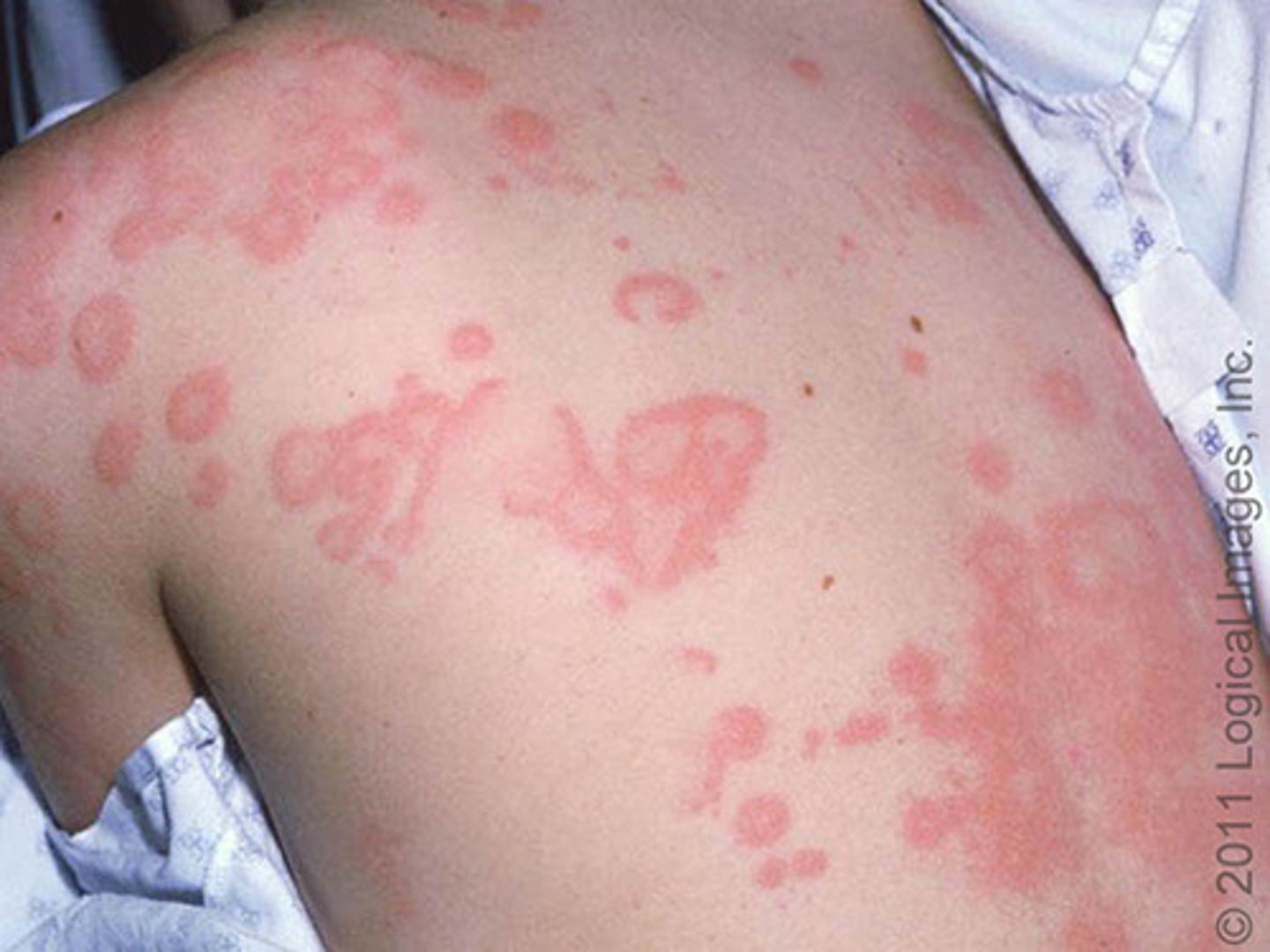
Wheal
the small, round, raised area on the skin that may be accompanied by itching; usually seen in allergic reactions
secondary skin lesions
It is characterized by piles of material on the skin surface, such as a crust or scab, or depressions in the skin surface, such as an ulcer.
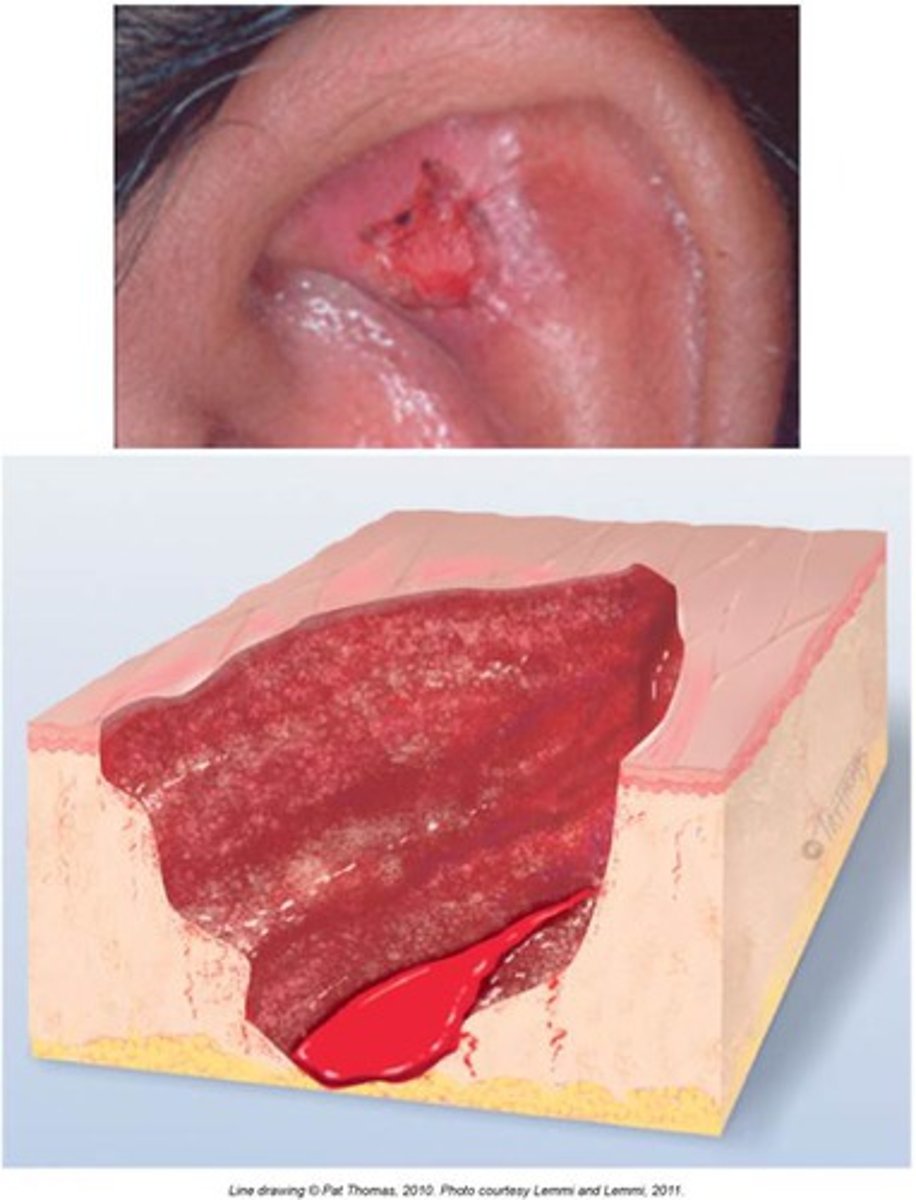
Crust
Is dead cells that form over a wound or blemish while healing; accumulation of sebum and pus, sometimes mixed with epidermal cells.
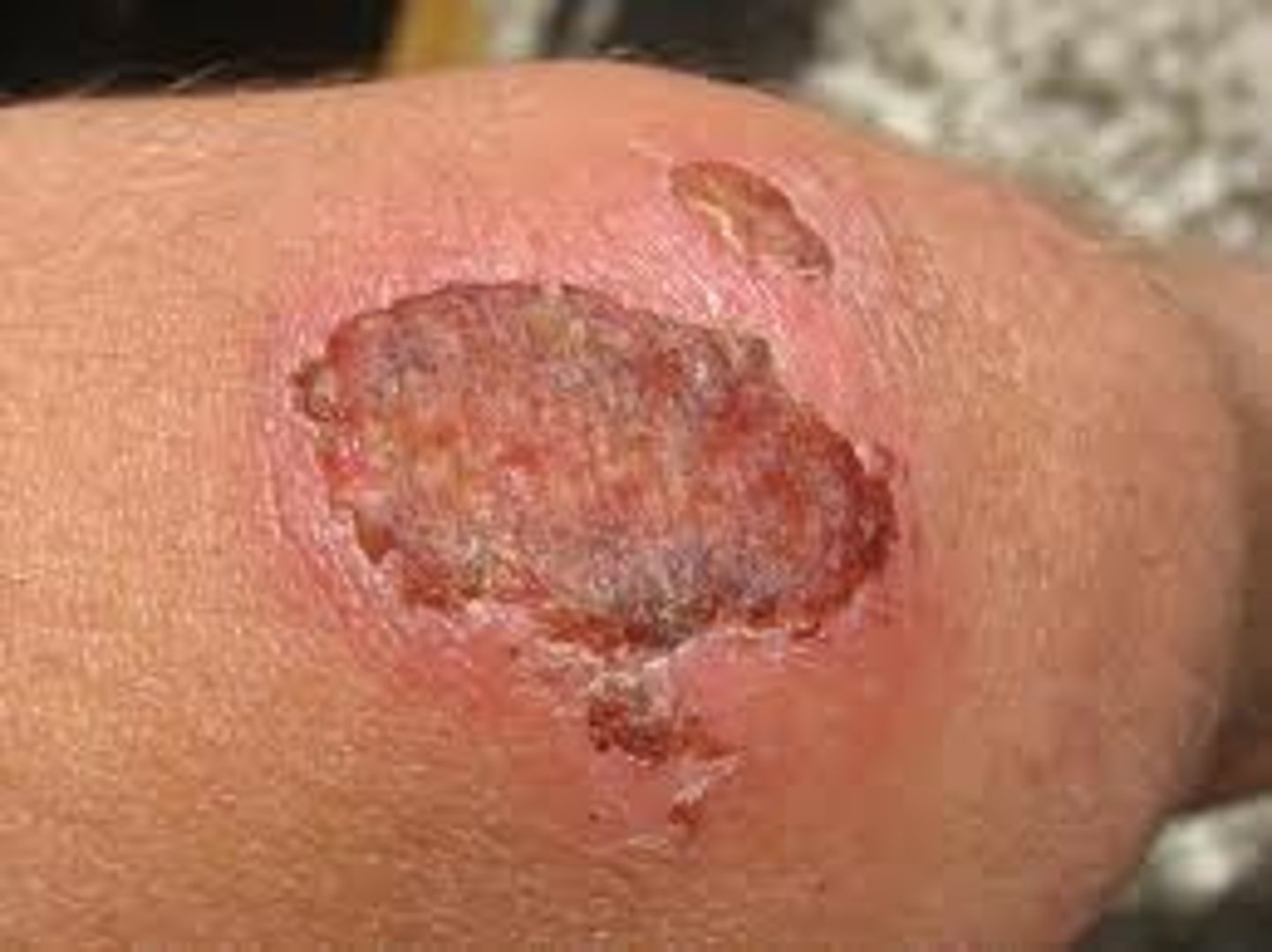
Excoriation
Skin sore or abrasion produced by scratching or scraping
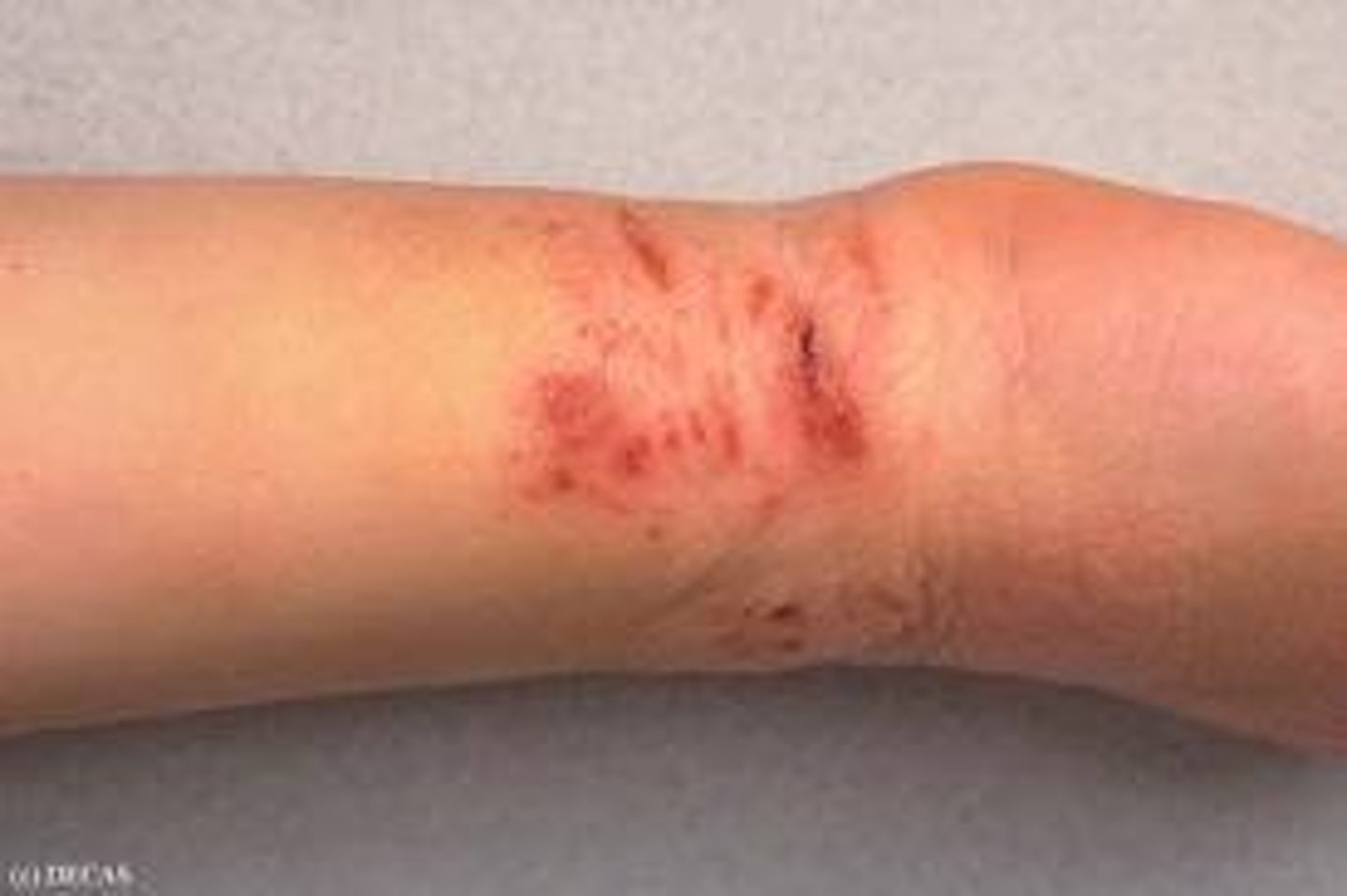
Fissures
is a crack in the skin penetrating into the dermis.
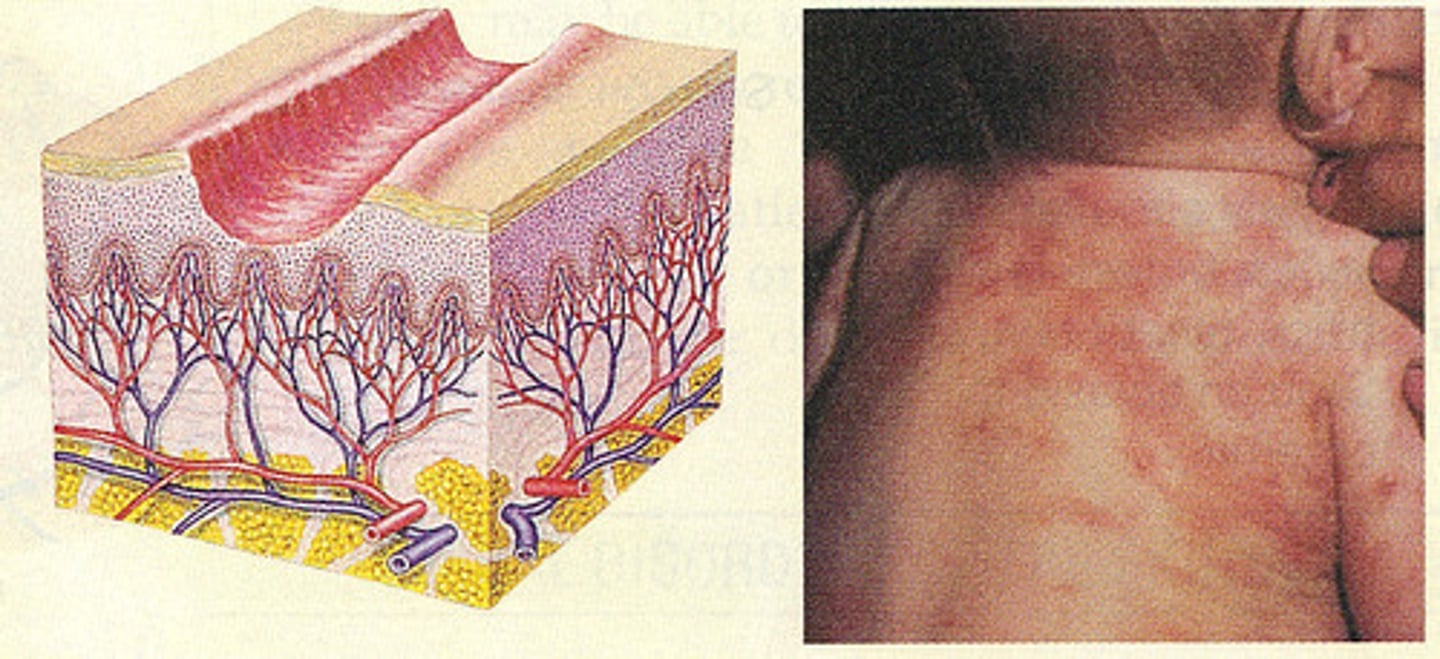
Keloids
raised scar
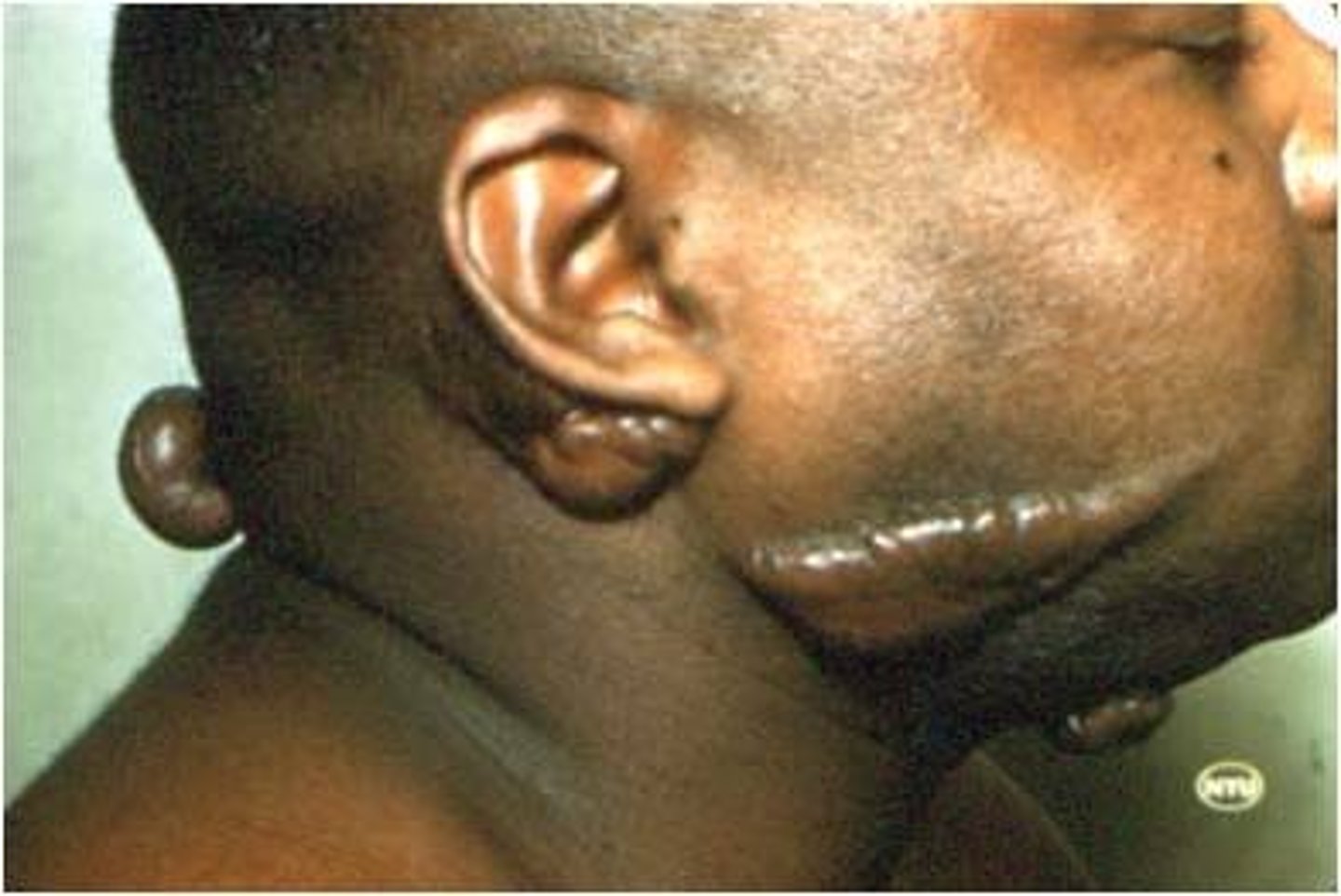
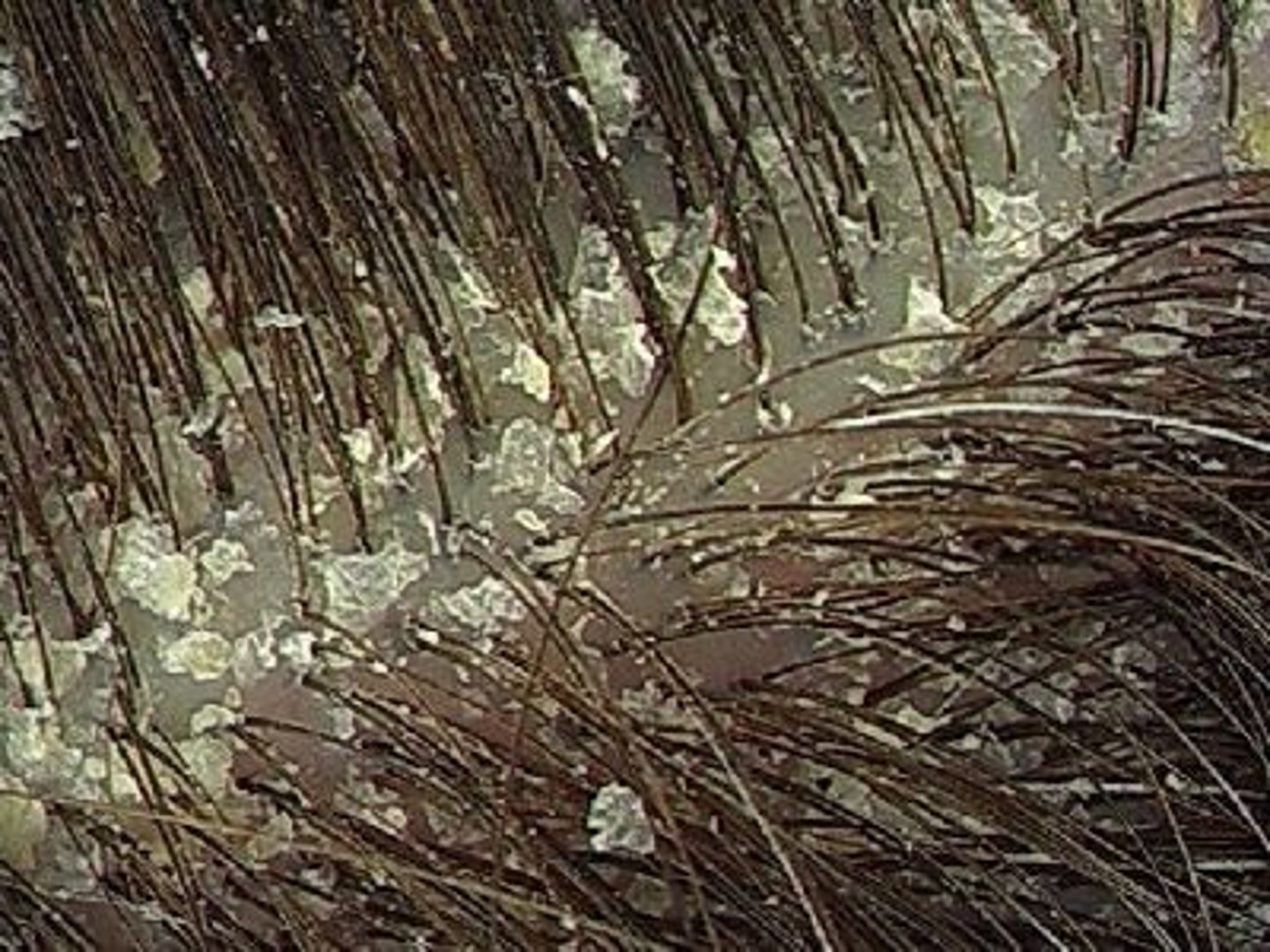
Scale
Thin, dry, or oily plate of epidermal flakes, excessive Dandruff
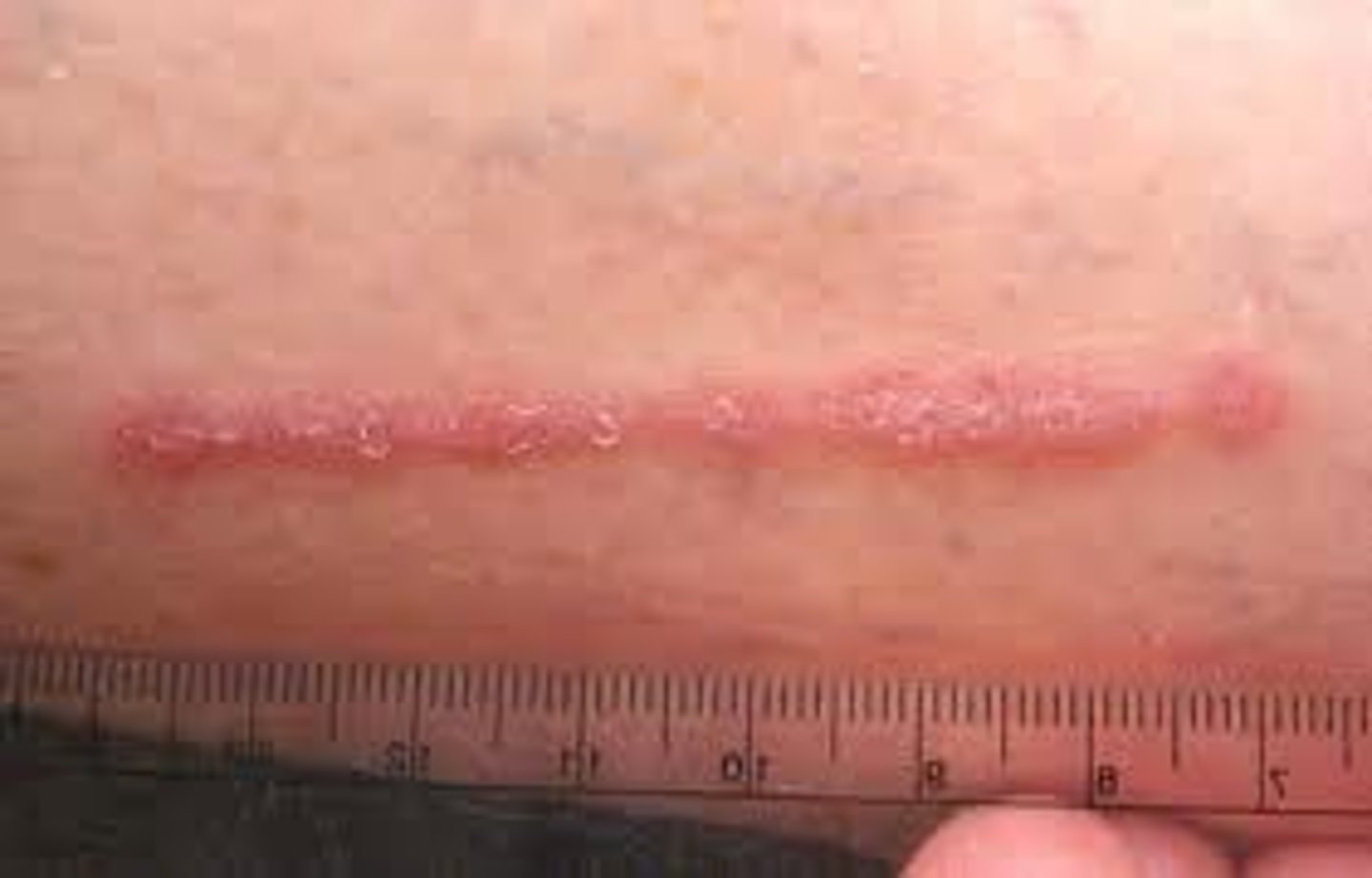
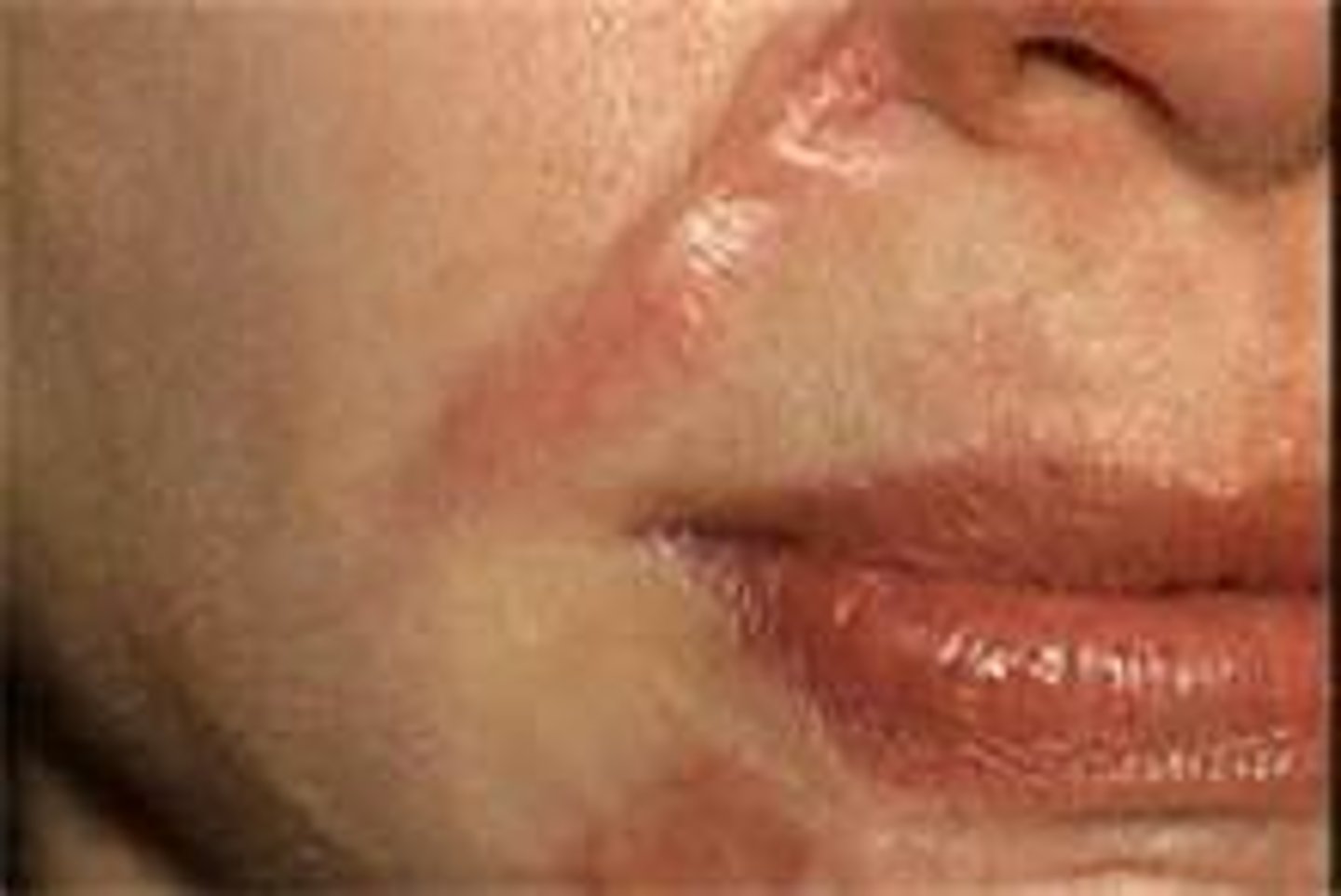
Scar or Cicatrix
Slightly raised or depressed area of the skin that forms as a result of the healing process related to an injury or lesion.
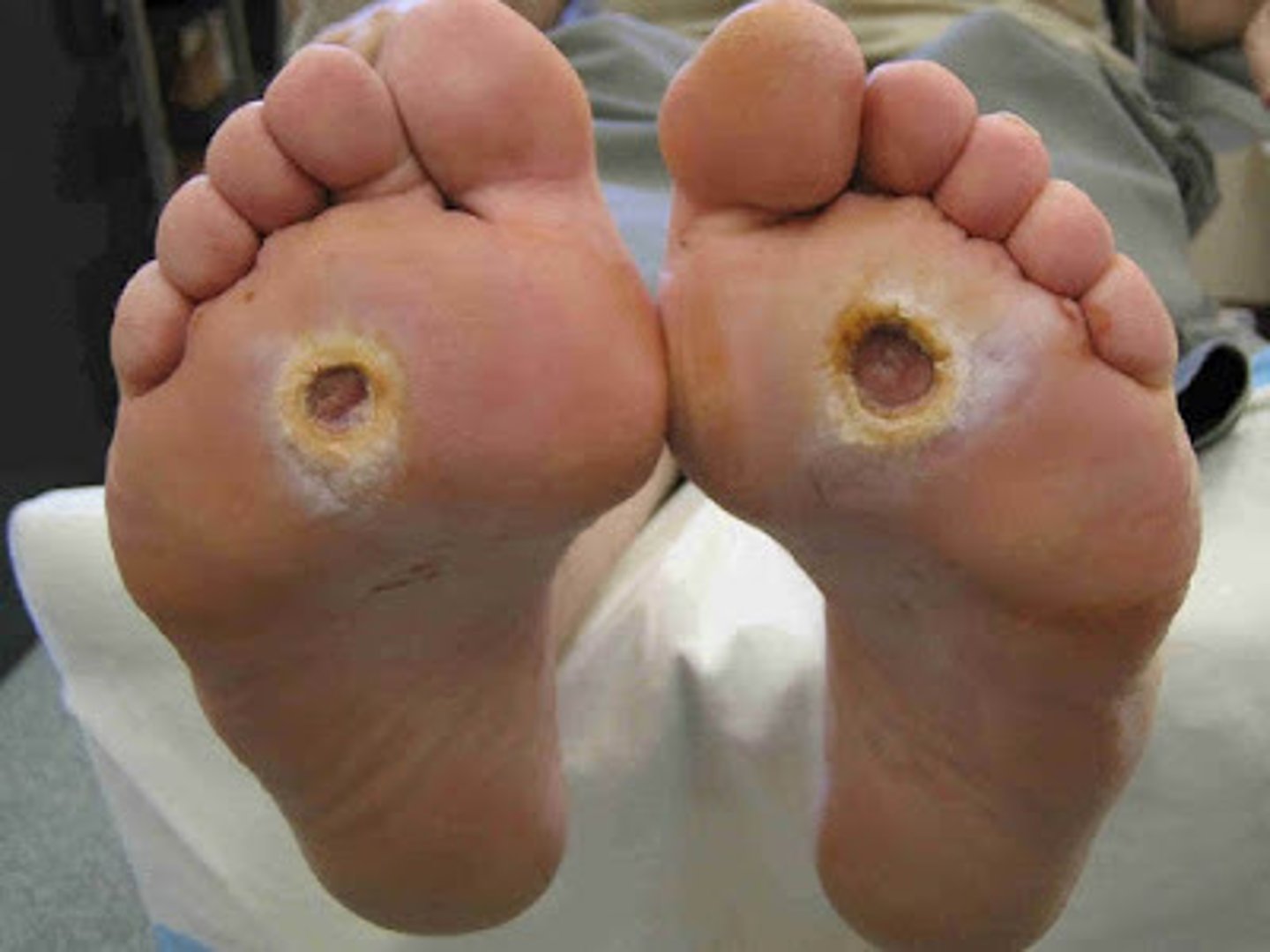
Ulcer
open sore or lesion in the skin or mucous membrane
integumentary system
skin, hair, nails, sweat glands, sebaceous glands
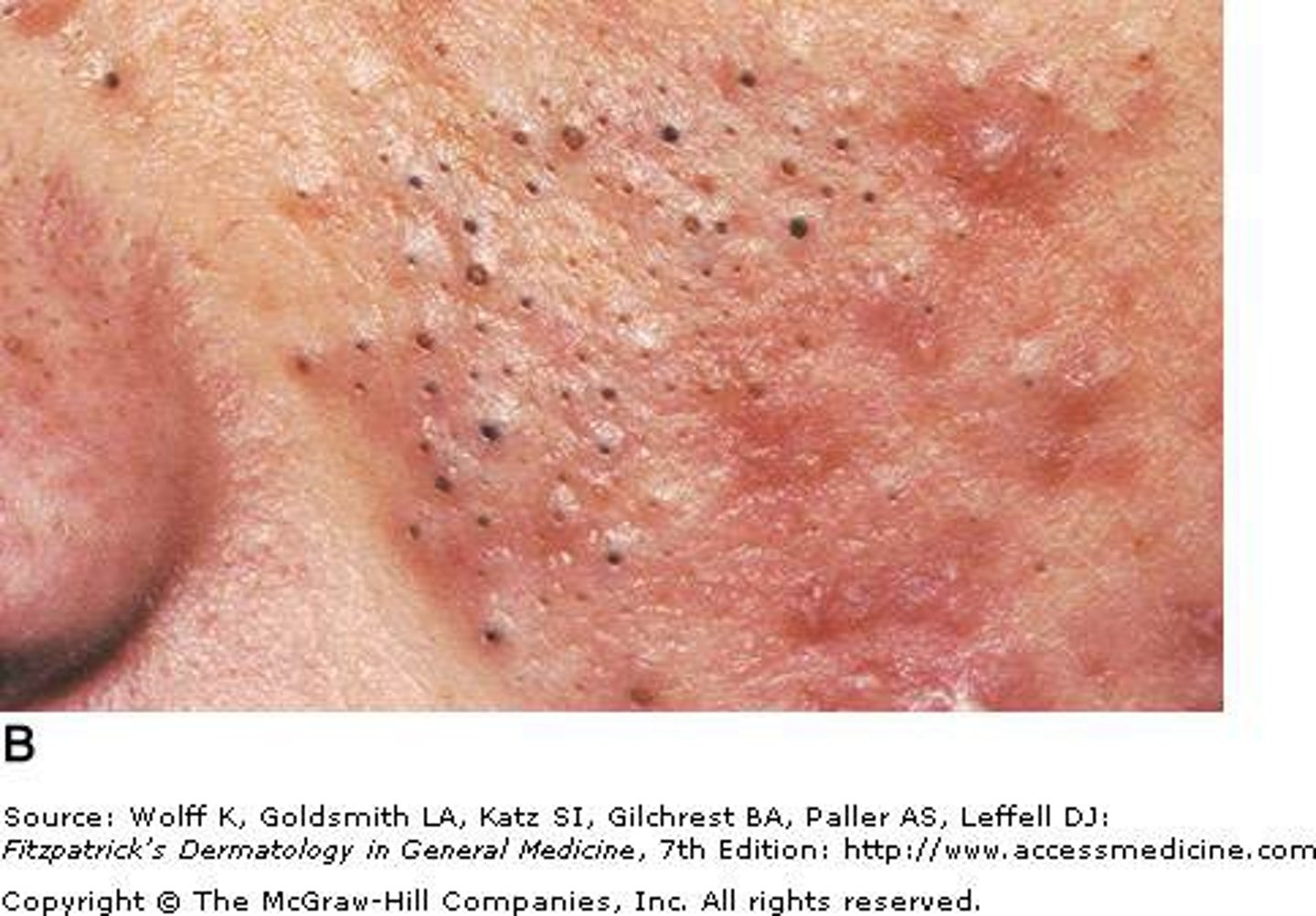
open comedo
comedones, Also known as a blackhead; hair follicle filled with keratin and sebum.
closed comedo
comedones, Also known as a whitehead, a follicle is impacted with dead cells and solidified sebum, appearing as a small white bump just under the skin's surface.
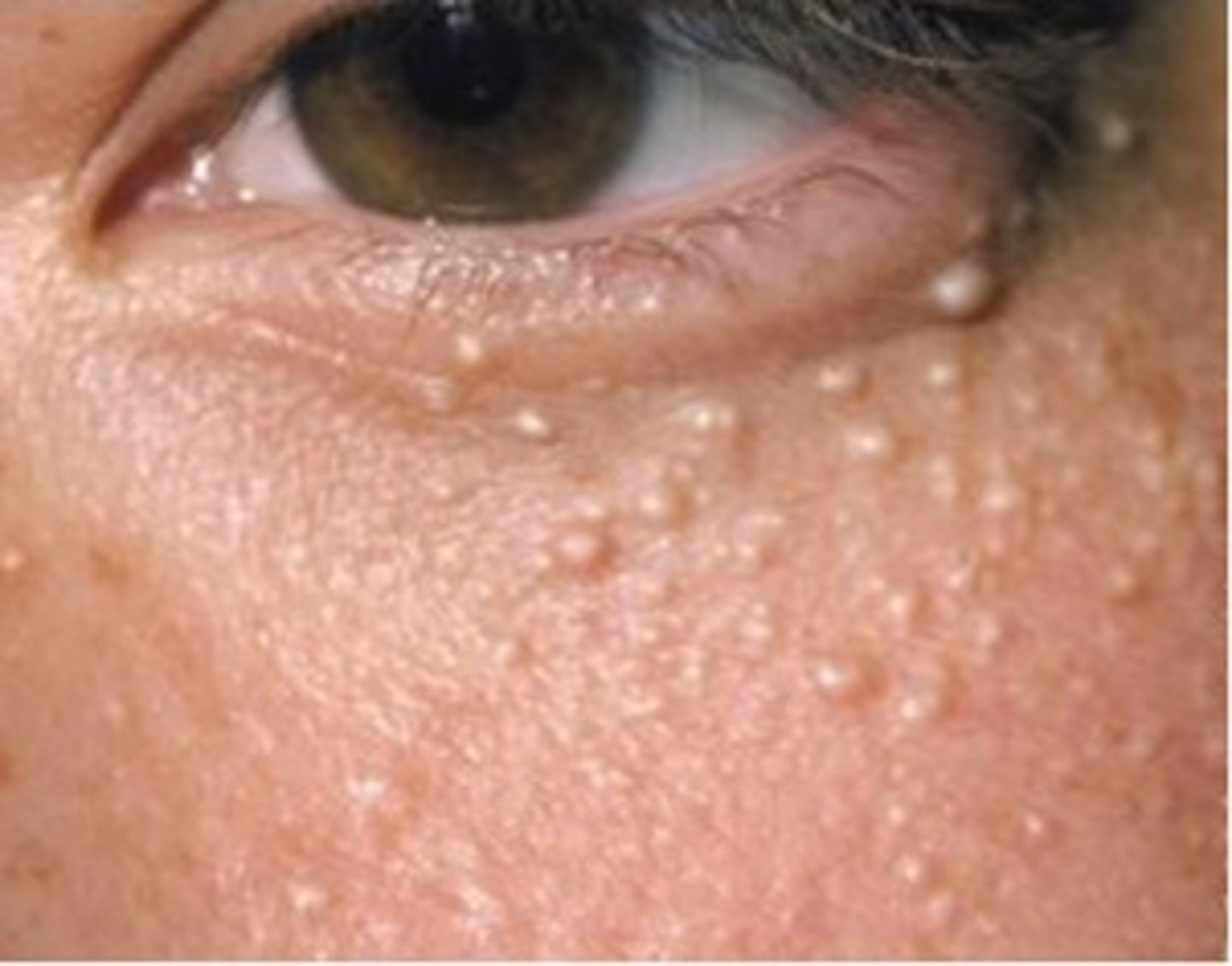
Milia
Benign, keratin-filled cysts that can appear just under the epidermis and have no visible opening.
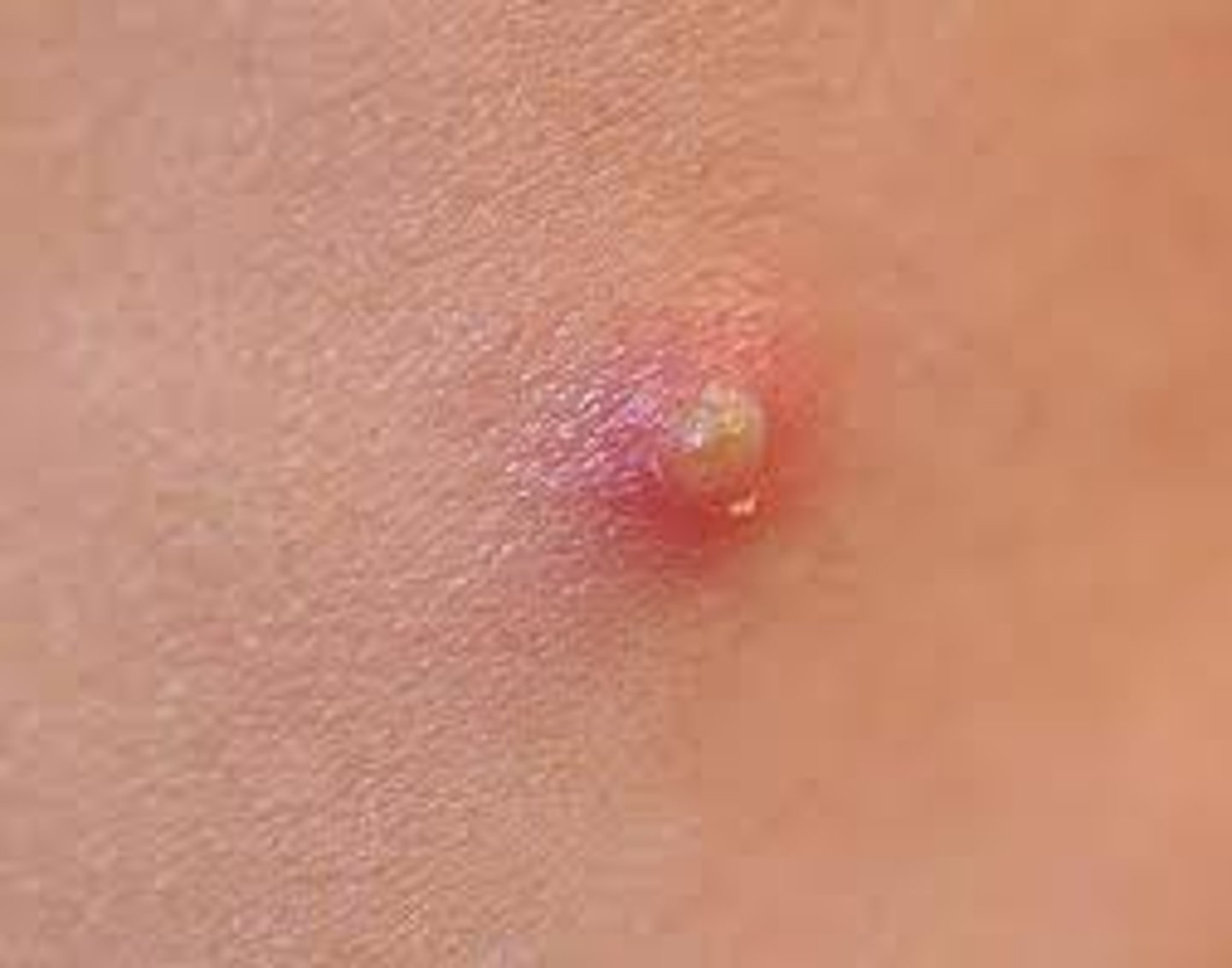
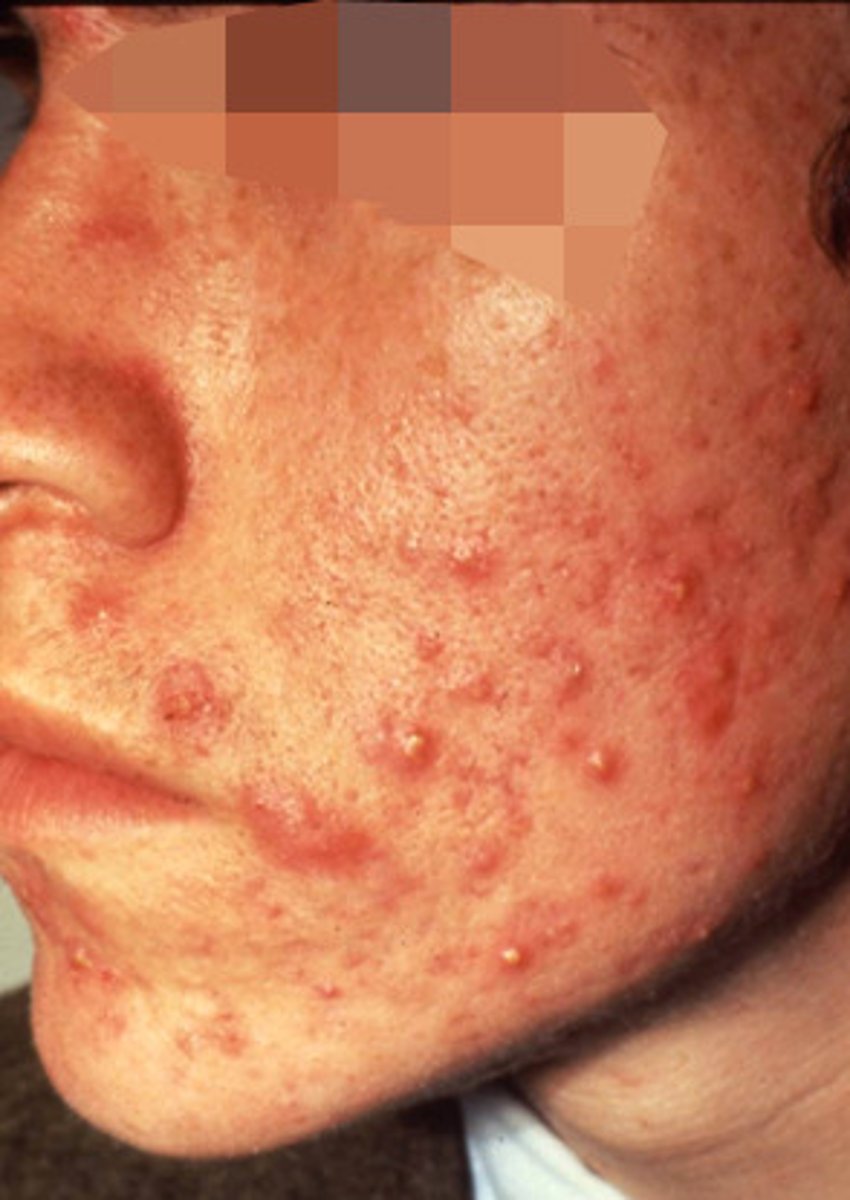
Acne
inflammatory disease of the skin involving the sebaceous glands and hair follicles
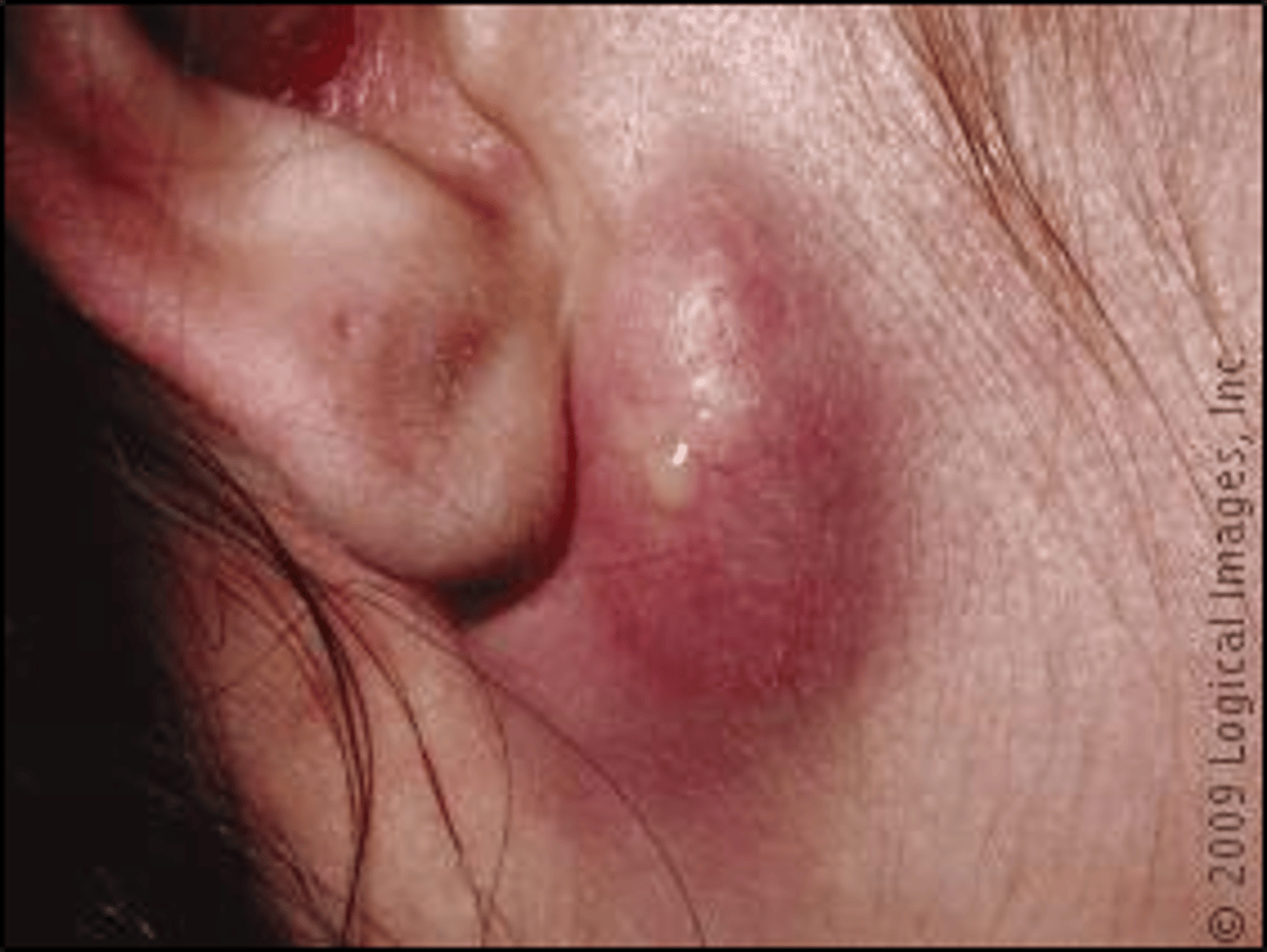
sebaceous cyst
Large protruding pocket like lesion filled with sebum
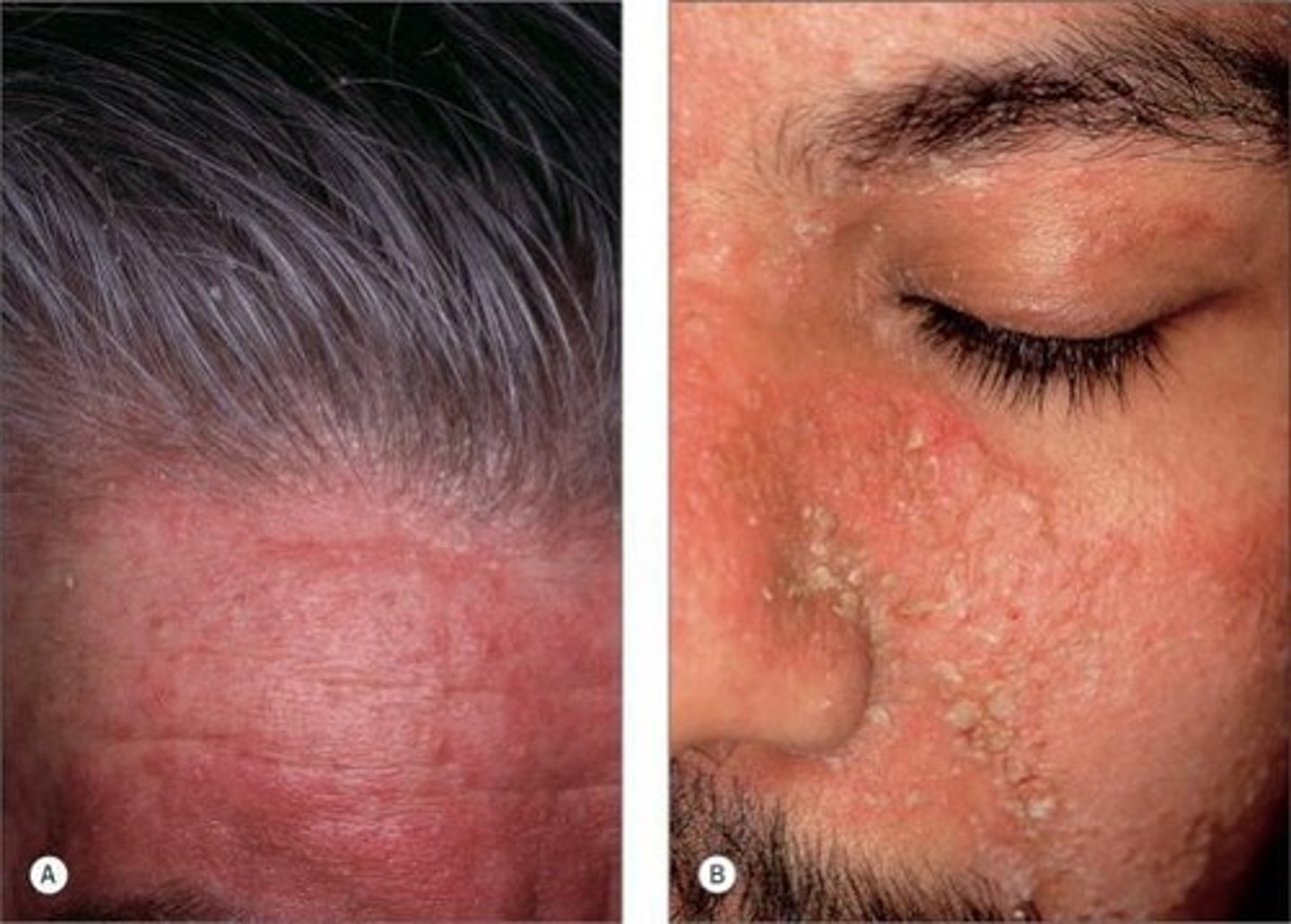
seborrheic dermatitis
Skin condition caused by an inflammation of the sebaceous glands. It is often characterized by redness, dry or oily scaling, crusting, and itchiness.
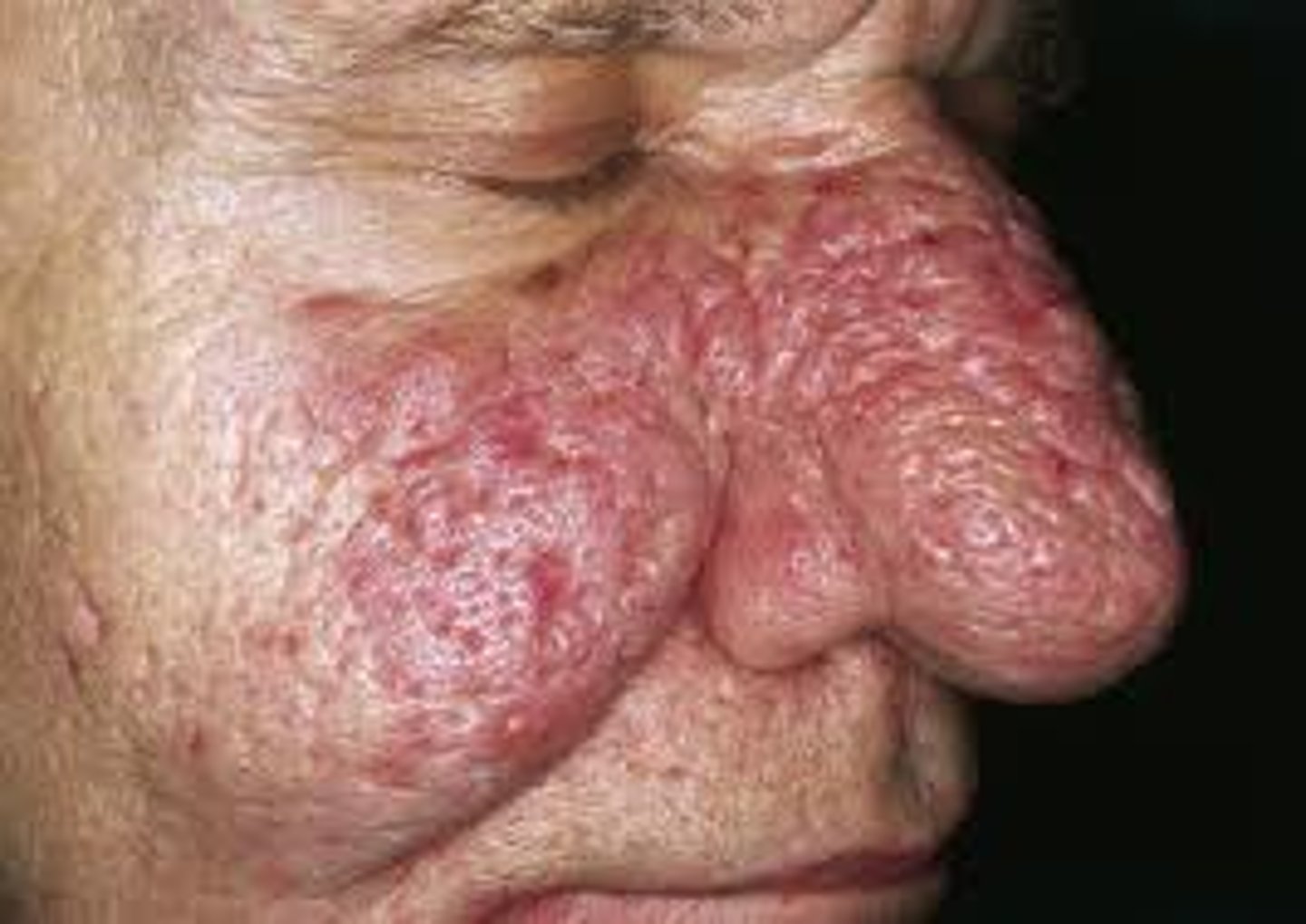
Rosacea
A chronic condition that appears primarily on the cheeks and nose, and is characterized by flushing (redness), telangiectasis (distended or dilated surface blood vessels), and in some cases, the formation of papules and pustules.
anhidrosis
lack of sweating

Bromidrosis
Foul-smelling perspiration caused by the yeast and bacteria that break down the sweat on the surface of the skin

Hyperhidrosis
excessive sweating

Miliaria rubra
known as prickly heat, an acute inflammatory disorder of the sweat glands, characterized by the eruption of small red vesicles and accompanied by burning, itching skin.
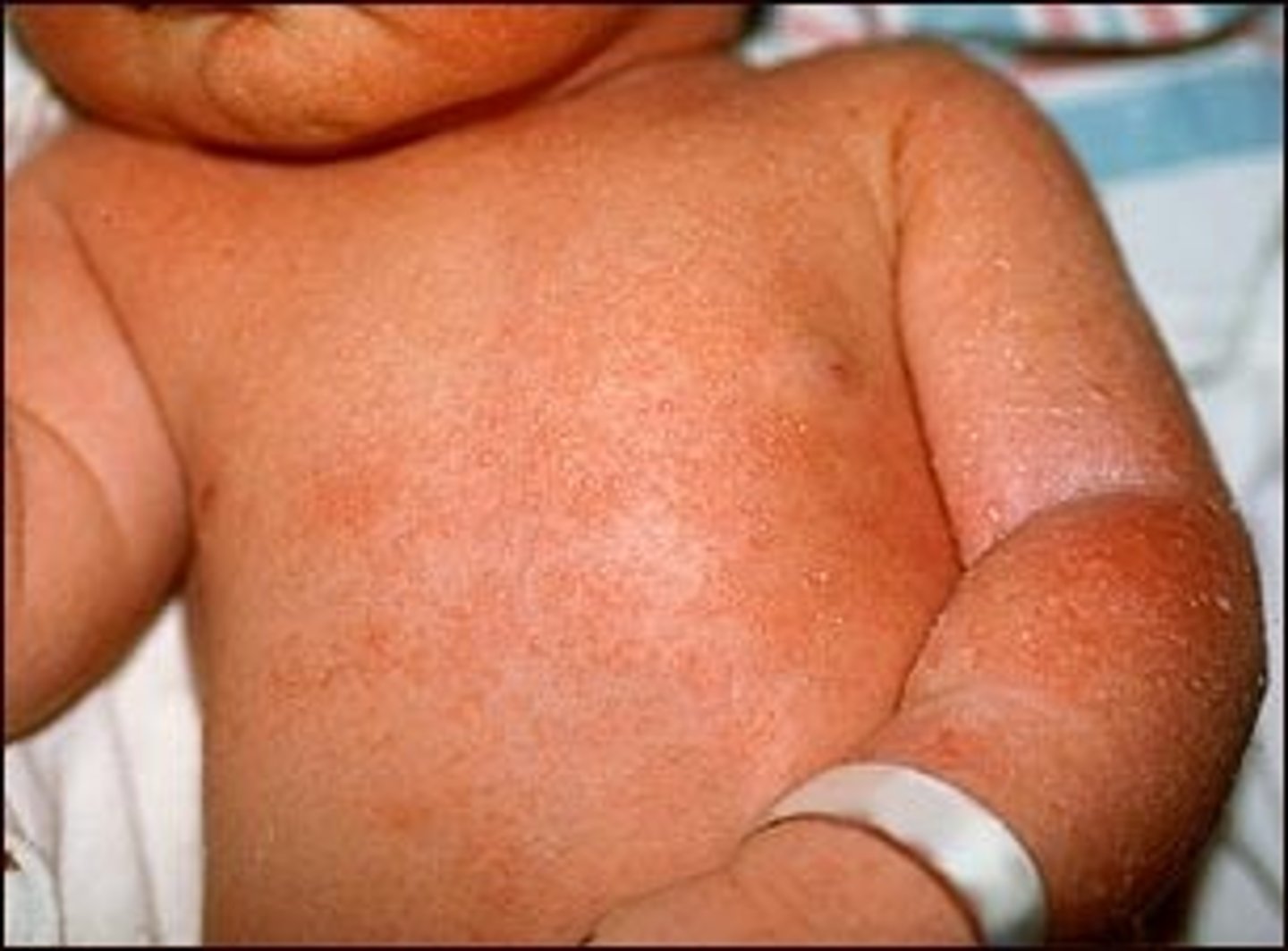
Conjunctivitis (pink eye)
Infection of the outer lining of the eye, known as the conjunctiva
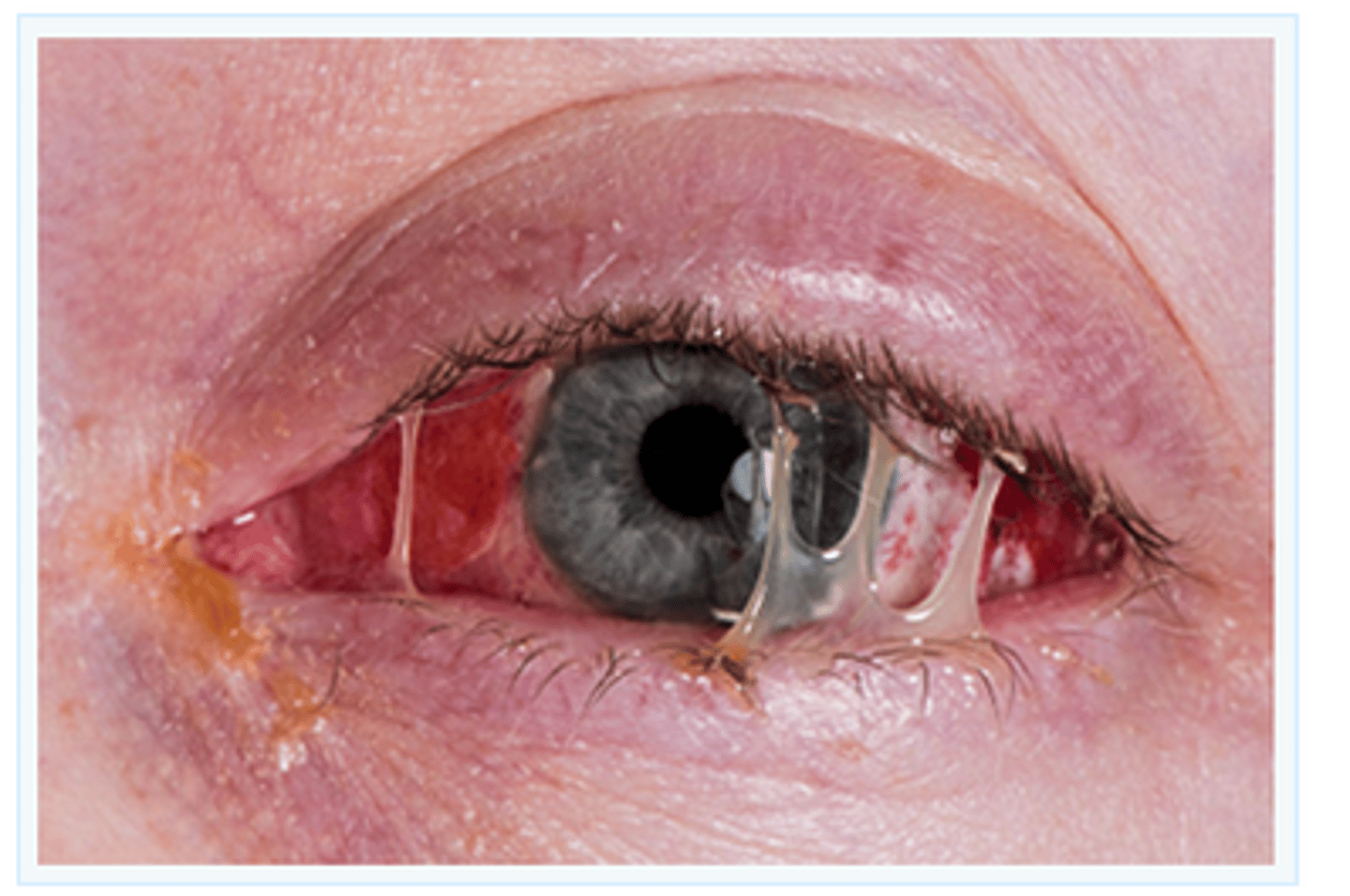
dermatitis
inflammation of the skin
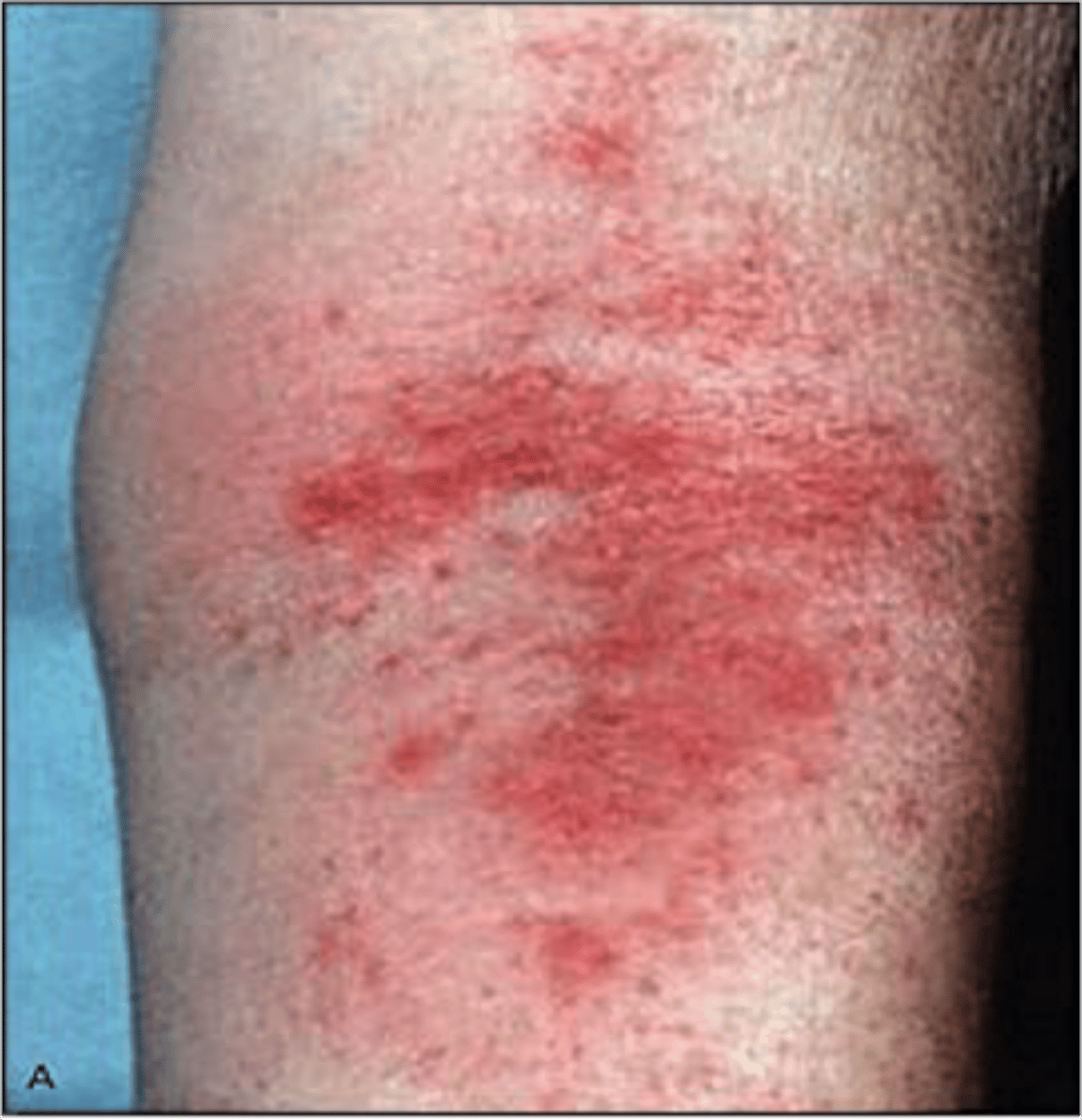
Eczema
noninfectious, inflammatory skin disease characterized by redness, blisters, scabs, and itching
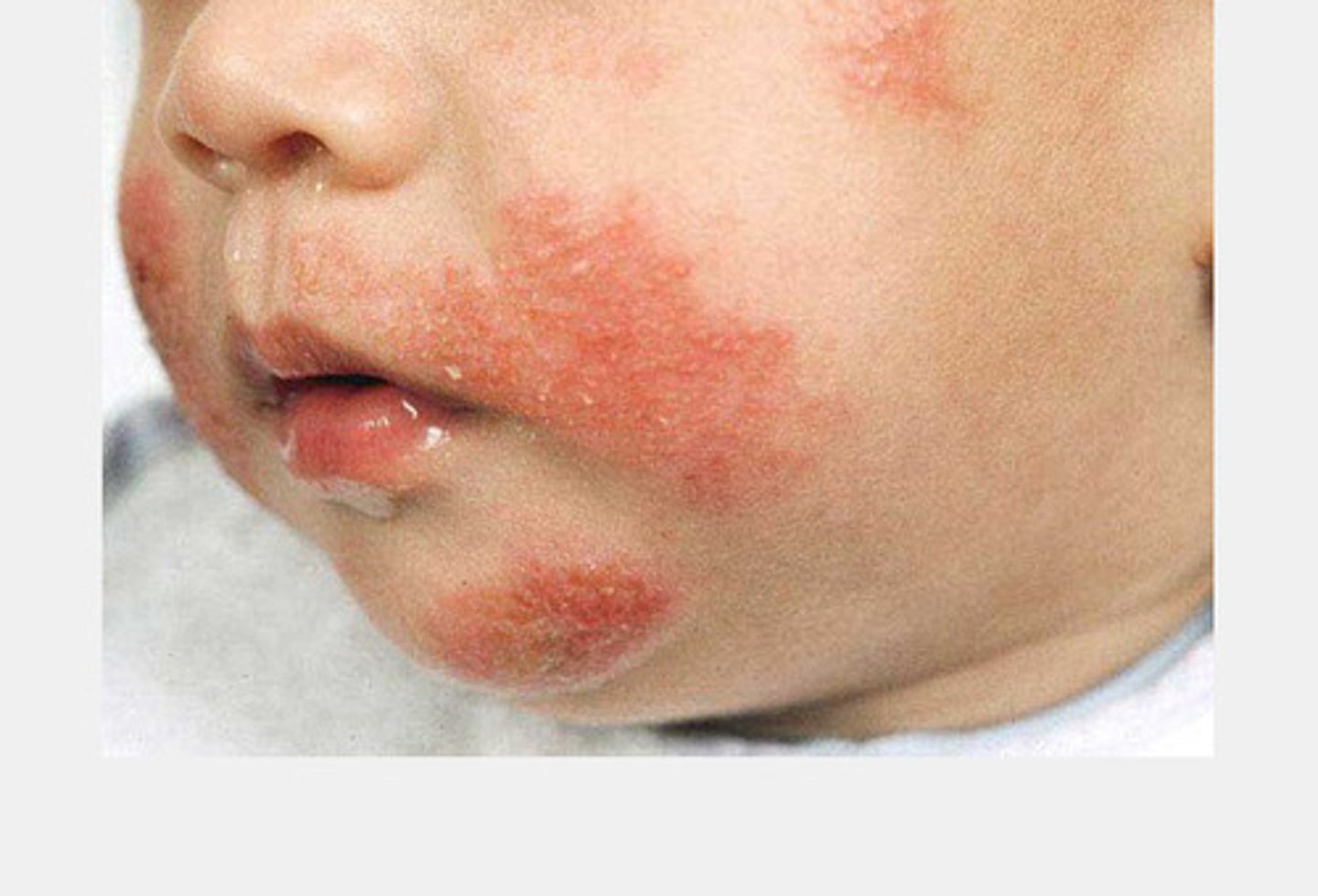
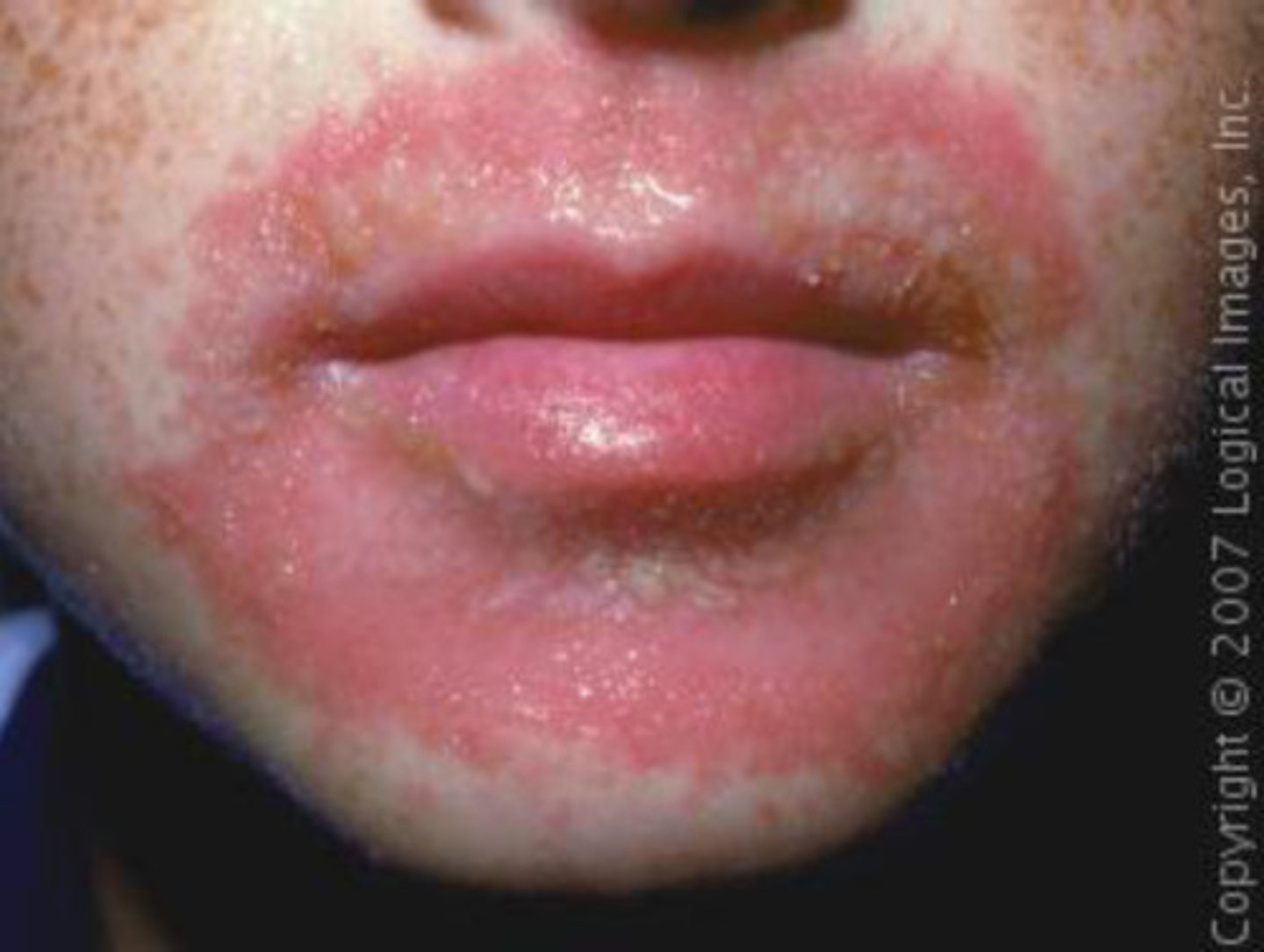
Herpes Simples
"cold sores"; clear vesicles with red base that evolve into pustules, usually at lip-skin junction
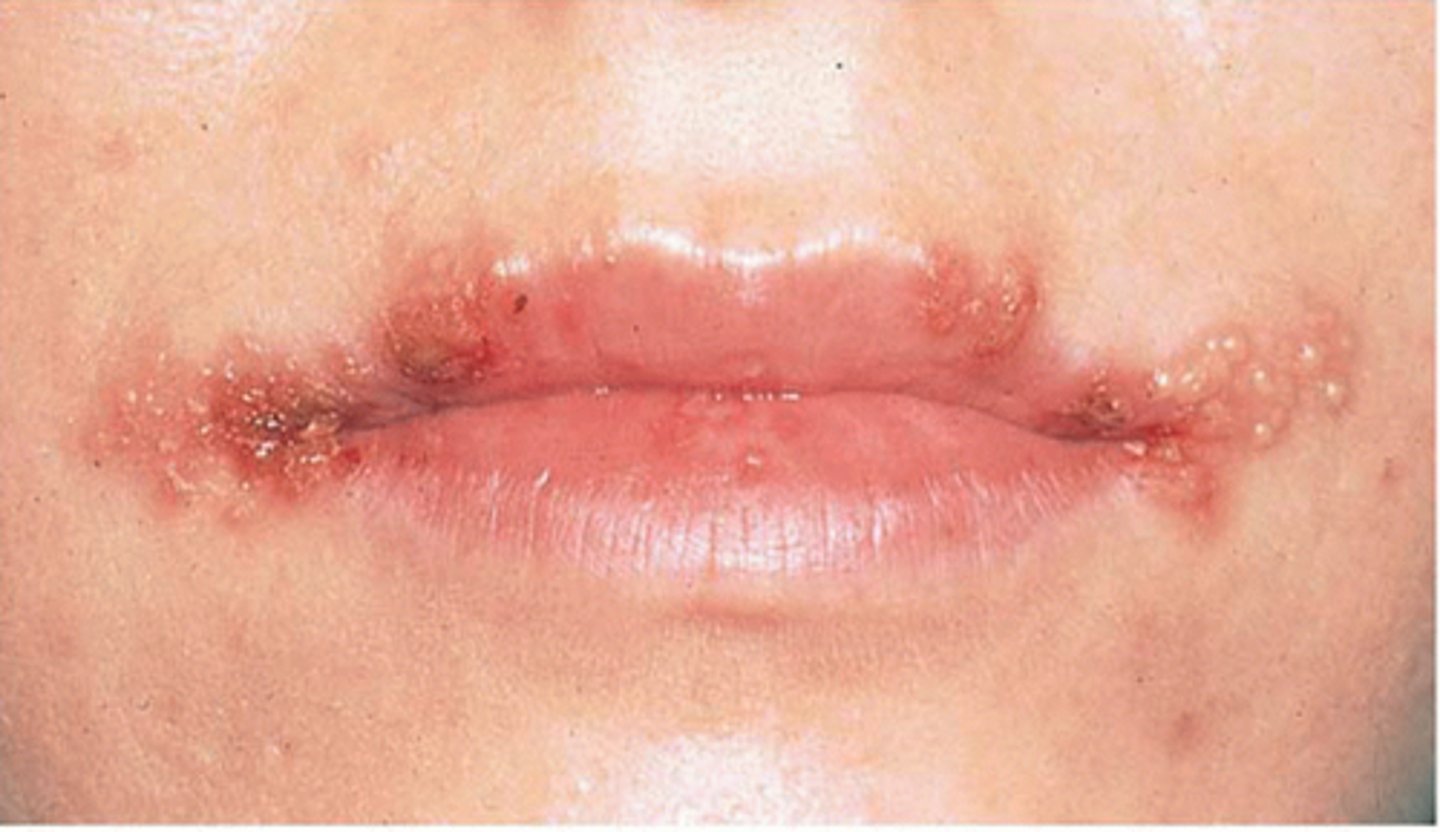
Impetigo
Bacterial skin infection characterized by isolated pustules that become crusted and rupture
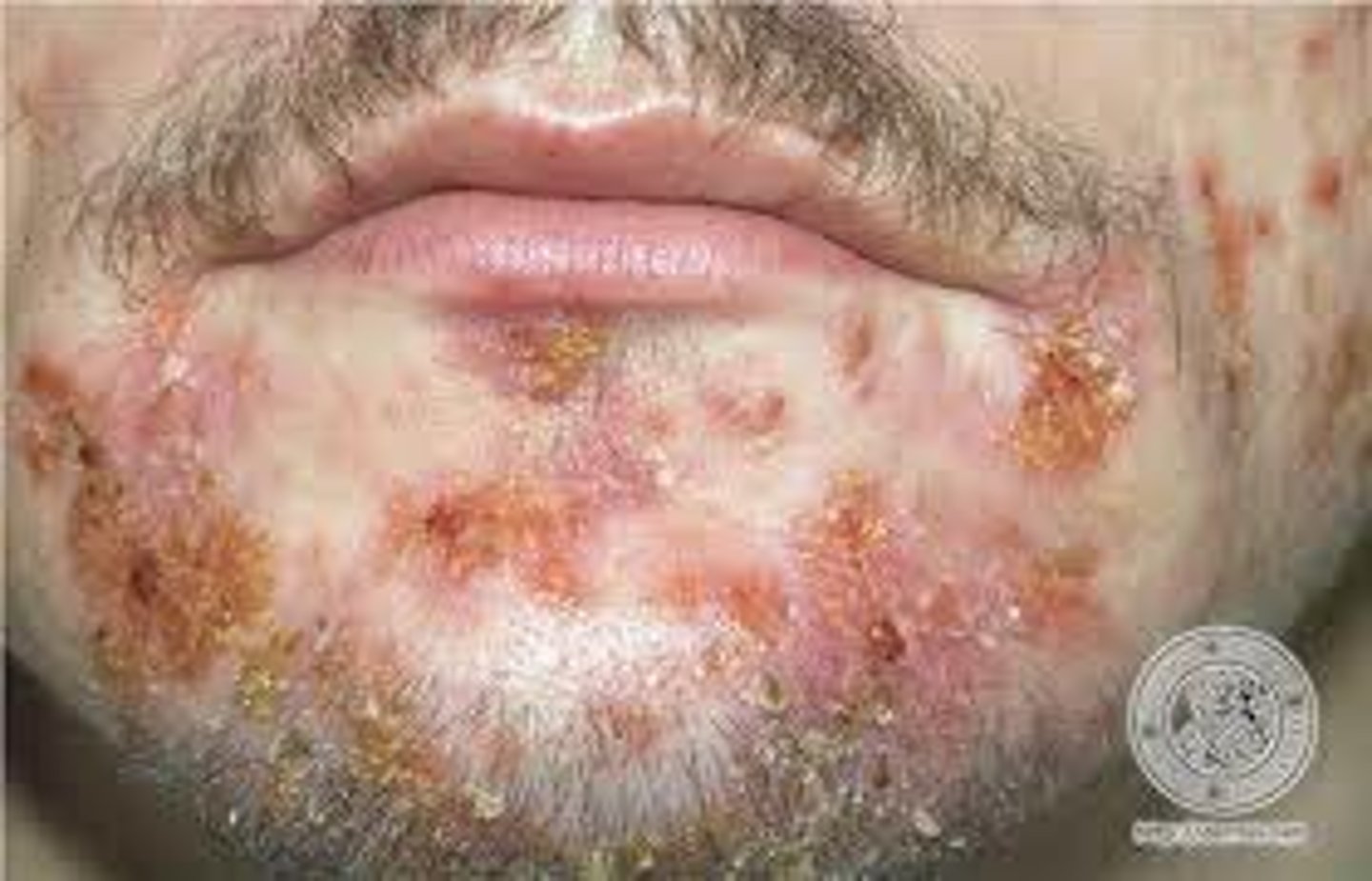
Psoriasis
chronic, recurrent dermatosis marked by itchy, scaly, red plaques covered by silvery gray scales
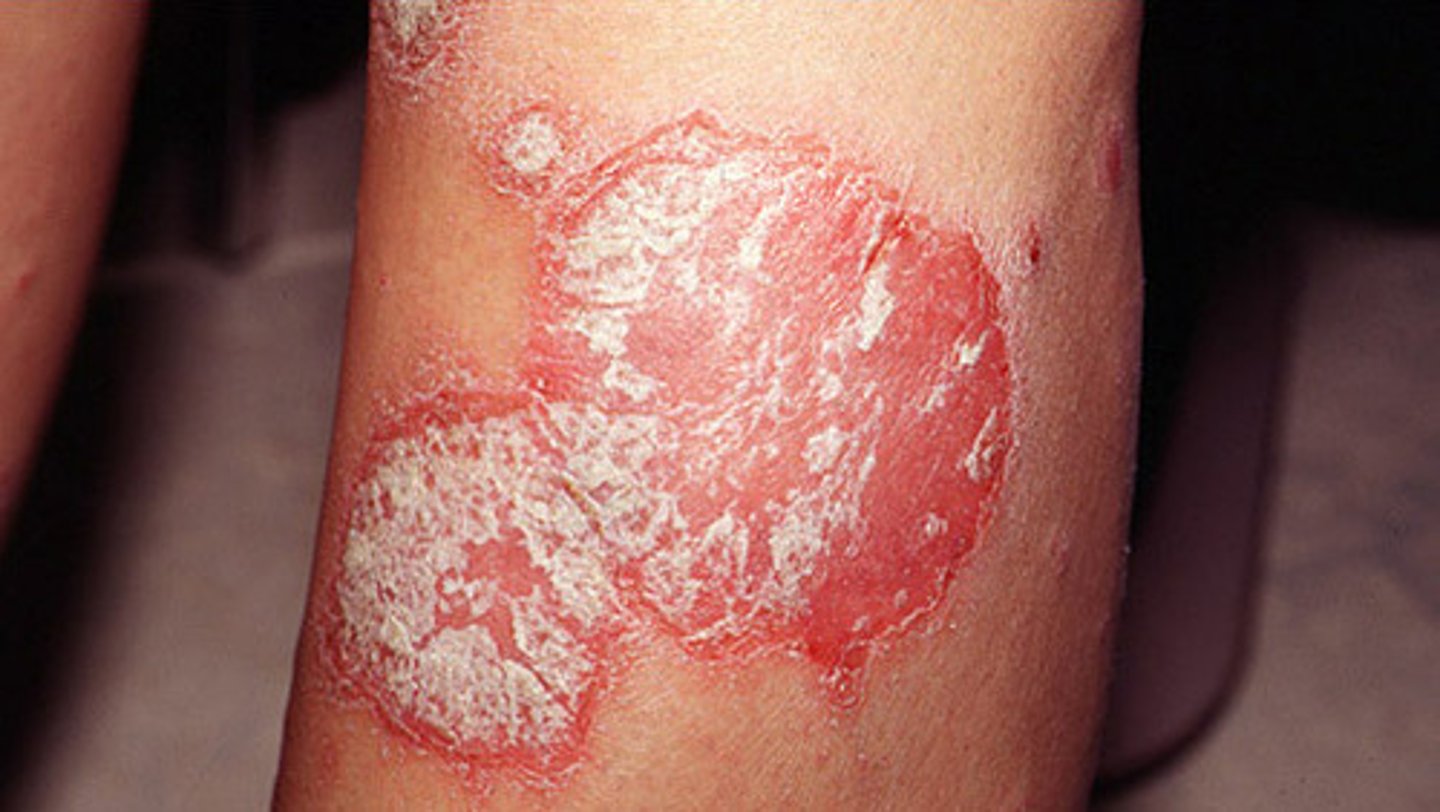
Hyperpigmentation
Darker than normal pigmentation, appearing as dark splotches.
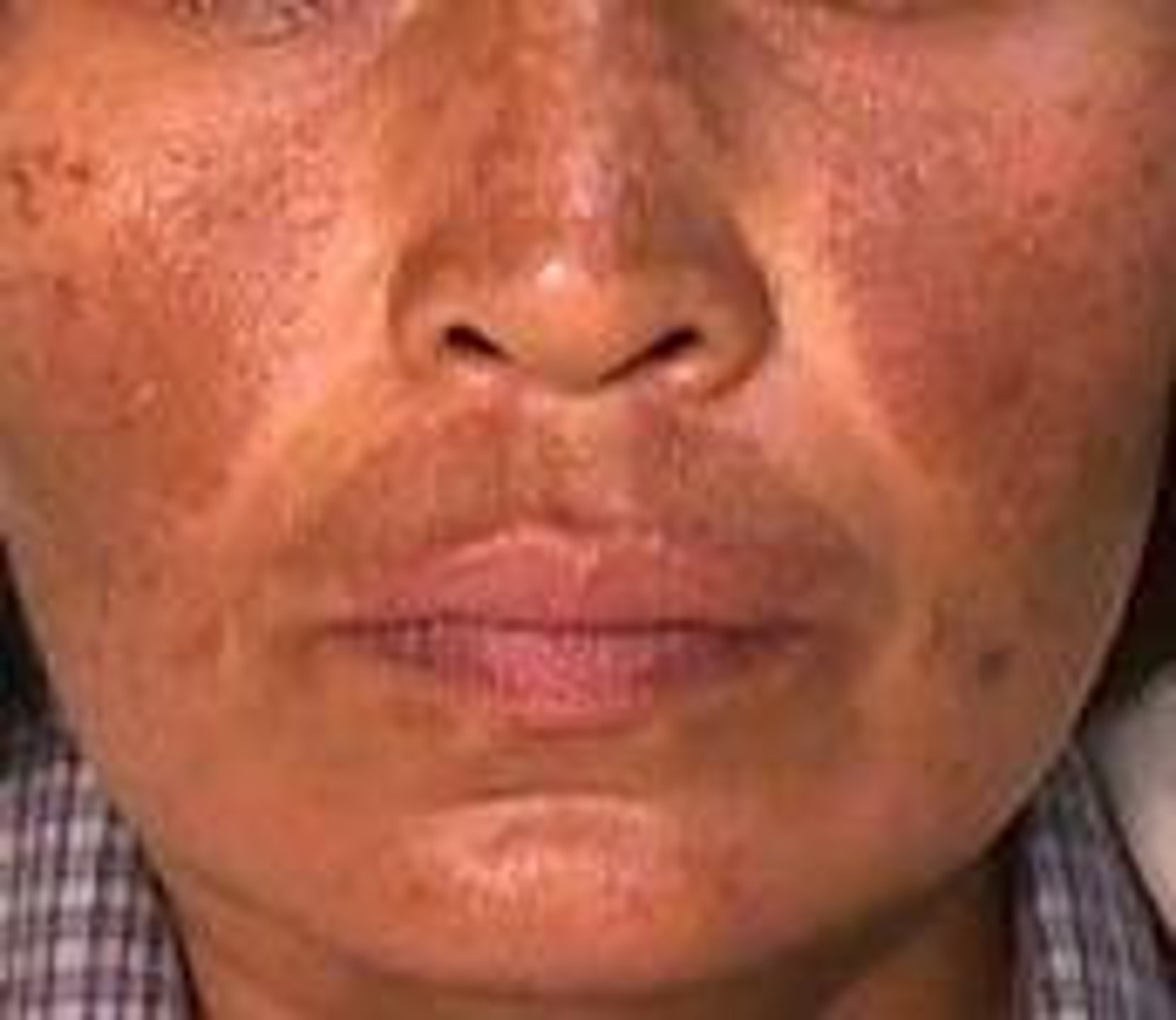
Hypopigmentation
Absence of pigment, resulting in light or white splotches.
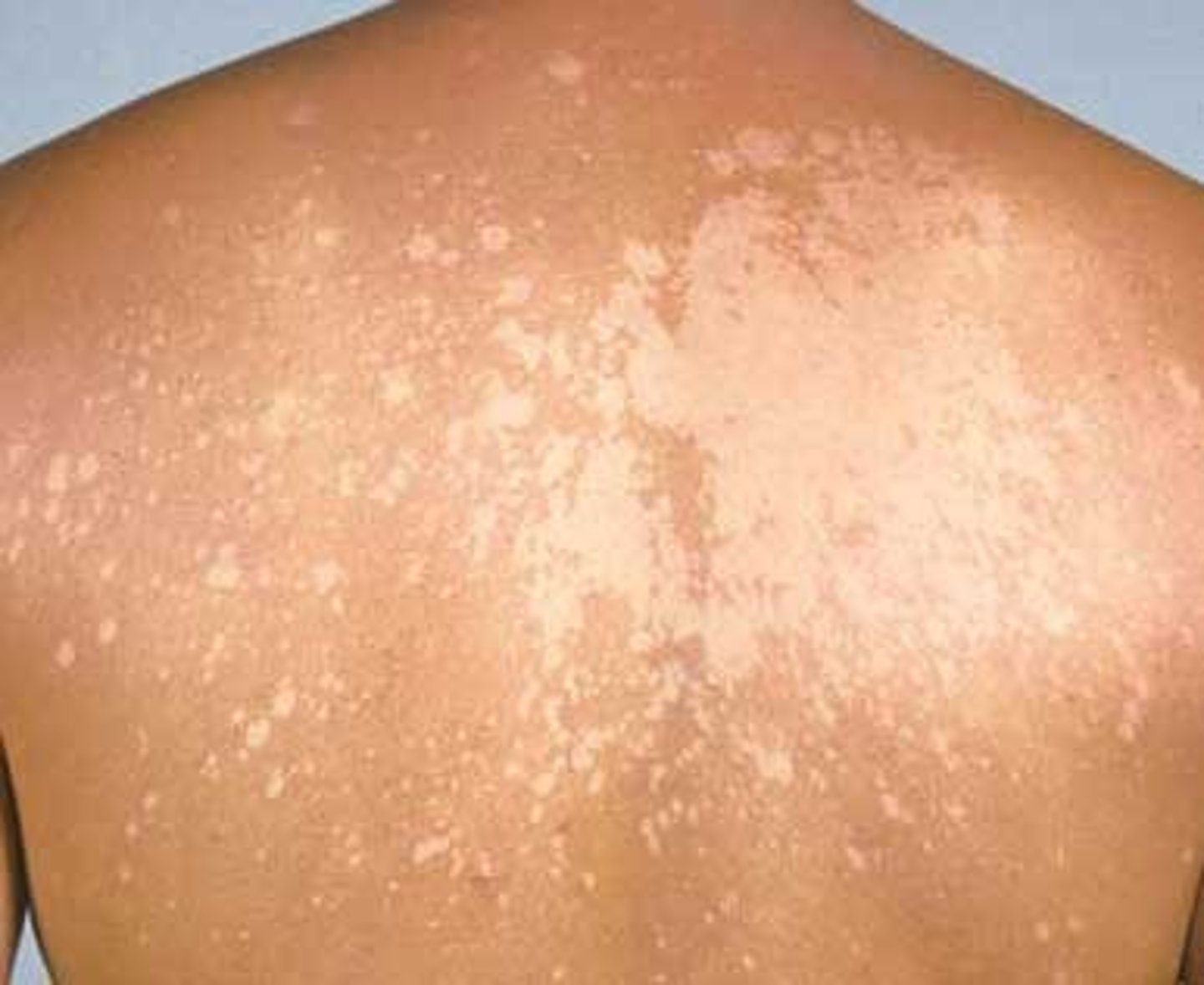
Albinism
Absence of pigment in the skin, hair, and eyes

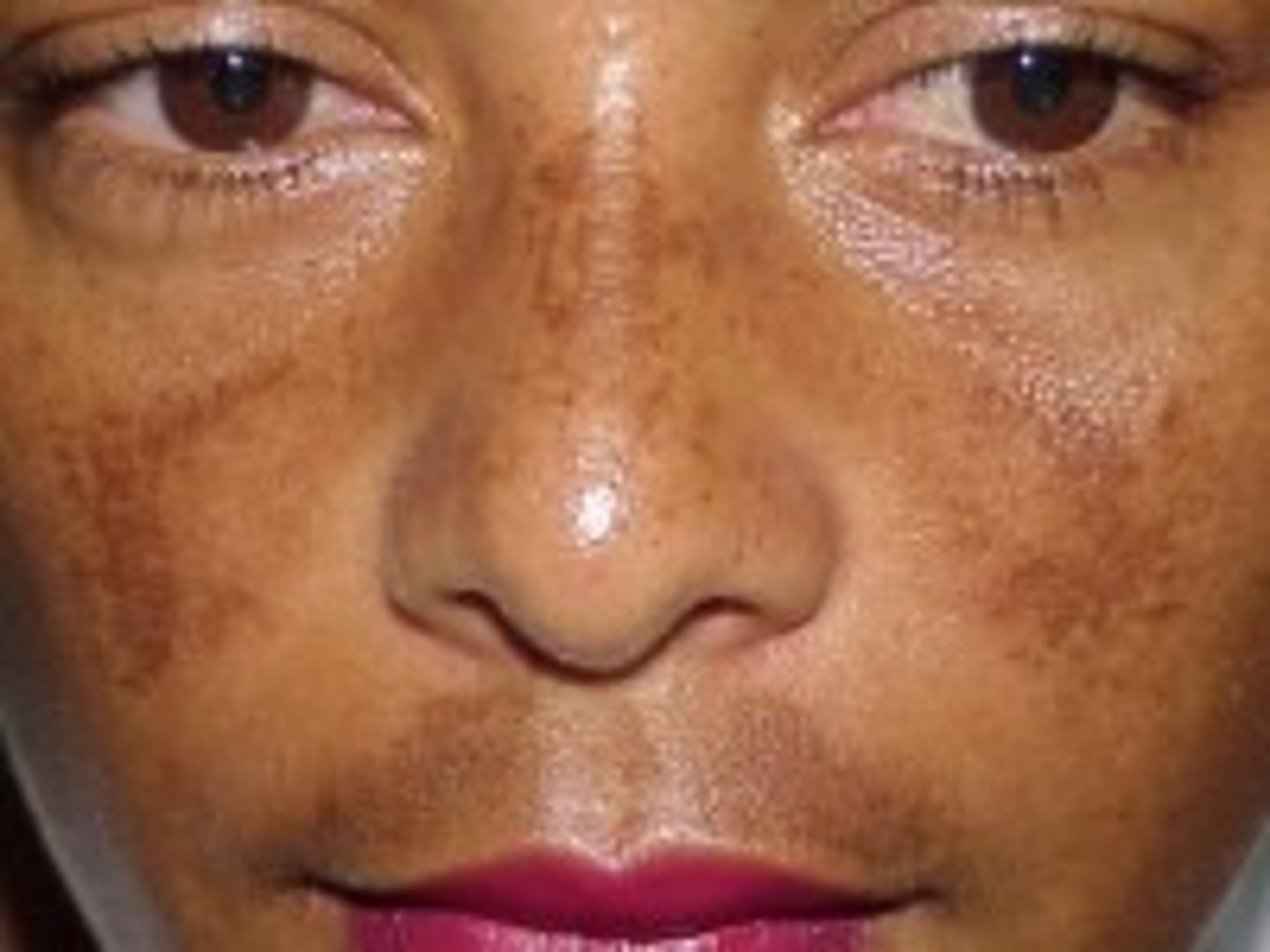
Chloasma
a pigmentation disorder characterized by brownish spots on the face
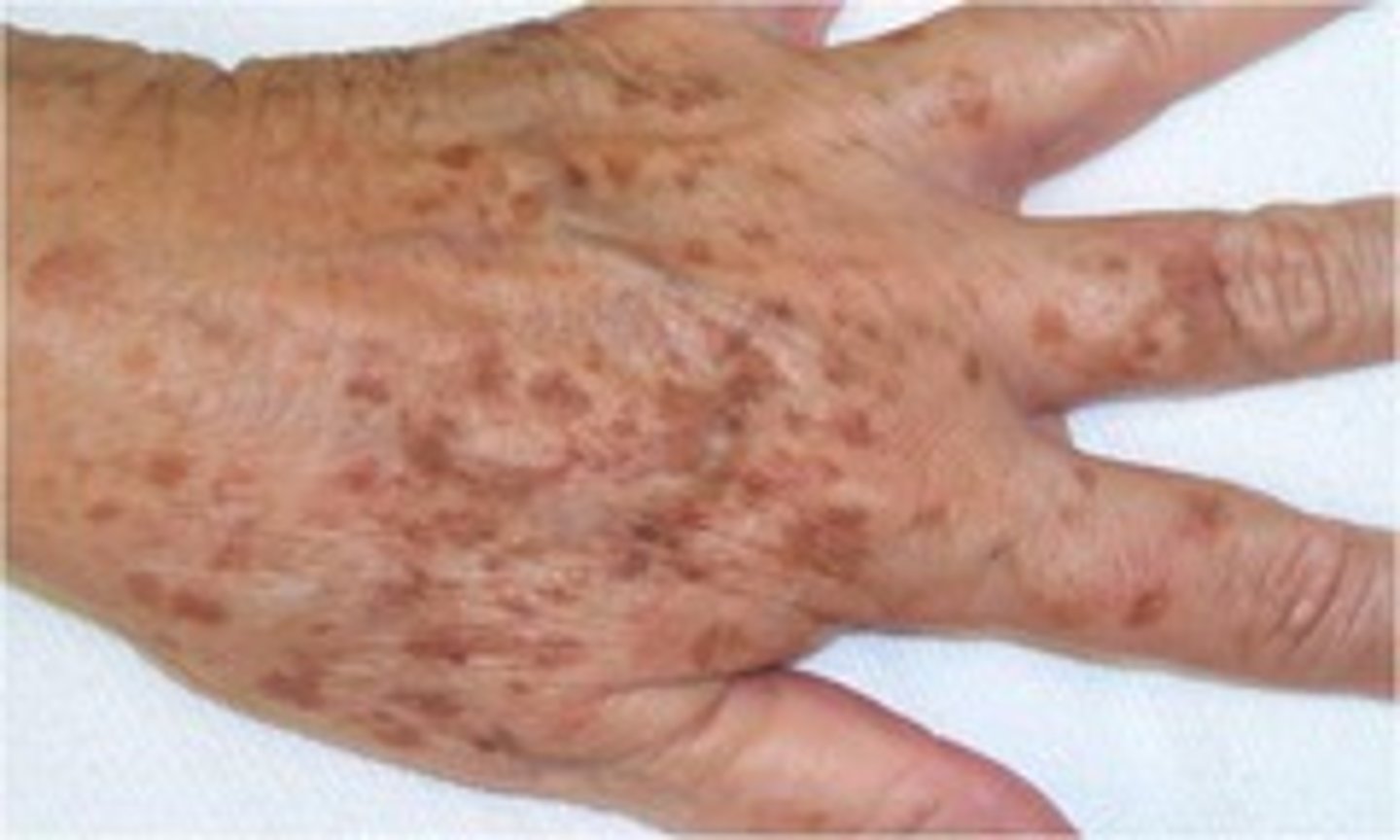
Lentigines
Technical term for freckles
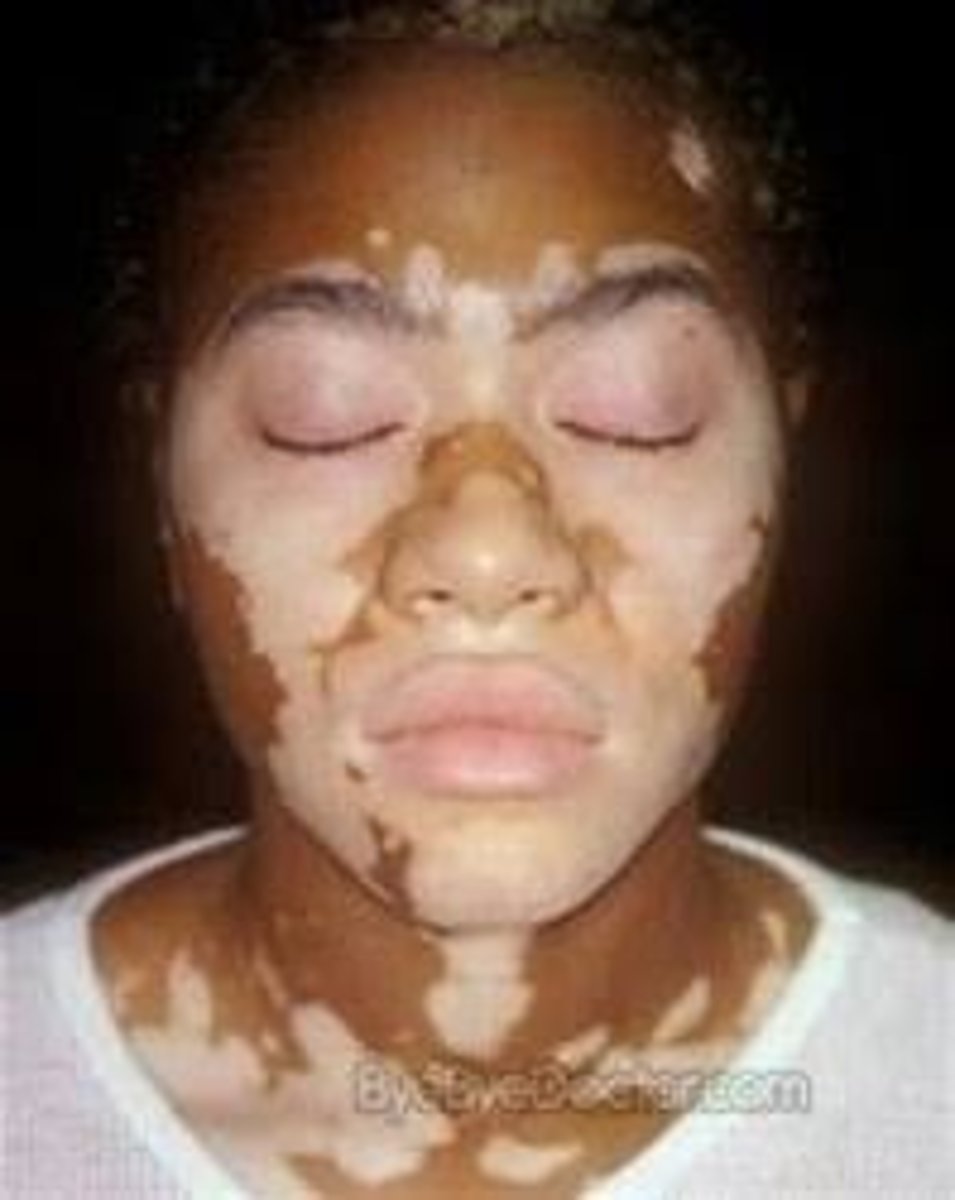
Leukoderma
white skin (white patches caused by depigmentation)
Nevus
birthmark
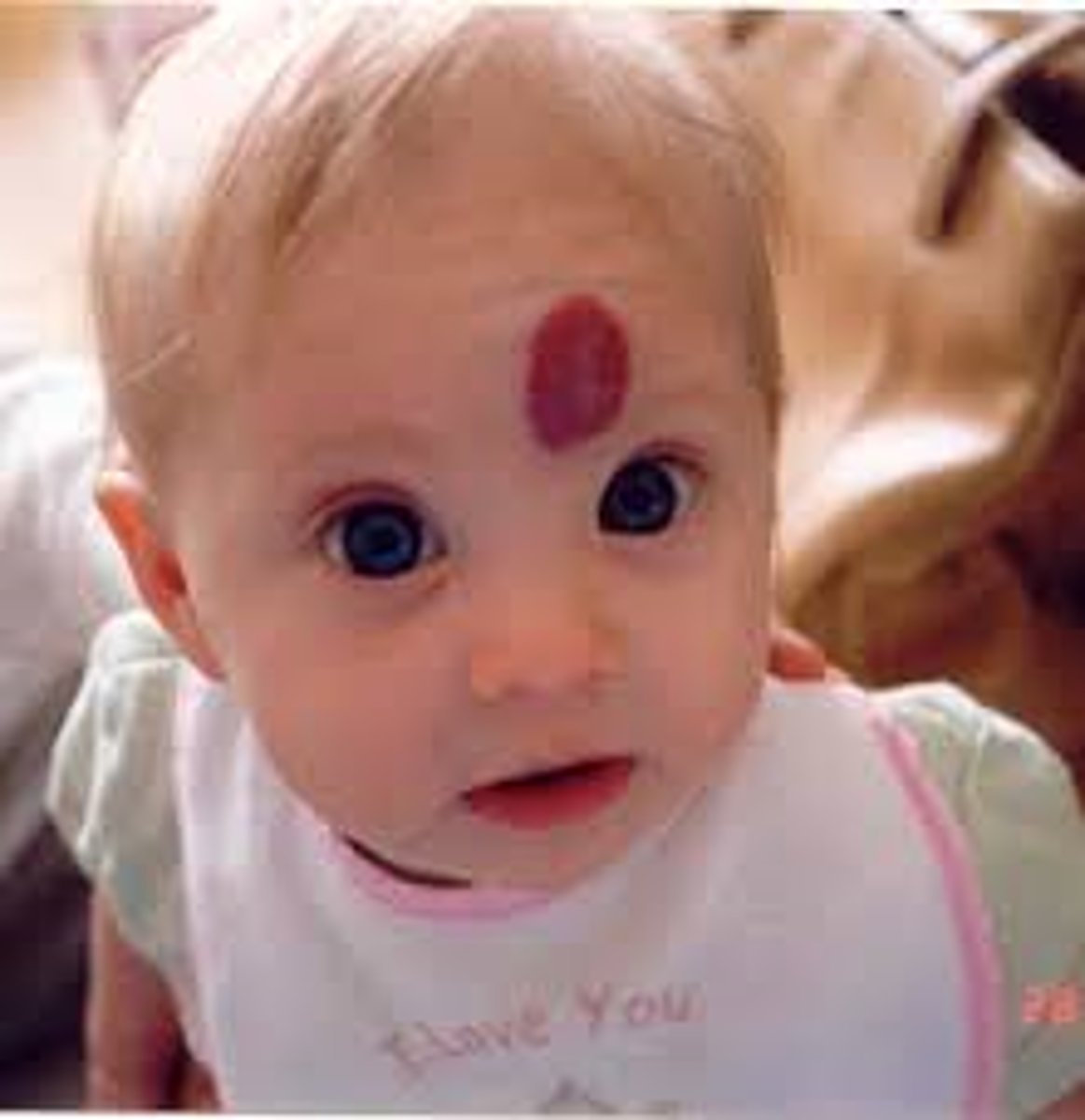
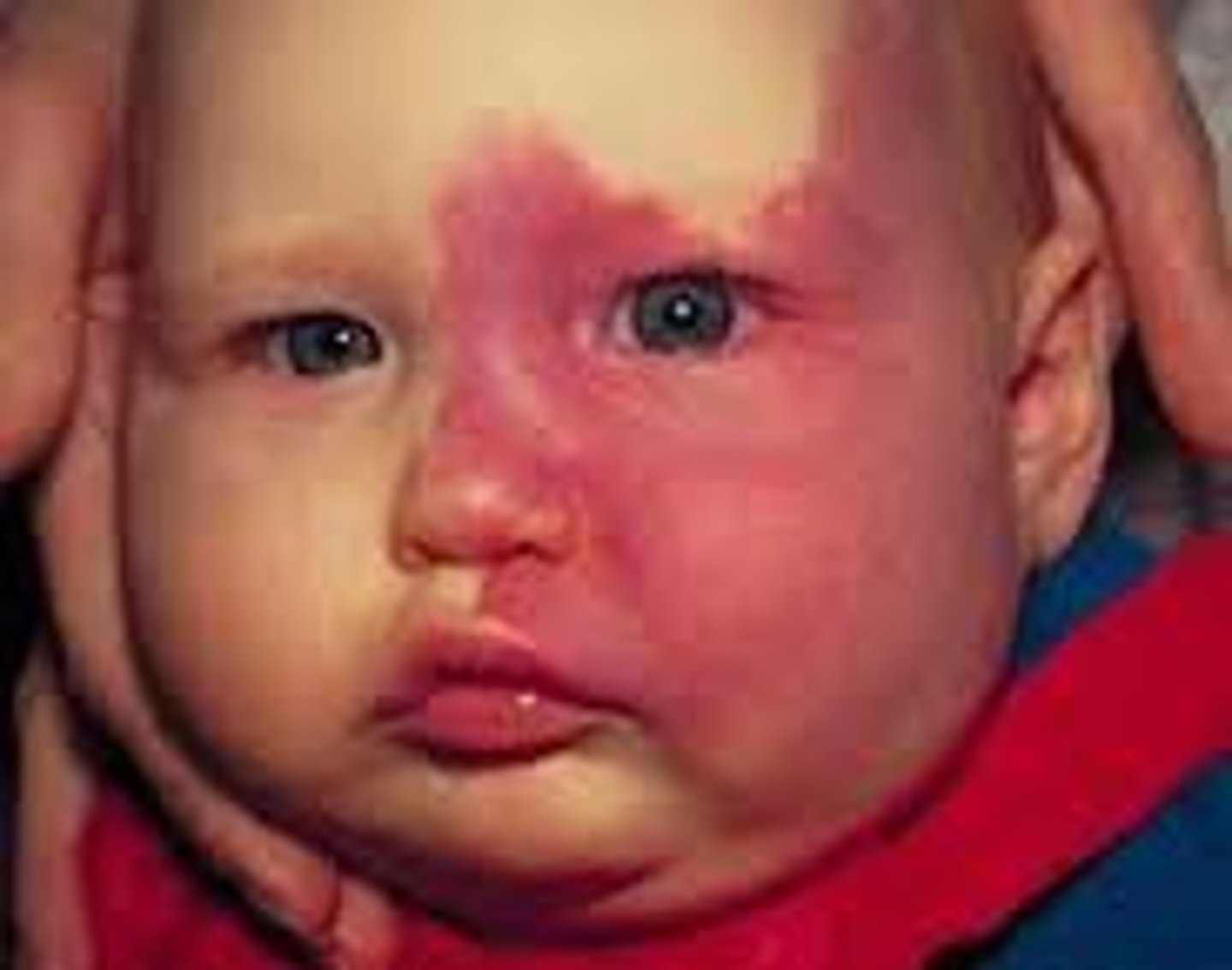
Stain
Abnormal brown-colored or wine-colored skin discoloration with a circular and/or irregular shape.
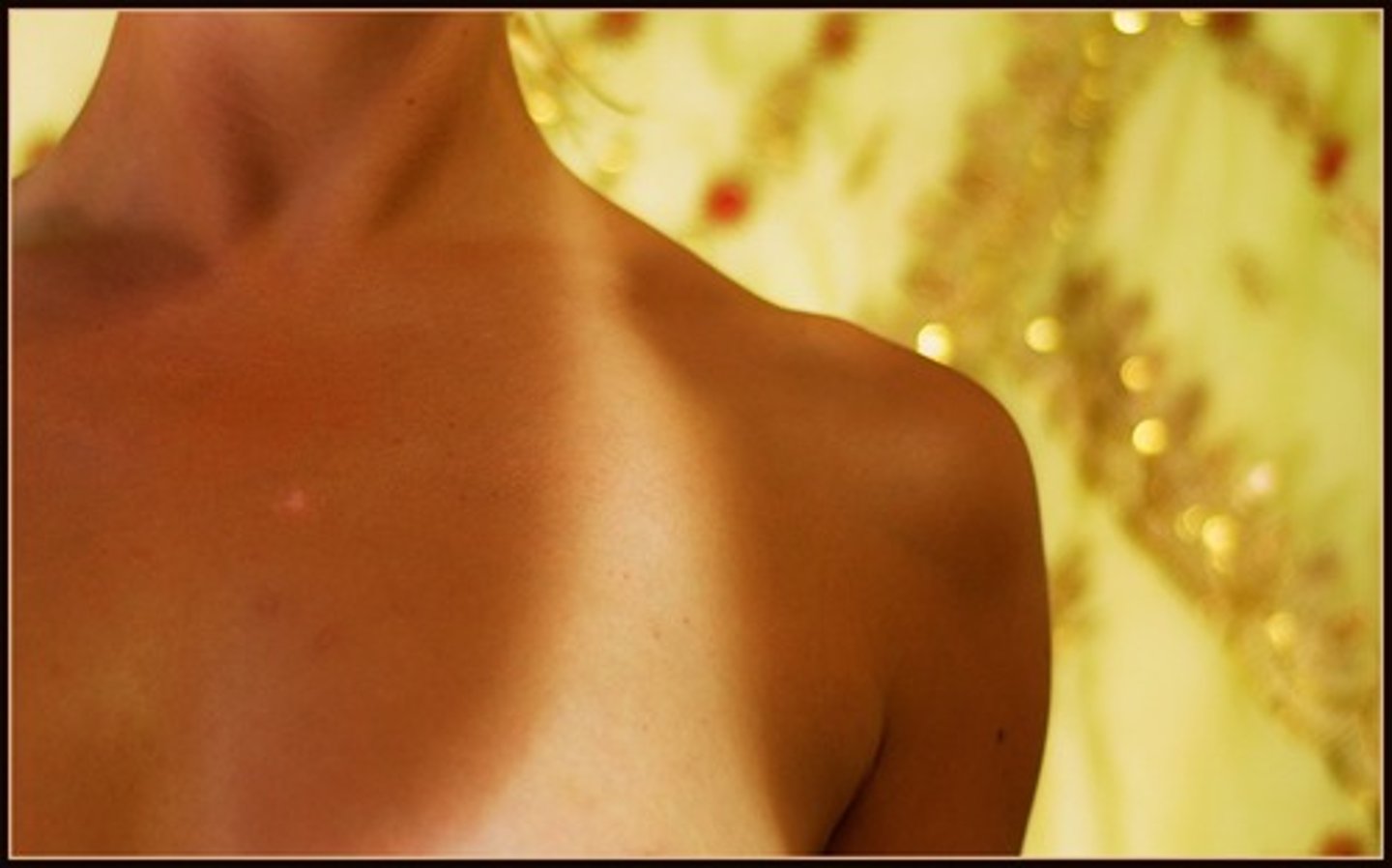
Tan
increase production of melanin for protection from ultraviolet radiation
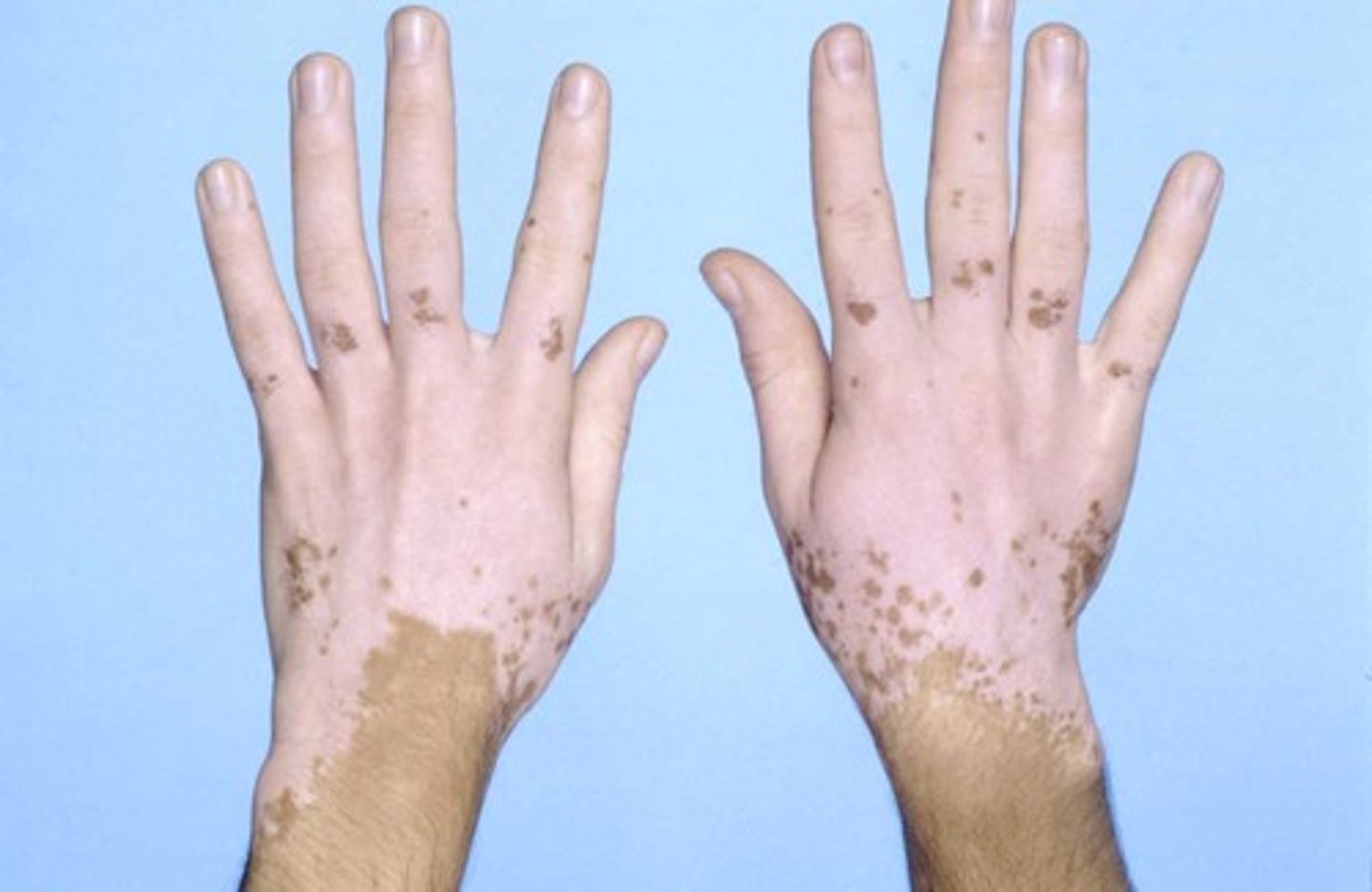
Vitiligo
localized loss of skin pigmentation characterized by milk-white patches
Keratoma
Acquired, superficial, thickened patch of the epidermis.
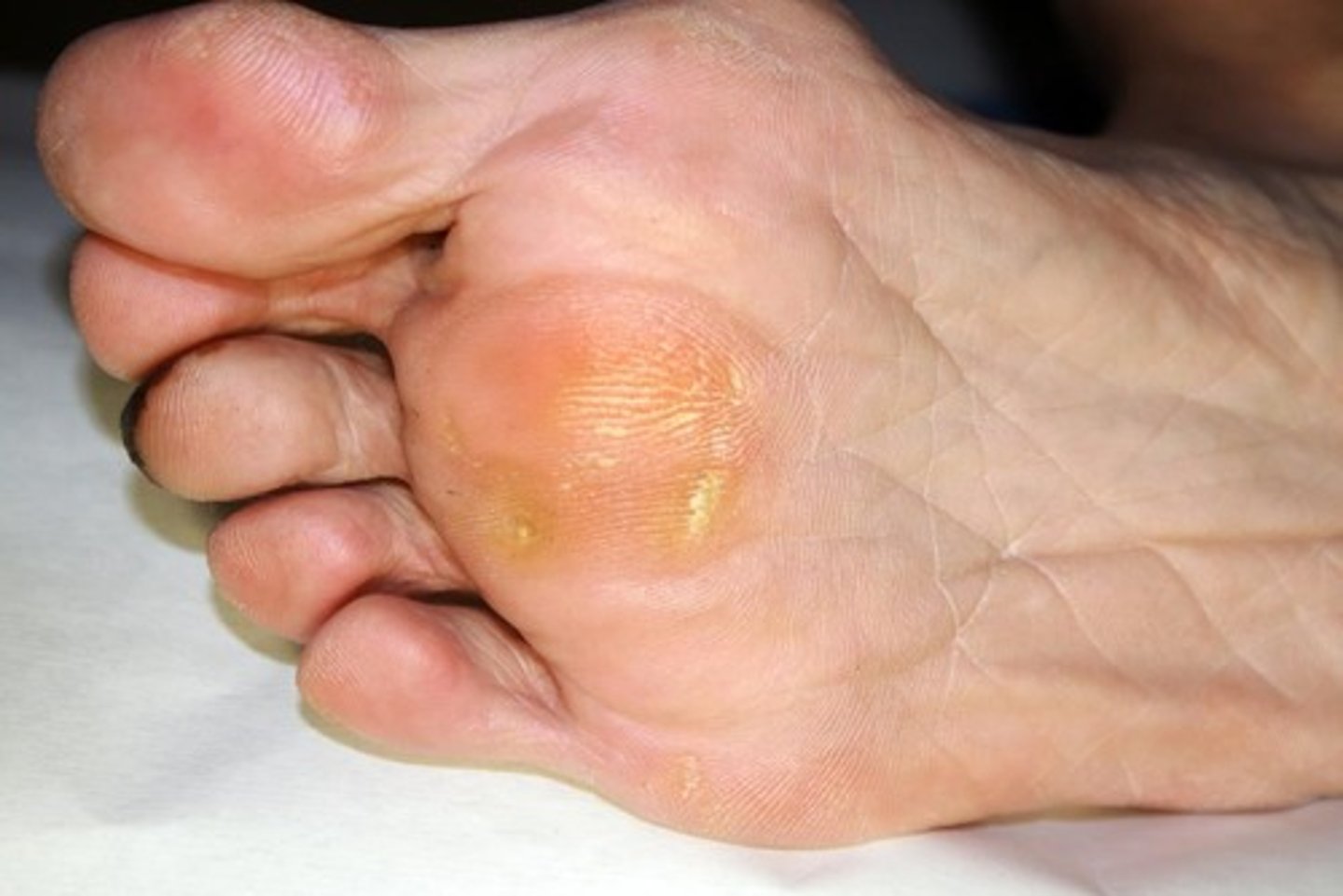
Mole
It is a small brownish on the skin, ranging in color from pale tan to brown or bluish-black.
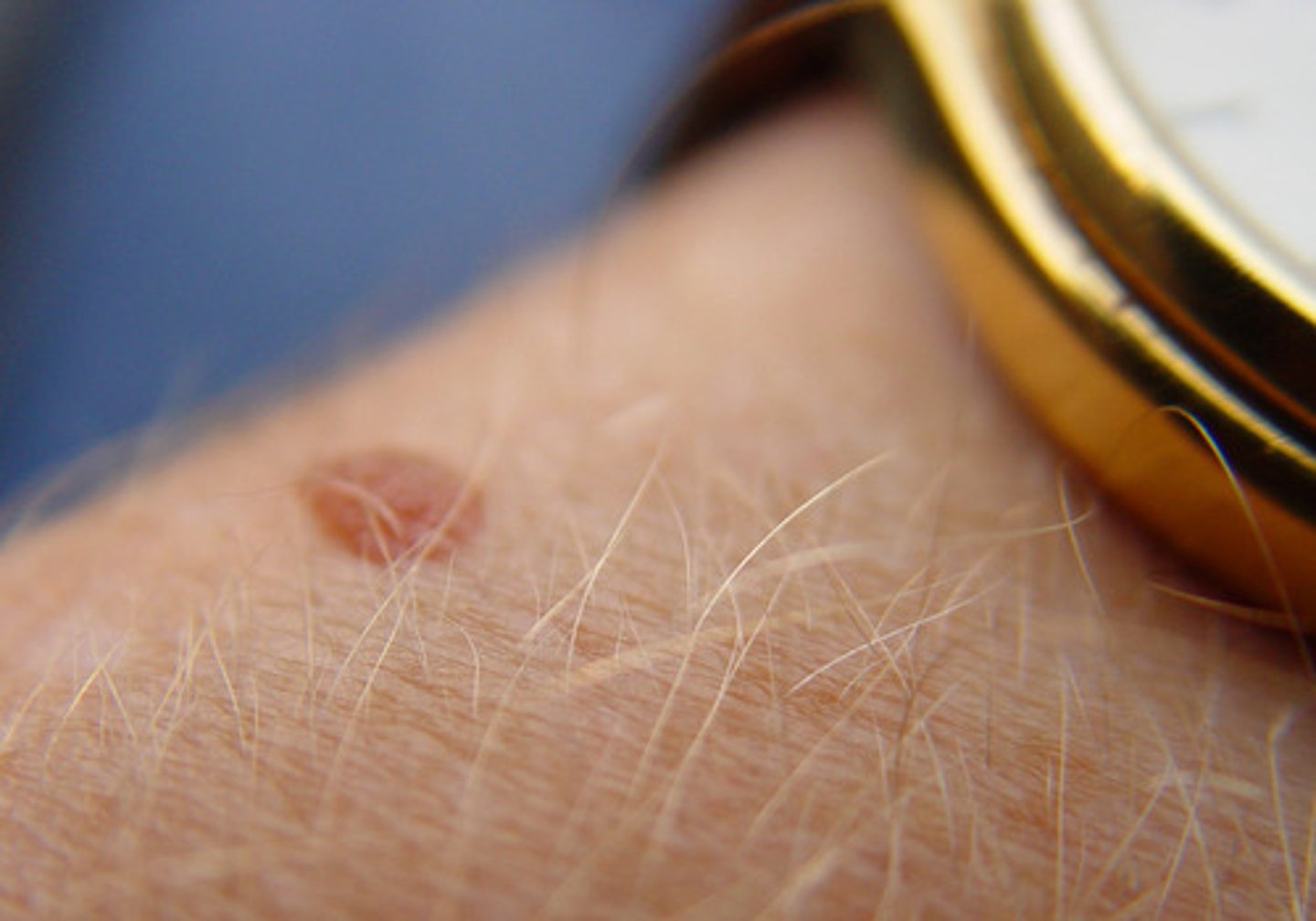
Skin tag
A small brown-colored or flesh-colored outgrowth of the skin.
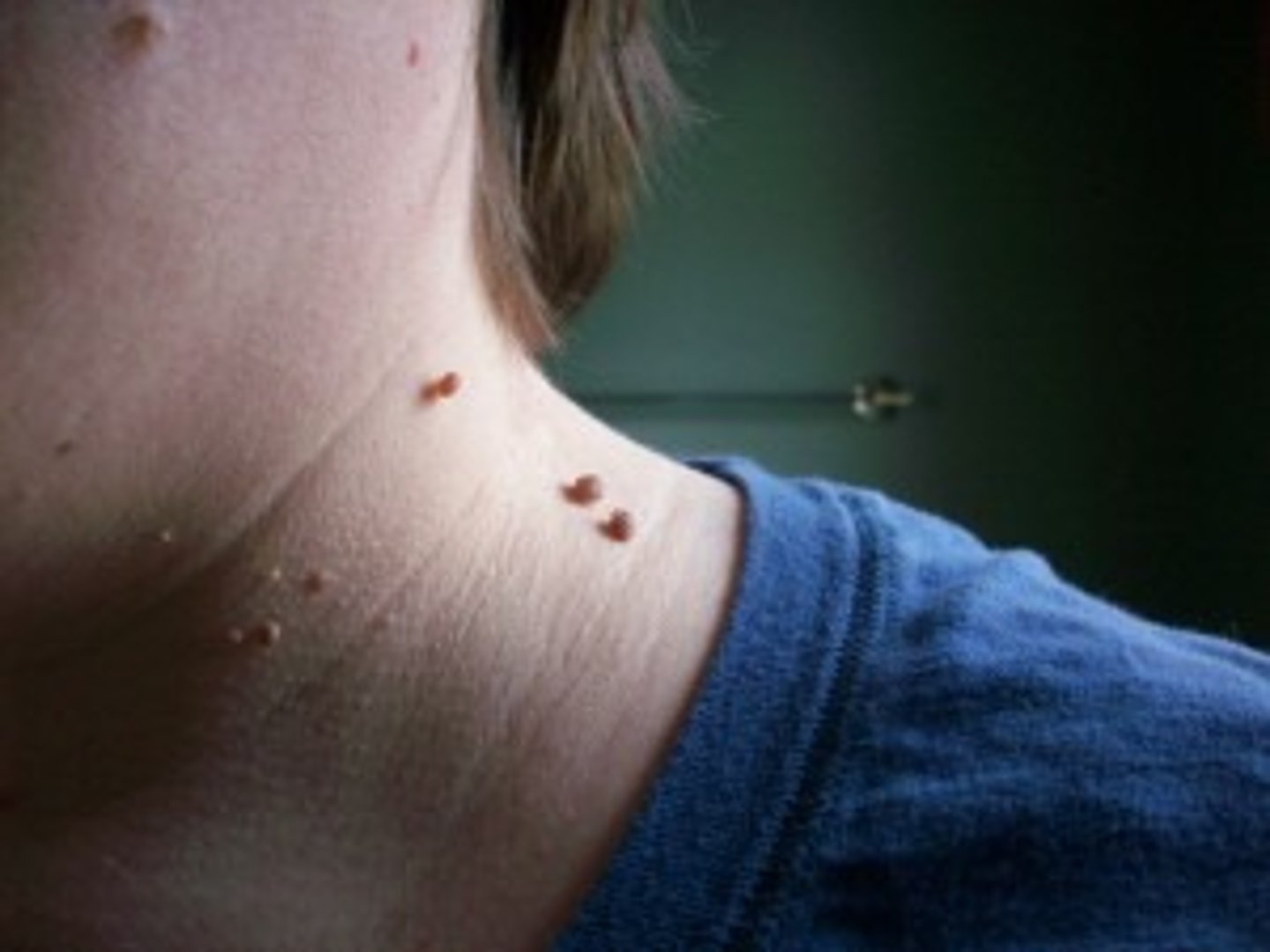
Verruca
wart caused by a virus
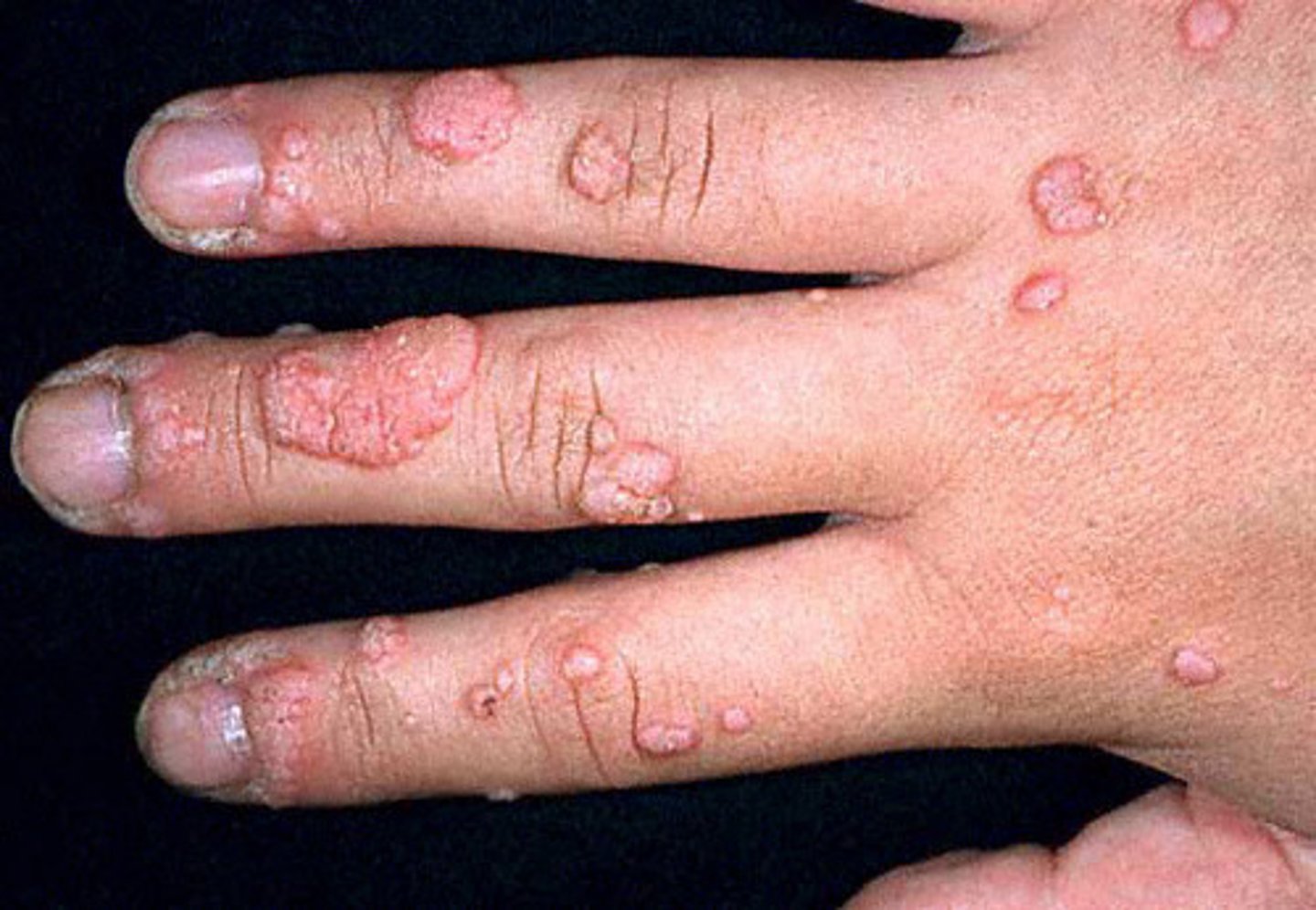
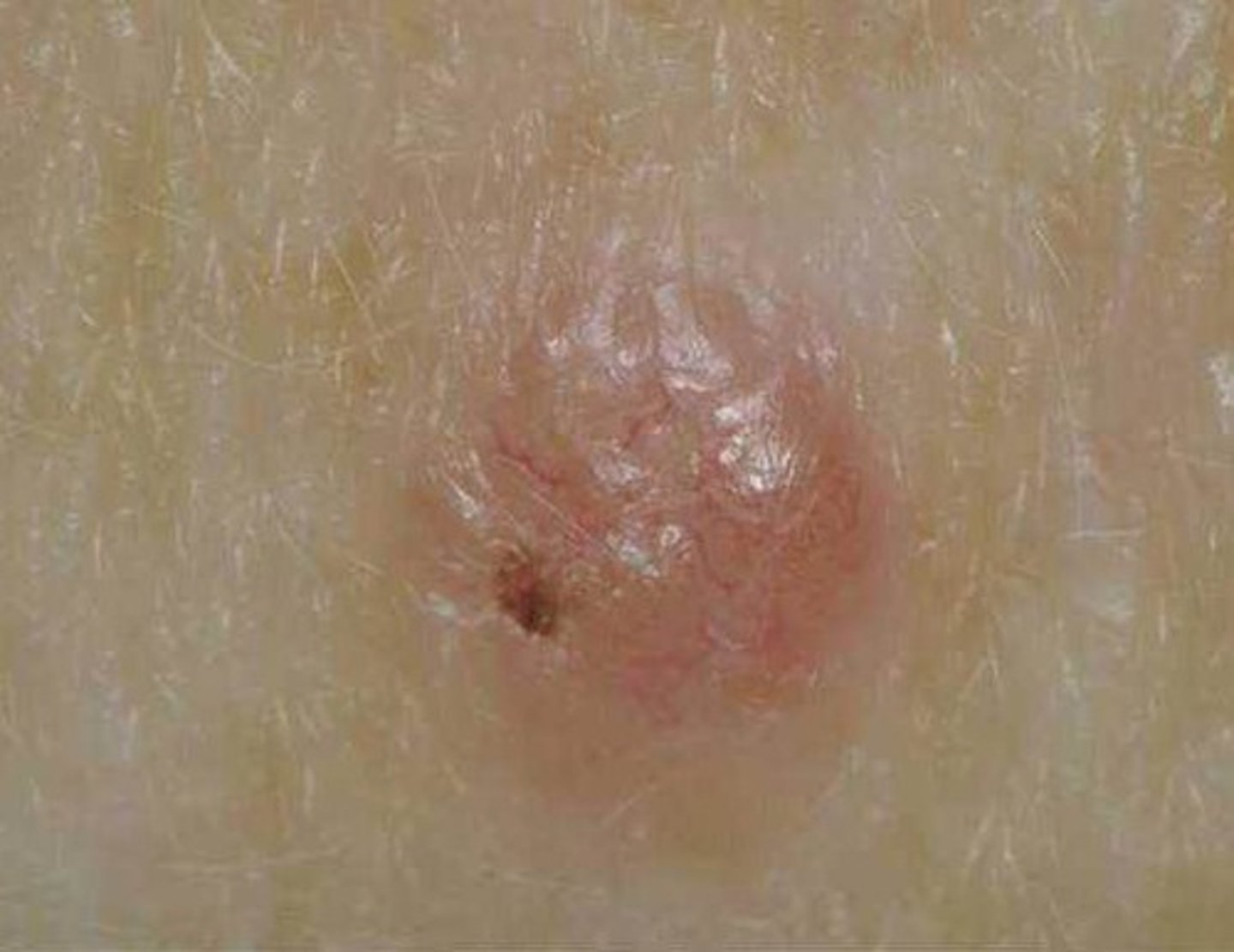
basal cell carcinoma
A most common and least severe type of skin cancer; often characterized by light or pearly nodules.
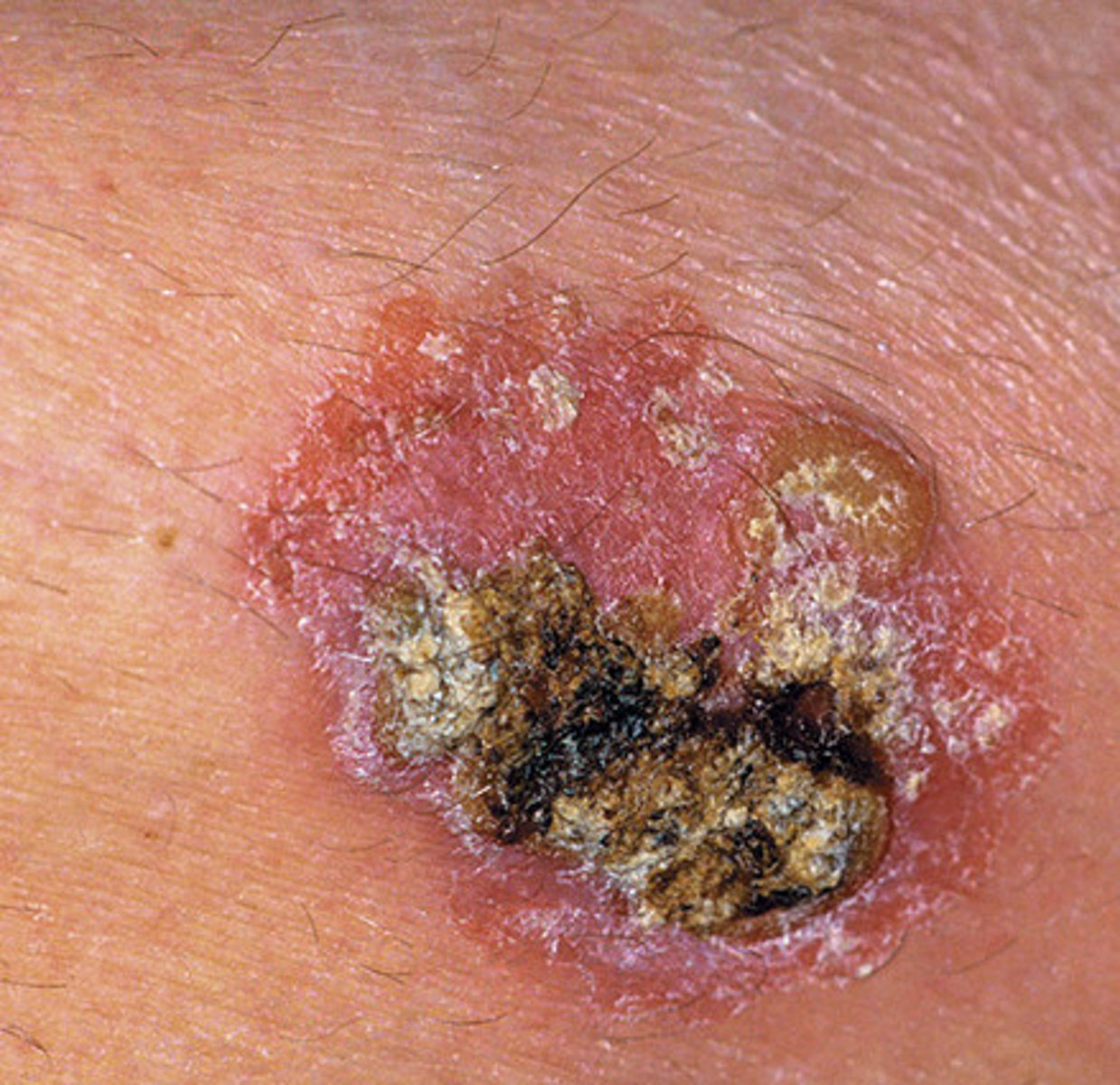
Squamous cell carcinoma
It is more serious than basal cell carcinoma, characterize by scaly red papules or nodules.
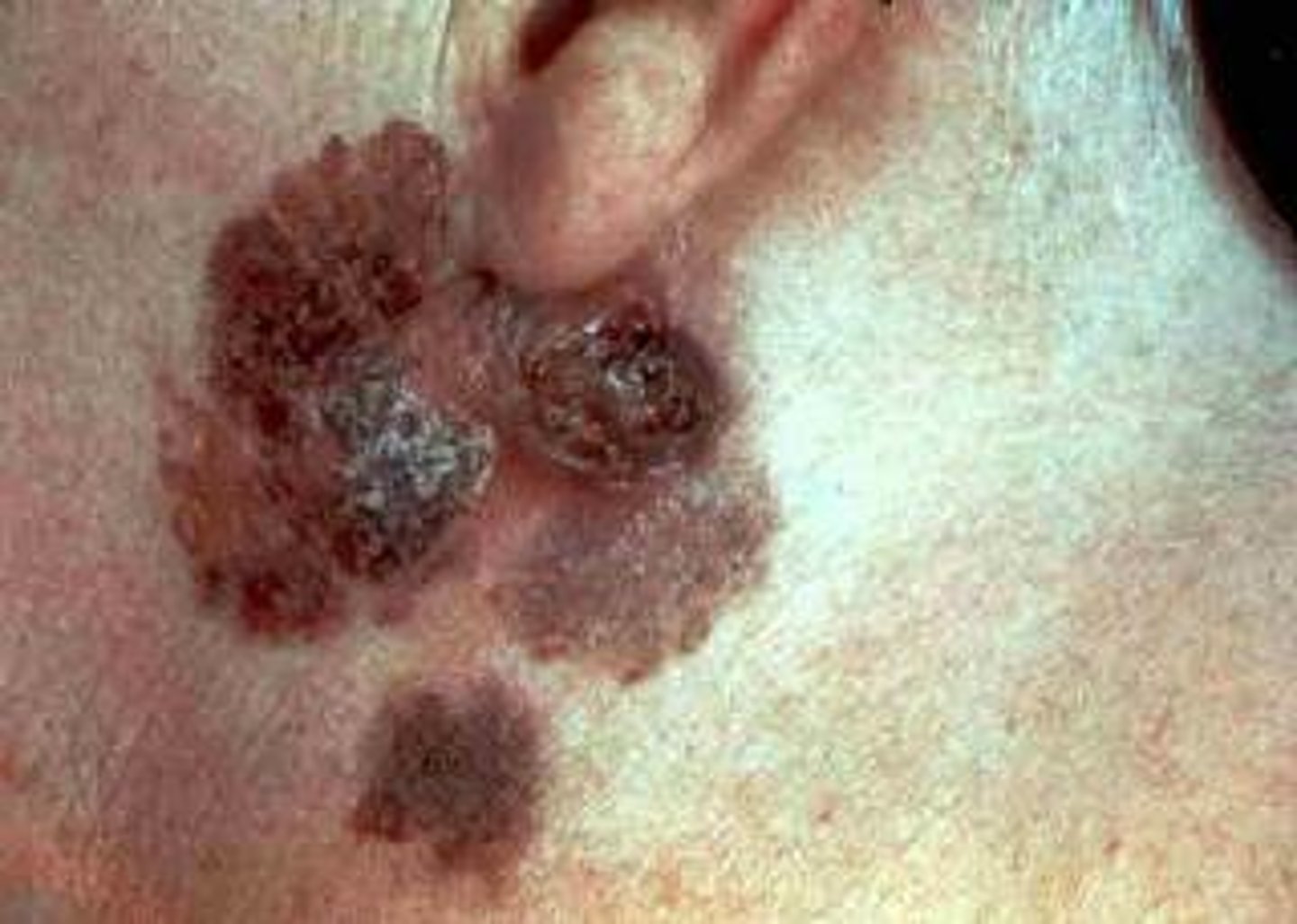
Maligant melanoma
A most serious form of skin cancer; often characterized by black or dark brown patches on the skin that may appear uneven in texture, jagged, or raised.
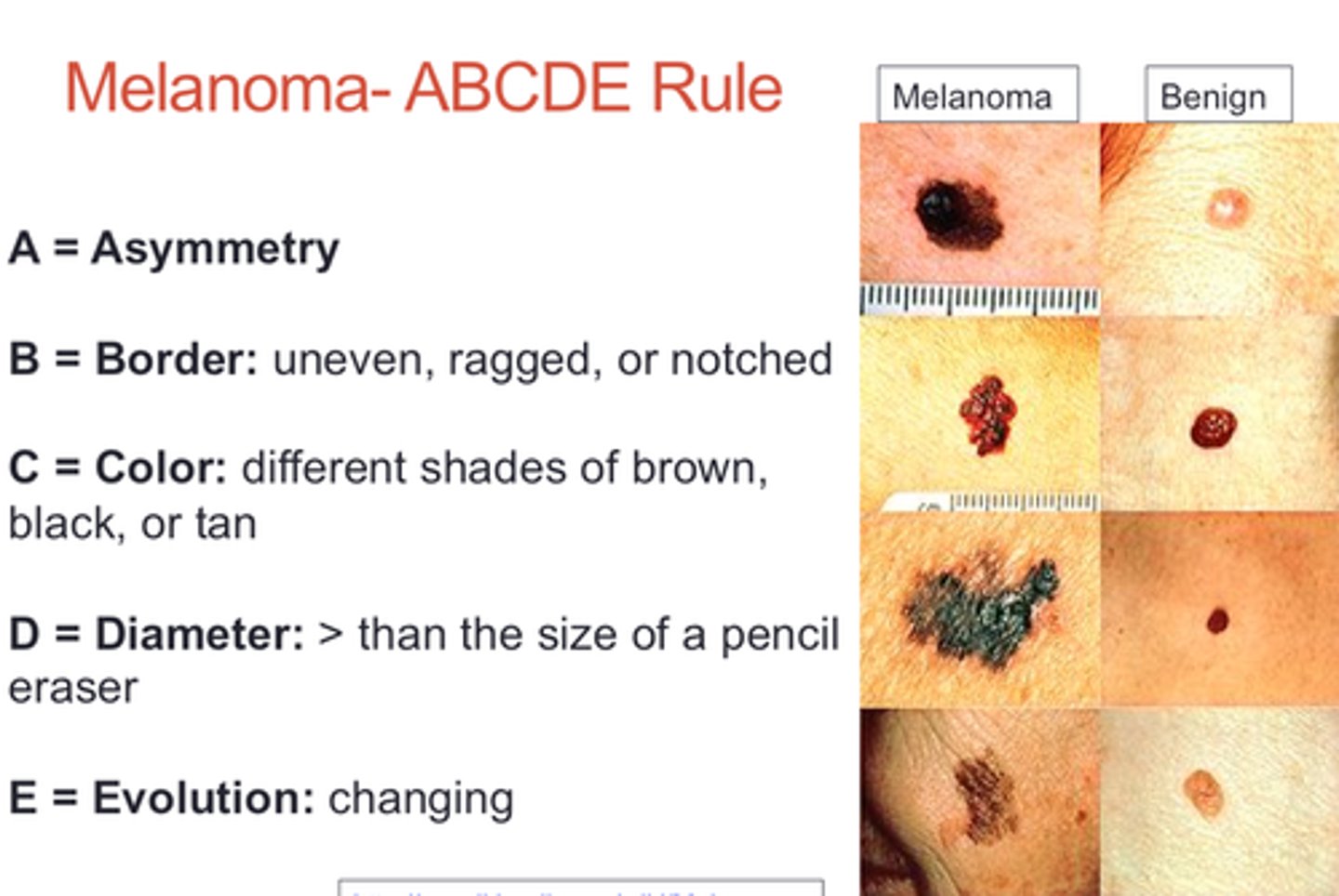
The cancer checklist
Asymmetry, Border irregularity, Color, Diameter, Evolution
Retention hyperkeratosis
The hereditary tendency for acne-prone skin to retain dead cells in the follicle, forming an obstruction that clogs follicles and exacerbates inflammatory acne lesions such as papules and pustules.
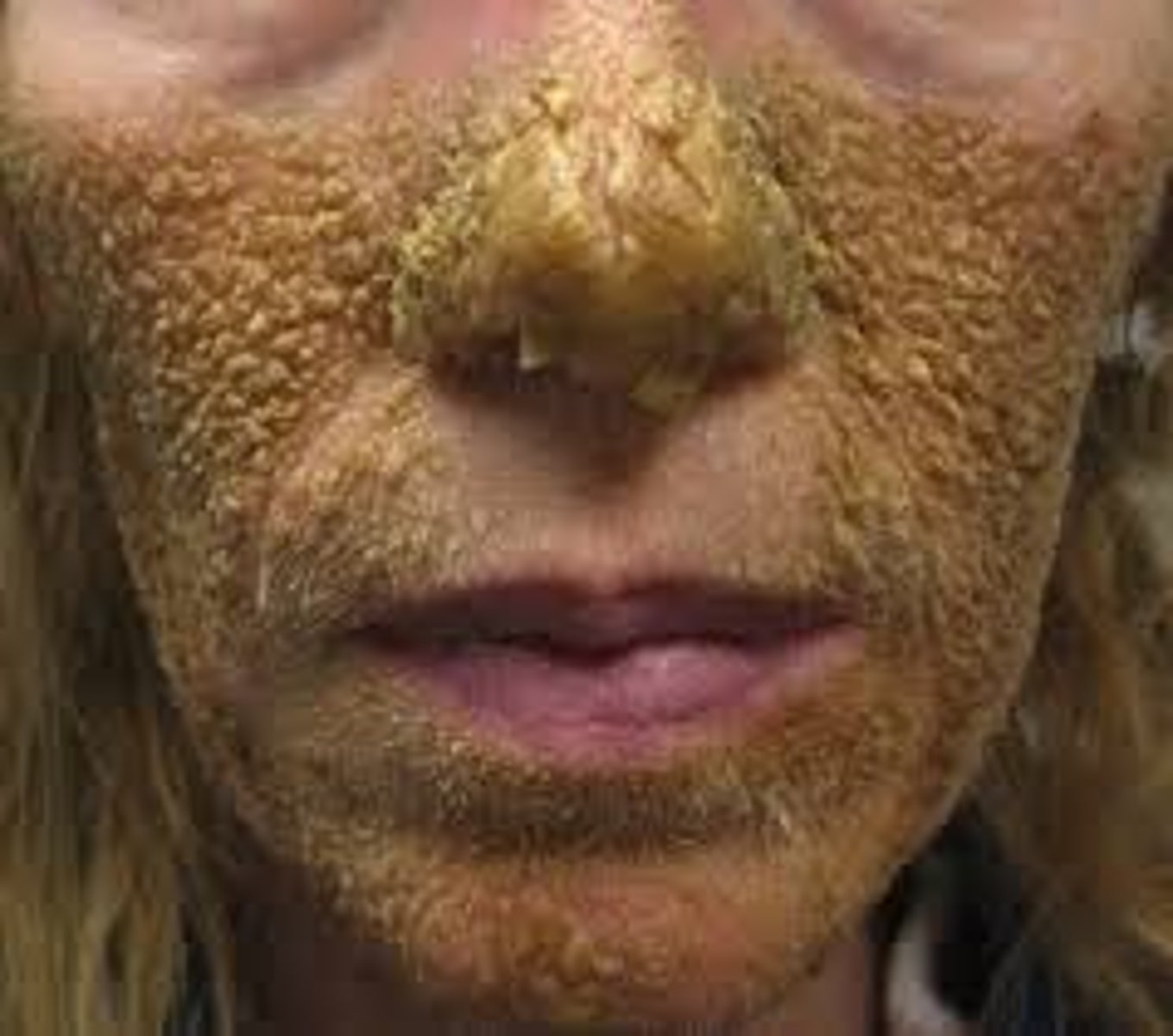
Propionibacterium acnes
Technical term for acne bacteria
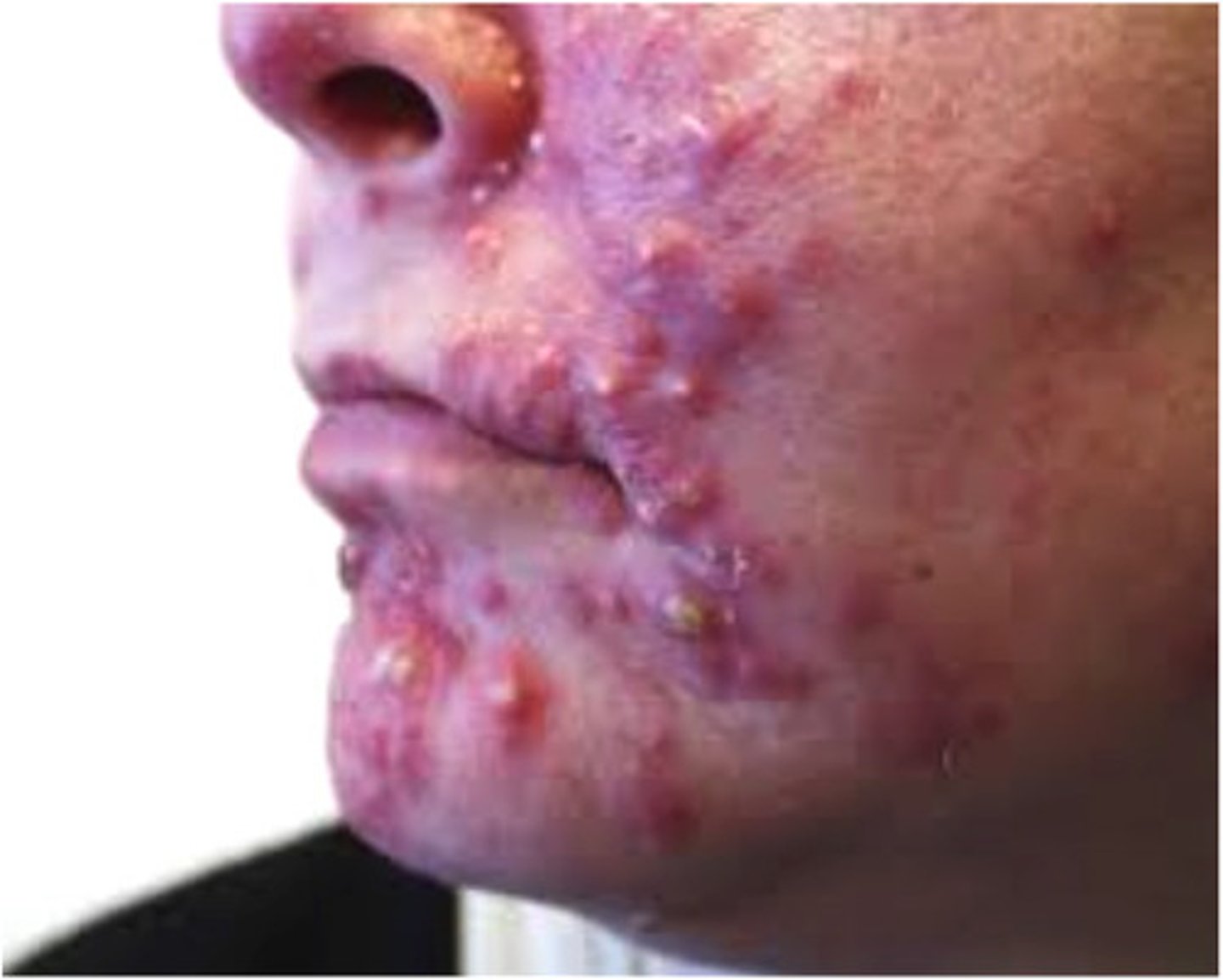
Acne papule
Inflammatory acne lesion resulting from follicle wall rupture and infusion of blood
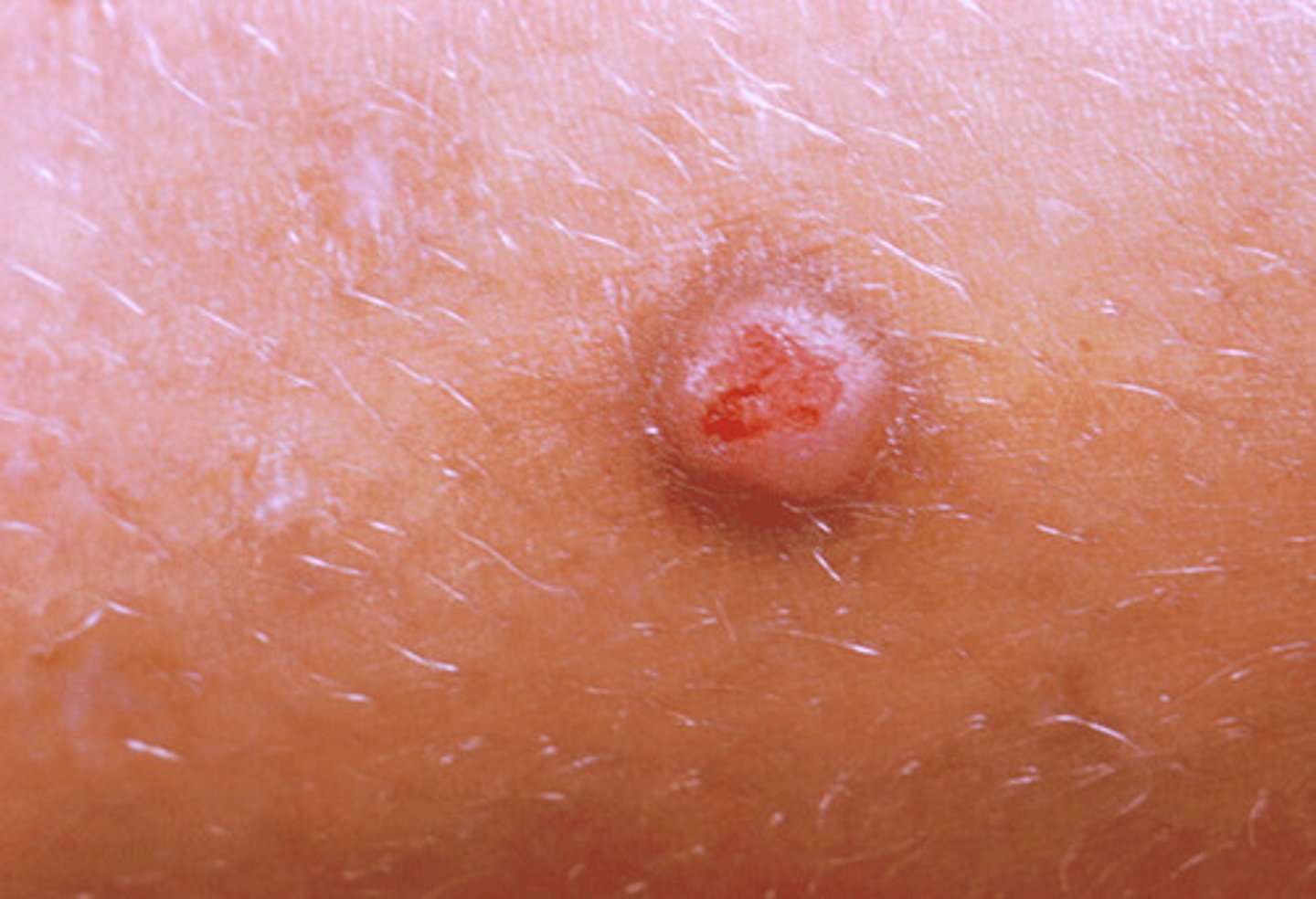
Acne treatment
cleaners, follicle exfoliant, avoidance of fatty skin care and cosmetic products
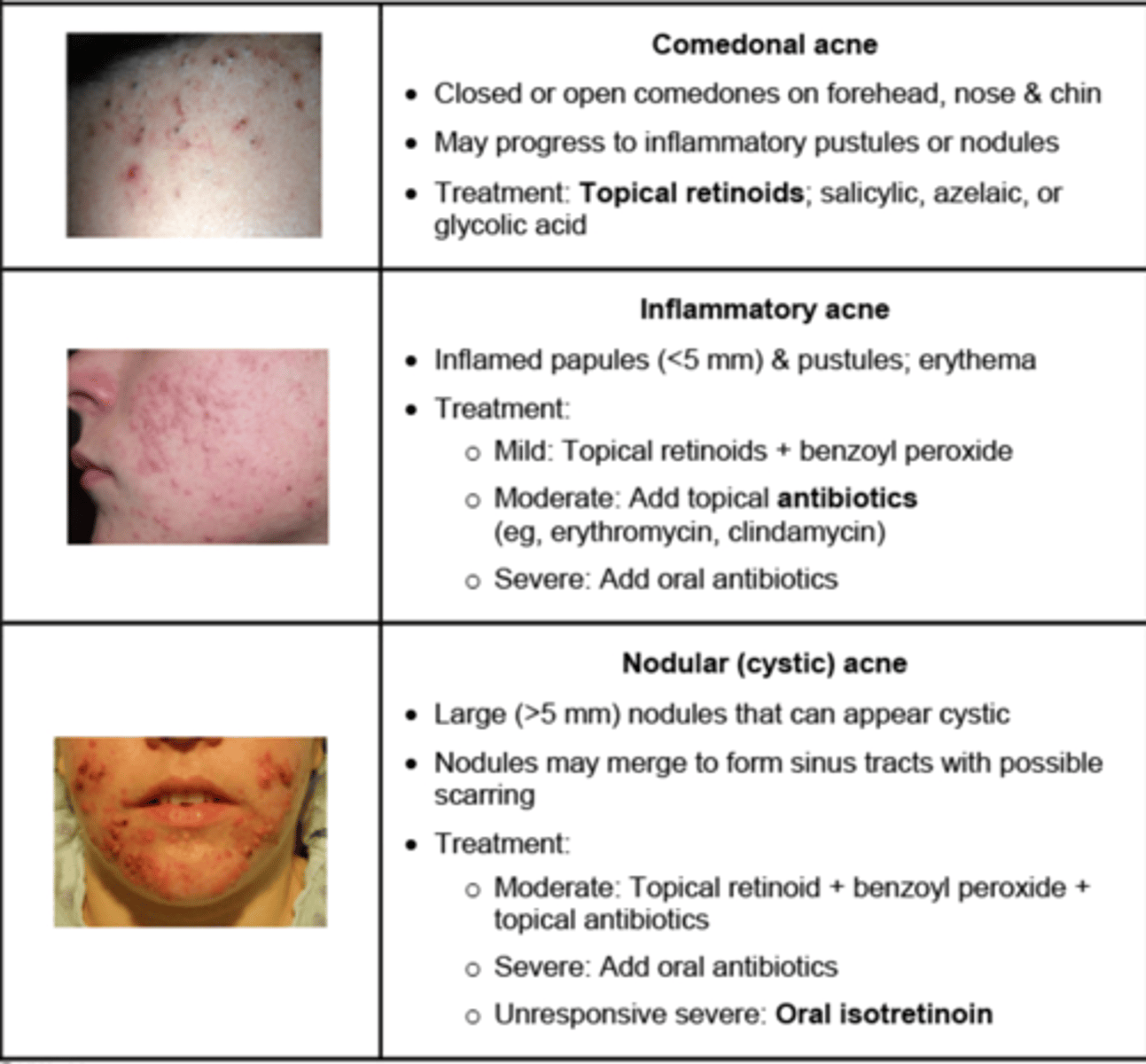
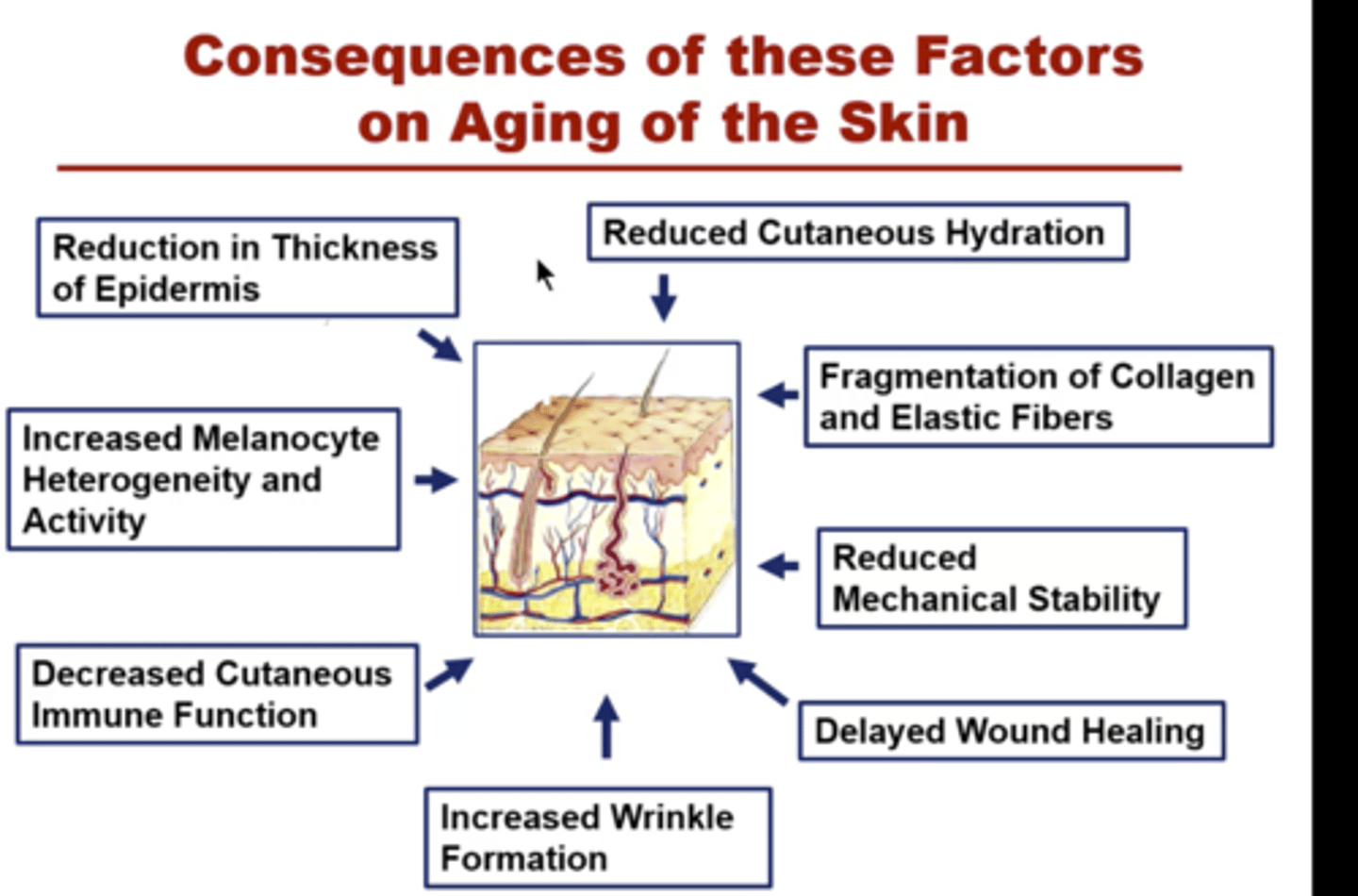
intrinsic factor
Are akin-aging factors over which we have little control
extrinsic aging factors
aging caused by environmental factors
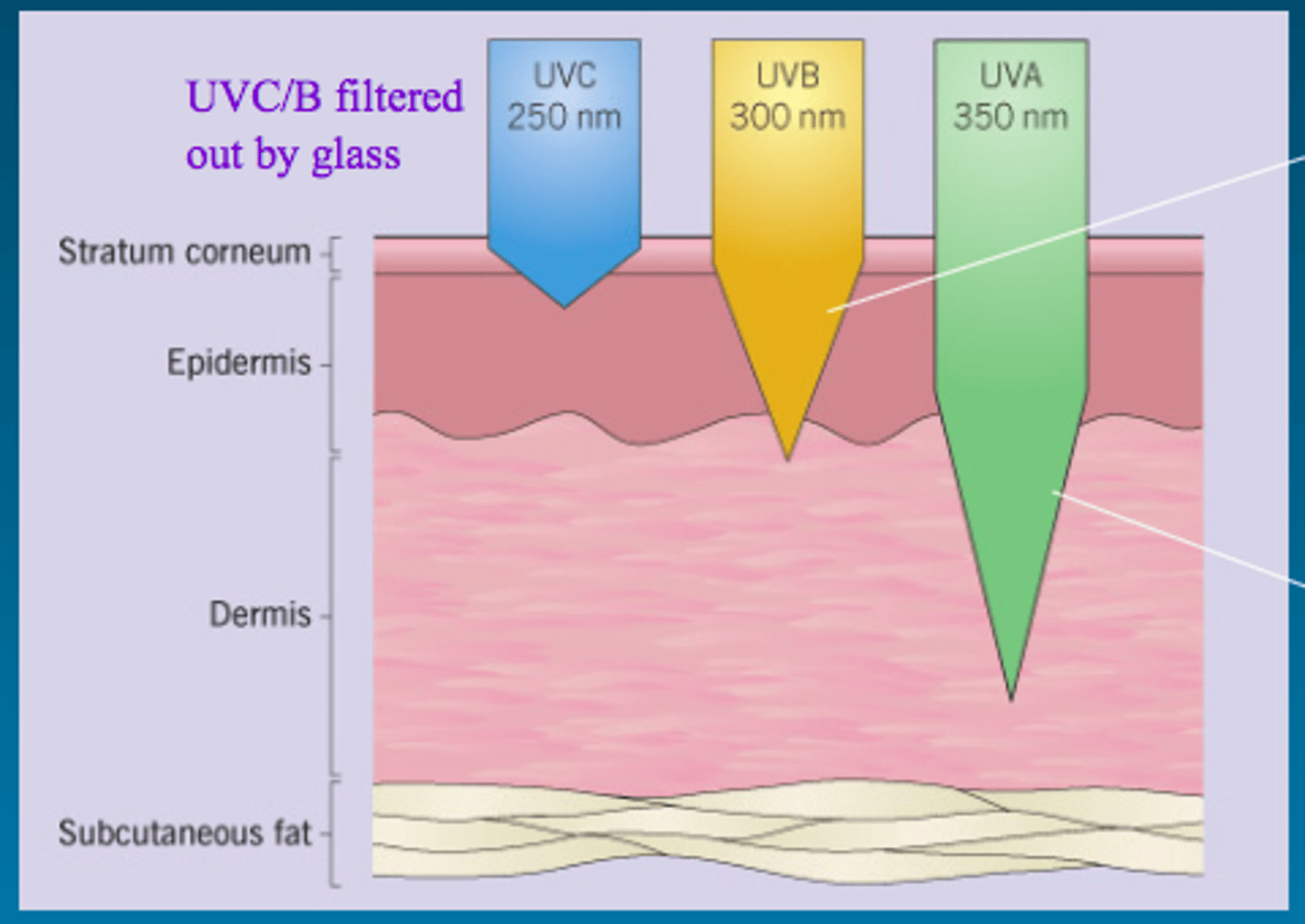
UVA rays
aging rays, penetrate to dermis destroying collagen and elastin
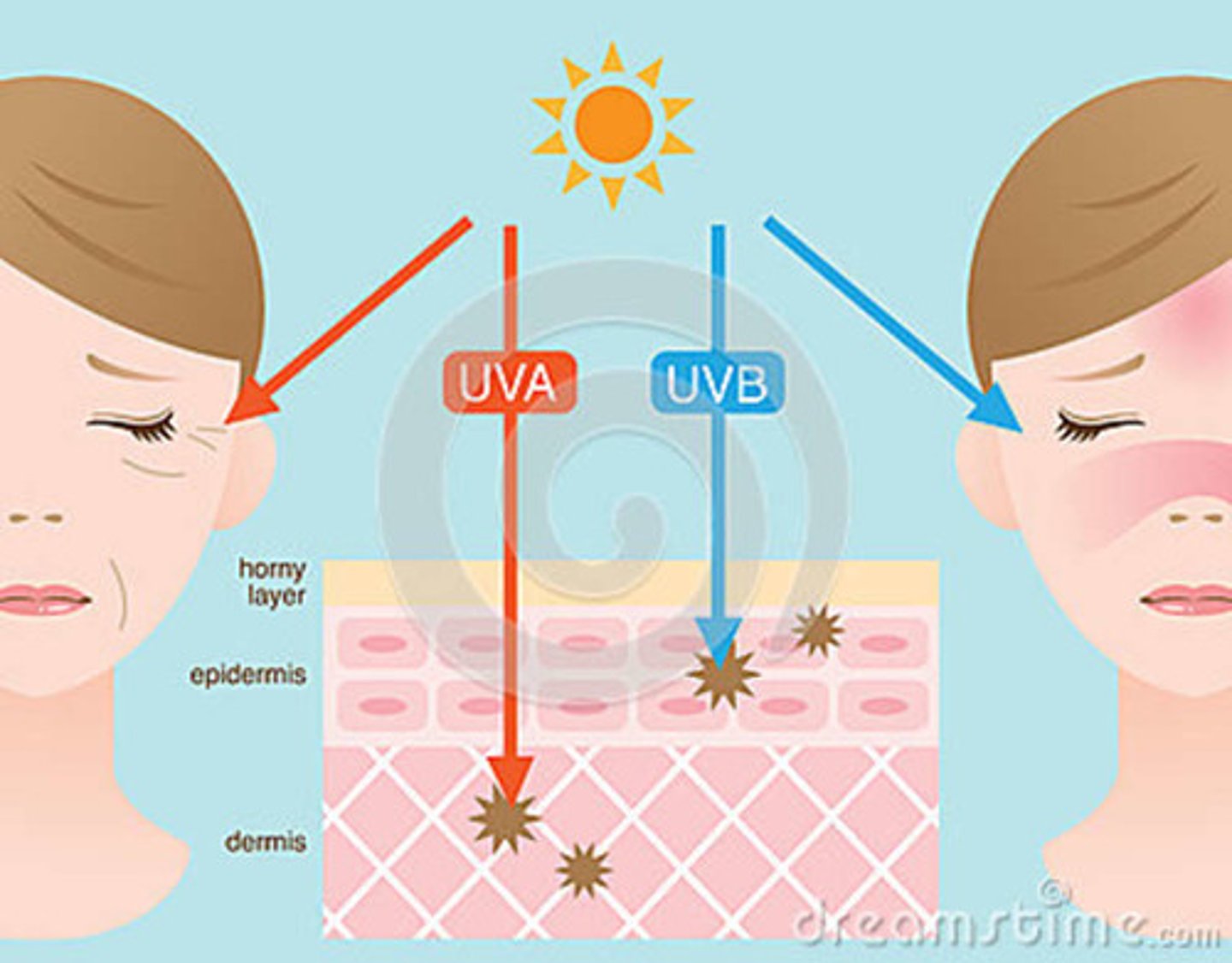
UVB rays
The rays of the sun that cause sunburns and tanning and are also known as burning rays are:
Allergic contact dermatitis
Abbreviated ACD; an allergy to an ingredient or a chemical, usually caused by repeated skin contact with the chemical.
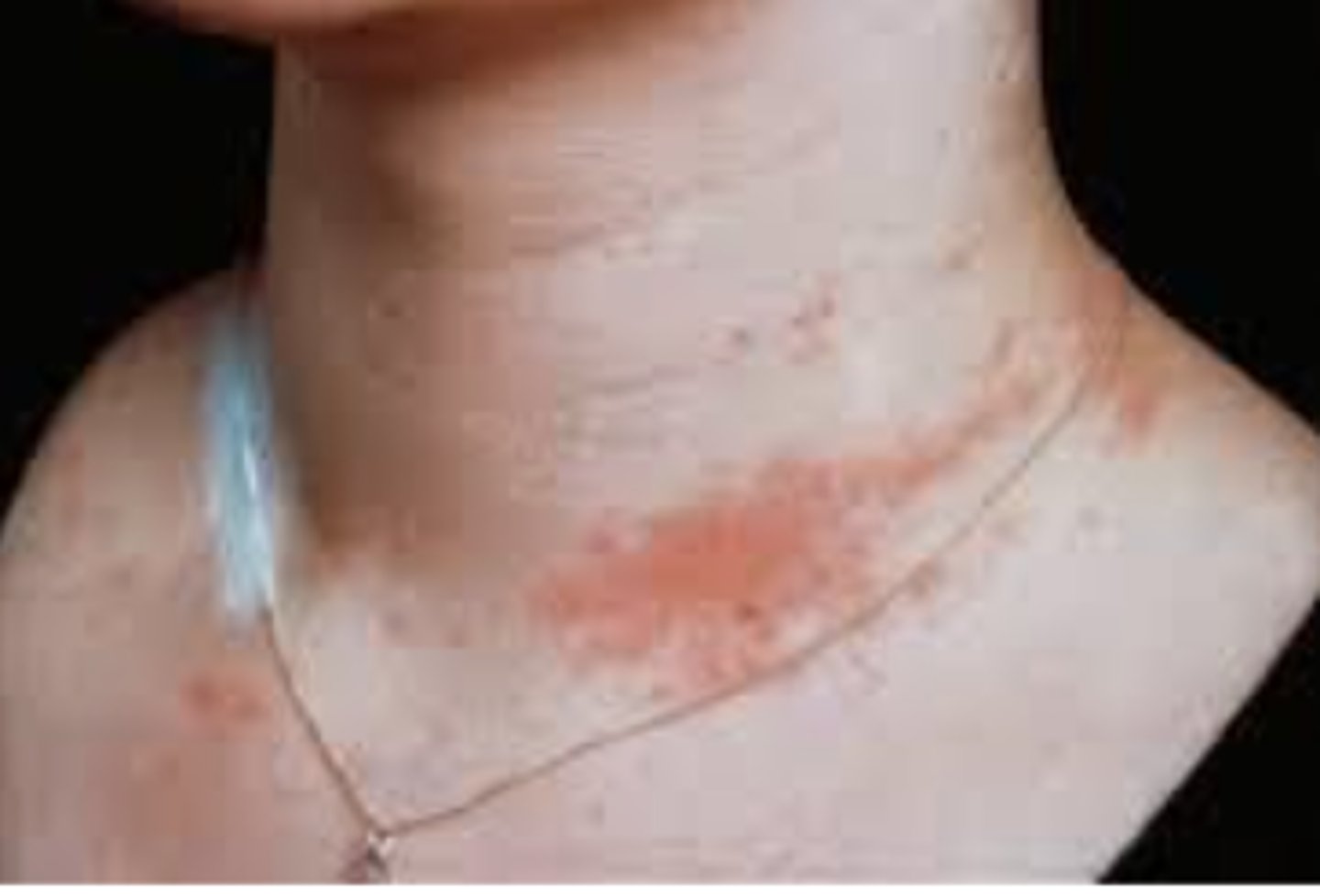
Irritant contact dermatitis
occurs when irritating substances temporarily damage the epidermis