Equine dentisry 1
 Call Kai
 Learn
Learn Practice Test
 Spaced Repetition
 Match
Match Flashcards
 Knowt Play
1/50

There's no tags or description
Looks like no tags are added yet.
Name | Mastery | Learn | Test | Matching | Spaced | Call with Kai | Chat |
|---|
No analytics yet
Send a link to your students to track their progress
51 Terms
What dentition pattern do horses have?
Hypsodont = long crowned
What diet do horses have and how long do they graze for?
Grass diet —> abrasive
Graze for 18hrs / day
What is the eruption time of horse's teeth?
2mm/ year
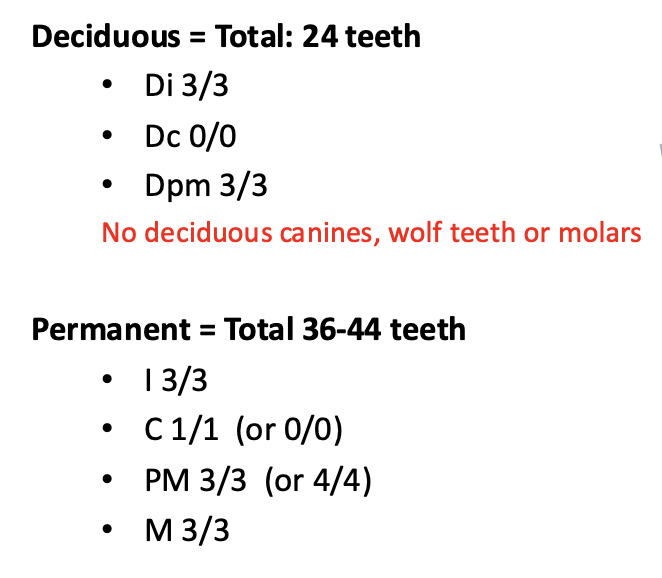
What is the dental formulae of equids- deciduous and permanent?
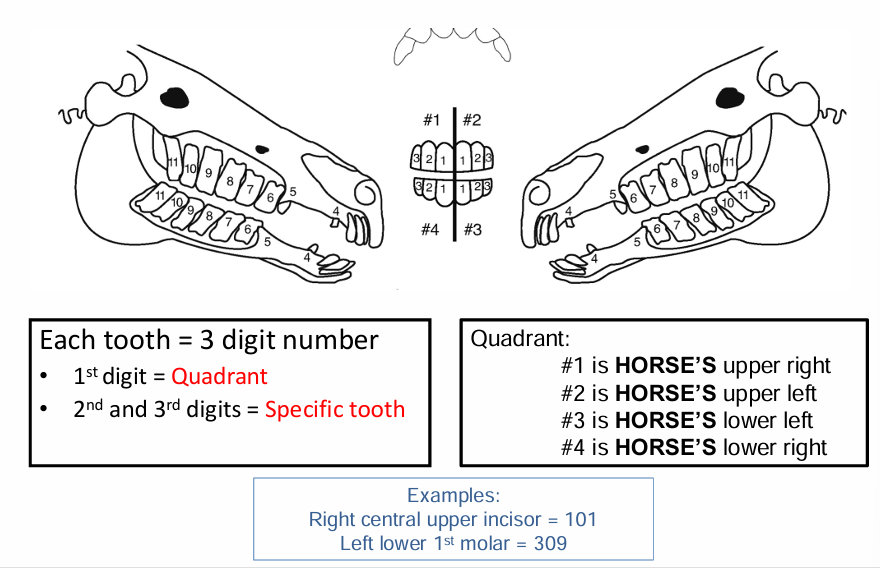
What is the triadan numbering system for permanent horse teeth?
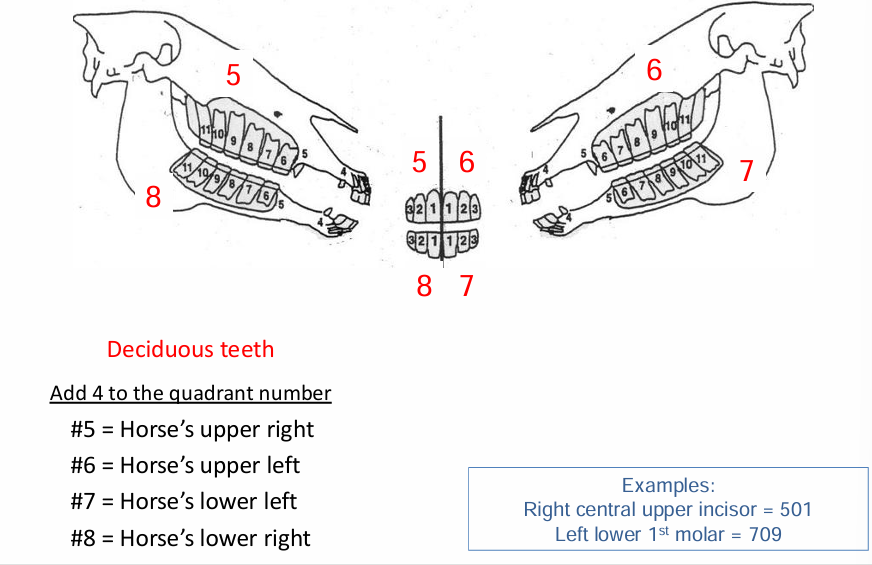
What is the deciduous triadan numbering system for horse teeth?
What are the eruption times for deciduous incisors of the horses?
01s (central) = 1 week
02s (middle) = 6 weeks
03s (corner) = 6-9 months
(Easy to remember 6 days, 6 weeks, 6 months)
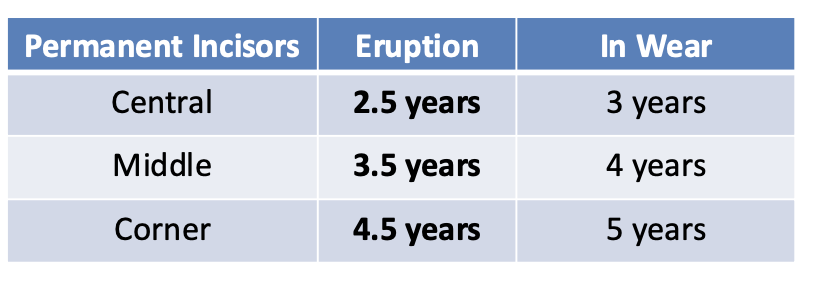
What are the eruption times for permanent incisors of the horses?
What is the eruption time for canine teeth?
5 years
(In males, occasionally females)
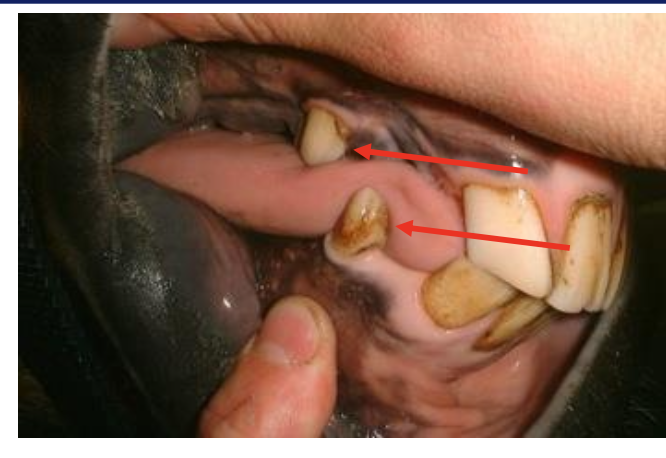
(no deciduous precursor)
What is the eruption time for wolf teeth?
1 year
(Many lost with 06 cap —> 2.5 years)
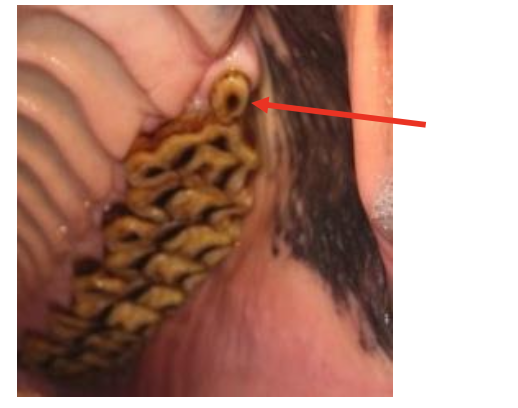
(1st PM)
(no deciduous precursor)
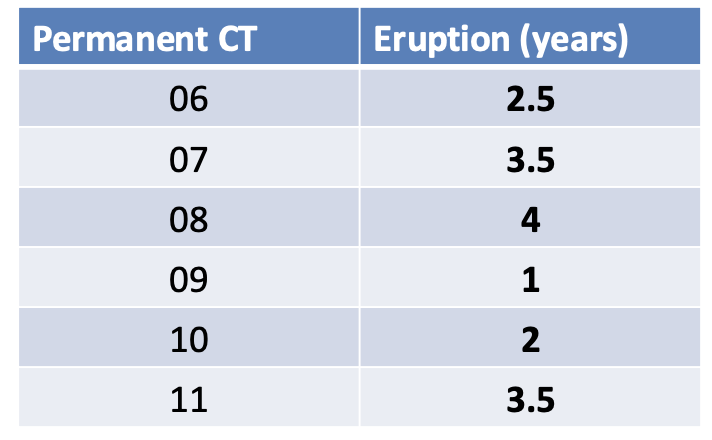
What are the eruption times of the cheek teeth?
PMs —> 06, 07, 08 present at birth
Cap shedding time very variable
Ms —> No deciduous precursor
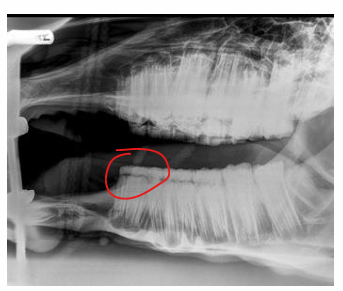
What does this radiograph show?
Dental caps, only on PMs
Recall the different layers of the tooth
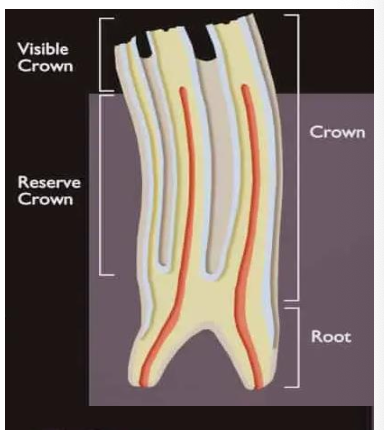
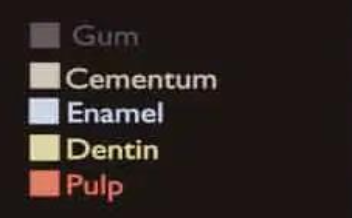
What are the general features of the horse tooth anatomy ?
Irregularly formed laminate of tissues with different properties
Why is the tooth anatomy irregular?
Complex folds/ridges increase amount of enamel present on occlusal surface & total surface area of enamel available
Why does the tooth anatomy have a laminated structure?
Dentine & cementum interspersed between enamel folds protects brittle enamel from cracking & form irregular occlusal surface due to differential wear
Recall the features of enamel
Hardest substance in body
Brittle
No capacity to heal if damaged
Almost translucent in horses
Recall the features of dentine
Majority of tooth
Cream coloured
Calcified tissues
Produced by odontoblasts
Four subtypes of dentine
1°, 2° (regular and irregular), 3°
Recall the features of cementum
Outermost layer of tooth (& fills infundibulum) similar to bone, attachment between tooth & periodontal lig
Recall the features of pulp
Contains vital structures (nerves, blood supply, lymphatics and odontoblasts)
Variable distance from occlusal surface (1mm-36mm)
How does the appearance of the incisor change throughout the years?
Infundibilum (lingual side) & dentine star become visible at 4 years
More triangular and then more round when older
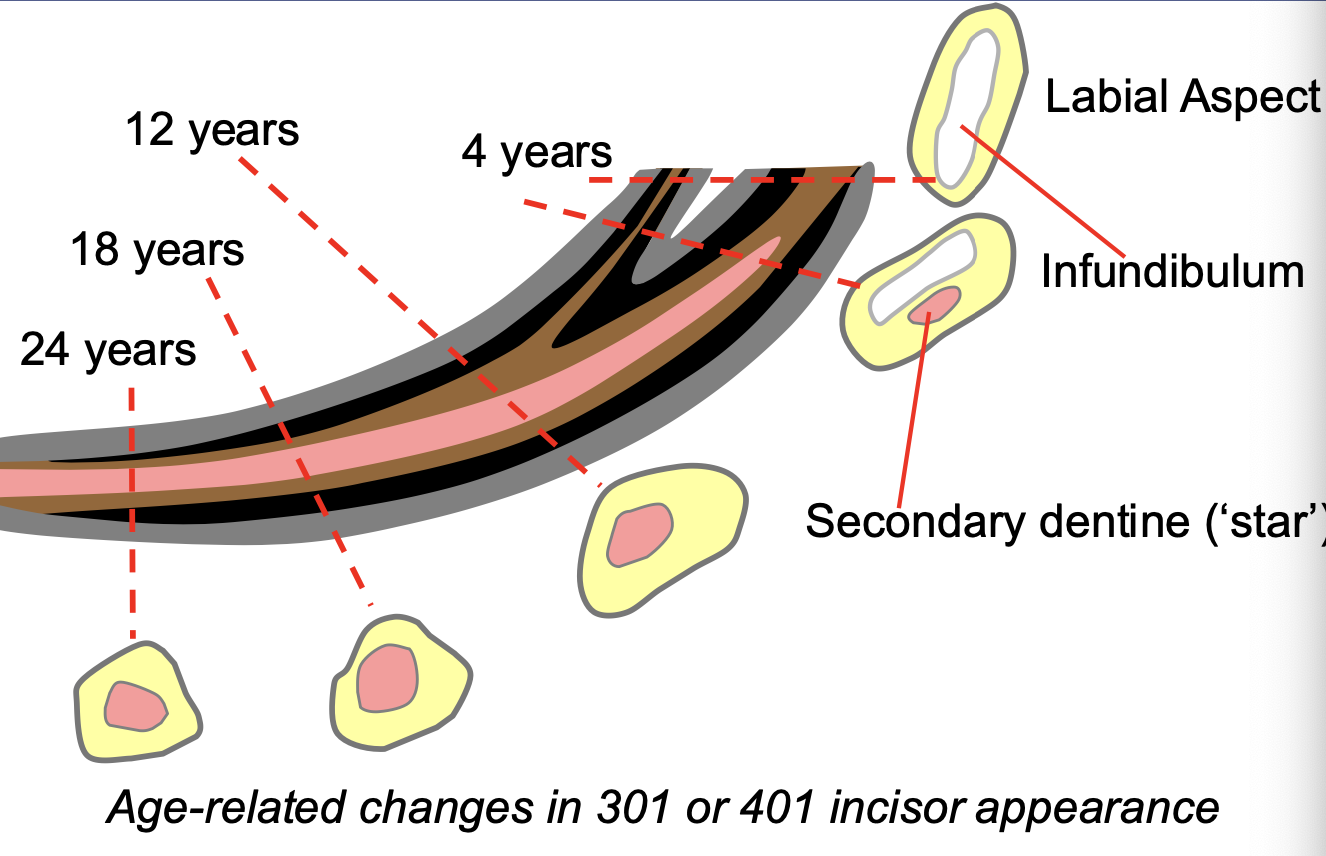
(age related to pre-purchase examination when buying horse)
Why is ageing teeth inaccurate?
Individual variation (genetics)
Uneven wear (diet & environment e.g. crib biting )
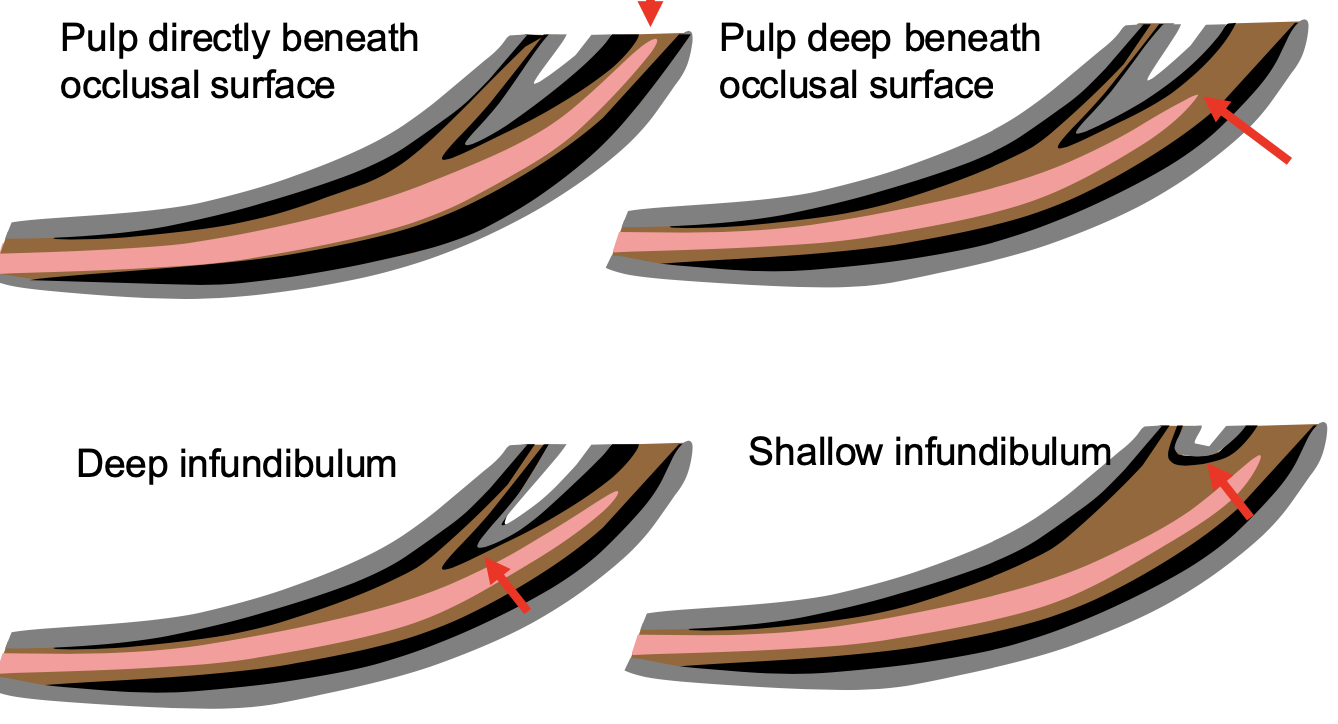
Label the cheek tooth
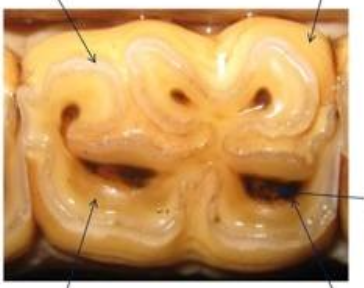
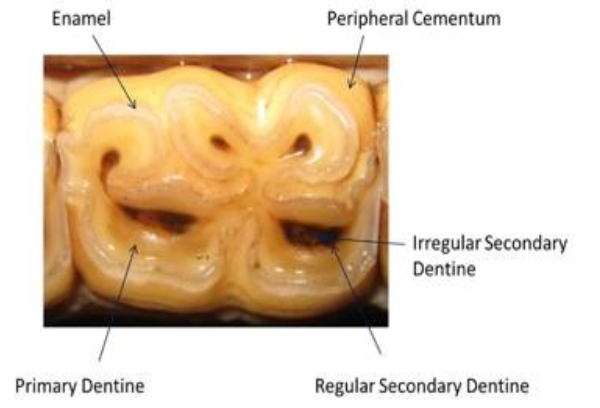
How does the cheek tooth anatomy vary between the maxillary CT and mandibular CT?
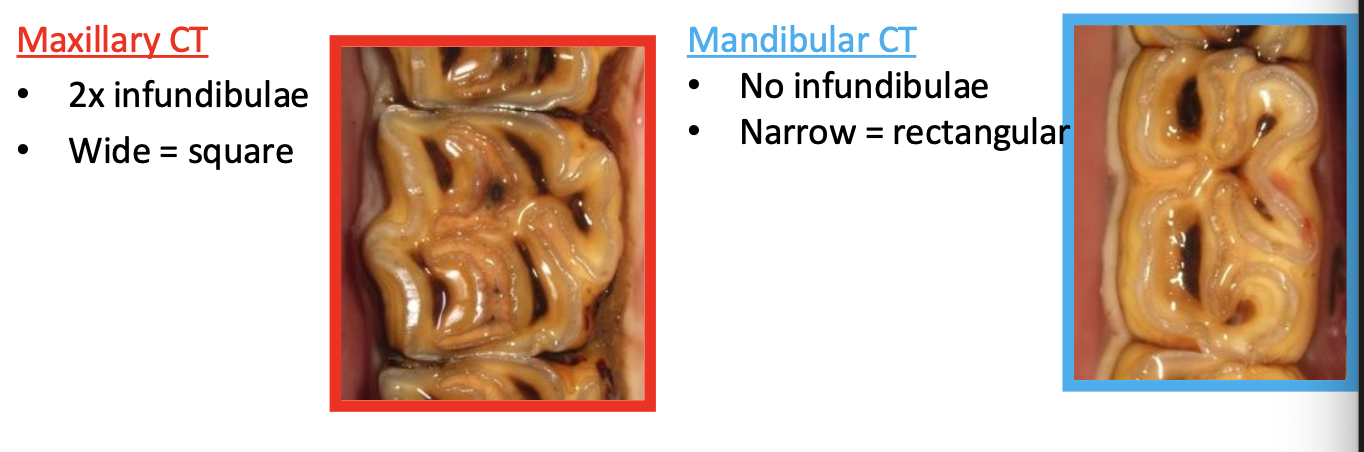
Maxil = prone to carries, squarer
Mandib = narrower
What are pulp horns?
Area of pigmented 2° dentine on occlusal surface (approx 5mm thick)
Protect underlying pulp
Every cheek tooth >5 pulp horns
06s + 11s have extra pulp horns
06 = rostrally
11s = caudally
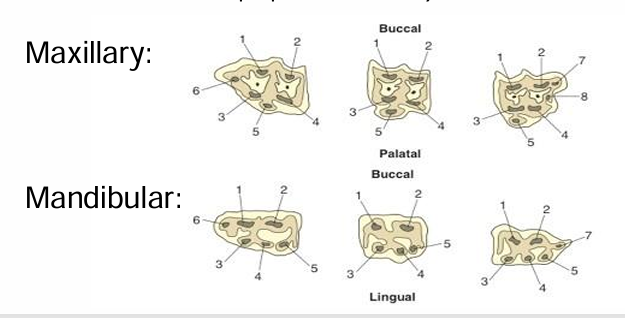
What is this showing
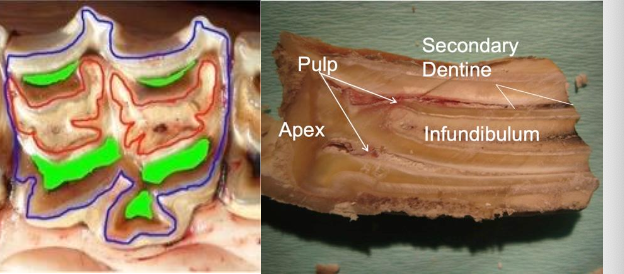
Maxillary cheek teeth
2 infundibulae (enamel cups) = red
>5 pulp horns = green
Where are the maxillary cheek teeth located?
06 + 07 → Maxillary bone
08 + 09 → Rostral maxillary sinus
10 + 11 → Caudal maxillary sinus
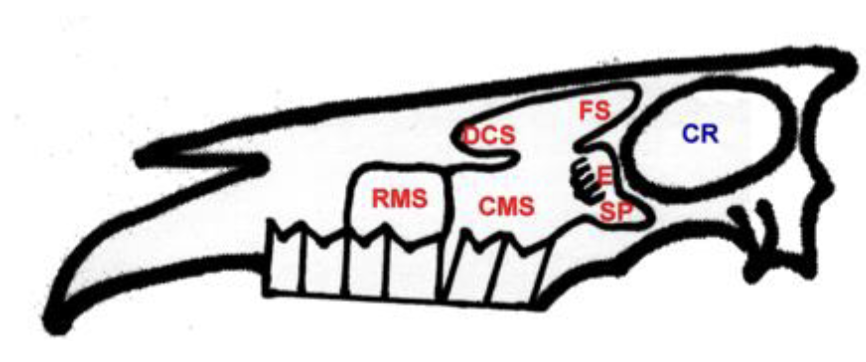
What is the clinical relevance of the location of the cheek teeth?
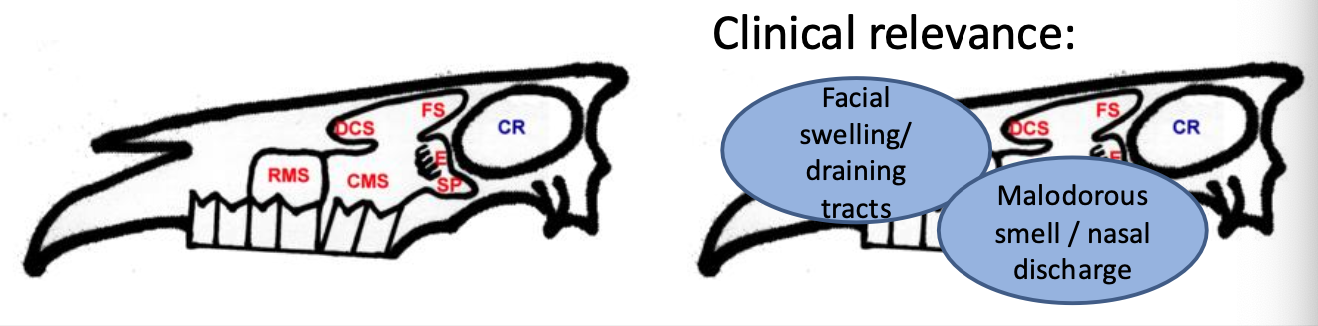
Presentation of maxillary tooth infection dependent on location (whether sits in bone or sinus)
What are the features of the mandibular cheek teeth?
No infundibulae
>5 pulp horns
Narrower bucco-lingually compared to maxillary cheek teeth
How many roots do mandibular cheek teeth have?
2 roots (rostral and caudal)
06-11 = mandible
What is the clinical relevance of location of mandibular cheek teeth?
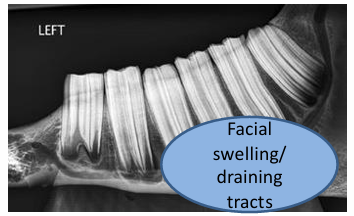
What is anisognathia?
Maxillary CT 20-25% further apart than Mandibular CT —> mandib CT sit closer to teeth
Relevance = location of spurs
Able to grind teeth more effectively
overgrowths form if not grinding properly → sharp
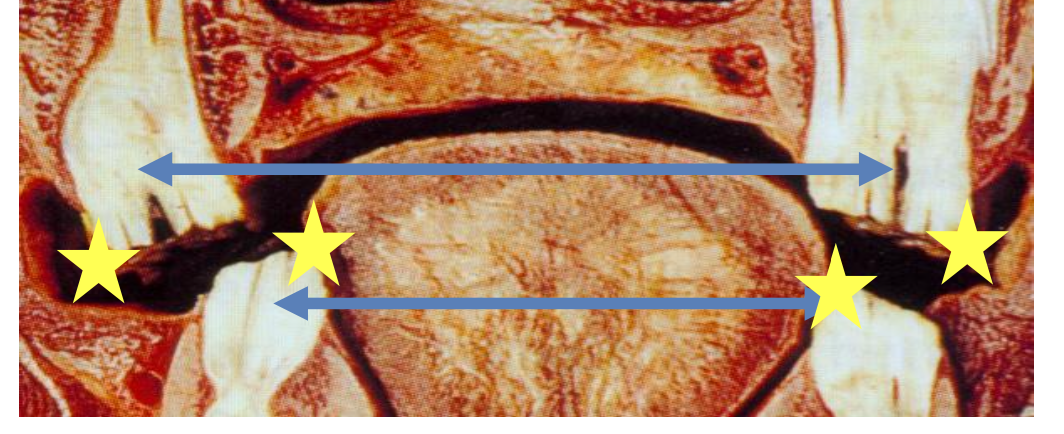
What is the widest point of the curvature of the maxilla? What are the implications of this?
Widest 08-10
Implications:
Tack
Removing buccal overgrowths follow curve
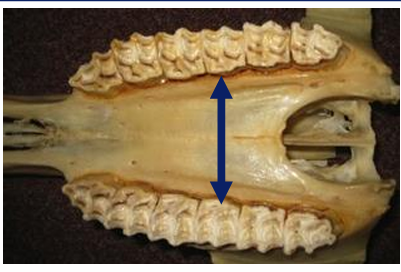
What is the curve of spee?
Curving upwards of cheek teeth
take care when trying to remove caudal 11 overgrowths
More pronounced in Arabs
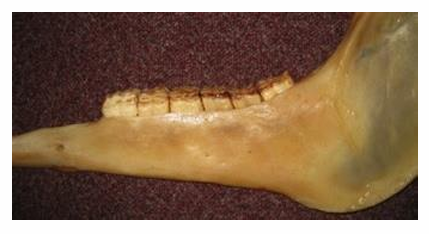
What do you need to prepare for a dental exam?
Dental equipment, gloves, water
Lighting and appropriate area
Recording sheets
+/- Sedation —> alpha 2 agonists, butorphonol
+/- head stand
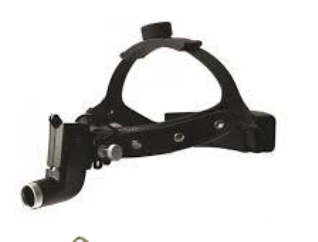
List the basic dental equipment
Gag/Speculum
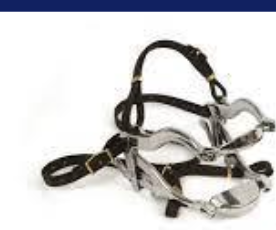
Light source
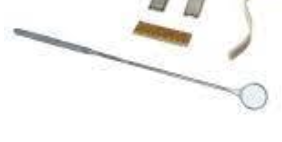
Dental mirror
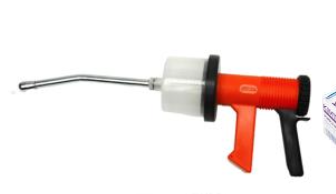
Dental Syringe
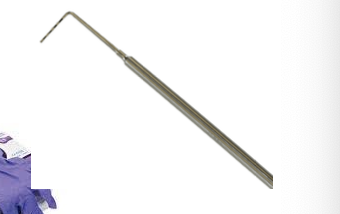
Pulpar explorer
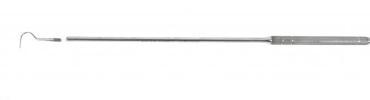
Periodontal probe
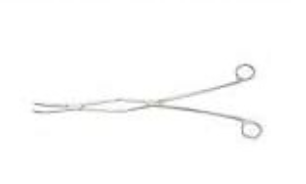
Diastema forceps —> to pick bits of grass out between teeth
Rasps
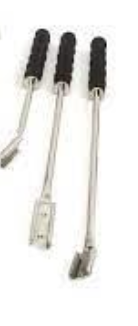
+/- motorised tools
What should you do in the initial examination of a horse?
Thorough history
Recent weight loss, colic, rubbing, headshaking, feed type
duration of signs
Watch the horse eat —> normal grinding sounds?, chew on both sides?, take longer to chew?, quidding?
quidding = partially masticated food due to pain —> balls of food spat out (horses good at covering it up)
General clinical exam
Signs of underlying disease
External swellings or asymmetry
Draining tracts
Halitosis
Nasal discharge
What should you do in the incisor examination?
Check for any abnormal masses / fractured teeth
Check occlusion from side —> over / underbite
performed in neutral position
Check occlusion from front —> slant / smile mouth or evidence of crib biting
Check lateral excursion —> movement of maxilla & mandible laterally
Count teeth —> supranumerary, missing, retained deciduous
How do you examine canines and wolf teeth?
Place speculum
Flush mouth
Check canines —> calculus formation, fractured canines, apical infection
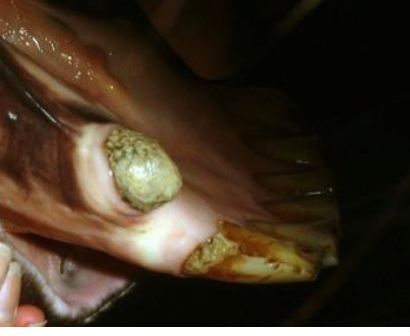
Wolf teeth —> palpate bars to check
Displaced, loose, blindly erupted, mandibular
Has bit come into contact with them?
What are the four steps of the cheek teeth exam?
Palpate
Look without mirror - count teeth
Look with mirror - count again, every inter-dental space
Probe
What should you palpate in the first step of your oral exam?
Occlusal surface of every tooth
Edges of all teeth particularly:
buccal aspect of Maxillary CT
lingual aspect of Mandibular CT
Every inter-dental space
Buccal mucosa
Tongue adjacent to the teeth
Especially opposite pathology
What is being assessed in the oral exam?
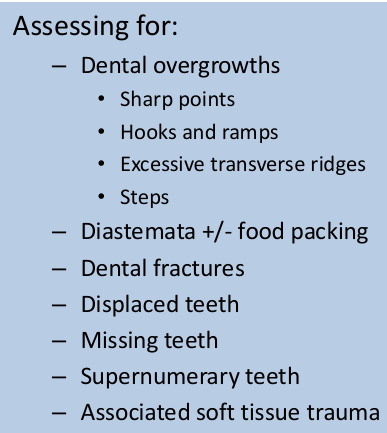
What should you probe in the fourth step of the dental exam?
Teeth of concern
Every pulp horn
Assess depth of diastema
What is being assessed with the probe?
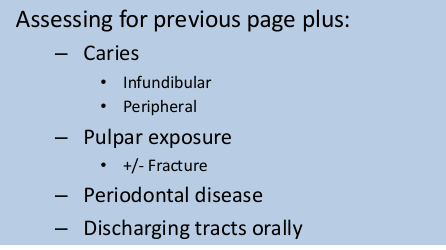
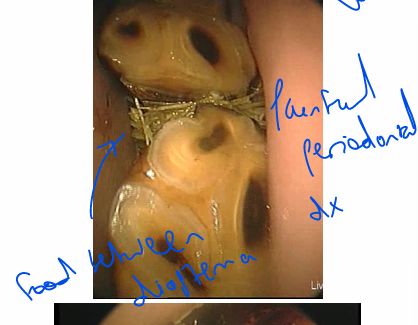
How is oral endoscopy helpful?
Better evaluation of occlusal surface
Fissure fractures
Subtle dentinal abnormalities
Better evaluation of diastemata & periodontium
What are the methods you can use for routine floating?
Hand rasps
Motorised equipment
Disc vs apple core
Variable angle
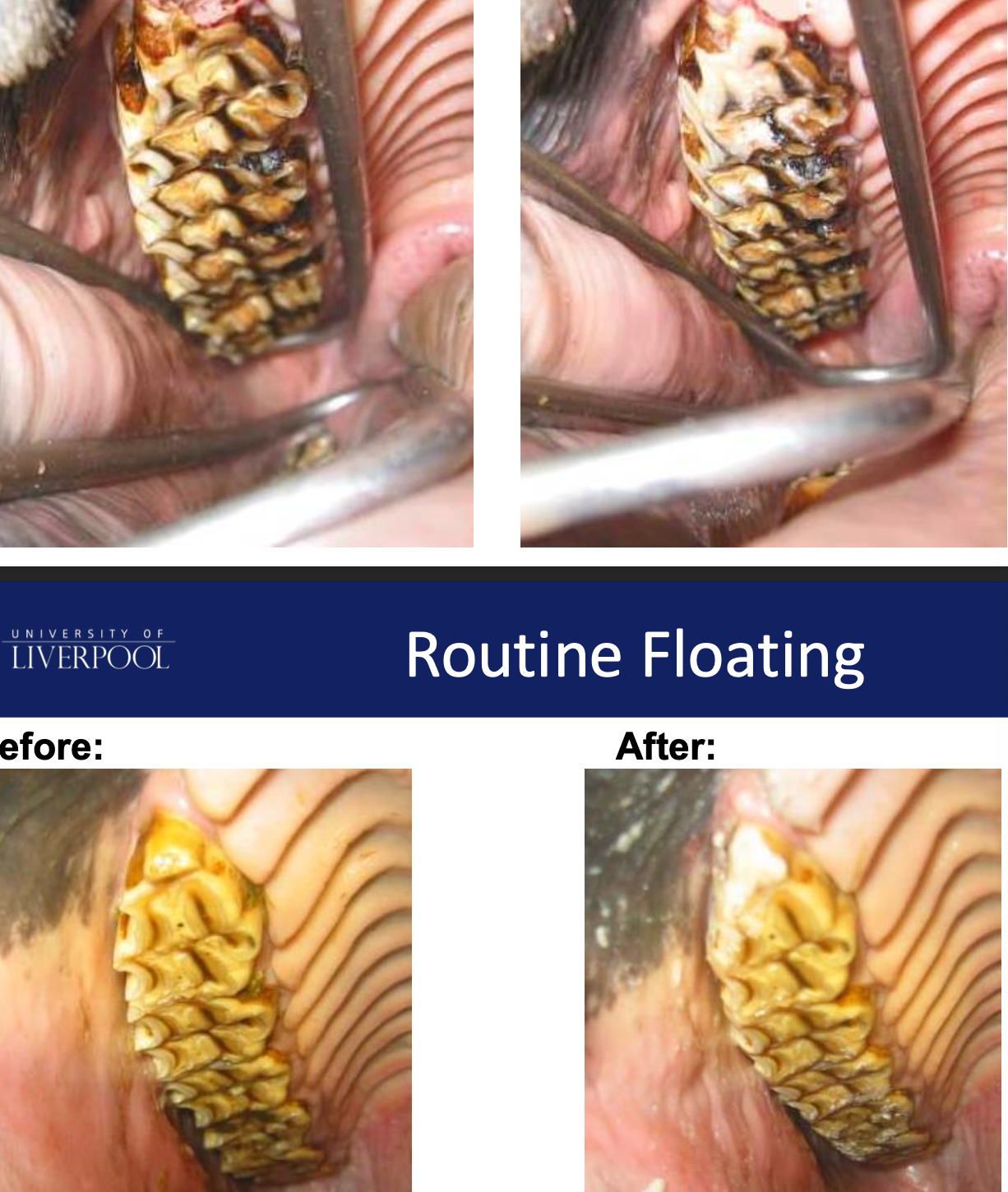
(before = can cause ulceration due to sharp points)
(after = smoother)
How do you document findings from a dental exam?
Dental chart —> give record to owner + one for yourself
Discuss findings and plan treatments
further diagnostic imaging?
What further diagnostic imaging can you do to evaluate dental disease?
Radiography
Sinoscopy
CT
Scintigraphy
Magnetic resonance imaging (MRI)
What procedures are classed as category 1?
Can be performed after recognised training w/o specific attainment of qualifications
Examination of teeth
Removal of sharp enamel points using manual rasps only
Removal of small dental overgrowths (maximum 4mm reductions) using manual rasps only
Rostral profiling of the first cheek teeth (maximum 4mm reductions), previously termed ‘bit seat shaping’
Removal of loose deciduous caps
Removal of supragingival calculus
What are category 2 procedures and who can perform them?
Cat 2 = EDT passed DEFRA exam
Examination, evaluation and recording of dental abnormalities
Removal of loose teeth / fragments with negligible periodontal attachments
The removal of erupted, non-displaced wolf teeth in the upper or lower jaw under direct and continuous veterinary supervision
Palliative rasping of fractured and adjacent teeth
Motorised dental instruments to reduce overgrowths and sharp enamel points only
Horses should be sedated unless it is deemed safe to undertake any proposed procedure without sedation, with full informed consent of the owner
What are category 3 procedures who can perform them?
Category 3 procedures may only be performed by qualified veterinary surgeons
Diastemata widening
Unerrupted wolf tooth removal
Teeth extractions
(only qualified vet surgeons can dispense POMs + administer / owners can administer)