Introduction to Lipid Catabolism
 Call Kai
 Learn
Learn Practice Test
 Spaced Repetition
 Match
Match Flashcards
 Knowt Play
1/31

There's no tags or description
Looks like no tags are added yet.
Name | Mastery | Learn | Test | Matching | Spaced | Call with Kai | Chat |
|---|
No analytics yet
Send a link to your students to track their progress
32 Terms
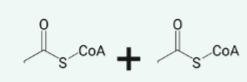
name the structure
Acetyl CoA
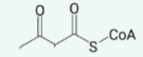
name the structure
acetoacetyl-CoA
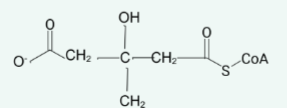
name the structure
HMG-CoA
(B-hydroxy-B-methyl-glutaryl-CoA)
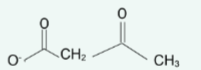
name the structure
acetoacetate
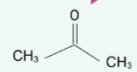
name the structure
acetone
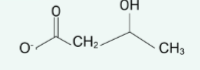
name the structure
B-hydroxybutyrate
What emulsifies dietary fat in the small intestine, and why is this step necessary?
Bile salts. Fat is hydrophobic and would otherwise clump into large globules; emulsification breaks it into smaller droplets, increasing surface area for enzymes to act on.
What enzyme breaks down triacylglycerols in the intestine, and what happens to the products afterward
Intestinal lipases hydrolyze TAGs into free fatty acids, which are absorbed by intestinal epithelial cells and reassembled back into triacylglycerols.
After triacylglycerols are reassembled in intestinal epithelial cells, how are they packaged and transported?
They're packaged into chylomicrons, which travel through the lymphatic system and then the bloodstream to target tissues.
What enzyme releases free fatty acids from chylomicrons at target tissues, and what activates it?
Lipoprotein lipase, activated by ApoC-II (apolipoprotein C-II) on the chylomicron surface. It sits at the capillary wall/endothelial lining and hydrolyzes the TAGs into free fatty acids for tissue uptake.
What hormone triggers lipolysis in adipocytes, and what type of receptor does it act on?
Glucagon, acting on a Gs-coupled GPCR on the adipocyte membrane, triggering intracellular signaling that promotes fat mobilization.
What are the three sequential enzymes that break down a stored triacylglycerol into glycerol + 3 free fatty acids, in order?
ATGL/ Adipose Triglyceride Lipase (TAG → DAG + FA) → HSL/hormone-sensitive lipase (DAG → MAG + FA) → MGL/monoacylglycerol lipase (MAG → glycerol + FA).
Once released from adipose tissue, how do free fatty acids travel through the blood to tissues like heart and skeletal muscle
Bound to serum albumin (since they're not water-soluble on their own).
What enzyme activates a free fatty acid to fatty acyl-CoA, and where does this occur?
Fatty acyl coa Synthetase/ Cytosol outside the mitochondria
Walk through the carnitine shuttle steps that get fatty acyl-CoA into the mitochondrial matrix
CPT1 (CAT1) at the outer mitochondrial membrane transfers the fatty acyl group from CoA to carnitine → fatty acyl-carnitine crosses the inner mitochondrial membrane via a translocase → CPT2 (CAT2) on the matrix side reconverts it back to fatty acyl-CoA, regenerating free carnitine.
Why is the carnitine shuttle considered a major control point for fatty acid oxidation?
Malonyl-CoA (the first intermediate in fatty acid synthesis) inhibits CPT1, ensuring fatty acid synthesis and oxidation don't happen simultaneously in the same cell.
What are the four enzymatic steps of one round of β-oxidation, in order?
1) Acyl-CoA dehydrogenase (introduces double bond between α/β carbons, FAD→FADH2) → 2) Enoyl-CoA hydratase (adds water across double bond) → 3) β-hydroxyacyl-CoA dehydrogenase (oxidizes hydroxyl to keto group, NAD+→NADH) → 4) Thiolase (cleaves off acetyl-CoA using CoA-SH, releasing a fatty acyl-CoA shortened by 2 carbons).
In β-oxidation, which carbon becomes part of the released acetyl-CoA, and which becomes the new carbonyl carbon of the shortened chain?
The original α carbon becomes part of acetyl-CoA; the original β carbon becomes the new carbonyl carbon of the shortened fatty acyl-CoA.
Starting from palmitoyl-CoA (16 carbons), how many rounds of β-oxidation are needed, and what's the final yield?
7 rounds, yielding 8 acetyl-CoA total (each round removes one 2-carbon acetyl-CoA; the last round splits the remaining 4-carbon piece into two acetyl-CoA)
What two additional enzymes are needed to oxidize unsaturated fatty acids that aren't needed for saturated ones?
Enoyl-CoA isomerase and 2,4-dienoyl-CoA reductase.
What happens when an odd-chain fatty acid undergoes β-oxidation, and what vitamin-dependent step is involved
It yields acetyl-CoA units plus one propionyl-CoA at the end. Propionyl-CoA is carboxylated to methylmalonyl-CoA, then isomerized to succinyl-CoA by methylmalonyl-CoA mutase — an enzyme requiring vitamin B12 (cobalamin).
For one palmitoyl-CoA (16C) fully oxidized, how many FADH2 and NADH are produced, and how much ATP does each contribute?
7 FADH2 × 1.5 ATP = 10.5 ATP; 7 NADH × 2.5 ATP = 17.5 ATP (from β-oxidation alone, not counting the 8 acetyl-CoA entering the TCA cycle for further ATP)
: Why does even more ATP get generated beyond the ~28 ATP from FADH2/NADH in β-oxidation?
Because the 8 acetyl-CoA produced also enter the TCA cycle (in extrahepatic tissue), generating substantially more ATP per acetyl-CoA oxidized.
What are the three ketone bodies, and what are they all synthesized from
Acetone, acetoacetate, and β-hydroxybutyrate — all synthesized from acetyl-CoA.
Where are ketone bodies made, and where are they used?
Made in the liver; used by extrahepatic (peripheral) tissues.
Why can't the liver itself use the acetyl-CoA it generates from β-oxidation for ketone bodies?
After β-oxidation, the liver lacks the enzyme needed to activate acetoacetate back into acetoacetyl-CoA for further use — so it diverts the excess acetyl-CoA into ketone body synthesis instead of using it locally.
What are the steps of ketogenesis, starting from two acetyl-CoA molecules?
1) Thiolase combines 2 acetyl-CoA → acetoacetyl-CoA (releasing CoA-SH) → 2) HMG-CoA synthase adds a third acetyl-CoA → HMG-CoA → 3) HMG-CoA lyase cleaves HMG-CoA → acetoacetate + acetyl-CoA.
Ketogenesis: Once acetoacetate is formed, what are its two possible fates?
Reduction to β-hydroxybutyrate (via β-hydroxybutyrate dehydrogenase, using NADH → NAD+), or 2) spontaneous/enzymatic decarboxylation to acetone (releasing CO2).
How is β-hydroxybutyrate converted back into a usable form in peripheral tissues?
β-hydroxybutyrate dehydrogenase oxidizes it back to acetoacetate, converting NAD+ to NADH.
How does acetoacetate get "reactivated" into acetoacetyl-CoA in extrahepatic tissue, given the liver can't do this step itself?
β-ketoacyl-CoA transferase (thiophorase) transfers CoA from succinyl-CoA onto acetoacetate, forming acetoacetyl-CoA and releasing succinate. This is the enzyme the liver lacks.
What happens to acetoacetyl-CoA once it's formed in peripheral tissue, and what can the products do?
Thiolase cleaves it (using CoA-SH) into two acetyl-CoA molecules, which can enter the citric acid cycle for energy.
Why can prolonged aerobic exercise on a low-carbohydrate diet induce ketogenesis?
Low carb intake + sustained exercise depletes glycogen/glucose availability, so the body shifts toward fat oxidation for fuel — increasing acetyl-CoA production in the liver beyond TCA capacity, again driving ketone body formation.