Ch4 Gene Interaction
 Call Kai
 Learn
Learn Practice Test
 Spaced Repetition
 Match
Match Flashcards
 Knowt Play
1/74

There's no tags or description
Looks like no tags are added yet.
Name | Mastery | Learn | Test | Matching | Spaced | Call with Kai | Chat |
|---|
No analytics yet
Send a link to your students to track their progress
75 Terms
In Gene interaction there are many ways genes interact to influence a BLANK
Phenotype
There are several important types of gene interactions can you list the four?
1.There may be more than two alleles for a given locus within a population
2. Dominance of one allele over another may not be complete
3.Two or more genes may affect a single trait
4.the expression of a trait may depend on the interaction of more than one gene and/or the interaction of genes with non-genic factors
Mendel chose to examine traits with just BLANK alternative forms
*in one case one form was BLANK over the other such that individuals heterozygous for the two alleles showed the BLANK phenotype
*research in the early and mid-20th century was aimed at better understanding the BLANK nature of dominance
Two
*completely dominant, dominant
*molecular
The terms dominant and recessive have a BLANK basis
Biological
The dominance of one allele over another is determined by the BLANK of that allele
Protein product
The overall BLANK is the consequence of the activities of the protein products of the alleles of the gene
Phenotype
Example 1: Mutant Alleles BLANK to Wild Type
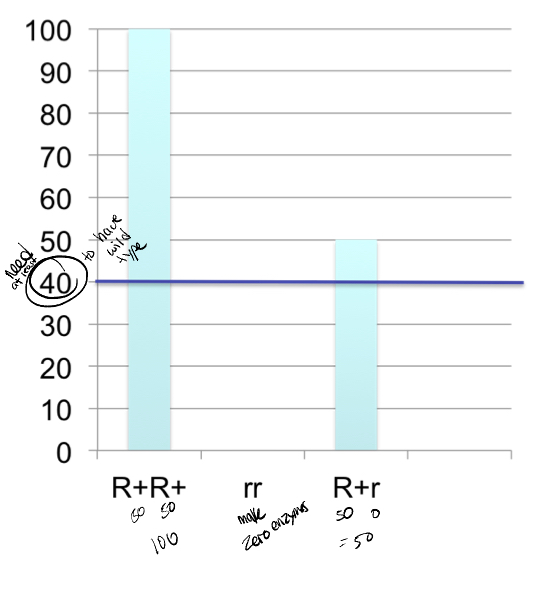
a wild type alleles (R+) produces and active enzyme (50 units) and a mutant allele ( r) produces little or no active enzyme (0 units)
40 or more units of enzyme activity will produce a wild type phenotypes thus R+R+ (100 units) or R+r (50 units) individuals are wild type
r/r individuals (0units) have the mutant phenotype this the mutant allele is recessive
In this case the wild type allele is BLANK meaning that?
Haplosufficent, one copy of it is enough for normal function
Example2: Mutant Allele Dominant to Wild Type
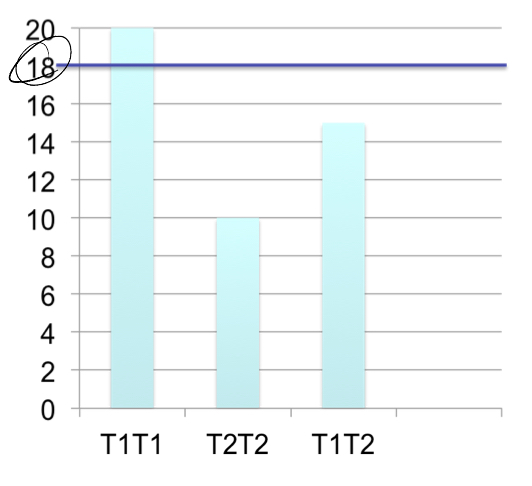
*An Allele (T1) produces an active enzyme (10 units) and a mutant allele (T2) produces less active enzyme (5 units)
*18 or more units of enzyme activity will produce a wild type phenotypes, thus only T1T1 (20 units) individuals will be wild type
*the mutant allele is dominant to the wild type allele because individuals heterozygous for both alleles or homozygous for the mutant allele are both mutant in phenotype
In this case the wild type allele is BLANK meaning?
In this case the wild type allele is haploinsufficent meaning that one copy of it is NOT enough for normal function
What causes a wild-type phenotype is always be produced?
When an organism has two copies of the wild type allele
Mutant alleles can either be? (2 things) and describe
Gain-of function- when the gene product acquires a new function or shows increased leave of wild type activity
Loss- of function- when there is a significant decrease or complete loss of functional gene product
Loss of function. Mutation produce BLANK which is called a BLANK or BLANK often these are lethal when homozygous
No functional protein product, null mutation, amorphic mutation
Loss of function mutations that result in a BLANK are called BLANK or BLANK the severity of the phenotype depends on the level of activity of the leaky mutation
Partial loss of function, leaky mutation as, hypomorphic mutations
Mutimeric proteins, composed of two or more polypeptides that join together to form a functional protein are particularly subject to BLANK
Dominant Negative mutations
Dominant Negative Mutations are dominant due to?
The loos of function of the multimeric protein complex due to an amino acid change in one subunit
Dominant negative mutations are negative mutations due to their BLANK on the protein as a whole
Spoiler effect
What type of mutations (usually dominant can be either hypermorphic or neomorphic?)
Gain-of-function mutations
Define hypermorphic
Mutations produce more gene activity than wild type
Define neomorphic
Mutations acquire novel gene activities not in the wild type
Often the dominance of one allele over the other is BLANK in this case allele designations such as A1, A2, or B1, B2 are used instead of capitol or lowercase letters
Not complete
What is the term (s) for when heterozygous individuals display intermediate phenotypes between either homozygous type (typically the heterozygote is more similar to one of the homozygous types than the other)
Incomplete dominance or partial dominance
What type of dominance does blood type ABO alleles reveal?
Codominance
The ABO blood type has BLANK different types results from different combinations of BLANK alleles
4, 3
Which two alleles are codominant in blood types
IA and IB
What does codominance produce?
Heterozygotes with a phenotype different than that of either homozygote
IA and IB alleles are BLANK over the i allele (i fully recessive)
Completely dominant
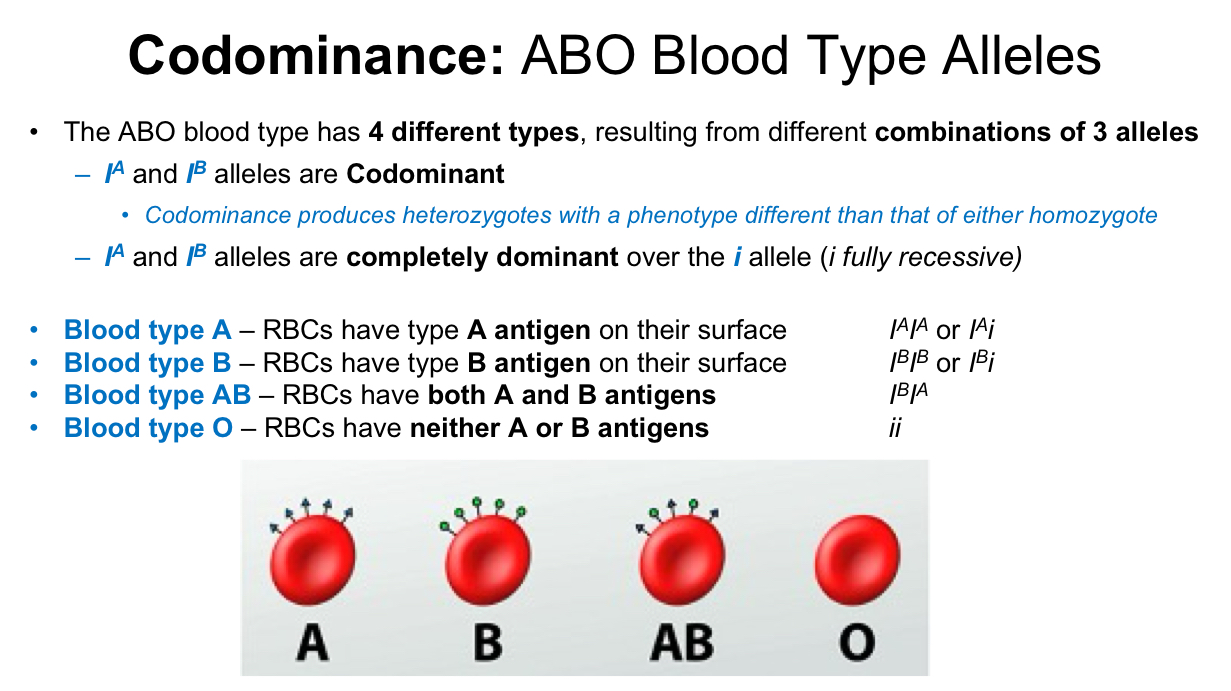
Blood type A- RBCs have type BLANK on surface
Blood type B- RBCs have type BLANK on their surface
Blood type AB- have both BLANK and BLANK antigens
Blood type O- have neither BLANK or BLANK antigens
A
B
A, B
A,B
The two blood group antigens are BLANK with the lipid portion anchored in the red blood cell membrane
Glycolipids
The blood group antigens are based on a BLANK sugar molecule, called the BLANK which is then modified by the addition of an extra (6th) sugar of one type A or another type B or no extra sugar molecule added O
5
H antigen
The H antigen is created by a separate enzyme- individuals homozygous recessive for the loss of this enzyme (h/h) display the BLANK and lack the H antigen and thus are not A, B, or O, this is found in 1:8000 in Taiwan, 1:10000 in Indian and 1 in a million in Europe, there is no adverse effect
Bombay phenotype
Many BLANK required to produce and distribute pigment to the hair follicles or skin cells where they give rise to skin or coat color
Genes
What gene is responsible for coat color in mammals?
C Gene
The C gene produces an enzyme involved in BLANK production, there are dozen of BLANK of the gene, 4 form a clear BLANK BLANK
Melanin, alleles, allelic series
Which Allele of the C gene produces a functional enzyme and full coat color?
C (wt)
Which allele of the C gene produces a “dilute” phenotype called chinchilla?
Cch (superscript)
Which C gene allele produces a phenotype called Himalayan with little pigment on the body but full color on the extremities (temp sensitive protein)
Ch (superscript)
Which c gene allele produces a fully recessive null allele and produces an albino phenotype?
C
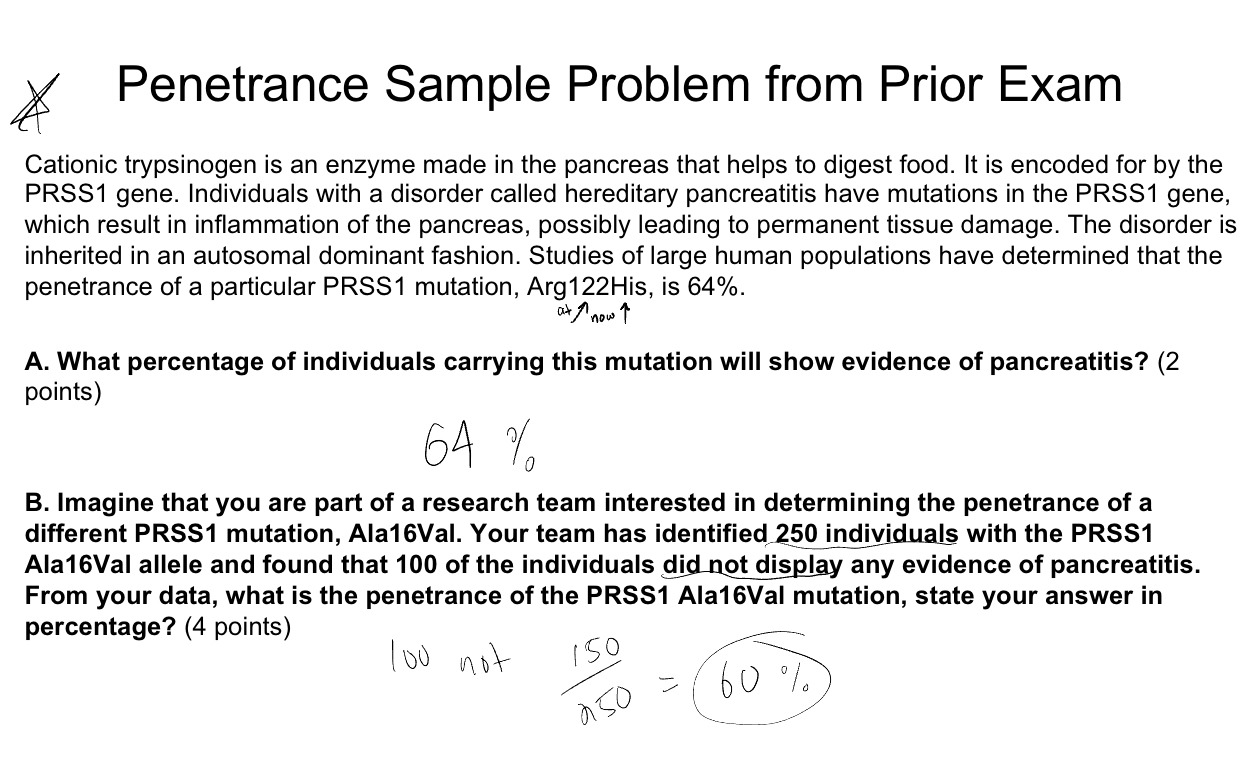
Penetrance sample problem
BLANK is seen in individual who show a phenotype but to a varying degree of severity
BLANK syndrome has four principle features can you name them?
Ex- perigee each family member with the syndrome has same genotype but different combination of symptoms
Variable expressivity
Waardenburg syndrome, premature graying, hearing loss, white forelock, hearing loss, different colored eyes
The human autosomal recessive conditions BLANK is caused by the absence of an enzyme involved in phenylalanine breakdown
PKY (phenylketonuria)
BLANK is one of the hereditary disorder routinely screened for in infants
Infants with BLANK are normal at birth, but over time, the inability to break down phenylalanine is BLANK to developing neurons
PKU
PKU
Toxic
The key to preventing PKU is BLANK in the diet of infants with BLANK
Thousands of people with PKU are living normal lives due to the simple dietary modification that prevents the expression of PKU phenotype
Restricting phenylalanine
PKU
BLANK is the alteration of multiple distinct traits by a mutation in a single gene
Pleiotrophy
BLANK is an autosomal recessive condition caused by a mutation in the B-globin gene
Many red blood cells of people with this conditions take on a BLANK shape and can cause numeral physical problems and complications
Sickle Cell disease
Sickle
The collaboration of multiple genes in a produce of a single phenotypic characteristic or group of related characteristics is termed BLANK
Gene interaction
Both anabolic and catabolic pathways involves gene working together through an multi-step biochemical process with intermediate products
BLANK pathways involve biosynthesis of complex compounds
BLANK pathways involve degradation of complex compounds
Signal transduction pathways and developmental pathways involve interaction of multiple genes
Anabolic
Catabolic