Diabetic Kidney Disease and Chronic Kidney Disease (copy)
 Call Kai
 Learn
Learn Practice Test
 Spaced Repetition
 Match
Match Flashcards
1/31

Earn XP
Description and Tags
May your GFR stay high, your confidence stay higher, and your board score be off the charts.
Name | Mastery | Learn | Test | Matching | Spaced | Call with Kai | Chat |
|---|
No analytics yet
Send a link to your students to track their progress
32 Terms
Which of the following structural changes is the first identifiable lesion in the glomeruli of type 1 diabetic patients via electron microscopy?
a. Kimmelstiel-Wilson nodules
b. Podocyte detachment
c. Glomerular basement membrane (GBM) thickening
d. Arteriolar hyalinosis
Answer: c
Reference: Chapter 39, Epidemiology of Diabetic Kidney Disease, Page 1342
Explanation: GBM thickening is the first lesion identifiable by electron microscopy morphometry, often developing within 2 years of the onset of diabetes.
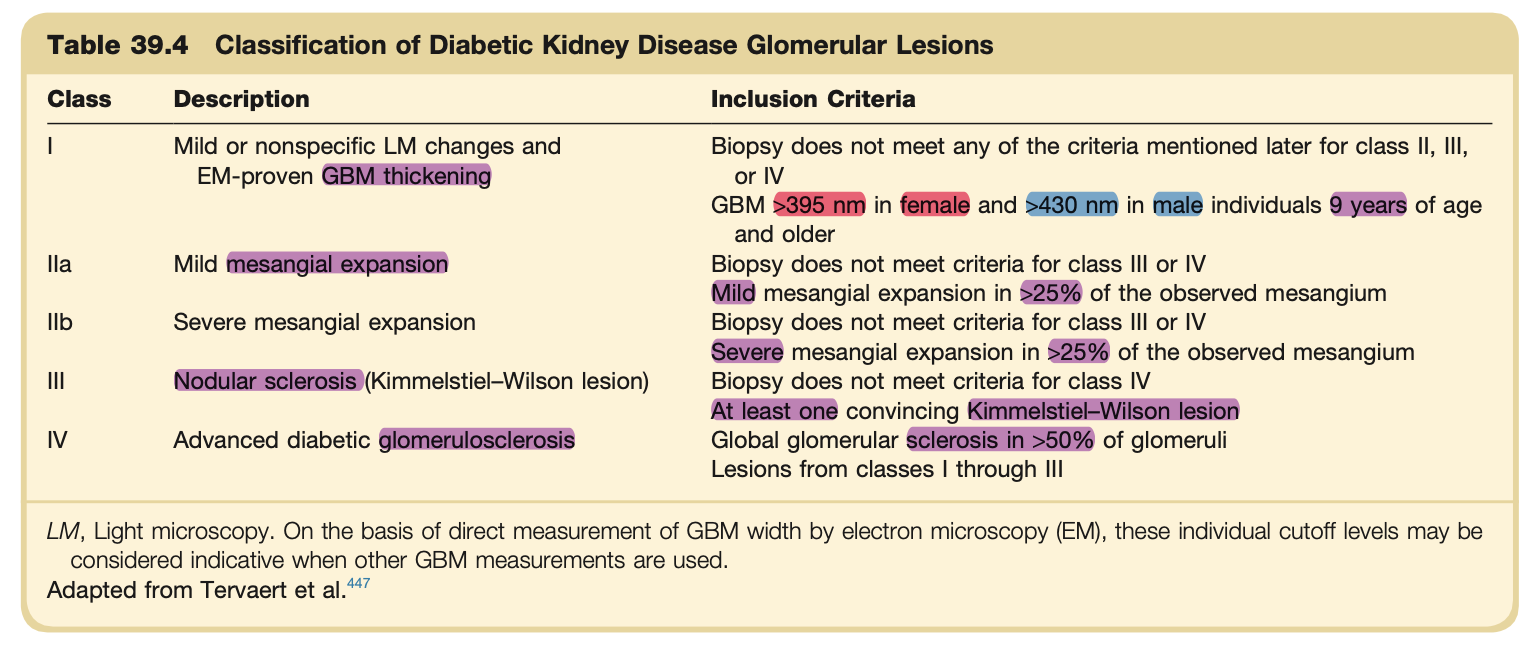
According to the Tervaert pathologic classification, a biopsy showing at least one convincing Kimmelstiel-Wilson lesion defines which class of DKD glomerular lesions?
a. Class I
b. Class II
c. Class III
d. Class IV
Answer: c
Reference: Chapter 39, Epidemiology of Diabetic Kidney Disease, Page 1350
Explanation: Class III is defined by the presence of nodular sclerosis (Kimmelstiel-Wilson lesions) without meeting the >50% global sclerosis criteria of Class IV.
Why is dual blockade of the RAAS (combining an ACE inhibitor and an ARB) currently discouraged in patients with DKD?
a. It is no more effective than placebo.
b. It leads to a high risk of spontaneous hypoglycemia.
c. It increases the risk of hyperkalemia and acute kidney injury.
d. It has been shown to worsen diabetic retinopathy.
Answer: c
Reference: Chapter 39, Epidemiology of Diabetic Kidney Disease, Page 1362
Explanation: Large trials like VA NEPHRON-D showed that while dual blockade might reduce proteinuria, it significantly increased the risks of hyperkalemia and AKI without improving mortality
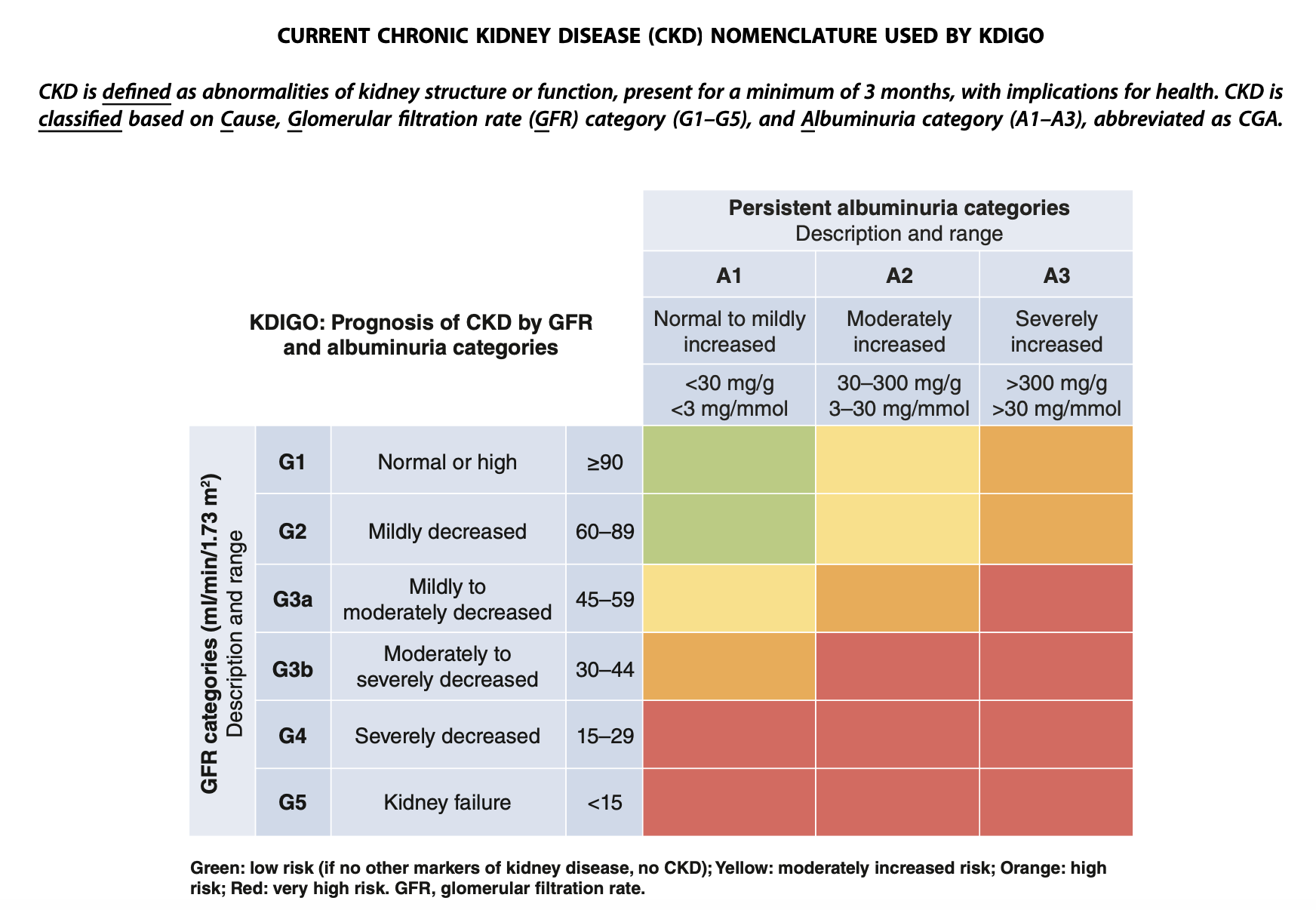
Ms. VL is a 25-year-old Micronesian female with a BMI of 44, acanthosis nigricans, and retinal exudates. Laboratory results show a fasting glucose of 382 mg/dL, an eGFR of 22 ml/min/1.73 m², and albuminuria of 2800 mg/g. No ketones are present. What is the most likely diagnosis?
a. Stage 3aA2 diabetic kidney disease
b. Stage 3bA3 diabetic kidney disease
c. Stage 4A2 diabetic kidney disease
d. Stage 4A3 diabetic kidney disease
Answer: D
Reference: KDIGO CKD 2024 Guidelines p S126
Mr. PG is a 62-year-old male on chronic hemodialysis for ESKD due to type 2 diabetes. He is new to your practice and has an HbA1c of 9.5%. He is not currently on hypoglycemic medications. Which of the following is true?
a. HbA1c is unreliable in ESKD, so the apparent hyperglycemia should not be treated.
b. EPO use causes HbA1c to overestimate glucose, so he likely has good control.
c. Treatment with insulin should be considered to achieve a modest reduction in HbA1c and reduce mortality risk.
d. Glycated albumin should be used instead, as HbA1c is confounded by his high BUN.
Answer: c
Reference: Chapter 39, Epidemiology of Diabetic Kidney Disease, Page 1379.e23
Explanation: Observational studies in dialysis populations show a J-shaped relationship between HbA1c and mortality. Reducing an HbA1c from 9.5% to below 9% is generally associated with improved outcomes.
HbA1c is less accurate in ESKD because shortened red blood cell survival, erythropoiesis-stimulating agent (ESA) therapy, iron therapy, and transfusions may alter the value. However, it is not so unreliable that it should be ignored. An HbA1c of 9.5% strongly suggests poor glycemic control, and treatment should not be withheld solely because the patient has ESKD.
ESA therapy may underestimate, not overestimate, average glycemia.
The major factors affecting HbA1c in ESKD are altered erythrocyte lifespan, ESA therapy, iron therapy, and blood transfusions.
Which genetic factor has been most intensively studied and associated with a higher likelihood of progression to ESKD and mortality in diabetic patients?
a. Plasmacytoma variant 1 (PVT1) gene
b. FERM domain-containing protein 3 (FRMD3) gene
c. Insertion/deletion (I/D) polymorphism of the ACE gene
d. Pro618Ala polymorphism of the ADAMTS13 gene
Answer: c
Reference: Chapter 39, Epidemiology of Diabetic Kidney Disease, Page 1336
Explanation: Patients with the DD genotype of the ACE gene are far more likely to progress to ESKD and have higher mortality once dialysis is initiated
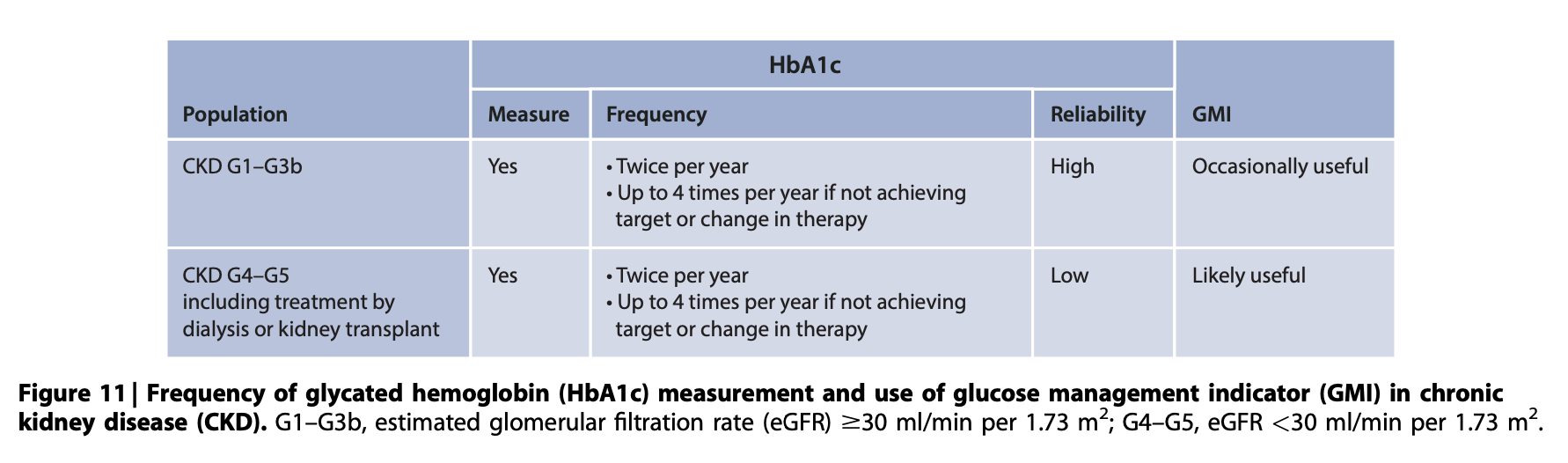
What is the recommended frequency for monitoring long-term glycemic control via HbA1c in stable patients with diabetes and CKD?
a. Every 3 months
b. Twice per year
c. Once per year
d. Only when therapy changes
Answer: b
Reference: KDIGO 2022 Diabetes Guideline, Chapter 2: Glycemic monitoring and targets, Page S57.
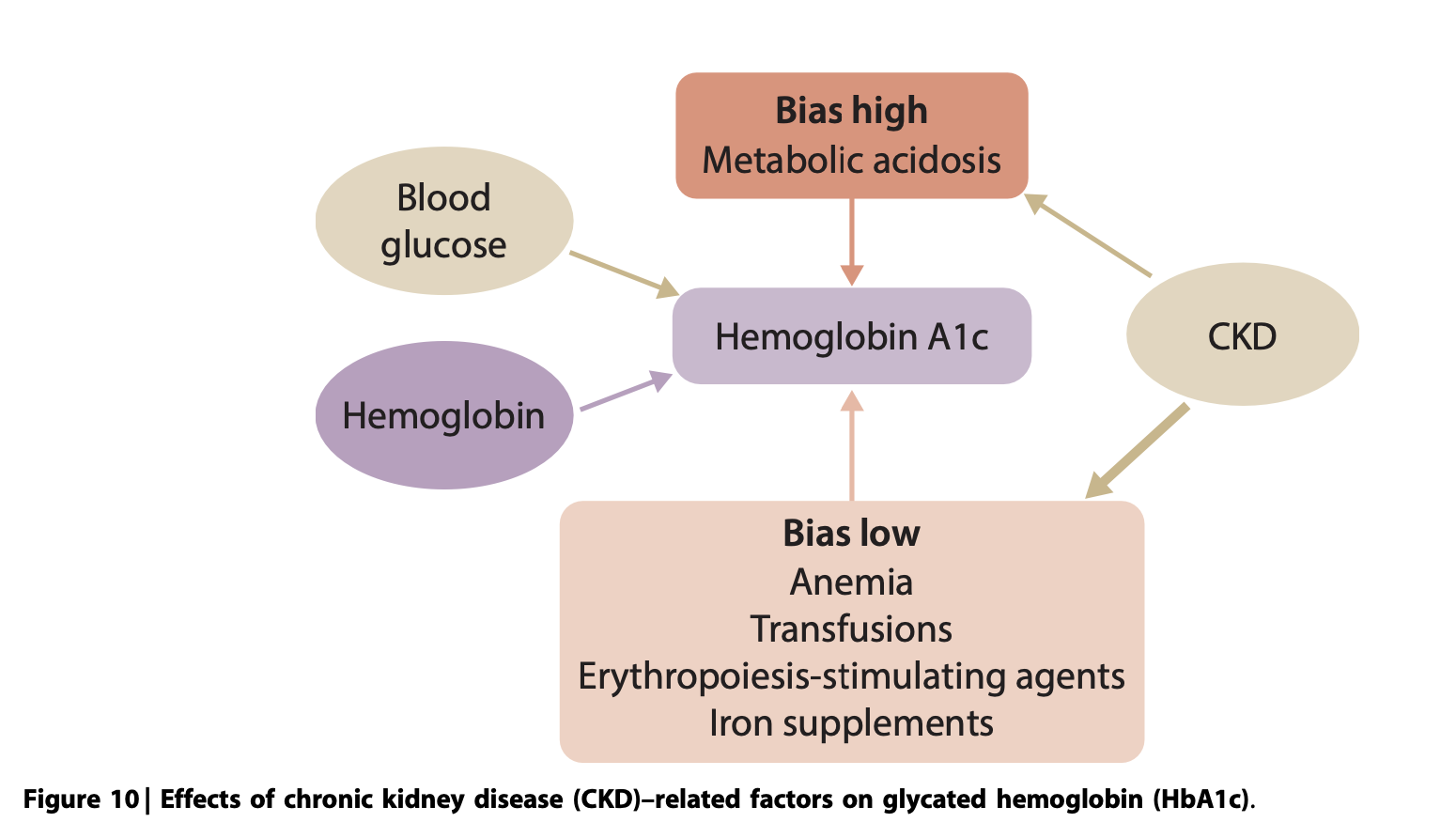
Why might HbA1c be "biased high" (overestimate actual glycemia) in a patient with advanced CKD?
a. Metabolic acidosis
b. ESA
c. Anemia
d. Iron supplements
Answer: A
Reference: KDIGO 2022 Diabetes Guideline, Chapter 2: Glycemic monitoring and targets, Page S56. Other choices are biased low (underestimate actual glycemia)
A 55-year-old female with T2D, eGFR 40 ml/min/1.73 m², and ACR 400 mg/g is on Metformin. Her HbA1c is 8.2%. What is the most appropriate addition to her regimen according to KDIGO?
a. Increase Metformin to 2500 mg daily
b. Initiate an SGLT2 inhibitor
c. Add a Sulfonylurea
d. Start basal insulin
Answer: b
Reference: KDIGO 2022 Diabetes Guideline, Chapter 4: Glucose-lowering therapies, Page s20.
Explanation: Option b is the next step in the algorithm for heart/kidney protection. Option a exceeds safe dosing at this eGFR; Options c and d address glycemia but lack the specific organ-protective benefits of SGLT2i.
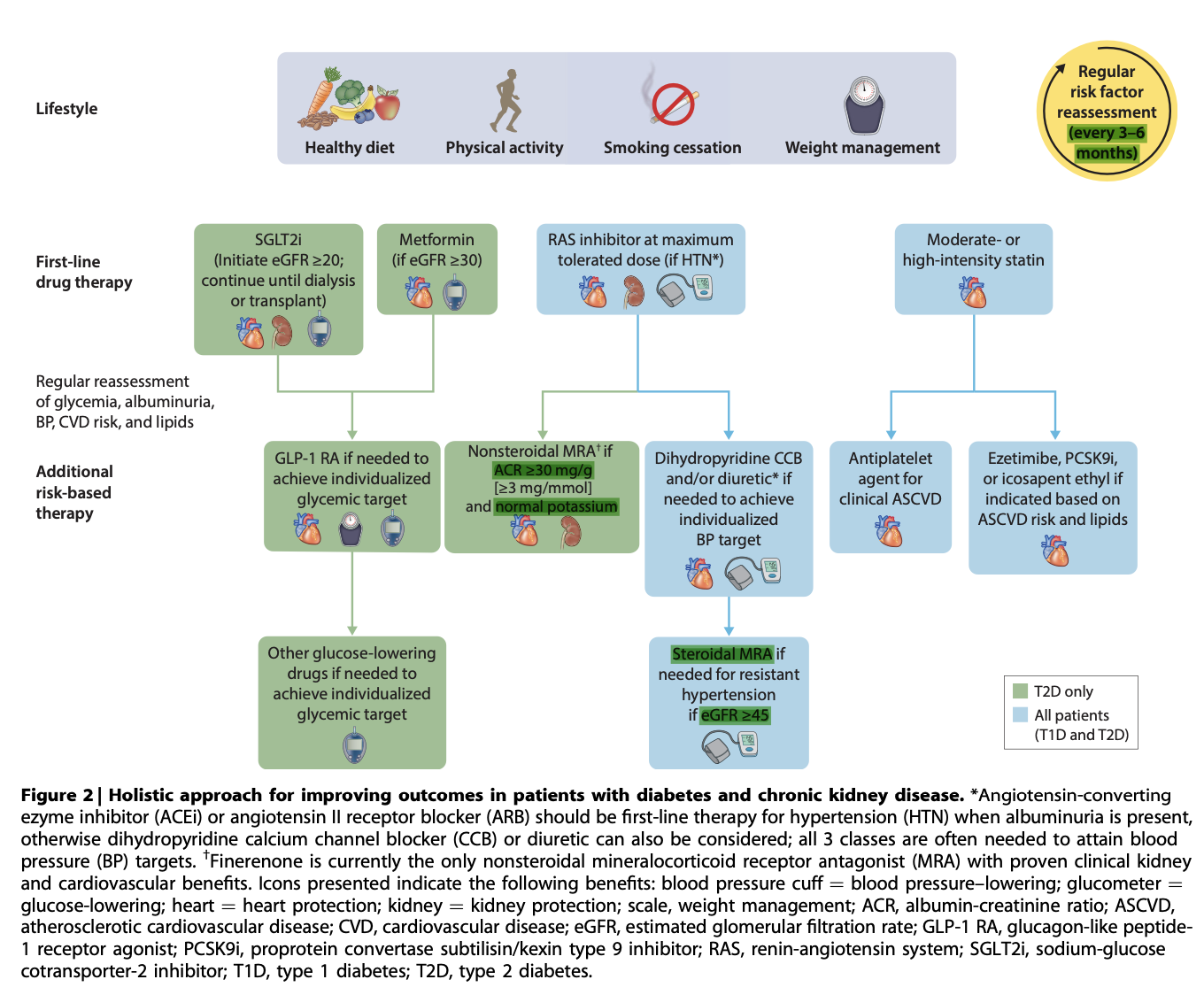
A patient with T2D and an eGFR of 25 ml/min/1.73 m² is already taking the maximum dose of an ACE inhibitor. ACR is 900 mg/g. Which agent should be considered next to specifically reduce the risk of kidney failure and CV events?
a. Diuretic
b. Finerenone
c. DPP-4 inhibitor
d. Alpha-glucosidase inhibitor
Answer: b
Reference: KDIGO 2022 Diabetes Guideline, Chapter 1: Comprehensive care, Page S19-20.
Explanation: Option b is recommended for patients with persistent albuminuria despite max RASi. Option a treats BP but isn't primary renoprotection; Options c and d are glycemic agents with neutral/minimal kidney outcomes.
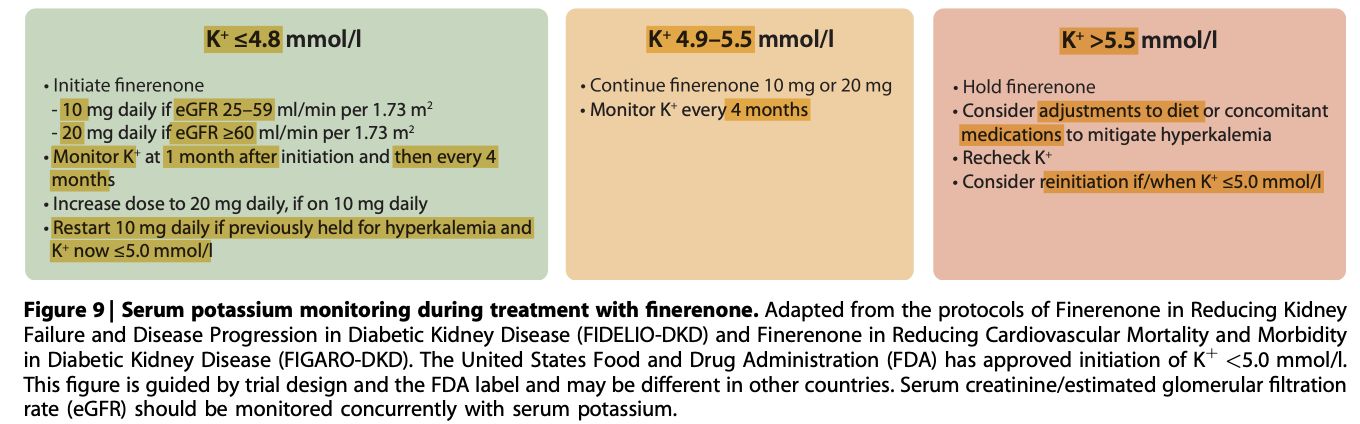
A 64-year-old male with type 2 diabetes and CKD (eGFR 48 mL/min/1.73 m², ACR 450 mg/g) is currently treated with the maximum tolerated dose of an ACE inhibitor and an SGLT2 inhibitor. His serum potassium is 4.4 mmol/L. Based on the KDIGO guidelines, he is initiated on finerenone at 10 mg daily. At his 1-month follow-up, his serum potassium is 5.2 mmol/L and his eGFR is stable at 46 mL/min/1.73 m². What is the most appropriate next step in the management of his finerenone therapy?
a. Increase the dose to 20 mg daily to maximize cardiorenal protection.
b. Continue the current dose of 10 mg daily and monitor potassium every 4 months.
c. Hold finerenone temporarily and recheck serum potassium within 72 hours.
d. Discontinue finerenone and initiate a potassium binder (e.g., patiromer).
Answer: b
Reference: KDIGO 2022 Diabetes Guideline, Chapter 1: Comprehensive care, Page S52 (Figure 9)
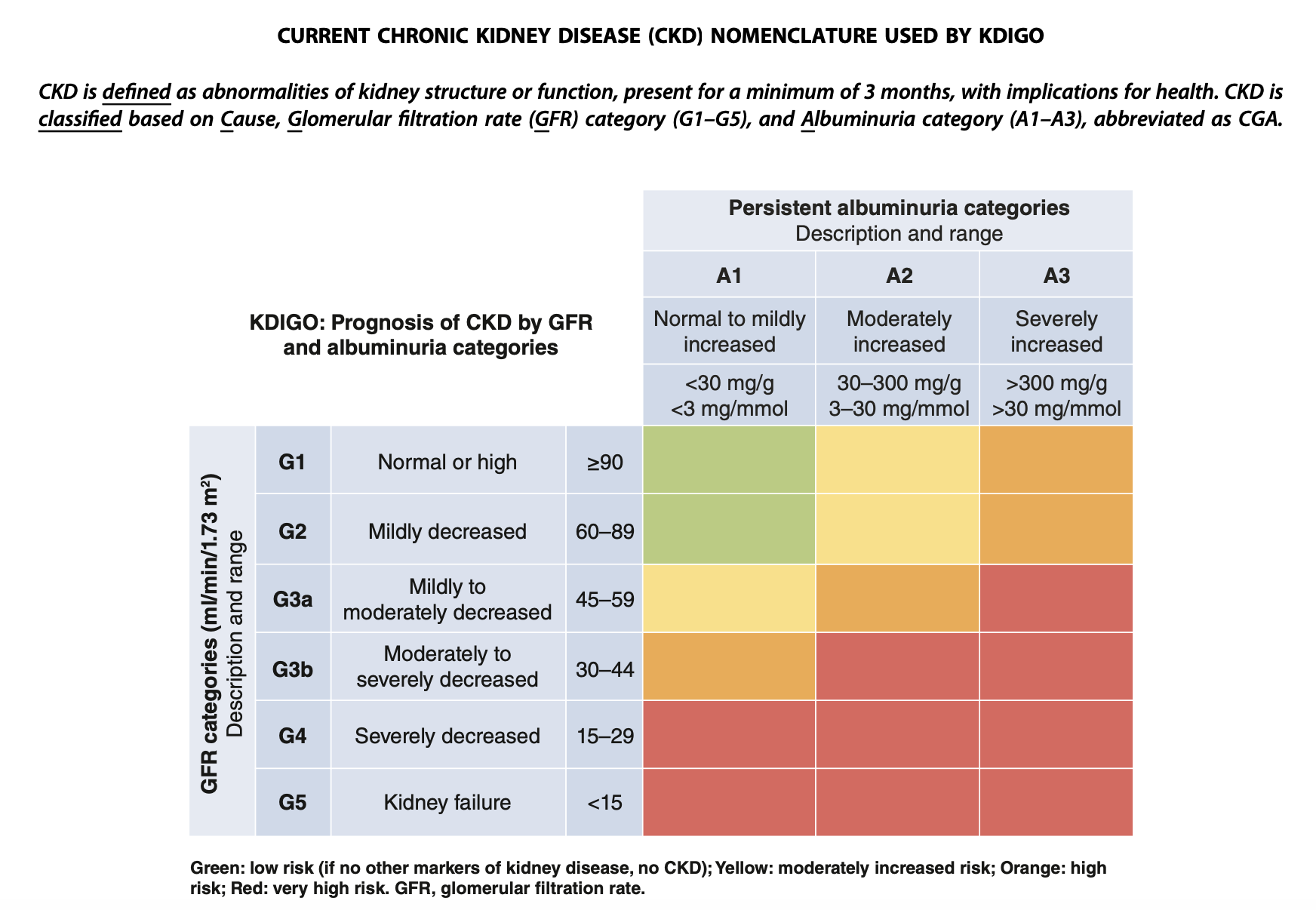
What is the minimum duration of kidney structure or function abnormalities required to diagnose CKD?
a. 1 month
b. 2 months
c. 3 months
d. 6 months
Answer: c
Reference: KDIGO 2024 CKD Guideline, Nomenclature, Page S9.
he "CGA" classification of CKD stands for:
a. Creatinine, GFR, Albuminuuria
b. Cause, GFR, Albuminuria
c. Clearance, GFR, Albuminuria
d. Comorbidities, GFR, Age
Answer: b
Reference: KDIGO 2024 CKD Guideline, Evaluation of CKD, Page S9.
A patient is categorized as G3a A2. According to the KDIGO heat map, what is their level of risk for adverse outcomes?
a. Low risk (Green)
b. Moderately increased risk (Yellow)
c. High risk (Orange)
d. Very high risk (Red)
Answer: c
Reference: KDIGO 2024 CKD Guideline, Prognosis Heat Map, Page S137.
Explanation: Option c is correct; the intersection of G3a (eGFR 45-59) and A2 (ACR 30-300) is orange. Option a is for G1/G2 A1; Option b is for G3a A1; Option d is for A3 or stage G4/G5.
A clinician is reviewing the eGFR results of a patient and notes that the eGFR based on cystatin C is significantly lower than the eGFR based on creatinine. Which of the following clinical factors is a non-GFR determinant of cystatin C that could be causing this discrepancy?
a. Low muscle mass
b. High dietary protein intake
c. Thyroid disorder
d. Excessive tubular secretion
Answer:
Reference: KDIGO 2024 CKD Guideline, Page S181.
Explanation: The source of error in eGFR may be related to errors in eGFR or in mGFR (Figure 12174). The most important sources of error are non-GFR determinants of either creatinine or cystatin C. The non-GFR determinants of creatinine include generation by diet and muscle mass, tubular secretion, and extrarenal elimination.130,175 The non-GFR determinants of cystatin C are less well understood but thought to be higher adiposity, smoking, hypo- and hyperthyroidism, glucocorticoid excess, and chronic inflammation (as indicated by insulin resistance, higher levels of C-reactive protein and tumor necrosis factor, or lower levels of serum albumin).129,130,176–185
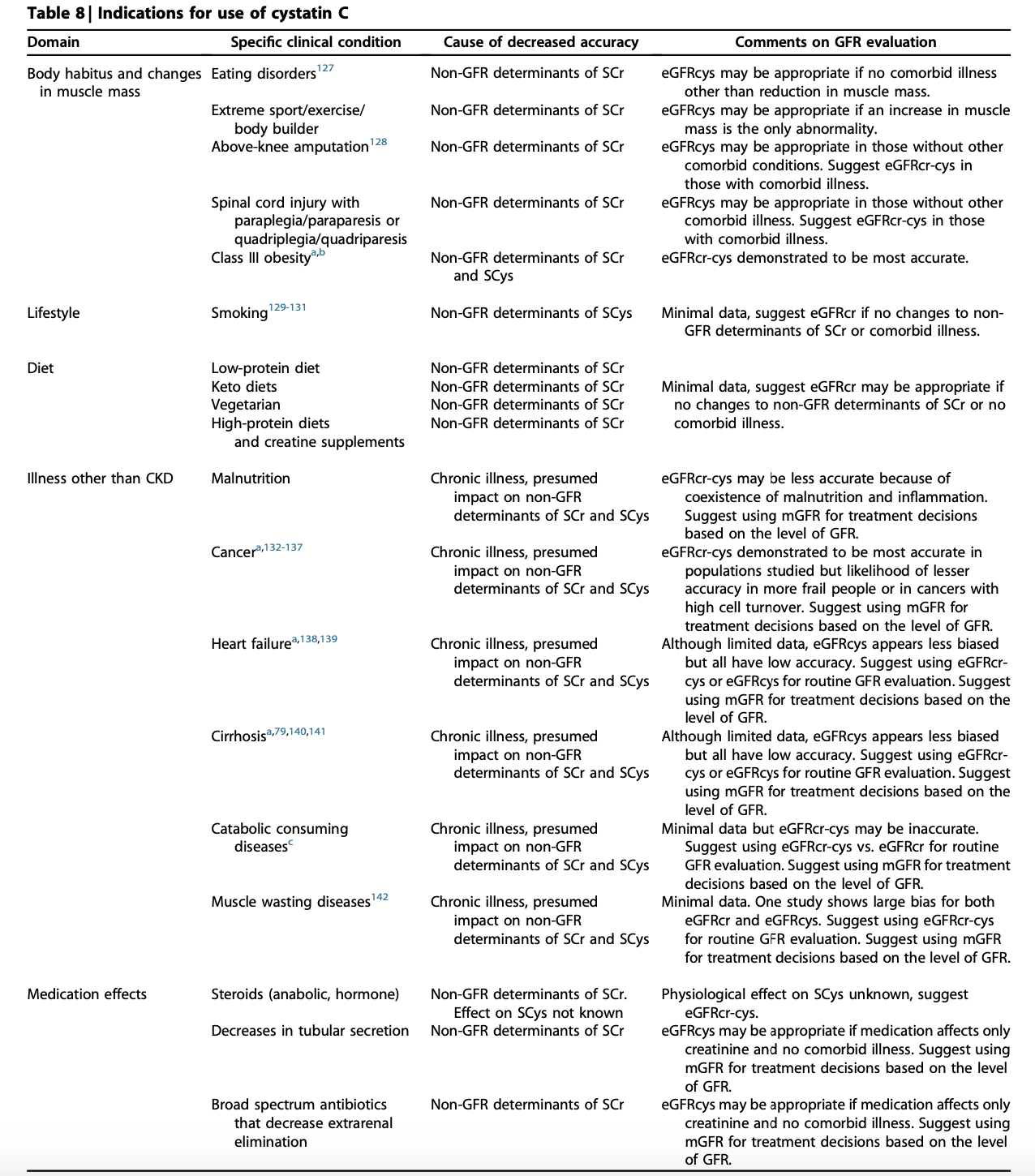
In which clinical scenario is measuring Cystatin C most strongly indicated?
a. Malnutrition
b. Vegetarian Diet
c. Above the knee amputation
d. Cancer
Answer: C
Reference: KDIGO 2024 CKD Guideline, Chapter 1: Evaluation, Page S179 (Table 8).
Explanation: Option c is a primary use case for cystatin C to confirm eGFR. Options a (malnutrition) and d (cancer) would prefer for combined cystatin C and eGFR. For option B (vegetarian diet) minimal data suggest eGFRcr may be appropriate if no changes to non-GFR determinants of SCr or no comorbid illness.
What is the target systolic blood pressure (SBP) for most adults with CKD, including those with diabetes?
a. < 140 mm Hg
b. < 130 mm Hg
c. < 120 mm Hg
d. < 110 mm Hg
Answer: c
Reference: KDIGO 2024 CKD Guideline, Chapter 3: Progression, Page S119.
The "Bricker Hypothesis" (Intact Nephron Hypothesis) suggests that in CKD:
a. All nephrons decline in function at the same rate.
b. Only the diseased nephrons contribute to the urine.
c. Total GFR falls because of a decrease in the number of functioning nephrons, though the remaining ones may hyperfunction.
d. Tubular function is lost before glomerular function.
Answer: c
Reference: Chapter 51, Mechanisms of Progression, Page 1789.e20.
Explanation: Option c is the central concept of nephron adaptation. Option a is incorrect as damage is heterogeneous; Option b is wrong as diseased nephrons often lose function entirely; Option d is not part of the Bricker hypothesis.
Which class of uremic solutes is considered most difficult to remove by conventional hemodialysis?
a. Small, water-soluble compounds (e.g., Urea)
b. Protein-bound solutes (e.g., p-Cresol)
c. Middle molecules (e.g., Beta-2 microglobulin)
d. Electrolytes
Answer: b
Reference: Textbook Chapter 52, Pathophysiology of Uremia, Page 1803 (Key References).
Explanation: Option b (protein bound solutes) is correct because only the free fraction is dialyzable. Option a (small water soluble molecules) are easily removed; Option c (middle molecules) is removed by high-flux membranes; Option d (electrolytes) is easily managed by the dialysate.
What magnitude of change in eGFR on a subsequent test exceeds expected variability and warrants evaluation?
a. > 5%
b. > 10%
c. > 20%
d. > 50%
Answer: c
Reference: KDIGO 2024 CKD Guideline, Chapter 2: Risk Assessment, Page S196.
Explanation: Option c is the threshold for clinical concern. Options a (5%) and b (10%) are within biological/lab variability; Option d (50%) is severe and usually indicates AKI.
Following a successful kidney transplant, a patient has a calcium of 10.8 mg/dL and a PTH of 150 pg/mL. What is the most likely cause?
a. Hungry bone syndrome
b. Adverse effect of immunosuppressant
c. Persistent hyperparathyroidism
d. Vitamin D toxicity
Answer: c
Reference: Textbook Chapter 53, CKD-MBD, Page 1837.e8.
Explanation: Persistent hyperparathyroidism is common as the parathyroid glands do not always involute immediately after GFR is restored.
How do FGF-23 and PTH compare with regards to their effect on 1,25-dihydroxyvitamin D production?
a. Both stimulate its production.
b. Both inhibit its production.
c. PTH stimulates production; FGF-23 inhibits it.
d. FGF-23 stimulates production; PTH inhibits it.
Answer: c
Reference: Textbook Chapter 53, CKD-MBD, Page 1837.e9.
Explanation: PTH upregulates 1-alpha-hydroxylase while FGF-23 downregulates it. This is a key part of the feedback loop.
Which of the following is a "traditional" cardiovascular risk factor that is highly prevalent in CKD?
a. Hypertension
b. Arterial stiffness
c. Uremic toxins
d. Anemia
Answer: a
Reference: Textbook Chapter 54, CV Aspects, Page 1860.e8.
Explanation: Option a is a standard/traditional risk factor. Options b, c, and d are "non-traditional" or "CKD-specific" risk factors.
For which CV risk factor in CKD is there strong RCT evidence that reduction directly improves CV outcomes?
a. Hemoglobin level targets
b. Homocysteine
c. Low-density lipoprotein (LDL) cholesterol
d. Serum Phosphate
Answer: c
Reference: Textbook Chapter 54, CV Aspects, Page 1860.e8.
Explanation: Option c is supported by trials like SHARP (statin/ezetimibe). Options a, b, and d have shown associations in studies, but RCTs for their reduction have often been equivocal or negative.
A patient receives intravenous ferric carboxymaltose for iron deficiency. Which electrolyte abnormality is a common, clinically relevant side effect?
a. Hypercalcemia
b. Hypophosphatemia
c. Hyperkalemia
d. Hyponatremia
Answer: b
Reference: Textbook Chapter 55, Hematologic Aspects, Page 1900.e21.
Explanation: Hypophosphatemia is a known side effect due to increased FGF-23 activity.
What is the primary mechanism of "uremic bleeding" in patients with ESKD?
a. Thrombocytopenia
b. Impaired platelet-vessel wall interaction
c. Depletion of fibrinogen
d. Vitamin K deficiency
Answer: b
Reference: Textbook Chapter 55, Hematologic Aspects, Page 1900.e21.
Explanation: Option b is correct; uremic toxins interfere with Von Willebrand factor-mediated adhesion. Option a is incorrect as counts are usually normal; Options c and d are rare and not the primary uremic mechanism.
Which comorbid factor or medication is LEAST likely to contribute to hypogo-
nadism in a male with ESKD?
a. Obesity
b. Diabetes
c. Beta-blockers
d. Paricalcitol
Answer: d
Reference: Textbook Chapter 56, Endocrine Aspects, Page 1915.e7.
Explanation: Option d is the exception. Options a, b, and c are all established contributors to sesual dysfunction or hormonal suppression in CKD.
Which diagnostic tool is most useful for supporting a clinical suspicion of calciphylaxis?
a. X-ray of soft tissues showing linear/net-like calcifications
b. Serum protein C levels
c. Urine sediment for eosinophils
d. Serum calcium-phosphate product
Answer: a
Reference: Textbook Chapter 58, Dermatologic Conditions, Page 1944.e3.
Explanation: Option a is a classic supportive imaging finding. Option b is often low but not diagnostic; Option c is for AIN; Option d is often elevated but neither sensitive nor specific for calciphylaxis.
Data from the SPRINT trial suggests that an intensive SBP target (<120) in CKD patients may:
a. Have no effect on CV risk but reduced risk of kidney injury.
b. Improve CV risk but increase risks of AKI and hyperkalemia.
c. Be dangerous for all patients over 70.
d. Exclusively benefit patients with PKD.
Answer: b
Reference: Textbook Chapter 59, Classification and Management, Page 1946.
Explanation: Option b reflects the trade-off identified in the trial. Option a is false; Option c is wrong as elderly patients often benefit; Option d is too specific as it benefits wider population.
When initiating an ACE inhibitor, a rise in serum creatinine of what magnitude is generally considered acceptable?
a. < 10%
b. < 20%
c. < 30%
d. No rise is acceptable
Answer: c
Reference: Textbook Chapter 59, Classification and Management, Page 1967.
Regarding the timing of kidney transplantation, "preemptive" transplantation occurs when:
a. The patient receives a transplant before ever starting dialysis.
b. The patient has been on dialysis for less than 3 months.
c. A patient gets a second transplant after graft failure.
d. Only living donors are used.
Answer: a
Reference: Textbook Chapter 59, Classification and Management, Page 1975.
Explanation: Option a is the definition of preemptive. Option b is "early" transplant but not preemptive; Option c is re-transplantation; Option d is a donor type, not a timing category.
The "Surprise Question" used in kidney supportive care is: a. "Are you surprised you have kidney disease?" b. "Would it be a surprise if the patient started dialysis today?" c. "Would you be surprised if the patient died in the next 12 months?" d. "Surprise! You are getting a transplant."
Answer: c
Reference: Textbook Chapter 62, Supportive Care, Page 2017 (Fig 62.1).
Explanation: Option c is a validated tool to identify patients who need supportive/palliative care. Options a, b, and d are not clinical tools.