COGSCI 1 Lecture 17 - Problem Solving
 Studied by 0 people
 Call Kai
 Learn
Learn Practice Test
 Spaced Repetition
 Match
Match Flashcards
 Knowt Play
1/17

There's no tags or description
Looks like no tags are added yet.
Name | Mastery | Learn | Test | Matching | Spaced |
|---|
No study sessions yet.
18 Terms
Problem Solving
Studies have found that college education improves people’s problem solving/reasoning ability
Ability to reason is developed through learning about rules of reasoning
Those with a college education have been found to handle stress better than those who have not gone to college
Algorithm
A methodical, logical rule or procedure that guarantees a solution to a particular problem
Heuristic
A rule-of-thumb strategy that allows one to reduce the number of operations that are tried in solving a problem
Means-end Heuristic
divide problem into sub-problems and try to reduce difference between initial state and goal state for each of sub-problems
Analogy Approach
problem solving is often a matter of finding a useful analogy between the present problem or situation and some other problem or situation with which you are more familiar
Foster Insight
finding a solution is a matter of perceptual reorganization — any conditions that would allow your thought and perceptual processes to run more freely might help
Confirmation Bias
tendency to search for information that confirms one’s preconceptions
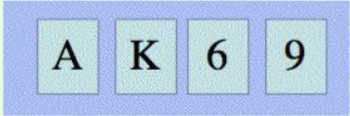
Watson Card Problem
Statement: “If a card has a vowel on one side, then it has a even number on the other side”
Which card or cards would you need to turn over in order to find out whether this rule holds?
Accuracy is enhanced when task describes a concrete social situation
73% of students who tried drinking-age problem made correct selections, as opposed to 0% in the standard, abstract form of task
Deontic Conditionals
Relating to permissions, prohibitions etc
Research has found that humans tend to be much better at reasoning with deontic conditionals
Cheater Detection Module (Cosmides and Tooby)
Theory that when we solve problems with deontic conditionals, we are using a specialized module for monitoring social exchanges and detecting cheaters
Confirmation Bias and Social Judgements
Study in which participants asked to interview other student to determine if interviewee was an introvert or extravert
Participants who tested for extraversion tended to find
interviewees extraverted and vice versa because of tendency
to ask questions that confirmed traits
Rosenhan Study
Confirmation bias may have important implications for medical diagnosis/psychotherapy
Therapist may form a less than accurate first impression of a patient and then only ask questions geared toward confirming that view
Mental Set
tendency to approach a problem in a particular way; especially a way that has been successful in the past but may not be helpful in solving a new problem
Functional Fixedness
Tendency to think of things only in terms of their usual functions
Insight
A sudden and often novel realization of the solution to a problem
Contrasts with strategy-based solutions
Insight Problems
Solved when answer appears suddenly
Non-insight problems
Solved gradually
Neural Basis of Insight
Associated with the right cerebral hemisphere
EEG shows a burst of high-frequency gamma-band EEG activity over the right anterior temporal lobe
fMRI shows a corresponding