Entomology Exam 1
 Call Kai
 Learn
Learn Practice Test
 Spaced Repetition
 Match
Match Flashcards
 Knowt Play
1/175

There's no tags or description
Looks like no tags are added yet.
Name | Mastery | Learn | Test | Matching | Spaced | Call with Kai | Chat |
|---|
No analytics yet
Send a link to your students to track their progress
176 Terms
entomology
the study of insects
can be done by professionals and everyday citizens
importance of insects
insects are important to ecology
nutrient recycling (fall in between macro and microscopic levels of the world—breakdown micrbes)
plant propagation (pollinators are key for 70% of food supply)
maintenance of plant community, food source (humans and other animals), maintenance of animal community (help to manage both plant and animal populations)
keystone species
vital to entire ecosystems (thought of as most important)
insects are one
biodiversity of insects
dominate in numbers and volume
1.0+ million species
span 32 orders but 5 dominate (coleoptera, lepidoptera, hymenoptera, diptera, hemiptera)
species richness come from extrapolations (how many are found per year)
reasons for insect species richness
highly organized sensory and nervous system (fires repeatedly to different ganglia to operate different things, not logical but can react quickly to environmental stimuli)
short life periods (quick generation times—100s per brood, multiple broods per year)
sexual selection and adaptation (propensity for isolation—driven by distance to result in different species)
metamorphosis (insects at different life stages don’t compete with one another)
wings (shape and position determines ecologial role)
miniaturization (allows them to fit in smaller places, use less oxygen)
feeding group diversity
mining (eat a tunnel through a leaf-safe from predators while eating)
netting (avoids tertiary veins)
chewers
different eating patterns allow multiple types of insects to use the same food source
hierarchy of biological classification
species (most specific)
genus
family
order
class
phylum
kingdom (least specific)
exoskeleton
insects have no internal skeleton
a hard outer covering made of chitin that supports body shape and protects internal organs
this must be shed through molting throughout an insect’s life to grow and develop
apodemes
projections into the inside of the insect where muscles attach to exoskeleton
suture
an incision-like indentation in the exoskeleton to allow for more flexibility
ecdysial line
where molting starts
a pre-formed, weakened area in an insect’s or arthropod’s rigid outer shell
allows insect to more easily split its exoskeleton at the end of a molt
spine
an immobile projection from the exoskeleton that is like a thorn
spur
a projection from the exoskeleton that an insect can move by flexing
seta
a projection from the exoskeleton that act as sensory hairs
basement membrane
everything in exoskeleton is ultimately anchored to this
basal part of body walls formed from degenerated epidermal cells
made of fibrous protein, collagen, and glycoproteins
forms a continuous sheet beneath the epidermis, where muscles are attached
epidermis
under the cuticle but above the basement membrane
unicellular continuous layer formed from polygonal cells (modifies into cuboidal or columnar during molting process)
adjacent epidermal cells are held together by desmosomes (like rivots holding the cells together)
all the cells are glandular and secrete either the cuticle or the enzymes involved in the production and digestion of the old cuticle (anything broken down gets reused)
absorb the digestion products of the old cuticle and repair the wound
cuticle
the part that is actually shed
contains the epicuticle, exocuticle, and endocuticle
is the secretory product of the epidermis
determines the surface pattern and physio-chemical properties of integument
divided into 2 regions: upper epicuticle and inner procuticle (exocuticle and endocuticle)
contains proteins (arthropodin, sclerotin, resilin)
epicuticle
outermost, thinnest layer
made of protein and sugars
1-2 cells thick
cement layer (top), wax layer, polyphenol layer, cuticulin layer,
exocuticle
middle layer
thicker
made of chitin and proteins
proteins are tanned by phenolic substances to produce sclerotin, giving rigidity to cuticle
endocuticle
made of fibrous chitin towards top and unhardened proteins towards the bottom to allow for movement of substances
thickest bottom layer
proteins are not tanned
soft and flexible (not sclerotized, mostly made of arthropodin)
procuticle
term for the endocuticle and exocuticle together
Tormogen cell
cells that are wrapped around the hair shaft
non-sensory cells
secretions are to protect the trichogen cell
Trichogen cell
the cell with the hair bulb
secretes setae
endocrine gland cell
create hormones and neural transmitters that stay inside the insect
exocrine gland cell
create hormones that exit the cuticle
chitin
a polymer only found in crustaceans, insects, and some fungi
second most abundant biopolymer
results in a hardening
made of glucosamine monomers and N-acetyl groups
adjacent chains held together by beta-glycosidic linkages
is insoluble in water, alcohol, organic solvents
is soluble in concentrated mineral acids and sodium hypochlorite (why pesticides have to be so strong)
synthesized by the insect epidermis
sclerotization
the hardening of the exocuticle
like tanning leather (eventually gets hard and brown)

cuticular perturbances
multicellular spine
acanthae
seta
microtrichia

multicellular spine
large and bulky spines that protrude
made of the cuticle and epidermal cells

seta
not a cell but a secretion from a trichogen cell
a sensory hair that protrudes out of the cuticle

microtrichia
tiny little sensory hairs

acanthae
microscopic secretions to increase surface area of cuticle
segmentation
insects are made of repeating body segments
can be primary, secondary (non-winged), or secondary (winged)
primary segmentation
found in some soft-bodied insect larvae or other primitive forms
no hardening visible over joints (ex. caterpillars) and boundaries between segments are marked by simple infoldings of the body wall
secondary segmentation (non-winged)
hard body plates over “joints” with flexible intersegmental regions to allow for movement and flexibility
secondary segmentation (winged)
wings need to move with greater flexibility than legs
no sclerites around wings
tagmatization
specialization of segments over time to perform distinct and independent functions
head, thorax, abdomen
head
specialized for feeding and sensory input (eyes, antennae)
thorax
specialized for locomotion (legs and wings)
abdomen
handles visceral, reproductive, and respiratory functions
dorsal
top of the insect
where the wings come out (if winged)
ventral
bottom of the insect
where the legs come out
posterior
back of insect
butt
anterior
front of insect
head
proximal
closer to the body
dorsal
farther from the body
median line/medial
in the middle
lateral
towards the side
head segments
6 fused segments (preantennal (ocular), antennal, labral, mandibular, maxillary, and labial)
2 functional units (cephalic sensory and mouthparts)
ocellus (ocelli)
very simple eyes that only detect light
frons
forehead (really looks like it’s in the middle of the face though)
gena
“cheeks”
lateral parts of the head, under the compound eyes
labrum
upper lip
mandibles
hold the teeth used to crush
maxillae
more like typical teeth
have sensory projections attached
labium
like the chin
have sensory projections attached
all insects will have the same ____ but they are adapted
mouthparts
ex. difference in fly and mosquito feeding
insect vision
consists of compound eyes and ocelli
compound eye
many lenses (stemmata) put together
antennomeres
segments on antennae
scape
first segment of antenna that attached to head
pedicel
second segment of antenna
flagellum
the rest of the antenna
flagellomeres
segments of the flagellum
Johnston’s organ
helps insects during flight to fix their speed and orientation
Sensilla (arista or style)
extra sensory organs at the end of the antenna
thorax
middle region of insect body
all 6 legs and wings (if applicable) are connected to the thorax
coxa
attaches leg to the thorax
like a hip
trochanter
connects coxa to femur
femur
large upper bone of insect leg
think human femur
tibia
smaller middle bone of insect leg
tarsus
insect “foot”
has tarsal claws (kind of like toes)
tarsomeres
parts of tarsus
significant leg adaptations
roaches-long legs to run fast and keep body high off of ground
mantids-2 raptoral legs to grab prey
diving beetles-hairs off of legs to hold onto oxygen while diving
lice and mites-claws to grab onto hairs
closed cell (wings)
a cell is completely surrounded and enclosed on all sides by veins, It does not touch the outer margin of the wing
open cells (wings)
a cell is missing a vein on at least one side, meaning its outer boundary runs right into the open edge (margin) of the wing
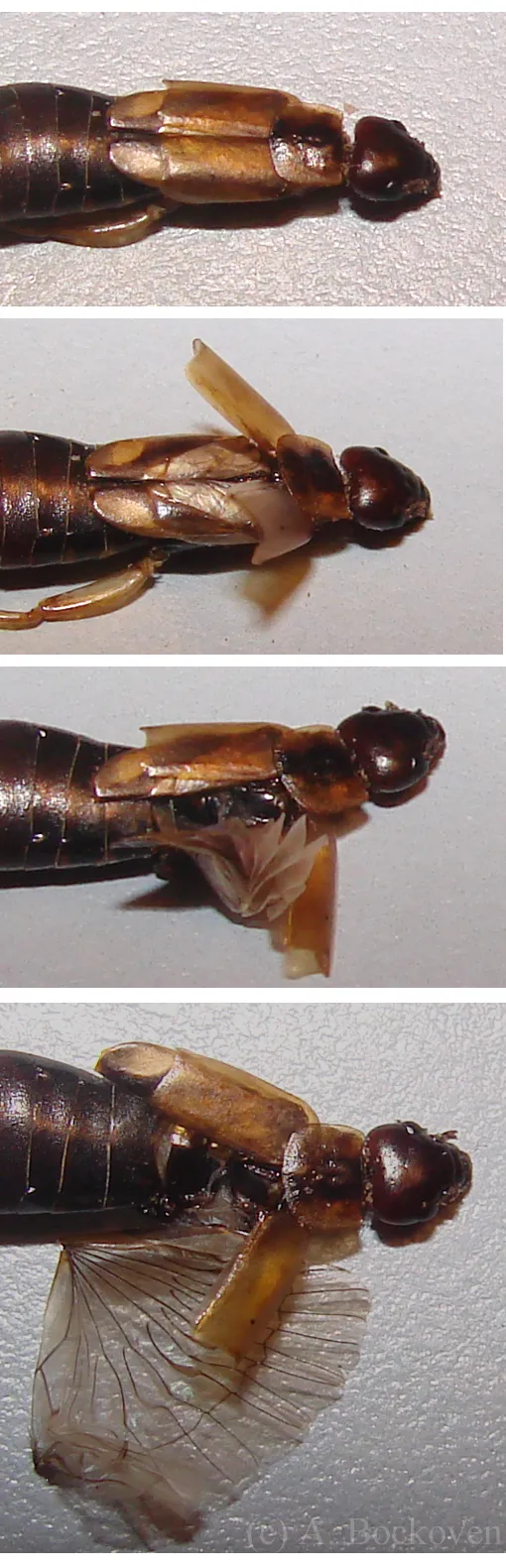
dermaptera wing folding
have to pull a covering off to get their wings out
insect flight adaptations
coleoptera- all fold wings under a hard shell (elytra)
Diptera-usually have 2 wings instead of 4 and have hauteres instead
Thysanoptera-wings undulate
Hymenoptera-forewings and hindwings look attached, but are not
ovipositor adaptations
insects’ ovipositors are modified based on where they like to lay their eggs
ex. grasshoppers have a shovel-like ovipositor because they like to lay their eggs underground
cerci
paired appendages found on the rear end of the abdomen
can be very small or very large
can be strictly for sensing or can serve other purposes (pincers on earwigs)
hemocoel
the primary body cavity in animals with an open circulatory system where blood directly bathes the internal organs
hemolymph
circulatory fluid that combines the functions of blood and lymph
all organs sit in this (surrounded by it)
trachaea
tiny tube-like channels used to breath
oxygen goes directly to body tissues
spiracles
little valves that connect tracheae to exoskeleton and let in oxygen while preventing water loss
Malpighian tubules
slender tubes that connect the midgut and the hindgut
waste is pumped into them so that additional nutrients can be extracted and absorbed into the body
actual waste is sent back to the hindgut to be excreted
muscles and locomotion
only have striated muscles
hydrostatic skeleton
if larval body is pierced, everything just comes out “pops”
synchronous vs. asynchronous movement
synchronous- 1 signal, 1 movement
asynchronous- 1 signal, many movements (like a cascade)
hydrostatic skeleton
“turgor” muscles continually contract and hemolymph puts pressure to keep shape (larvae)
apodous larvae movement
contractile waves of entire body (head to tail)
terrestrial larvae movement
use hooks
aquatic larvae
anterior-posterior (head to butt) waves form undulating motion (like dolphin kick)
larvae with thoracic legs and abdominal prolegs
posterior-to-anterior waves
up to 3 waves simultaneously
ex. caterpillars
adults with hard exoskeletons
use antagonistic and agonistic contractions
(1 muscle contracts, another relaxes)
only have 3 legs touching a surface when in motion (front and back leg on same side move with middle leg on opposite side)
flight muscles
slower flyers maintain wing beats by synchronous muscles
fast flyers maintain wing beats by asynchronous muscles
nervous system
over evolutionary time, insects have developed fused ganglia which allows for signals to send very fast (less distance to travel)
older orders of insects have more spread out ganglia while more recently diverged orders have ganglia closer together or fused
ecdysone
begins the molting process in nymphs and adults
juvenile hormone
when present in high amounts, less development happens
produced in the corpora allata (part of brain stem) and inhibits genes that promote development (keeps them “immature”)
corpora allata shrinks during last larval or nymphal instar (stops production of JH and causes insect to molt into an adult (if hemimetabolous) or a pupa (if holometabolous))
outcome of a molt determined by the level of JH in holometabolous insects, all or nothing in hemimetabolous insects (large JH= larva to larva, small JH=larva to pupa, no JH= pupa to adult)
Inka cells (pre-ecdysis hormone)
release a hormone to tell the system to start producing ecdysone
circulatory system
open system
6 chamber heart
blood cycles through heart and out the aorta
blood is then in hemolymph
hematocyte functions
phagocytosis (immune cells engulf foreign microbes)
encapsulation of parasites
coagulation (can clot the hemolymph so wounds heal during the next molt)
storage/distribution of nutrients (move nutrients around)
no red/white blood cells like humans—all 1 cell