Bio120 Definitions #3
 Call Kai
 Learn
Learn Practice Test
 Spaced Repetition
 Match
Match Flashcards
 Knowt Play
1/51

There's no tags or description
Looks like no tags are added yet.
Name | Mastery | Learn | Test | Matching | Spaced | Call with Kai | Chat |
|---|
No analytics yet
Send a link to your students to track their progress
52 Terms
What are the two main species concepts
taxonomic or morphological — based primarily on distinct morphological differences
The biological species concept (BSC) — By Ernst Mayr, 1942 “groups of actually or potentially interbreeding populations which are reproductively isolated from other such groups (only works for sexually reproducing species)
What is a species
distinguished as isolated gene pools which cannot exchange genes
What is the difference in focus for natural selection and speciation
natural selection → focus is on genetic interactions within populations
speciation → focus is on genetic interactions between populations, “how can populations of the same species become genetically isolated to the point of becoming two species”
What are the two models of speciation
allopatric (focus of this course)
sympatric
What is the theory of allopatric speciation
introduction of some barrier to gene flow resulting in speciation:
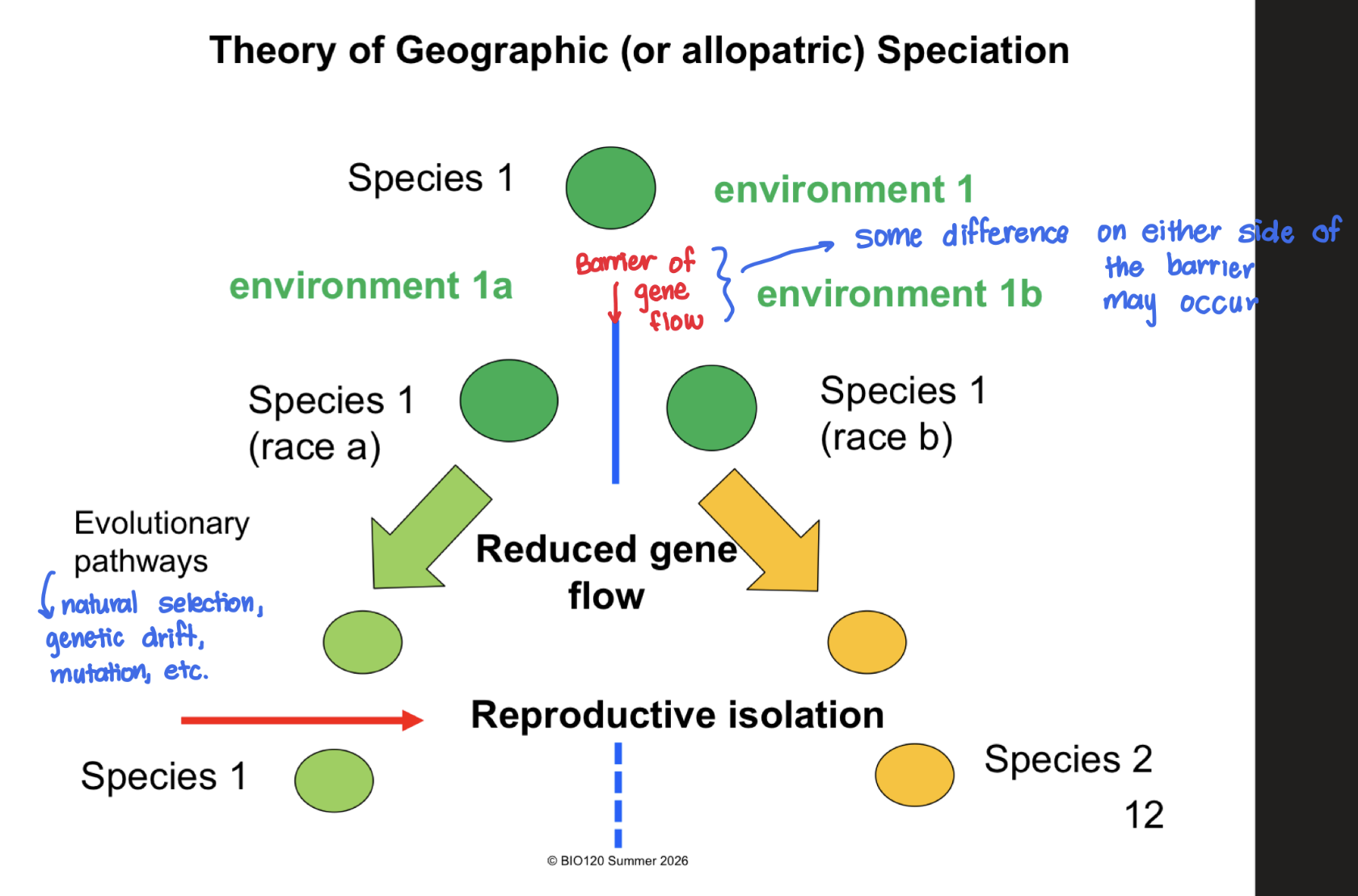
What is a barrier
can be physical or ecological (environmental) and may no longer exist
what are the two predictions of speciations
speciations depends on isolation
we should find isolated “sister species” nearby
speciation should still be occurring in nature
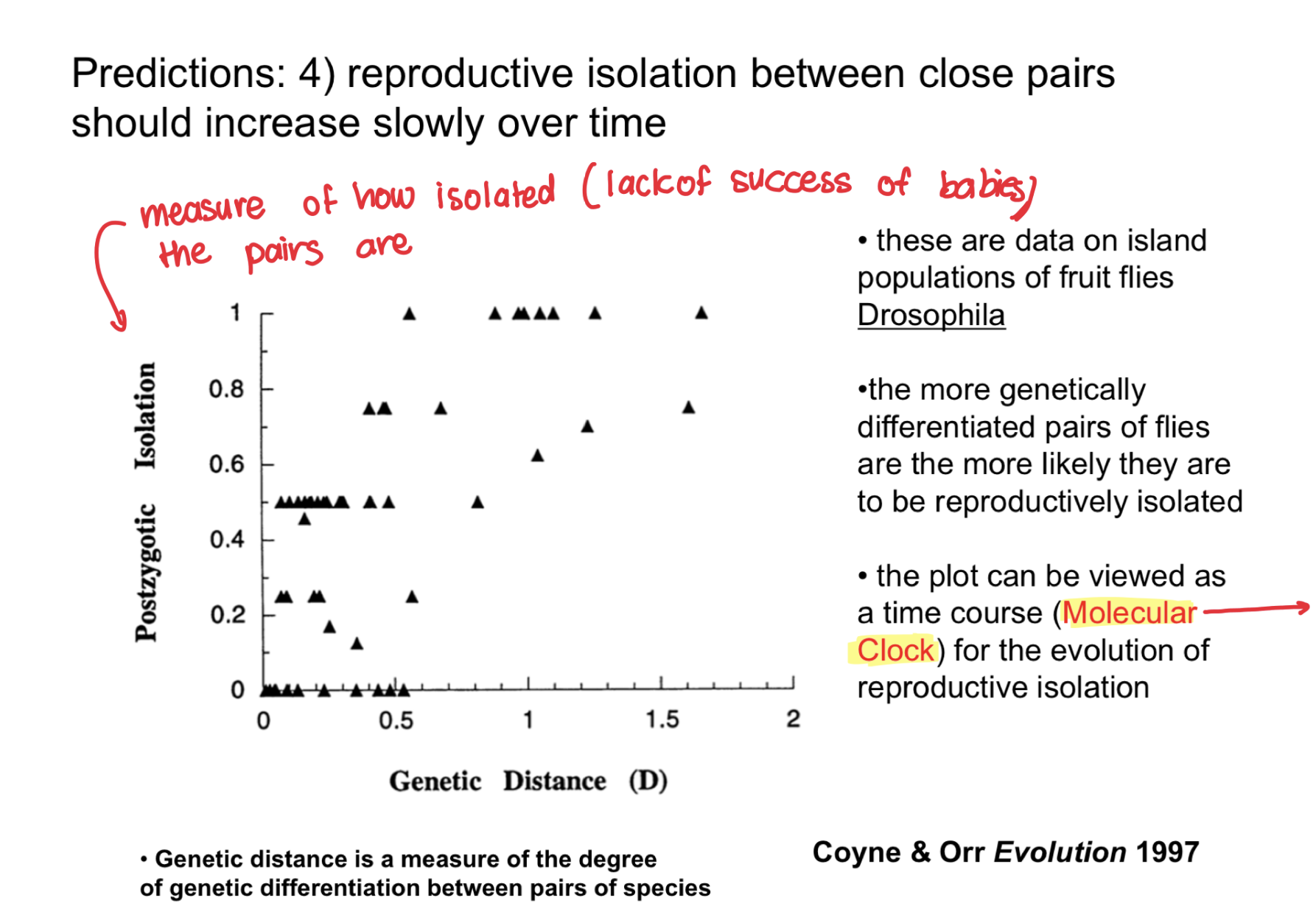
reproductive isolation between close pairs should increase slowly over time
ex. galapogas finches
What did Jerry Coyne and Allan Orr do
When can reproductive isolation take place?
Any of the following stages:
finding a compatible mate
mating and fertilization
development of zygote
adult growth and survival
reproduction and fertility of offspring
What are the two types of reproductive isolating mechanisms
prezygotic — prevents zygote formation
geographical → ecological
temporal → behavioural
mechanical → prevention of gamete fusion
postzygotic
improper functioning of zygotes once they are formed
inviability, sterility or abnormal hybrids
poor performance of hybrid
what are intrinsic postmating isolation
sterility or lethality
what is mullerian mimicry
when species have evolved “warning” colouration to warn predators
what is the role of natural selection in speciation
two populations of the same species in different environments might become more different because of divergent selection favoring different adaptations and known as “ecological speciation”
what do we treat ecological speciation as
variation of allopatric speciation where besides reduced gene flow, divergent natural selection also contributes to differences which can lead to reproductive
What is the difference between ecological and allopatric speciation
Allopatric speciation is driven by geographic isolation (a physical barrier stops populations from interbreeding). Ecological speciation is driven by natural selection (populations adapt to different environments or niches, even if they live in the same area)
What changes allows the sticklebacks to evolve adaptations to increase or decrease the bony armour
There is a change in a single nucleotide in the freshwater populations in the EDA gene, which affects the regulatory portion which does not code for the EDA protein but instead reduces or enhances the EDA expression
what can large changes in skeletal morphology in the wild be created by?
simple genetic mechanisms
What are the chapter summaries from speciation
as population diverge and diversify through natural selection and drift, populations become reproductively isolated, often as an incidental byproduct of evolutionary change within populations
Some genes appear to be more commonly associated with speciation than other genes. Especially regulatory genes (or regulatory sequences) instead of protein coding genes (or coding sequences)
This allows speciation to occur, and populations to begin evolving and adapting independently, driving diversification
what is adaptive radiation
rapid divergence from a single common ancestor into populations and species adapted to many different ecological niches (best example are on oceanic islands)
Island ages
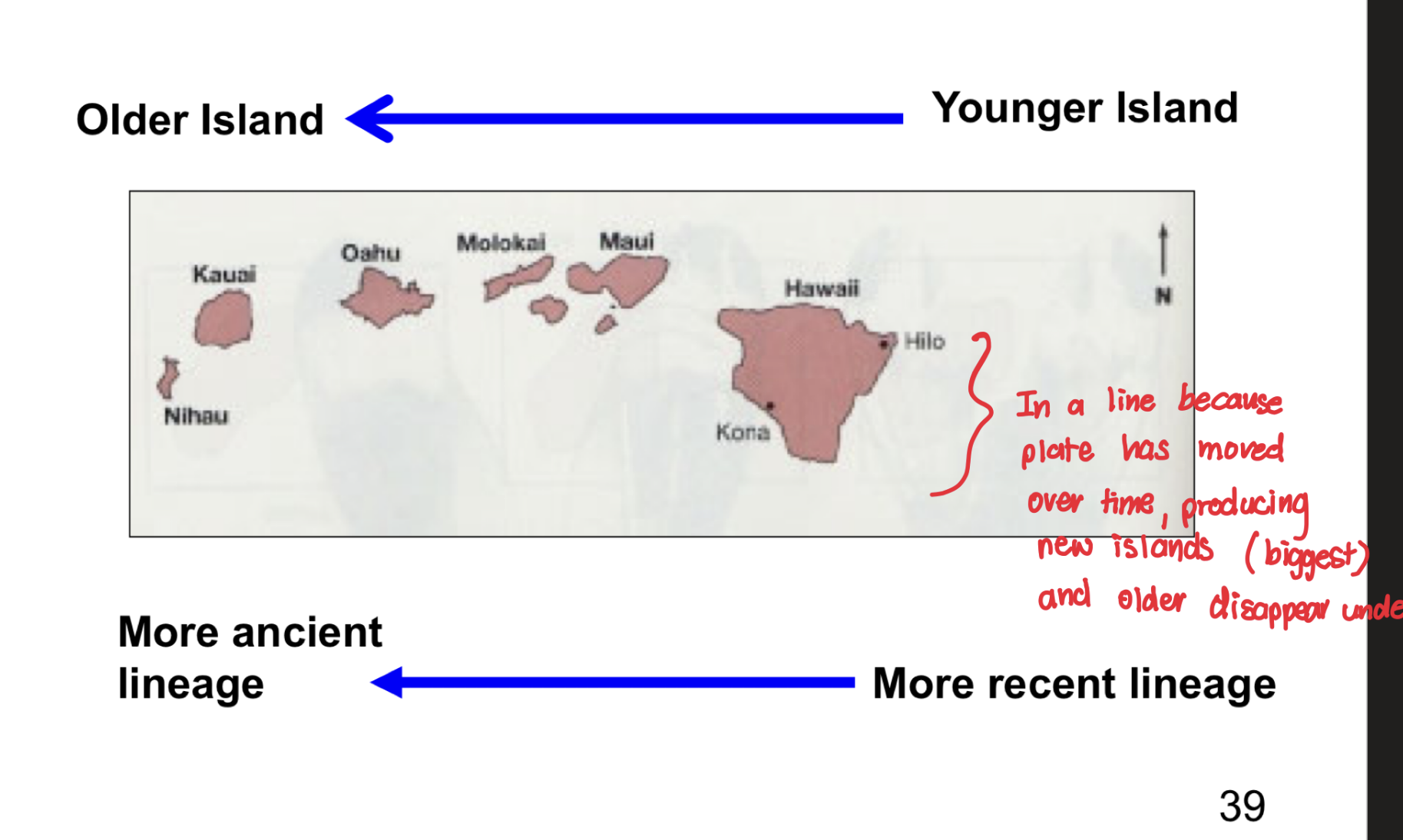
what causes adaptive radiation
ecological opportunity — abundant resources and few competitors often occur on oceanic islands or their aquatic counterparts
origin of a key innovation — e.g floral nectar spurs in Columbine for hummingbirds
Who was Carolus Linnaeus
the father of taxonomy:
binomial nomenclature
hierarchical system of classification
what is a taxon (plural = taxa)
a named taxonomic unit at any level (e.g can be kingdom or phyla)
who added the 3 domains
1977 carl woese
what is taxonomy
the theory and practice or classifying organisms based on morphology and lifestyle
what is systematics
classifying organisms based on the evolutionary relationships among organisms
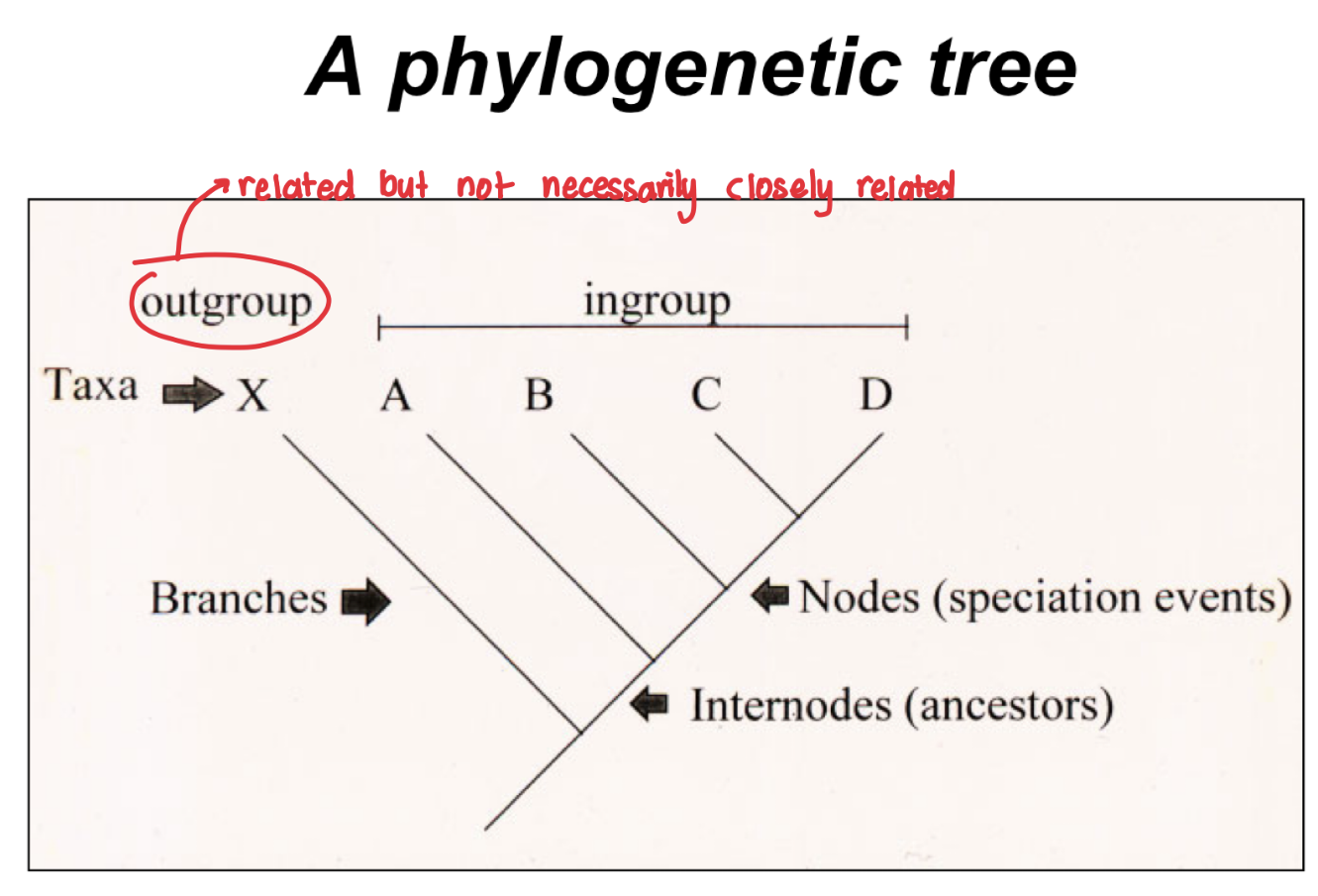
what is the structure of a phylogenetic tree
what is a monophyletic group
“complete set of species derived from a common ancestor”
def → a single ancestor gave rise to all species in that taxon and no species in any other taxon
what is a paraphyletic group
contains some, but not all species that are derived from a common ancestor
def → a taxon whose members are derived from two or more ancestral forms not common to all members
what is a clade
an evolutionary group that includes a single common ancestor and all of its descendants
what is a vestigial trait a type of
homology
what is homoplasy
similarity of traits as a result of convergent evolution
what is covergent evolution
the evolution of structures that resemble one another and perform similar functional roles due to the shared ecology of unrelated organisms (ex. cacti or cichlid fishes)
why is molecular biology relevant to evolution and phylogeny
all life is related through branching descent
common genetic code is evidence that all life is related
evolutionary relationships among species are reflected in their DNA and proteins
what are key origins in a phylogeny
origin of a novel trait resulting in adaptive radiation
carriers of the trait can exploit new resources or sets of habitats
usually associated with rapid evolutionary diversification (e.g. adaptive radiations)
e.g herbivory is associated with higher diversification
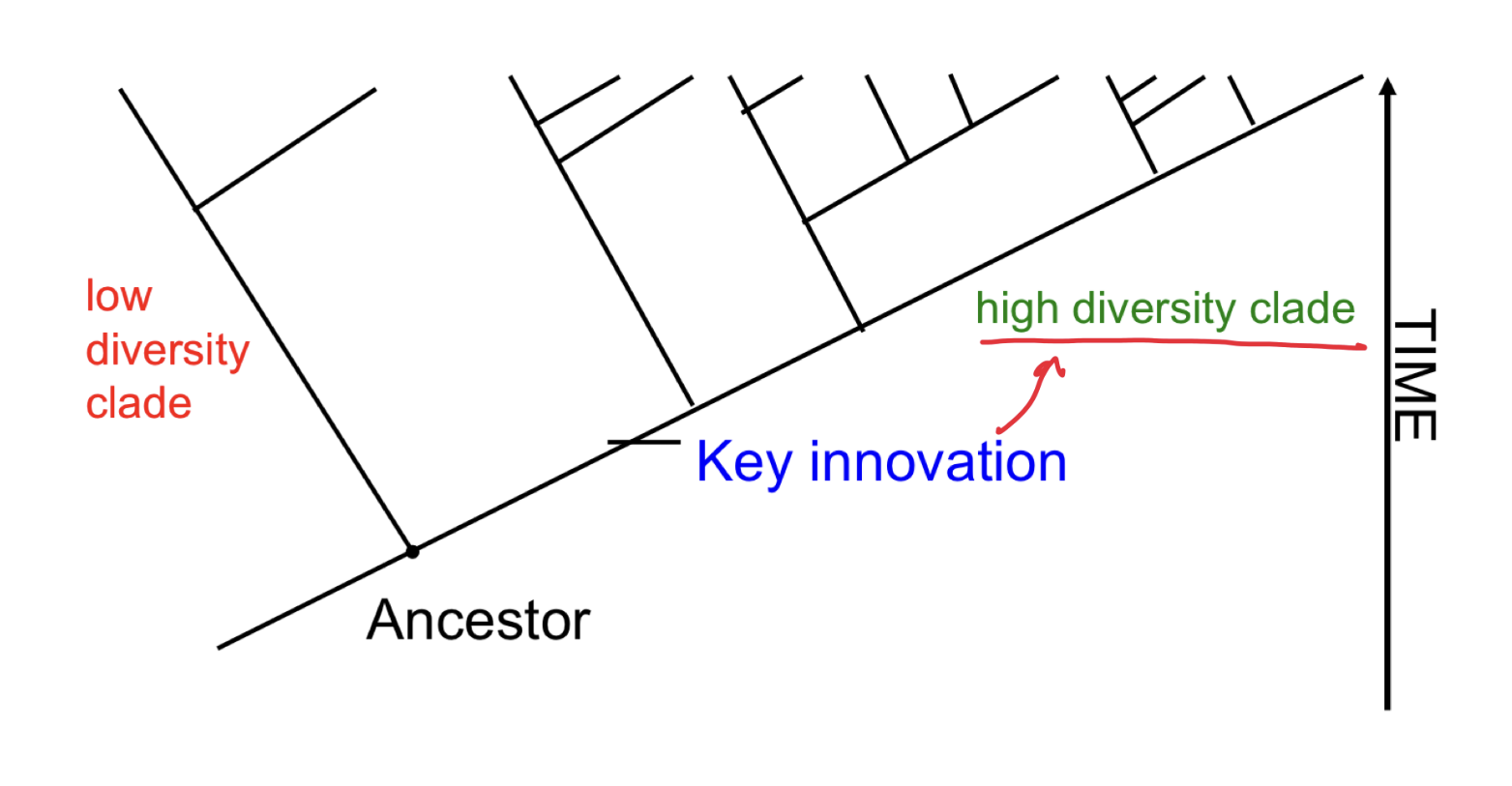
what are features that are associated with greater diversification
key origins
species with more sexual selection
animal pollination
increased dispersal of seeds
herbivory
what was lamarck’s view on complexity
he said “all organisms have an inherent tendency to become more complex”
what are the major transitions in evolution
origin on cells
origin on chromosomes
origin of genetic code
origin of sexual reproduction
origin of eukaryotes
origin of multicellularity
origin on colonies (e.g. non reproductive castes)
greater complexity arises from ________________ organisms.
greater “cooperation” amongst previously independent
(ex. the endosymbiosis theory where previously independently evolving units merged, leading to higher-level complexity through division of labour)
what is the unit of selection
individuals/genes
what does natural selection act one
the individual’s, more specifically their genes, and not the species
what types of traits can spread
traits which increase the fitness of the individuals, and may or may not be good for the species
when is cooperation “adaptive”?
high relatedness - genes that lead to helping “relatives” can spread via natural selection, called “kin selection”
reciprocal altruism - cases where organisms repeatedly encounter each other, where mutual cooperation can lead to highest fitness
key → cooperation can sometimes break down and/or select for “cheaters”
True or false: selection on individual organisms is a form of cooperation
true → because genomes are composed of unrelated genes and alleles, which get inherited from different places, and typically persist by improving the fitness of the individual
How do genomes stay cooperative?
Many features of individual organisms prevent competition and evolution within an individual → ensuring genes succeed by enhancing the fitness of the organism
Fair meiosis
when cheating alleles spread, strong selection on rest of genome for suppression
selection on rest of genome for silencing TEs (DNA methylation)
transposition - selection balance (first abundance increased through replication, then abundance reduced through natural selection if harmful, and finally there is a balance in the abundance)
uniparental inheritance of organelles (ex. mitochondrion), preventing competition within cells of different organelle genomes
development of multicellularity — starting from a single cell prevents initial competition among cell lineages
to what extent does cooperation break down?
cheating a fair meiosis
meiotic drive
overreplication
what is a meiotic driver
an allele that can enhance its own transmission by biasing transmission away from a 1:1 ratio of alleles
what is fair meiosis
each allele of an individual’s genomes has an equal chance of being representing in the gametes (1:1) → ensuring the alleles don’t compete within an individual
what are transposable elements (TEs)
self replicating segments of DNA (aka transposons)
TE replication is separated from cellular replication
they ensure their own over-representation in offspring (>50% of gametes have a TE copy)
this is what causes overreplication during meiosis
how do genomes not explode from transposons?
1) Alleles arising elsewhere in genome that silence TEs will be favoured by individual selection
Mechanisms controlling DNA & histone methylation
piRNAs and RNA interference may have evolved as silencing mechanisms
2) Transposition-selection balance
Transposition is a form of mutation that can disrupt a gene
Natural selection against harmful effects on the organism reduces abundance of chromosome copies with most TEs
Abundance of TEs in an organism results from a balance between these opposing forces