Development Cleft lip / palate
 Call Kai
 Learn
Learn Practice Test
 Spaced Repetition
 Match
Match Flashcards
 Knowt Play
1/20

There's no tags or description
Looks like no tags are added yet.
Name | Mastery | Learn | Test | Matching | Spaced | Call with Kai | Chat |
|---|
No analytics yet
Send a link to your students to track their progress
21 Terms

face and anterior aspects of mouth…
face & anterior aspects of mouth formed 5-8 weeks
normal development of face & mouth
result of fusion of 5 embryonic processes
mandibular right and left
frontonasal (nasolateral/median)
maxillary processes (2)
Fusion of R & L mandibular processes
4 & 5 week gestation
forms mandible & lower lip
R & L grow toward each other and fuse at midline
completed - 6 weeks (embryo)


Frontonasal process grows
5th week of gestation
grow downward into 2 separate processes
nasomedial
lateral nasal
depression between nasomedian and lateral nasal are olfactory pits (become nasal cavities)

Lateral nasal processes
fuse with paired maxillary processes forming nasal alae (flared portion of nostril)
& anterior aspects of the face below the eyes
Fusion of the nasomedian processes & maxillary processes occurs
primitive tissue from nasomedian processes become:
anterior portion of upper lip
anterior aspect of alveolar process (upper teeth / central incisors)
anterior aspect of hard palate (premaxilla)
*PRIMARY palate= columella, anterior lip, alveolar ridge —> incisive foramen

Figure b- facial development complete 8th week gestation
clefting (lip and/or palate) occur when fusion process between nasomedian and maxillary process is interrupted
Secondary palate includes
bony hard palate
soft palate
Anterior aspects of face complete at 8 weeks BUT complete separation of the oral and nasal cavities has not been achieved
Between 8-12 weeks of gestation
embryonic processes that give rise to the hard and soft palate fuse, this separates the oral and nasal cavities

Development of Secondary palate: 2 palatal shelves grow downward from the inner aspects of the maxillary processes
up to the 9th week the tongue projects into nasal cavity
growth spurt during 8th and 9th week
mandible width and length increase, pulling tongue down away from palatal shelves
*palatine bones & maxilla = hard palate
Fusion of palate (anterior to posterior)
as palate fuses, nasal septum grows downward to meet palatal shelves in the midline, this separates right and left nasal cavities

Muscles of soft palate evolve from palatal shelf
SP development during 10th week
fusion of secondary palate complete at 12 weeks

Definitions: columella, nares, alae
“little column”
tissue underneath nasal tip and between the nostrils
made of cartilage & mucosa
at lower end of nasal septum
nares: nostrils
Alae:
two curved sides of nostril
made up of base and rim

Veau system
general reference for nature & extent of clefts
4 classes of clefts
I —> cleft of soft palate only
II —> cleft of the hard and soft palate to the incisive foramen
III —> complete unilateral cleft of the soft and hard palate and of the lip and alveolar ridge on one side
IV —> complete bilateral cleft of the soft and hard palate and/or the lip and alveolar ridge on both sides
*kiernans Y = people circle where the cleft is

Clefts vary in type and severity, Classification:
unilateral or bilateral cleft of lip
unilateral cleft of lip and palate
bilateral cleft of lip and palate
submucous cleft
bifid uvula

Cleft of lip
involves vermillion portion of upper lip (reddish portion) and may extend into nostril
Incomplete - minor v shaped notch involving vermillion
complete - cleft continues through the upper lip into floor of nostril
effects shape of nose, flaring nostril on side of cleft, columella short and misaligned

Unilateral cleft lip

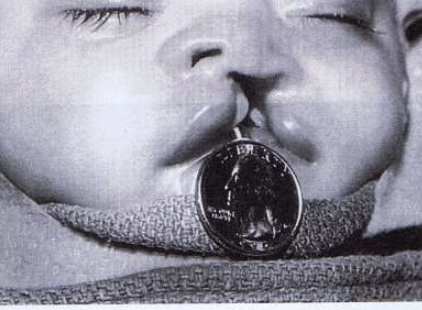
Unilateral cleft of lip and palate
extends from the external portion of the upper lip through the alveolus, hard and soft palate
cleft of palate without cleft of lip can occur
Cleft of palate without lip
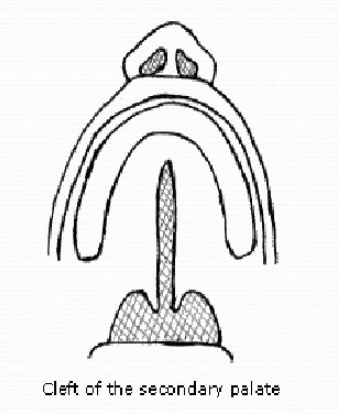
Unilateral Cleft of the primary palate

Lip & palate unilateral
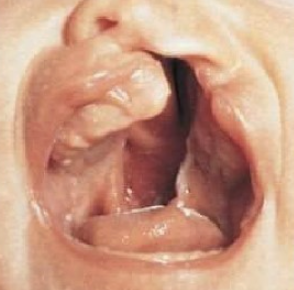
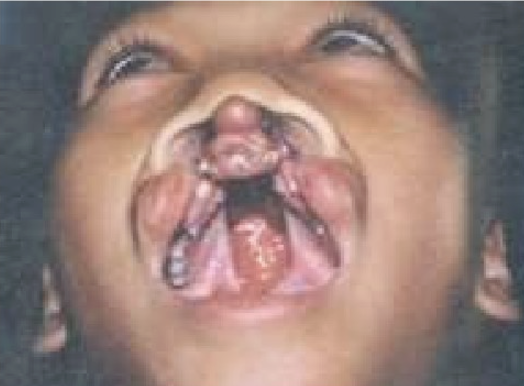
Bilateral Cleft of lip and palate
most severe
lip and alveolus cleft under both nostrils & prolabium (central portion of lip), alveolar process & premaxilla positioned abnormally at the tip of the nasal septum; protruding mass of tissue
columella usually absent

Submucous cleft
muscular cleft in the region of the soft palate
cleft covered by a thin layer of mucosal tissue
may not be discovered until later in childhood
Indicators:
bifid uvula may indicate sub-clefting
bluish coloration in the middle of the soft palate where muscles fail to fuse (zona pellucida)