Structure of the Vertebrae
 Call Kai
 Learn
Learn Practice Test
 Spaced Repetition
 Match
Match Flashcards
 Knowt Play
1/22

There's no tags or description
Looks like no tags are added yet.
Name | Mastery | Learn | Test | Matching | Spaced | Call with Kai | Chat |
|---|
No analytics yet
Send a link to your students to track their progress
23 Terms
Vertebrae
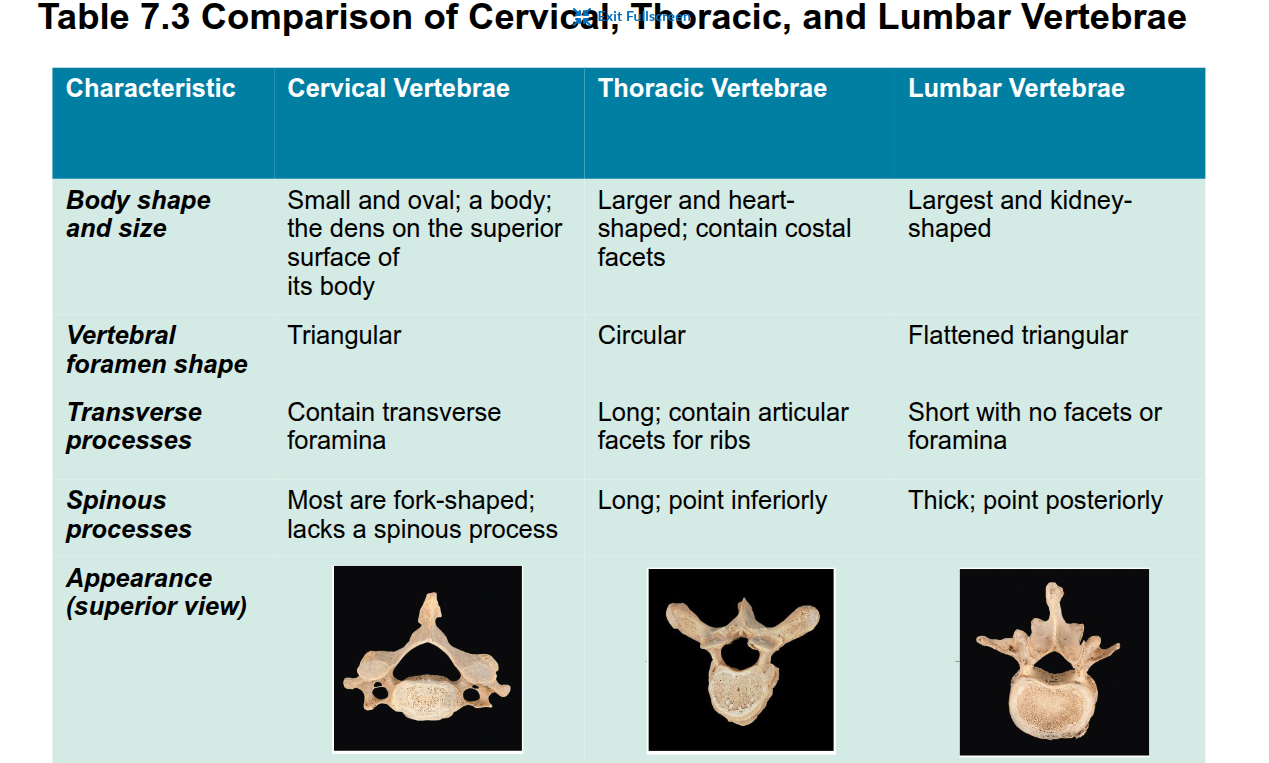
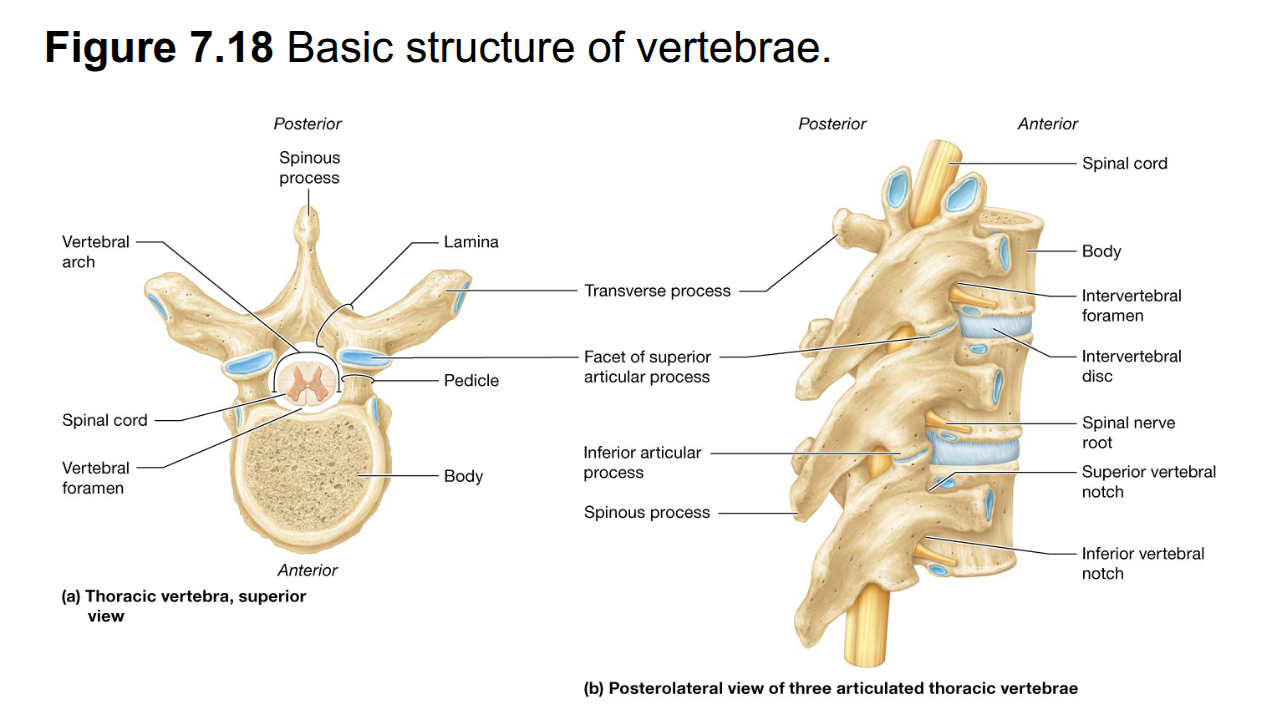
vertebrae share common features
body (centrum)
vertebral foramen
pedicles and laminae
superior and inferior articular processes
transverse processes
spinous process
memory trick for Vertebrae number:
Breakfast at 7, Lunch at 12, Dinner at 5
7 cervical, 12 thoracic, 5 lumbar
Body (centrum)
Most anterior structure
Weight bearing with vertebral discs between adjacent vertebral bodies

Vertebral Foramen
Space for spinal cord and associated structures
Collectively, make up the vertebral cavity
Pedicles and Laminae
Pedicles project laterally from the body and Laminae project posteriorly
Together they form the Vertebral Arch
The inferior side of the pedicles curves up to create an Inferior Vertebral Notch and the superior side curves down to create the Superior Vertebral Notch
Notches of successive vertebrae form the Intervertebral Foramina where spinal nerve roots pass

Superior and Inferior Articular Processes
Found at the junctions of the pedicles and laminae
Surfaces of both processes contain smooth Facets covered in hyaline cartilage
Superior articular facets of one vertebra form joints with the inferior articular facet of the vertebra above it

Transverse Processes
Project from the lateral sides of the vertebral arch
Attachment sites for muscles

Spinous Process
Posterior projection for muscle attachments and protect the posterior spinal cord

Cervical Vertebrae
Smallest vertebrae with Transverse Foramina in their transverse processes for the passage of vertebral arteries and veins
C1: Atlas
C2: Axis
C3-C7
C1: Atlas
Named for the Greek Titan that supported the world
No vertebral body or spinous process
Two Anterior Arches that meet at the Anterior Tubercle and two Posterior Arches that meet at the Posterior Tubercle
Lateral Masses contain the articular facets
Superior articular facet meets the occipital condyles at the atlanto-occipital joint

C2: Axis
The Dens (Odontoid Process) projects from the body and fits into the atlas’s vertebral foramen forming the atlantoaxial joint
held by the transverse ligament

C3-C7
Have oval bodies, large triangular vertebral foramina, and short, forked spinous processes

C7 (Vertebra Prominens)
Has a unique, longer spinous process that is not forked
This process is palpable and is used as a clinical landmark

Thoracic Vertebrae
Larger than cervical vertebrae and grow larger moving down the vertebral column
Heart-shaped bodies
Circular vertebral foramina
Long spinous processes that point inferiorly
Superior Costal Facets and Inferior Costal Facets on lateral sides of bodies provide points of articulation for the ribs
T10-T12 there is only one costal facet on each side
T1-T10 also have transverse costal facets, which articulate with another portion of the ribs
looks like the head of a giraffe

Lumbar Vertebrae
Largest and heaviest to bear the weight of the torso
Kidney-shaped bodies
Thick spinous processes that point posteriorly
Vertebral foramina shaped like a flattened triangle
Lumber pedicles and laminae are thicker and shorter than other vertebrae
looks like the head of a moose

Vertebral Compression Fracture
Fracture of the vertebral body that reduces the height of the vertebra by more than 20%
Typically result from trauma or diseases that destroy bone, such as osteoporosis and bone tumors
wedge fractures and burst fractures
Wedge Fractures
Involve the anterior portion of the vertebra
Common in elderly women with kyphosis and osteoporosis
Cause radiating pain
Burst Fractures
Involve the entire vertebral body
From severe trauma
Bone fragments may damage the spinal cord and nerves
Treatments include bed rest, bracing, physical therapy, and surgery if the injury is severe
Sacrum
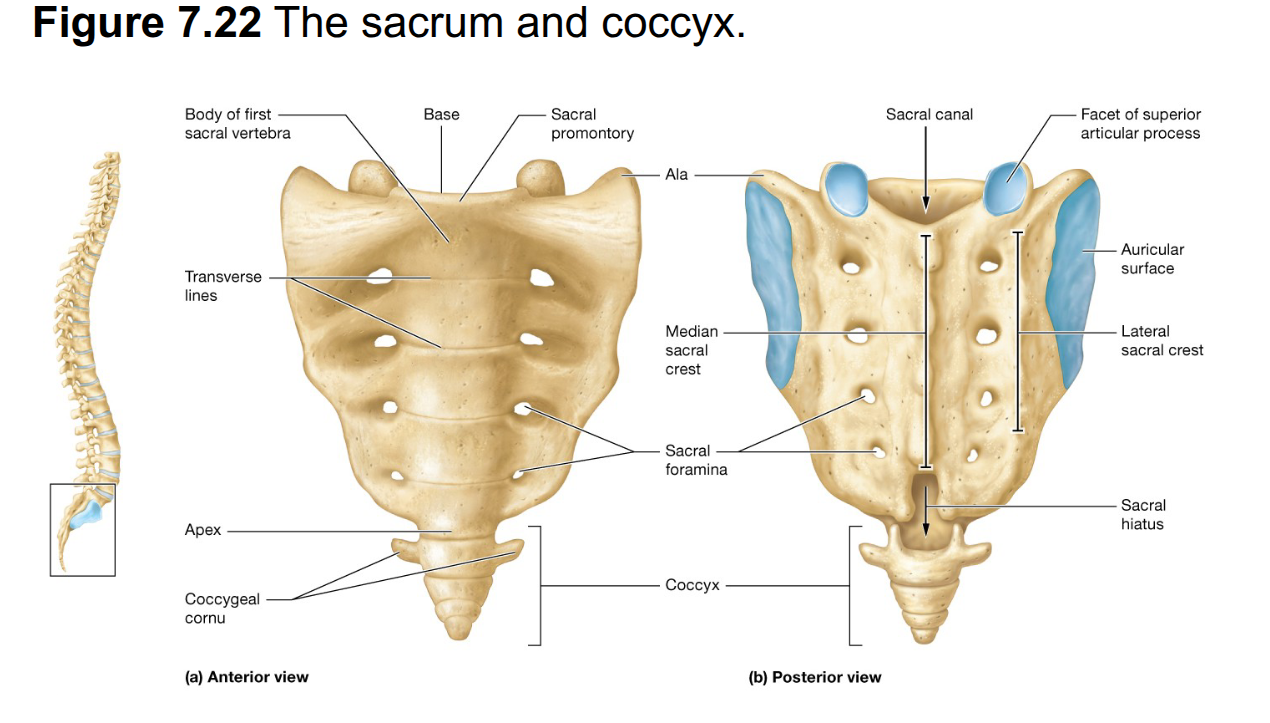
S1-S5 form the posterior wall of the pelvic cavity;
Fuse by ages 20–25
Flattened Base on superior surface articulates with 5L at its superior articular processes
Apex at the inferior surface articulates with the coccyx
Auricular Surfaces on the lateral sides articulate with the pelvic bones
Sacral Promontory is a bony projection at the anterior margin of the base with smooth regions called Alae
Sacral Canal opening connects to the vertebral canal and terminates in the Sacral Hiatus
Bordered posteriorly by the Median Sacral Crest with 4 pairs of holes called the Sacral Foramina
Lateral to these are the Lateral Sacral Crests
Coccyx
Generally composed of 4 vertebrae
Fuse about age 25
Similar to the sacrum, has transverse ridges where the vertebrae fused
Coccygeal Cornu—Hornlike projections at the superior end

Intervertebral Discs
Pads between vertebrae; There are 23 discs from C2-S1
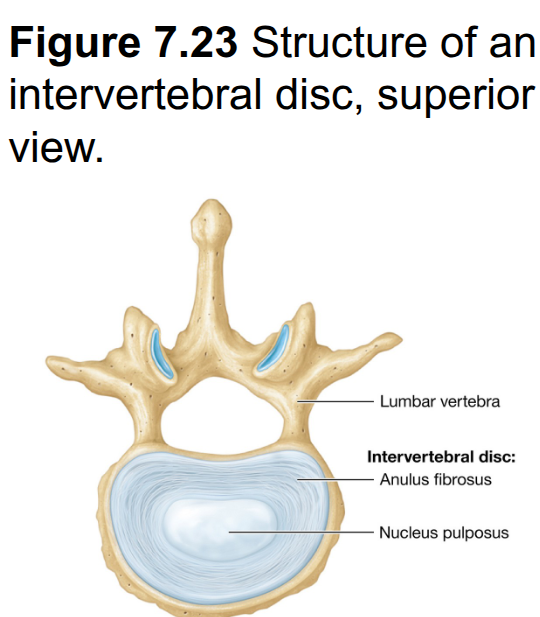
structure contains nucleus pulposus and anulus fibrosus
Ligaments and muscles also support the vertebral column

Nucleus Pulposus
Inner, jelly-like shock absorber
Anulus Fibrosus
Outer ring of fibrocartilage
Holds nucleus pulposus and vertebrae together

Herniated Disc
Tear in the anulus fibrosus allows the nucleus pulposus to protrude, usually on posterolateral side
Results from trauma, injuries from lifting, or longer-term damage from repeated motions
Nerve compression can cause significant pain, numbness, tingling, and muscle weakness
Treatments include physical therapy, anti-inflammatory steroid injections, and surgery