skin and nail infections and dermatitis
 Call Kai
 Learn
Learn Practice Test
 Spaced Repetition
 Match
Match Flashcards
 Knowt Play
1/52

There's no tags or description
Looks like no tags are added yet.
Name | Mastery | Learn | Test | Matching | Spaced | Call with Kai | Chat |
|---|
No analytics yet
Send a link to your students to track their progress
53 Terms
measles (rubeola)
Maculopapular, starts at hairline → face/neck → trunk/extremities; confluent
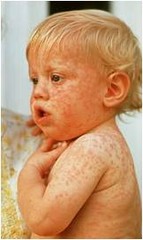
High fever, cough, coryza, conjunctivitis, Koplik spots (oral)
key features of measles
paramyxovirus
virus type of measles
togavirus
virus type of rubella
rubella (german measles)
Pink maculopapular rash, spreads face → trunk → extremities, faster than measles

Postauricular & occipital lymphadenopathy, mild fever, arthralgias
key features of rubella
Human herpesvirus 6/7
viral cause of roseola
Roseola (Exanthem subitum, HHV-6/7)
High fever 3-5 days, then sudden maculopapular rash (trunk → spreads out)

Febrile seizures, well-appearing when rash appears
key feature of roseola
Erythema Infectiosum (Fifth disease)
"Slapped cheek" rash → lacy reticular rash on trunk/extremities
Arthralgia (adults), aplastic crisis in sickle cell disease, hydrops fetalis in pregnancy
key complications associated with parvovirus B19
Varicella zoster virus (HHV-3)
viral cause of varicella
Varicella
Vesicular rash in crops at different stages (dew drop on a rose petal), centripetal (trunk > extremities)

lesions crust
varicella is contagious until
Coxsackievirus A16 (enterovirus)
viral cause of hand-foot-mouth disease
hand-foot-mouth disease
Vesicles on hands, feet, buttocks, painful oral ulcers
mononucleosis rash
diffuse maculopapular rash after antibiotics (esp ampicillin/amoxicillin)
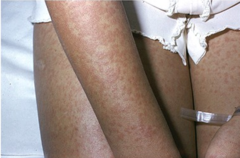
Measles: rash progression slow, systemic symptoms severe.
Rubella: rash fades quickly, milder prodrome.
main difference in presentation of measles vs rubella
no
is the ampicillin rash in mono a true allergy?
impetigo
Superficial epidermal infection, most often by Staph aureus (MSSA, sometimes MRSA) or Strep pyogenes.

Non-bullous (most common): vesicles → honey-colored crusts.
Bullous: toxin-producing S. aureus, large flaccid bullae.
what are the two types of impetigo
bullous impetigo
Caused by toxin-producing strain of S. aureus, begins as red macules that progress to bullous (fluid-filled) eruptions on an erythematous base; after rupture, a clear, thin, varnish-like coating forms over denuded area; can be mistaken for cigarette burns
often requires systemic antimicrobial

post-strep glomerulonephritis (but not rheumatic fever)
most common complication of impetigo
Erysipelas
Raised, sharply demarcated erythematous lesion.
Classically on face or lower extremities.
Systemic signs: fever, chills often present.

Acute superficial dermal + lymphatic infection, usually caused by Group A Strep (S. pyogenes).
pathophys of erysipelas
cellulitis
Ill-defined, warm, erythematous, tender swelling.
Spreads rapidly, not sharply demarcated (unlike erysipelas).
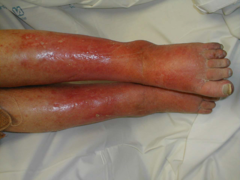
Infection of dermis + subcutaneous tissue, most commonly by Group A Strep or Staph aureus
pathophys of cellulitis
erysipelas: superficial dermal and lymphatic infcection; sharply demarcated
cellulitis: invades dermis and subcutaneous tissue; not sharply demarcated
main differences between erysipelas and cellulitis
Can progress to sepsis, abscess formation, or necrotizing fasciitis.
complications associated with cellulitis
Infection of hair follicle, usually S. aureus.
pathophys of folliculitis
pseudomonas
hot tub folliculitis is caused by
folliculitis
Small erythematous papules/pustules centered on follicles.
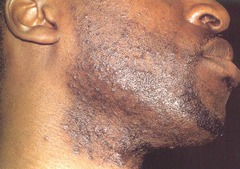
Usually self-limited, but can progress to furuncle/carbuncle.
prognosis of folliculitis
Localized collection of pus within dermis or deeper tissue, usually S. aureus (including MRSA).
pathophys of abscesses
abscess
fluctuant, tender, erythematous nodule, may drain spontaneously.
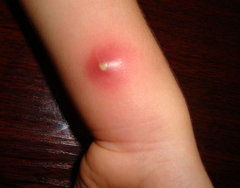
Requires incision & drainage; antibiotics if severe, recurrent, systemic infection, or MRSA risk.
management of abscesses
Gentle cleansing and mild compresses help. Protection from offending substances and use of drying agents also help.
Topical application of clindamycin or erythromycin works well on mild casess. Bactroban may be used.
Extensive cases may require oral antibiotics
Hot tub folliculitis usually resolves without treatment. Severe or recalcitrant cases may be treated with a fluoroquinolone
treatment of folliculitis
Topical: mupirocin or retapamulin.
Oral (if widespread): cephalexin, dicloxacillin; clindamycin if MRSA suspected.
treatment recommendations for impetigo
Penicillin (oral or IV, depending on severity).
Alternatives: amoxicillin, cephalexin, clindamycin.
treatment for erysipelas
Mild: oral cephalexin, dicloxacillin.
MRSA risk: TMP-SMX, clindamycin, doxycycline.
Severe/systemic: IV cefazolin, ceftriaxone, vancomycin (if MRSA risk
treatment for cellulitis
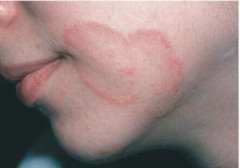
Tinnea corporis
Annular, scaly plaque with central clearing and raised border.
Interdigital maceration, scaling on soles ("moccasin distribution").
presentation of tinea pedis

tinea cruris
ringworm of the groin (jock itch)

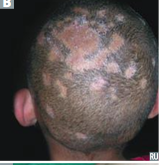
Patchy alopecia with scaling, "black dot" broken hairs. Common in children.
presentation of tinea capitis
onychomycosis
thickened, discolored, brittle nails

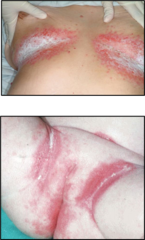
Beefy red rash with satellite lesions, moist intertriginous areas.
presentation of candidiasis of the skin
HSV 1/2
grouped painful vesicles on erythematous base, recurrent, prodrome of tingling.
HPV warts
verrucous papules/plaques, common on hands, feet, genitals

verrucous
warty, often rough surface
scabies
Presentation: intense pruritus (worse at night), burrows in interdigital webs, wrists, axillae.
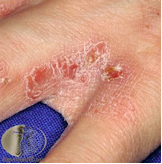
permethrin 5% cream (entire body, repeat in 1 week), oral ivermectin in refractory cases.
treatment of scabies
permethrin 1% lotion/shampoo, repeat in 7-10 days. Alternatives: malathion, ivermectin lotion.
treatment of lice (Pediculosis capitis/corporis/pubis)
scabies: 5% cream
lice: 1% lotion
different concentrations of permethrin for scabies vs lice