FINA1109 WEEK 1
 Call Kai
 Learn
Learn Practice Test
 Spaced Repetition
 Match
Match Flashcards
 Knowt Play
1/59

There's no tags or description
Looks like no tags are added yet.
Name | Mastery | Learn | Test | Matching | Spaced | Call with Kai | Chat |
|---|
No analytics yet
Send a link to your students to track their progress
60 Terms
What practical financial decisions and life choices does FINA1109 address?
The unit covers:
- Financial plans and the financial-planning process
- Whether you are saving or borrowing the "right" amount
- Renting versus buying
- What you can invest in and how to make an investment
- The financial side of long-term choices, including partners, children and retirement
- Personal tax
- Financial risks and insurance
How has the purchasing power of Australian money changed since 1966?
The purchasing power of a dollar has fallen substantially because prices have risen over time.
An amount of money kept unchanged as cash buys progressively fewer goods and services.
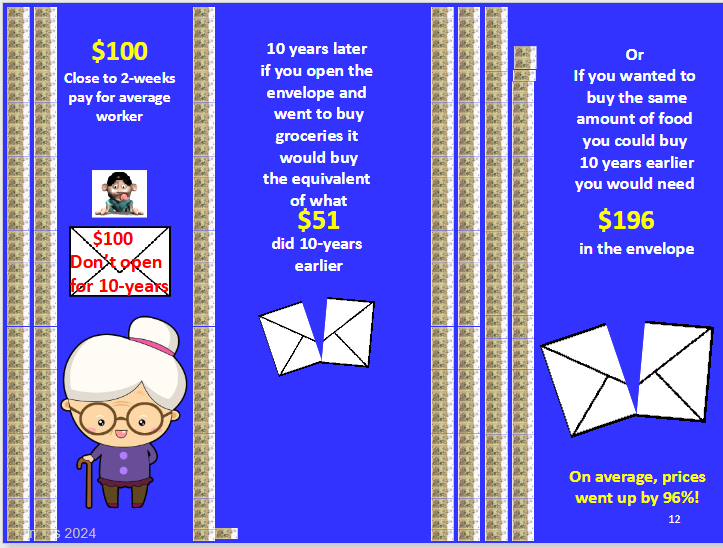
In the lecture's 10-year envelope example, what happened to $100 and grocery prices?
After 10 years:
- The original $100 bought only the equivalent of what about $51 bought at the start.
- About $196 was needed to buy the same amount of groceries as $100 bought initially.
- Average prices had risen by about 96%.
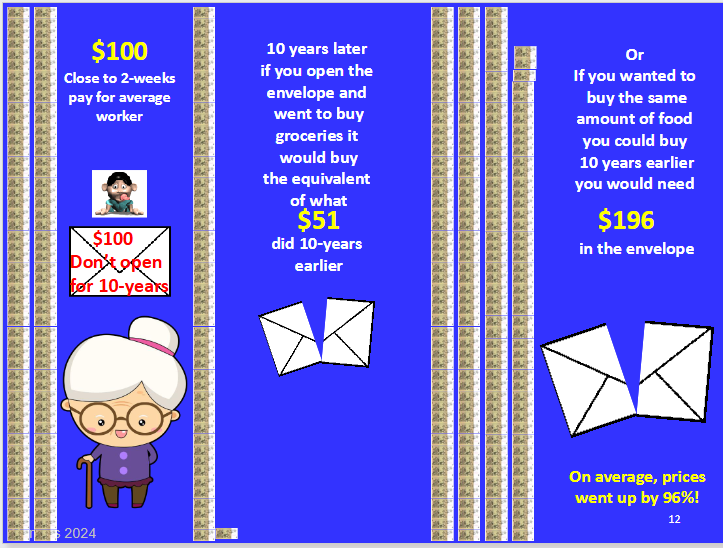
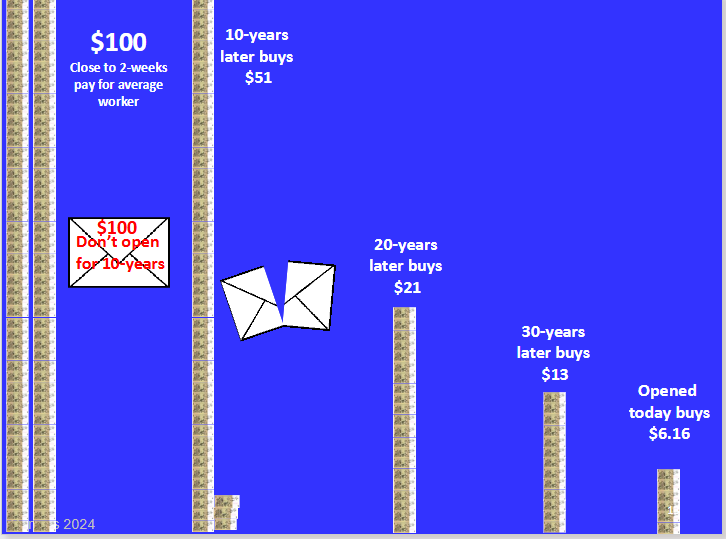
How did the purchasing power of the original $100 fall over longer periods in the lecture example?
The original $100 had purchasing power equivalent to approximately:
- $51 after 10 years
- $21 after 20 years
- $13 after 30 years
- $6.16 when opened "today"
This demonstrates the cumulative loss of purchasing power when money is held as cash.
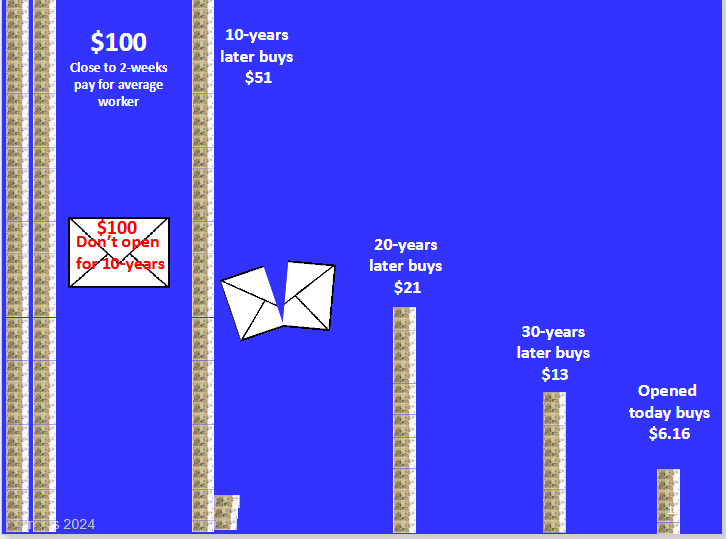

How much was needed by the end of 2023 to buy what $100 bought at the beginning of 1966?
Approximately $1,605.
This illustrates the large cumulative impact of inflation over the period.

Why can different generations have very different financial experiences?
Inflation and other financial conditions are not constant across time.
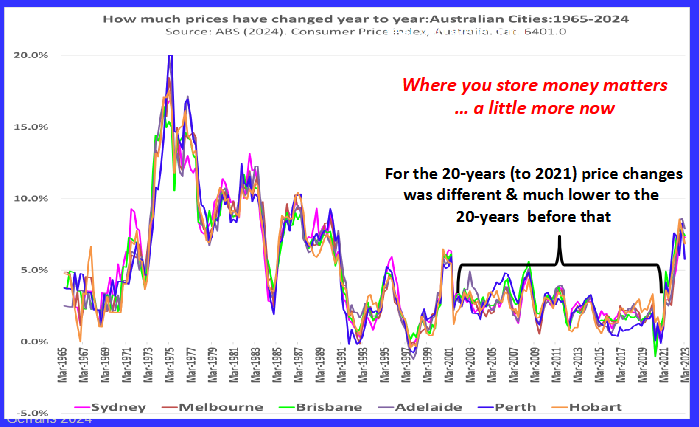
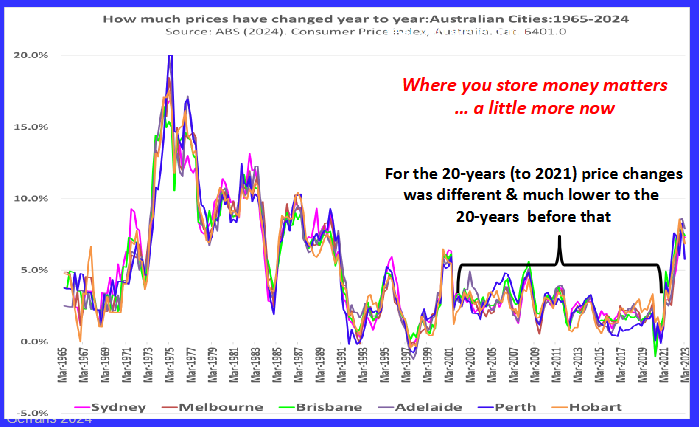
The 20 years to 2021 experienced much lower annual price changes than the preceding 20 years. Therefore, the year a person is born and the period through which they save or invest can strongly affect their experience.
Where money is stored also matters because returns may or may not keep pace with rising prices.
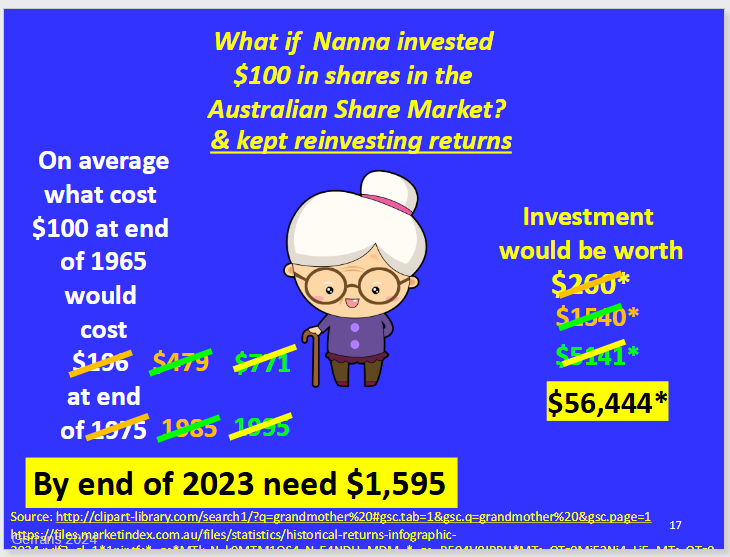
What did the lecture's Australian-share-market example show about investing $100 from 1965 and reinvesting returns?
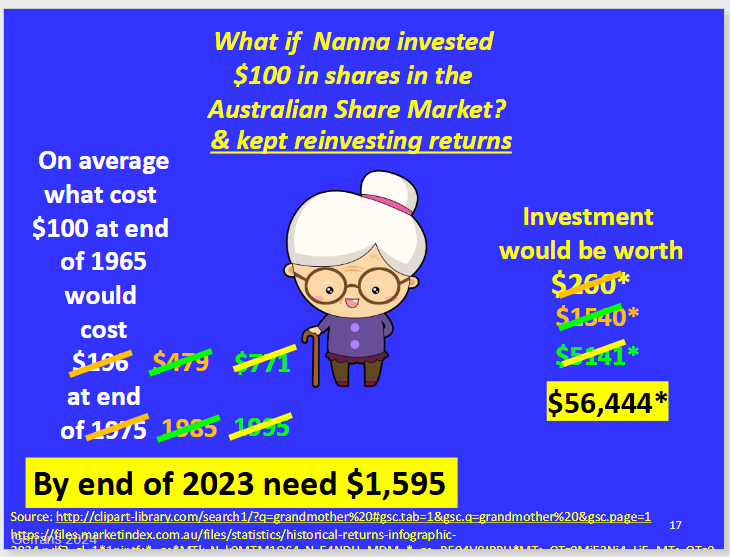
By the end of 2023:
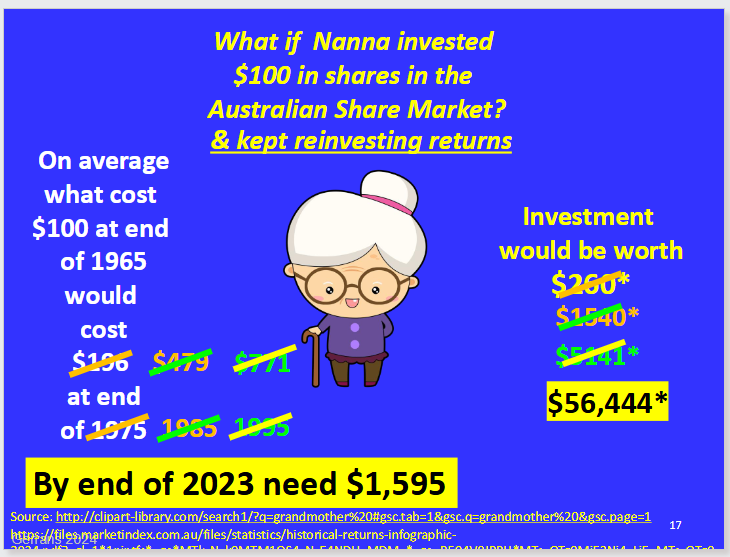
- The amount needed merely to match the purchasing power of $100 from 1965 was about $1,595.
- The share investment was shown as approximately $56,444 before allowing for taxes or possible fees.
The example demonstrates that investment choice and reinvestment of returns can greatly affect long-term wealth.
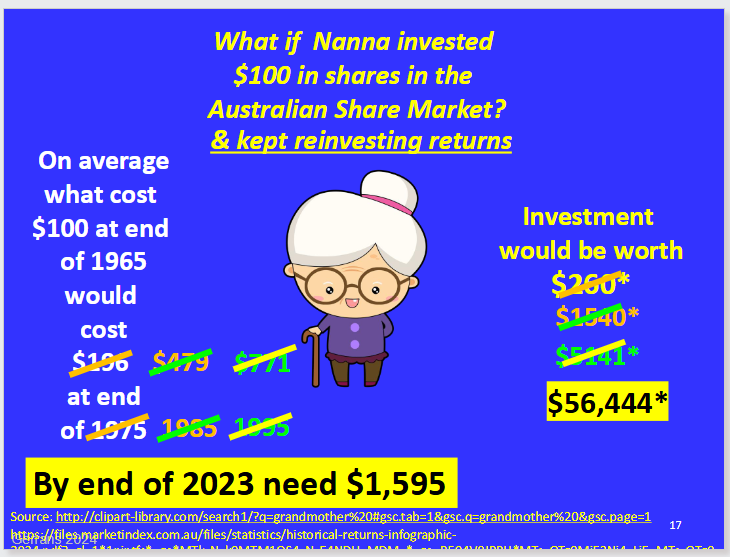
Why must the asterisk and fine print on an investment illustration be checked?
Important assumptions or exclusions may be hidden in the fine print.
In the share-market illustration, taxes and possible fees had not been deducted. These could reduce the amount actually received.
Lecturer emphasis:
Always read the asterisk and fine print.
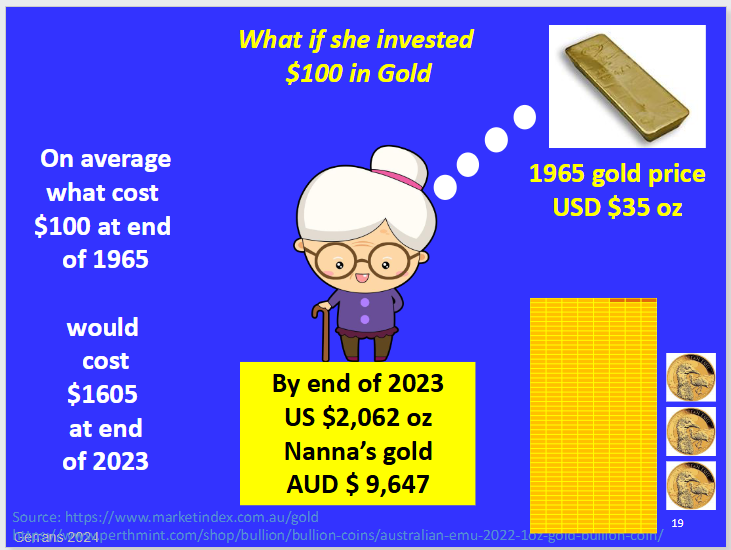
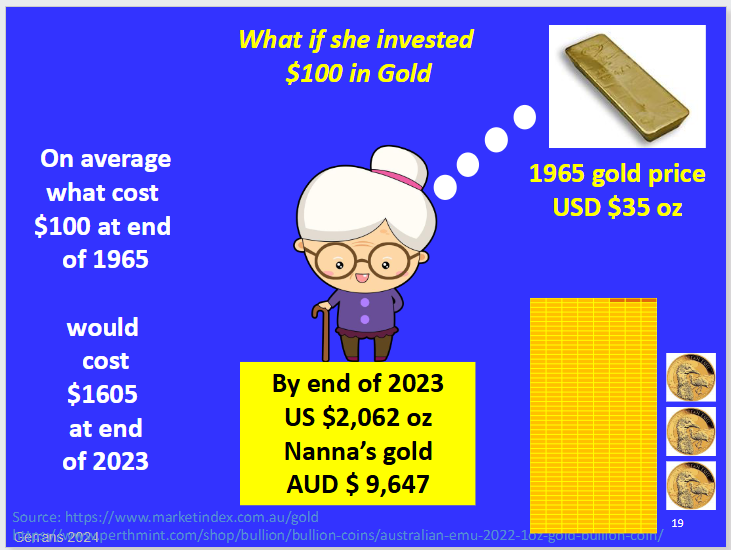
What did the lecture's gold example show about investing $100 in gold from 1965?
The example used:
- 1965 gold price: USD $35 per ounce
- End-of-2023 gold price: USD $2,062 per ounce
- Estimated end-of-2023 value of the gold: AUD $9,647
- Inflation-equivalent cost of the original $100 basket: about $1,605
The example reinforces that where wealth is stored affects its future value.
What are the overall objectives of FINA1109?
The unit aims to help students:
- Develop fundamental financial concepts and skills, rather than become financial experts
- Consider major decisions made over a lifetime
- Articulate known personal objectives
- Consider possible unknown objectives
- Reflect on and plan for the financial consequences of decisions and shocks, such as investments falling or losing a job
- Begin a personal financial plan and the financial-planning process
Key idea: "Plans are worthless, but planning is everything."
What broad content is introduced in Weeks 1-3?
Weeks 1-3 introduce:
- Personal financial decision making and what it means
- Fundamental financial ideas, including financial planning and the time value of money
- Basic financial checks used to assess a person's finances
What are the Week 1 learning objectives?
By the end of Week 1, students should be able to:
- Define human capital
- Explain marginal cost and opportunity cost
- Explain why money has a time value and identify its components
- Relate present value and future value using examples
- Explain the steps in the personal financial-planning process
- Identify the components of a personal financial plan
What three related personal-finance concepts must be distinguished?
1. Personal financial planning
2. The personal financial-planning process
3. A personal financial plan
Personal financial planning is the broad activity; the process is the sequence of steps; the plan is the resulting organised framework for action.
What is personal financial planning?
Personal financial planning is the process of meeting your life goals through the management of your finances.
Possible life goals include:
- Getting a job
- Buying a home
- Saving for postgraduate or a child's education
- Taking a round-the-world holiday
- Retiring or no longer needing to work
Lecturer explanation:
Goals are personal and differ according to circumstances and preferences; comparison with other people should not determine your goals.
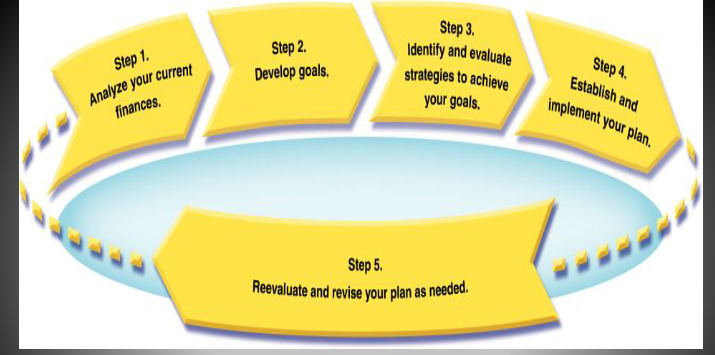
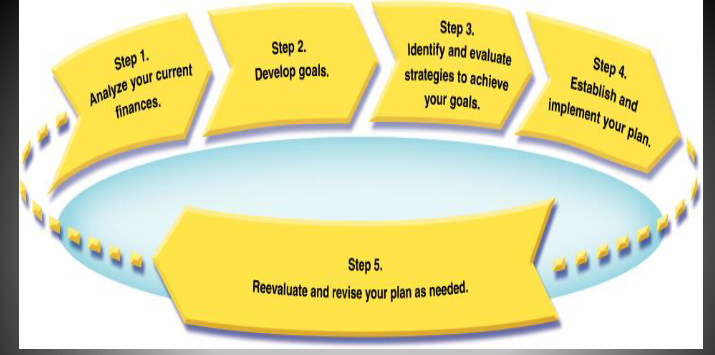
What are the stages of the personal financial-planning process?
1. Analyse or assess your current financial position.
2. Develop and articulate goals.
3. Identify and evaluate possible strategies.
4. Implement the chosen financial plan.
5. Re-evaluate and revise the plan as circumstances and feedback change.
The process is ongoing rather than a once-only decision.

What are the four elements of a personal financial plan?
1. Establish a foundation
- What you need to know and do
- Available tools
- Your objectives
.
2. Secure basic needs
- Cash flow
- Housing
- Employment choices
- Emergency funds
.
3. Build wealth
- Saving
- Investing
.
4. Protect finances
- Insurance
- Estate planning

What four principles support effective financial decisions about the future?
1. Use reasonable assumptions.
2. Apply marginal reasoning.
3. Consider opportunity costs.
4. Use sensitivity analysis.
These principles help address uncertainty in future-oriented decisions.
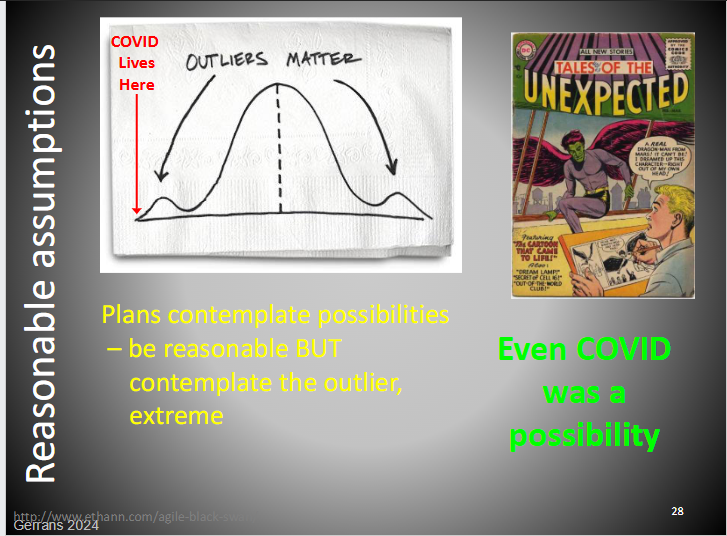
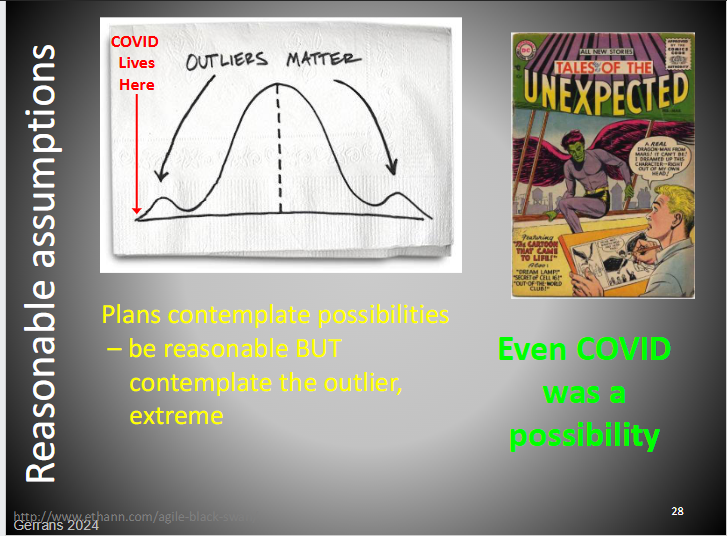
What makes an assumption "reasonable" in financial planning?
A reasonable assumption should be plausible and grounded, but planning should also contemplate outliers and extreme events.
COVID was used as an example of an event that appeared unlikely but was still possible.
What is marginal reasoning?
Marginal reasoning asks:
- Is doing a little bit more worth it?
- What changes because of the decision?
- What changes "at the margin"?
It focuses on the additional benefits and costs caused by the choice.
Why should non-marginal amounts and sunk costs not drive a current decision?
If an income or expense does not change because of the choice, it is not marginal to that decision.
A sunk cost is a past, irreversible loss. Because it cannot be recovered, it should not determine the current choice.
Phrase used in the lecture: "Don't cry over spilt milk."
What is an opportunity cost?
Opportunity cost is the value of the next-best alternative forgone when one option is chosen.
Ask:
- What have I given up doing?
- What am I missing out on?
- What else could I have done?
- What do I forgo?
Opportunity costs can involve time, alternative activities, tuition money or possible investment uses.
What is Stage 1 of the personal financial-planning process?
Stage 1 is to assess or analyse your current finances.
This establishes the person's starting financial position before goals and strategies are developed.
What two types of information are used to assess personal finances?
1. Financial position or net worth
- Shown in a personal balance sheet
- Describes what is owned and owed
- Can tell a history of what has accumulated over previous months or years
.
2. Financial performance
- Shown in a personal cash-flow statement
- Describes money flowing in and out
- Shows what is happening during the current month or year
How is net worth calculated?
Net worth = Assets − Liabilities
- Assets are what you own.
- Liabilities are what you owe.
Net worth compares the estimated current value of assets with outstanding liabilities.
How should you complete a basic personal net-worth calculation?
1. List estimates of the current value of your assets—not what they originally cost.
2. List estimates of your liabilities.
3. Calculate assets minus liabilities.
Interpretation:
- Positive net worth: assets > liabilities
- Zero net worth: assets = liabilities
- Negative net worth: assets < liabilities
Why did the lecturer ask whether you included yourself as an asset?
The individual's human capital is often their largest asset, especially early in life.
Lecturer emphasis:
Whatever your current monetary net worth, you are your own most valuable asset because of your future ability to earn and save.
What is human capital in personal finance?
Human capital is a person's ability to earn and save over time.
It represents the value of future productive capacity and future earnings.
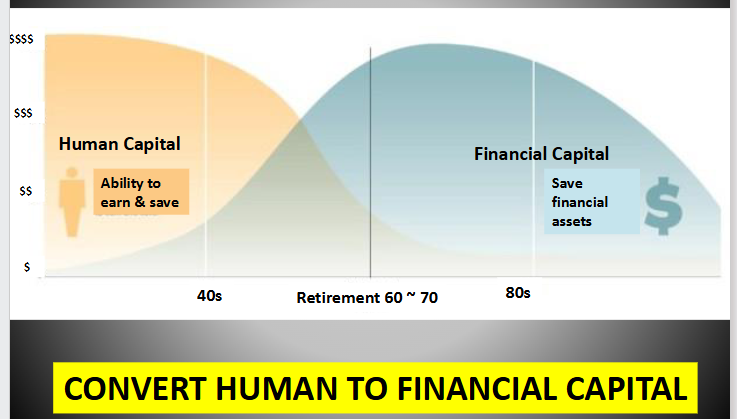
How is human capital converted into financial capital over the life cycle?
During working life, income generated by human capital is partly saved and invested to build financial assets.
Therefore:
Human capital → earning and saving → financial capital
As retirement approaches, remaining human capital generally declines while accumulated financial capital becomes increasingly important.
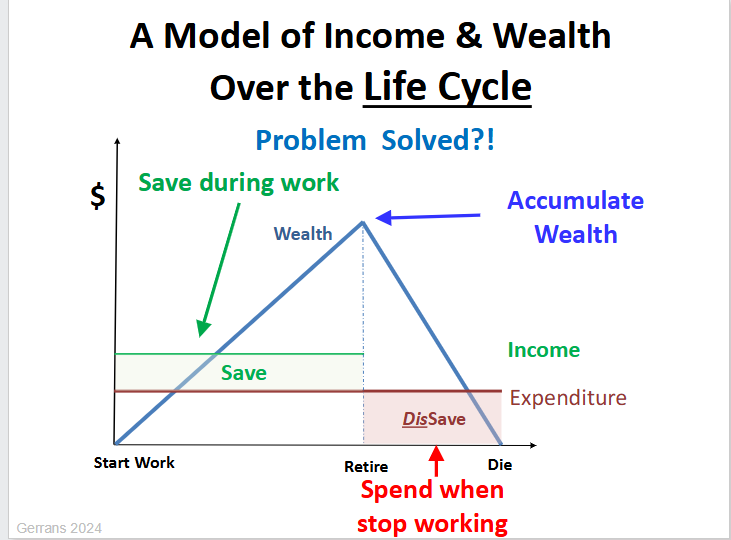
What does the simplified life-cycle model say about income, expenditure and wealth?
- Work begins and income is earned.
- During working life, income exceeds expenditure and the difference is saved.
- Savings accumulate into wealth.
- Wealth may peak around retirement.
- After work stops, the person "dissaves" by spending accumulated wealth.
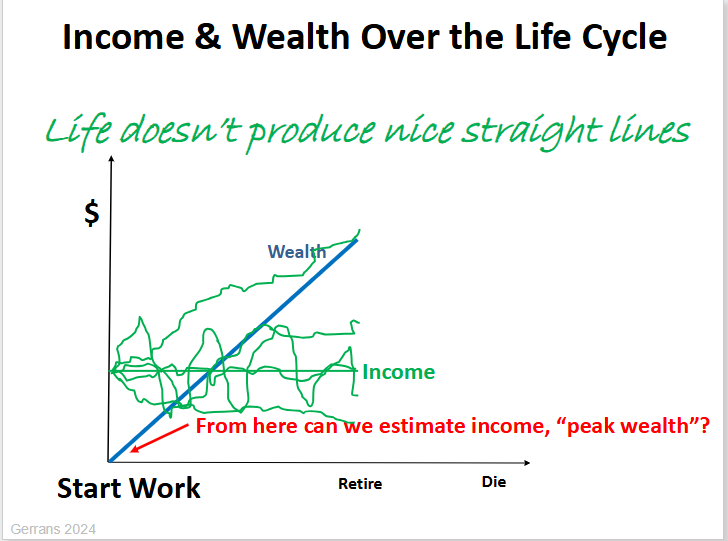
Why is the life-cycle model only a simplified model?
Real income and wealth do not follow smooth, straight lines.
Employment changes, layoffs, market movements and other uncertain events can interrupt the path, so estimates of future income, retirement and peak wealth are imperfect.
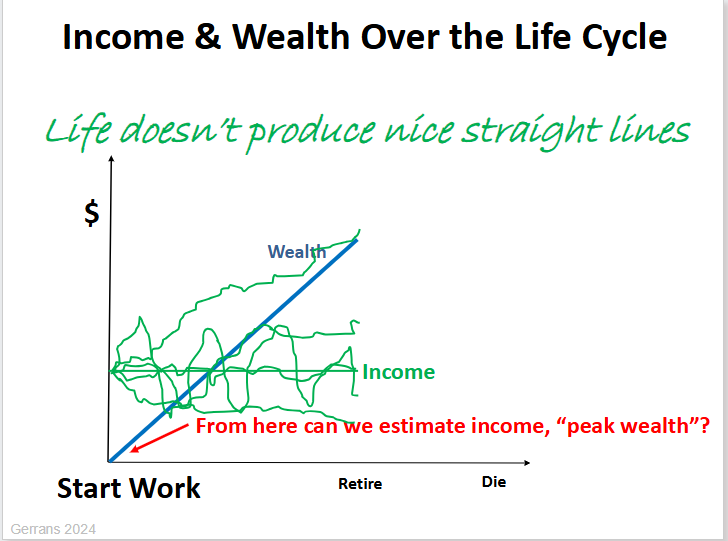
What assumptions are needed when salary is expected to be a person's main income?
Estimate:
- Probability of obtaining a job at graduation
- Expected starting salary
- Probability of remaining employed
- Likely duration of any layoff
- Rate at which income may grow
The estimates will not be perfect, but they provide a starting point for planning.
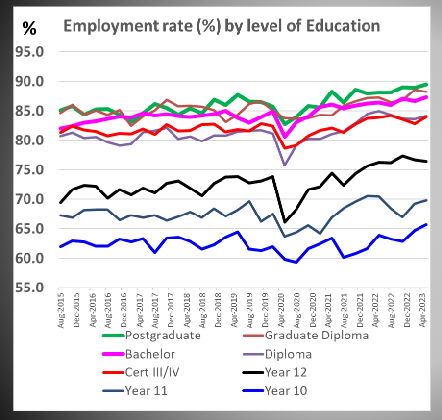
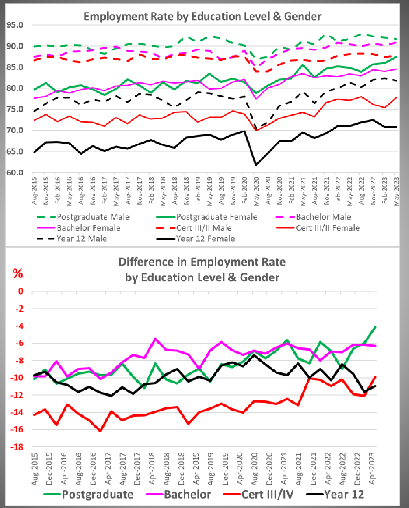
What relationship did the lecture show between education, employment and human capital? (NOT ASSESSABLE)
Higher education was associated, on average, with higher employment rates and therefore a greater chance of building human capital.
Not assessable:
The lecturer stated that detailed historical employment rates, such as a specific Year 12 employment rate in 2020, were background only and were not to be memorised.
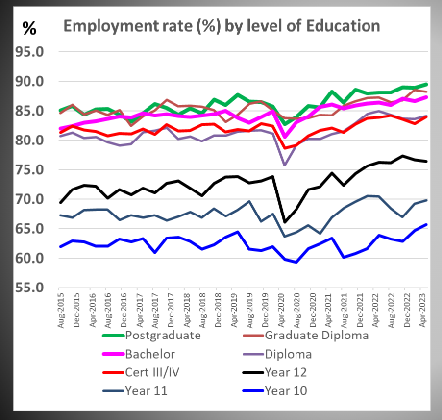
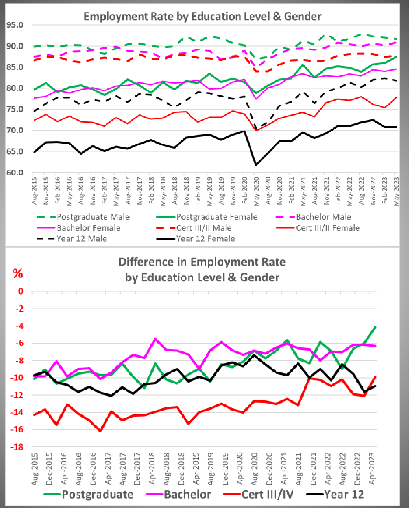
What did the employment data suggest about the gender gap among graduates?
Employment-rate differences between genders appeared smaller among graduates, although a gap remained.

How might AI affect different forms of human capital?
The lecturer raised whether ChatGPT and related AI could threaten some occupations.
Jobs involving writing, programming and information processing may have greater exposure, while many physical or manual occupations may be less directly exposed.
The implication is that technological change can alter the future value and risk of a person's human capital.

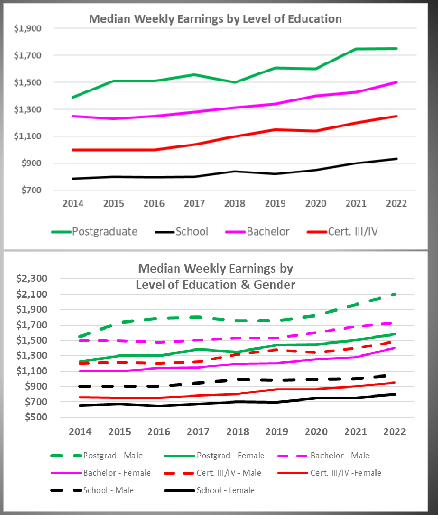
What relationships did the lecture identify between education, earnings and gender?
- Graduates have higher earnings on average.
- A gender earnings gap persists even at similar education levels.
These are averages and do not determine the outcome for every individual.
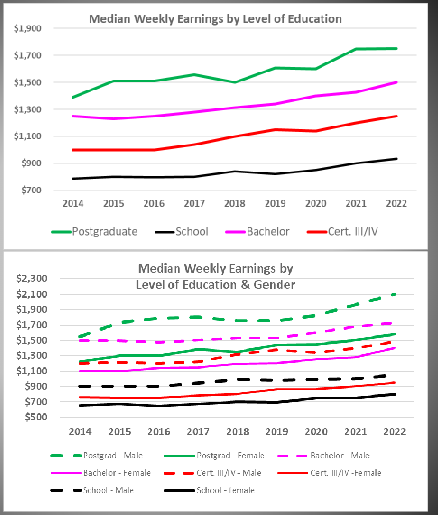
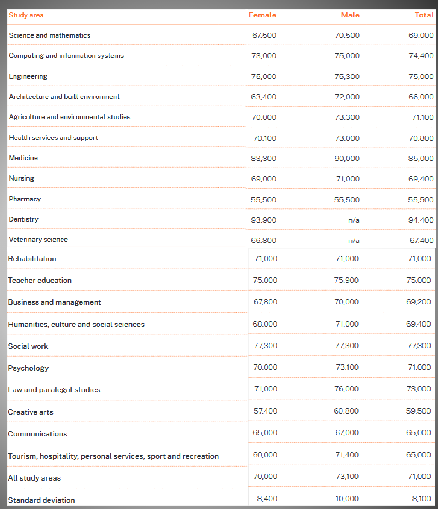
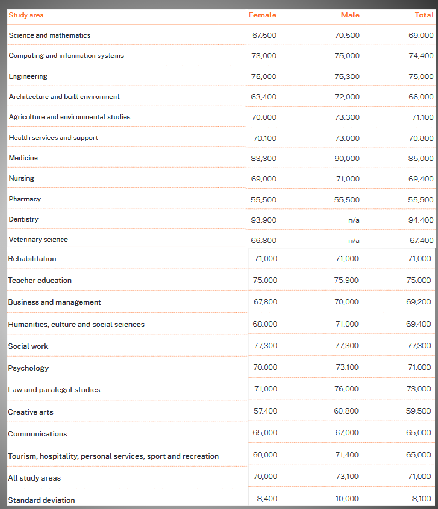
What factors cause graduate earnings to vary?
Graduate earnings vary by factors including:
- Field or area of study
- Gender
- Location
- Other personal and labour-market circumstances
Therefore, one salary assumption will not fit everyone.
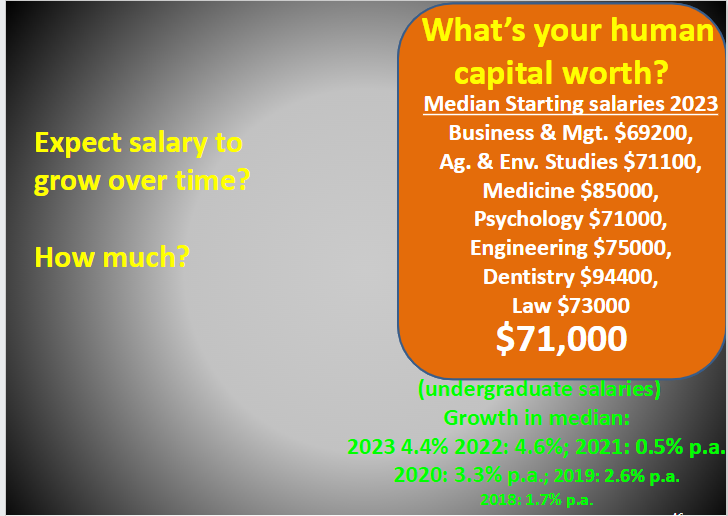
What 2023 median starting salaries were shown for selected fields of study?
- Business and Management: $69,200
- Agriculture and Environmental Studies: $71,100
- Medicine: $85,000
- Psychology: $71,000
- Engineering: $75,000
- Dentistry: $94,400
- Law: $73,000
- Overall figure highlighted: $71,000
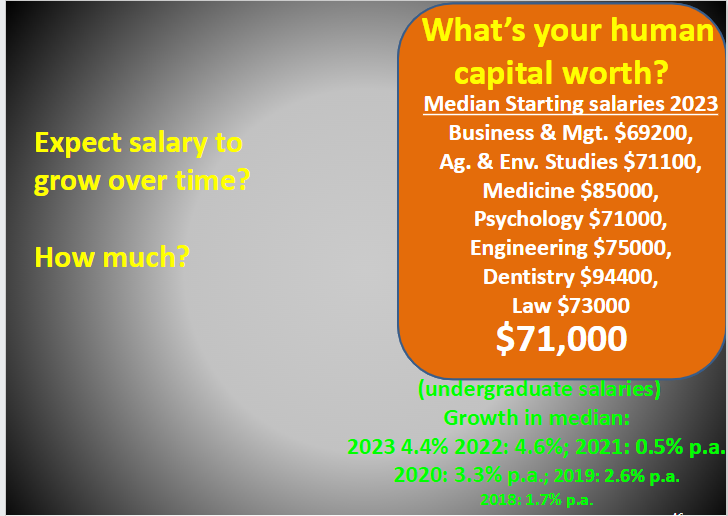
What recent growth rates in undergraduate median starting salaries were shown?
Growth in median starting salaries:
- 2023: 4.4%
- 2022: 4.6%
- 2021: 0.5% p.a.
- 2020: 3.3% p.a.
- 2019: 2.6% p.a.
- 2018: 1.7% p.a.
Lecturer explanation:
Salary growth varies over time; a rough long-run assumption of around 3% per year could be used as a starting estimate rather than treating one recent year as permanent.
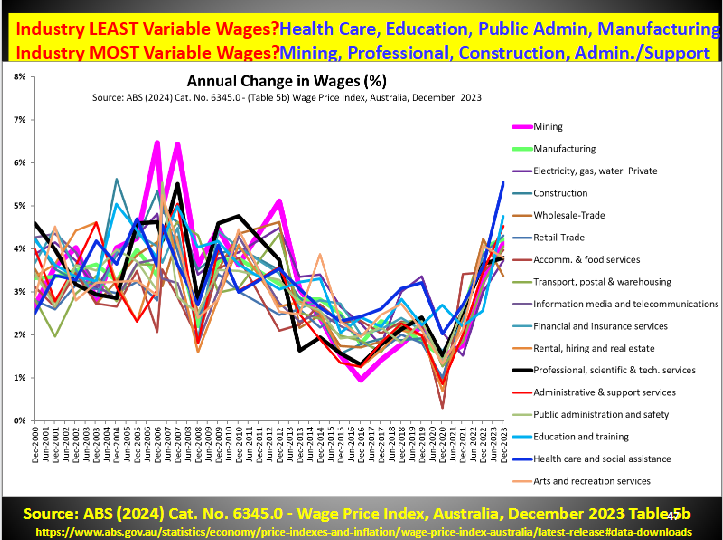
Which industries were shown as having less-variable versus more-variable wage growth?
Less-variable wage growth:
- Health Care
- Education
- Public Administration
- Manufacturing
More-variable wage growth:
- Mining
- Professional services
- Construction
- Administrative and Support services
Why can future salaries not simply be added together to calculate human capital?
Future salaries occur at different points in time.
Money received in different years does not have the same value today, so future earnings must be converted into comparable present values using the time value of money.
What is the time value of money?
The time value of money is the principle that the value of money depends on when it is received or paid.
A dollar today and a dollar in the future are not automatically equivalent because of opportunity cost, risk, inflation and impatience.
Why does receiving $105 in one year after paying $100 today not necessarily make you better off?
Four factors must be considered:
1. Opportunity cost—what else the $100 could have done
2. Risk—the future $105 may not be received
3. Inflation—$105 in one year may buy less than $105 today
4. Impatience or preference for receiving value sooner
Therefore, the $5 difference alone is not enough to judge the investment.
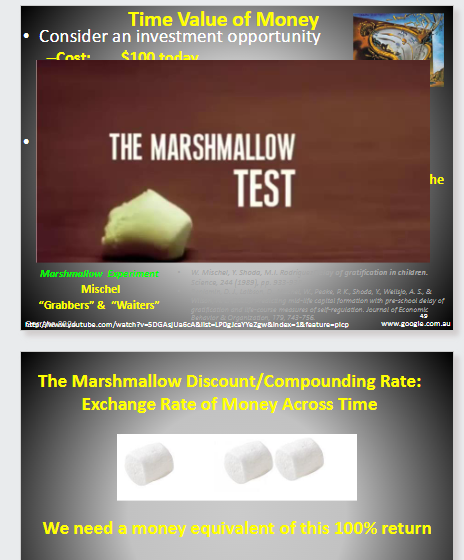
How did the marshmallow experiment illustrate the time value of money?
The choice between one marshmallow now and two later illustrates delayed gratification and impatience.
The exchange between an amount now and a larger amount later implies an "exchange rate" across time. Finance expresses this using a discount or compounding rate.
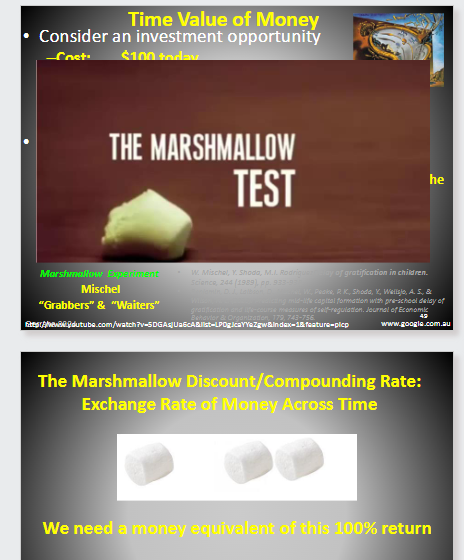
What is a compounding rate or discount rate?
It is the exchange rate of money across time.
- A compounding rate converts a present amount into a future equivalent.
- A discount rate converts a future amount into its present equivalent.
The rate reflects the relevant opportunity cost and may also capture inflation and risk.
What rates might be considered when choosing a discounting or compounding rate?
Possible reference rates include:
- The inflation rate
- A government bond rate, described as a "risk-free rate"
- A fixed-deposit or bank-deposit rate
The chosen rate should match the opportunity cost and context of the decision.
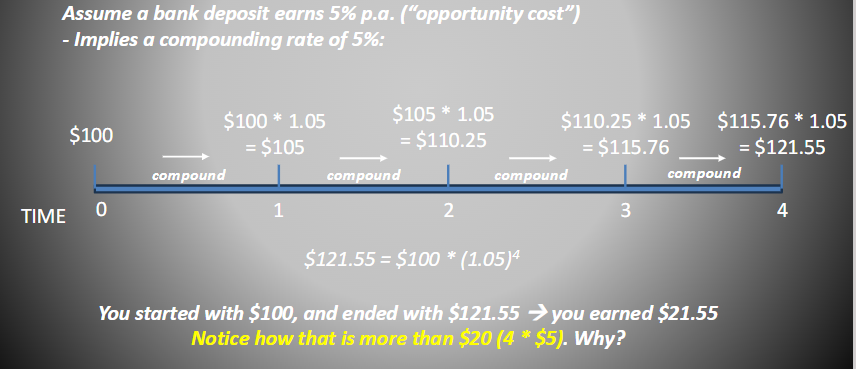
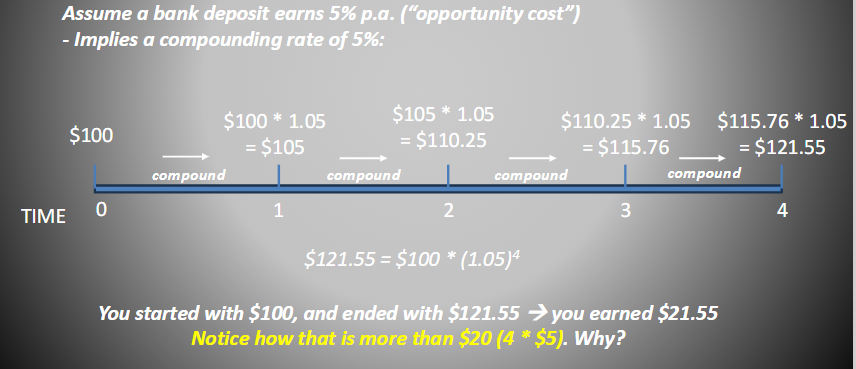
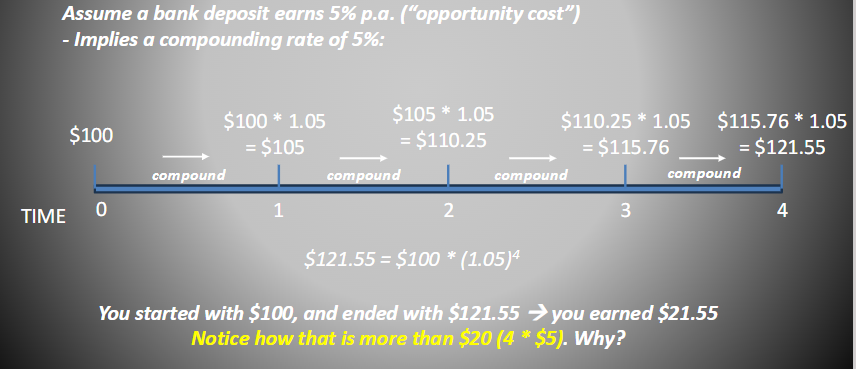
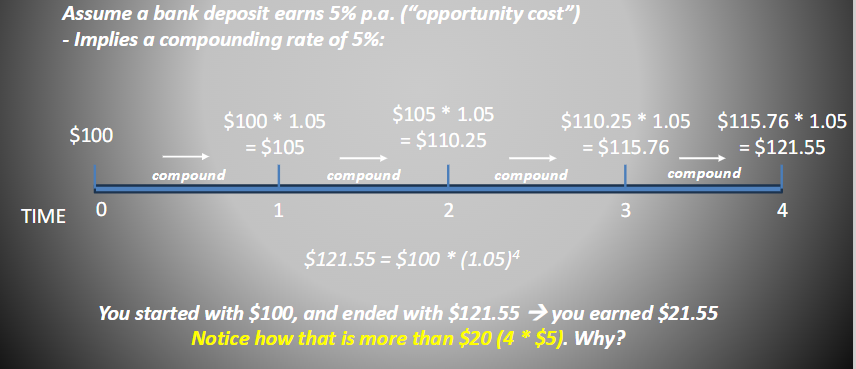
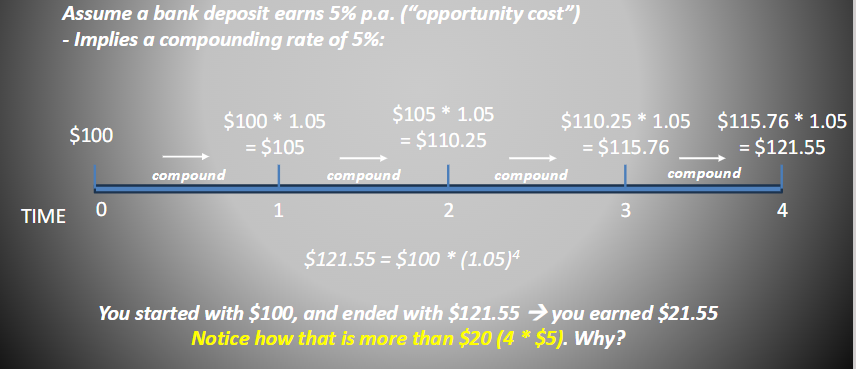
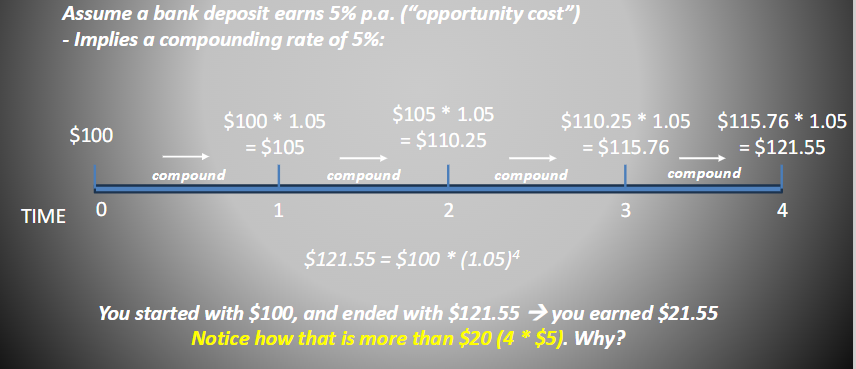
How does $100 compound over four years at 5% p.a.?
Year 0: $100.00
Year 1: $100 × 1.05 = $105.00
Year 2: $105 × 1.05 = $110.25
Year 3: $110.25 × 1.05 = $115.76
Year 4: $115.76 × 1.05 = $121.55
Formula:
FV = $100 × (1.05)^4 = $121.55
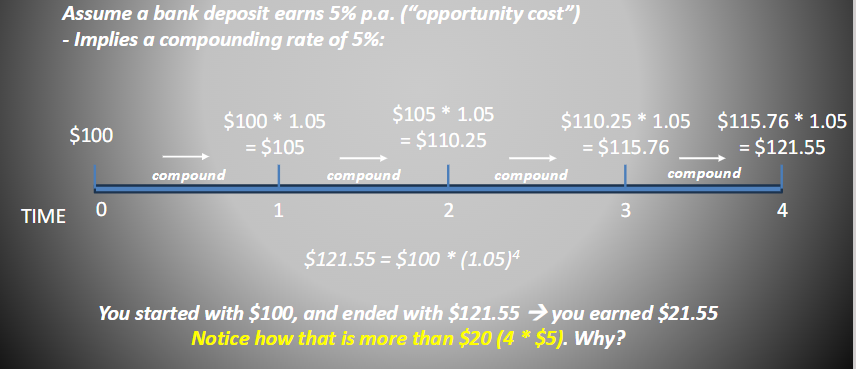
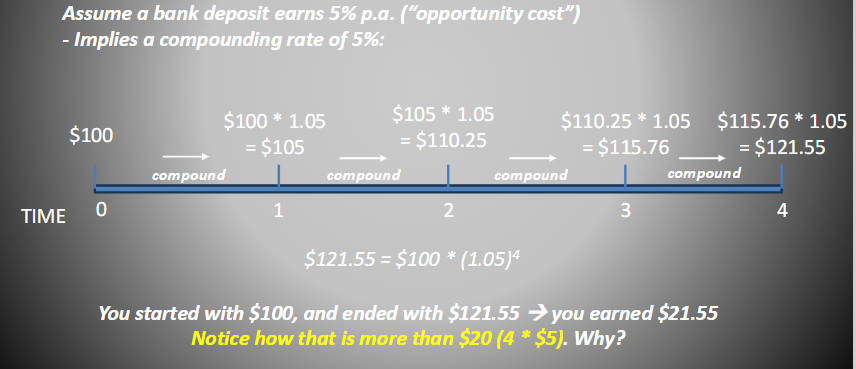
Why does $100 compounded at 5% for four years become $121.55 rather than $120?
Compounding earns interest on:
- The original principal, and
- Interest earned in earlier periods.
The extra $1.55 is produced by earning interest on interest.
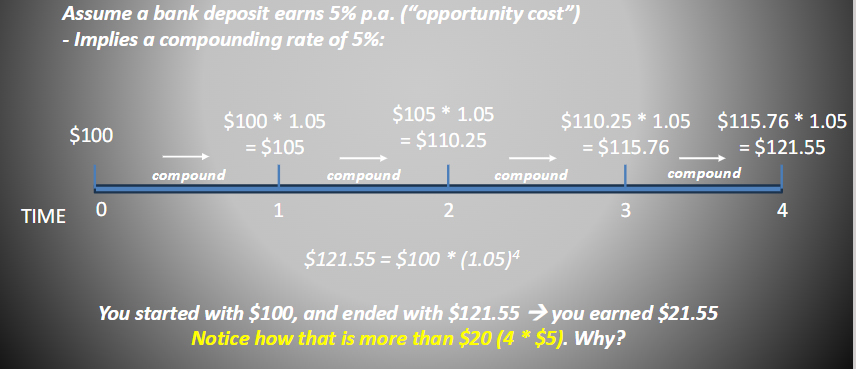
What is future value?
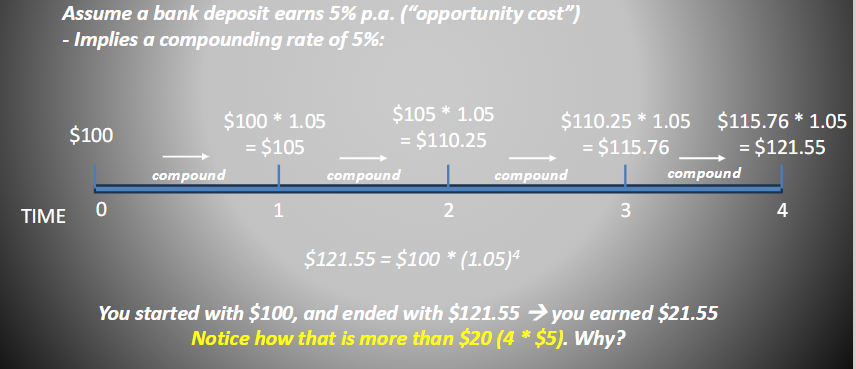
Future value (FV) is the amount to which a present sum grows after compounding for a stated period at a stated rate.
For one lump sum:
FV = PV × (1 + r)^n
In the lecture example:
$100 × (1.05)^4 = $121.55.
What is discounting?
Discounting is the opposite of compounding.
It works backwards from a future amount to determine the equivalent value today by dividing by the growth factor for each period.
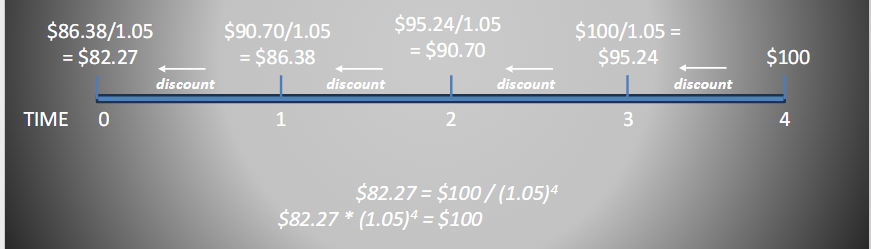
How is the present value of $100 received in four years calculated at 5%?
PV = FV ÷ (1 + r)^n
PV = $100 ÷ (1.05)^4
PV = $82.27
This means $82.27 invested today at 5% would grow to $100 in four years.
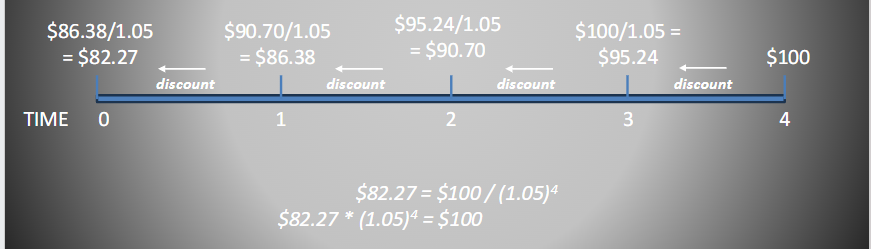
How does the $100 future amount discount backwards year by year at 5%?
Year 4: $100.00
Year 3: $100 ÷ 1.05 = $95.24
Year 2: $95.24 ÷ 1.05 = $90.70
Year 1: $90.70 ÷ 1.05 = $86.38
Year 0: $86.38 ÷ 1.05 = $82.27
Check:
$82.27 × (1.05)^4 = $100.
What is present value?
Present value (PV) is the current equivalent of a future cash flow after discounting for its timing and the relevant rate.
For one future lump sum:
PV = FV ÷ (1 + r)^n
What is the relationship between present value and future value?
They are two values of the same cash flow at different points in time.
- Compound a present value forward to obtain future value.
- Discount a future value backward to obtain present value.
At the same rate and number of periods, the two calculations reverse each other.
What must be checked when using an online compound-interest or present-value calculator?
Online calculators can perform the arithmetic, but they may be set up differently.
Check inputs and settings such as:
- Whether the rate is annual or for another period
- Number and timing of periods
- Whether payments are lump sums or recurring
- Compounding frequency
Lecturer emphasis:
Do not accept an output without understanding how the calculator is configured.
What three key factors determine present value and future value?
1. SIZE—How large is the amount of money?
2. TIMING—How long before it is received or paid?
3. RISK / RATE—At what rate is it compounded or discounted?
The lecture grouped the big idea as size, timing and risk.
How should the statement "An investment will pay $100 in four years; how much should you invest now?" be translated?
It asks:
"What is the present value of a future value of $100 received in Year 4?"
- $100 in Year 4 is the future value.
- The amount invested now is the present value.
- A discount rate is required to calculate it.
An investment pays $100 in four years and the relevant rate is 5%. What is its present value?
Correct answer:
$82.27
Calculation:
PV = $100 ÷ (1.05)^4 = $82.27
Interpretation:
If $82.27 were deposited now at 5%, it would compound to $100 in four years.
What does the lecturer want students to focus on when using present-value and future-value calculations?
The unit is more interested in:
1. What the calculation means
2. Why the calculation is being performed
3. Whether the numbers and result are sensible
Calculators can do the "grunt work," but students must understand the financial interpretation.
How should the result PV = $82.27 for $100 received in four years at 5% be stated in words?
"The present (discounted) value of $100 received in four years' time is $82.27 when the discount rate is 5%."
The statement should identify:
- The future amount
- Its timing
- The discount rate
- The present equivalent
What were the major Week 1 takeaways?
1. Factors affecting financial decision making
2. Three key concepts: personal financial planning, the planning process and the components of a personal financial plan
3. Key indicators used to assess personal finances
4. The importance of human capital
5. The very important concept of the time value of money
Lecturer emphasis:
The time value of money was identified as especially important.