B. Disaccharides
 Call Kai
 Learn
Learn Practice Test
 Spaced Repetition
 Match
Match Flashcards
 Knowt Play
1/46

There's no tags or description
Looks like no tags are added yet.
Name | Mastery | Learn | Test | Matching | Spaced | Call with Kai | Chat |
|---|
No analytics yet
Send a link to your students to track their progress
47 Terms
c. Sucrose
Table sugar.
a. Maltose
b. Lactose
c. Sucrose
d. Cellobiose
b. Glucose + Fructose
component: glu (a1-B2) fructose
Components of sucrose.
a. Glucose + Galactose
b. Glucose + Fructose
c. Galactose + Fructose
d. Glucose + Glucose
c. α1→β2
Glycosidic linkage of sucrose.
a. α(1→4)
b. β(1→4)
c. α1→β2
d. β(1→6)
a. Sugar cane (Saccharum officinarum)
Source of sucrose.
a. Sugar cane
b. Barley
c. Cow's milk
d. Corn
a. Sugar beet (Beta vulgaris)
Source of sucrose.
a. Sugar beet
b. Rice
c. Wheat
d. Potato
a. Sugar maple (Acer saccharum)
Source of sucrose.
a. Sugar maple
b. Barley
c. Corn
d. Coconut
b. Molasses
Dark, syrupy, liquid mixture left behind after isolating/purifying crystals from a solution.
a. Honey
b. Molasses
c. Syrup
d. Caramel
a. Demulcent
Pharmaceutical use of sucrose.
a. Demulcent
b. Cathartic
c. Expectorant
d. Emetic
d. Comparison of sweetness
Pharmaceutical use of sucrose.
a. Emetic
b. Cathartic
c. Expectorant
d. Comparison of sweetness
b. Sweetening agent
sugar + drug na bitter
Pharmaceutical use of sucrose to mask the bitter taste of drugs.
a. Flavoring agent
b. Sweetening agent
c. Buffering agent
d. Suspending agent
a. 85% w/v
pa-check kung w/v or w/w
Sucrose concentration in syrup.
a. 85% w/v
b. 95% w/w
c. 85% w/w
d. 95% w/v
b. Self-preserving
Property of syrup containing 85% w/v sucrose.
a. Hygroscopic
b. Self-preserving
c. Effervescent
d. Volatile
b. Coating agent
Pharmaceutical use of sucrose in sugar-coated tablets.
a. Binding agent
b. Coating agent
c. Lubricant
d. Disintegrant
b. Maltose
Malt sugar.
a. Lactose
b. Maltose
c. Sucrose
d. Galactose
c. Maltose
fermented grains
Product of diastatic fermentation.
a. Lactose
b. Sucrose
c. Maltose
d. Fructose
c. Diastase

Enzyme that converts starch into maltose.
a. Lactase
b. Maltase
c. Diastase
d. Invertase
c. Glucose + Glucose
Components of maltose.
a. Glucose + Fructose
b. Galactose + Glucose
c. Glucose + Glucose
d. Fructose + Fructose
c. α(1→4)
Glycosidic linkage of maltose.
a. β(1→4)
b. α(1→6)
c. α(1→4)
d. β(1→6)
a. Sugar in beer
Common use of maltose.
a. Sugar in beer
b. Infant formula
c. Artificial sweetener
d. Intravenous fluid
d. Barley (Hordeum vulgare)
Source of maltose.
a. Sugar cane
b. Cow's milk
c. Sugar beet
d. Barley
c. Lactose
Milk sugar.
a. Maltose
b. Sucrose
c. Lactose
d. Trehalose
b. Cow's milk (Bos taurus)
Source of lactose.
a. Sugar cane
b. Cow's milk
c. Barley
d. Sugar beet
c. Galactose + Glucose
Components of lactose.
a. Glucose + Glucose
b. Glucose + Fructose
c. Galactose + Glucose
d. Galactose + Fructose
b. β(1→4)
Glycosidic linkage of lactose.
a. α(1→4)
b. β(1→4)
c. α1→β2
d. β(1→6)
b. Whey
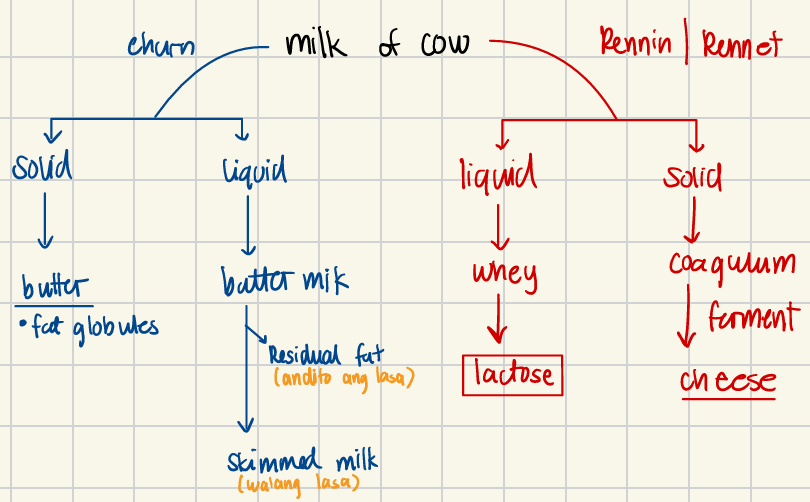
Liquid portion obtained after treatment of milk with rennin.
a. Cream
b. Whey
c. Butter
d. Casein
c. Coagulum
Solid portion obtained after treatment of milk with rennin.
a. Whey
b. Lactose
c. Coagulum
d. Butter
b. Butter
Solid product obtained after churning cow's milk.
a. Whey
b. Butter
c. Buttermilk
d. Skimmed milk
c. Buttermilk
Liquid product obtained after churning cow's milk.
a. Whey
b. Skimmed milk
c. Buttermilk
d. Cheese
b. Fat globules
Major component of butter.
a. Lactose
b. Fat globules
c. Casein
d. Whey proteins
b. Buttermilk
andito sa residual fat ang lasa (skimmed milk ang walng lasa)
Milk product with residual fat.
a. Whole milk
b. Buttermilk
c. Skimmed milk
d. Whey
d. Skimmed milk
walang lasa dahil naalis kasama ng residual fat
Milk product with fat removed.
a. Whole milk
b. Buttermilk
c. Whey
d. Skimmed milk
c. Lactose
Milk carbohydrate present in whey.
a. Sucrose
b. Maltose
c. Lactose
d. Fructose
b. Cheese
Product formed after fermentation of the coagulum.
a. Butter
b. Cheese
c. Yogurt
d. Whey
c. Lactulose
Disaccharide produced by alkaline rearrangement of lactose.
a. Maltose
b. Cellobiose
c. Lactulose
d. Sucrose
b. Galactose + Fructose
Components of lactulose.
a. Glucose + Glucose
b. Galactose + Fructose
c. Glucose + Fructose
d. Galactose + Glucose
d. α1→4
Glycosidic linkage of lactulose.
a. α(1→4)
b. β(1→4)
c. α(1→6)
d. α1→4
b. Stimulant laxative
Pharmacologic use of lactulose.
a. Antidiarrheal
b. Stimulant laxative
c. Osmotic laxative
d. Bulk-forming laxative
b. Acetic acid
Acid produced from lactulose in the stomach.
a. Hydrochloric acid
b. Acetic acid
c. Sulfuric acid
d. Carbonic acid
b. Lactic acid
Acid produced from lactulose.
a. Acetic acid
b. Lactic acid
c. Citric acid
d. Oxalic acid
c. Colon
Site irritated by acetic acid and lactic acid to produce the laxative effect.
a. Stomach
b. Small intestine
c. Colon
d. Duodenum
b. Laxative effect
Lactulose produced irritation in the colon.
a. Antidiarrheal effect
b. Laxative effect
c. Antacid effect
d. Carminative effect
c. Cellobiose
Disaccharide composed of glucose and glucose linked by β(1→4).
a. Maltose
b. Lactose
c. Cellobiose
d. Sucrose
c. Glucose + Glucose
Components of cellobiose.
a. Glucose + Fructose
b. Galactose + Glucose
c. Glucose + Glucose
d. Galactose + Fructose
b. β(1→4)
Glycosidic linkage of cellobiose.
a. α(1→4)
b. β(1→4)
c. α1→β2
d. β(1→6)
c. Cellobiose
Disaccharide obtained from cellulose.
a. Maltose
b. Lactose
c. Cellobiose
d. Trehalose
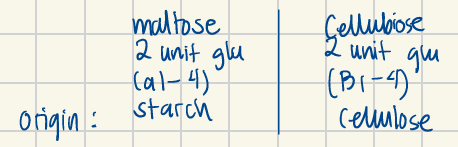
Cellobiose and Maltose difference