Intro to Audio Technology Lecture 1
 Call Kai
 Learn
Learn Practice Test
 Spaced Repetition
 Match
Match Flashcards
 Knowt Play
1/34

There's no tags or description
Looks like no tags are added yet.
Name | Mastery | Learn | Test | Matching | Spaced | Call with Kai | Chat |
|---|
No analytics yet
Send a link to your students to track their progress
35 Terms
Sound Propagation
How sound moves through things.
2 requirements of Sound Propagation
Movement and a Medium for the sound to travel through.
Compression
Higher pressure of a sound wave
Rarefaction
Lower pressure of a sound wave
One complete cycle of a waveform
Complete cycling through positive and negative aspect. (peak to peak or trough to trough)
Frequency
How many cycles per second
Higher frequency
Higher pitch
Lower frequency
Lower pitch
Unit used for frequency
Hertz (Hz), 1000 cps = 1000 Hz
People with healthy hearing can perceive sound between
20-20,000 Hz
Amplitude
strength of a wave
Higher Amplitude
Louder sound
Lower Amplitude
Quieter sound
Wavelength
Physical length of one complete cycle (speed of sound / frequency)
People with healthy hearing can perceive wavelengths between
.5 inc to 55’
Speed of sound propagation
How fast a wave moves through a medium
In warmer air, sound moves
faster
In colder air, sound moves
slower
Speed of sound at 70 degrees F
1128 ft/sec
Reflection
Wave bouncing off of a barrier and changing direction
Diffraction
A wave bouncing around a barrier
What type of wavelengths diffract around large barriers?
Long wavelengths
Sine Waves (Pure Tones)
Comprised of one frequency.
Complex waves (Tones)
Two or more frequencies
Top waveform in complex waves
100, 300, and 500 Hz
Bottom waveform in complex waves
200 and 400 Hz
Harmonic Series
Vibration at many frequencies
Fundamental
Lowest frequency in a harmonic series
Harmonics
Multiple frequencies in a harmonic series
Octave
Double the frequency
Timbre
Characteristic sound of something. Result of relative loudness of each overtone in the harmonic series of a sound.
White noise
Equal energy at all frequencies. Not tolerable to listen to.
Pink noise
Equal energy per octave. Much more listenable. Used for testing PA systems.

Polarity
Reversing the positive and negative aspects of a wave.
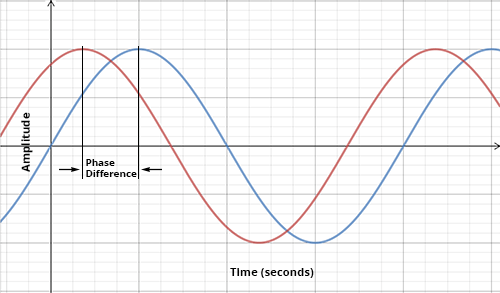
Phase
Delaying a waveform. Used to address technical problems and create phasing, flanging, and chorus.