MEDI 101 Lecture human tissues 1 and 2 (week 3)
 Call Kai
 Learn
Learn Practice Test
 Spaced Repetition
 Match
Match Flashcards
 Knowt Play
1/89

There's no tags or description
Looks like no tags are added yet.
Name | Mastery | Learn | Test | Matching | Spaced | Call with Kai | Chat |
|---|
No analytics yet
Send a link to your students to track their progress
90 Terms
tissues
groups of tisues similar structure and function
four types: epithelial, connective, muscle, nervous
epithelial tissues
cover and line body surfaces
often form sheets with one free surface, the apical surface, the basement surface
avascular (no blood supply)
Regenerate easily if well nourished
squamous
the shape is flattened, like fish scales
cuboidal
the tissue is cube-shaped, like dice
columnar
the tissue is shaped like columns
simple epithelia
Functions in absorption, secretion, and filtration
Very thin (so not suited for protection)
simple squamous epithelium
Single layer in membranes of flat cells
Locations—usually forms membrane
Functions in diffusion, filtration, or secretion
found in: air sacs of lungs, walls of capillaries, forms of serous membranes
simple cuboidal epithelium
A single layer of cube-like cells
Functions in secretion and absorption; ciliated types propel mucus or reproductive cells
found in: glands in their ducs, walls of kidney tubules, surface of ovaries
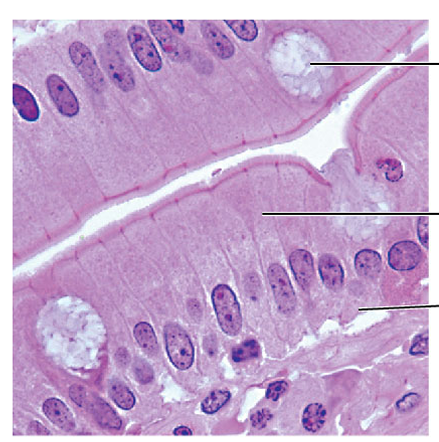
simple columnar epithelium
Single layer of tall cells
Functions in secretion and absorption; ciliated types propel mucus or reproductive cells
found in: lining of the digestive tract, mucous membranes
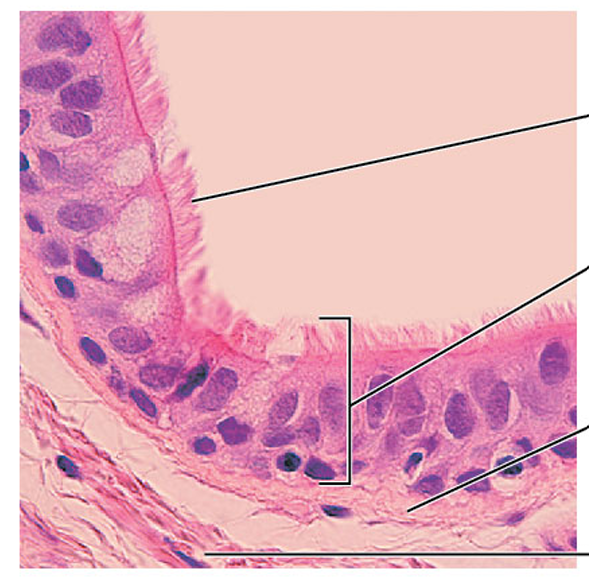
pseudostratified columnar epithelium
All cells rest on a basement membrane
Single layer, but some cells are shorter than others giving a false (pseudo) impression of stratification
Functions in absorption or secretion
found in: respiratory tract
stratified epithelia
Consist of two or more cell layers
Function primarily in protection
stratified squamous epithelium
Most common stratified epithelium
Named for cells present at the free (apical) surface, which are squamous
Functions as a protective covering where friction is common
found in: skin, mouth, esophagus
stratified cuboidal epithelium
two layers of cuboidal cells; functions in protection
stratified columnar epithelium
• surface cells are columnar, and cells underneath vary in size and shape; functions in protection
Stratified cuboidal and columnar
Rare in human body
Found mainly in ducts of large glands
transitional epithelium
Composed of modified epithelium cells called dome shape/umbrella cells on the surface
Shape of cells depends upon the amount of stretching
Functions in stretching and the ability to return to normal shape
found in: lining of urinary system organs
glandular epithelia
One or more cells responsible for secreting a particular product
Secretions contain protein molecules in an aqueous (water-based) fluid
Secretion is an active process
endocrine glands
Ductless; secretions (hormones) diffuse into blood vessels
Produce molecules called hormones
Examples include thyroid, adrenals, and pituitary
exocrine glands
Secretions empty through ducts to the epithelial surface
Include sweat and oil glands, liver, and pancreas (both internal and external)
connective tissue
Found everywhere in the body to connect body parts
Includes the most abundant and widely distributed tissues
variations in blood supply
contain extracellular matrix
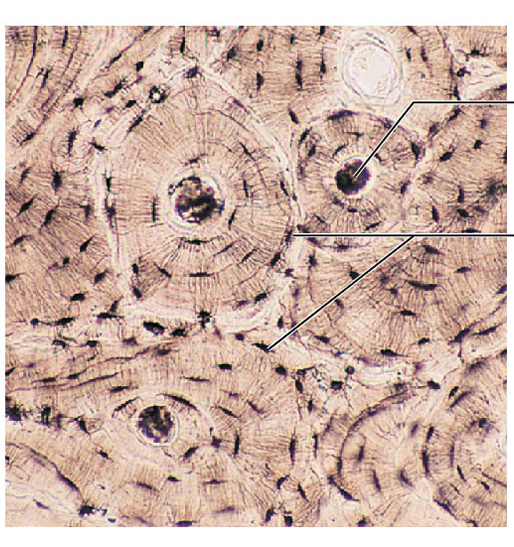
bone
osseous tissue
composed of osteocytes sitting in lacunae, hard matrix of calcium salts, large numbers of collagen fibers
to protect and support the body
central canal
or haversian canal
Opening in the center of an osteon (Haversian system)
Runs lengthwise through bone
Carries blood vessels and nerves
Perforating (Volkmann’s) cana
osteon
A unit of bone containing central canal and matrix rings
Structural and functional unit of compact bone
cartilage
Less hard and more flexible than bone
Found in only a few places in the body
Chondrocyte (cartilage cell) is the major cell type
hyaline cartilage
Most widespread type of cartilage
Abundant collagen fibers hidden by a glassy, rubbery matrix
found in: trachea, ribs to breastbone, covers ends of long bones, epiphyseal plates in long bones
elastic cartilage
Provides elasticity
Location: supports the external ear
fibrocartilage
Highly compressible
Location: forms cushion-like discs between vertebrae of the spinal column
dense connective tissue
main matrix element is collagen fiber
Fibroblasts are cells that make fibers
found in: tendons, ligaments, dermis
loose connective tissues
Softer, have more cells and fewer fibers than other connective tissues (except blood)
areolar connective tissue
Most widely distributed connective tissue
Soft, pliable tissue like “cobwebs”
Functions as a universal packing tissue and “glue” to hold organs in place
Layer of _____ called lamina propria underlies all membranes
All fiber types form a loose network
can soak up excess fluid (causes edema)
adipose connective tissue
An areolar tissue in which adipose (fat) cells dominate
insulates the body, protects some organs, site of fuel storage
found in: Subcutaneous tissue beneath the skin, kidneys, Fat “depots” include hips, breasts, and belly
reticular connective tissue
A delicate network of interwoven fibers with reticular cells (like fibroblasts)
Forms stroma (internal framework) of organs
found in: lymph nodes, spleen, bone marrow
blood
or vascular tissue
surrounded by a fluid matrix known as blood plasma
Soluble fibers are visible only during the clotting
Functions as the transport vehicle for the cardiovascular system, carrying: nutrients, wastes, respiratory gases
simple squamous epithelium
which tissue is found in air sacs of lungs, walls of capillaries, serous membrane that line and cover organs in ventral cavity?
simple cuboidal epithelium
which tissue is found in glands and ducts, walls of kidney tubules, and surface of ovaries?
simple columnar epithelium
which tissue is found in lining of digestive tract, mucous membranes?
pseudostratified columnar epithelium
which tissue is found in the respiratory tract?
stratified squamous epithelium
which tissue is found on the skin, mouth, esophagus?
transitional epithelium
which tissue is found in the urinary system organs?
endocrine glands
which gland is found in the thyroid, adrenals and pituitary?
exocrine glands
which glands is found in the sweat and oil glands, liver and pancreas, salivary glands?
hyaline cartilage
which cartilage is found in the trachea, ribs to breastbone, growth plates in long bones and fetal skeleton prior to birth?
elastic cartilage
which cartilage is in the external ear?
dense connective tissue
which tissue is found in the tendons, ligaments, dermis?
reticular connective tissue
which tissue can be found in lymph nodes, spleen and bone marrow?
skeletal muscle tissue
Packaged by connective tissue sheets into skeletal muscles, which are attached to the skeleton and pull on bones or skin
Voluntarily (consciously) controlled
Produces gross body movements or facial expression
Has striations, multinucleate, long cylindrical shape
cardiac muscle tissue
Involuntarily controlled
Found only in the heart
Pumps blood through blood vessel
has striations, one nucleus per cell, short branching cells, intercalated discs with gap junction
smooth muscle tissue
Involuntarily controlled
Found in walls of hollow organs such as stomach, uterus, and blood vessels
Peristalsis, a wavelike activity, is a typical activity
no striations, one nucleus per cell, spindle-shaped cells
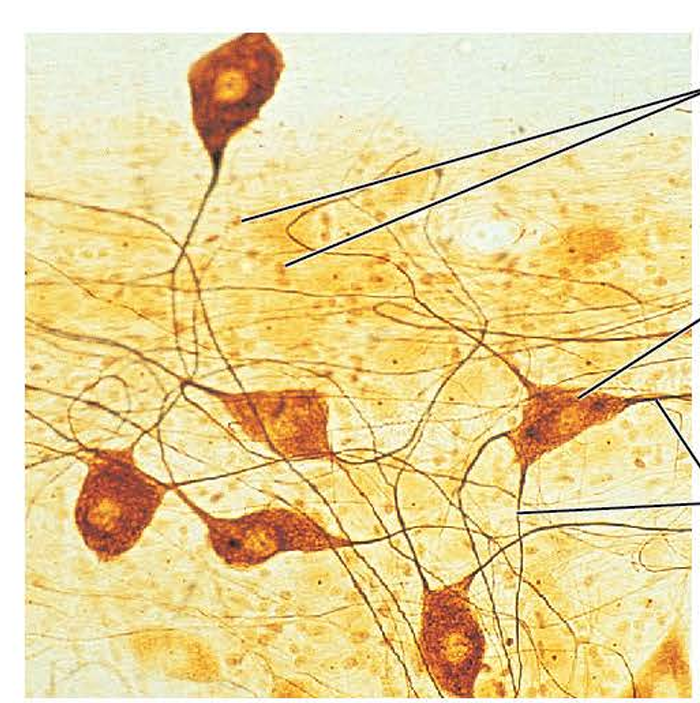
neurons
or nerve cells
cells specialized to transmit messages (nerve impulses)
Major regions of all neurons (cell body and processes)
cell body
is the metabolic center of the neuron
has nuclues with large nucleolus
nissl bodies
the rough endoplasmic reticulum in the neuron
neurofibrils
intermediate filaments in the neuron the maintain cell shape
dendrites
conduct impulses toward the cell body
neurons may have hundreds of these
axons
conduct impulses away from the cell body
neurons have only one of this arising from the cell body at the axon hillock
end in axon terminals, which contain vesicles with neurotransmitters
Axon terminals are separated from the next neuron by a synaptic gap
synaptic cleft
gap between axon terminals and the next neuron
synapse
functional junction between nerves where a nerve impulse is transmitted
myelin
White, fatty material covering axons
Protects and insulates fibers
Speeds nerve impulse transmission
damage to this sheath due to autoimmune disease is multiple sclerosis
schwann cells
wrap axons in a jelly roll–like fashion (PNS) to form the myelin sheath
neurilemma
part of the Schwann cell external to the myelin sheath
nodes of ranvier
gaps in myelin sheath along the axon
Oligodendrocytes
produce myelin sheaths around axons of the CNS
Wrap around nerve fibers in the central nervous system
lack a neurilemma
neuroglia
or glial cells or glia
Insulate, support and protect neurons
they resemble neurons, Unable to conduct nerve impulses and never lose the ability to divide
divided into 6 types
nervous tissue
made up of two principal cell types (neurons and supporting cells)
Function is to receive and conduct electrochemical impulses to and from body parts (irritability and conductivity)
astrocytes
Abundant, star-shaped cells
Brace and anchor neurons to blood capillaries
Determine permeability and exchanges between blood capillaries and neurons
Protect neurons from harmful substances in blood
Control the chemical environment of the brain
microglia
Spiderlike phagocytes
Monitor health of nearby neurons
Dispose of debris
ependymal cells
Line cavities of the brain and spinal cord
Cilia assist with circulation of cerebrospinal fluid
satellite cells
Protect and cushion neuron cell bodies
in the peripheral nervous system
epithelial membranes
are simple organs
Also called covering and lining membrane
contain epithelial tissues layer and connective tissue layer
cutaneous membrane
skin
Dry membrane
Outermost protective boundary
construction: epidermis and dermis
mucous membrane
or mucosae
Moist membrane
Line all body cavities that open to the exterior body surface
Adapted for absorption or secretion
construction: epithelium type depends on site, has loose connective tissue (lamina propria)
serous membrane
or serosae
Line open body cavities that are closed to the exterior of the body
Occur in pairs, separated by serous fluid, with a visceral and parietal layer
construction: simple squamous epithelium and areolar connective tissue
synovial membranes
Loose areolar connective tissue only (no epithelial tissue)
Line fibrous capsules surrounding joints (Line bursae Line tendon sheaths)
Secrete a lubricating fluid to cushion organs moving against each other during muscle activity
simple cuboidal epithelium
what tissue is this?

simple columnar epithelium
what tissue is this?
pseudostratified columnar epithelium
what tissue is this?
stratified squamous epithelium
which tissue is this?

transitional epithelium
which tissue is this?

stratified cuboidal epithelium
which tissue is this?

bone
which tissue is this?
hyaline cartilage
which tissue is this?

fibrocartilage
which tissue is this?

dense connective tissue
which tissues is this?

areolar connective tissue
which tissue is this
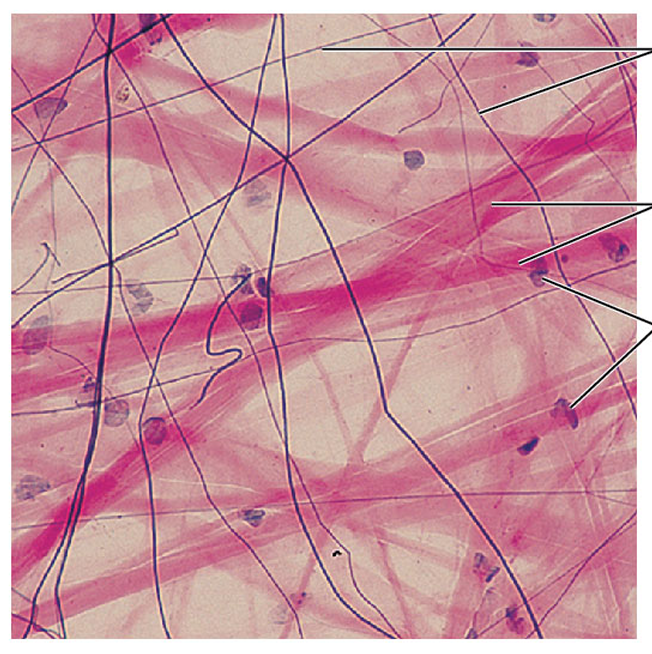
adipose connective tissue
which tissue is this?
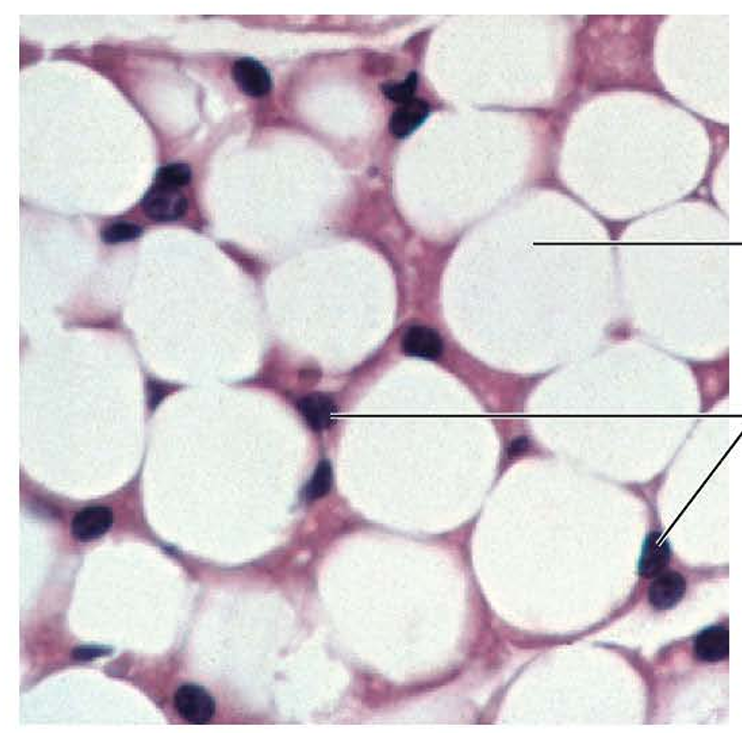
reticular connective tissue
which tissue is this?

blood
which tissue is this?

skeletal muscle
which muscle is this?

cardiac muscle
which muscle is this?

smooth muscle
which muscle is this?

neuron
what is this?