lipari malabsorptive syndromes
 Call Kai
 Learn
Learn Practice Test
 Spaced Repetition
 Match
Match Flashcards
 Knowt Play
1/56

There's no tags or description
Looks like no tags are added yet.
Name | Mastery | Learn | Test | Matching | Spaced | Call with Kai | Chat |
|---|
No analytics yet
Send a link to your students to track their progress
57 Terms
t/f: more than a third of adults in the US are obese and have significantly larger healthcare costs
true. 40.3% of adults are obese, $2k higher costs
whats a normal BMI
18.5-24.9
classify weight classes by BMI
underweight: <18.5
normal: 18.5-25
overweight : 25-30
obesity class 1: 30-35
obesity class 2: 35-40
obesity class 3: 40+
BMI equation
weight (kg) / height (m^2)
[ or lbs/inches * 703]
at what BMI may weight loss medications be considered
BMI >27
examples of obesity related complications remediable by weight loss
-T2DM, insulin resistance/ prediabetes
-dyslipidemia
-non-alcoholic fatty liver disease
-obstructive sleep apnea
-hypertension
-urinary stress incontinence
the most effective and sustainable intervention for obesity
bariatric surgery
3 indications for bariatric surgery
1. BMI >40 WITHOUT coexisting med problems
2. BMI >35 with >=1 med problem due to obesity
3. BMI 30-35 with T2DM and poor glycemic control despite optimal lifestyle and meds
is the following pt indicated for bariatric surgery:
pt AD has BMI of 33 with hypertension and dyslipidemia
no. BMI 30-35 must have T2DM with poor glycemic control
is the following pt indicated for bariatric surgery:
pt AD has BMI of 37 with hypertension and dyslipidemia
yes. bmi >35 with 1+ med problems that may be resolved w weight loss
is the following pt indicated for bariatric surgery:
pt AD has BMI of 37 with glaucoma and lupus
no. comorbidities must be weight loss related and resolved by weight loss. pt must have BMI>40 to get surgery if they dont have weight related conditions
4 types of bariatric surgeries
restrictive (reduce size of stomach)
1. laparoscopic adjustable gastric binding
2. laparoscopic sleeve gastrectomy
combo malabsorptive and restrictive:
3. roux-en-Y gastric bypass (RYGB)
4. biliopancreatic diversion with duodenal switch
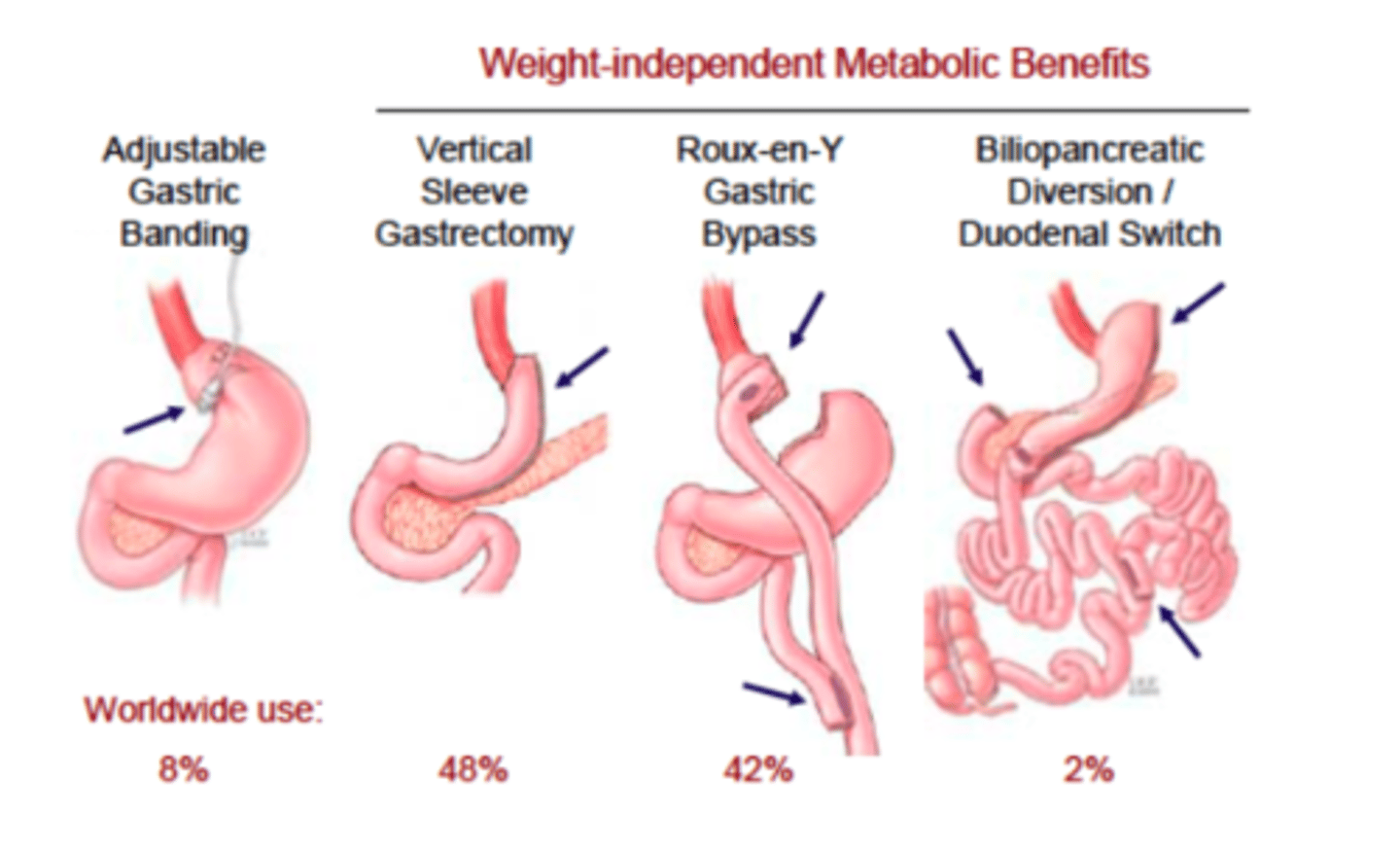
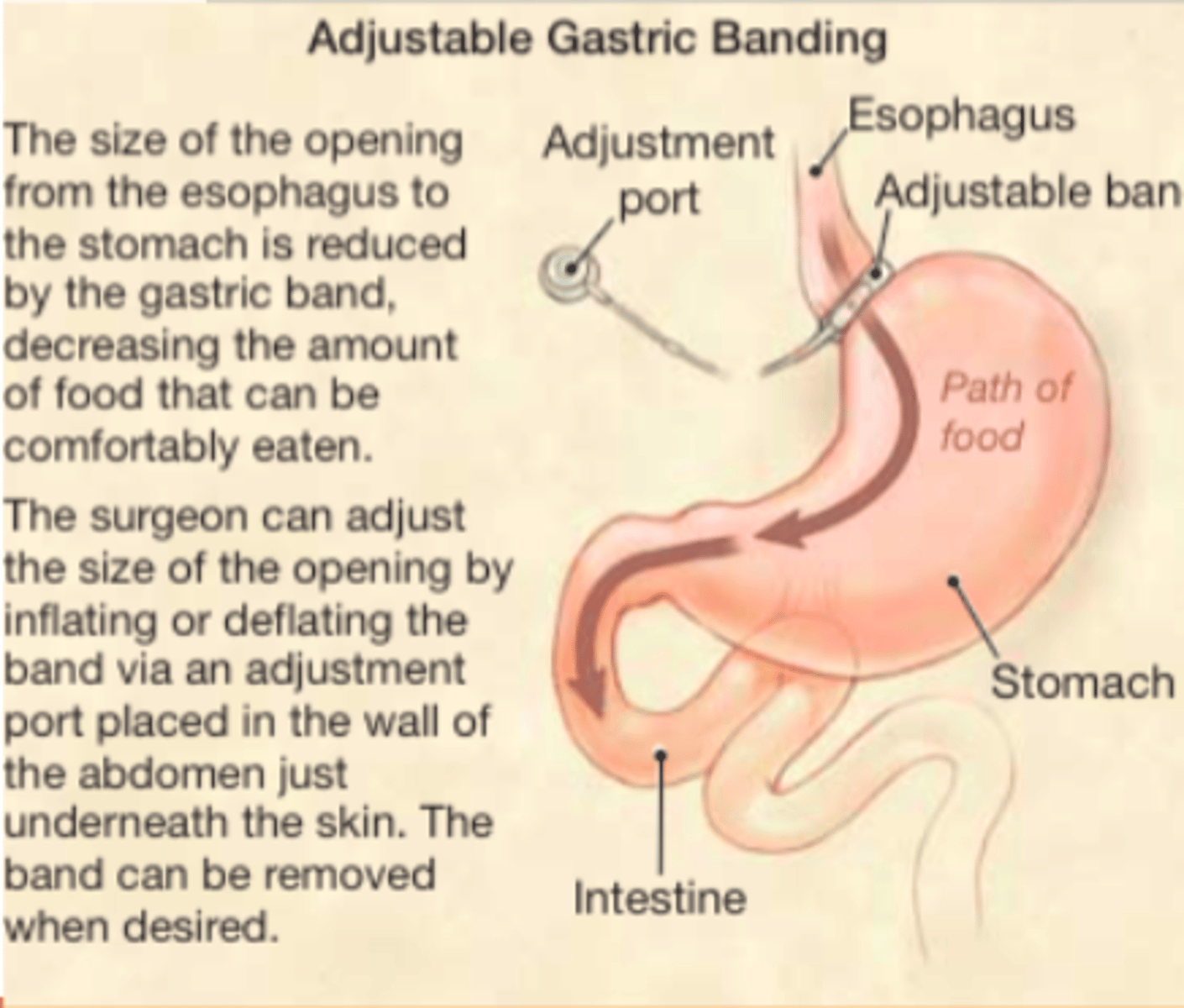
laparoscopic adjustable gastric binding
describe:
projected weight loss:
- silicone band placed around upper stomach to limit food intake
- band is adjustable; can control food intake
20-25% weight loss from baseline
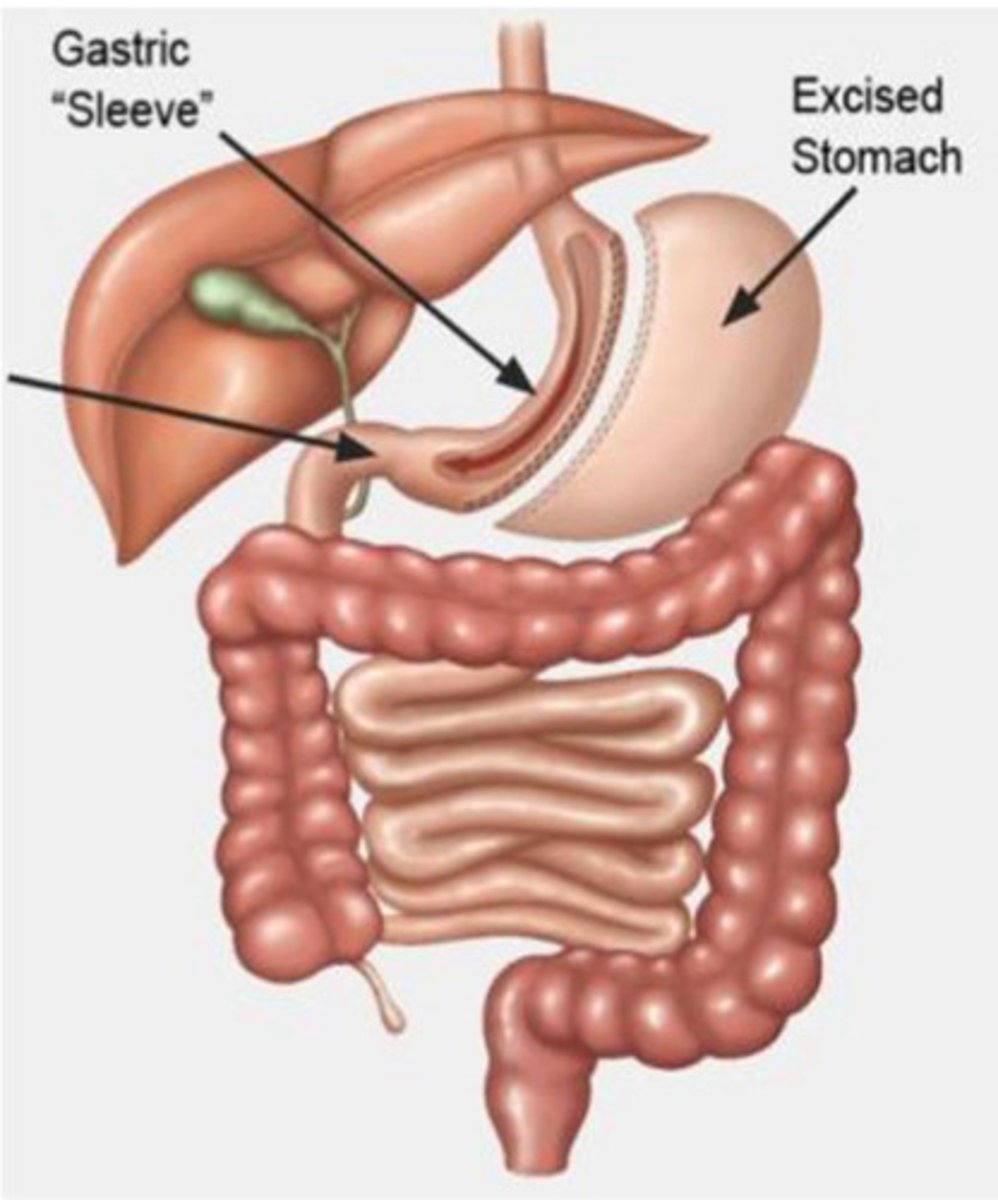
laparoscopic sleeve gastrectomy (70%)
describe:
projected weight loss:
- 70% of stomach is removed, leaving banana shaped tube
- irreversible; limited food intake
25-30% weight loss from baseline
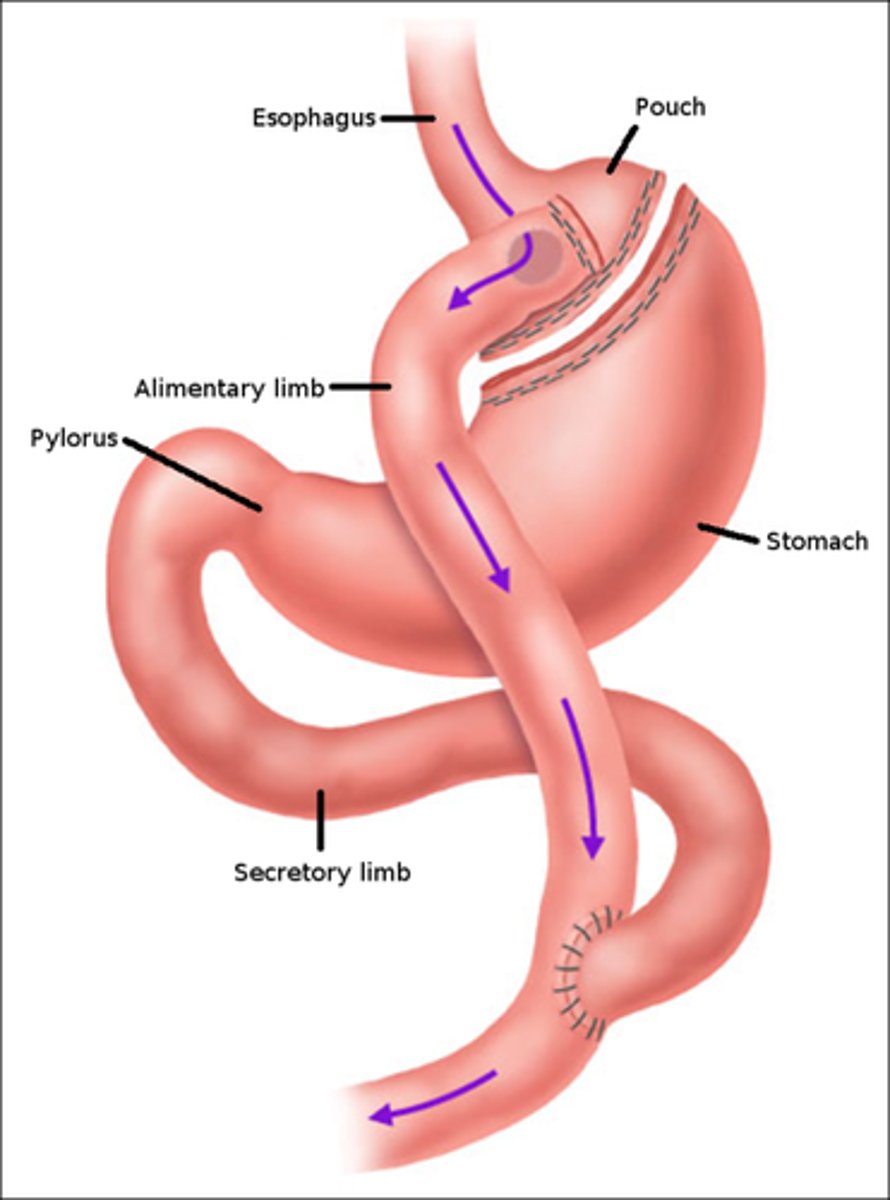
roux-en-y gastric bypass (RYGB)
describe:
projected weight loss:
- SI is divided and connected to early part of stomach (so most of stomach and SI is bypassed)
- this both restricts food intake and causes malabsorption
30-35% weight loss
biliopancreatic diversion with duodenal switch
describe:
projected weight loss:
- portion of stomach removed (like LSG) AND lower SI is connected to stomach (malabsorption)
20-25% weight loss
which bariatric surgery is reversible
LAGB
Which restrictive weight loss surgery involves placing an adjustable silicone band around the stomach and is fully reversible?
a) Laparoscopic sleeve gastrectomy (LSG)
b) Roux-en-Y gastric bypass (RYGB)
c) Laparoscopic adjustable gastric banding (LAGB)
d) Biliopancreatic diversion with duodenal switch (BPD-DS
c) Laparoscopic adjustable gastric banding (LAGB)
Which procedure is both restrictive and malabsorptive, has a "Y"-shaped intestinal rearrangement, and is considered one of the most common bariatric surgeries?
a) Laparoscopic sleeve gastrectomy (LSG)
b) Roux-en-Y gastric bypass (RYGB)
c) Laparoscopic adjustable gastric banding (LAGB)
d) Biliopancreatic diversion with duodenal switch (BPD-DS)
b
t/f: while very helpful in quick weight loss, bariatric surgeries have a high risk of mortality
false. considered among the safest abdominal procedures
how is absorption affected in bariatric surgeries?
1. reduced stomach size= increased pH= bypasses 1st pass metabolism
2. increased pH= less acid dependent meds absorbed
3. less SA= less absorbed
4. SI bypassing= drugs needing bile salts not processed
bariatric surgeries can cause __________ in gastric pH, leading to
increased pH (less acidic)
- acid dependant drugs (ex: iron) less absorbed
in RYGB and BDDS, a portion of the SI is bypassed, impacting drugs that require bile salts. examples?
fenofibrate, cyclosporine, estrogen
increased gastric pH in bariatric surgeries may effect acid-dependant meds such as
ketoconazole, enalapril, iron, calcium carbonate, aspirin
how is distribution of drugs impacted post-bariatric surgery? examples?
- less adipose tissue= less lipophilic drug distribution
ex: tacrolimus, levothyroxine, propofol
how may bariatric surgery impact drug metabolism? examples?
- bypassing SI bypasses CYP3A4 enzymes
ex: verapamil, diltiazem, apixaban
monitor for decreased efficacy or toxicity!
how may bariatric surgery impact renal clearnace
may improve clearance, needing dose adjustments
which of the following drugs would be best for post-bariatric pts?
- IR, ER, or DR
- liquid or solid
- SQ or oral
-immediate release (avoid extended, delayed, or film)
- liquid/ crushable (over solid)
- SQ (use non-oral)
which meds should be initiated or discontinued pre-bariatric surgery?
1. discontinue estrogen therapy (to reduce risk of thromboembolism)
- stop oral birth control 1 cycle before
- stop hormone replacement 3 weeks before
2. take allopurinol for gout prophylaxis
3. stop smoking 6 weeks- 1 year beforehand
what kind of diet must be followed before bariatric surgery? which meds may have to be adjusted as a result?
- very low calorie diet of 800 or less
- induces ketosis (easier surgery, less complications)
- adjust diabetes meds (sulfonylureas, lantus, levemir)
vit D and calcium deficiency post surgery
sx:
monitoring:
sx: osteoporosis, tingling, leg cramping, tetany
monitor: DEXA scan every 2 years
proper calcium supplementation dosing post op
BPDDS: 1800-2400mg/day
LAGB, SG, RYGB: 1200-1500mg/day
proper VitD supplementation dosing post op
3000 IU daily until blood levels normal (>30ng/mL)
which forms of calcium are preferred post op? how must other be taken?
- calcium citrate preferred (does not need acid for absorption)
- if using calcium carbonate, must take with food (needs acid)
give in divided doses!! seperate from iron!!
pt AA has just received a LAGB. how much calcium and vitD would you recommend? how would you instruct to take it?
give 1200-1500mg calcium per day. citrate can take whenever, carbonate must be with food. divided doses!
give 3000IU VitD daily till levels are normal
thiamine (B1)
sx:
tx (preventative):
sx: neuropathy, lower extremity edema, wernicke-korsakoff syndrome
tx: AT LEAST 12mg thiamine (preferred B complex w 50-100mg)
cobalamin (b12)
sx:
tx:
sx: pernicious, megaloblastic anemias, fatigue, palpitations
tx:
-oral 350-1000microg daily
- nasal, see manufacturer
- IM/SQ: 1000 microg monthly
iron
sx:
tx:
sx: microcytic anemia, fatigue, palpitations
tx:
low risk= 18mg from multivitamin
rest= 45-60mg qd
give with VitC and away from calcium and acid reducers!!!!!
when giving iron, which supplements should you separate?
- separate calcium and acid reducers
- give with VitC
Vit A dosing post op
LAGB: 5000IU/day
RYGB, LSG: 5000-10,000 IU/day
BDDS: 10,000 IU/day
VitE dosing post op
15mg/d
VitK dosing post op
LAGB: 90-120 microg/day
RYGB, LSG: 90-120 microg/day
BDDS: 300 microg/day
Zinc dosing post op
Use multivitamin with minerals
BPD/DS: 200% RDA (16-22mg/d)
RYGB: 100-200% RDS (8-22mg/d)
SG, LAGB: 100% (8-11mg/d)
Ratio of 8-15mg zinc to 1mg copper
copper dosing post op
BPD/DS, RYGB: 200% RDA (2mg/d)
SG, LAGB: 100% RDA (1mg/d)
- Copper gluconate or sulfate recommended
- 1mg copper for every 8-15mg zinc
t/f: lifelong supplementation is necessary after bariatric surgery
true
what can you do as a pharmacist to increase supplementation adherence in post op pts
- lower frequency of administrations (ex: patch, injectables)
- powdered drinks, chewable tablets
- consider low cost OTC options
which medications should be separated from iron intake
Vampires Crave Blood Leaving Folks Tired
antiretroVirals
carbidopa/levodopa
bisphosphonates (alendronate)
Levothyroxine
Fluoroquinolones (ciprofloxacin)
Tetracyclines
which dosage forms are preferred post op and for how long
- liquid for 2 months
- avoid ER, DR, MR< and enteric coated
- see which tabs you may or may not crush
which meds are preferred for pain control in post op pts
- acetaminophen preferred
- AVOID NSAIDS! risk of ulcers
which meds and for how long post op are given to pts for anticoag effects
- first 4 weeks: IV anticoag therapy
- after 4 weeks: transition to warfarin or DOAC
which 3 classes of meds have a narrow therapeutic index and must be monitored in post op patients
- anti-epileptics
- immunosuppressants
- anticoags
how must diabetes meds be altered post op
- metformin bioavailability increases 50%-> must reduce dose
- reduce insulin dose 50-75% immediately post op
- avoid sulfonylureas
bisphosphonates and post op care
- oral bisphosphonates cause GI distress
- switch to IV: zoledronic acid, ibandronate
estrogen and post op care
- decreased absorption after SI bypass
- switch to topical
oral contraceptives and post op care
- surgery improves fertility and maternal outcomes
- avoid progesterone only pills and emergency contraception pills
dumping syndrome
sx:
tx:
- large carb load dumped straight into SI (like liquids w sugar)
- hypoglycemia, fluid shifts, fatigue
tx:
1. diet change: avoid rapidly absorbed carbs, increase fiber, separate food and liquids
2. meds: acarbose, octreotide
pt AD presents to pharmacy post op complaining that her estrogen meds have not been working. what is proper recommendation
a. fill estradiol script, follow up with doc
b. contact doc, recommend transdermal
c. recommend taking med with food
d. recommend probiotic to increase absorption
b