Principles of Instrumentation
 Call Kai
 Learn
Learn Practice Test
 Spaced Repetition
 Match
Match Flashcards
 Knowt Play
1/27

There's no tags or description
Looks like no tags are added yet.
Name | Mastery | Learn | Test | Matching | Spaced | Call with Kai | Chat |
|---|
No analytics yet
Send a link to your students to track their progress
28 Terms
3 main parts of the instrument
Handle, shank, working end

Instrument Handle function and physical Characteristics(3)
The part of the periodontal instrument used for holding the instrument
weight
diameter
texture(knurling)
Instrument Shank function (and other charcteristics)
(rod shaped length between handle and working end)
increases insrument length so then working end can reach tooth/root corectly
can be a visual cue for how instrument works(a./p., assesment/calculus, type of claculus, depth
can be straight or bent

Functinal shank vs Lower terminal shank
functional = bend to working end, allows the working-end to be adapted to the tooth surface
Lower = the straight piece, the visual que, needs to be paraelle to tooth surface

Instrument working end function /characteristics(4)
instrument part that does the work
Shaped or flattened on some surfaces
May terminate in a sharp point or a rounded surface
May be thin and wire-like or look like a tiny measuring stick
Instrument may have one or two working ends

Insrument design characteristics
single ended vs. double ended
paired vs unpaired
Design name and Design name and nunber
How you identify the working end on an instrument

Working end identificartion
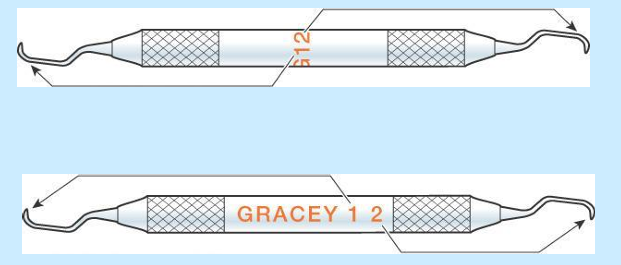
Instrument Balance
instument long axis goes directly through working end

Shank design and dedicated teeth
Simple= anterior teeth
Complex= posteriors teeth
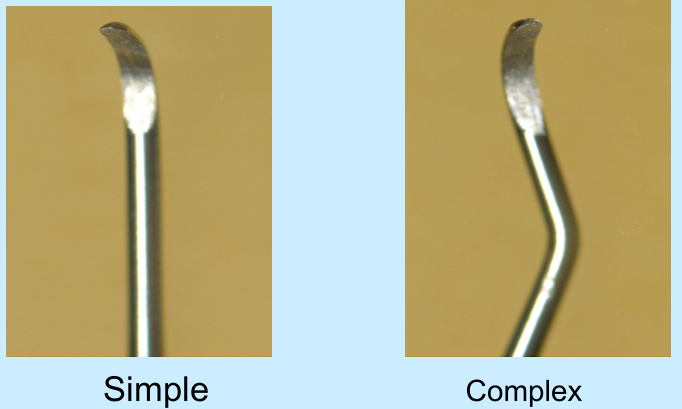
Function of Simple Shank with short functinal length
supragingival use on anteriors
shank needed for subgingival anteriors
Simple shank with long functinal length
Complex shank with short functinal length needed for what
supragingival posteriors
complex shank with long functianl length needed for what
subgingival posteriors
Flexible shank uses
Visual info
Vibrations
Tactile sensitivity
basically feel for calc
works well to remove small and medium-sized calculus deposits(but cant remove big deposits)
Ridged Shank uses
calcified deposit removal
stain removal
basically remove calc
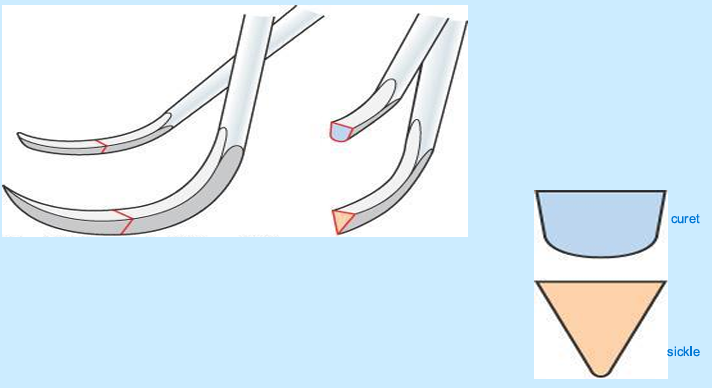
Working end geometry
Face and back
lateral surface( part between front and back)
Cutting edges, line angles that connect face and lateral
Toe= Curet = semi circle shape
Tip= sickle = triangle cross section
Draw instrumrnt classification diagream
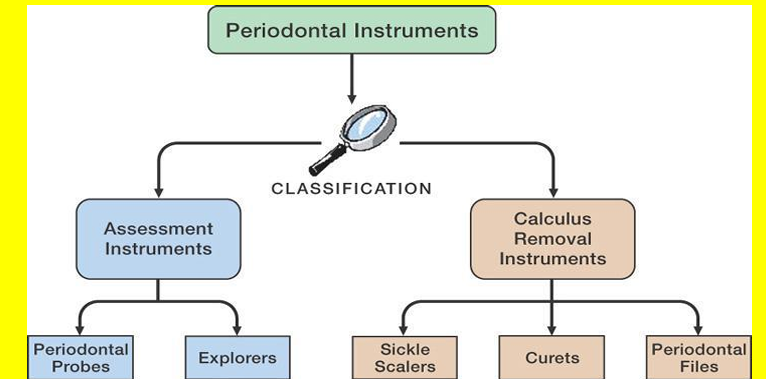
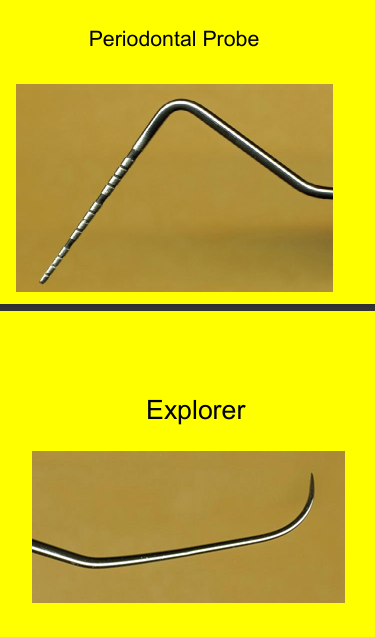
Assesment instruments
Probe
explorer
Calculus removal instruments
Sickle, curet, periodontal files, chisels, hoes
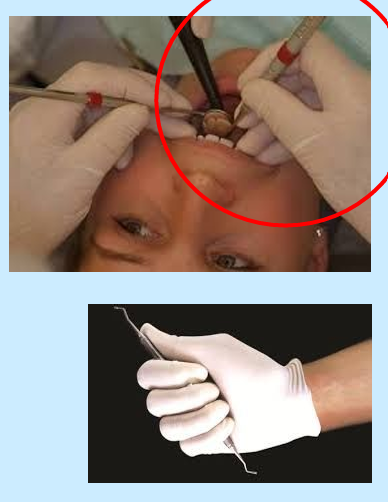
What is the Modified Pen Grasp (1) and its benefits(3)
The recommended grasp for holding a periodontal instrument.
Allows precise control of the working end
Permits a wide range of movement
Facilitates good tactile conduction
Describe Modified Pen Grasp.
Index finger and thumb hold the instrument handle
Middle finger rests on the instrument shank
Ring finger advances ahead of the other fingers to act as support for the hand and instrument
handle must rest between 2nd and 3rd knuckle

Fulcrum functions
hand support by letting hand and instrument move as one
control stroke pressure and length during instrumentation
Intraoral Fulcrum
Pad of ring finger on tooth near the one being worked on
Fulcrum may be in the same sextant/quadrant, cross arch or opposite arch.
Different types of fulcrums(5)

Front surface of dental mirror (4)
most commonly used surface
scratches easily
reflecting surface
clear image
The 4 uses of a dental mirror
retraction
indirect vision and illumination
Transllumination- used to direct light through anterior teeth
The 2 mirror grasp
Modified pen grasp- retraction tongue and cheeks.
Palm Grasp- retracting the upper and lower lip for visualization of facial/labial surfaces