Introduction to Bacteriology
 Call Kai
 Learn
Learn Practice Test
 Spaced Repetition
 Match
Match Flashcards
 Knowt Play
1/85

There's no tags or description
Looks like no tags are added yet.
Name | Mastery | Learn | Test | Matching | Spaced | Call with Kai | Chat |
|---|
No analytics yet
Send a link to your students to track their progress
86 Terms
bacteria structure
single celled
0.2-2.0 um in diameter
2-8 um in length
there are __x _ bacterial cells than human cells
10, more
Antonie van Leeuwenhoek
created glass lenses and engineered a microscope with ~270x magnification
Hans Christian Joachim Gram
developed gram staining technique (1884)
noticed that some bacteria retained color and some became de-colorized by alcohol.
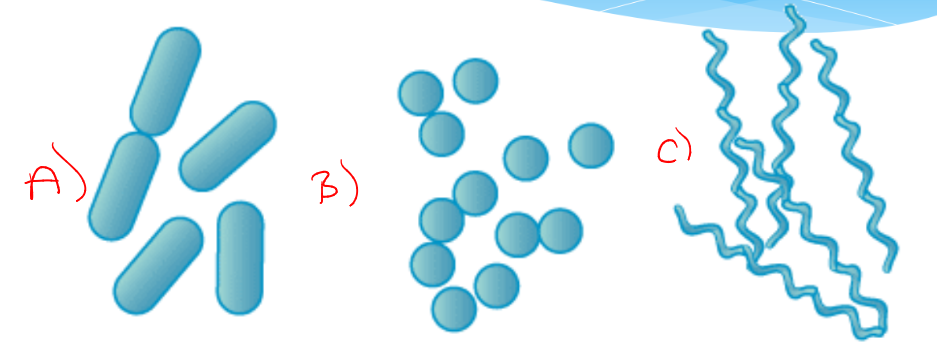
a
bacillus (rod)
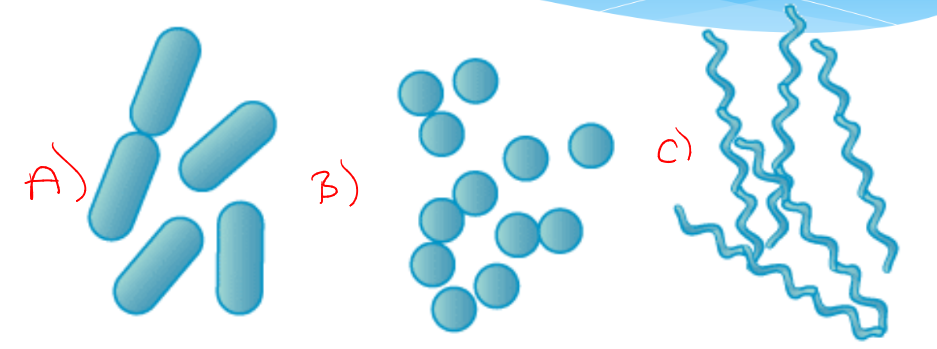
b
coccus
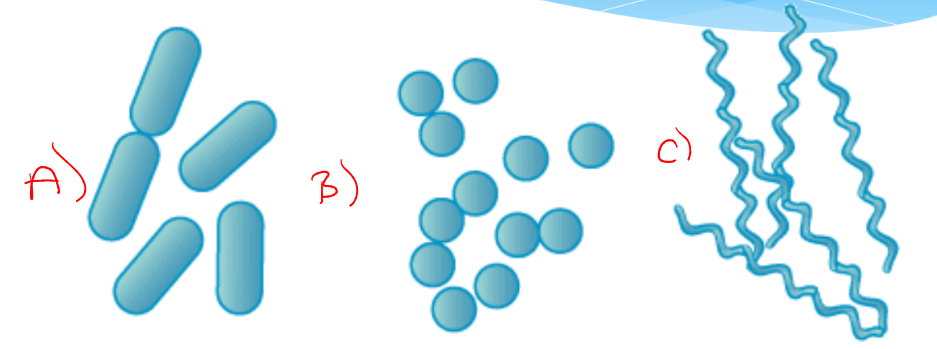
c
spirillus
tetrad shape on slide

grape-like cluster on slide
common cocci that clumps in tetrads and grape like clusters
staphylococcus species
staphylococcus and streptococcus species are gram _
+
streptococcus species forms
chains
chain formation on bacterial slides
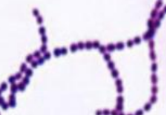
diplococci structure on slide

bacillus, listeria, lactobacillus species are all
gram + bacilli
neisseria and moraxella species are both
gram - cocci
E. Coli, K. Pneumoniae, Proteus mirabilis, P. aeruginosa are examples of
gram - bacilli
vibrio and campylobacter species are examples of
gram - curved bacilli
Glycocalyx
substances surrounding cells
consists of capsule and slime layer
bacterial glycocalyx structure
sticky, gelatinous material composed of polysaccharides
capsule structure
organized and firmly attached to the cell.
slime layer structure
unorganized and loosely attached to the cell
capsule functions
protects bacteria from phagocytosis
protects bacteria from drying out
may provide a food source
used to diagnose infection due to the variations in sugars
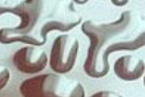
capsule in slides

capsule in petri dish
slime layer functions
protects cells within
facilitates communication
enables cells to survive by attaching to various surfaces in environment
atrichous flagella
lack flagella
polar flagella
single one at one end (monotrichous)
at both ends (amphitrichous)
tuft of at one end (lophotrichous)
peritrichous flagella
distributed over entire cell
flagellar protein is also called _____ and can be used to __
H antigen; identify variations within species
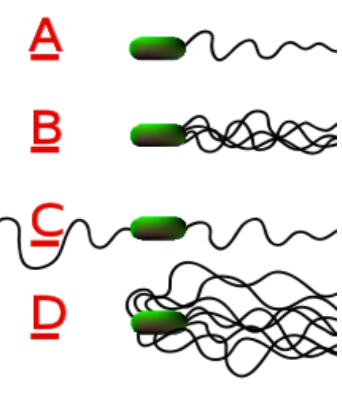
a
monotrichous
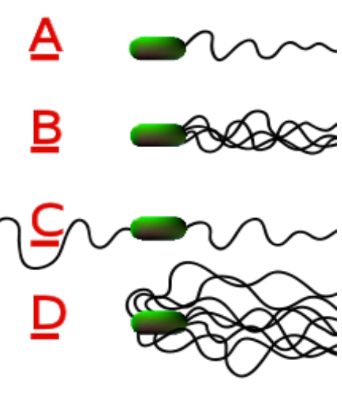
B
lophotrichous
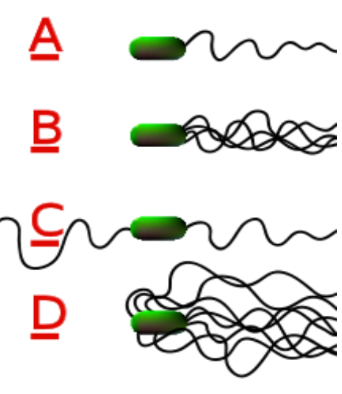
C
Amphitrichous
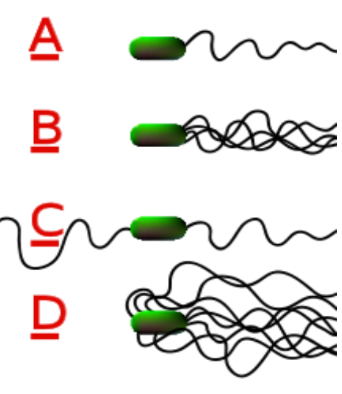
D
Peritrichous
fimbriae
can occur at poles or over entire surface of bacteria
can be a few or several hundred
fimbriae function in bacteria
allow bacteria to adhere to each other
allow bacteria to adhere to epithelial surfaces in humans
bacterial pathogens that cause pharyngitis, urinary tract infections, and sexually transmitted diseases often have ___.
fimbriae
Pili structure
longer than fimbriae, only 1 or 2 per cell
pili structure
motility (twitching)
dna transfer (conjunction)
bacterial conjugation allow for
exchange of DNA that can add a new function to the recipient of the cell (ie. antibiotic resistance)
Cell wall structure
complex, semi-rigid, composed of peptidoglycan
cell wall functions
prevents bacterial cell from rupturing under osmotic pressure
helps maintain shape of bacterial cell
gram positive bacteria have ___ peptidoglycan
thick
gram negative bacteria have ___ peptidoglycan and
thin, porin channels, lipoprotein membrane, LPS
Lipopolysaccharide (LPS)
includes O polysaccharide and Lipid A

the first line in the LPS example is the
o polysaccharide

the second line in the LPS example is the
lipid a
outer membrane structure in gram negative cell wall
lipid bilayer containing polysaccharides and proteins
outer membrane function in gram - cell well
anti-phagocytic
barrier to substances that are detrimental to cell
provides selective passage via porin channels.

A
Cell wall
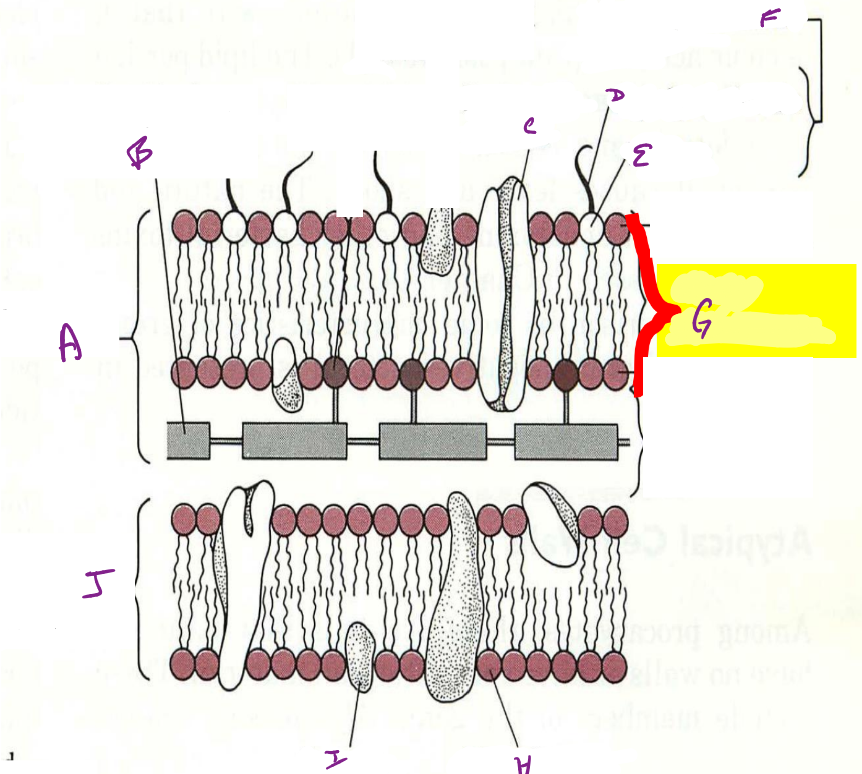
B
peptidoglycan layer
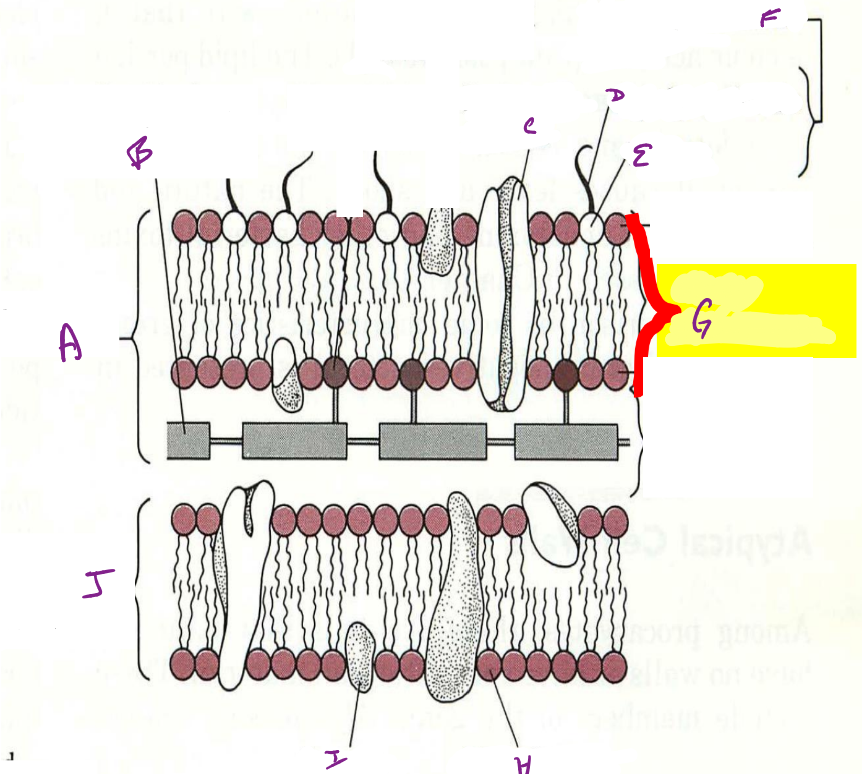
c
porin with channel
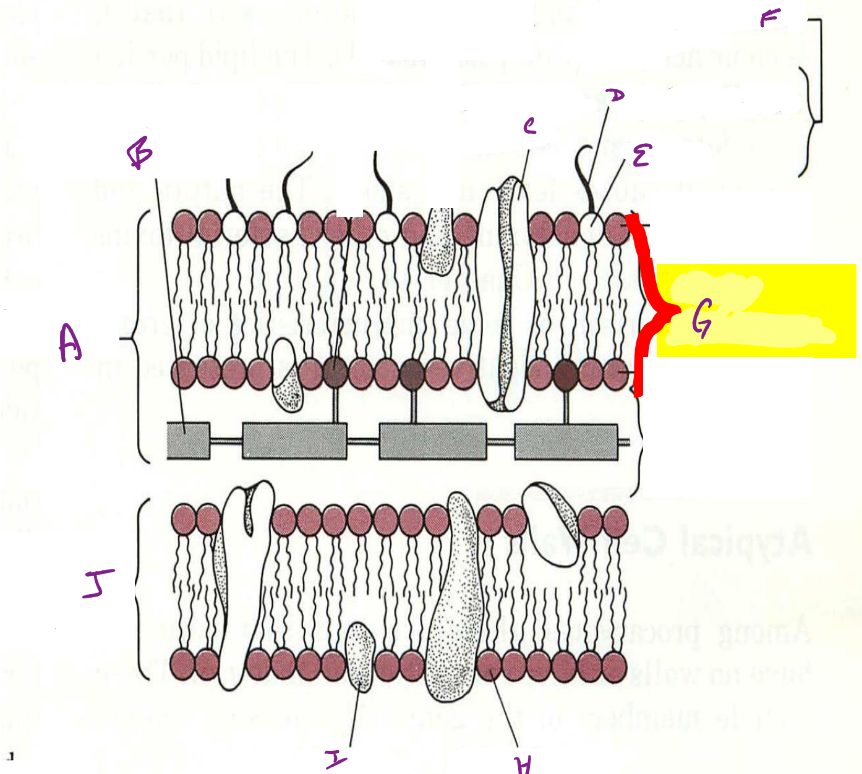
d
o polysaccharide
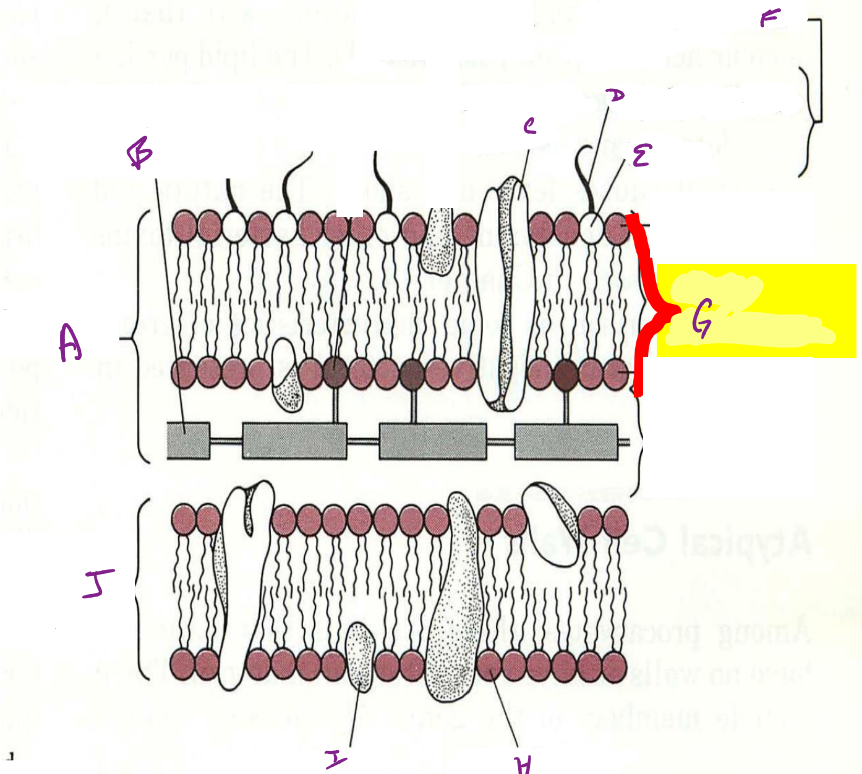
e
lipid a

f
lipopolysaccharide (LPS)
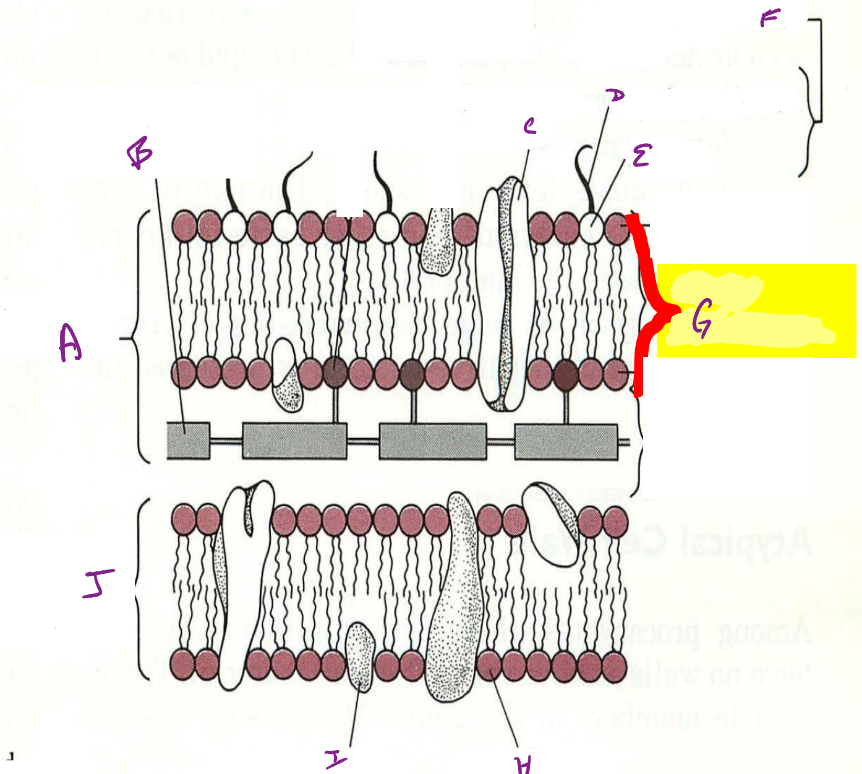
g
outer membrane
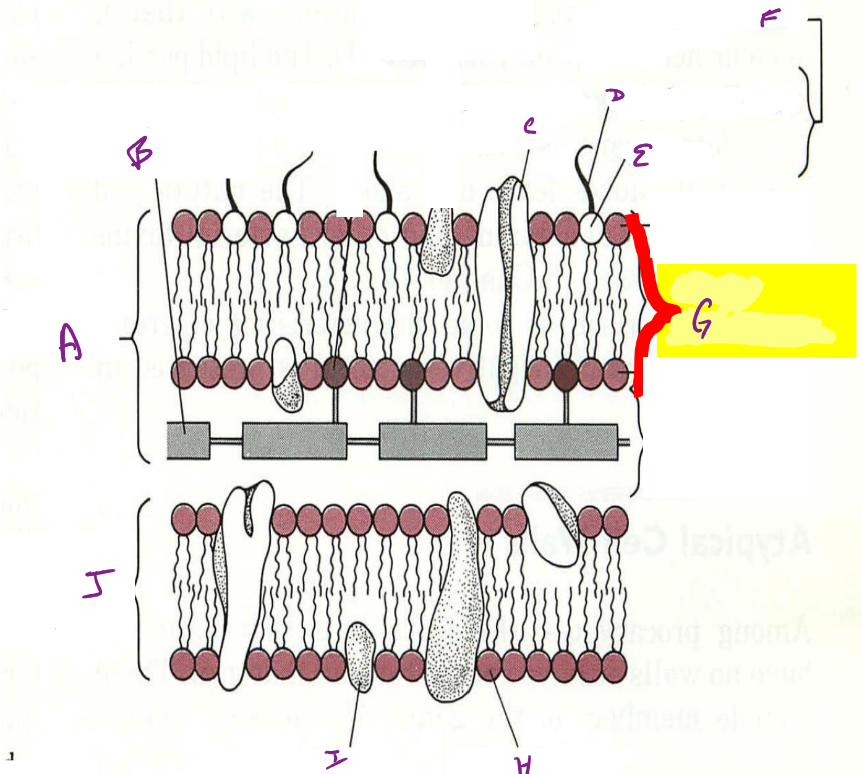
h
phospholipid
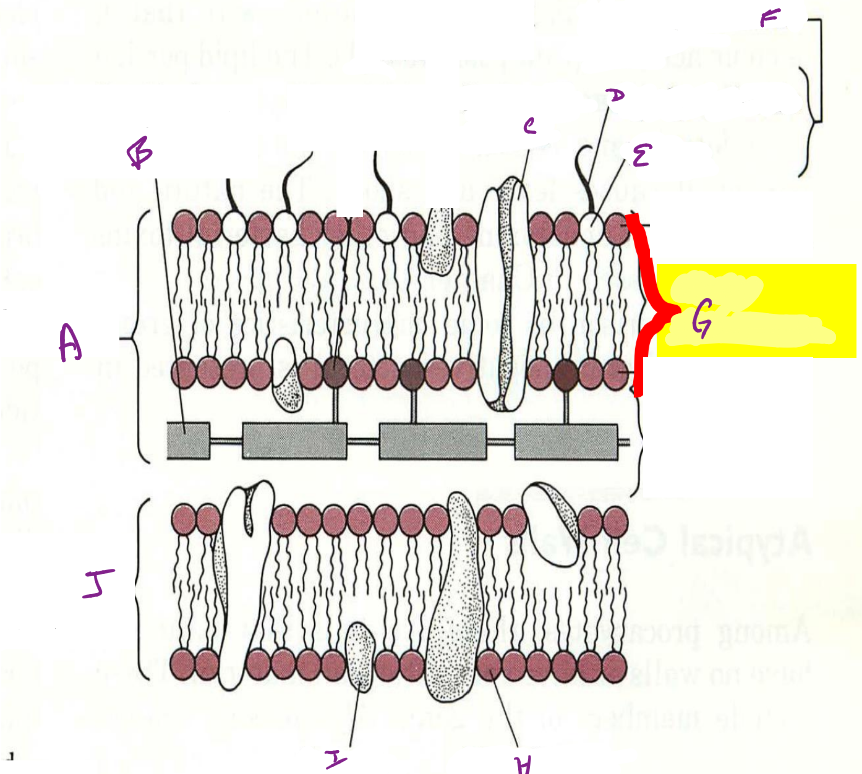
I
protein
lipid a (endotoxin)
responsible for symptoms associated with gram - infections; ex. fever, dilation of bv, shock, blood clotting)
O polysaccharide
extends outward from lipid a and functions as an antigen
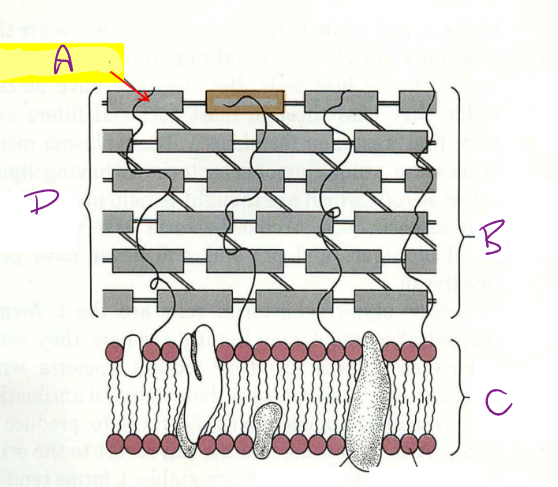
A
liptoeichoic acid

b
cell wall
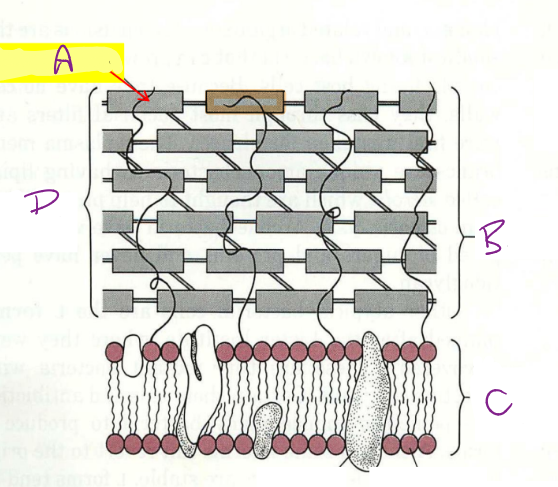
c
plasma membrane
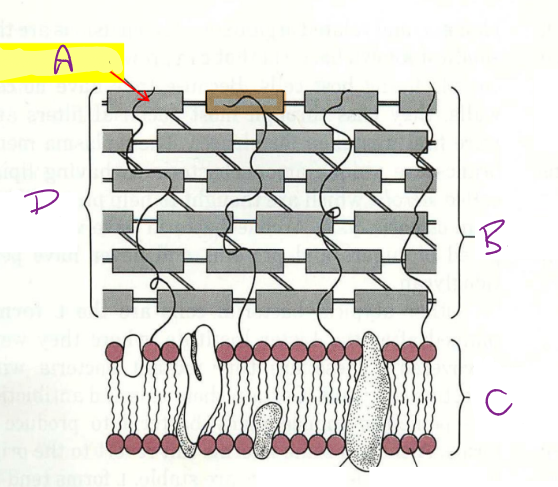
d
peptidoglycan layers
lipoteichoic acid
not present in gram - bacteria
may aid in attachment to mammalian cells
can cause endotoxin-like response
Gram + cell wall additional components
c-carbohydrates
protein a
m protein
c carbohydrates
allows for differentiation of some bacteria (ie streptococci)
protein a
antiphagocytic
can be used for identification
m protein
antiphagocytic
can be used for identification
L forms
created when bacteria are exposed to lysozyme or antibiotics
will live and divide repeatedly or return to walled state
mycoplasma has ____ cell wall
no
plasma membrane
in both gram pos and neg cells
serves as selective barrier
plasma membrane structure
enzymes that build peptidoglycan
structural support
channels that allow for selective entry/exit
bacterial cytoplasm
thick and aqueous
contains carbohydrates, enzymes, lipids, inorganic ions and low mw compounds.
structures inside bacterial cytoplasm
nucleoid
ribosomes
endospores
nucleoid
contains 1 long, circular thread of dsDNA
100x longer than bacterial cell
supercoils
plasmid
small, circular dsDNA molecules that are extrachromosomal
not crucial for survivial
can carry genes acquired from other bacteria
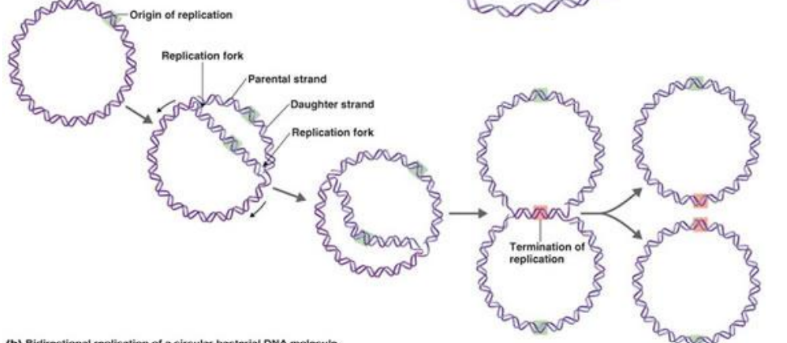
vertical transfer of genetic material
replication
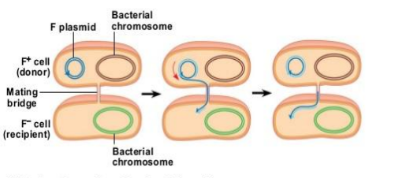
horizontal transfer of genetic material
transformation or conjugation
transformation

conjugation
horizontal transfer of genetic information by transduction
dna is transferred from donor cell to recipient cell inside virus that infects bacteria (bacteriophage)
inside human intestinal tract bacterial dna transfer is
horizontal
bacterial ribosomes are __S and human ribosomes are _S
70;80
endospores
formed when essential nutrients are depleted
formed by gram + bacteria
can survive extreme heat, lack of water, exposure to toxic chemicals and radiation
steps of endospore formation
dna in cell replicates
double layer of cell membrane forms around dna
membranes encircle dna
peptidoglycan layer forms between 2 membranes
thick protein coat forms
endospore is released