Motion
 Call Kai
 Learn
Learn Practice Test
 Spaced Repetition
 Match
Match Flashcards
 Knowt Play
1/36

There's no tags or description
Looks like no tags are added yet.
Name | Mastery | Learn | Test | Matching | Spaced | Call with Kai | Chat |
|---|
No analytics yet
Send a link to your students to track their progress
37 Terms
Ideal Simple Machine
A simple machine with no friction
Mechanical Advantage
The amplification of a force by increasing the input distance in a simple machine. the output force divided by the input force = equals the input distance divided by the output distance. Ex: pushing refrigerator up a ramp
Electromagnetic Force
interactions (pushes and pulls) of electrically charged particles with other charged particles and magnetic poles. Ex: like charges repel, opposite charges attract
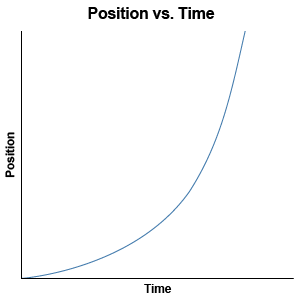
Position vs. Time Graph
A graph with position on the y-axis and time on the x-axis, the slope of the line equals speed
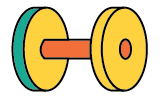
Wheel and Axle
A simple machine that is compromised of two attached wheels of different diameters. Ex: ceiling fan
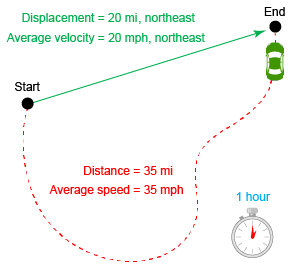
Average Speed
A measure of how fast an object’s position changes, calculated from distance/time. Ex: 35mph
Newton’s First Law/Law of Inertia
The law that objects resist changes in their state of motion. Ex: a rolling bowling ball keeps moving at constant speed
Axle
A rod or bar connected to the center of a wheel that allows it to turn
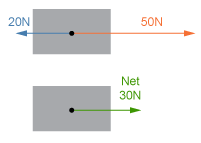
Net Force
The vector sum of all forces acting on an object
Output
A result of input into a system. Ex: human shivering to increase temperature when it is cold
Position
The location of an object
Force (elementary)
A push or a pull on an object
Screw
A simple machine that is an inclined plane wound around a shaft. Ex: screw on light bulb

Direction
The orientation of the movement of an object, often in a compass direction. Ex: north, south, east, west
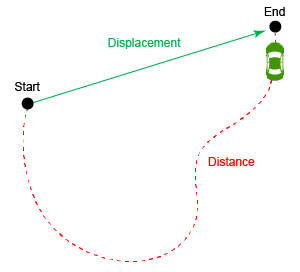
Displacement
The difference between the starting and ending point of an object. Ex: 25 meters, northeast
Velocity
An object’s speed and direction. Average velocity is calculated from displacement/time while instantaneous velocity has to be measured at a specific moment in time. Ex: 5m/s, north
Meters (m)
The unit for distance in the metric system. Ex: the pool was 6m deep
Simple Machine
A device that makes work easier by reducing the fore (but increasing the application distance) or reducing the distance (but increasing the force)

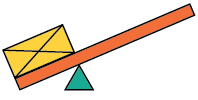
Fulcrum
The pivot point of a lever. Ex: rock as a pivot under a board
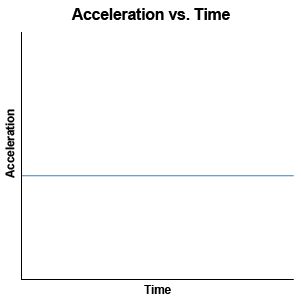
Acceleration vs. Time Graph
A graph with acceleration on the y-axis and time on the x-axis
Input
Something put into a system that causes change. Ex: temperature changes in environment
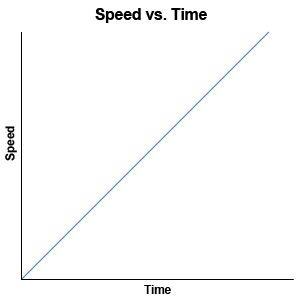
Speed vs. Time Graph
A graph with speed on the y-axis and time on the x-axis, the slope of the line equals acceleration
Strong Nuclear Force
A force that hold protons and neutrons together in the nucleus. Ex: fission and fusion
Distance
The length of the path traveled by an object. Ex: 25 meters
Wedge
A triangular simple machine that pushes objects apart and changes the direction and amount of the input force. Ex: knife

Pulley
A simple machine that can change the direction and size of a force. Ex: block and tackle

Inertia
The tendency to resist changes in a state of motion. Ex: objects at rest and objects in motion stay in motion
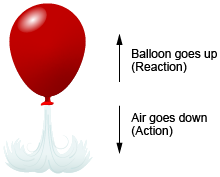
Newton’s Third Law
The law that for every action there is an equal and opposite reaction. Ex: if you release the bottom of a balloon, the air rushes out. This movement causes an equal and opposite reaction and the balloon moved up.
Gravitational Force
The force of attraction of all masses toward each other due to gravitational pull. Ex: earth pulls on moon
Lever
A simple machine with a fulcrum, an output force or weight, and an applied force. Ex: seesaw
Work
The process by which energy is changed in a system; calculated from the product of force and distance. The object must move for work to have been done. Ex: lifting weights
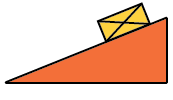
Inclined Plane
A simple machine that is a ramp with one end higher than the other. Ex: slide, loading ramp
Acceleration
A measure of how quickly something changes its speed or direction, calculated from change in velocity/time. Ex: slowing down, turn a corner
Newton’s Second Law
The law that greater masses require a greater force to achieve the same acceleration, F=ma. Ex: force needed to stop a bowling ball vs baseball rolling at the same speed
Mass
The amount of matter in an object, measured in grams (g) or kilograms (kg), in the SI system of units
Force
An interaction (push or pull) of one object with another that resists other forces or causes acceleration. Ex: there are only 4 kinds of forces, called universal (or fundamental) forces: gravitational, electromagnetic, strong nuclear, and weak nuclear
Weak Nuclear Force
Force that resists particle decay in the nucleus. Ex: radioactive decay