Dairy Cattle Production Exam 1
 Call Kai
 Learn
Learn Practice Test
 Spaced Repetition
 Match
Match Flashcards
 Knowt Play
1/104

There's no tags or description
Looks like no tags are added yet.
Name | Mastery | Learn | Test | Matching | Spaced | Call with Kai | Chat |
|---|
No analytics yet
Send a link to your students to track their progress
105 Terms
large contributors to the beef industry
male calves, cull cows, beef and dairy mix
top ____ commodities for a majority of states
10
_____ in farm income 2022
59 billion
cows used for milk purposes as early as
9000 B.C.
cattle name originates from the word
chattel
first domesticated in ____ and ______ during ____ _____ _____ _____
europe, asia, the new stone age
milk is a ____ food item
staple
______ sets the standards for payment of farmers in each state
the federal government
want milk produced in
the region it will be sold in
which state pays farmers the most for milk
florida
the average american consumes about this much dairy per day
1.5 servings
dietary recommendation for daily dairy serving
2-3 servings
milk is hard to ship because
it is bulky, perishable, fluid source
which dairy product is consumed the most
cheese
there is currently an increase in the dairy market because of
GLP-1s making people want more protein in their diets
from 1981 to 2021 what changed in the types of dairy being consumed
milk was replaced by cheese, non-fat milk in school lunches made children not like milk as much; also more options for drinks now than in 1981
based on what we know about our region why is the dairy market scary for Georgia farmers
we’re a fluid milk market so we want fluid milk on shelves, but it isn’t being consumed the same
the reality of dairy cattle
milk is easy to harvest
high protein contributor
efficient conversion of feed to protein
what are three trends you would use to describe the dairy industry today
walmart is economy of scale, more cost efficient when that big, seeing that in dairy
which state has the highest milk production, why
Wisconsin, colder climates
which state has the lowest milk production, why
hawaii, arkansas, alabama because it is hot and humid or it is a place where dairy is not supported
top dairy producing states in 2025
California
Wisconsin
Idaho
Texas
New York
where does GA rank and why
21st, because it is hot and humid here
which state has the most efficient cows
Michigan
what is the average milk production per cow in the US
90 lbs/day
what is wrong with seasonal milk production
doesn’t match demand (higher during back to school and thanksgiving which is a hot time of year)
can’t differ more than a certain amount from the average when selling to a plant
do not want peak milk production in the summer when it’s hardest for cows to milk
trend 1 in dairy
cow # staying the same but farm # going down and farm size increasing
consolidation at a very rapid rate
efficiency
total milk is increasing because
cows are getting more efficient, the # of cows is not increasing
trend 2 in dairy
production per cow is increasing
the number of dairy farms is
decreasing
milk production per cow is
increasing
the number of dairy cows is
relatively steady
total milk production is
increasing
the size of individual farms is
increasing
dairy product consumption is
steady to slightly declining
fluid milk decline, but cheese is going up
how do we keep up with data, cow stats, etc
USDA, NASS, Council on Dairy Cattle Breeding, DHI
the average US Holstein produces ______ during lactation
26,328 lbs which equals 3,061 gallons
it takes ____ of milk to make 1 lb of cheddar cheese
10 lbs
risks associated with consolidation
shipping milk as a fluid product is not easy
price increase because of distance
environmental implications of that many cows all together
risk of bioterrorism if all farms are together
benefits of moving cows west
climate is better for them
pollution is lower because there is a low water table
quality and availability of feedstuffs
population shift
available land
reasons to stay in the east
milk deficit area (get paid more)
access to large markets
cheaper land prices in rural areas
which state is paid the least for dairy, why
California, they have a milk surplus
why would a mostly Holstein farm have a handful of Jersey cows
to meet the milk fat requirement of 3.5%
minimums for milk prices set based on
class 1 price
milk prices are given per
hundredweight (cwt)
milk price volatility
inelastic (price doesn’t really change with supply and demand)
supplies greatest in spring
demand greatest in fall
cheese demand highest during thanksgiving and the super bowl
anything that disrupts production affects the price
weather, exports, etc.
facilities should
promote the comfort and health of cattle for optimum productivity
give animals the opportunity to express or perform to their full genetic capabilities
phenotype = genotype + environment
goals of a facility
labor efficient
maximize cow comfort
address environmental concerns
to minimize labor
design facility to enhance cow movement so workers have to do less, minimize time required to feed, bed, and milk
to optimize cow performance
adequate ventilation, accessibility of water and feed, lighting, cow comfort
lower light causes
lower milk production t
early dairy facilities
open barn with feed trough (almost all farms had at least one dairy cow)
tie-stall facilities
mostly found in north east
easy to keep warm and clean
first kind of facility for multiple cows
how has the current industry changed tie-stall housing
cows have gotten larger (are trying to undo this)
machinery has to move to the cows
free-stall housing
most common type of facility
cows move freely between bedding areas, feed bunks, and water
“stalls” designed to fit the animal and their movements
different bedding types
helps maximize cleanliness
which direction is preferred for cow housing especially in the southeast
east to west because that is how our winds blow
why are grooved floors important
traction, foot health, cleanliness with a concrete floor
what can we do to help comfort in the feed bunk
adding tiles on top of the concrete that won’t wear down easily from eating
clues that stalls are not comfortable
idle standing, perching, hitting the bars at knees or withers, cows bedding backwards
types of bedding material
sawdust, sand, straw, etc.
what is the purpose of brisket boards and neck rails
to keep the cows from laying down so far in their stalls they can’t lunge to get back up
ventilation
maximizes air flow
consider barn style and stocking density
purpose to remove odors/pathogens, dec stress, inc cooling capacity
consider fan size and spacing, ceiling height, vents/peak ridge, wind speed
lighting
16 hours of light and 8 hours of dark is optimum production
can have timers to control lights
issues with extreme cold
prolonged exposure
frostbite
should we teat dip
can use emollients (dry slow), powder, stay away from barrier teat dips
issues with extreme heat
decreased: feed passage, DMI, blood flow to internal organs, milk production
fix with: ventilation, misters, evaporative cooling
heat stress is determined using a scale of
temperature and humidity
types of dairy housing
free-stall, tie-stall, loose housing (pasture based, dry lots)
types of milking parlors
flat barn, side-entry, herringbone, parallel, rotary, automatic
flat barn/tandem parlor

herringbone parlor
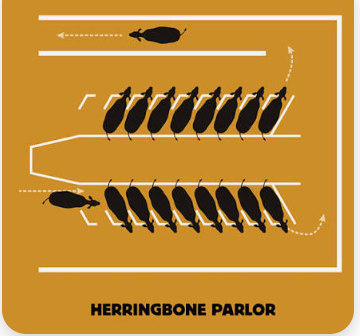
parallel parlor

rotary parlor

turns per hour in the parlor
how many times you fill and empty the parlor in 1 hour
turns per hour goal
4-5 turns per hour
the robotic milker
1/60 cows
cow visits vary but should be above traditional milking
3-4 week training period
electronic ID regulates visits
easy to check data system
put the best tasting feed in the milker to train them to go
carousel robot
the UK has them but no the US yet
workers bring cows in and the milker milks them
allows cows to move in groups
what is the highest cost on a farm
feed
what is the second highest cost on a farm
calves
who is the most vulnerable member on a farm
calves on milk replacer
three things to evaluate at birth
muscle tone: active with head righting in a few minutes is good
respiration: 50-75 bpm and thoracic breathing are good
attempts to rise: attempting to stand within 15 minutes is good
four Cs of calf health
colostrum
cleanliness
consistency
calories
consistency
calves need to be fed the exact same every day (temperature, time, etc.) they can bloat if there is a change to what they are eating early on
cleanliness
reducing infections; want the calves using nutrients for growth and development rather than for fighting off infections
calories
comparing nutrient components of regular milk and milk replacer and making sure calves are growing the way they should be
why might heifer markets change
milk prices and available inventory
rearing heifers is an important discussion because
the future of the herd and it’s an expensive activity
using sexed semen
can sway the gender likelihood if you need more replacement heifers in your herd
all calves are valuable right now because
they are going back into the herd or going into the beef market
rearing replacements
some farms specialize in raising calves and farmers can pay price/day to have their calves raised
reduces labor for the farmer
responsibility of raising on someone who specializes in it
basics of calf housing (VICE)
ventilation
isolation
comfort
economy
ventilation in calf housing
removing noxious odors that could stress calf
reducing circulation of airborne pathogens
isolation in calf housing
removes transfer of pathogens by fecal contamination or animal to animal contact
reduce disease transmission while the immune system is immature
(workers often take away isolation)
(also noticing calves do better housed in pairs)
comfort in calf housing
utilize nutrients for growth and not combating stressors of a poor environment
(not the fluffy bed comfort we might think of; just a clean environment without wet or dirty bedding)
economy in calf housing
cost effective for the producer
(sand is expensive, not often used for calf bedding; need a housing style you can keep up and maintain)
what are the benefits and risks of a mob feeder
benefits: calves all eat together and get 10 minutes to drink what they want; cuts down on labor
risks: no sense of isolation while using this
automated calf feeder advantages
removes improper mixing risks
workers can actually observe calves instead of worrying about chores
improved nutrient utilization when the calves consume at their own pace
herding mentality has them switching to eat starter in a bunk more efficiently with greater intake
weaning is a simple adjustment to the computer (stops letting the calf in to get milk)
automated calf feeder disadvantages
large financial investment
harder to detect disease like scours
calves have fewer health issues when they are backgrounded before going to the automated feeder (keep individually for a few days first)
need to manage and maintain equipment to prevent bacterial growth
there is a greater energy loss in calves in ______ temps
colder
hutch housing style
