TEXES Core subjects & Generalist EC-6 Review Music
 Call Kai
 Learn
Learn Practice Test
 Spaced Repetition
 Match
Match Flashcards
 Knowt Play
1/48

There's no tags or description
Looks like no tags are added yet.
Name | Mastery | Learn | Test | Matching | Spaced | Call with Kai | Chat |
|---|
No analytics yet
Send a link to your students to track their progress
49 Terms
measure
the space between two line bars (vertical) on the staff
time signature
A symbol looking like a fraction indicating the type of meter and the unit of beat
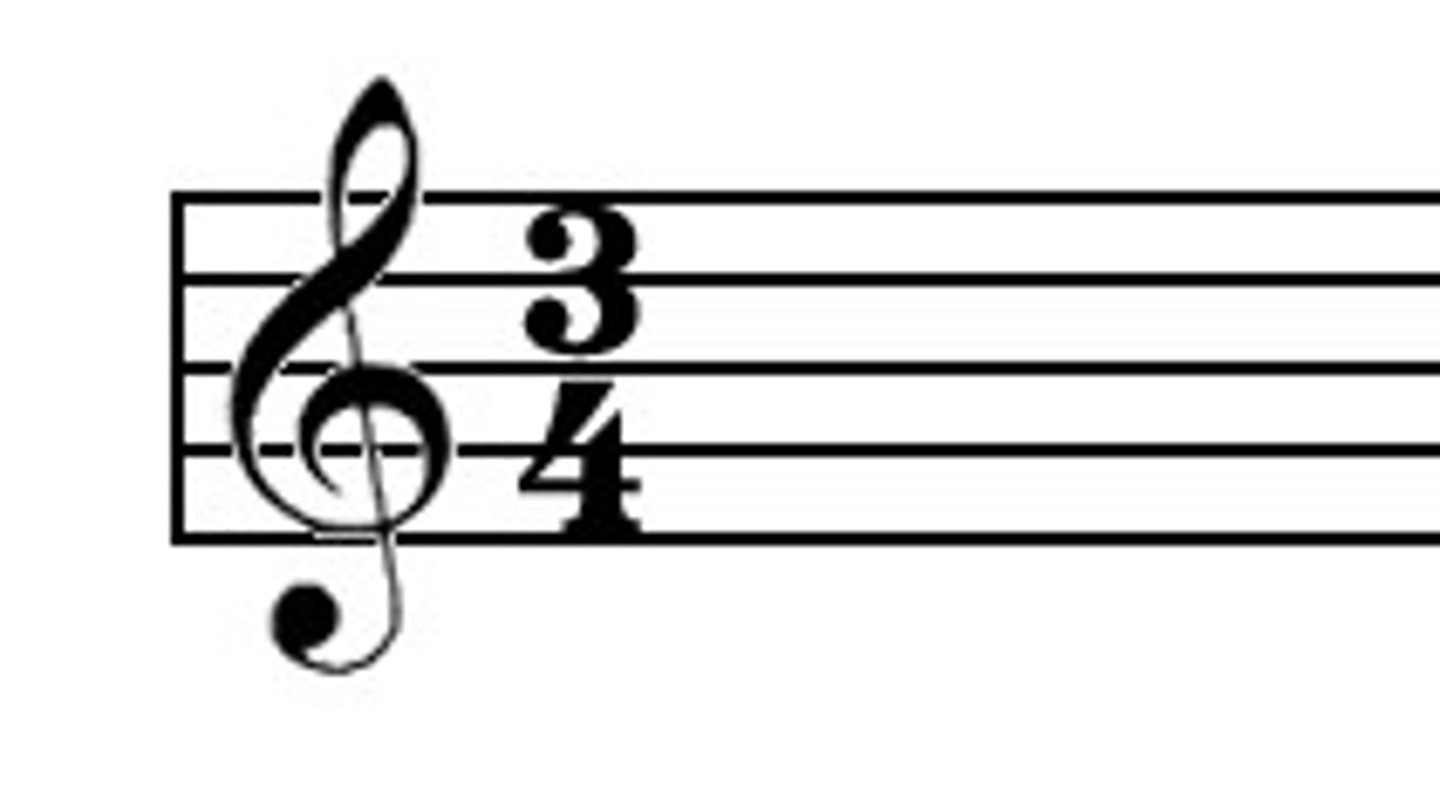
time signature top number
tells how many beats in a measure (between two vertical lines on a staff)
time signature bottom number
tells what type of note gets the beat
dynamics
markings for showing how loud or soft to play a particular note or section
dynamics: pianissimo
very soft
dynamics: piano
soft
dynamics: mezzo piano
medium soft
dynamics: mezzo forte (mf)
medium loud
dynamics: forte
loud
dynamics: fortissimo
very loud
tempo
the speed of the music
tempo: adagio
very slow and somber
tempo: andante
walking tempo
tempo: allegro
fast
tempo: presto
very fast
rhythm
the way notes and rests are put together to make sound and or silence
tone
Characteristic sound quality; the sound an instrument, voice or percussion makes.
(To stress tone to 1st graders have them pick instruments to represent characters in a familiar fairy tale like the 3 Billy Goats Gruff; this uses their schema from language arts to help students "hear" the different sounds.). To hear differences in instruments they should be played alone NOT in unison or all together.
pitch
How high or low a sound is. For students to hear pitch, have them echo the teacher's voice singing a high, then a low, note. It is easier for students to learn pitch with a human voice as a model rather than an instrument or recording.
sharp (#)
a musical symbol that raises a pitch by a half step
flat (b)
a musical symbol that lowers a pitch by a half step
meter
how the beat of the music is divided; number of beats per bar measured by the time signature
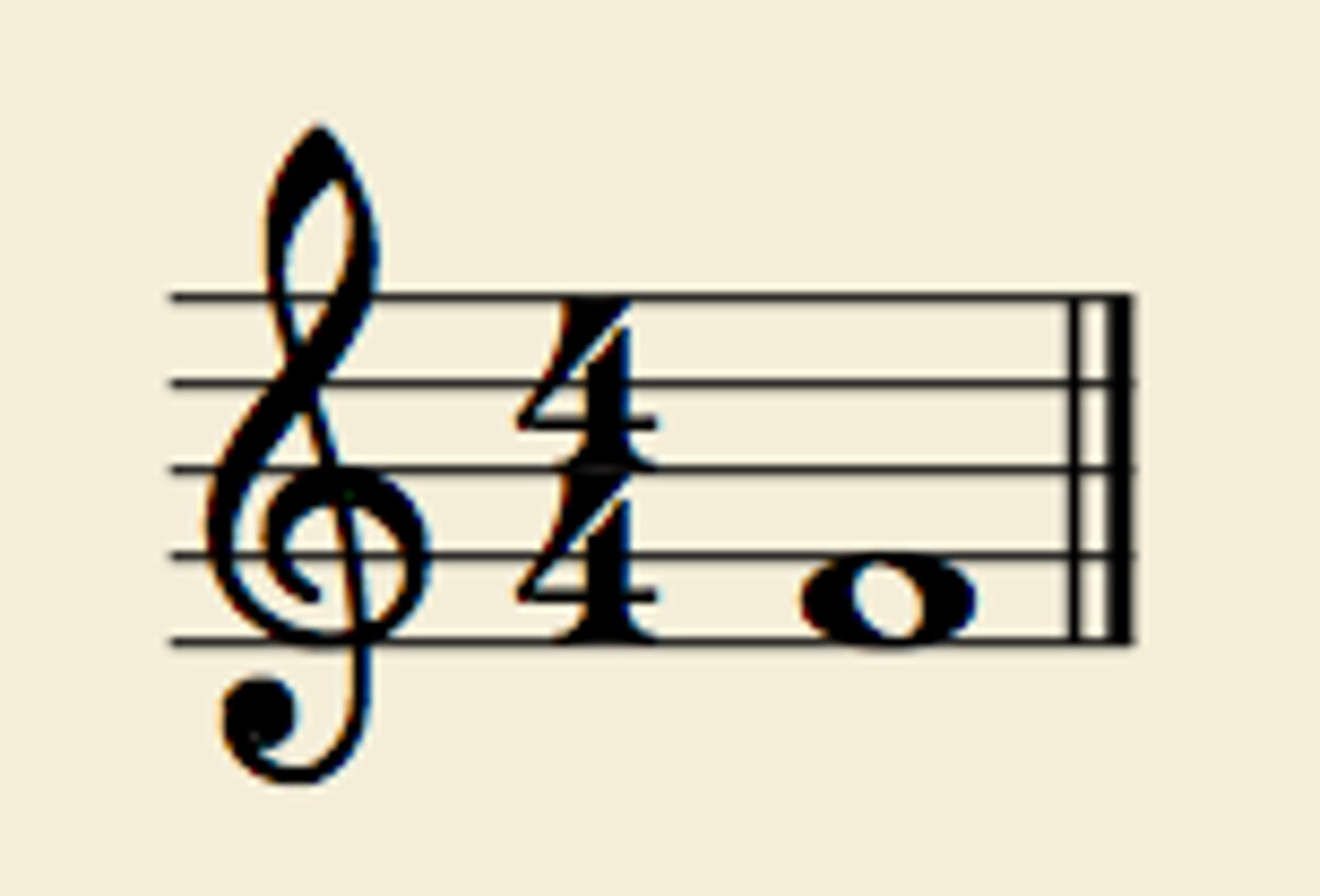
whole note
gets 4 beats
half note
each gets 2 beats
quarter note
each gets 1 beat; may be called the steady beat (used by young children to accompany singing/music by clapping or playing a rhythm instrument)
eighth note
each gets 1/2 a beat
beat
Pulse; a continuous, periodic pulse that underlies music and can be used to clap along to the music; students clap or play instruments in unison to practice keeping a steady beat
treble clef
🎼
A clef that shows that written notes are high in pitch;
symbol that indicates higher voices and instruments
treble clef lines
EGBDF
Every good boy does fine
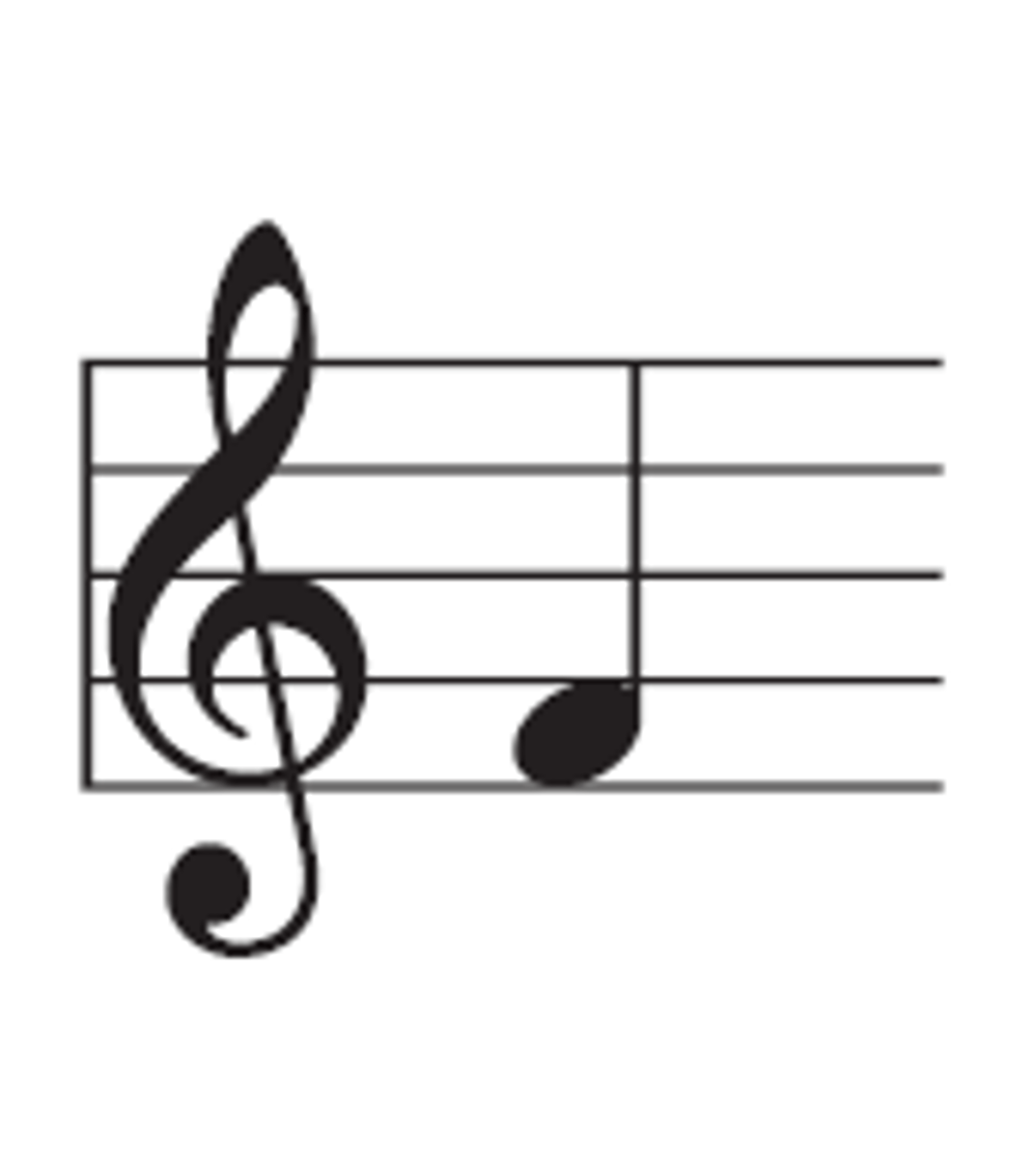
treble clef spaces
FACE
bass clef lines
GBDFA
Good bass does fine always
bass clef spaces
ACEG (all cows eat grass)
clef
Musical symbol used to indicate pitch of written notes
staff
set of five lines and four spaces on which musical notes are written, with each note representing a different musical pitch
round
song in which a second voice exactly imitates a leading voice at different places in the melody
partner songs
singing two different songs at the same time;
two or more different songs that share an identical harmonic structure and are performed at the same time; different melodies that can be sung together
lullaby
a quiet song that lulls a child to sleep
game song
Game songs are used throughout the world and by different cultures for play and enjoyment. Game songs often use movement and dance.
"The Old Chisolm Trail"
folk song that promotes the heritage of Texas;
Was written about the Chisholm trail which was used by ranchers to drive cattle to rail yards in Kansas during the 19th century (1800s)
Cotton-Eyed Joe
Folk song/Dance from Deep South of US
"Casey Jones"
song from North Mid-West about legendary railroad engineer Casey Jones; died by staying on his train to bring to a stop when rail cars were blocking track he was on; his train crashed into cars but Casey was able to break his train until,the impact thus saving the lives of others
"Sweet Betsy From Pike"
American ballad about troubles of pioneer named Betsy in California Gold Rush (1850s)
dynamics: fp (forte piano)
loudly then quiet
dynamics: dim.
increasingly more quietly
dynamics: cresc.
play increasingly louder
Timbre
THE CHARACTERISTIC QUALITY OF SOUND PRODUCED BY A PARTICULAR INSTRUMENT OR VOICE; TONE COLOR
Voice intonation
The pitch, speed, fluidity, and sounds of the voice when a person speaks; the way a person says words.
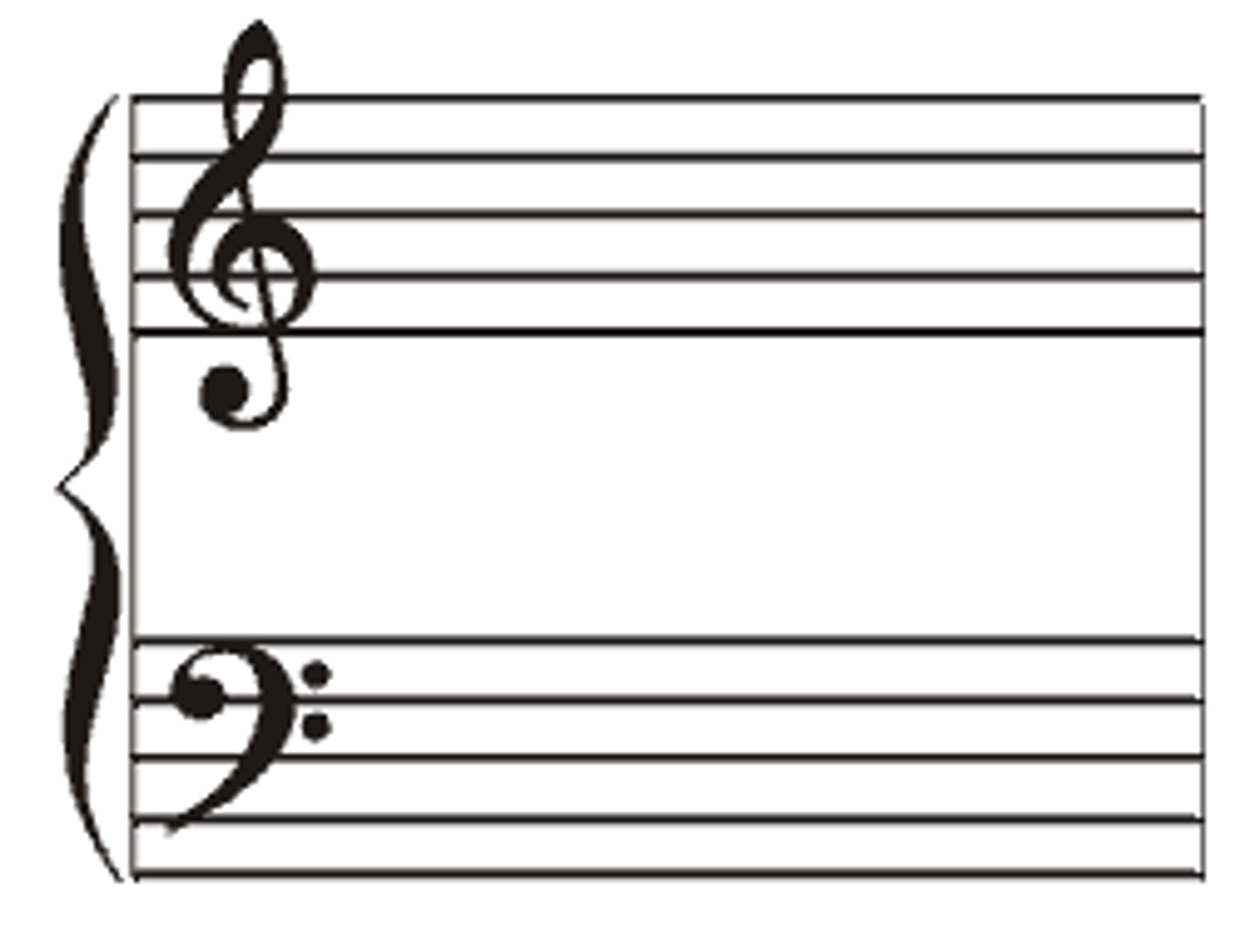
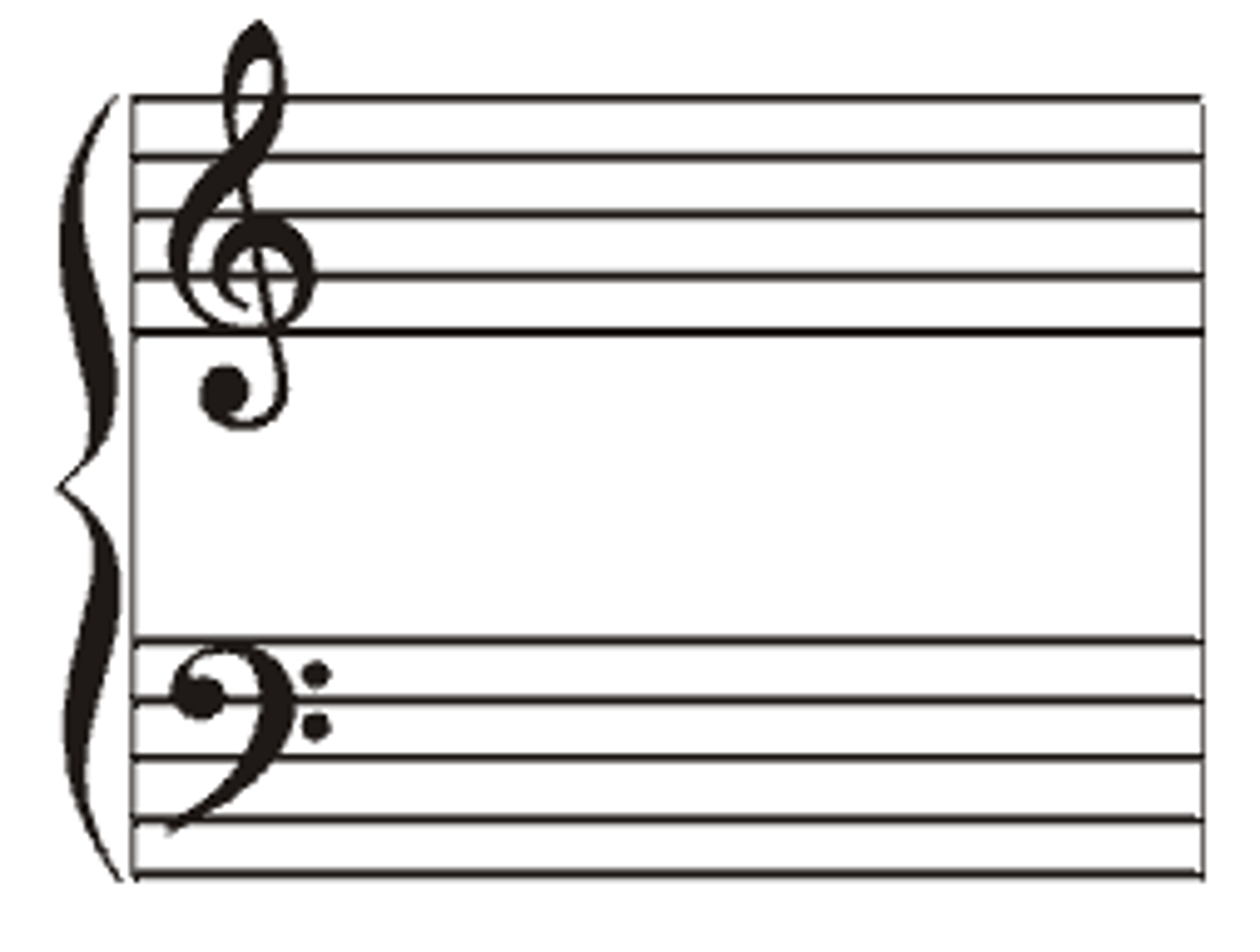
grand staff
Treble and Bass clef read together