formula quizzes updated
 Call Kai
 Learn
Learn Practice Test
 Spaced Repetition
 Match
Match Flashcards
 Knowt Play
1/119

There's no tags or description
Looks like no tags are added yet.
Name | Mastery | Learn | Test | Matching | Spaced | Call with Kai | Chat |
|---|
No analytics yet
Send a link to your students to track their progress
120 Terms
d/dx (sin x)
cos x
average value

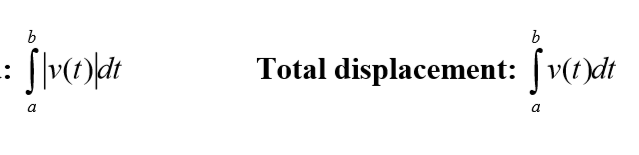
total distance traveled/displacement
dy/dx =
ky (differential equation)
y(t) = (general solution)
Ce^kt
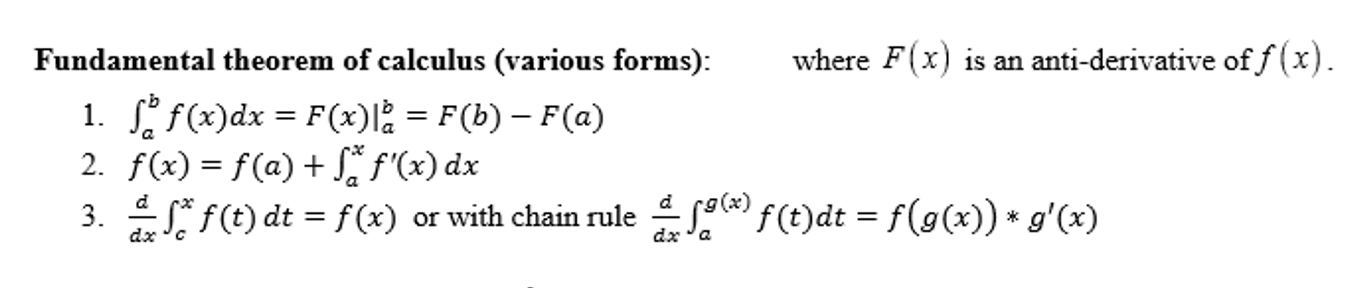
fundamental theorem of calculus (various forms)
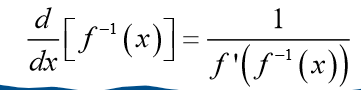
inverse function formula
d/dx (cos x)
-sin x
d/dx (tan x)
sec²x
d/dx (csc)
( -csc x ) ( cot x )
d/dx (sec x)
(sec x ) (tan x)
d/dx (cot x)
-csc²x
d/dx (e^x)
e^x
d/dx (ln x)
1/x
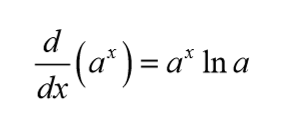
d/dx (a^x)
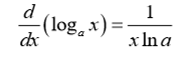
d/dx (loga x)
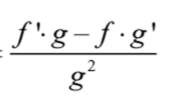
d/dx (f/g) — quotient rule
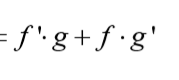
d/dx (fg)
chain rule: if h(x) = f(g(x)), then

tan x =
sin x / cos x
quotient ID
cot x =
cos x / sin x
quotient ID
sec x =
1 / cos x
reciprocal ID
csc x =
1 / sin x
reciprocal ID
sin²x + cos²x = 1. what is the other pythagorean ID?
sec²x - tan²x = 1. what is the other pythagorean ID?
2sinxcosx = sin2x. what is the other double angle ID?
cos²x - sin²x = cos2x. what is the other double angle ID?
sin (-x) = -sin x (odd), cos(-x) = cos x (even), tan (-x) = -tanx (odd)
even-odd id’s
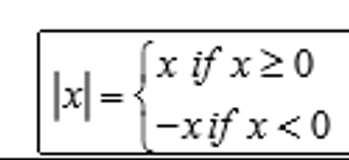
definition |x|
sin (A + B) =
sin A cos B + cos A sin B
cos (A + B) =
cos A cos B - sin A sin B
sin (A - B) =
sin A cos B - cos A sin B
cos (A-B)
cos A cos B + sin A sin B
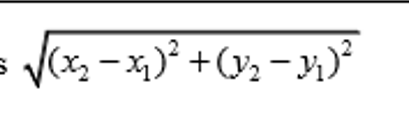
distance between two points
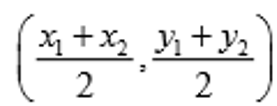
midpoint formula
laws of logarithms ln(ab)=
ln (ab) = ln a + ln b
laws of logarithms ln (a/b)
ln (a/b) = ln a - ln b
laws of logarithms (a^n)
ln (a^n) = n ln a
ln (1/a) =
-ln a
ln (0) =
undefined
ln (1)=
0
ln (e)=
1
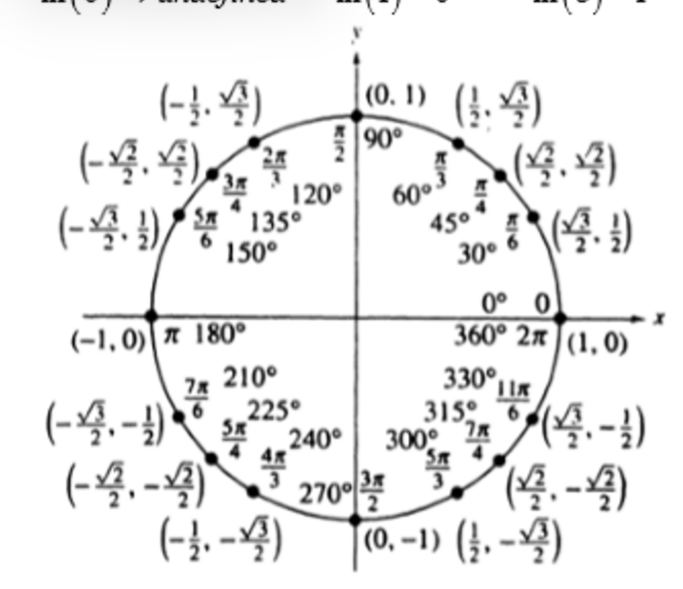
THE UNIT CIRCLE :)
cos is the x value and sin is the y value
one sided limits

definition of a limit

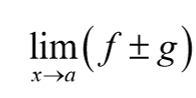
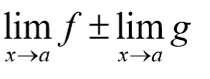
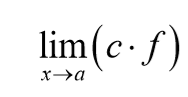
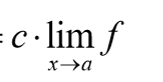
lim x→a of c =
c
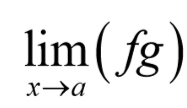
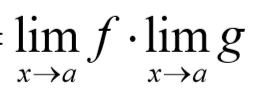
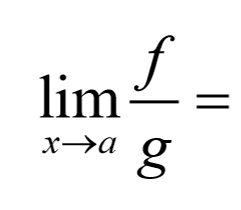
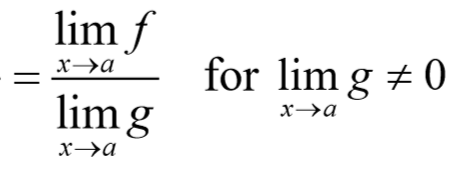
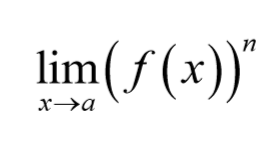
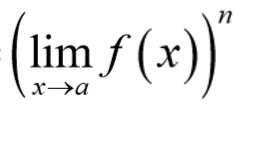
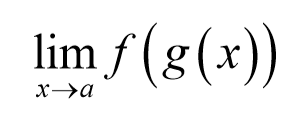
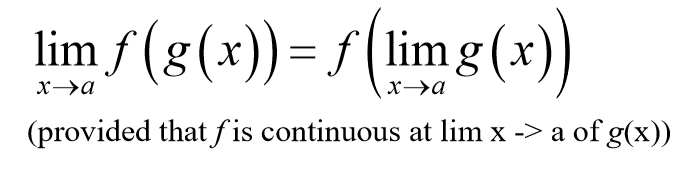
average rate of change…

squeeze theorem

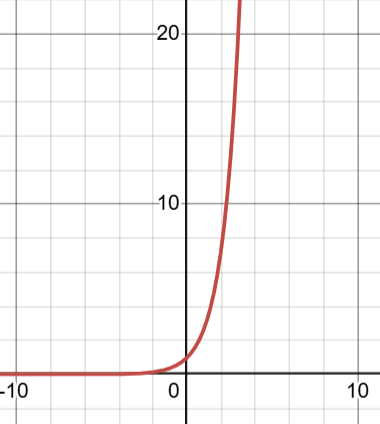
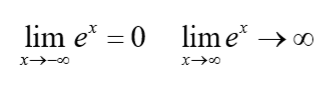
limit rules for e^x
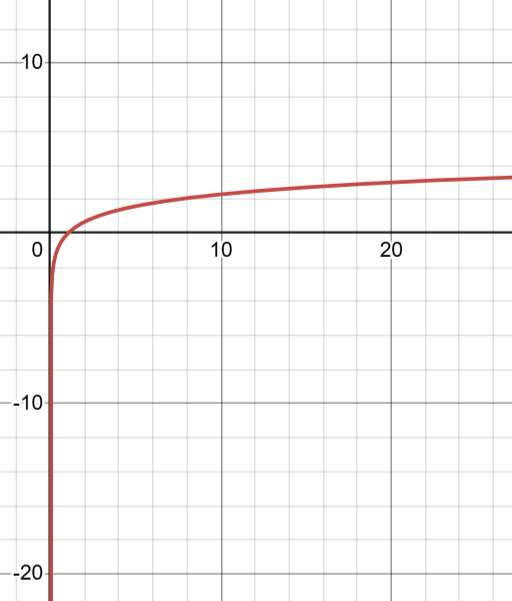
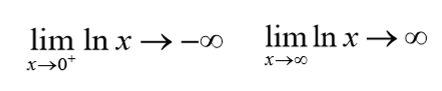
limit rules for ln x
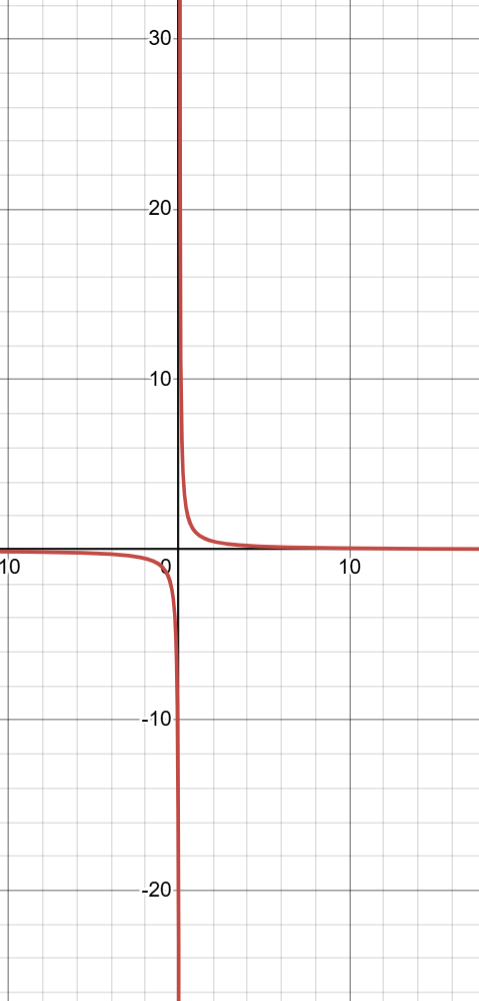
rules for lim 1/x
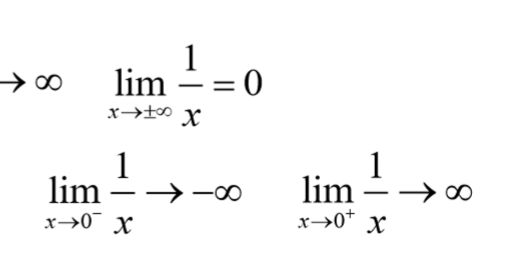
lim(x→0) of sinx/x =
1
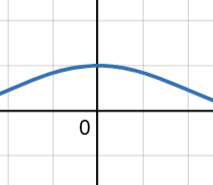
lim(x→0) of 1-cosx/x =
0
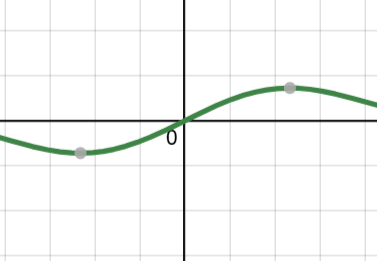
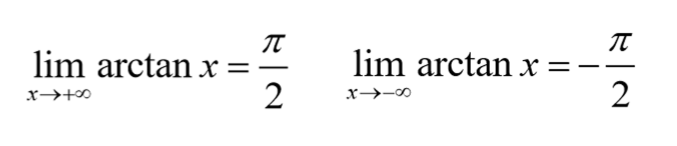
limit rules for arctan x
definition of vertical asymptote

definition of horizontal asymptote

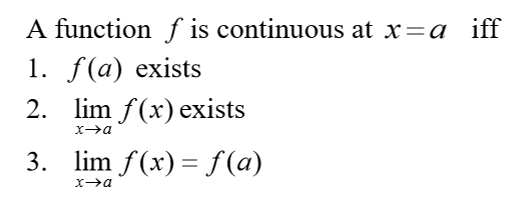
definition of continuity
intermediate value theorem (IVT):

definition of the derivative

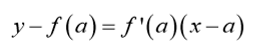
tangent line equation
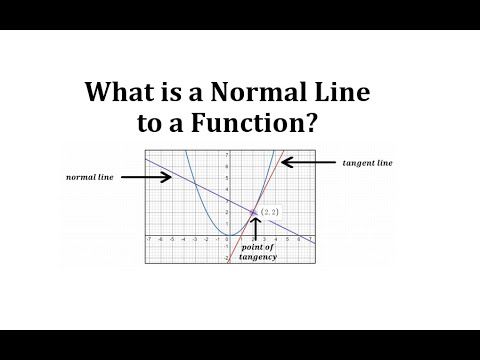
normal line
the line perpendicular to the tangent line at the point of tangency
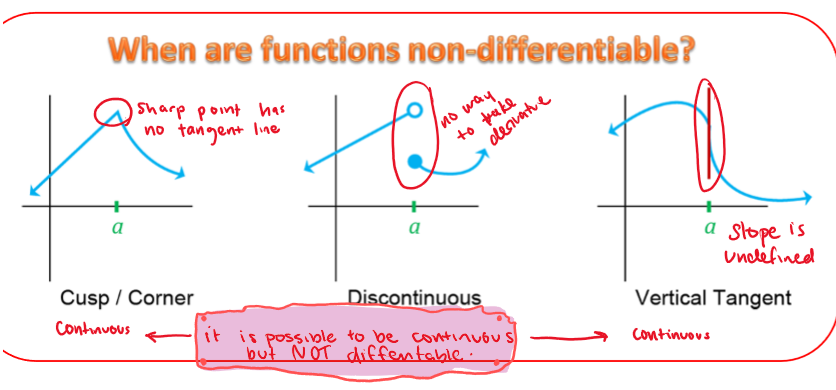
three reasons a function f will not be differentiable at a point x=a
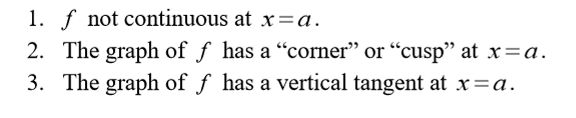
important derivatives

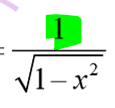
the derivative of the inverse of sin x
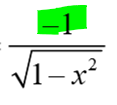
the derivative of the inverse of cos tx
the derivative of the inverse of tan x
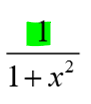
the derivative of the inverse of cot x
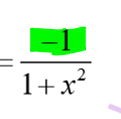
the derivative of the inverse of sec x
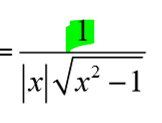
the derivative of the inverse of csc x
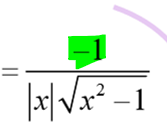
s(t), v(t), |v(t)|, a(t) application
s(t) = position
v(t) = s’(t) = velocity
|v(t)| = speed
a(t) = v’(t) = s’’(t) = acceleration
particle at rest when v(t) = 0
speed is increasing if v and a have the same sign
speed is decreasing if v and a have opposite signs
linear approximation of f for values of x near x=a (a is the x-value at the point of tangency)
y=f(a) + f’(a)(x-a) —> tangent line at x=
hospital rule
note: only used when you have 0/0 or inf/inf

mean value theorem
“the slope of the tangent equals the slope of the secant at some point between a and b'“
if 1. f is continuous on [a,b]
differentiable on (a, b)
then there exists a number C between a and b such that f’© = f(b)-f(a)/b-a
minimum or maximum values refer to…
the y value
extreme value theorem (EVT)
if f is continuous on a closed interval [a,b]
then f has an absolute max and absolute min on the interval [a,b]
definition of critical points
a critical point of f is a number c (x-value) such that either
f’ c = 0 (stationary points) OR
f’ c does not exist (singular points)
candidates test for absolute extrema on a closed interval
find the y-values of critical points in the interval (a,b)
find the y-values of endpoints, a and b
the largest y-value is the maximum and the smallest y-value is the minimum
test for increasing and decreasing (DUH)
f’ > 0 means f is increasing
f’ < 0 means f is decreasing
relative extrema must occur at…
relative or local mins/maxs must occur at critical points
1st derivative test for relative extrema
if f’ changes from positive to negative at c, then f© is a relative max
if f’ changes from negative to positive at c, then f© is a relative min
if f’ does not change sings at c, then f© is neither.
definition of concavity
f is concave up if f’ is increasing
f is concave down if f’ is decreasing
test for concavity
f’’ > 0 means f is concave up
f’’ < 0 means f is concave down
definition of a point of inflection (POI)
a point on the graph of f where the concavity of f changes
test for inflection point
a function f has an inflection point at (c, f©) iff
f’’ changes from + to - or vice versa at x =c
2nd derivative test for relative extrema
given f’© = 0, then
if f’’© <0 (concave down) then f© a max
if f’’©> 0 (concave up) then its a min
if f’’© = 0 then the test is incoclusive
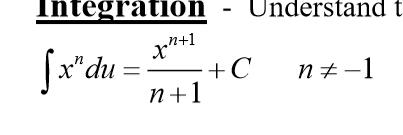
the integral of x^ndu
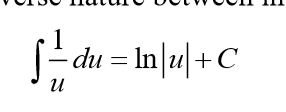
the integral of 1/u du
there is an absolute value because you can’t use negative logs
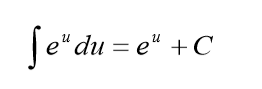
the integral of e^u du
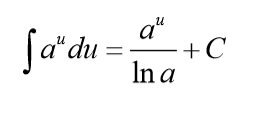
the integral of a^u du
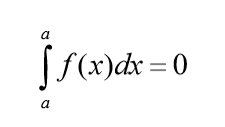
the integral of f(x)dx a and a
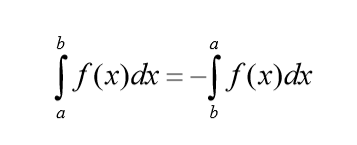
the integral of f(x)dx b and a
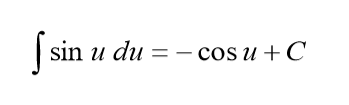
the integral of sin u du
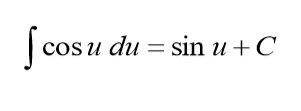
the integral of cos u du
integral of sec²u du
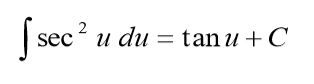
integral of csc u cot u du
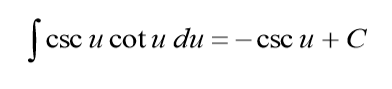
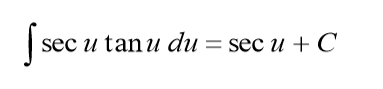
integral of sec u tan u du