micro 3.3 pt 2
 Call Kai
 Learn
Learn Practice Test
 Spaced Repetition
 Match
Match Flashcards
 Knowt Play
1/32

There's no tags or description
Looks like no tags are added yet.
Name | Mastery | Learn | Test | Matching | Spaced | Call with Kai | Chat |
|---|
No analytics yet
Send a link to your students to track their progress
33 Terms
Function of a slime layer
Helps bacteria attach to surfaces and prevents drying out.
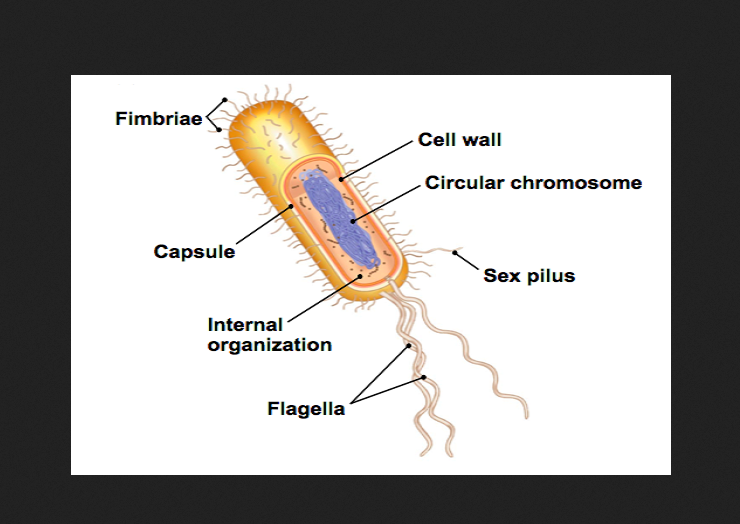
Fimbriae
Short, hairlike appendages used for attachment.
Primary function of fimbriae
Attachment to surfaces and host tissues.
Pili
Longer appendages involved in attachment and DNA transfer.
Function of the sex pilus
Transfers DNA during conjugation.
Bacterial conjugation
The transfer of DNA from one bacterium to another.

Structure allowing bacterial movement
Flagella.
Power source of bacterial flagella
A rotary motor at the base.
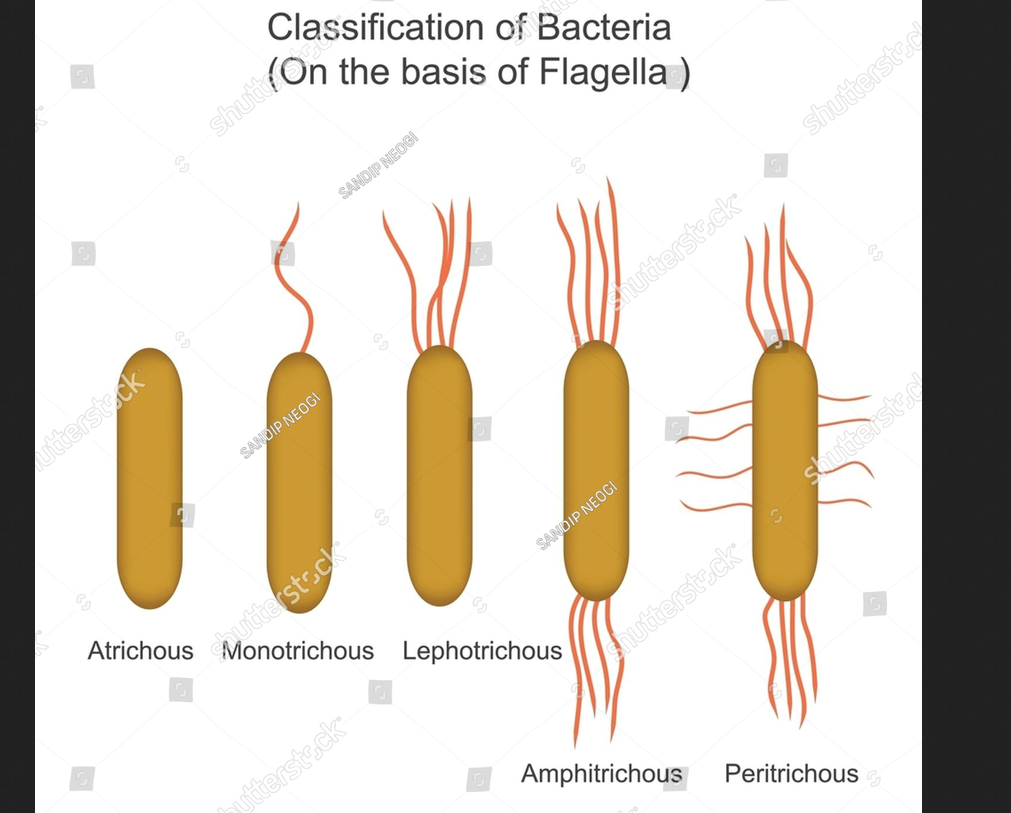
Monotrichous
One flagellum.
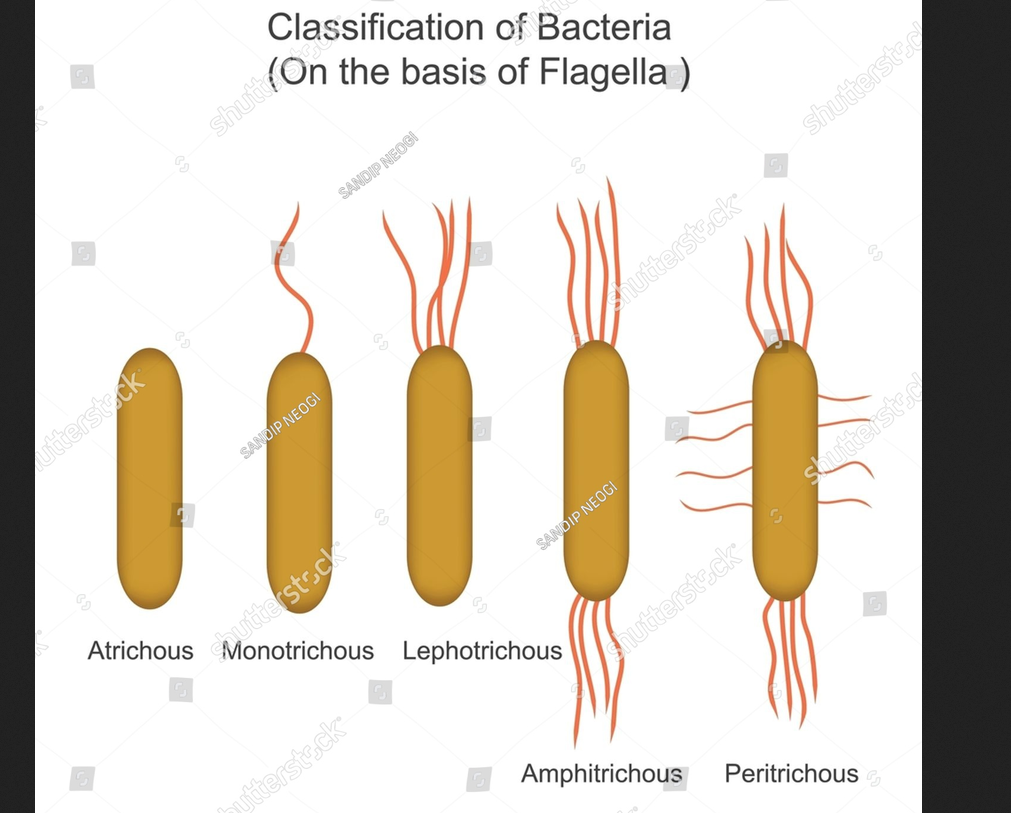
Lophotrichous
A tuft of flagella at one end.
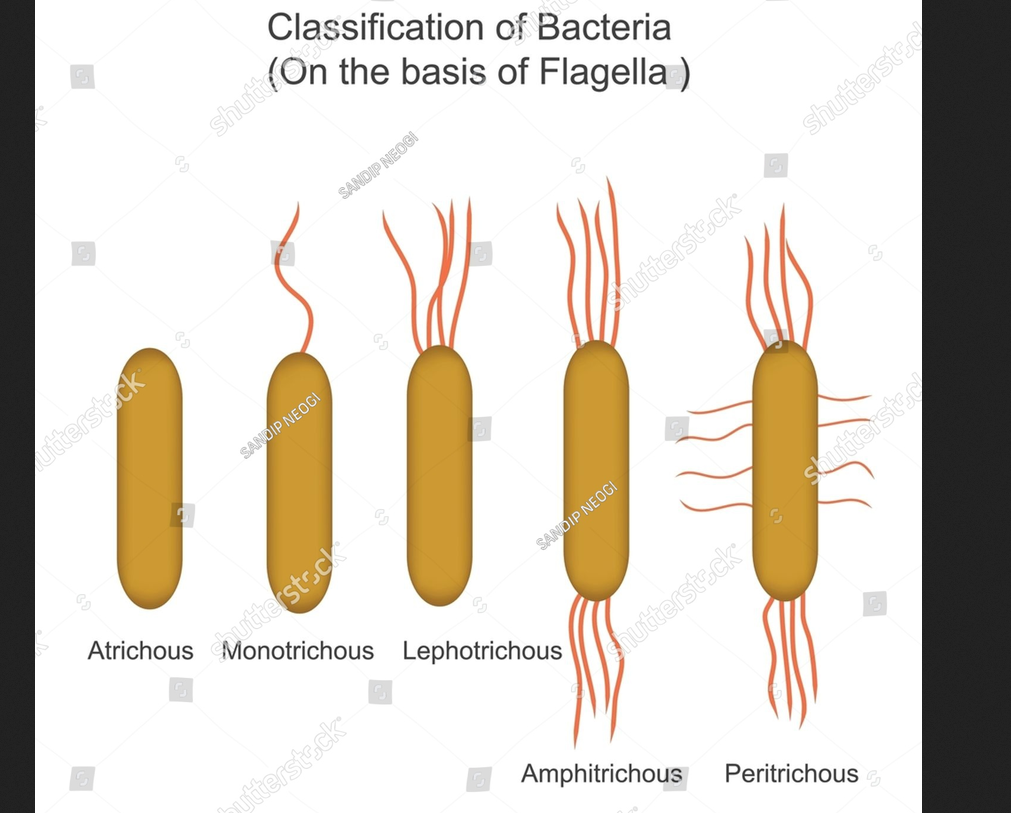
Amphitrichous
Flagella at both ends.
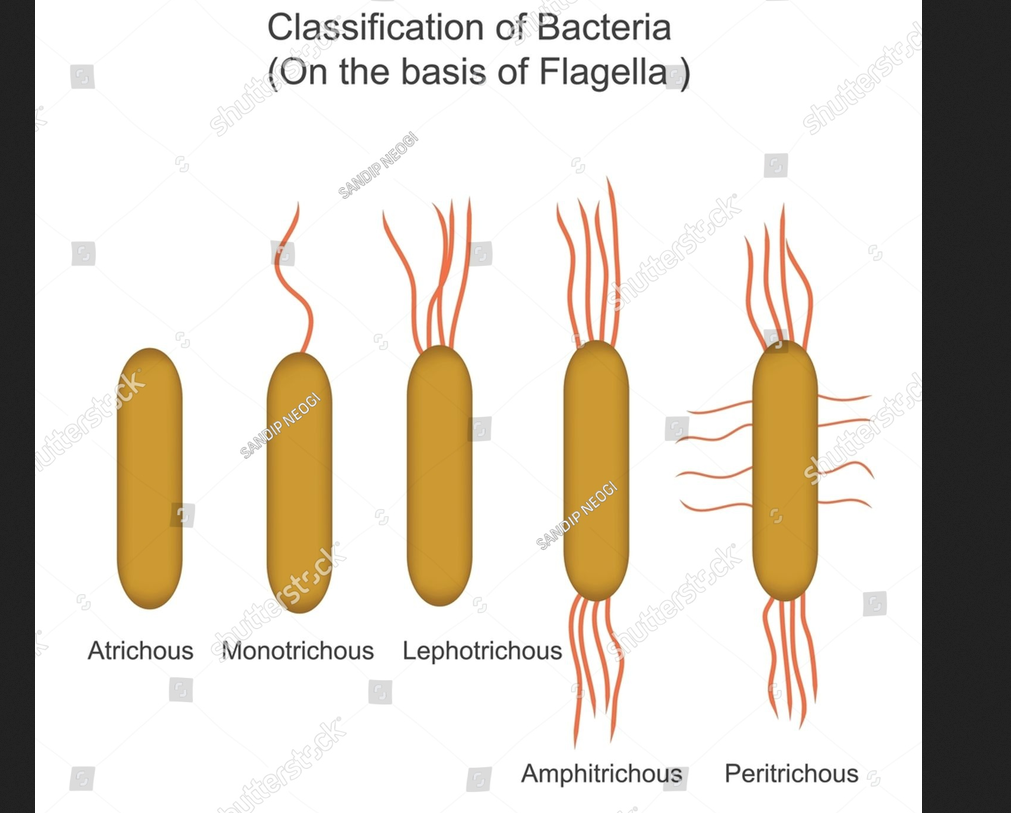
Peritrichous
Flagella distributed over the entire cell surface.
purpose of Inclusion bodies
Storage granules for nutrients such as glycogen, phosphate, and sulfur.
Endospores
Dormant, highly resistant survival structures.
Purpose of an endospore
To help bacteria survive harsh environmental conditions.
what are Bacillus and Clostridium?
.Endospore-producing bacterial genera
Are endospores reproductive structures?
No, they are survival structures.
Conditions endospores can survive
Heat, drying, radiation, chemicals, and disinfectants.
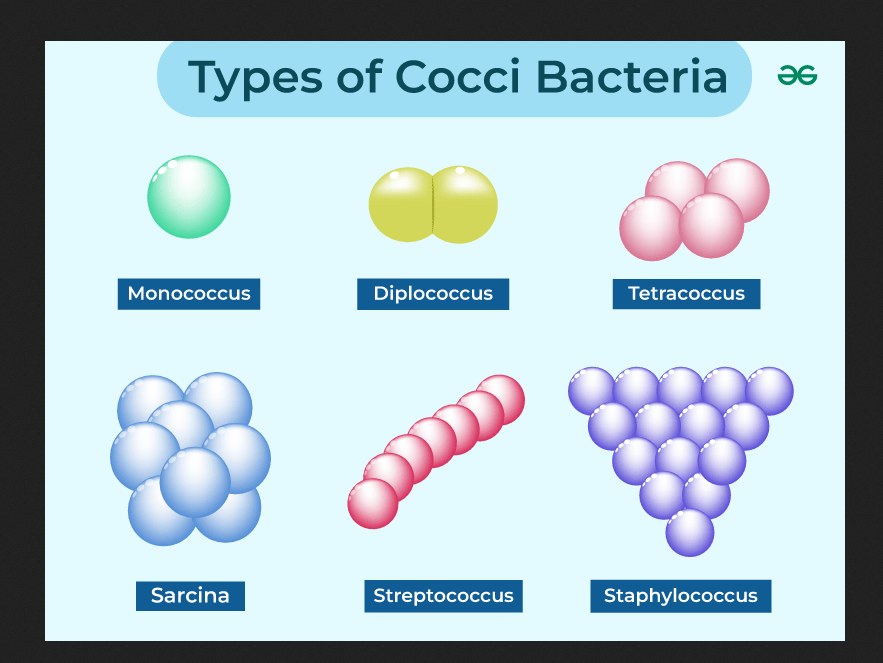
Coccus
A spherical bacterium.

Bacillus
A rod-shaped bacterium.

Coccobacillus
A short rod-shaped bacterium.
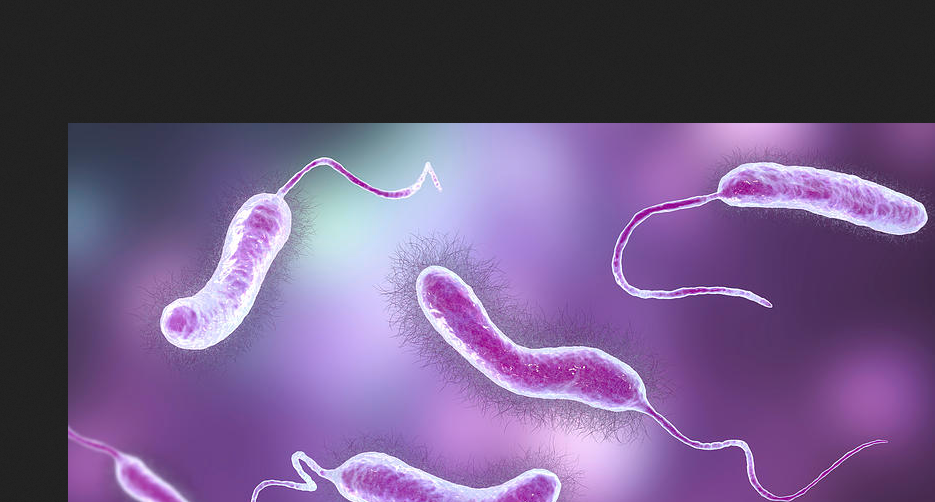
Vibrio
A curved rod-shaped bacterium.

Spirillum
A rigid spiral-shaped bacterium.

Spirochete
A flexible spiral-shaped bacterium.
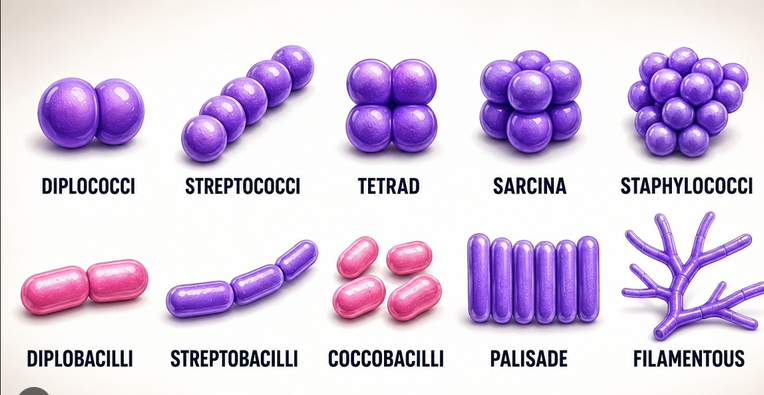
Diplo- (prefix)
Cells arranged in pairs.
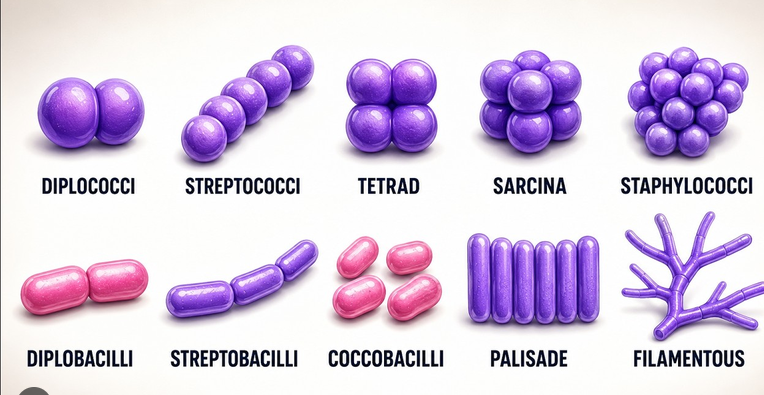
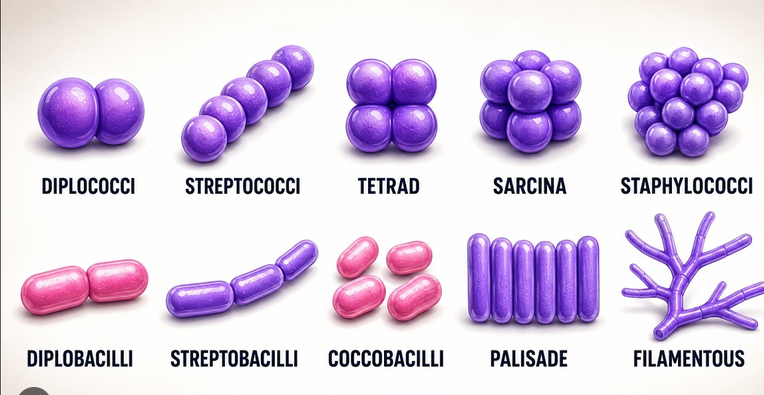
Strepto- (prefix)
Cells arranged in chains.
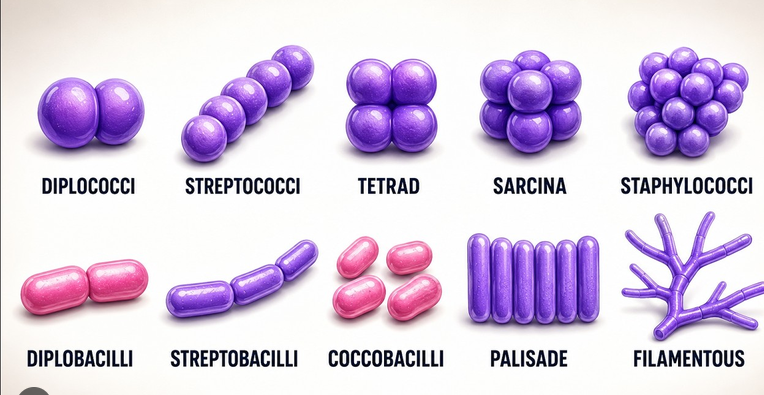
Staphylo- (prefix)
Cells arranged in grape-like clusters.
Tetrads
Groups of four bacterial cells.
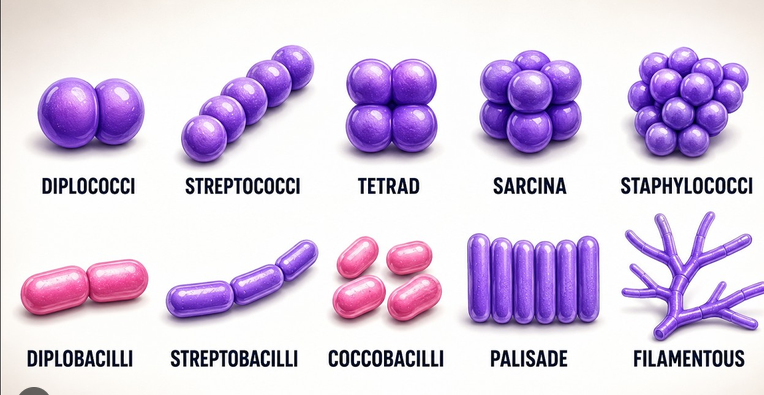
Sarcinae
Cube-like groups of eight bacterial cells.
Prokaryote classification characteristics
Cell shape, cell wall composition, Gram stain, DNA sequencing, metabolism, and oxygen requirements.
Structure responsible for movement
Flagella.
Structure primarily responsible for attachment
Fimbriae.
Structure primarily responsible for DNA transfer
Pili.