3.3.9 Carboxylic acids & derivatives
 Call Kai
 Learn
Learn Practice Test
 Spaced Repetition
 Match
Match Flashcards
 Knowt Play
1/33

There's no tags or description
Looks like no tags are added yet.
Name | Mastery | Learn | Test | Matching | Spaced | Call with Kai | Chat |
|---|
No analytics yet
Send a link to your students to track their progress
34 Terms
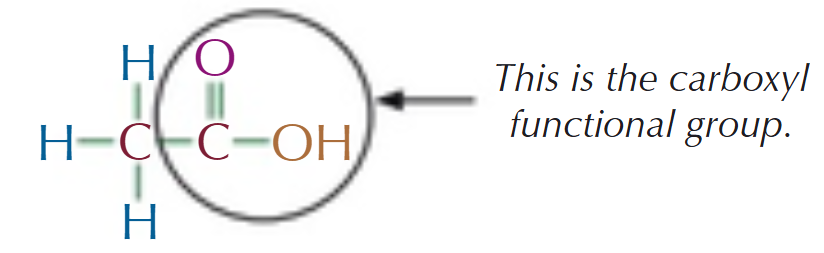
What is the functional group of a carboxylic acid?
-COOH
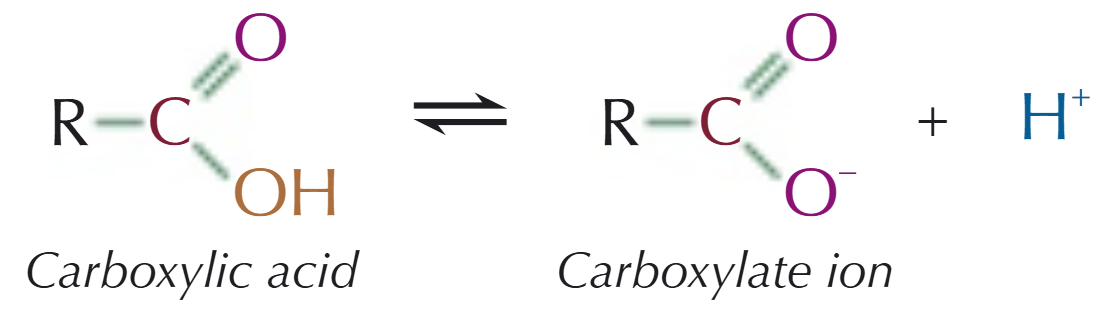
What type of acids are carboxylic acids & what does this mean?
Weak acids:
in water, they partially dissociate to form a carboxylate ion & a H+ ion
equilibrium lies to the left, as most of the molecules don’t dissociate
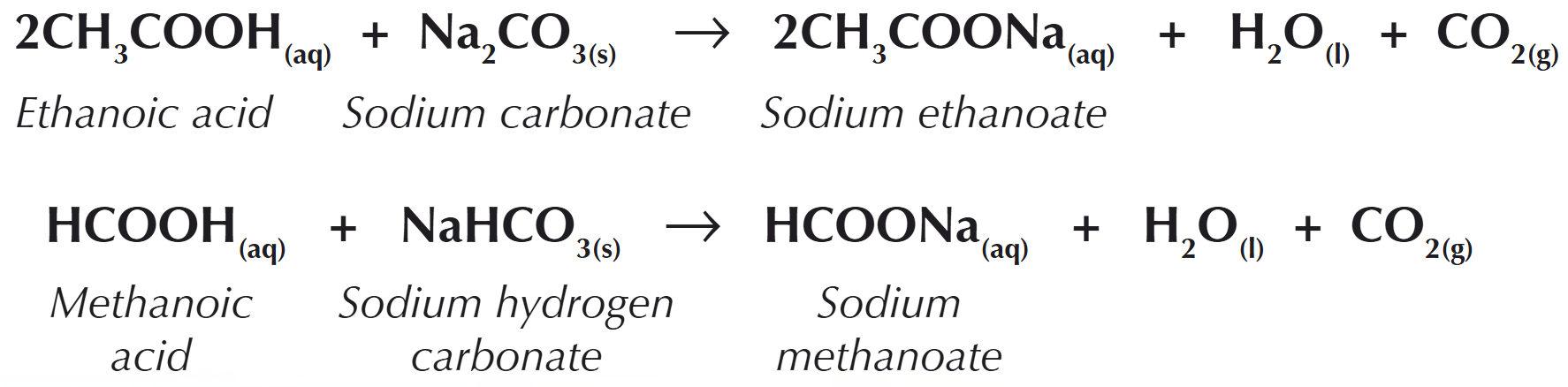
What do carboxylic acids form when they react with carbonates (CO32-) or hydrogen carbonates (HCO3-) ?
A salt, carbon dioxide & water → (CO2 fizzes out of the solution)
What is the functional group for an ester?
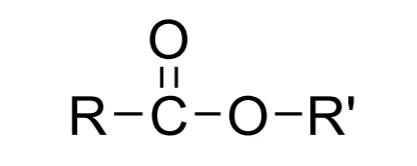
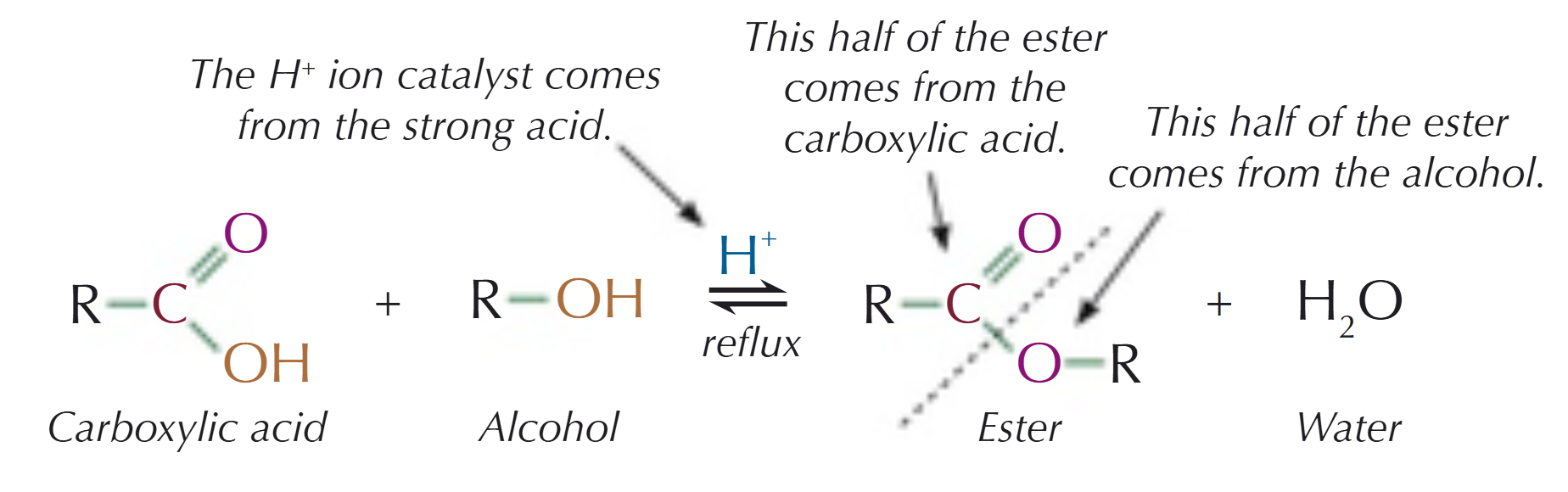
What is an esterification reaction?
When carboxylic acids are heated with an alcohol in the presence of a strong acid catalyst to produce an ester:
concentrated sulfuric acid catalyst (H2SO4) is usually used, but HCl & H3PO4 can also be used
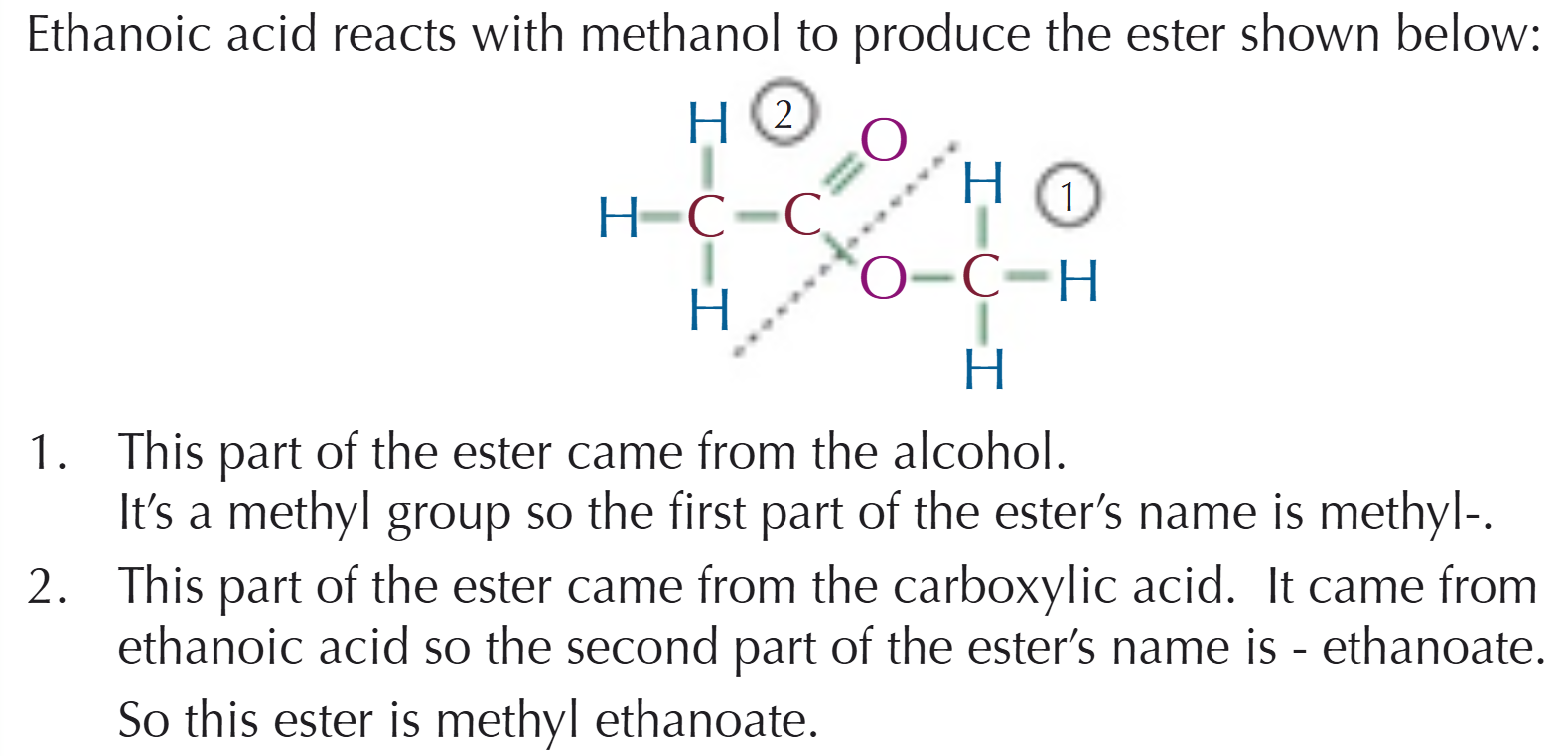
How are esters named?
Look at the alkyl group that came from the alcohol (the first bit)
Look at the part that came from the carboxylic acid & swap its ‘-oic acid’ ending for ‘oate’ (the second bit)
Put the two parts together
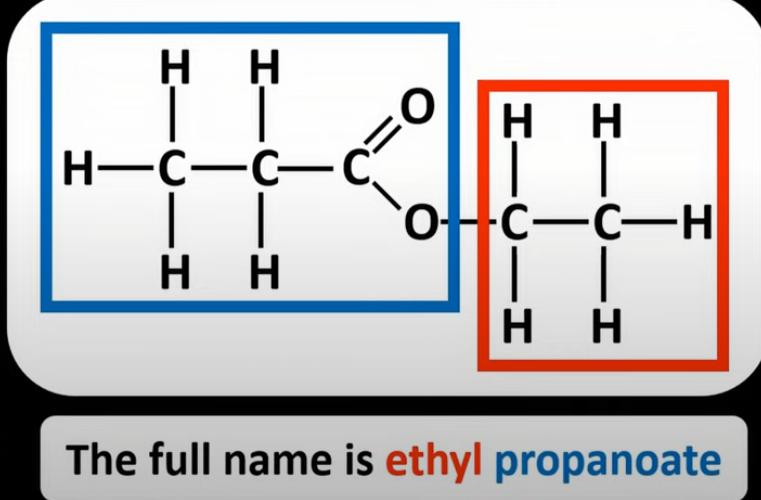
Draw & name the ester formed from the reaction between ethanol & propanoic acid
Ethyl propanoate
What are the properties of esters?
Esters have a sweet smell:
useful in perfumes & flavourings (e.g. drinks & sweets)
Esters are polar liquids & have low boiling points:
lots of polar organic compounds will dissolve in them & they evaporate easily from mixtures (good solvents in glue & printing inks)
Esters are plasticisers:
added to plastics during polymerisation to make plastics more flexible
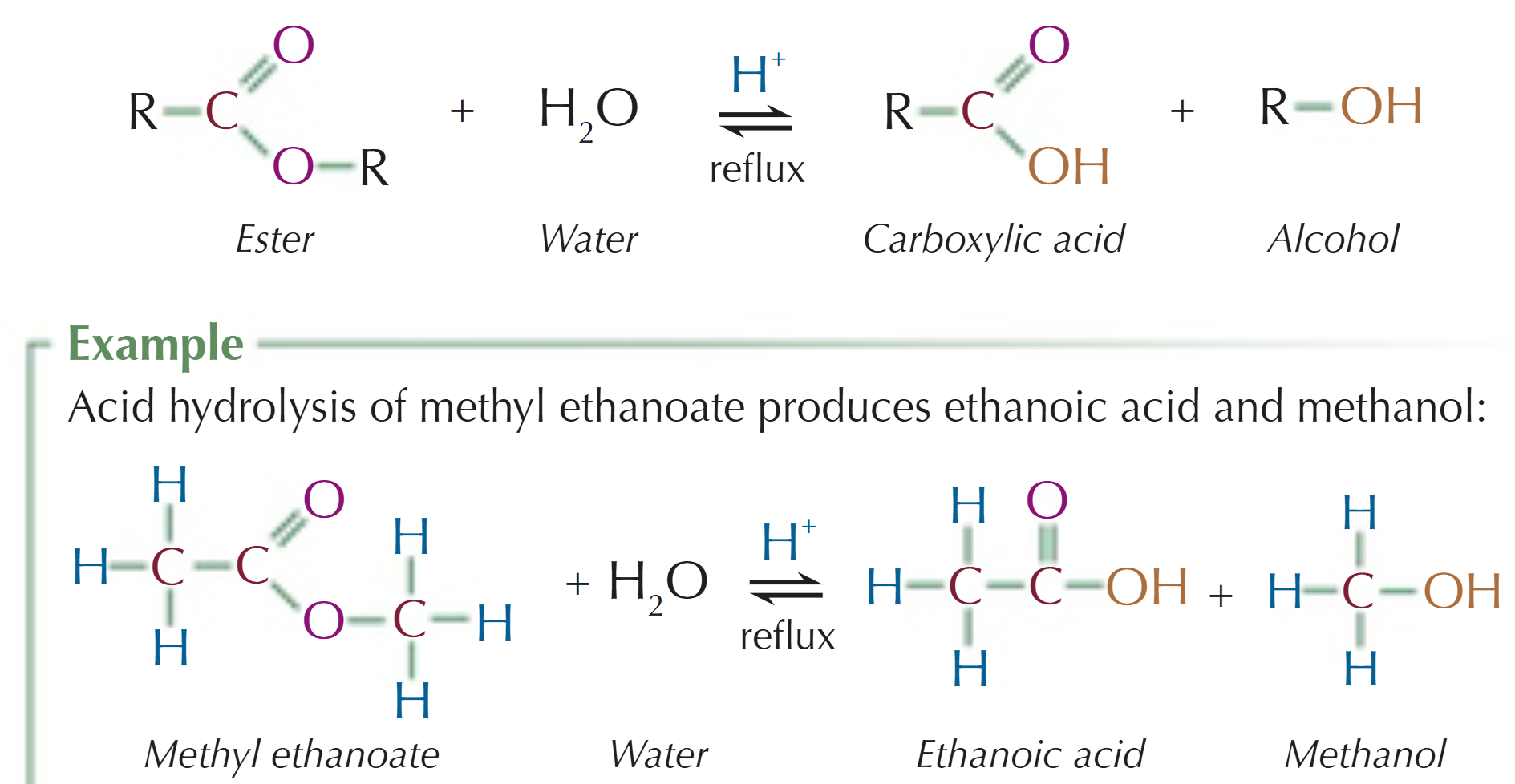
How are esters hydrolysed using acid hydrolysis?
Acid hydrolysis splits the ester into a carboxylic acid & an alcohol:
the ester has to be refluxed with a dilute acid (e.g. HCl or H2SO4)
acid hydrolysis reactions are reversible → lots of water needed to push equilibrium to the right
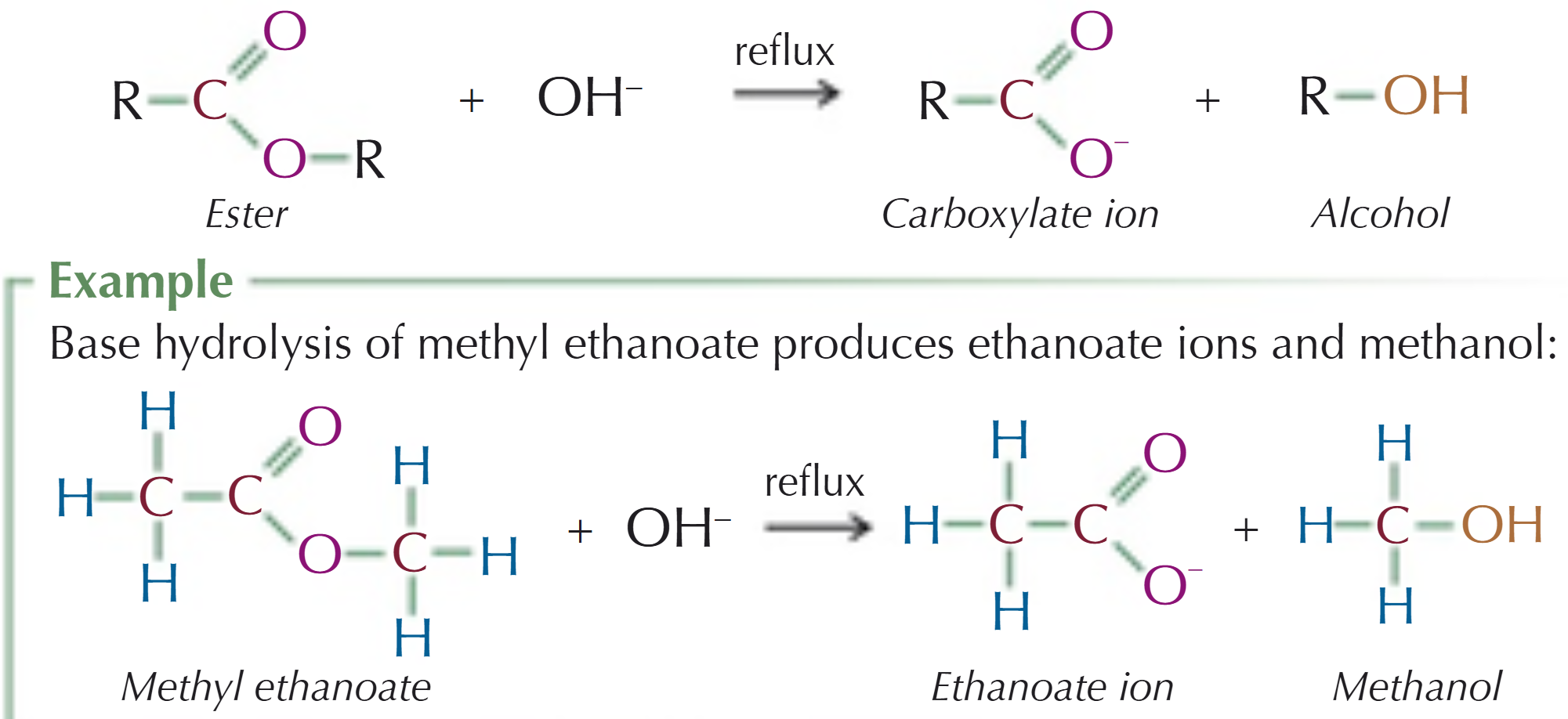
How are esters hydrolysed using base hydrolysis?
Base hydrolysis splits the ester into a carboxylate ion & an alcohol:
the ester has to be refluxed with a dilute alkali (e.g. NaOH)
OH- ions from the base react with the ester, producing a carboxylate ion & an alcohol
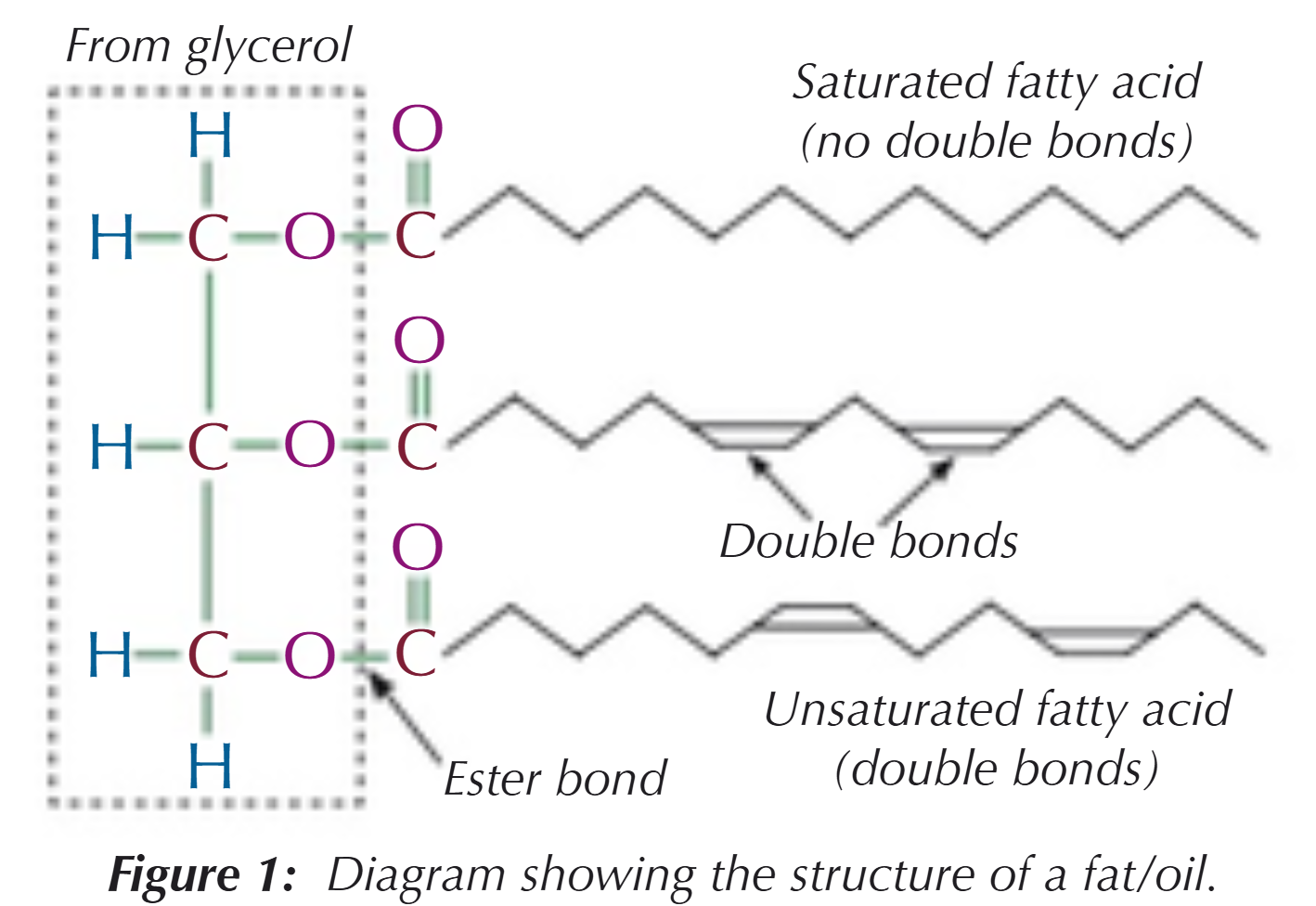
How are animal fats & vegetable oils produced?
They are esters of glycerol & fatty acids (long chain carboxylic acids)
They combine with glycerol (propane-1,2,3-triol) to make fats & oils
fatty acids can be saturated (no C=C double bonds) or unsaturated (with C=C double bonds)
Why are fats solid at room temperature & have a high melting point?
They have mainly saturated hydrocarbon chains → they fit neatly together, increasing the strength of Van der Waals forces between them

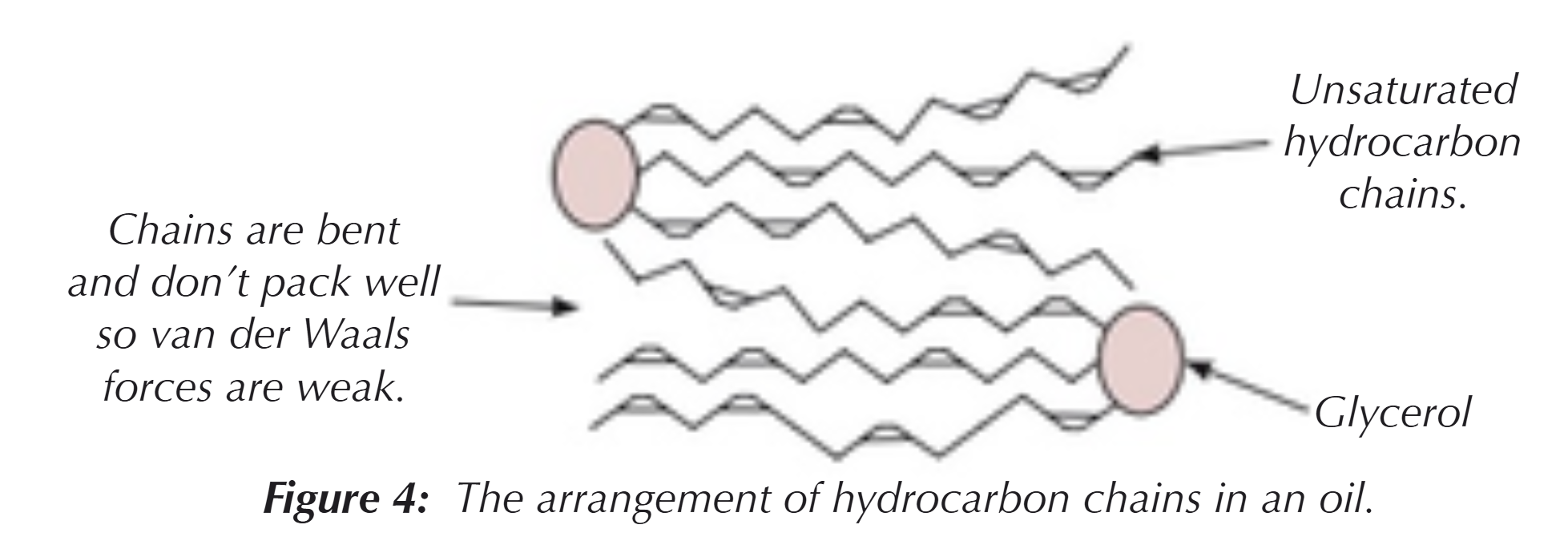
Why are oils liquid at room temperature & have a low melting point?
They have unsaturated hydrocarbon chains → the C=C double bonds mean the chains are bent & don’t pack together well, decreasing the strength of the Van der Waals forces between them
How are fats & oils hydrolysed?
Heating them with NaOH (base hydrolysis):
OH- ions from the NaOH react with the fat/oil to form a carboxylate ion & an alcohol
The alcohol that is formed in glycerol & the carboxylate ions combine with Na+ ions from the NaOH to form a sodium salt (soap)
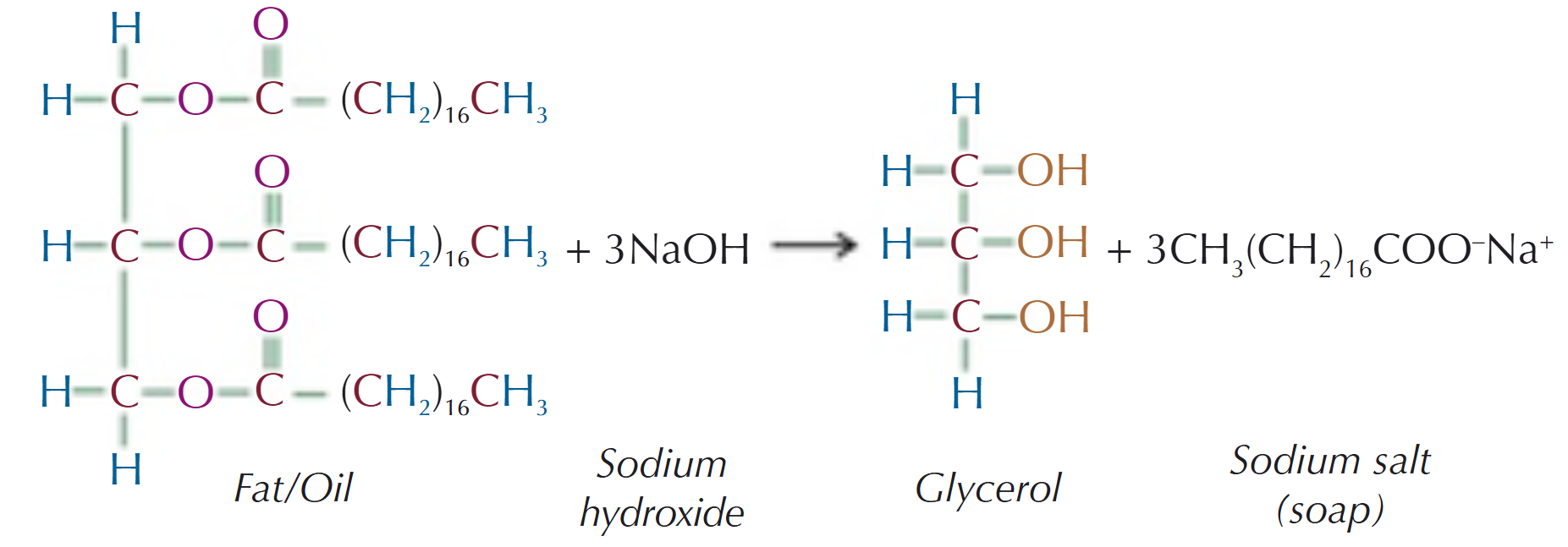
How is sodium salt, from the base hydrolysis of oils/fats, converted back into a long chain carboxylic acid (fatty acid) ?
Add an acid (e.g. HCl):
H+ ions from the acid displace the Na+ ions in the salt to form a carboxylic acid, which releases a free Na+ ion

Vegetable oils (e.g. rapeseed oil) make good vehicle fuels, but they cannot be burned directly in engines. How are these oils converted into biodiesel?
The oils are reacted with methanol & a strong alkali catalyst (e.g. KOH or NaOH)
A mixture of methyl esters of long-chain fatty acids is produced

What are the arguments for & against biodiesel being carbon neutral?
For: when crops grow, they absorb the same amount of CO2 as they produce when they’re burned
Against: energy is used to make the fertiliser to grow the crops & it’s used in planting, harvesting & converting the oil → if this energy comes from fossil fuels, then the process isn’t carbon neutral overall
What is the suffix & functional group for an acyl chloride?
-COCl
‘-oyl chloride’
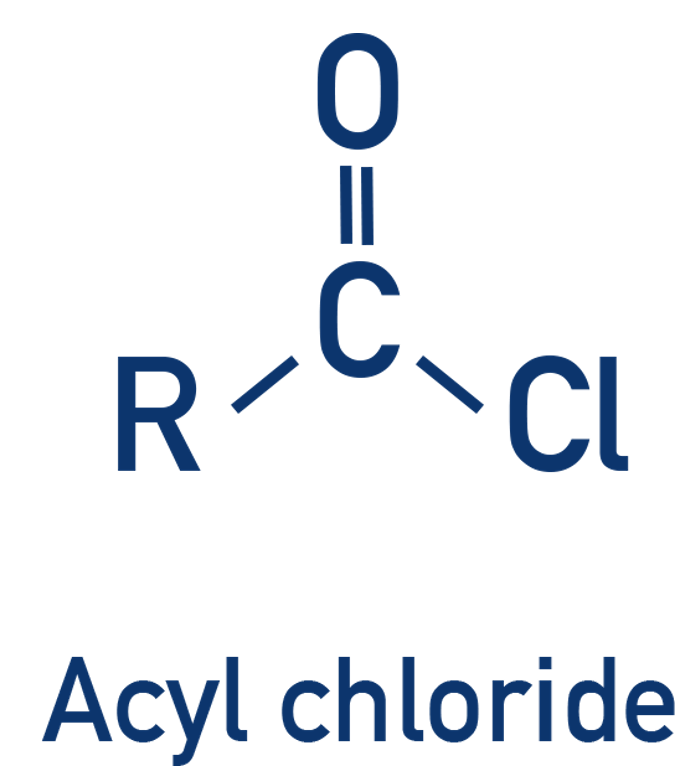

Name this acyl chloride
2,3-dimethylpentanoyl chloride
What molecules do acyl chlorides react with & what are the expected observations?
Water, alcohols, ammonia & primary amines
In each of these reactions, chlorine is substituted by an oxygen or nitrogen group & misty fumes of HCl are given off
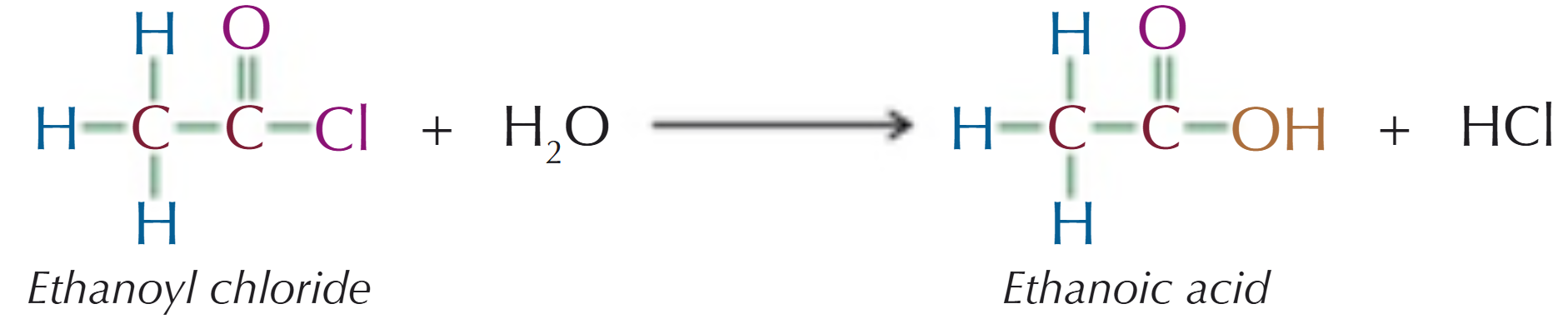
How do acyl chlorides react with water?
React vigorously with cold water, producing a carboxylic acid & HCl
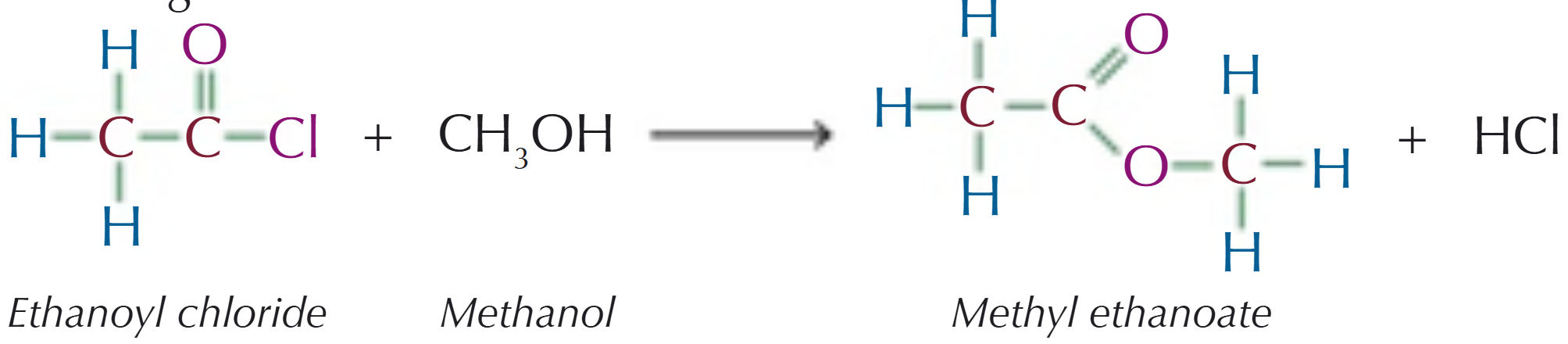
How do acyl chlorides react with alcohols?
Acyl chlorides react vigorously with alcohols at room temperature to produce an ester & HCl:
this irreversible reaction is a much easier, faster way to produce an ester than esterification
How do acyl chlorides react with ammonia?
React vigorously with ammonia at room temperature, producing an amide & HCl

How do acyl chlorides react with primary amides?
Acyl chlorides react vigorously with primary amides at room temperature to produce an N-substituted amide & HCl

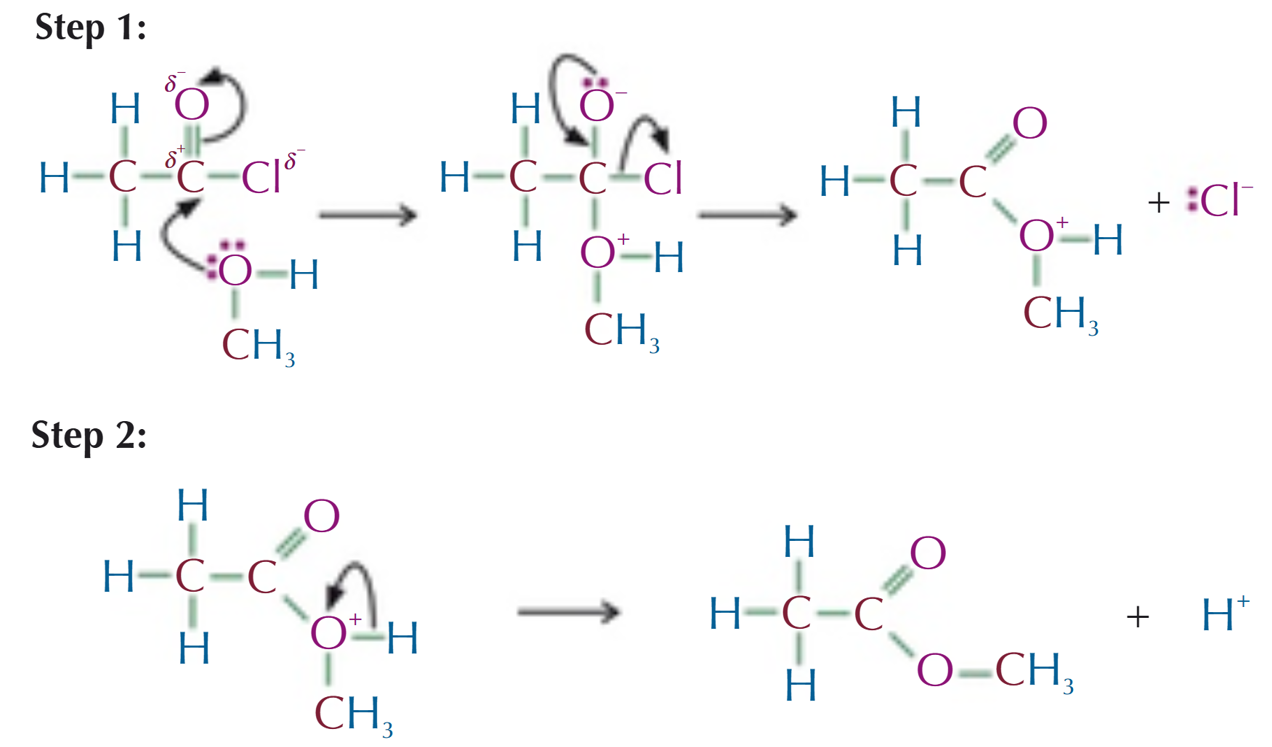
What are the two steps to acyl chloride nucleophilic addition-elimination reactions?
The nucleophile adds onto the acyl chloride, displacing a Cl- ion
The hydrogen leaves to create an acyl chloride derivative
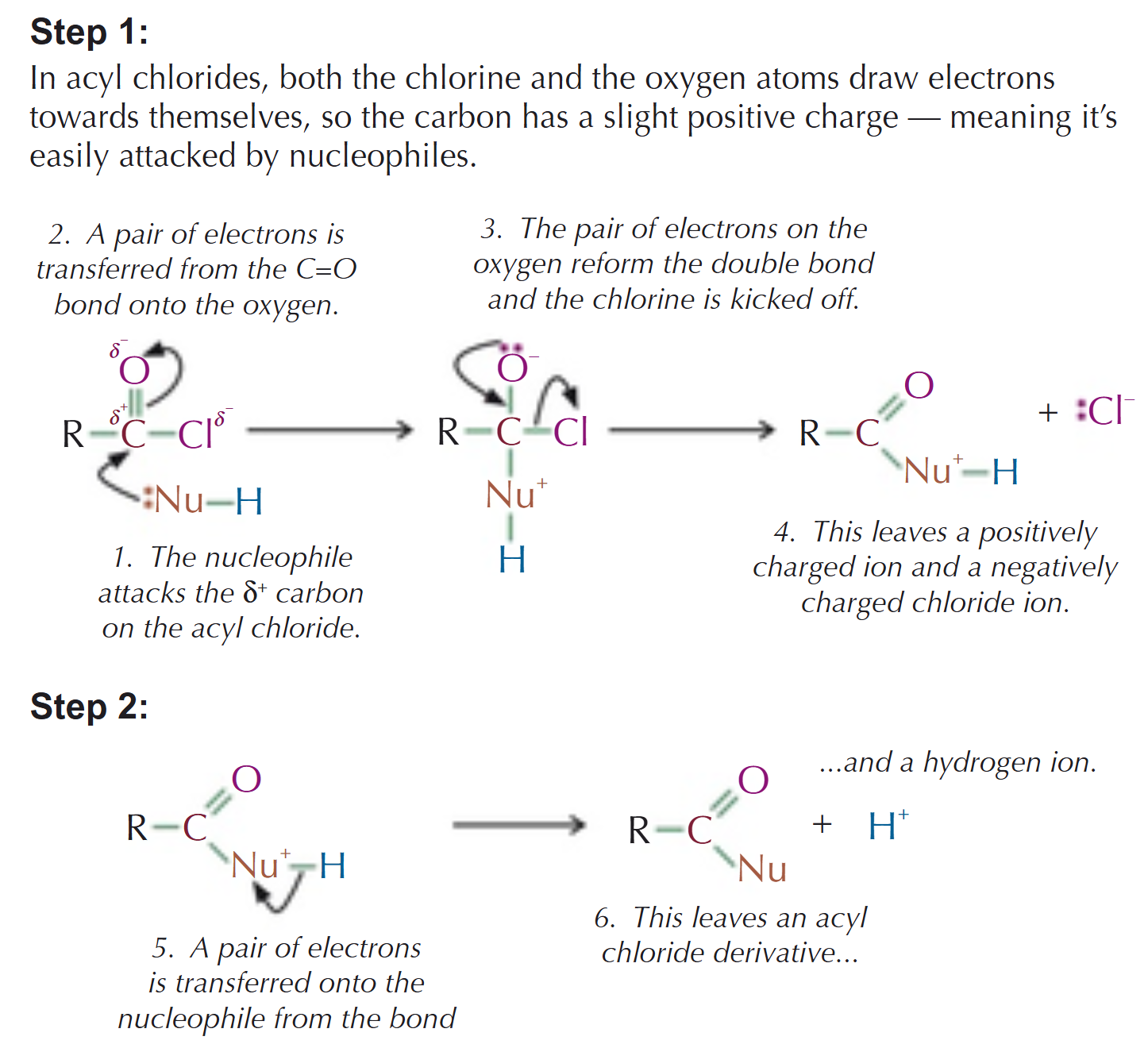
Draw & outline the nucleophilic addition-elimination mechanism for the reaction of ethanoyl chloride with methanol
What is an acid anhydride?
Made from two identical carboxylic acid molecules:
they are joined together via an oxygen with the carbonyl groups on either side
this oxygen comes from the OH group of one of the carboxylic acids; the other OH group & the spare hydrogen are released as water

How are acid anhydrides named?
If you know the name of the carboxylic acid, remove ‘acid’ & add ‘anhydride’

How do reactions of acid anhydrides differ from acyl chlorides?
The reactions are almost the same as those of acyl chlorides, but they are less vigorous & a carboxylic acid is formed, instead of HCl
How do acid anhydrides react with water?
Produce two lots of carboxylic acids

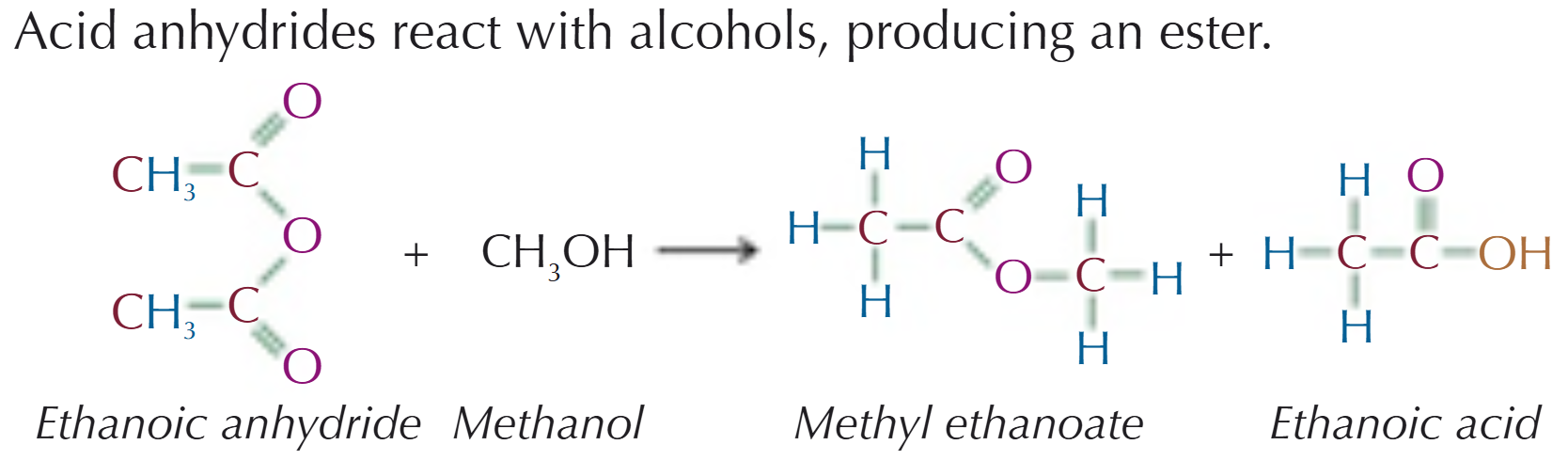
How do acid anhydrides react with alcohols?
Produce an ester & a carboxylic acid
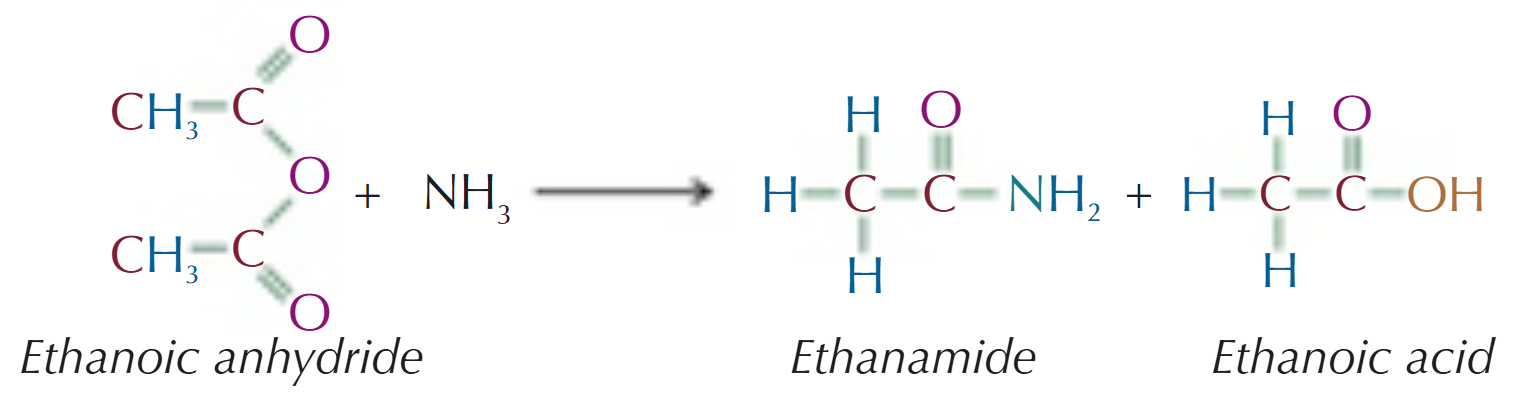
How do acid anhydrides react with ammonia?
Produce an amide & a carboxylic acid
How do acid anhydrides react with primary amines?
Produce an N-substituted amide & a carboxylic acid

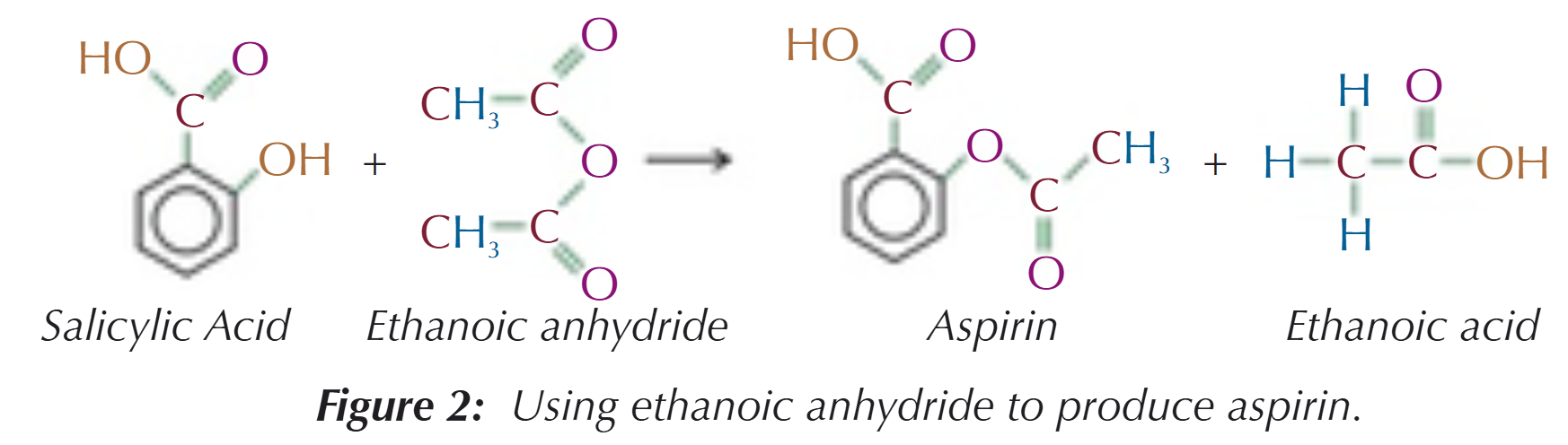
How is aspirin (an ester) manufactured?
Reacting salicylic acid (contains an alcohol group) with either ethanoic anhydride or ethanoyl chloride:
ethanoic anhydride is used in industry as it’s cheaper & safer to use than ethanoyl chloride → less corrosive, reacts more slowly with water & doesn’t produce dangerous HCl fumes