Midterm 1 Gen Chem 1
 Call Kai
 Learn
Learn Practice Test
 Spaced Repetition
 Match
Match Flashcards
 Knowt Play
1/72

There's no tags or description
Looks like no tags are added yet.
Name | Mastery | Learn | Test | Matching | Spaced | Call with Kai | Chat |
|---|
No analytics yet
Send a link to your students to track their progress
73 Terms
anything that has mass and takes up space
matter
has distinct properties and a composition that does not vary from sample to sample
substances
2 types of substances
element and compound
substance that cannot be decomposed into simpler substances
element
can be decomposed into smaller substances and is made up of more than one element
have a definite composition, meaning the number of atoms of each element in it is the same from sample to sample
compound
building block of matter
atom
made up of substances
can vary in composition throughout a sample
mixtures
have the same composition throughout a sample (aka a soulution)
homogenous mixture
varys throughout a sample
heterogenous mixture
can be observed without changing a substance into another substance
color oder, density, melting point, boiling point, hardness
physical property
can only be observed when a substance is changed into another substance
flammability/ ability to burn in oxygen
chemical property
quantity independent (boiling point, melting point)
density, boiling point, color
intensive properties
quantity dependent (ex. mass, volume)
extensive properties
solid substances are separated form liquids and solutions
filtration
uses differences in boiling points to separate a liquid mixture into its components
distillation
technique that separates by differences in adhering to the solid phase
chromatography
Conversion between kelvin and celsius (0 K is absolute 0)
K = degrees C + 273.15
each element is composed of extremely small particles called atoms
All atoms of a given element are identical, but the atoms of one element are different form the atoms of all other elements
atoms of one element can not be changed created or destroyed
Compounds are formed when atoms of more than one element combine
Daltons atomic theory
Compounds have a definite composition, meaning that the relative number of atoms of each element in the compound is the same in any sample (Joseph Proust)
Law of constant composition
The total mass of substances present at the end of a chemical process are the same as the mass of the substances present before the process took place (Antoine Lavoiser)
Law of conservation of mass
If two elements, A and B form more than one compound the masses of B that combine with a given mass of A are in the ration of small whole numbers (Dalton)
Law of multiple proportions
Streams of negatively charged particles were found to emanate from cathode tubes causing fluorescence
Cathode ray experiment
importance of cathode ray experiment and who did it?
discovery of the electron JJ Thomson (1897)
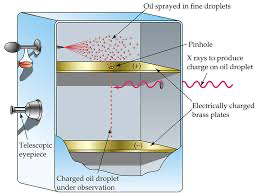
Millikan Oil-Drop Experiment
purpose of Millikan Oil-Drop Experiment and who did it?
found charge of a single electron Robert Millikan (1909)
who discovered radioactivity?
Marie Curie
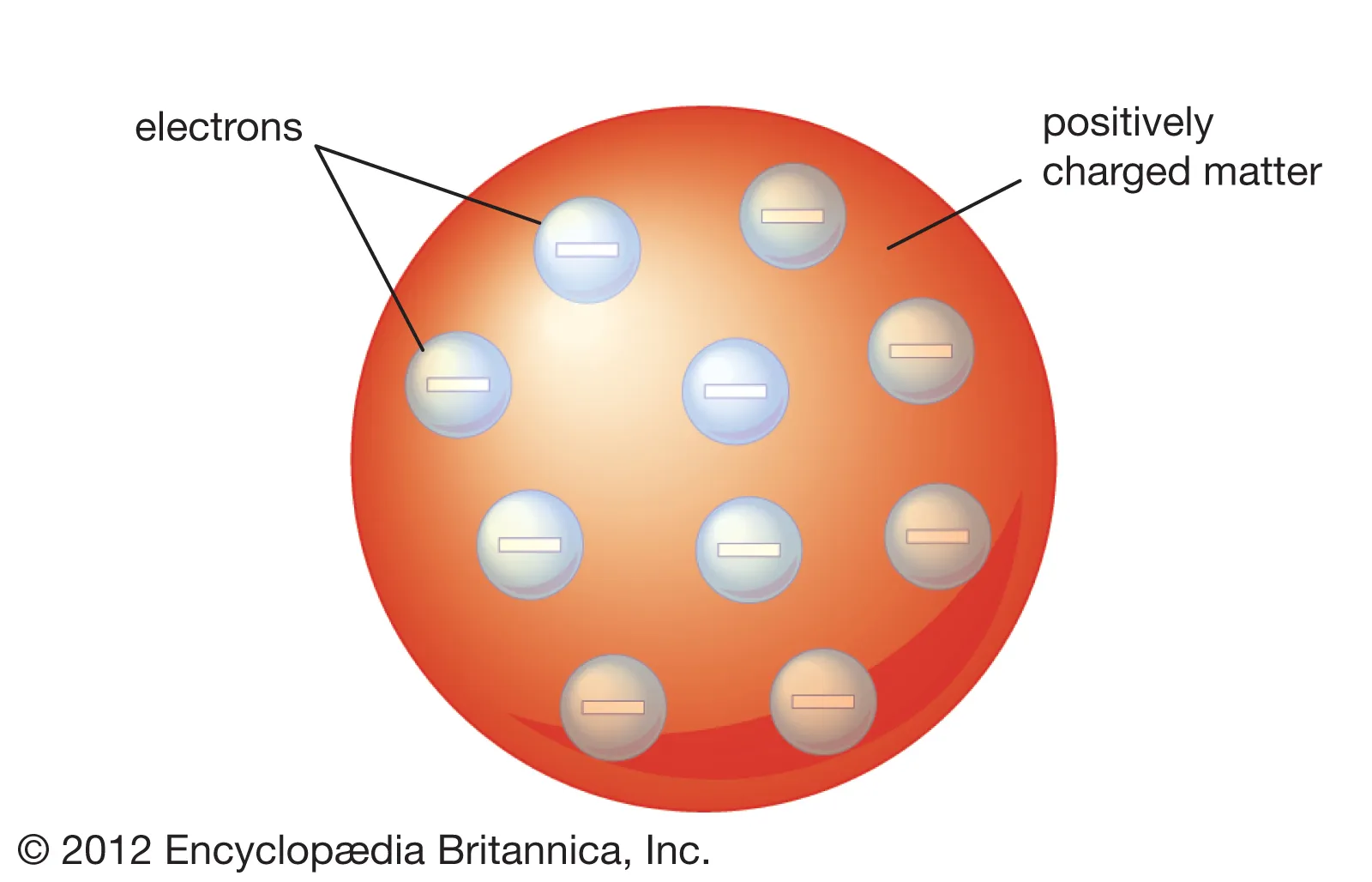
plum pudding model - JJ Tompson
what did the gold foil experiment find and who discovered it?
nucleus, Ernest Rutherford
proton charge
+1
neutron charge
0
electron charge
-1
the number of protons in the nucleus
atomic number
12
6 C top number?
mass number (protons + neutrons)
12
6 C bottom number
atomic number (number of protons/electrons)
atoms of the same element with different masses
Isotopes
Average of mass of all isotopes?
atomic weight (on periodic table)
name of columns on periodic table
groups
rows on periodic table
periods

pink
alkali metals

orange
alkaline earth metals

green
Chalogens

green/blue color
halogens

dark blue
noble gasses
where are non metals on periodic table other than hydrogen
right side
where are metalloids on periodic table?
stairs next to metals
where are metals?
on left side of the periodic table
Seven elements that occur naturally at diatomic molecules
Hydrogen, Nitrogen, Oxygen, Fluorine, Chlorine, Bromine, Iodine
the lowest whole-number ration of atoms of each element in a compound
empirical formula
the exact number of atoms of each elements in a compound
molecular formulas
when an atom gains/loses and electron
ion
formed when one electron is lost (pawsitive)
cation
formed when at least one electron is gained
anion
generally formed between metals and nonmetals
ionic compounds
charge of Ag (Silver)
1+
charge of Zn (Zinc)
2+
Charge of Cd (Cadmium)
2+
Charge of Al (aluminum)
3+
how to name ions from group 1 and group 2 and exceptions (Ag, Cd, Zn, Al)
element name + ion
NH4+
Amonium ion
H3O+
Hydronium
Co 2+
Cobalt(II) Ion
naming anions in groups15 16 and 17 rule?
start of name + ide
OH-
Hydroxide
CH3COO 2-
Acetate
CO3 2-
Carbonate
NO3 -
Nitrate
PO4 3-
Phosphate
SO4 2-
Sulfate
ClO3 -
Chlorate
CLO4 -
perchlorate
ClO2 -
chlorite
ClO -
Hyperchlorite
same formula but different structures
isomers