AH Biology - Unit 2 - KA3 - Whole KA
 Call Kai
 Learn
Learn Practice Test
 Spaced Repetition
 Match
Match Flashcards
 Knowt Play
1/51

There's no tags or description
Looks like no tags are added yet.
Name | Mastery | Learn | Test | Matching | Spaced | Call with Kai | Chat |
|---|
No analytics yet
Send a link to your students to track their progress
52 Terms
What is sexual reproduction?
Sexual reproduction is when offspring are produced by combining genetic information from two individuals of different sexes.
What are costs of sexual reproduction?
Costs of sexual reproduction are:
Only half of the population can produce offspring, since males can’t, so population growth is slower.
Each parents successful genome is disrupted as only half of each parents genome is passed on.
What is a benefit of sexual reproduction?
A benefit of sexual reproduction is that it maintains greater genetic variation which provides the raw material required for an adaptation. This gives sexually reproducing offspring a better chance of survival when selection pressures change.
What is it thought that the parasitic co-evolution between parasites and hosts selects for?
It is thought that the parasitic co-evolution between parasites and hosts selects for sexually reproducing hosts.
What does sexual reproduction in hosts increase and reduce, and what does this mean for the host and parasite.
Sexual reproduction in hosts increases their offsprings genetic variability and reduces the chances that all offspring will be susceptible to infection. This variation means that hosts better able to resist and tolerate parasitism have a greater fitness and parasites better able to feed, reproduce, and find a new host have a greater fitness.
What is asexual reproduction?
Asexual reproduction is when offspring arise from a single parent and inherit genes from that parent alone.
What is a benefit of asexual reproduction?
A benefit of asexual reproduction is that in very narrow, stable niches and when recolonising a disturbed habitat, asexual reproduction can be a very successful strategy because:
Just one parent can produce a daughter cell colony rapidly and of a virtually unlimited size.
The successful whole genome of the parent is passed on from parent to offspring, so the offspring are already well adapted to their habitat.
What is a cost of asexual reproduction?
A cost of asexual reproduction is that there is very little, if any, genetic variation in the population, so they cannot adapt to changing selection pressures easily. (Mutations can give rise to some variation).
What do some organisms that can reproduce asexually have mechanisms for?
Some organisms that can reproduce asexually have mechanisms for horizontal gene transfer between organisms of the same generation. Such as prokaryotes and yeasts, which can transfer genetic information horizontally in the form of plasmids. This increases variation and can result in faster evolutionary change.
What are examples of asexual reproduction?
Examples of asexual reproduction are:
Vegetative cloning in plants. Examples of vegetative cloning are bulbs, runners, and tubers.
Parthenogenesis in lower plants and animals, such as the brahminy blind snake (Indotyphlops braminus). They are the only obligate parthenogenetic snake species.
What is parthenogenesis?
Parthenogenesis is reproduction from a female gamete without fertilisation, for example an unfertilised egg.
Where is parthenogenesis more common?
Parthenogenesis is more common in:
Cooler climates, which are disadvantageous to parasites
Regions of low parasite density or diversity
What is a gametocyte?
A gametocyte is a diploid cell that can divide by meiosis to form a haploid gamete.
What is meiosis?
Meiosis is the double division of the nucleus of diploid gametocytes to form haploid gametes.
What do diploid cells normally contain?
Diploid cells normally contain chromosomes in homologous pairs, this means they contain one from each parent.
What are homologous chromosomes and what do they have?
Homologous chromosomes:
Are the same size
Have the same centromere position
Have the same sequence of genes at the same loci
What can homologous chromosomes differ in?
Homologous chromosomes can differ in the copies of the alleles present at each loci
What do centromeres do?
Centromeres hold the two chromatids together.
How many divisions are there during meiosis?
There are two divisions during meiosis.
What happens during meiosis one?
In meiosis one, homologous chromosomes separate to produce two cells.
What happens during meiosis two?
In meiosis two, sister chromatids separate to produce four cells.
What happens prior to meiosis one?
Prior to meiosis one:
Chromosomes replicate
Each chromosome consists of two genetically identical chromatids attached to the centromere.
The chromosomes condense and the homologous chromosomes pair up.
What are the two key processes during meiosis one?
The two key processes during meiosis one are:
Crossing over
Independent assortment
What is the process of crossing over during meiosis one?
The process of crossing over during meiosis one is:
Non-sister chromatids of a homologous pair touch and form points of contant called chiasmata.
Crossing over takes place at the chiasmata where sections of DNA are exchanged between the homologous chromosomes. This can result in new combinations of alleles of linked genes. Linked genes are genes on the same chromosome.
Crossing over of DNA is random and produces genetically different recombinant chromosomes.
As a result of this, it increases genetic variation in the offspring.
What is the process of independent assortment during meiosis one?
The process of independent assortment during meiosis one is:
Spindle fibres attach to the homologous pairs at the centromeres and they line the chromosomes up at the equator of the spindle.
Each pair of homologous chromosomes line up in pairs but the orientation of each pair is irrespective of whether they are maternal or paternal chromosomes.
The random orientation of the pairs of chromosomes is known as independent assortment.
The chromosomes of each homologous pair are separated and move towards opposite poles. As a result, it increases genetic variation in the offspring.
Cytokinesis occurs and two daughter cells form.
What is the process of meiosis two?
In meiosis two:
The two cells formed during meiosis one undergo a further division during which the sister chromatids of each chromosome are separated.
This stage ends with the production of four haploid genetically different gamete cells.
How do you calculate the number of different chromosome combinations in gametes?
To calculate the number of different chromosome combinations in gametes, you use the formula 2n, where n represents number of homologous pairs.
What is the relationship between distance between two linked genes and chance that they will cross over during crossing over?
The relationship between the distance between two linked genes and the chance that they will cross over during crossing over is the further apart two linked genes are on a chromosome, the higher the chance they will cross over during crossing over.
What is the sex of birds, mammals, and some insects determined by?
The sex of birds, mammals, and some insects is determined by the presence of sex chromosomes.
In mammals, what sex chromosomes do males have?
In mammals, males have XY sex chromosomes.
In mammals, what sex chromosomes do females have?
In mammals, females have XX sex chromosomes.
In mammals, what are males described as due to their sex chromosomes?
In mammals, males are described as being heterogametic due to their sex chromosomes.
In mammals, what are females described as due to their sex chromosomes?
In mammals, females are described as being homogametic due to their sex chromosomes.
What do the Y chromosomes of most mammals contain and what does this gene determine?
The Y chromosomes of most mammals contain the SRY gene. This gene determines the development of male characteristics.
What is the Y chromosome in comparison with the X chromosome and what occurs as a result of this?
The Y chromosome is much shorter than the X chromosome and as a result, males lack a copy of the alleles of certain genes found on the X chromosome, but not the Y chromosome.
Where are the genes for some genetic disorders found?
The genes for some genetic disorders are found on the X chromosome, but not on the Y chromosome. Homogametic females have two X chromosomes and so receive two copies of the gene. Heterogametic males have only one X chromosome and so receive only one copy of the gene.
What are most of the sex linked disorders and what is a result of this?
Most of the sex linked disorders are recessive and so females must receive two copies of the recessive allele before they inherit the condition, while males only need to receive one copy of the allele to inherit the condition.
What are the different possible genotypes for a recessive sex linked disorders?
The different possible genotypes for recessive sex linked disorders are:
XBY
XbY
XBXB
XbXb
XBXb
For a recessive sex linked disorder, what phenotype would the genotype XBY result in?
For a recessive sex linked disorder, XBY would result in a normal male.
For a recessive sex linked disorder, what phenotype would the genotype XbY result in?
For a recessive sex linked disorder, XbY would result in a male with the condition.
For a recessive sex linked disorder, what phenotype would the genotype XBXB result in?
For a recessive sex linked disorder, XBXB would result in a normal female.
For a recessive sex linked disorder, what phenotype would the genotype XbXb result in?
For a recessive sex linked disorder, XbXb would result in a female with the condition.
For a recessive sex linked disorder, what phenotype would the genotype XBXb result in?
For a recessive sex linked disorder, XBXb would result in a carrier female who does not have the condition but could pass it on to her children.
As a result of the different genotypes for a recessive sex linked disorder, what are the chances of males and females inheriting the recessive allele or alleles.
As a result of the different genotypes for a recessive sex linked disorder, males have a 1 in 2 chance of inheriting the recessive allele and females have a 1 in 3 chance of inheriting 2 recessive alleles, so are much less likely to inherit the condition.
What sex does X chromosome inactivation take place in?
X chromosome inactivation takes place in females.
How does X chromosome inactivation happen and why is this important?
At an early stage in development, one of the two X chromosomes is randomly inactivated in each cell. This is important as it prevents females from receiving a double dose of gene products that could harm the cells.
What occurs as a result of X chromosome inactivation and why is this?
As a result of X chromosome inactivation, female carriers (XBXb) of recessive disorders are much less likely to be affected by these disorders. This is because only half the cells in any tissue will receive a working copy of the gene.

What are hermaphrodites?
Hermaphrodites are species that have both male and female reproductive organs functioning in each individual. They can produce both male and female gametes. They usually have a partner to exchange gametes with, but can reproduce themselves if they are unlikely to meet a partner. Examples of hermaphrodites are many flowering plants and earthworms.
What is a benefit of being a hermaphrodite?
A benefit of being a hermaphrodite is that there is no requirement to find a partner of the opposite sex if the chances of meeting one are unlikely.
Aside from genetic factors, what other type of factors can control sex determination and sex ratio?
In some species, sex determination and sex ratio are controlled by environmental factors rather than genetic factors. For example, the sex of some reptile species is determined by the environmental temperature during incubation.
During their lifetime, what can individuals of some species change and what is this normally a result of?
During their lifetime, individuals of some species can change their sex. This is normally a result of:
Change in size
Competition
Parasitic infection
Temperature
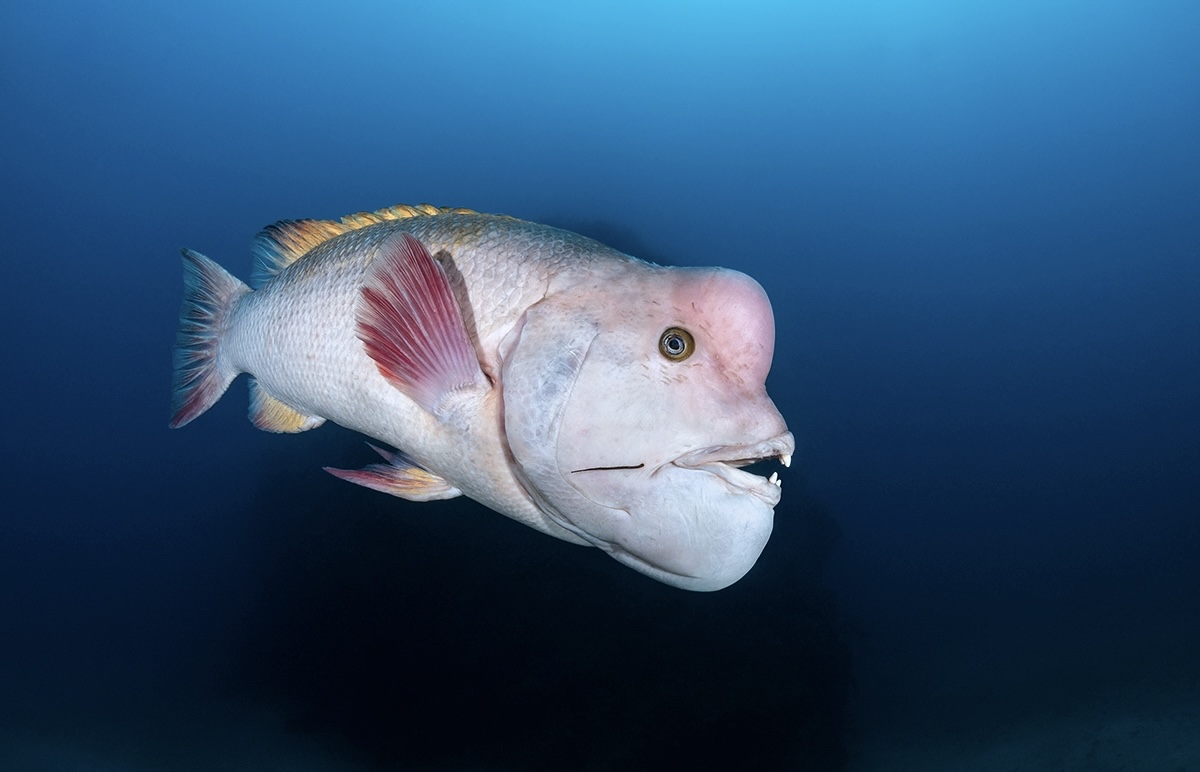
An example of this are kobudai (Bodianus reticulatus), which change sex due to a change in size.
What are some species able to adjust as a result of changes to resource availability?
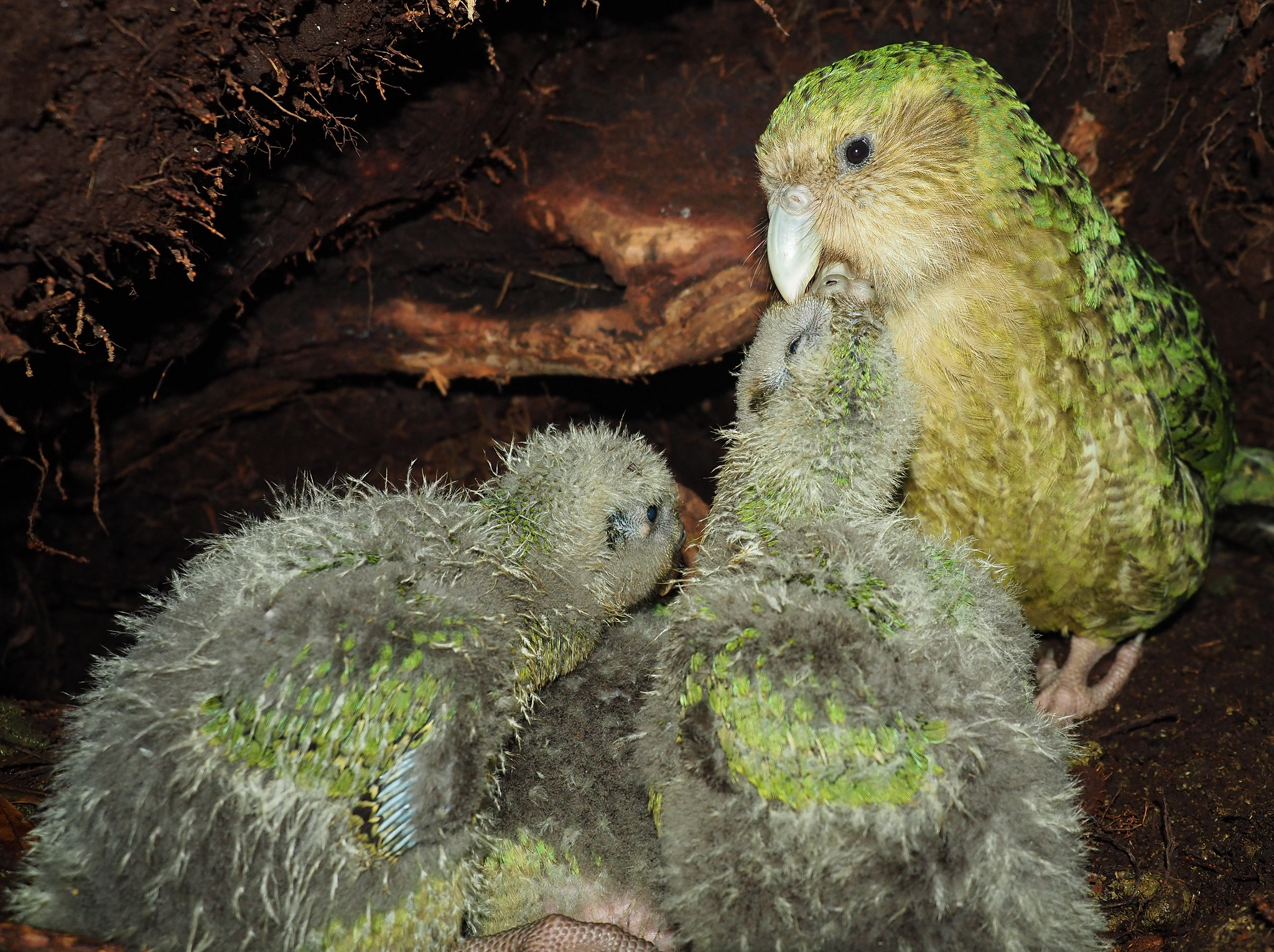
Some species are able to adjust the sex ratio of their offspring as a result of changes to a resource availability. An example of this is the kākāpō (Strigops habroptila). Female kākāpō in good condition will produce more male offspring.