M10: Muscle Mechanics
 Call Kai
 Learn
Learn Practice Test
 Spaced Repetition
 Match
Match Flashcards
 Knowt Play
1/30

There's no tags or description
Looks like no tags are added yet.
Name | Mastery | Learn | Test | Matching | Spaced | Call with Kai | Chat |
|---|
No analytics yet
Send a link to your students to track their progress
31 Terms
What is the origin of a muscle?
The muscle's stationary attachment, usually proximal.
What is the insertion of a muscle?
The muscle's mobile attachment, usually distal.
What is an agonist muscle?
The muscle or muscle group most directly involved in movement.

What is an antagonist muscle?
The opposing muscle group that slows down limbs during fast movement.
What is the role of synergist muscles?
Muscles that stabilize the body during movement but are not responsible for the movement.
What defines eccentric muscle action?
A muscle action where the contractile force is less than the external load, causing the muscle to lengthen.

What defines concentric muscle action?
A muscle action where the contractile force is greater than the external load, causing the muscle to shorten.
What is isometric muscle action?
Active muscle contraction without changing the muscle length.
What is contractility in skeletal muscle?
The ability of muscle to shorten and produce tension at its ends.
What is excitability in skeletal muscle?
The ability of a muscle fiber to respond rapidly to electrical or chemical signals.
Define elasticity in muscle tissue.
The capacity of muscle to stretch to normal resting length and beyond after contraction.
What is plasticity in muscle?
The muscle's ability to constantly adapt to stretching.
What is the stretch-shortening cycle (SSC)?
An active eccentric stretch of a muscle followed by a rapid concentric contraction.

Describe the force-velocity relationship during concentric actions.
The relationship between force and velocity is inverse.

Describe the force-velocity relationship during eccentric actions.
The relationship between force and velocity is direct.
What is a pennate muscle?
A muscle where fibers attach obliquely to its tendon.
What are the five general shape classifications of bone?
Irregular, long, short, flat, and sesamoid.
What is the periosteum?
The outermost layer enveloping bone.
What is the endosteum?
The lining of the inner surface of bone tissue.
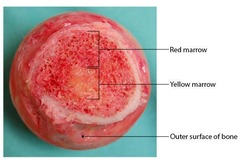
What is the function of red marrow?
Site of blood cell production.
What is the function of yellow marrow?
Fat storage.
What are the three types of levers?
First-class, second-class, and third-class levers.
What characterizes a first-class lever?
Applied and resistant forces on opposite sides of the fulcrum.
What characterizes a second-class lever?
Resistance lies between the applied force and the fulcrum.

What characterizes a third-class lever?
Force is applied between the resistance and the fulcrum.

What is the definition of articulation in joints?
The meeting place of two or more bones.
What is the range of motion in joints?
The normal extent of mobility for a specific joint movement.
What is the principle of specificity in muscle training?
Muscles adapt in the way they are stressed through exercise.
What is the principle of reversibility?
If a person stops or reduces their training, there will be a loss in adaptation brought on by prior training.
What is hypertrophy in muscle training?
Increased enlargement of muscle fiber cross-sectional area following training.
What happens to Type II fibers with inactivity?
They are replaced by fat or connective tissue over time.