Aging and functional Assessment: Exam 1 Material
 Call Kai
 Learn
Learn Practice Test
 Spaced Repetition
 Match
Match Flashcards
 Knowt Play
1/30

There's no tags or description
Looks like no tags are added yet.
Name | Mastery | Learn | Test | Matching | Spaced | Call with Kai | Chat |
|---|
No analytics yet
Send a link to your students to track their progress
31 Terms
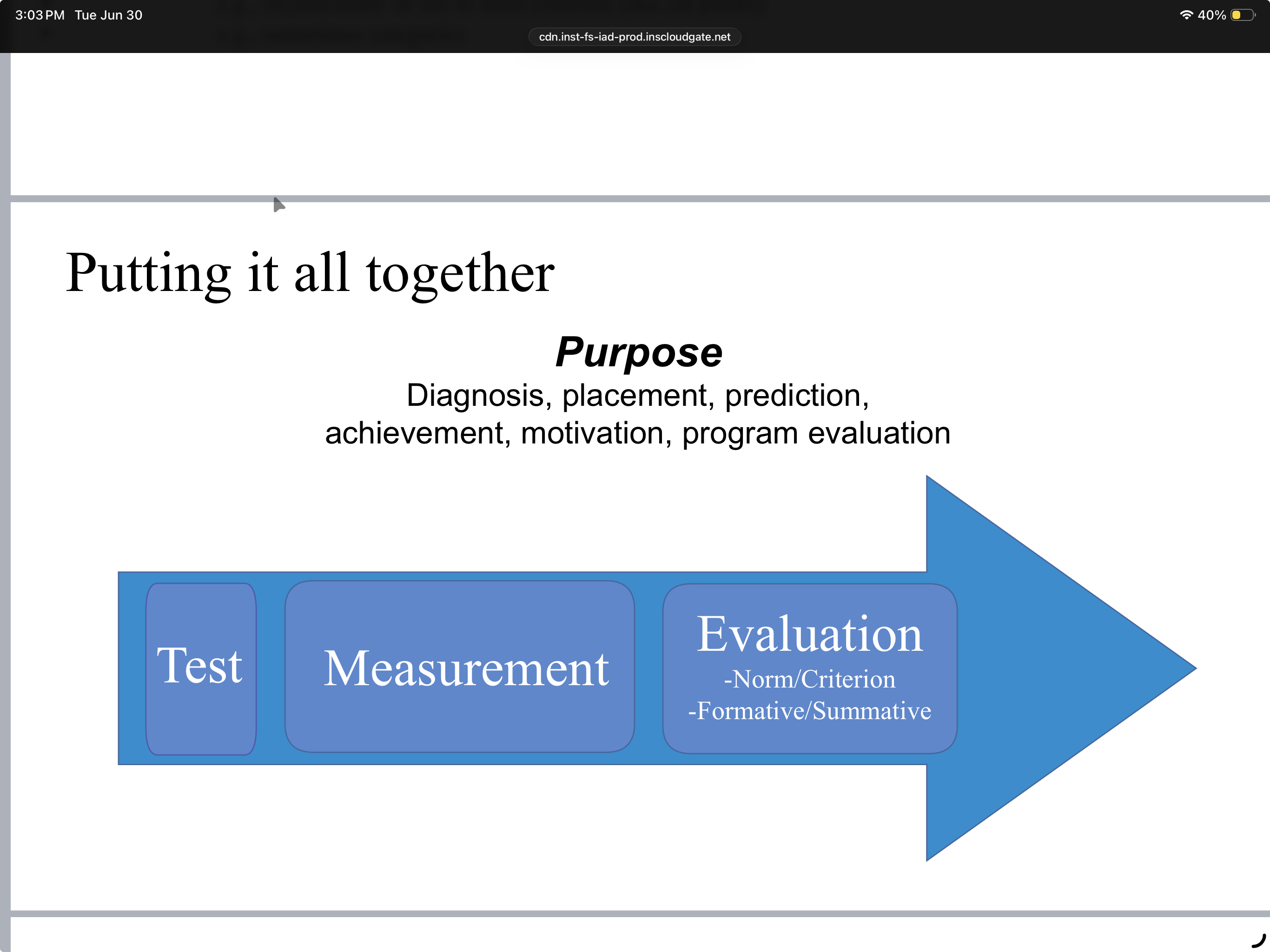
Test. How is it classified?
An instrument or tool used to make a measurement
The test is classified based on what it is measuring
For instance, a cognitive test assesses intelligence
Measurment
The act of collecting data from a test in order to quantify an effect, variable, or any desired aspect.
Evaluation. What crucial piece of information do you need to evaluate
Interpretation of data obtained from measurements.
To evaluate something you will need a reference standard:
Norm referenced standard: Compare the results to a well defined comparison group. For instance you may measure a percentile of a variable; 70th percentile score within a group (so above average, but within 1 SD)
Criterion referenced standard: Predetermined threshold that classifies whether or not their is an achievement (could be categorical).
Correlation
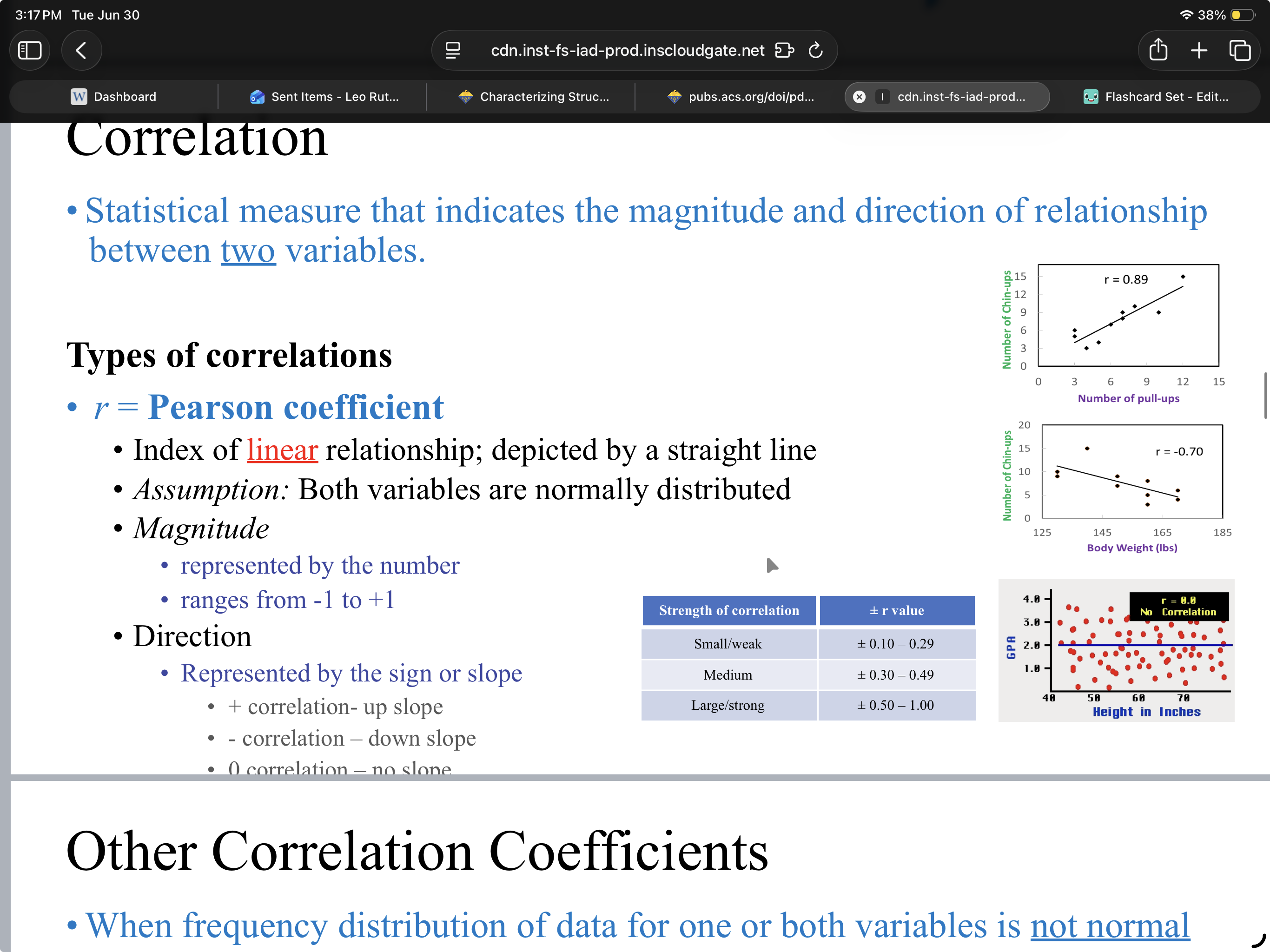
A measure that indicates the size and direction of a relationship between two variables
.r What is it and what assumptions does it make
pearson coorelation coefficient. Indicator of the linear relationship between two variables.
It assumes both variables are normally distributed.
Magnitude: from -1 to +1
Direction: +, -, 0
What is the top cause of mortality for adults over the age of 65? What can be doing to prevent this
Deterioration of the respritory or cardiovascular system. Systemic exercise can enhance these systems and prevent this deterioration.
Age related declines in respritory and cardiovascular system is accelerated by what? Is this observed during rest or exercise?
Sedentary behavior, physiological changes are observed during exercise
Cardiovascular system
Transports all substances important for cellular metabolism such as o2 into cell and co2 out of the cells
Clots to prevent blood loss
Age relates structural changes related to the cardiovascular system,
Aorta and arterial walls
Thicken and stiffen. In other words they are less compliant
This leads to an increased systolic BP
Left ventricle
Increases in thickness by 30%
Compensates for increased systolic BP so there is more contractile force to overcome the increased pressure
Atherosclerosis
Structurally changes the structure and function of the CV system in a deleterious way.
The new structure puts more stress on the total CV system
Maximal heart rate changes with aging?
Contributing factors?
Maximal heart rate decrease
Force of contraction decreases
Hormonal changes are resposible:
Higher norepinephrine levels during exercise in elderly
Higher epinephrine levels during rest and exercise in elderly
There is a reduction in sensitivity of the heart to hormones that signal harder contraction and higher HR with age.
SV
Amount of blood pumped out w/ each beat
Cardiac output (Q) total blood ejected from the ventricles in 1’
Changes in HR, SV, and Q during aging
Heart rate
RHR is unaffected by aging
MHR declines by 5-10 BPM per decade
SV
Little change with aging
Q
Reduces with aging Especially during maximal exercises
A-Vo2 difference
Amount of oxygen consumed/ extracted from the tissues
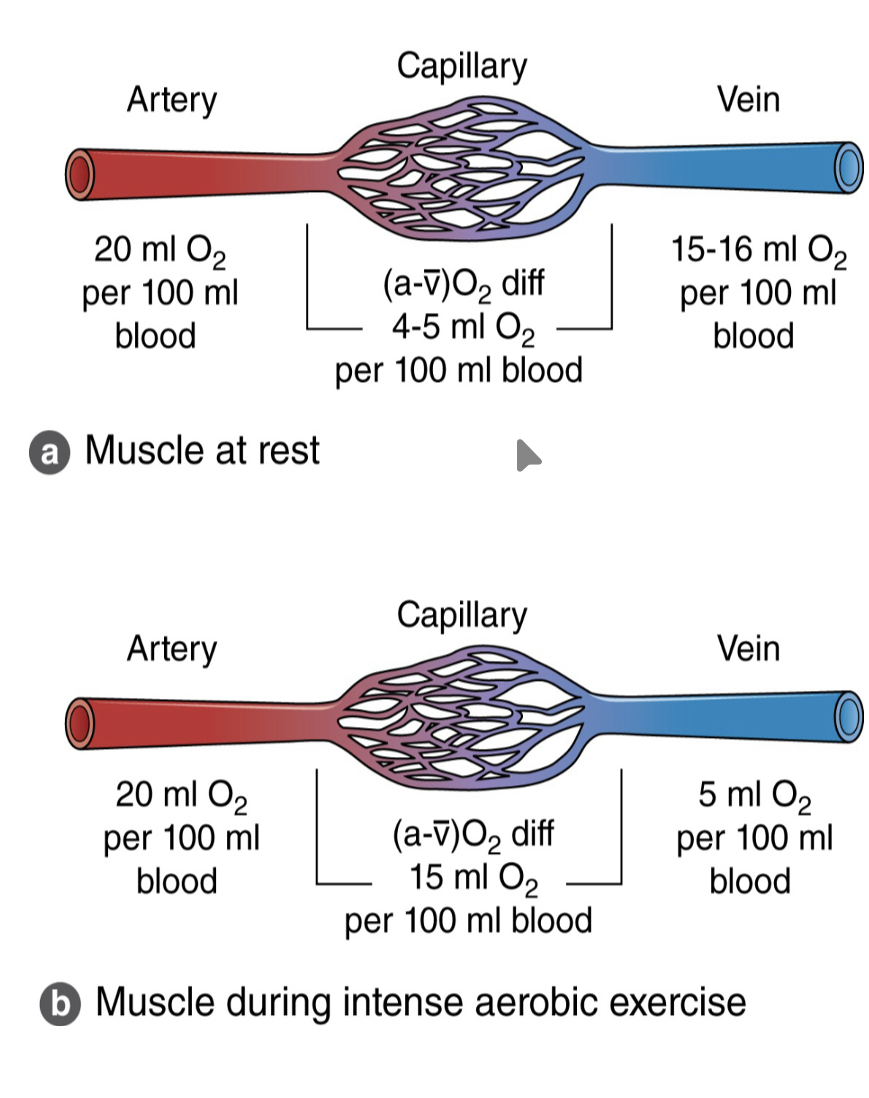
AVO2 dIFFERENCES with age
Reasons for change
At rest:
Reduced by 20-30%
With exercise
Reduced by 10-12%
Reduced capillary density
Reduced mitochondrial density
More blood diverted to skin and viscera instead of working muscle
Reduced vasodilation in response to corresponding signals
Systolic BP
Pressure generated by heart against the arterial walls during ventricular contraction. Related to Q
Diastolic BP
Arterial pressure without pressure from contraction. Associated with peripheral resistance and continuous BF into arteries and capillaries
Systolic and Diastolic BP changes with age? Why?
Systolic increased
Diastolic Increases
Higher rigidity of arterial walls resists TPR
Arteries exert greater resistance to PBF increasing systolic to maintain Q
Seniors have a 60% rate of hypertension in men and 70% in women
vo2 max
•Maximal O2 delivery and utilization with exercise
•Single best variable to define overall physiological change that occur with aging
Vo2 max change w/ age
decreases irrespective of training; more pronounced in sedentary folk
Declines accelerate from 75-85 from 65-75
HoW to increase vo2
Properly prescribed exercise
Elderly may not achieve same absolute gains as young folk but may achieve same relative gains
Why does vo2 increase w/ training
Q increases w/ exercise because of SV increases (remember MHR cannot be changed)
AVO2 difference increases
§↑ capillary density
§↑ mitochondrial density
§↑ amount of blood sent to muscle, ↓ blood diverted to viscera and skin
§↑ vasodilation response
Why does exercise reduce Hypertension? What kind of exercise
Low dose frequent exercise reduces BP
Mechanisms for decrease:
Lower RHR
Lower resting Q
Lower TPR
Lower norepinephrine levels
Lower sympathetic innervation
Improved renal function
Lower BW and body fat
Things you cannot change
Genetics
Being man
Being old
Things you can change to prevent Heart disease
High BP
Smoking
High cholesterol
Physical inactivity
Obesity
Diabetes
Deterioration of cardiovascular system can lead to heart diseases
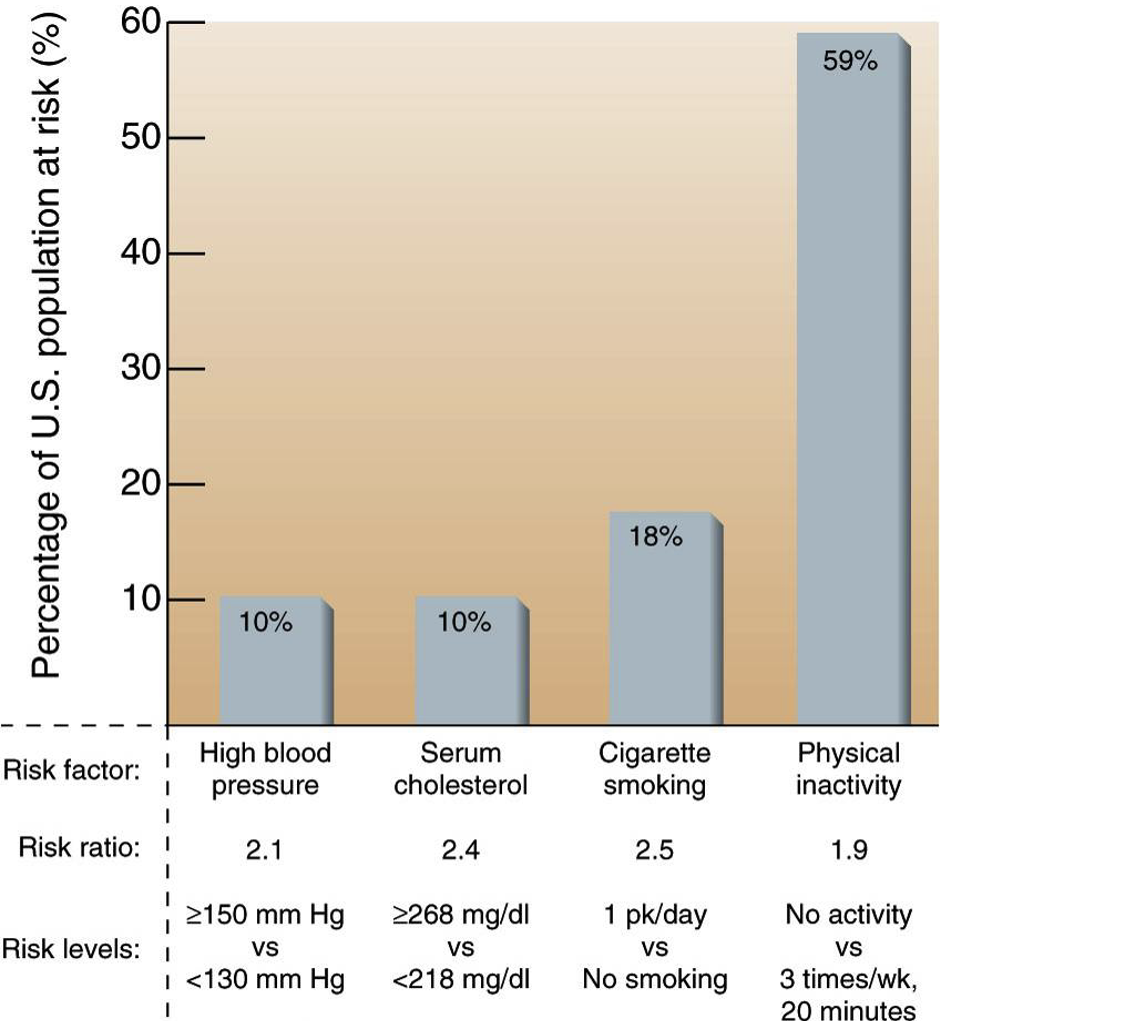
Population based risks for heart disease
Respritory changes w/ aging
15% decrease in alveolar SA
Fewer alveoli per unit of volume
More physiological dead space
Less SA for gas exchange
Increase in large airway diameter
Decrease in small airway diameter
Increased work required for breathing
Loss of lung elastic recoil
Increased chest wall stiffness
Gas exchange and ventilators pump
•Gas Exchange (O2 and CO2) occurs between alveoli of lungs and blood
•With aging, gas exchange is affected
•Arterial oxygenation impeded
•CO2 elimination unaffected
•
•Ventilatory pump
•Consists of chest wall, respiratory muscles, and respiratory centers
•All are affected by aging
•Chest wall stiffness increases
•Respiratory muscle strength decreases
•Decreased respiratory center sensitivity to hypoxia
Respriatory effects of exercise
•Respiratory Function
•Exercise postpones losses in respiratory function
•Endurance training improves respiratory function
•
•VO2max
•Most changes improving performance are related to cardiac output and a-v O2 difference, not respiratory improvements
Effects endure only with continual exercise