Microbiology Midterm Notes
 Call Kai
 Learn
Learn Practice Test
 Spaced Repetition
 Match
Match Flashcards
 Knowt Play
1/238

There's no tags or description
Looks like no tags are added yet.
Name | Mastery | Learn | Test | Matching | Spaced | Call with Kai | Chat |
|---|
No analytics yet
Send a link to your students to track their progress
239 Terms
types of microscopy
light microscopy, dark field microscopy, phase-contract, and nomarski
light microscopy
“bright field microscopy”, compound, lenses are parfocal
dark field microscopy
A condenser prevents light from being transmitted through the specimen, specimen looks light against a dark background
parfocal
when you change the objective, the image stays in focus as you go up in magnification
scanning
40X
low power
100X
high dry
400X
oil immersion
1000X
phase-contrast and nomarski
used to examine alive and unstained organisms
flourescence microscopy
utilizes UV light
confocal microscopy
Uses UV light. Beams of UV light are focused through a thin optical fiber. Fluorescent emissions are focused on a detector. 3D image
Electron microscopy
Beams of electrons instead of light. Electromagnets instead of glass lenses to focus the beam. Electrons must travel through a vacuum.
Transmission electron microscope (TEM)
see to a single nanometer, thin slice of the specimen, electrons pass through the specimen. Look inside
scanning electron microscope (SEM)
Can see down to 20 nanometers; specimens are coated with a thin layer of heavy metal. Better 3D images of the surface of specimens. Scanning - electrons are back scattered. Look on surface
stain
a molecule that can bind to a celular structure and give it color. common are cationic since bacterial cells have a slight negative charger
simple staining
uses a single dye
differential
uses two or more dyes
wavelength
the length of a light ray
resolution
Light must pass between two objects for them to be seen as separate things. The focus of something
reflection
light strikes ann object and bounces back
Transmission
the passage of light through an object
absorption
neither bounce off or go through absorption. Luminance/fourescence
Prokaryote
no membrane bound organelles
eukaryote
have defined membrane bound organelles
pro
before
karyon
nucleus
eu
true
what do eukaryotes and prokayotes have in common?
genetic material (double stranded DNA), cell membrane (phospholipid bilayer)
what are the differences between prokaryotes and eukaryotes
Prokaryotes have a cell wall; they are haploid and have a single circular chromosome. Eukaryotes have paired linear chromosomes
the two domains of prokaryotes
archaea and bacteria
archaea
crazy extremophiles
archea and bacteria are evolutionary distinct
true
prokaryotic structure
0.5-2 micrometers in diameter but have a large surface-to-volume ratio
why is a large surface-to-volume ratio beneficial?
exchange nutrients and waste more efficiently, metabioloze quickly and therefore replicate quickly

identify the shape
cocci

identify arrengement
coccus
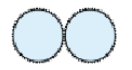
identify arrangement
diplococci

identify arrangement
staphlycocci

identify arrangement
streptococci

identify arrangement
sarcina

identify arrangement
tetrad
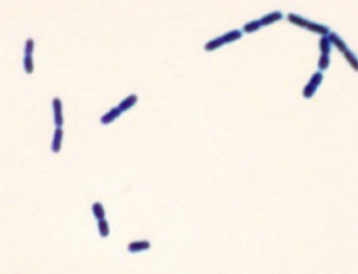
identify shape
bacilli

identify shape
bacilli

identify arrangement
coccobacillus

identify arrangement
bacilli

identify arrangement
diplobacilli

identify arrangement
palisades

identify arrangement
streptobacilli
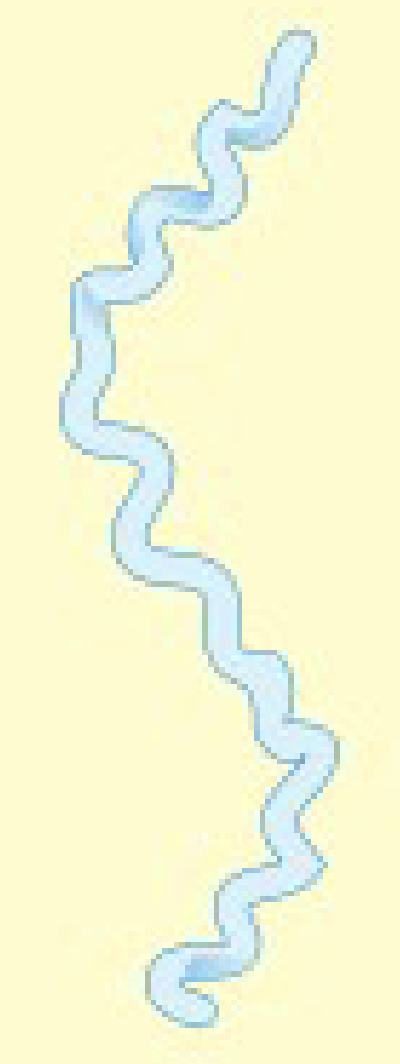
indentify shape
spirochete

identify shape
vibrio

identify shape
corkscrew’s form
variations that effect shape of cell
plentiful conditions, nutrient deprivation, pleomorphism
pleomorphism
the ability to alter shape or size in response to environmental cues, not uniform in a culture
basic functions in a bacterial cell
reproduction, metabolism, response to environmental changes, and change through mutation
basic components of a bacterial cell
cell envelope, nucleic acids, enzymes, some have spores, and appendages for motility and adhesion
fucntion of plasma membrane
keep good things in, keep bad things out, control moveemnt of materials, sensing the environment
what the plasma membrane composed of
phospholipid bilayer
function of proteins in the cell membrane
structural support, recognition, communication, and transport
function of cell wall
maintain cell shape and protect the cell from rupturing
the most important component fo the cell wall
peptidoglycan
peptodoglycan
forms a supportive net around the bacterium, alternating with gluNAC (NAG) and murNAC (NAM), the fence is cross-linked by tertapeptides on NAM molecules
Gram (+) Bacteria
Thick layer of peptidoglycan
Gram (-) Bacteria
complex outer membrane with thin layer of peptidoglycan
Acid-fast bacteria
thick lipid layer over thin peptidoglycan, difficult to treat infections of this bacteria
mycoplasma
smallest of bacterial cells, no cell wall, respiratory infections
internal structure of bacterial cells
cytoplasm, ribosomes, nuclear region, inclusions, endospores
external structures of bacterial cells
flagella, pilli, glycocalyx

identify shape
spirochete

identify shape
vibrio
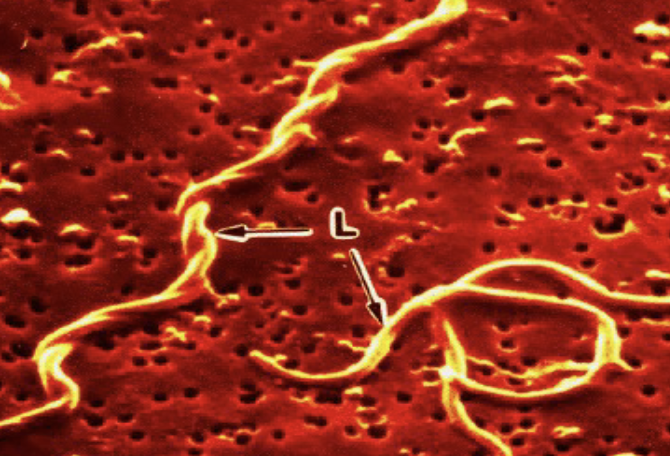
identify shape
corkscrew’s form
flagella
Confers motility via its rotation
number and arrangement of flagella varies
important for “chemotaxis”
chemotaxis
directive movement towards or away from chemical stimulus, non-random movement, occurs along a concentration gradient

flagella attachment
gram positive

flagella attachment
gram negative
types of flagella arrangement
polar (mono or amphitrichous), peritrichous, lophotrichous

lophotrichous
monotrichous
flagella at one pole
amphitrichous
flagella at each pole

monotrichous

peritrichous
run
flagella bundle rotates counter-clockwise
tumble
flagella bundle comes apart, rotates clockwise
positive chemotaxis
bacteria move towards an attractant, temblus less frequent
negative chemotaxis
bacteria move away from a repellant, tumbles more frequent
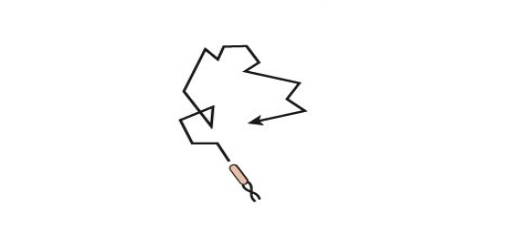
no attractant or repellant

postive chemotaxis
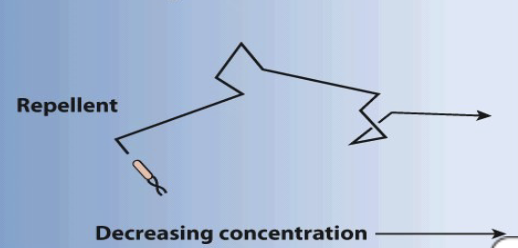
negative chemotaxis
the two kinds of pili
long conjugation and short attachment
long conjugation pili
F-pili/sex-pili, genetic transfer, allow the organism to mate
short attachment pili
fimbriae, allow the organism to stick to things
glycocalyx
External to the cell wall, it provides protection, like a capsule or a slime layer
endospores
found in some Gram-positive bacteria, Bacillus sp and Clostridium sp. (soil species), life after death - produce an endospore when the environment becomes harsh, highly resistant
metabolism
the total sum of chemical reactions (harvesting energy and synthesizing new components)
anabolism
reactions involved in synthesis
require energy
catabolism
degradative reactions
produce energy
metabolic pathway
starting compound is converted to intermediate molecules and end products
components of metabolic pathways
enzymes, ATP, energy source, electron carriers, and precursor metabolites
the role of enzymes
acts as chemical catalysts
lower the activation energy of a reaction
activation energy
The energy required to activate a chemical reaction
enzyme characteristics
Most are proteins, provide a reactive site for substrates, are not used up in the reaction, can be recycled and function in very low concentrations