Ch10 malnutrition/underweight and ED's
 Call Kai
 Learn
Learn Practice Test
 Spaced Repetition
 Match
Match Flashcards
 Knowt Play
1/111

There's no tags or description
Looks like no tags are added yet.
Name | Mastery | Learn | Test | Matching | Spaced | Call with Kai | Chat |
|---|
No analytics yet
Send a link to your students to track their progress
112 Terms
MALNUTRITION AND WEIGHT LOSS
being underweight has risk for
health
Hight rates of famine and food insecurity can be found in what countries/places?
Haiti, south Sudan, and occupied Palestinian territories
also be found in south and southeast Asia and other parts of Africa
being underweight is a increasing problem in what population?
adults 65 and older (3.1-25%)
being underweight is defined by what BMI?
<18.5
mini-nutritional assessment (AMA), SGA/PG-SGA, and frail scale are assessedments for?
risk of malnutrition, sarcopenia, and frailty

which assessment is usually used for older adults? if that one is not feasible?
Mini-nutritional assessment (MNA)- older adults
SGA or PG-SGA when MNA not feasible
the frail scale
3+ positive answers = frail
1 or 2 = prefrail

what are the medical risk factors and possible causes for malnutrition/weight loss in older adults? (8)
Poor dentition
Loss of taste and smell
Emphysema
Malabsorption
Diabetes
Stroke, Parkinson’s disease
Drug interactions
Poor mobility, arthritis
Cancer

what are the main 3 categories of risk of older adults for malnutrition and weight loss
hospitalization
lifestyle/social factors
psychological factors
how may hospitalization increase risk for malnutrition and weight loss (4)
Need assistance with eating
Unpleasant sights, sounds, and smells
Missed meals due to medical tests
Increased nutrient needs
how may lifestyle/social factors increase risk for malnutrition and weight loss (4)
Lack of knowledge about foods and cooking
Isolation/loneliness
Financial concerns
Lack of access to transportation
what psychological factors may increase risk for malnutrition and weight loss (4)
Confusion
Dementia
Anxiety
Grieving
EATING DISORDERS
what are eating disorders?
Psychiatric condition characterized by severe disturbances in eating behaviors that result in significant physiologic impairment
the Diagnostic and Statistical Manual of Mental Disorders (DSM-5) recognizes which ED’s
Anorexia nervosa (AN)
Atypical anorexia nervosa (atypAN)
Bulimia nervosa (BN)
Binge eating disorder (BED)
Avoidant/restrictive food intake disorder (ARFID)
Disordered eating includes what behaviors
unhealthy/unhelpful eating behaviors like frequent dieting, refusal to eat certain macronutrients, and skipping meals
how does disordered eating differ from ED’s?
disordered eating does not tend to negatively impact health while eating disorders do
what is Anorexia Nervosa (AN)
Restriction of energy intake relative to requirements, leading to significant low body weight in the context of age, sex, developmental trajectory, and physical health (less than minimally normal)
AN is characterized by what main characteristic?
an intense fear of weight gain or becoming fat
AN occurrence rates
more common in females than males (10:1)
More common in postindustrialized, high income nations
what is atypical AN?
meets all criteria and has loss significant weight BUT is not underweight
what are the 2 types of AN?
restrictive and binge-purge type
what is AN-restrictive?
Extreme dietary restraint used to achieve low BW AND During last 3 months has not regularly engaged in binge eating or purging
excessive exercise is common
what is AN-Binge-purge type?
Binge eating followed by compensatory behaviors
Self-induced vomiting
Laxative, enema, or diuretic misuse
Combination
has occurred at least 1x a week for the past 3 months
are restrictive AN and binge-purge type isolated?
there tends to be cross-over between the 2
with low weight loss, what are other things that should be considered?
Weight history, body frame, and physiological disturbances
what is commonly seen in AN individuals but is no longer part of criteria?
amenorrhea
how can Prepubescent males and females experience sexual maturation arrest
Males: testosterone deficiency
Females: delayed menarche (first menses not occur by age 14)
what are the risk factors for AN?
Drug, alcohol abuse
Psychiatric disorders
Anxiety disorders, panic disorders, obsessive compulsive disorder
Influential social factors
Cultural settings where thinness is valued
Professions that value lean physique (models, athletes)
Personality traits
Rigid, inflexible thinking, lack of spontaneity, perfectionism, low self-esteem, need for control
what is the prognosis for AN?
Course and outcome variable
Many adopt a new eating behavior, such as vegetarianism, prior to developing the disorder
Can become more severe the longer it is present
AN clinical complications (signs, side effects, etc) -14
Brittle hair and nails
Lanugo
Ketotic breath
Cyanosis of the extremities
Carotenoderma
Hypothermia or cold intolerance
Protein energy malnutrition
Bradycardia
Cardiac arrythmias
Orthostatic hypotension
Delayed gastric emptying
Severe constipation
Decreased small bowel motility
Peripheral edema
what occurs to REE in AN individuals?
it decreases due to weight loss
once those with AN start to refeed, what occurs to REE?
increases —→ leading to hypermetabolism
AN effects on bones
Bone mineral density decreases
AN impacts of hormones
low leptin
low T3
decreased testosterone and reproductive hormones
AN and mortality
Mortality rate for AN is 5% per decade
Higher for AN compared to other EDs
Predictors of AN relapse include
age, psychosocial functioning, preoccupation with and misperception of body weight and shape, and individual psychotherapy
what is bulimia nervosa (BN)
Characterized by recurrent episodes of binge eating followed by one or more compensatory behaviors to avoid weight gain
what is a binge
eating within any 2-hour period an amount definitively larger than what most individual would eat in a similar period under similar circumstance
what are the characteristics of a binge
Accompanied by feelings of loss of control and severe body dissatisfaction
Usually take place in secrecy
Accompanied by feelings of guilt and shame
Foods can be unique, but typically include energy dense snacks and desserts an individual would normally avoid
Can have “triggers” such as interpersonal stressors, dietary restraint, boredom, feelings of body dissatisfaction
what are the “purging” behaviors involved with BN
Compensatory behaviors: self-induced vomiting, misuse of laxatives, diuretics, medications, fasting, excessive exercise
binge and purge cycle needs to occur how often to be BN
Occur on average at least once a week for 3 months
body weight and size commonly seen in those with BN
Generally maintain body weight at or above normal (differentiates from binge-purge AN subtype)
BN risk factors
Psychiatric disorders
Anxiety, depression, personality disorder, social anxiety disorder
Personality traits
Low self-esteem, multiple weight loss efforts, strong desire to lose weight leading to frustration
Family, environmental
Parental obesity, childhood abuse (sexual or physical abuse)
Physical traits
Early pubertal maturation, obesity
Substance abuse
BN average onset age
20 years old
BN usually initiated when?
during or after a dieting attempt or stressful event
when vomiting, what signs and symptoms can help identify the disorder
Eroded dental enamel, dental caries, gingivitis, enlarged parotid glands, and Russell’s sign
what are russell’s sign
the scarring by the teeth on the lower dorsum of the hand used to stimulate the gag reflex
chronic vomiting leads to what complications
lead to dehydration, alkalosis, and hypokalemia
AND manifested as sore throat, esophagitis, subjunctive hemorrhage, and mild hematemesis (vomiting blood)
serioud complications of BN (vomiting) (3)
Mallory-Weiss tears or tears in the mucosa of the stomach esophagus junction
Esophageal rupture
Acute gastric dilation
laxative misuse possible side effects (7)
Dehydration
Elevated aldosterone and vasopressin levels
Rectal bleeding
Abdominal cramping
Intestinal atony
Rectal prolapse
Dependence on laxatives to stimulate bowel movements
AN and BN similarities and differences
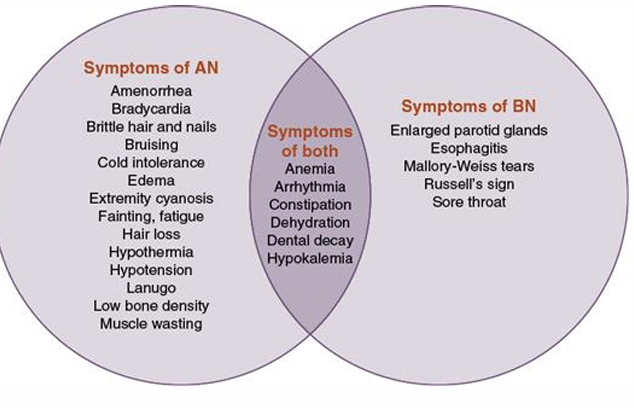
which BN patients are at higher risk for relapse? lower?
who experience full remission for 1 year after treatment have better long term outcomes than those that relapse within the first year
what are the predictors of BN relapse?
Level of psychosocial functioning
Weight or body shape anxiety
Lower scoring on the Global Assessment Functioning Scale
Higher mania scoring on the Psychiatric Status Rating Scale
Bing eating disorder (BED) is what
Characterized by recurrent binge eating episode that are not followed by compensatory purging or nonpurging behaviors
BED is characterized by what key characteristics
Characterized by lack of control over eating during episode.
Marked distress regarding binge eating
Occurs on average at least 1 day a week for 3 months
Not associated with in appropriate compensatory behavior
Includes severity rating
binge eating is associated with 3 or more of the following (what are they)
Eating much more rapidly than normal
Eating until uncomfortably full
Eating large amounts of food when not feeling physically hungry
Eating alone because of being embarrassed by how much one is eating
Feeling disgusted with oneself, depressed, or very guilty after overeating
those with BED general body type/size
have overweight or obesity
BED is commonly seen in what population group
those seeking bariatric surgery
BED onset age
average of 25 years old
BED and dieting relationship
Attempts at dieting tend to follow the development of the disorder
instead of before like in BN
Course of journey in BED is comparable to what ED in terms of severity and duration
BN
BED increases risk for
weight gain, obesity, T2DM, CVD
increases risk for medical morbidities and mortality
Studies reveal that individuals with BED experience what tings in comparison to healthy (mentally) individuals
greater functional impairment, lower QOL, increased healthcare utilization, higher lifetime prevalence of substance abuse, major depression, and personality disorders
BED and relapse
Those who seek treatment tend to be older than those who seek treatment for other EDs
Higher rate of relapse
Common for lost weight to be regained within first year
what is avoidant/restrictive food intake disorder (ARFID)
“An eating or feeding disturbance (e.g., apparent lack of interest in eating or food; avoidance based on the sensory characteristics of food; concern about aversive consequences of eating) as manifested by persistent failure to meet appropriate nutritional and/or energy needs”
ARFID presents itself with 1 or more of what characteristics? (4)
Significant weight loss (or failure to achieve expected weight gain or faltering growth in children)
Significant nutritional deficiency
Dependence on enteral feeding or oral nutritional supplements
Marked interference with psychosocial functioning
what is orthorexia
Referred to as obsessive eating behaviors that are focused on eating only a narrowly defined group of foods deemed to be “healthy” and “pure”
orthorexia and DSM-V
Not a recognized diagnosis by the DSM 5
what are the general common features of ED’s (4)
Disturbed body image
Perceive self as obese
Intense fear of weight gain and obesity
Relentless drive to lose weigh
ED’s often begin with
dieting and weight loss progression
Persons predisposed to eating disorders are seen to have what behaviors
diet more strictly and develop characteristic psychological, behavioral, and medical problems associated with eating disorders
risk factors for ED’s include what categories (4)
Environmental factors
Character traits
Comorbidities of psychiatric and mental health disorders
Biological factors including genetics
ED treatment requires what type of approach
Interdisciplinary team approach
Medical
Nutritional
Psychiatric/behavioral
for underweight individuals with ED’s the initial treatment goal is to
normalize eating patterns and weight
role of the medical team in ED’s
Baseline general medical and psychiatric assessment should be performed at the time of diagnosis
Medical complications should be treated as needed
Behavioral/psychotherapy treatment include what types (therapy styles)- 5
Cognitive behavior therapy (CBT)
MANTRA
Maudsley Model of cognitive interpersonal therapy
Specialist supportive clinical management
Family-based treatments
Entry-level RDN should know what in terms of ED’s
where to access medical and nutritional guidelines as well as recognize signs and symptoms of all disordered eating diagnoses
what are the goals for inpatient individuals with AN (diet)
Correcting starvation (PO diet, TF as needed)
Correcting fluid and electrolyte imbalances
what are the goals for inpatient individuals with AN (medical signs)
Correcting bradycardia and/or hypotension
inpatient wanted weight gain per week for AN
Weight gain 2-3 lbs per week
for AN individuals in outpatient, what professionals/treatments are involved?
Team oriented (Physician, psychologist, RD, family)
Psychotherapy
what is the goal of outpatient AN treatment (2)
Promote healthy eating habits
Goal - normal menstrual cycle
weight gain for outpatient AN recovery
0.5-1 lb per week
for AN, when reintroducing food what occurs
Reintroduction of food causes increase in diet-induced thermogenesis —→ hypermetabolism for 3-6 months
when does REE normalize normally
normalizes as food intake becomes adequate
caloric needs for weight gain in AN patients
initial needs
increases recommended
needs for weight gain in severe cases
average females and male caloric needs (totals)
30-40 kcal/kg initially or 1000-1600 kcal/day
Increase 200-300 kcal daily (American Psychological Association)
May require up to 70-100 kcal/kg for wt gain
Females may need 3500+ kcal and males 4000+ kcal daily
what is refeeding syndrome?
Metabolic shift from starvation to refeeding causes intercellular uptake of glucose, potassium, phosphorus, and magnesium resulting in low serum levels
Driven by carbohydrate inducing insulin action
who are at risk for refeeding syndrome (in general)
severely malnourished patients or when oral, enteral, or parenteral nutrition intake is introduced within first week of treatment
due to risk of refeeding syndrome, what should be supplemented?
provide supplemental potassium, phosphorus, magnesium, and thiamine
refeeding syndrome is a risk if individuals have 1+ of the following: (4)
BMI <16
Unintentional weight loss of >15% of body weight in the last 3 to 6 months
Very little or no nutritional intake for more than 10 days
Low K+, Phos--, or Mg ++ levels prior to feeding
refeeding syndrome is a risk if individuals have 2+ of the following: (5)
BMI <18.5
Unintentional weight loss of >10% of body weight in the past 3 to 6 months
Very little or no nutritional intake for more than 5 days
History of chronic drug use (insulin, diuretics, antacids)
Alcohol or drug abuse
for BN, what type of approach is take (professionals involved)
Team approach (MD, RD, Psychologist, Family)
for BN, what are the goals (8- physical, mental, behavioral)
Healthy weight maintenance
Cessation of binge-purge cycle
Restoration of normal eating pattern
Correct nutrient deficiencies
Stabilize fluid / electrolyte balance
Recognition of hunger and satiety cues
Stress management
Oral health
BN and weight loss during treatment (can it be a goal?)
Weight loss should not be the initial goal of intervention and should not be explored until after treatment.
Weight loss may be a reasonable long-term goal for some individuals
BN energy needs compared to AN
Generally, patients with BN will require lower calorie intake to restore or maintain weight than patients with AN
what is common regarding weight in BN
weight fluctuations
why may weight fluctuations occur in BN?
purging
Weight loss may result from dehydration, followed by weight gain from rebound fluid retention
Individuals who abruptly stop abusing laxatives or diuretics may experience significant fluid retention for several weeks
Edema, fluid retention, and swollen salivary glands that can result from purging behaviors may be mistaken as true weight gain
what is recommended in BN treatment based on meals
Recommend a structured meal plan
Avoid long periods of fasting so that cravings decrease and satiety and nutritional adequacy is promoted
Restrict intake below energy needs to avoid triggering binge eating episodes