Coronary Circulation Disorder
 Call Kai
 Learn
Learn Practice Test
 Spaced Repetition
 Match
Match Flashcards
 Knowt Play
1/25

There's no tags or description
Looks like no tags are added yet.
Name | Mastery | Learn | Test | Matching | Spaced | Call with Kai | Chat |
|---|
No analytics yet
Send a link to your students to track their progress
26 Terms
first
Coronary circulation is important because the heart is the ___ organ supplied
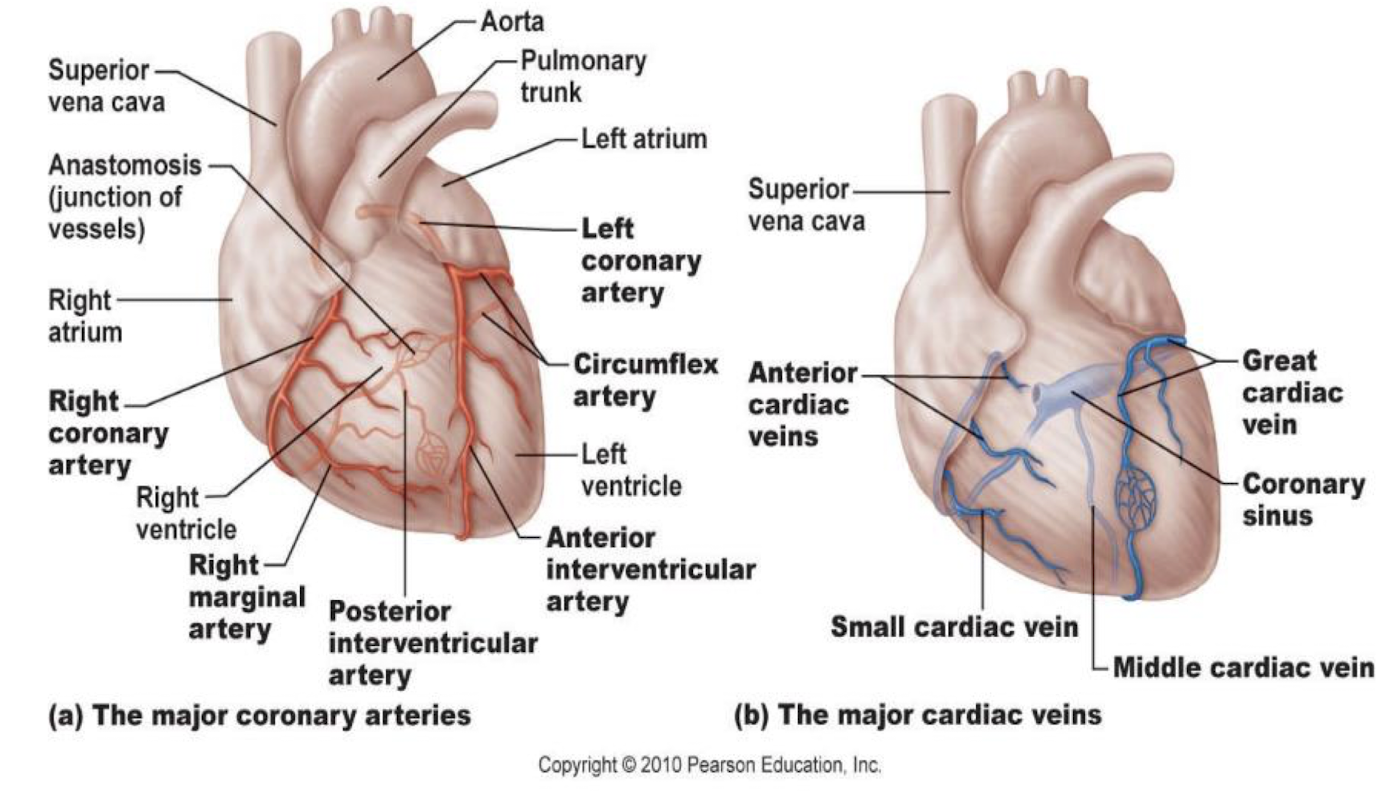
Coronary Artery Disease CAD
reduced supplies of oxygen and nutrients
Coronary heart disease CHD
atherosclerosis
angina pectoris (pain in chest)
acute coronary syndrome (ACS)
silent myocardial ischemia
myocardial infarction (MI)
Ischemia
temporary deficiency of blood flow to tissue
Myocardial ___
Myocardial infarction MI
necrosis in myocardium due to obstructed blood flow
Cell and tissue features
reduced contractility of ischemic myocardial fibers
Disruption in cardiac conduction system
Ischemic cascade
Occlusion initiates steps
Electrolyte balance
Anaerobic metabolism
Systolic and diastolic dyfunction
ECG abnormalities (changes depend on many factors)
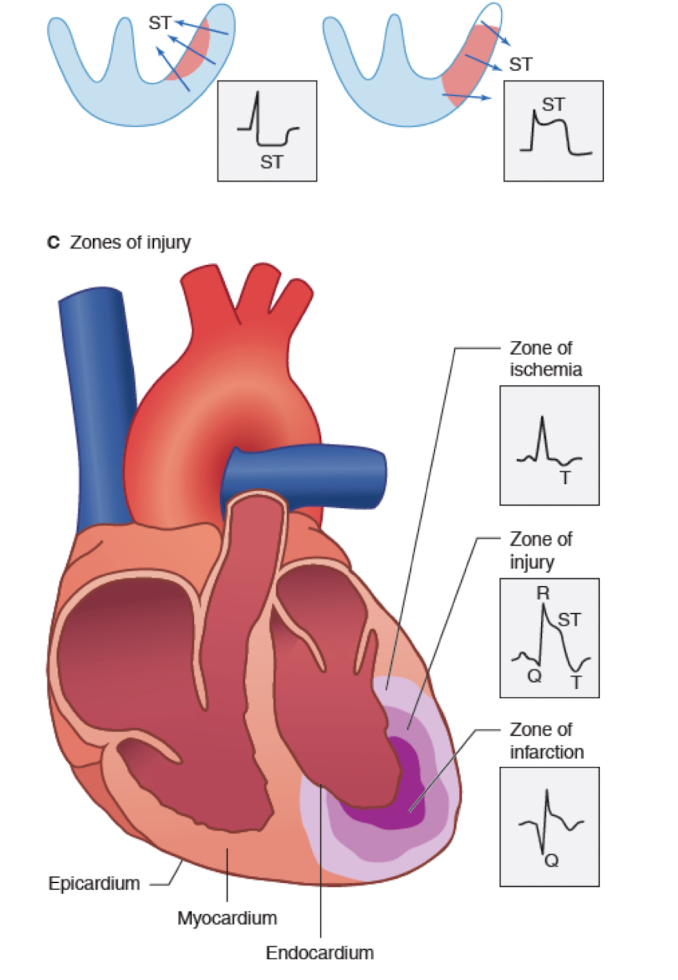
CAD
Pathophysiology of _____
Most blood flow to myocardium delivered during ventricular diastole
Coronary collateral circulation
triggered by insufficient blood supply
Endothelial cells EC
thrombus
Smooth muscle cells SMC
vasospasm (sudden, abnormal tightening or narrowing of an artery that reduces or blocks blood flow to tissues)
Blood vessel wall
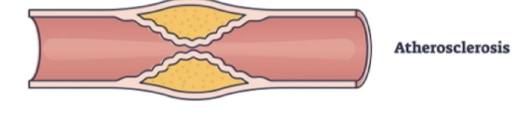
Atherosclerosis
aneurysm (bulging of BV that can rupture and cause blockage)
Atherosclerosis
cell and tissue features
____
narrowed coronary arterties
decreased blood flow
fracture in fibrous cap
superficial erosion of intima
Disruption of coronary blood flow
imbalance among oxygen supply, demand, and consumption
commonly mixed with arterialscleorsis (overall thickness of the artery)
this is a type of arteriosclerosis
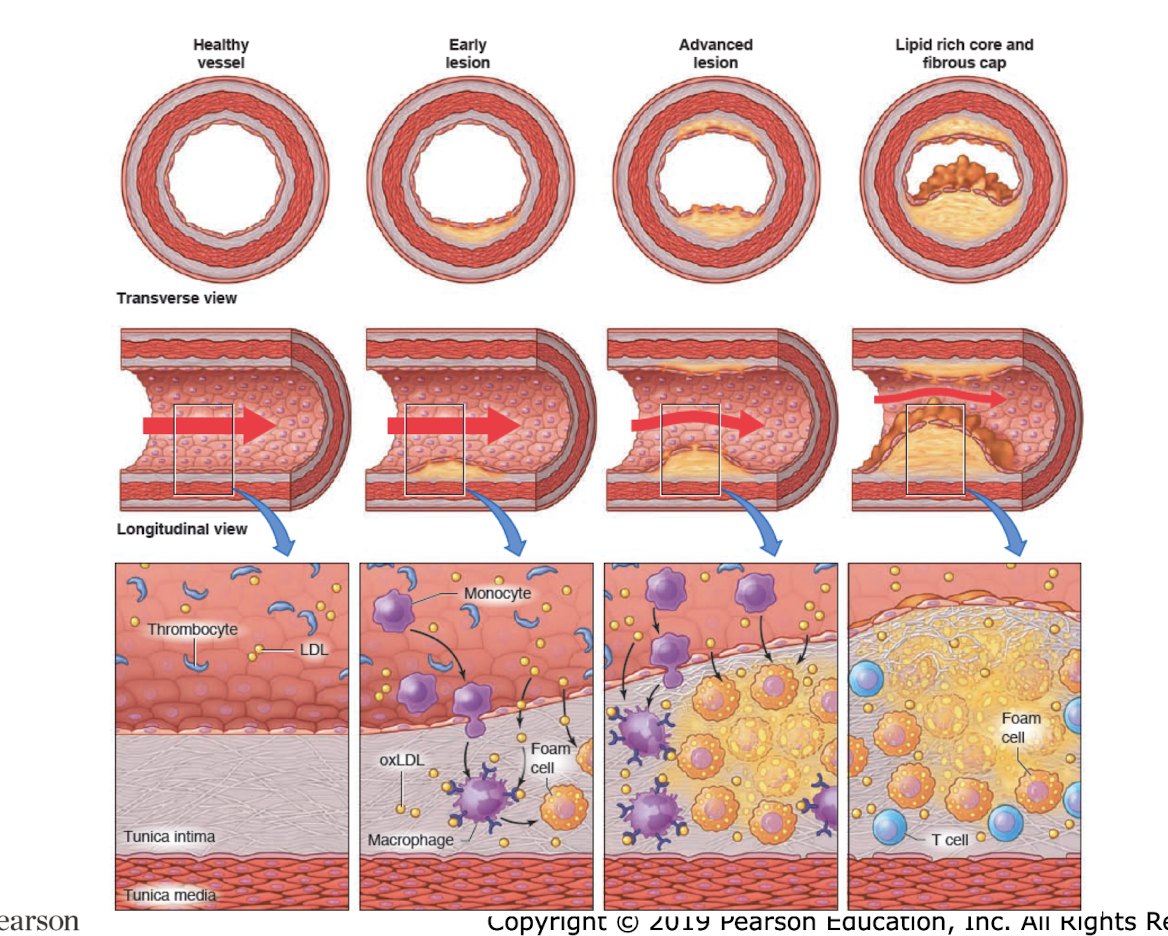
Thrombus
Clot that blocks blood supply
Forms inside a blood vessel or the heart and stays attached to its site of origin
Dignosis
____ of CAD
lipid panel, CRP, lipoprotein a, homocysteine
detection of heart attack
Lipid panel
LDL, HDL, total cholesterol and triglycerides
C- Reactive Protein CRP
marker of inflammation in the body
Lipoprotein a
type of cholesterol that can build up in the arteries
Homocysteine
amino acid that can damage blood vessels
Detection of heart attack
Cardiac troponin test I and T (if you have these then it means you are lossing myocardium and damge to heart is being done)
Stable Angina
Chronic form of ischemic heart disease IHD
Occurs with increased myocardial oxygen demand and reduced blood flow during exertion or emotional stress
Clinical Manifestations
related to exertion
resolve with rest or short acting nitroglycerin (vasodilator medication used primarily to treat and prevent acute chest pain (angina) caused by coronary artery disease)
a predictable type of chest discomfort that occurs when your heart muscle does not get enough oxygen-rich blood during physical exertion or emotional stress
Silent Ischemia
thought to be related to defective anginal warning system
Clinical manifestations
chest pain (not always present)
ST-segment changes
DIgnosis
ambulatory ECG
SPECT (single photon emission computed tomogrpahy)
Treatment
same medical therapies as for symptomatic ischemia
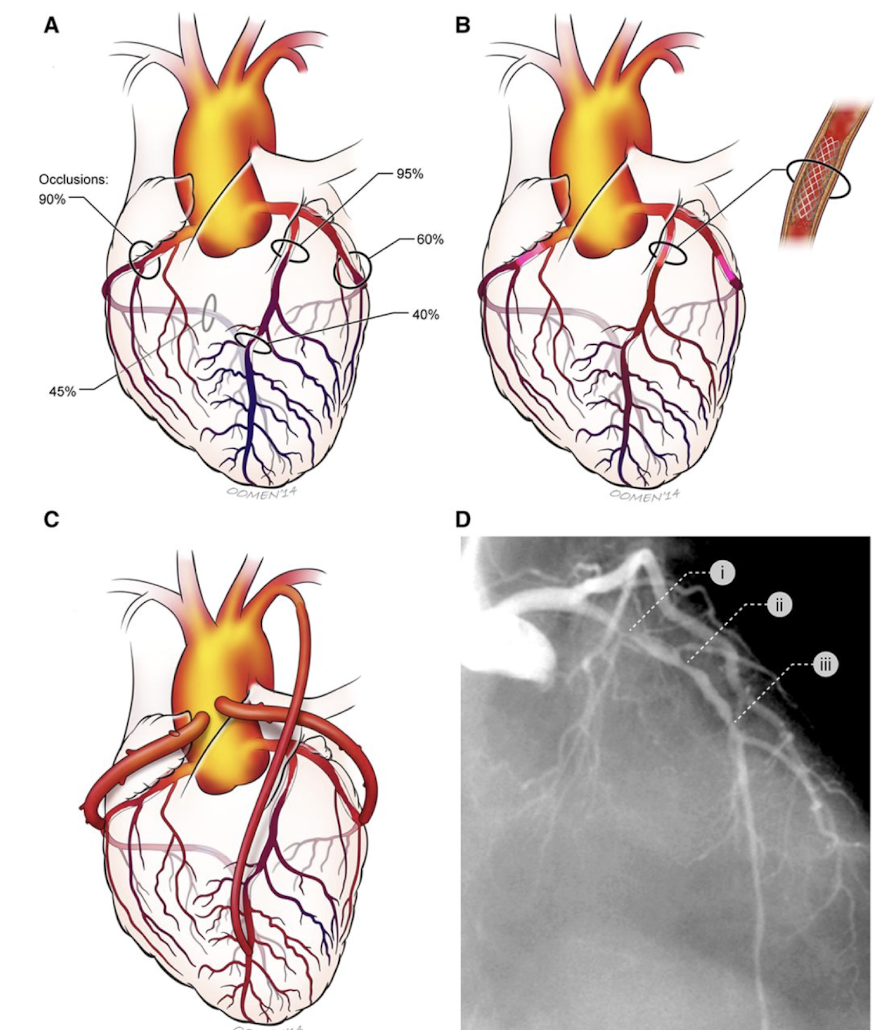
coronary angiography and revascularization
CABG
Name this process. used to restore healthy blood flow to the heart muscle when coronary arteries become blocked or narrowed
Specific Acute Coronary Syndromes (ACS)
Types
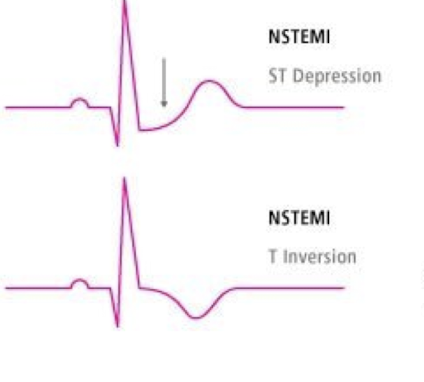
Non-ST segment elevation ____ NSTE-ACS) is an umbrella term for non-ST segment elevation myocardial infarction NSTEMI and unstable angina
ST-segment elevation myocardial infarction STEMI
a group of life-threatening conditions caused by a sudden reduction or block of blood flow to the heart muscle
Plaque
Progression of ___

Non-ST segment elevation acute coronary syndrome
A heart attack caused by a partial blockage that damages the heart muscle, confirmed by elevated troponin levels without ST-elevation
NSTEMI vs unstable angina
Degree of ischemia that results
whether damage causes release of myocardial necrosis biomarkers (troponin, creatine, kinase-MB, myoglobin)
Pathogenesis
atherosclerotic plaque rupture
coronary artery vasoconstriction
myocardial oxygen demand and supply imbalance
Risk Factors
cigarette smoking (vasospastic angina)
Clinical Manifestations
presentation of unstable angina and NSTEMI similar
severe chest pain lasting more than 20min
Emergency medical services needed in cases of
chest pain
sever dyspnea
Syncope (loss of consciousness or fainting) or presyncope episode (lightheadedness, nausea, and weakness)
Palpitations
Dignosis
ECG
Serial cardiac tropnins
Treatment
supplemental O2
Short-acting sublingual nitroglycerin
IV nitroglycerin
Morphine sulfate
Oral beta blockers
High intensity statin therapy
Antiplatelet therapy and anticoagulation therapy
Invasive strategies
unstable angina
Chest discomfort that occurs unexpectedly or worsens over time; it reduces blood flow like a heart attack, but troponin levels remain normal
plaque disruption and platelet aggregation
when the thrombus starts to block blood flow and causes pain in the chest, even when at rest
Vasospastic angina
type of chest pain caused by a sudden, temporary tightening or spasm of the coronary arteries that temporarily reduces blood flow to the heart
ST segment elevation MI (STEMI)
A severe heart attack caused by a complete blockage of a coronary artery, leading to rapid muscle death and specific ST-segment elevation on an ECG
More precise definition of a heart attack
STE refers to ECG tracing of ST segment elevation
MI refers to myocardial infarction
Preventation of death requires RAPID
recognition
reperfusion treatment
management
Pathogenesis
disruption of atherosclerotic plaque leads to thrombosis and disrupts blood flow
Imbalance of myocardial oxygen supply and demand results
Causes
Nonobstructive CAD
Coronary artery vasospasms
Contusions related to trauma
Cocanine abuse
Hematologic problems
Clinical Manifestations
classic chest pain and dyspnea
malaise and fatigue
radiating pain
Diaphoresis, dizziness, weakness, palpitations, altered mental status, feeling of doom
Tachycardia or bradycardia
Dignosis
ECG
Cardiac Troponins
RAPID RESPONSE TEAM in hospital

risk factors
____ for STEMI
same for CAD
air pollution
prinzmetal angina/ vasospastic angina
Contusions related to trauma to cornary arteries
cocaine abuse
aortic insuffciencies
hematologic problems
a fib (embolus)
Embolus
A piece of a thrombus (or another foreign substance) that breaks loose, enters the circulation, and moves to another part of the body
Embolism
The medical emergency or blockage that happens when the traveling embolus finally lodges in a narrow vessel and cuts off blood flow.
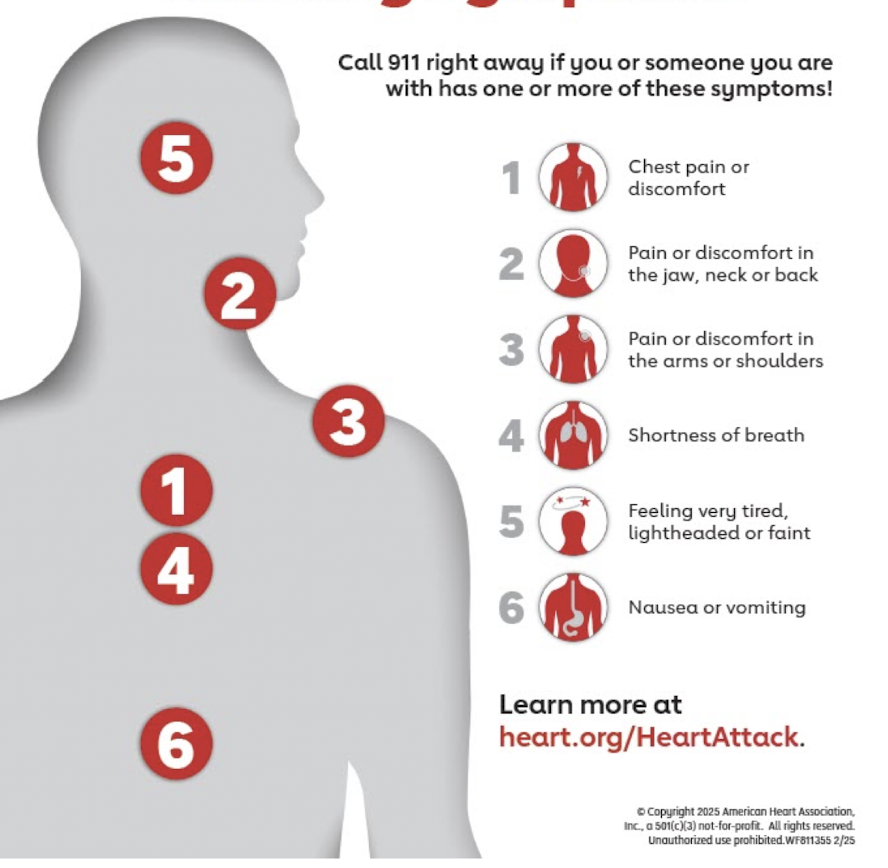
Common Heart attack warning signs
Name these