Radiology Quality Management and Safety: Key Concepts and Procedures
 Call Kai
 Learn
Learn Practice Test
 Spaced Repetition
 Match
Match Flashcards
 Knowt Play
1/202

There's no tags or description
Looks like no tags are added yet.
Name | Mastery | Learn | Test | Matching | Spaced | Call with Kai | Chat |
|---|
No analytics yet
Send a link to your students to track their progress
203 Terms
What is the ASRT's definition of Quality Management?
Quality Management consists of organized and coherent activities and procedures designed to monitor equipment performance and compliance with industry benchmarks. Compliance with JTC (3 years) and IEMA (annually)
What does CQI stand for?
Continuous quality improvement
What is the difference between QA and QC?
QA is the overarching process focused on patient care, people, and processes. QC is the equipment/instrumentation component of QA and focuses on controlling the radiographic image from start to finish.
What are the two QA processes
short wait times (15 minutes for non-scheduled) and quick turnaround times (4 hours national average)
Which times are usually the most busy in a radiology department
11a-2p and 4-7p
What is the purpose of sentinel events? Why were they implemented?
Sentinel events were adopted in 1997 to improve quality and safety, and are incidents that cause death/severe temporary or permanent harm to a patient. They are intended to prompt strong corrective actions, protect patients, improve systems, and prevent further harm.
What are the top 3 Sentinel events? What are the 3 reasons for the #1 Sentinel Event?
Falls are the #1 sentinel event, with wrong-site surgery and unanticipated infant death following closely behind. Falls are at the top because they happen the most, result in severe consequences, and are largely preventable.
What is the point of healthcare employees understanding the elements of safety events?
To recognize safety problems, understand contributing factors, and help prevent the same type of event from happening again through system improvement.
What is the purpose of Quality Management in Radiology?
To reduce patient dose and reduce cost while maintaining quality.
What are the QC tests that rad techs perform?
Lead apron, console, overhead crane, table, calipers, and sponges/equipment checks.
What is the minimum Pb for lead aprons?
0.5 mm Pb (per NCRP)
What is the minimum Pb for Bucky slot cover and lead drapes in Fluoro rooms?
0.25 mm Pb/Eq
What is the absorption limit, in mm of aluminum equivalent, that an x-ray should not exceed?
2.5mm
Why is it so important to hang lead aprons after each use?
To prevent damage to protective lead equipment and maintain its protective integrity
What are calipers?
A specialized L-shaped measuring tool used to determine the exact thickness of a patient's body part in centimeters or inches before taking a radiograph
What is the oldest method for testing exposure timer accuracy?
The spinning top test
What happens if Focal Spot Size is tested and it exceeds the limits of FSS blooming?
Affects both image production (indicates tube failure) and processing (decreases spatial resolution)
What is the allowable variability for a 0.5mm Focal spot?
50%
What is the allowable variability for a 1.25mm Focal spot?
40%
What is the allowable variability for a 1.65mm Focal spot?
30%
In your own words, describe mAs reciprocity.
The same mAs should produce the same radiation output regardless of which mA and time combination is used
In your own words, describe mAs linearity.
Sequential changes in mAs should produce the same sequential change in radiation output.
In your own words, describe mAs reproducibility.
Using the same technical factors repeatedly should produce the same radiation output. Variation cannot exceed ±5%.
Why are there so many mAs tests?
mAs is considered the weakest link in digital image production and must be checked thoroughly
What test could an x-ray tech use to check collimation (beam restriction)?
A collimator test tool or the 8-penny test (the diameter is pi, which is ideal for the 2%)
What test has the most allowable variance?
Focal spot size
What test has the least allowable variance?
Beam alignment (1% of SID)
How many hours do most light sources in LCD flat panel monitors last?
30,000 hours (liquid crystal display)
What is the primary objective of a quality assurance program?
Enhancement of patient care
What are the three possible backgrounds of a QA program?
Medical, managerial, or technical in nature
The QA process operates by identifying what 4 processes?
Identify existing problems; identify potential problem areas; monitor problems; resolve issues.
When is preventative maintenance done
during downtime
What are the three outpatient imaging efficiency (OIE) measures that TJC implemented that are radiation involved by background?
CT w and w/o contrast, simultaneous use of brain CT and sinus CT, and mammography follow-up rates
QC Equipment Performance is divided into what two parts
Tube output (x-ray beam/external evaluation) and image processing (monitor the quality of image processing systems)
What are the three accrediting agencies that assure hospitals meet and have proof of ongoing Quality assessment?
TJC (The Joint Commission), HFAP (Healthcare Facilities Accreditation Program), and DNV
What accrediting organization is responsible for implementing and organizing sentinel events?
The Joint Commission (TJC) in 1997
Who is involved in a root cause analysis
risk management personnel, including an attorney and social services
True/False: most sentinel events are process-involved and not the negligence of the employees
true
What is HCAHPS?
Hospital Consumer Assessment of Healthcare Providers and Systems; a patient-perspective survey (CMS eligible) used to publicly report hospital performance
What is the penalty for failure to report HCAHPS data?
Hospitals that fail to report required quality measures, including HCAHPS, can receive an Annual Payment Update reduced by 2.0 percentage points
The purpose of healthcare metrics serves what two main objectives?
satisfy accreditors and enhance patient experience
What is CQI, and how does it differ from a typical QA background?
CQI focuses on systems first and individual performers second. QA focuses on the process of human error
In digital imaging, what is the weakest link in the imaging chain?
The CRT monitor (it is always on)
What does the SMPTE test pattern test for?
Used to evaluate monitor display performance, including brightness/contrast and spatial resolution/aliasing
What demonstrates spatial resolution of the monitor being within acceptable limits?
If the high contrast bar patterns in the test image are distinct as simple black and white pairs
All monitors used for interpretation of imaging exams should be tested how often?
Monthly (with daily visual checks)
How should lead aprons be tested? How often?
Semi-annually; make sure there are no holes in them (visual/palpable). If holes are suspected, the lead can be radiographed
What digital quality factor does focal spot blooming impact?
Spatial resolution
What is SMDA? How is imaging equipment affected by SMDA?
Safe Medical Devices Act; states that healthcare professionals must report death or injuries caused or suspected to have been caused by a medical device to the FDA and the product manufacturer. Imaging equipment can be considered a medical device under SMDA.
What factors can affect AEC devices?
AEC can be affected by positioning/anatomy over the detectors, prosthetics, failure to collimate, wrong image receptor, scatter, pathology, and minimum response time.
What is the difference between exit and entrance style detectors?
The exit (old system/phototimers) vs. entrance (modern day/ionization chambers) style detector determines whether the X-ray beam is measured before or after it passes through the IR
What are the two types of technique charts? Which is the most commonly employed?
Fixed vs variable kVp charts. A fixed kVp chart is most common since the kVp is set at an optimal level for the given anatomy.
Match the test with the tool: Beam restriction

Match the test with the tool: Focal Spot Size

Match the test with the tool: AEC

Match the test with the tool: Beam alignment

Match the test with the tool: Exposure timers
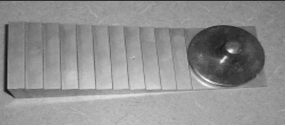
Which of the following QC tests has a 10% variability allowance?: 1-mAs reciprocity, 2-mAs linearity, 3-mAs reproducibility, 4-kVp accuracy, 5-Beam alignment, 6-AEC accuracy
1, 2, and 6
Which of the following describes a mAs linearity test?
Testing the tubes capability of producing an expected increase in exposure with an increase in mAs
The test that measures the accuracy of successive exposures is
Exposure reproducibility
Which of the following are true for exposure timer accuracy?: a. + 5% variability is allowed for times shorter than 10ms; b. + 5% variability is allowed for times longer than 10ms; c. + 20% variability is allowed for times shorter than 10ms; + 20% variability is allowed for times longer than 10ms
B and C
CQI is a process: a. that is never completed, b. that is a philosophy, not a methodology, c. requires continued attention
all of the above
How often should fluoroscopy equipment be tested for quality control?
bi-annually
The test that measures the accuracy of successive exposures is
exposure reproducibility
Resolution Test Tool can be tested with a
star pattern
Which factor in QC testing has the least allowable variance?
beam alignment
kVp must be accurate to within
5% of the control panel setting
The test that measures the accuracy of adjacent mA stations is
mAs linearity
A manual spin top test is only suitable for testing which of the following
single phase generators
kVp can be testing with which of the below
Wisconsin test cassette
Which of the following describes a mAs linearity test
Testing the tube's capability of producing an expected increase in exposure with an increase in mAs
The collimator must be accurate to _______ of the SID
±2%
Explain IEMA's role in making sure that tune output equipment is tested annually or semiannually. Name one item that must be tested semi-annually
IEMA comes annually to hospitals to make sure that the QC test tools are being performed at their respective rates (whether that be annually, semiannually, monthly). Fluoroscopy and AEC units are tested semi-annually
What would be the allowable variance for a 0.75mm Focal Spot
50%
Correctly match the QC test to the allowable variance: 50%
0.8mm or less FSS
Correctly match the QC test to the allowable variance: 5-20%
exposure timers
Correctly match the QC test to the allowable variance: 10%
mAs reciprocity
Correctly match the QC test to the allowable variance: 5%
kVp
Correctly match the QC test to the allowable variance: 2%
Beam restriction
Correctly match the QC test to the allowable variance: 1%
Beam alignment
A photometer may be used to test which of the below
illuminator brightness
What Act requires healthcare professionals to report death or injuries caused or suspected to have been caused by a particular medical device to the FDA or the product's manufacturer?
SMDA
Describes any instrument, apparatus, or other article that is used to prevent, diagnose, mitigate, or treat a disease as to affect the structure or function of the body except for drugs
medical device
The primary purpose of a QA program is
enhancement of patient care
Which of the below is not a background type of QA process?
executive
Which of the below would not be considered a sentinel event
cropping a digital image
Sentinel events were first classified by which hospital accreditation system
TJC
Which of the below incidents, involving ionizing radiation, is classified as a sentinel event?
All but one of the choices
Quality Control is divided into two parts. Which of the below is not a part of a QC program in diagnostic radiography
monitoring patient wait times
Which of the below would not be eligible for an HCAHPS survey
A patient who was brought in for an emergency appendectomy from the DuPage County Jail
Which of the below is not an Outpatient Imaging Efficiency (OIE) measure that is required for the Hospital Outpatient Quality Reporting Program?
the recall rate in diagnostic radiography
What role does IEMA serve in diagnostic imaging in reference to quality assurance? At what frequency do they come in for announced visits to your clinical facilities? When typically would you see them come in for an unannounced visit. Explain
IEMA comes in once a year, but can also come unannounced to nuclear medicine. Their purpose is to look for radioactivity stemming from the storage/disposal of radioactive isotopes.
Specifically, explain the purpose of a root cause analysis and the individuals involved. What is the goal of the investigation?
Root cause analysis is performed to get down to the reason that a sentinel event occurred. The individuals involved include risk management (attorney and social worker) and those who were involved in the event. The goal is to identify why something happened so that it doesn't occur again.
QA focuses on
people and process
QC focuses on
test tools and equipment
Weakest link in radiation production?
mAs
Used to evaluate digital imaging equipment performance by imaging a standardized test object
QC phantom
Monitor evaluation that should occur at least this frequently for displays used for interpretation
monthly monitor testing
Distortion that can cause the displayed image or spatial patterns to appear incorrectly
aliasing
A standard test image that can be used to evaluate monitor performance
SMPTE test pattern