Deep time lecture 2
 Studied by 0 people
 Call with Kai
 Learn
Learn Practice Test
 Spaced Repetition
 Match
Match Flashcards
 Knowt Play
1/21

There's no tags or description
Looks like no tags are added yet.
Name | Mastery | Learn | Test | Matching | Spaced | Call with Kai |
|---|
No study sessions yet.
22 Terms
how old is earth
4.6 billion years old
oldest form of life
bacteria (single-celled organisms)
life has existed on earth for
3.6 billion years
life has been evolving on earth for 3.6 billion years
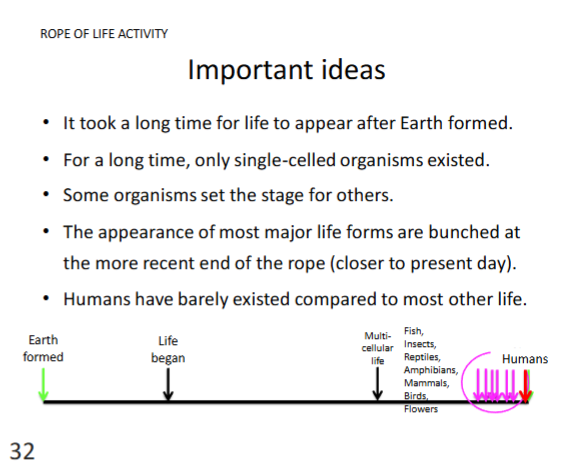
timing of events
single celled organisms (3.6 bya)
photosynthetic bacteria (3.4 bya)
multicelluar life (1 bya)
arthropods (570 mya)
fish (500 mya)
land plants (475mya)
insects (400 mya)
amphibians (360 mya)
reptiles (300 mya)
mammals (200 mya warm blooded organisms)
birds (150 mya)
flowering plants (130 mya)
dinosaurs died out (65 mya)
mammals diversified (65 mya)
humans (200,000)
why did oxygen breathers appear after photosynthetic organisms
photosynthetic organisms produced the oxygen that aerobic organisms would use later for respiration
new resource for a new niche
why was the shelled egg favored by natural selection
harder —> more protection
Organisms can stay on land
broke the tie between land and water
why did mammals only diversify after dinosaurs went extinct
new niches available
Dinosaurs filled most niches
niches opened up when they went extinct and mammals filled them
early earth
formed 4.6 bya and was very turbulent
anoxic (low oxygen) conditions
surface temp of 100 degrees C
methane, ammonia, nitrogen, CO2, and hydrogen
no liquid water
cyanobacteria
early life on earth
3-4 bya
early photosynthetic bacteria began dumping major amounts of oxygen into the ocean, then the atmosphere via diffusion
historical transitions
emergence of self-replicating molecules
RNA sequences can facilitate copying of nucleic acids
RNA replication
emergence of eukaryotic life (1.8-2 bya)
involves the acquisition of mitochondria
emergence of multicellularity
The Miller-Urey Experiment (1952)
how life began
Simulate early conditions in the lab with electricity to simulate lightning
results: Organic compounds (amino acids) can form from inorganic matter under these conditions
formed nucleic acids
eukaryotes have membrane bound organelles
like certain free living cells, mitochondria and plastids
have their own membrane
can self- replicate
have haploid genomes
plastid
any of a class of small organelles, such as chloroplasts, in the cytoplasm of plant cells, containing pigment or food
the endosymbiosis theory
endosymbiont- a symbiont that lives inside the host and is vertically transmitted to progeny
many endosymbiosis genes are lost or transferred to host nucleus
neither the host nor the endosymbiont can live independently anymore
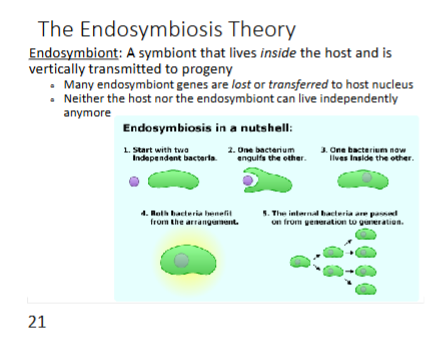
4 steps of endosymbiosis theory
infolding of plasma membrane
aerobic proteobacterium enters eukaryote
aerobe bility to use oxygen to make energy becomes an asset
evolves into chloroplsts
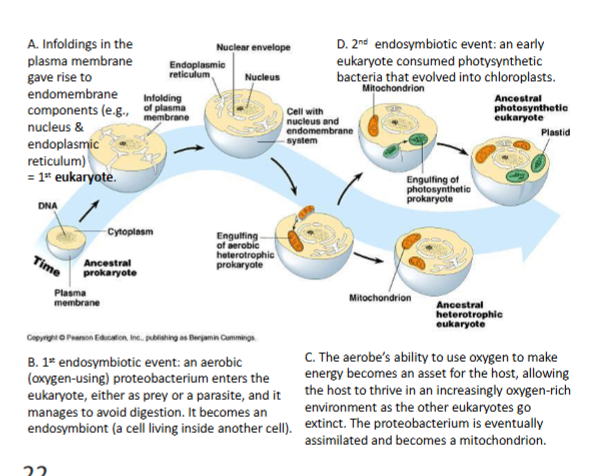
acquisition of ___ marks one of the origins of ____
mitochondria, eukaryotes
there is ___ evidence for the endosymbiosis theory
phylogenetic
emergence of multicellularity
600 mya
features of multicellularity:
cells must adhere
cells must cooperate
cells must share resources and energy
cells should show division of labor
specializing
Multicellularity has evolved convergently many times
cambiran explosion (542 mya)
invertebrates
came after plants
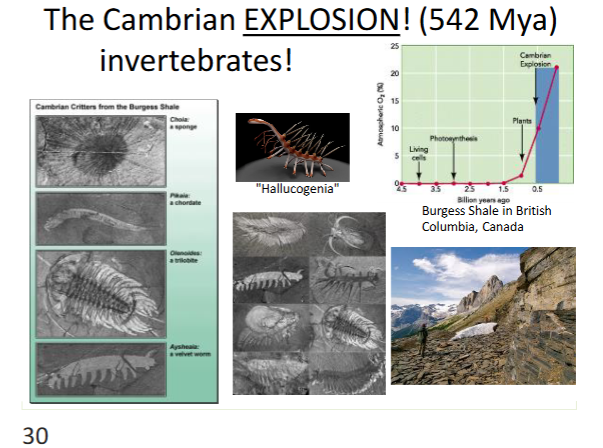
natural selection prefers
bilateral symmetry
from radial to bilateral symmetry
plant phylogeny
see attached notes
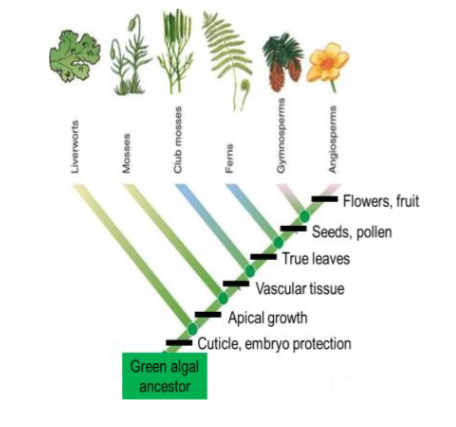
important ideas