Lecture 4: Hematopoiesis & Bone Marrow Evaluation
 Call Kai
 Learn
Learn Practice Test
 Spaced Repetition
 Match
Match Flashcards
 Knowt Play
1/79

There's no tags or description
Looks like no tags are added yet.
Name | Mastery | Learn | Test | Matching | Spaced | Call with Kai | Chat |
|---|
No analytics yet
Send a link to your students to track their progress
80 Terms
What is found in the hematopoietic microenvironment?
stromal elements: endothelial cells, reticular cells, adipocytes, and ECM
accessory cells: macrophages, T & B lymphocytes
hematopoietic cells
What hematopoietic cells are found int he extravascular space?
hematopoietic stem cells (HSC)
hematopoietic progenitor cells (HPC)
recognizable blood cell precursors
mature leukocyte storage pools, especially neutrophils
What cells produce bone marrow stromal cells?
mesenchymal stem cells
What cells regulate the transendothelial movement of cells between blood and the marrow extravascular space?
endothelial cells
What fibroblastic-type cells provide structural support for the bone marrow?
reticular cells
What roles do endothelial cells and reticular cells share concerning bone marrow?
synthesis of growth factors and ECM
supports hematopoiesis through cell-cell contact
How do blood cells enter bone marrow?
enter the vascular sinus by passing through endothelial cells
What are HSCs generally positive for?
the CD34 surface antigen
How do HSCs replicate?
sustained self-replication slowly (once every 8-10 wks)
What do HSCs have the capacity to differentiate into?
all blood cell types and some tissue cell types (macrophages, DCs, osteoclasts, mast cells)
What common lymphoid progenitors (CLPs) are produced by HSCs?
B lymphocytes, T lymphocytes, NK cells
What common myeloid progenitors (CMP) are produced by HSCs?
non-lymphoid blood cells, macrophages, DCs, osteoclasts, mast cells
What common progenitor produced by HSCs is needed to form platelets and erythrocytes?
common MYELOID progenitor
Why do HPCs have limited self-replication?
they’re not sustained without replenishment from HSCs
How does HPC differentiation differ than that of HSC?
more restricted lineage potential
What are hematopoietic growth factors (HGFs)?
glycoprotein cytokines that promote the proliferation, maturation, and survival of hematopoietic cells
Where are HGFs produced?
locally in marrow (paracrine and autocrine) and/or by cells in peripheral tissues (endocrine)
What is an example of an endocrine HGF?
erythropoietin from kidney
What are the early-acting hematopoietic growth factors?
stem cell factor (SCF) and flt3 ligand (FL)
What are the intermediate-acting hematopoietic growth factors?
IL3 and GM-CSF
What are the late-acting hematopoietic growth factors?
G-CSF, M-CSF, EPO, TPO, and IL5
How does indirect stimulation cause HGF release?
during inflammation, TNFalpha and IL1 stimulate stromal and accessory cells to release various HGFs
What are erythroid islands?
microenvironment in bone marrow created by macrophages where erythroid precursors develop
What is the function of erythroid islands?
phagocytize expelled nuclei of damaged or aged erythrocytes
store iron released from phagocytized erythrocytes
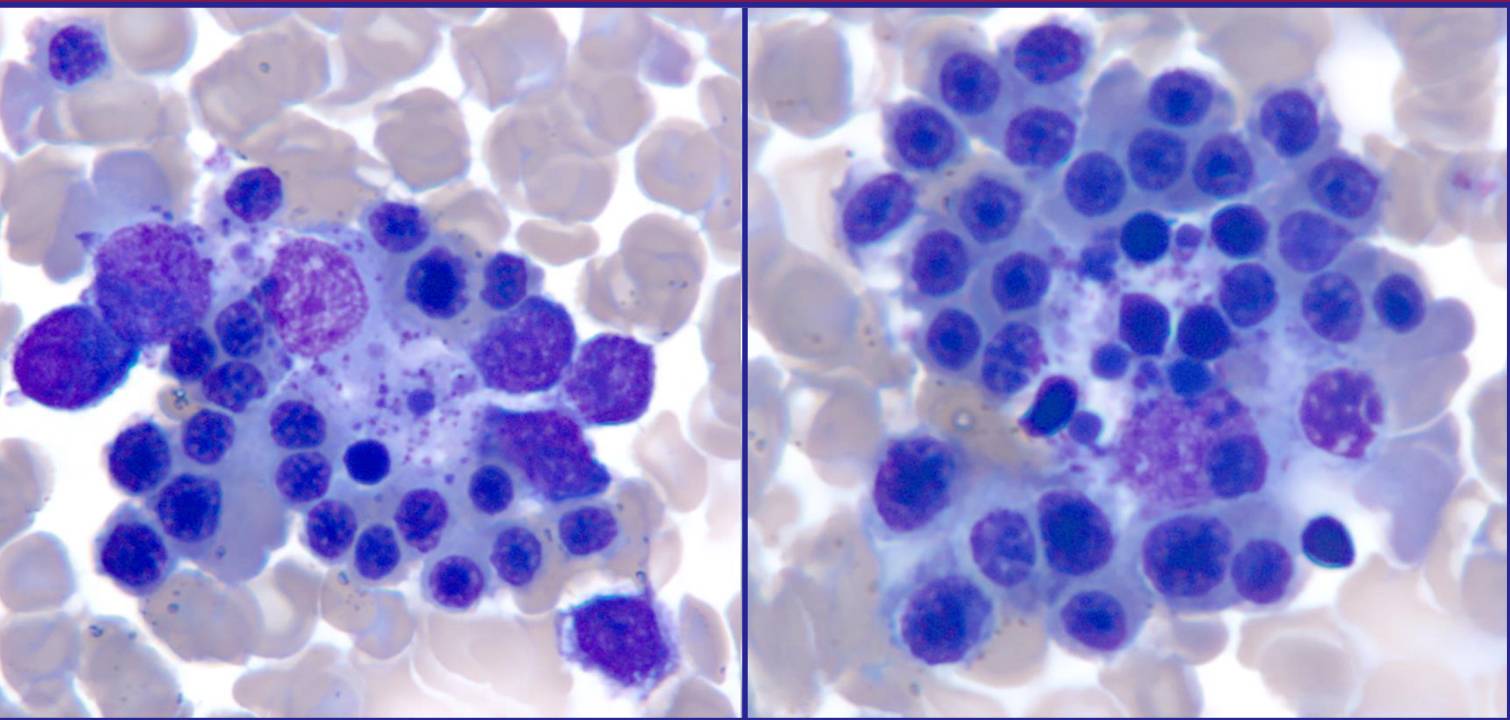
What can be seen in the bone marrow sample? Note the central macrophage.
erythroid islands
At what maturational division does marrow release in dogs?
reticulocytes
At what maturational division does marrow release in horses?
erythrocytes
What is formed when metarubricytes expel their nuclei, usually while still bound to macrophages?
reticulocytes
How many reticulocytes does one rubriblast produce?
16 reticulocytes in about 4 days
What is the glycoprotein growth factor that promotes proliferation, differentiation, and survival erythroid progenitor cells and early erythroid precursors?
erythropoietin (EPO)
What is the main mechanism of action EPO?
inhibition of apoptosis
What are the sites of EPO synthesis?
renal interstitial cells (primary site in adults
extrarenal production: liver in mammalian fetus, bone marrow macrophages and erythroid cells
What effect does tissue hypoxia in the kidney have on EPO?
increased synthesis
What are the stages of erythropoiesis?
rubriblast → prorubricyte → basophilic rubricyte → polychromatophilic rubricyte → metarubricyte → polychromatophilic erythrocyte → erythrocyte
At what stage of erythropoiesis is a nucleoli present?
rubriblast
At what stage of erythropoiesis does division stop?
after polychromatophilic rubricyte
What are the stages of neutrophil production?
myeloblast → promyelo → myelocyte → metamyelocytes → band → neutrophil
At what point in neutrophil production does mitosis stop and maturation and storage begins?
between myelocyte and metamylocytes
What is the function of G-CSF?
granulocyte progenitors to myeloblasts
increased cell division, decrease marrow transit time
What cells produce various neutrophilic growth factors?
fibroblasts and endothelial cells
T lymphocyte and mononuclear phagocytes
What causes terminal maturation of eosinophils?
IL-5 from Th2 lymphocytes
Where do mast cells develop?
in tissues
What promotes development of mast cells?
stem cell factor
What late activating factor stimulates monocyte production/
M-CSF
What may monocytes become?
macrophages or inflammatory dendritic cells in tissues
osteoclasts in bone marrow
dependent on amount of various cytokines present
What are osteoclasts?
multinucleated cells developed from monocyte fusion that degrade bone
Where are B-cells produced?
marrow in most mammals
Peyer’s patches in dogs, pigs, and ruminants
bursa of fabricius in birds
Where are T-cells produced?
progenitors in marrow, but final development is in the thymus
Where are NK cells produced?
primarily in bone marrow and subsets develop in tissues
What is produced by thrombopoiesis?
megakaryocyte
True or false: non mammals do not have megakaryocytes.
true
What occurs in the megakaryocyte niche?
proplatelet processes (tube-like extensions) extend off of the megkaryocyte into the vascular sinuses and platelets form from the proplatelet process within the vasculature; platelets sheared off when matured
How does thrombopoietin (TPO) stimulate thrombopoiesis?
promotes differentiation of progenitor cells into megakaryocytes
stimulates increased endomitosis, resulting in increased ploidy (number of sets of chromosomes) and size
What is the major site of production of thrombopoietin?
endothelial cells of liver
What stimulates TPO synthesis by the liver during inflammation?
inflammatory cytokine IL-6
Why do recombinant growth factors only work for a short period of time?
antibodies are made against these glycoproteins, which limits their effectiveness
What are some reasons for bone marrow examinations?
proliferative abnormalities with unexplained left shifts, nucleated erythroid cells, or blast cells in blood
evaluate iron stores (except in cats)
unexplained hyper proteinemia in blood
What are some bone marrow biopsy sites for small animals?
dorsal iliac crest
wing of ilium
proximal humerus
trochanteric fossa of the femur
What is contained in a bone marrow aspiration syringe?
EDTA in a sterile saline solution
When would a bone marrow core biopsy be done?
to get better evaluation of overall cellularity after unsuccessful aspirate attempts
identifcation of focal lesions that may occur with metastatic neoplasia, necrosis, or granulomatous inflammation
What is used to evaluate the number, morphology, and stages of megakaryocyte development?
sytematic bone marrow examination
What is calculated in a systematic bone marrow examination?
the M:E (granulocytic:erythrocytic) ratio
amount of hemosiderin is assessed too
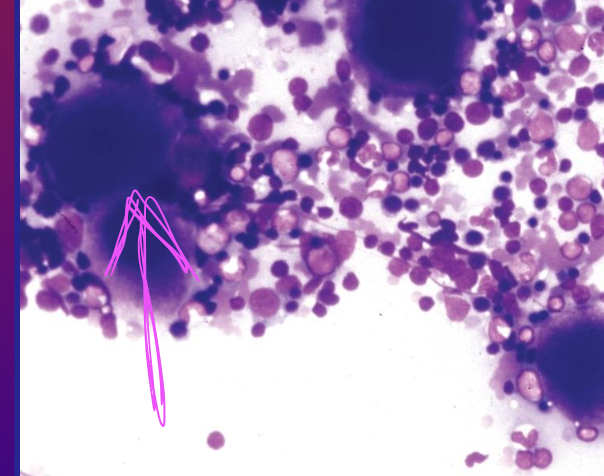
What is the arrow pointing to in this bone marrow sample?
megakaryocytes
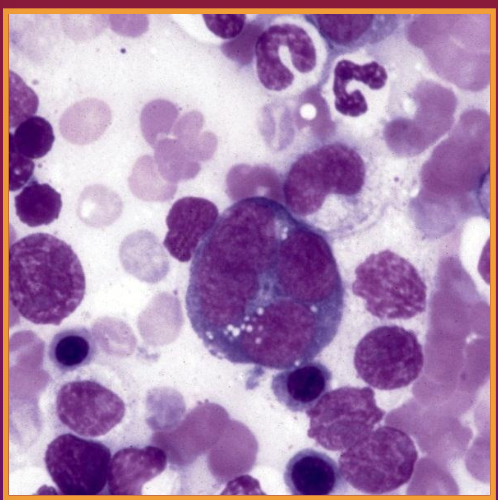
promegakaryocyte
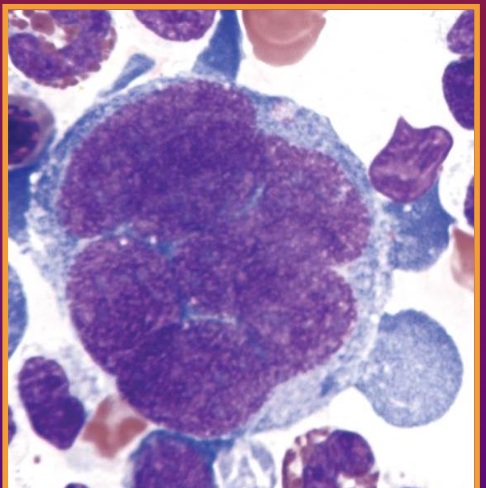
basophilic megakaryocyte
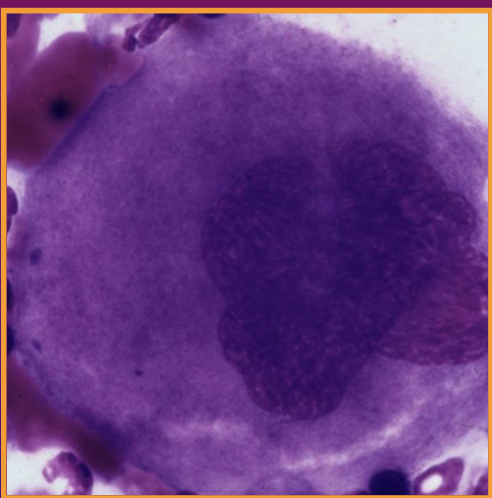
mature megakaryocyte
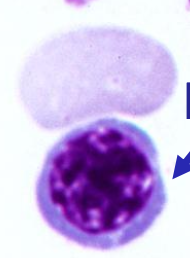
polychromatophilic rubricyte
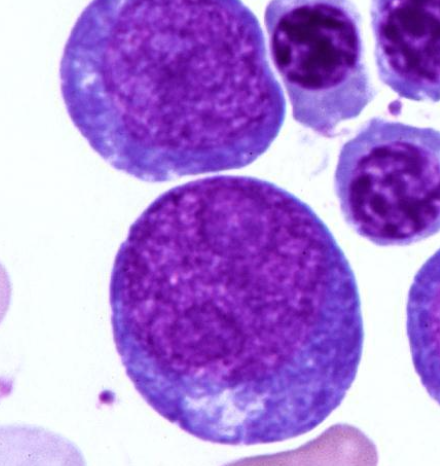
rubriblast
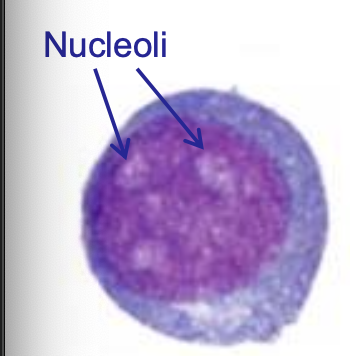
myeloblast
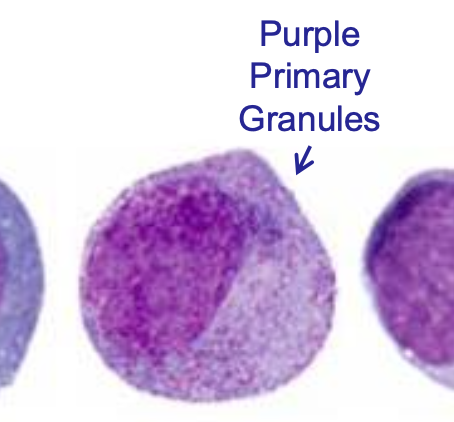
promyelocyte
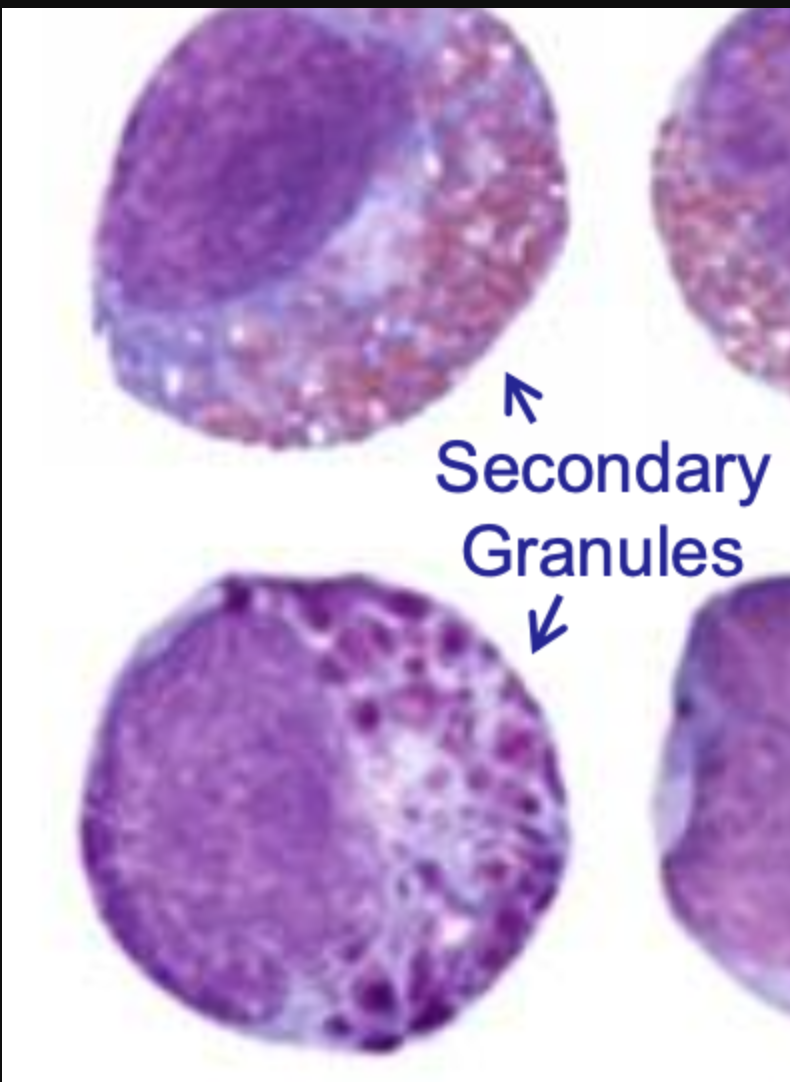
myelocytes
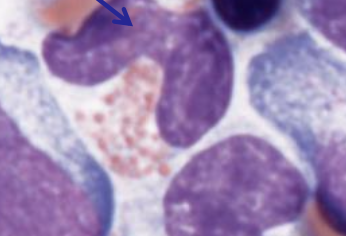
band eosinophil
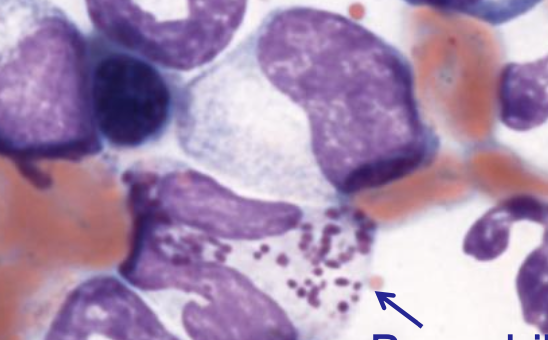
basophil
What knowledge is essential to interpret the M:E ratio?
Hct and total neutrophil count in blood
If the absolute blood neutrophil count is normal, what do changes in the M:E ratio reflect>
changes in the erythroid series
If Hct is normal, what do changes in M:E generally reflect?
changes in the neutrophilic series
When is the M:E ratio of little value?
if the marrow is markedly hypoplastic or filled with neoplastic cell
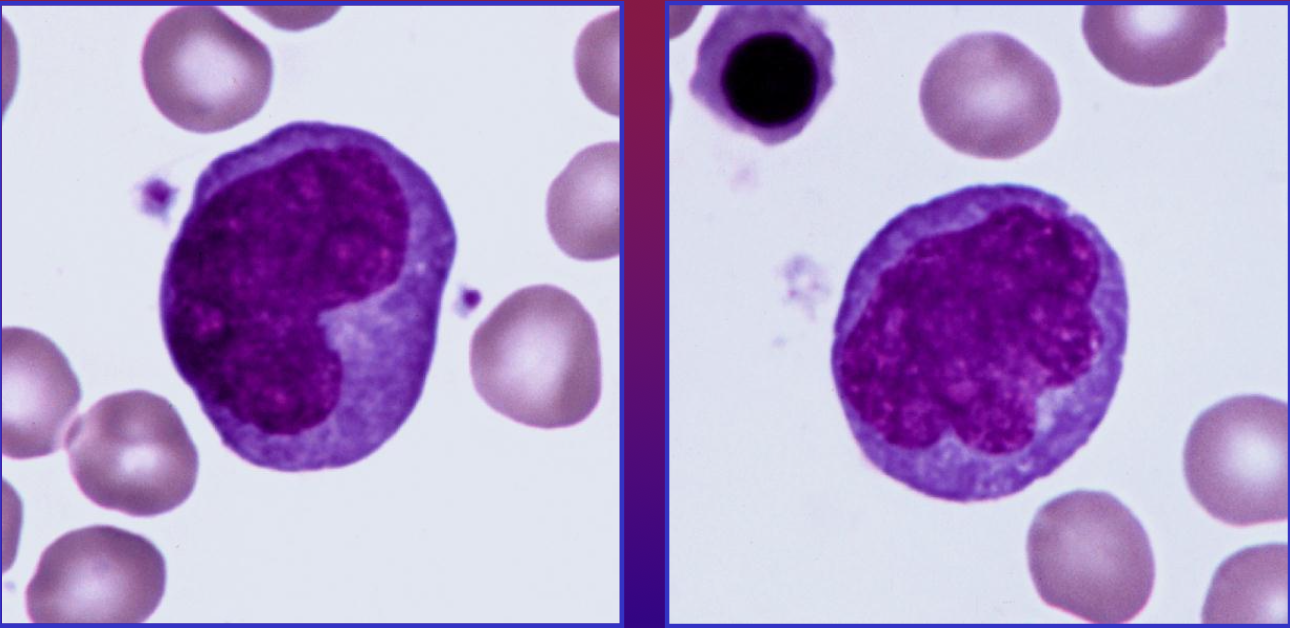
What are these two monocyte precursor cells?
left: monoblast
right: promonocyte
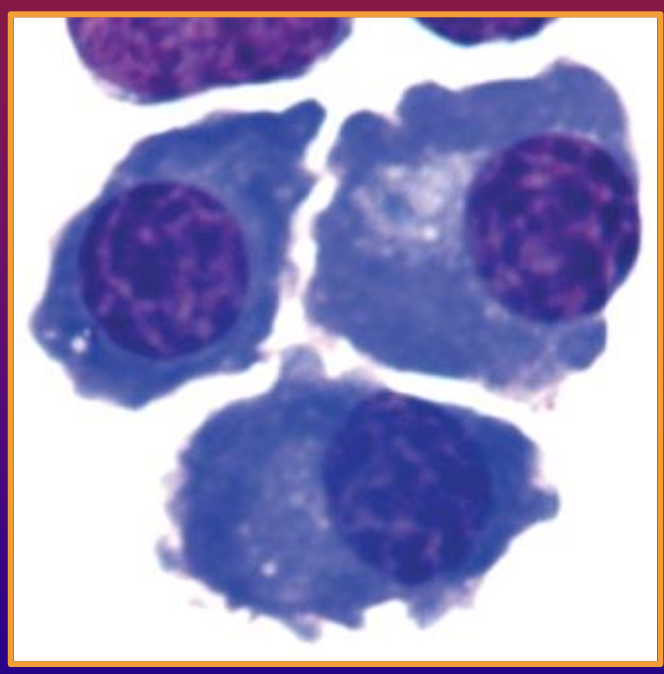
plasma cells
True or false: stainable iron is present in normal cat bone marrow aspirates.
false