WK4: Electrical Safety & Ultrasound
 Call Kai
 Learn
Learn Practice Test
 Spaced Repetition
 Match
Match Flashcards
 Knowt Play
1/312

There's no tags or description
Looks like no tags are added yet.
Name | Mastery | Learn | Test | Matching | Spaced | Call with Kai | Chat |
|---|
No analytics yet
Send a link to your students to track their progress
313 Terms
What are the 4 types of electrical injuries that can occur in a healthcare setting?
Electrocution (death caused by electrical shock)
Electrical shock
Burns
Falls (caused by an electrical shock)
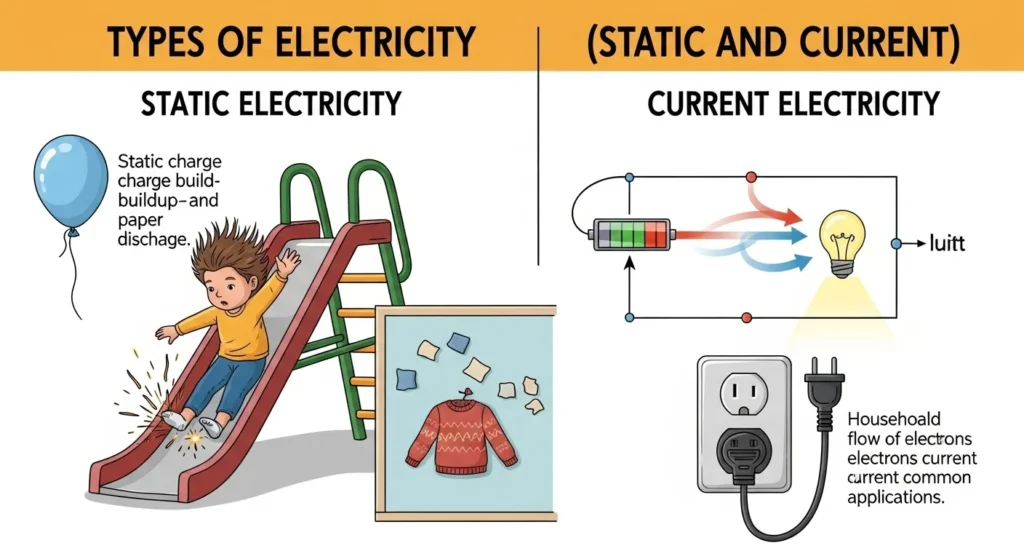
What is the difference between static electricity and current electricity?
Static electricity = an electric charge that builds up and stays in one place (does not move)
Current electricity (electrical current) = electricity that moves/flows from one place to another
What are the 3 basic requirements of an electrical circuit, and what is the difference between an open and closed circuit?
An electricity source, a conductor, and a continuous loop
Open circuit = the loop is broken, so electricity CANNOT flow
Closed circuit = the loop is complete, so electricity CAN flow

A PTA notices a piece of clinic equipment does not have a ground pin on its plug. Why is equipment grounding important for patient/staff safety?
Provides a separate, low-resistance pathway for electricity to follow if it doesn't follow its normal path (instead of going through a person)
Protects employees/patients from shock
Safeguards against fire
Protects equipment from damage
What happens if you remove the ground pin/there is no ground pin?
NEVER remove/eliminate the ground pin. If you do, YOU become the next-best path for the current!
What does GFCI stand for and what is a GFCI outlet?
ground fault circuit interrupters
outlets that detect abnormal current flow and shut off power to prevent someone from becoming the ground

In what 3 situations can grounding fail to protect a person from electrical shock?
The equipment doesn't have a ground pin
The person is working in a wet location
The person is touching a metal object
A patient receives an electrical shock of about 75 milliamps (mA) from faulty equipment. What is the biggest danger at this level of current, and why is this level considered especially dangerous?
Possible risk of ventricular fibrillation (a rapid, ineffective heartbeat) which can cause death within minutes unless a defibrillator is used (messes with the heart’s natural pacemaker, the SA node)
• This is dangerous because 75 mA is a SMALL amount of current — a small power drill uses about 30 times more current than this, showing how little current it takes to be life-threatening"
Match the amount of current to its effect on the body: >3 mA, >10 mA, >20 mA, >30 mA, >4 amps.
"• More than 3 mA: painful shock
• More than 10 mA: muscle contraction (ability to 'let go' may be lost around 20 mA AC)
• More than 20 mA: considered a severe shock
• More than 30 mA: lung paralysis
• More than 75 mA: possible ventricular fibrillation (can cause death in minutes without a defibrillator)
• Over 4 amps: heart paralysis and severe burns"
What is the most common nonfatal shock-related electrical injury, and when does it occur?
"Electrical shock/burn is the most common nonfatal shock-related injury.
• Occurs when a person touches electrical wiring or equipment that is improperly used or maintained
• Considered a very serious injury requiring immediate attention"
What are examples of safety-related practices for employee education regarding electrical equipment in healthcare?
"• Staying aware of electrical equipment in patient care areas, support service areas, and public areas
• Carefully placing cords so they don't get caught in bed frames or near other equipment
• Carefully attaching and removing plugs from wall outlets"
Why does OSHA regulate the use of flexible cords and cables (such as for TENS, NMES, and iontophoresis units), even for battery-operated devices?
"• Using an appliance with a flexible cord/cable that is as short as possible and plugged into a nearby outlet reduces tripping hazards and equipment damage
• Cables for e-stim devices (even battery-operated ones like portable TENS, NMES, iontophoresis) are regulated
• The OSHA electrical standard 1910.305 lists specific situations where flexible cords may be used"
A PTA is setting up the clinic for the day. List at least 6 electrical safety practices that should be followed in the clinic.
"• Replace standard outlets with GFCI (ground fault circuit interrupter) outlets
• Replace plugs with hospital-grade UL (underwriters laboratory) plugs marked with a green dot
• Have a biomedical engineer perform yearly maintenance checks on all electrical equipment
• Keep a dated inspection sticker on all electrical units
• Unplug equipment that is not in use
• Disconnect machines by pulling the PLUG, not the cord
• Frequently check plugs, cords, and e-stim leads for fraying
• Report loose-fitting connections between plugs and outlets
• Never use extension cords
• Never use 'cheater' adapters that let a 3-prong plug fit a 2-prong outlet
• Do not use electrical equipment near objects/environments that draw current
• Post a sign when equipment may interfere with pacemakers"
During treatment, a patient's family member keeps adjusting the settings on an electrical stimulation unit attached to the patient. What common electrical hazard does this represent, and what should the PTA do?
"This is an example of visitors/patients touching, handling, or moving electrical equipment — a common hazard in healthcare settings.
• The PTA should give the patient and family members explicit directions about what NOT to touch, change, or move regarding any electrical equipment attached to the patient
• Other common hazards include: multiple cords on the floor (tripping hazard), cords getting caught/stuck in other equipment (fraying risk), and wall sockets becoming loose with improper use"
What are the main learning objectives for the Intro to Ultrasound lecture?
"• Define ultrasound
• Describe the physical effects of ultrasound
• Explain the clinical indications for using ultrasound
• Choose the best technique for treatment and list advantages/disadvantages of each
• Select appropriate equipment and optimal treatment parameters
• Understand safety and effectiveness in application
• Accurately and completely document ultrasound treatment"
What is therapeutic ultrasound, and what frequency range is used clinically?
"• Ultrasound = a type of sound made of waves that transmit energy by alternately compressing (making dense) and rarefying (making less dense) material
• Ultrasound = sound with a frequency ABOVE 20,000 Hz (humans can only hear 16–20,000 Hz)
• Therapeutic ultrasound uses 0.7–3.3 MHz (700,000–3,300,000 cycles/second) to maximize energy absorption at a depth of 2–5 cm of soft tissue"
A PTA wants to increase tissue extensibility in a patient's joint capsule before stretching. Should thermal or nonthermal ultrasound be used, and why?
"Thermal (continuous) ultrasound should be used because its purposes include:
• Heating deep tissue
• Increasing tissue extensibility
• Most effective on deep tissue with high collagen content (tendons, ligaments, joint capsules, fascia)
Nonthermal (athermal) ultrasound is instead used to:
• Accelerate the body's natural healing process
• Increase cell membrane permeability
• Promote various cell functions
• Is particularly effective during the inflammatory phase of tissue repair"
Define cavitation, acoustic streaming, and microstreaming as they relate to therapeutic ultrasound.
"• Cavitation = the formation, growth, and pulsation of gas-filled bubbles caused by ultrasound (bubbles shrink during compression and expand during rarefaction)
• Acoustic streaming = a steady, circular flow of cellular fluids induced by ultrasound
• Microstreaming = microscale circular eddying that occurs near any small, vibrating object; it induces STABLE cavitation"
What is stable cavitation, and how is ultrasound energy delivered as a wave?
"• Stable cavitation = the bubbles in tissue oscillate (change size) repeatedly but do NOT burst — this is considered safe
• Sound is energy transmitted as a wave, exerting pressure on the medium it travels through by alternately compressing ('squeezing') and releasing pressure on particles — this compressing/releasing process is what causes cavitation"
What are the 5 main treatment parameters of therapeutic ultrasound?
"• Frequency (MHz)
• Intensity (W/cm²)
• Duty Factor (continuous or pulsed / duty cycle)
• Size of Treatment Area
• Duration of Treatment"
A patient reports a burning sensation during a continuous ultrasound treatment. Knowing that temperatures above a vigorous increase are considered noxious, what temperature increases correspond to mild, moderate, and vigorous thermal effects?
"• Mild heating = 1°C increase
• Moderate heating = 2–3°C increase
• Vigorous heating = 4°C increase
• Anything above vigorous (4°C) can be noxious/detrimental and lead to irreversible tissue damage — patients must be able to reliably report heat sensation, since pain means the patient won't tolerate it
• Helpful conversion to remember: 2.5 cm = 1 inch"
A PTA needs to treat a patient's deep hamstring tendon (about 4 cm deep). Should 1 MHz or 3 MHz frequency be selected, and why?
"1 MHz should be selected because it treats DEEPER structures (up to 2–5 cm deep).
• 3 MHz (3.0–3.3 MHz) = treats SUPERFICIAL structures, 1–2 cm deep (easily palpated tendons/ligaments)
• 1 MHz = treats deeper structures, up to 2–5 cm deep (not easily palpated)
• Key rule: Frequency and penetration depth have an INVERSE relationship — higher frequency waves expend energy sooner, so they don't travel as far, but they generate more heat superficially"
Define intensity and ERA (effective radiating area) in ultrasound.
"• Intensity = the quantity of energy delivered, measured in Watts; it is the supply of electrical energy to the transducer head. The higher the intensity, the SHORTER the time needed for tissue heating (but it can be less comfortable for the patient)
• ERA (Effective Radiating Area) = measured in cm²; the area of the transducer that actually transmits ultrasound energy, based on the size of the crystal inside the head. ERA is ALWAYS smaller than the total size of the transducer head
• Intensity must always be measured in W/cm²"
A clinic's ultrasound machine has a high BNR (beam nonuniformity ratio) and a poor-quality piezoelectric crystal. What safety risk does this create for the patient?
"A high BNR increases the risk of 'hot spots' — areas under the sound head that receive more energy than the selected dose, which can damage tissue.
• BNR = the ratio of peak power to average power in the ultrasound beam, measured in any cross-sectional plane; the higher the BNR, the greater the chance of a hot spot
• ERA = the radiating area of the applicator, based on the piezoelectric crystal, and is always slightly smaller than the transducer face
• Machines must be calibrated at least annually; heating of the sound head itself suggests energy is being lost in the transducer"
A physical therapist wants a duty cycle of 20% for pulsed ultrasound. If the 'on' time is 1 second, how many seconds of 'off' time are needed, and what is the duty cycle expressed as a ratio?
"4 seconds of 'off' time are needed; the ratio is 1:4.
Math: Duty Factor = on time / (on time + off time)
• 1 / (1 + 4) = 1/5 = 0.2
• 0.2 x 100 = 20% duty cycle
• Continuous ultrasound = 100% duty factor = always 'on' = produces the most thermal effect
• Pulsed (nonthermal) ultrasound interrupts the electrical supply so sound waves are discontinuous; longer 'off' times = less heat production. Common settings: 20% (1:4), 25% (1:3), 50% (1:1)"
When would a clinician choose a thermal duty factor versus a nonthermal duty factor?
"• Thermal effects (continuous US) are used primarily BEFORE stretching shortened soft tissue and to reduce pain
• Nonthermal effects (pulsed US) are used primarily to accelerate tissue healing, modify inflammation, and facilitate transdermal drug penetration (phonophoresis)"
List the biophysical effects of thermal/continuous ultrasound.
"• Pain reduction (due to decreased nerve conduction velocity)
• Increased tissue temperature and metabolic rate
• Increased blood flow → resolution of swelling (in CHRONIC inflammation, not acute) and enhanced immune response
• Increased extensibility of soft tissue
• Decreased viscosity of tissue fluid"
List the biophysical effects of nonthermal/pulsed ultrasound.
"• Interacts with and increases permeability of the cell membrane, allowing ions/molecules to diffuse into cells
• Facilitates tissue repair (increases plasma/cells in extravascular tissue)